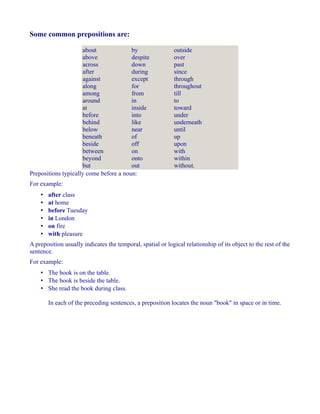
Some common prepositions are:

                     about              by                  outside
                     above              despite             over
                     across             down                past
                     after              during              since
                     against            except              through
                     along              for                 throughout
                     among              from                till
                     around             in                  to
                     at                 inside              toward
                     before             into                under
                     behind             like                underneath
                     below              near                until
                     beneath            of                  up
                     beside             off                 upon
                     between            on                  with
                     beyond             onto                within
                     but                out                 without.
Prepositions typically come before a noun:
For example:
    •   after class
    •   at home
    •   before Tuesday
    •   in London
    •   on fire
    •   with pleasure
A preposition usually indicates the temporal, spatial or logical relationship of its object to the rest of the
sentence.
For example:
    • The book is on the table.
    • The book is beside the table.
    • She read the book during class.

        In each of the preceding sentences, a preposition locates the noun "book" in space or in time.

Prep

  • 1.
    Some common prepositionsare: about by outside above despite over across down past after during since against except through along for throughout among from till around in to at inside toward before into under behind like underneath below near until beneath of up beside off upon between on with beyond onto within but out without. Prepositions typically come before a noun: For example: • after class • at home • before Tuesday • in London • on fire • with pleasure A preposition usually indicates the temporal, spatial or logical relationship of its object to the rest of the sentence. For example: • The book is on the table. • The book is beside the table. • She read the book during class. In each of the preceding sentences, a preposition locates the noun "book" in space or in time.