PREGNANCY INDUCED
HYPERTENSION
WHAT IS HIGH BLOOD PRESSURE (HYPERTENSION)?
Blood pressure is the force of blood pushing against blood
vessel walls.The heart pumps blood into the arteries
(blood vessels) that carry the blood throughout the body.
High blood pressure, also called hypertension, means that
the pressure in the arteries is above the normal range.
WHO IS AT HIGHER RISK OF DEVELOPING HIGH BLOOD PRESSURE (HYPERTENSION)
DURING PREGNANCY?
• Is under age 20 or over age 40
• Has a history of chronic
hypertension (high blood pressure
before becoming pregnant)
• Has had gestational hypertension or
preeclampsia during past pregnancies
• Has a family history of gestational
hypertension
• Has diabetes or gestational diabetes
• Is overweight
• Has an immune system disorder, such
as lupus
• Has kidney disease
• Is expecting multiple babies
• Had in vitro fertilization
SIGNS AND SYMPTOMS OF PREGNANCY INDUCED HYPERTENSION
• Blurry vision or double vision
• Frequent and persistent headaches
• Stomach and/or abdominal pain
• Rapid weight gain
• Nausea and/or vomiting
• Fatigue
• Swelling, typically of arms and face
• Drastically lower urine output
WHAT ISTHE DANGER OF HIGH BLOOD PRESSURE (HYPERTENSION) DURING PREGNANCY?
• The lowered amount of blood to
the placenta can lead to a low
birth weight.
• Seizures in the mother
• Stroke
• A cesarean delivery
• Temporary kidney failure
• Liver problems
• Blood clotting problems
• Placental abruption:The placenta pulls
away from the wall of the uterus,
causing distress to the baby and the
bleeding in the mother
• Premature (early) delivery of the baby
HOW IS HIGH BLOOD PRESSURE
(HYPERTENSION) DURING PREGNANCY
TREATED?
• High blood pressure (hypertension) during pregnancy can be treated in
a variety of ways depending on the severity, cause and time of onset.
Mothers with all forms of hypertension will need to be monitored
closely.This could include more prenatal visits, ultrasounds, and other
tests to ensure the baby’s well-being (monitoring of fetal heart rate or
activity).
WHAT STEPS CAN I TAKE TO HAVE A SAFE
DELIVERY WITH HIGH BLOOD PRESSURE
(HYPERTENSION) DURING PREGNANCY?
• Taking any blood pressure medication as prescribed
• Going to all of your prenatal visits
• Having an early delivery if it is needed
• Maintaining a healthy diet (low-sodium foods are recommended)
• Following your healthcare providers instructions regarding activity and exercise
PREECLAMPSIA
• Preeclampsia is a serious medical condition that can occur
about midway through pregnancy (after 20 weeks). People
with preeclampsia experience high blood pressure, protein in
their urine, swelling, headaches and blurred vision.This
condition needs to be treated by a healthcare provider. It
typically goes away after your baby is delivered.
WHAT IS PREECLAMPSIA?
• Preeclampsia is a serious blood pressure condition that develops
during pregnancy. People with preeclampsia often have high blood
pressure (hypertension) and high levels of protein in their urine
(proteinuria). Preeclampsia typically develops after the 20th week of
pregnancy. It can also affect other organs in the body and be
dangerous for both the mom and her developing fetus (unborn baby).
Because of these risks, preeclampsia needs to be treated by a
healthcare provider.
WHAT HAPPENS WHENYOU HAVE PREECLAMPSIA?
• When you have preeclampsia, your blood pressure is elevated
(higher than 140/90 mmHg), and you may have high levels of protein
in your urine. Preeclampsia puts stress on your heart and other
organs and can cause serious complications. It can also affect the
blood supply to your placenta, impair liver and kidney function or
cause fluid to build up in your lungs.The protein in your urine is a
sign of kidney dysfunction.
WHO GETS PREECLAMPSIA?
• Preeclampsia may be more common in first-time mothers. Healthcare providers are
not entirely sure why some people develop preeclampsia. Some factors that may put
you at a higher risk are:
• History of high blood pressure, kidney disease or diabetes.
• Expecting multiples.
• Family history of preeclampsia.
• Autoimmune conditions like lupus.
• Obesity.
WHAT ARE THE SYMPTOMS?
PREVENTION
HOW TO REDUCE RISK OF GETTING PREECLAMPSIA?
• Losing weight if you have overweight/obesity (prior to pregnancy-related
weight gain).
• Controlling your blood pressure and blood sugar (if you had high blood
pressure or diabetes prior to pregnancy).
• Maintaining a regular exercise routine.
• Getting enough sleep.
• Eating healthy foods that are low in salt and avoiding caffeine.
ECLAMPSIA
WHAT IS ECLAMPSIA?
• Pre-eclampsia is a disorder that pregnant women experience in which
blood pressure of the patient increases a lot and urine contains protein.
There may also be some other organ dysfunction as well. Eclampsia is
basically the most critical condition of pre-eclampsia where the women
start having seizures.These seizures caused in eclampsia usually last about
a minute and the person experiences confusion after the episode is over
and may even go into a coma. Eclampsia is included under the hypertensive
disorders of pregnancy.
SYMPTOMS OF ECLAMPSIA
• hypertension that is an increase in the blood
pressure before the onset of convulsions that signals
eclampsia.
• Proteinuria.
• Convulsions or seizure
• nausea, vomiting, headaches and even cortical
blindness due to brain damage.
• Multi-organ failure may also occur after the seizure
caused by eclampsia which may result into new
symptoms such pain in the abdomen, jaundice,
decreased urination and panting or shortness of
breath.
• retardation of intrauterine growth of
the fetus which means retarded
growth of the baby in the womb.
• can also lead to fetal distress and a
decreased heart rate of the fetus as
well
• pulmonary edema which means fluid
accumulation in the lungs
• Placental abruption
• Agitation, muscle pains and headaches
RISK FACTORS OF ECLAMPSIA
• Young mothers who are less than 20 years of age and women getting pregnant for the first time are
more prone to get eclampsia.
• Hypertension is another risk factor of eclampsia.
• Women suffering from kidney disease or diabetes
• Having a large placenta is also a risk factor of eclampsia.This may happen because of multiple
gestation or some other reason.
• Women with family history of the condition are at a higher risk of getting eclampsia.
• Also women who are above 35 years of age are also at more risk of getting eclampsia.
• If a woman is pregnant with twins
• A history of poor diet and nutrition
DIAGNOSIS OF ECLAMPSIA
Blood Tests
• There are many blood tests that a doctor can ask his patients to get but the most common one that doctors prescribe is hematocrit which measures
the number of red blood cells as well as platelets. Platelets help the doctors to determine whether the blood is clotting properly or not.They help in
determining whether the woman is suffering from pre-eclampsia or eclampsia and also help in evaluating kidney and liver functions as well.
Creatinine Tests
• An excess of creatinine in the blood may means pre-eclampsia or eclampsia even though it may be due to some other reason. Creatinine is a waste
product of muscles which gets excreted out of the body through kidneys. If the kidneys get damaged, creatinine starts building up in the body due to
its insufficient excretion which may indicate eclampsia.
Urine Tests
• The doctor may also ask you to get your urine tested to see whether it contains proteins or not.This may help the doctor in evaluating the presence
or risk of eclampsia.
TREATMENTS FOR ECLAMPSIA
If The Baby Has Matured
• If you are close to your term that is 37th week or after and your baby has matured enough, the doctor may decide to
perform a C-section or to induce labor (whichever is preferable) and deliver your baby.This will cure your eclampsia
effectively.
If The Baby Is Not Mature Enough
• If your baby is not matured enough to deliver safely, your doctor may prescribe some medications until it has grown
enough to be safely delivered if you are suffering from eclampsia.The more mature your baby and closer to your due
date, the safer it is for both you and your baby.
If this is the case, then some measures need to be taken, which are as follows:
• Medications
• If the pregnant women has eclampsia and is suffering from convulsions and seizures, she may be given anticonvulsants
to cure her of that. Doctors may also prescribe her some low dosages aspirin. Other than that doctors may also
prescribe some blood pressure lowering medications to control hypertension.
TREATMENTS FOR ECLAMPSIA
• Eat a healthy and balanced diet with all the nutrients that your body requires.
• You need to be proactive and have frequent check-ups as well as monitoring of the baby.
• Get plenty of rest.
• Avoid stress, tension and anxiety.
• Take all your medications exactly as the doctor asked.
• If you feel any discomfort or change in your condition, contact your doctor as soon as
possible.
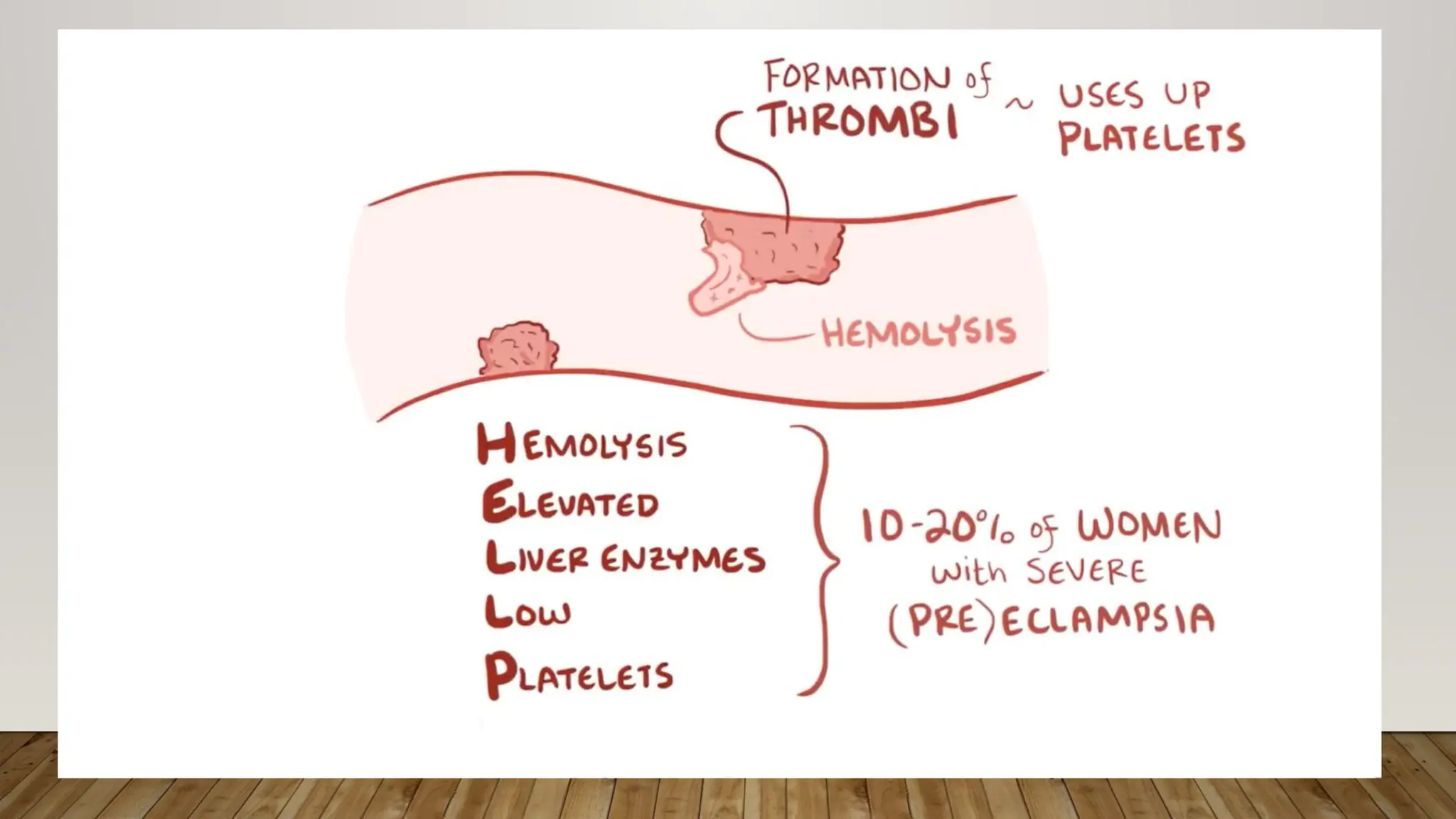
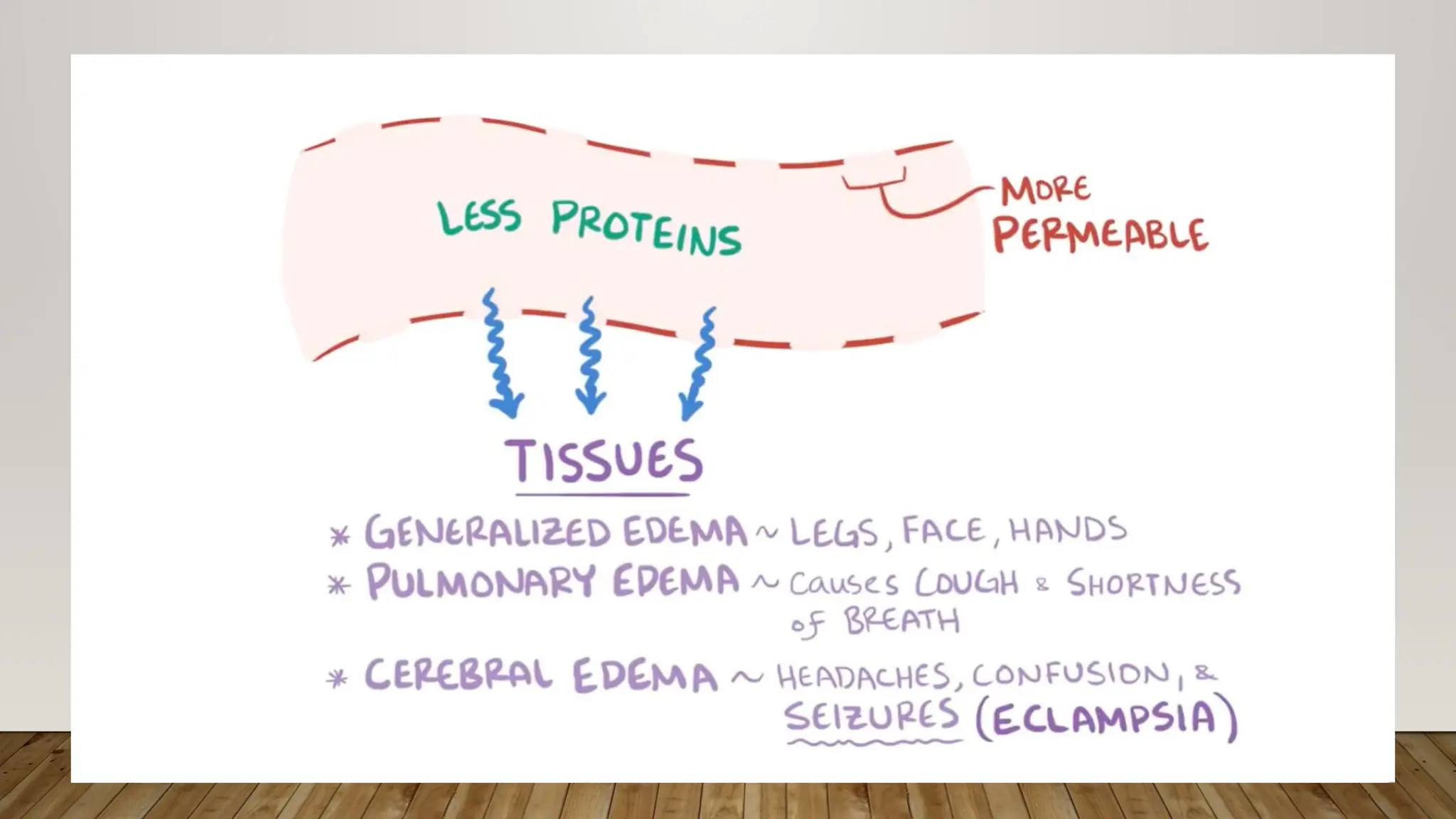
PATHOPYSIOLOGY
PREGNANCY INDUCED HYPERTENSION presentation.pptx

PREGNANCY INDUCED HYPERTENSION presentation.pptx

  • 1.
  • 2.
    WHAT IS HIGHBLOOD PRESSURE (HYPERTENSION)? Blood pressure is the force of blood pushing against blood vessel walls.The heart pumps blood into the arteries (blood vessels) that carry the blood throughout the body. High blood pressure, also called hypertension, means that the pressure in the arteries is above the normal range.
  • 3.
    WHO IS ATHIGHER RISK OF DEVELOPING HIGH BLOOD PRESSURE (HYPERTENSION) DURING PREGNANCY? • Is under age 20 or over age 40 • Has a history of chronic hypertension (high blood pressure before becoming pregnant) • Has had gestational hypertension or preeclampsia during past pregnancies • Has a family history of gestational hypertension • Has diabetes or gestational diabetes • Is overweight • Has an immune system disorder, such as lupus • Has kidney disease • Is expecting multiple babies • Had in vitro fertilization
  • 4.
    SIGNS AND SYMPTOMSOF PREGNANCY INDUCED HYPERTENSION • Blurry vision or double vision • Frequent and persistent headaches • Stomach and/or abdominal pain • Rapid weight gain • Nausea and/or vomiting • Fatigue • Swelling, typically of arms and face • Drastically lower urine output
  • 5.
    WHAT ISTHE DANGEROF HIGH BLOOD PRESSURE (HYPERTENSION) DURING PREGNANCY? • The lowered amount of blood to the placenta can lead to a low birth weight. • Seizures in the mother • Stroke • A cesarean delivery • Temporary kidney failure • Liver problems • Blood clotting problems • Placental abruption:The placenta pulls away from the wall of the uterus, causing distress to the baby and the bleeding in the mother • Premature (early) delivery of the baby
  • 6.
    HOW IS HIGHBLOOD PRESSURE (HYPERTENSION) DURING PREGNANCY TREATED? • High blood pressure (hypertension) during pregnancy can be treated in a variety of ways depending on the severity, cause and time of onset. Mothers with all forms of hypertension will need to be monitored closely.This could include more prenatal visits, ultrasounds, and other tests to ensure the baby’s well-being (monitoring of fetal heart rate or activity).
  • 7.
    WHAT STEPS CANI TAKE TO HAVE A SAFE DELIVERY WITH HIGH BLOOD PRESSURE (HYPERTENSION) DURING PREGNANCY? • Taking any blood pressure medication as prescribed • Going to all of your prenatal visits • Having an early delivery if it is needed • Maintaining a healthy diet (low-sodium foods are recommended) • Following your healthcare providers instructions regarding activity and exercise
  • 8.
    PREECLAMPSIA • Preeclampsia isa serious medical condition that can occur about midway through pregnancy (after 20 weeks). People with preeclampsia experience high blood pressure, protein in their urine, swelling, headaches and blurred vision.This condition needs to be treated by a healthcare provider. It typically goes away after your baby is delivered.
  • 9.
    WHAT IS PREECLAMPSIA? •Preeclampsia is a serious blood pressure condition that develops during pregnancy. People with preeclampsia often have high blood pressure (hypertension) and high levels of protein in their urine (proteinuria). Preeclampsia typically develops after the 20th week of pregnancy. It can also affect other organs in the body and be dangerous for both the mom and her developing fetus (unborn baby). Because of these risks, preeclampsia needs to be treated by a healthcare provider.
  • 10.
    WHAT HAPPENS WHENYOUHAVE PREECLAMPSIA? • When you have preeclampsia, your blood pressure is elevated (higher than 140/90 mmHg), and you may have high levels of protein in your urine. Preeclampsia puts stress on your heart and other organs and can cause serious complications. It can also affect the blood supply to your placenta, impair liver and kidney function or cause fluid to build up in your lungs.The protein in your urine is a sign of kidney dysfunction.
  • 11.
    WHO GETS PREECLAMPSIA? •Preeclampsia may be more common in first-time mothers. Healthcare providers are not entirely sure why some people develop preeclampsia. Some factors that may put you at a higher risk are: • History of high blood pressure, kidney disease or diabetes. • Expecting multiples. • Family history of preeclampsia. • Autoimmune conditions like lupus. • Obesity.
  • 12.
    WHAT ARE THESYMPTOMS?
  • 13.
    PREVENTION HOW TO REDUCERISK OF GETTING PREECLAMPSIA? • Losing weight if you have overweight/obesity (prior to pregnancy-related weight gain). • Controlling your blood pressure and blood sugar (if you had high blood pressure or diabetes prior to pregnancy). • Maintaining a regular exercise routine. • Getting enough sleep. • Eating healthy foods that are low in salt and avoiding caffeine.
  • 14.
  • 15.
    WHAT IS ECLAMPSIA? •Pre-eclampsia is a disorder that pregnant women experience in which blood pressure of the patient increases a lot and urine contains protein. There may also be some other organ dysfunction as well. Eclampsia is basically the most critical condition of pre-eclampsia where the women start having seizures.These seizures caused in eclampsia usually last about a minute and the person experiences confusion after the episode is over and may even go into a coma. Eclampsia is included under the hypertensive disorders of pregnancy.
  • 16.
    SYMPTOMS OF ECLAMPSIA •hypertension that is an increase in the blood pressure before the onset of convulsions that signals eclampsia. • Proteinuria. • Convulsions or seizure • nausea, vomiting, headaches and even cortical blindness due to brain damage. • Multi-organ failure may also occur after the seizure caused by eclampsia which may result into new symptoms such pain in the abdomen, jaundice, decreased urination and panting or shortness of breath. • retardation of intrauterine growth of the fetus which means retarded growth of the baby in the womb. • can also lead to fetal distress and a decreased heart rate of the fetus as well • pulmonary edema which means fluid accumulation in the lungs • Placental abruption • Agitation, muscle pains and headaches
  • 18.
    RISK FACTORS OFECLAMPSIA • Young mothers who are less than 20 years of age and women getting pregnant for the first time are more prone to get eclampsia. • Hypertension is another risk factor of eclampsia. • Women suffering from kidney disease or diabetes • Having a large placenta is also a risk factor of eclampsia.This may happen because of multiple gestation or some other reason. • Women with family history of the condition are at a higher risk of getting eclampsia. • Also women who are above 35 years of age are also at more risk of getting eclampsia. • If a woman is pregnant with twins • A history of poor diet and nutrition
  • 19.
    DIAGNOSIS OF ECLAMPSIA BloodTests • There are many blood tests that a doctor can ask his patients to get but the most common one that doctors prescribe is hematocrit which measures the number of red blood cells as well as platelets. Platelets help the doctors to determine whether the blood is clotting properly or not.They help in determining whether the woman is suffering from pre-eclampsia or eclampsia and also help in evaluating kidney and liver functions as well. Creatinine Tests • An excess of creatinine in the blood may means pre-eclampsia or eclampsia even though it may be due to some other reason. Creatinine is a waste product of muscles which gets excreted out of the body through kidneys. If the kidneys get damaged, creatinine starts building up in the body due to its insufficient excretion which may indicate eclampsia. Urine Tests • The doctor may also ask you to get your urine tested to see whether it contains proteins or not.This may help the doctor in evaluating the presence or risk of eclampsia.
  • 20.
    TREATMENTS FOR ECLAMPSIA IfThe Baby Has Matured • If you are close to your term that is 37th week or after and your baby has matured enough, the doctor may decide to perform a C-section or to induce labor (whichever is preferable) and deliver your baby.This will cure your eclampsia effectively. If The Baby Is Not Mature Enough • If your baby is not matured enough to deliver safely, your doctor may prescribe some medications until it has grown enough to be safely delivered if you are suffering from eclampsia.The more mature your baby and closer to your due date, the safer it is for both you and your baby. If this is the case, then some measures need to be taken, which are as follows: • Medications • If the pregnant women has eclampsia and is suffering from convulsions and seizures, she may be given anticonvulsants to cure her of that. Doctors may also prescribe her some low dosages aspirin. Other than that doctors may also prescribe some blood pressure lowering medications to control hypertension.
  • 21.
    TREATMENTS FOR ECLAMPSIA •Eat a healthy and balanced diet with all the nutrients that your body requires. • You need to be proactive and have frequent check-ups as well as monitoring of the baby. • Get plenty of rest. • Avoid stress, tension and anxiety. • Take all your medications exactly as the doctor asked. • If you feel any discomfort or change in your condition, contact your doctor as soon as possible.
  • 22.