Prefixes and Suffixes
Prefixes
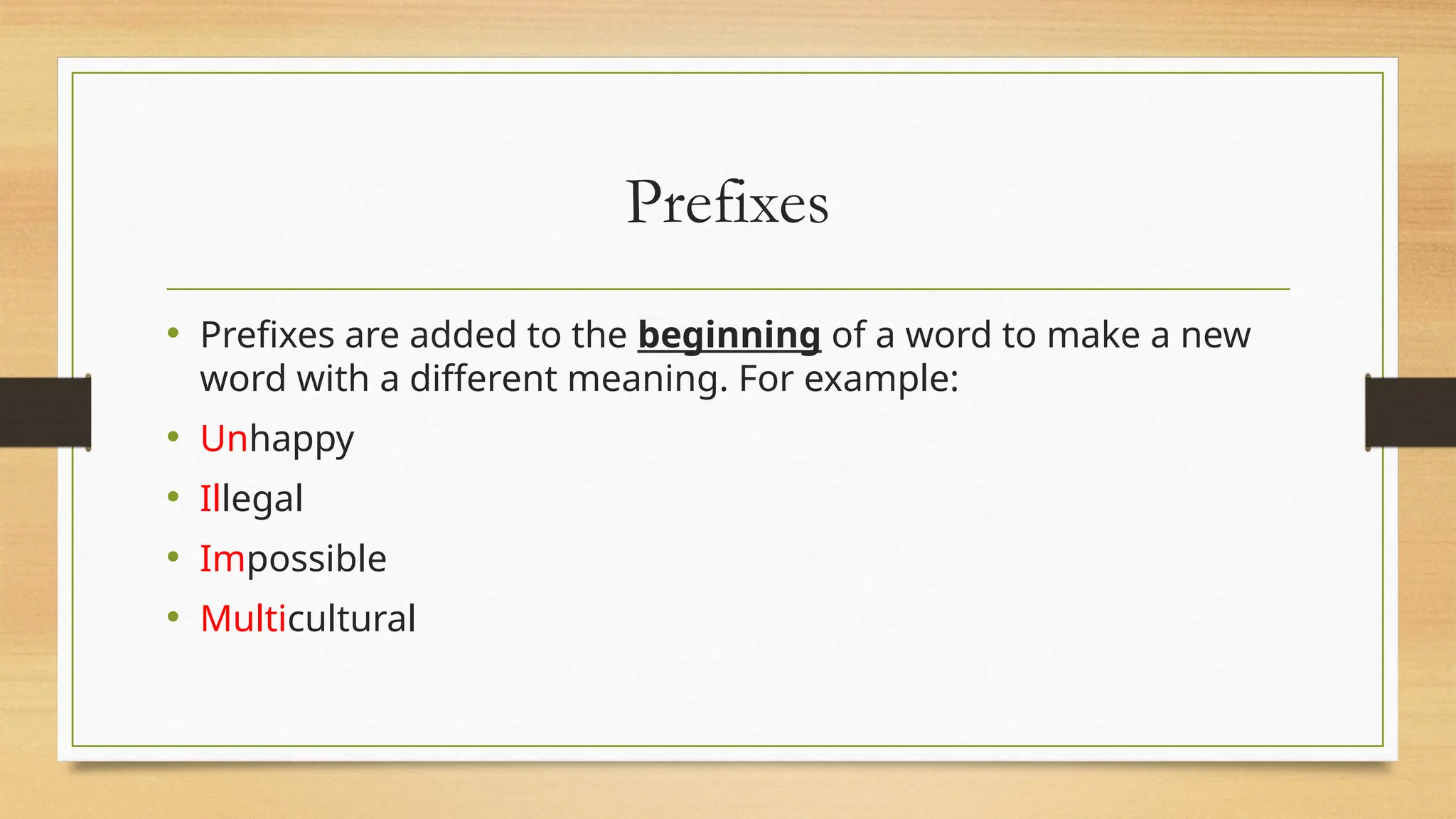
• Prefixes are added to the beginning of a word to make a new
word with a different meaning. For example:
• Unhappy
• Illegal
• Impossible
• Multicultural
Suffixes
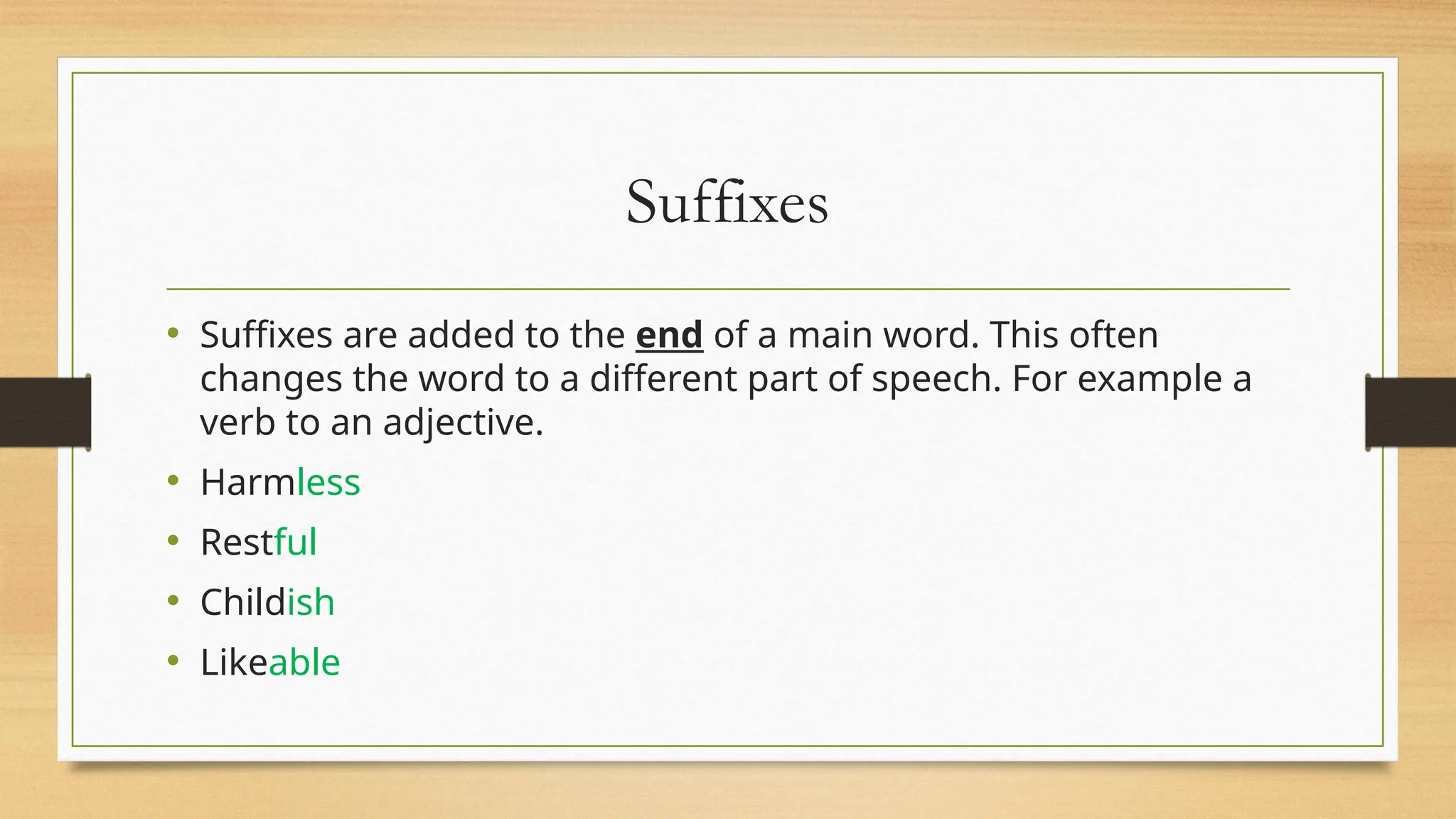
• Suffixes are added to the end of a main word. This often
changes the word to a different part of speech. For example a
verb to an adjective.
• Harmless
• Restful
• Childish
• Likeable
• Some suffixes and prefixes are part of our living language in
that people regularly use them to create new words for modern
products, concepts or situations.
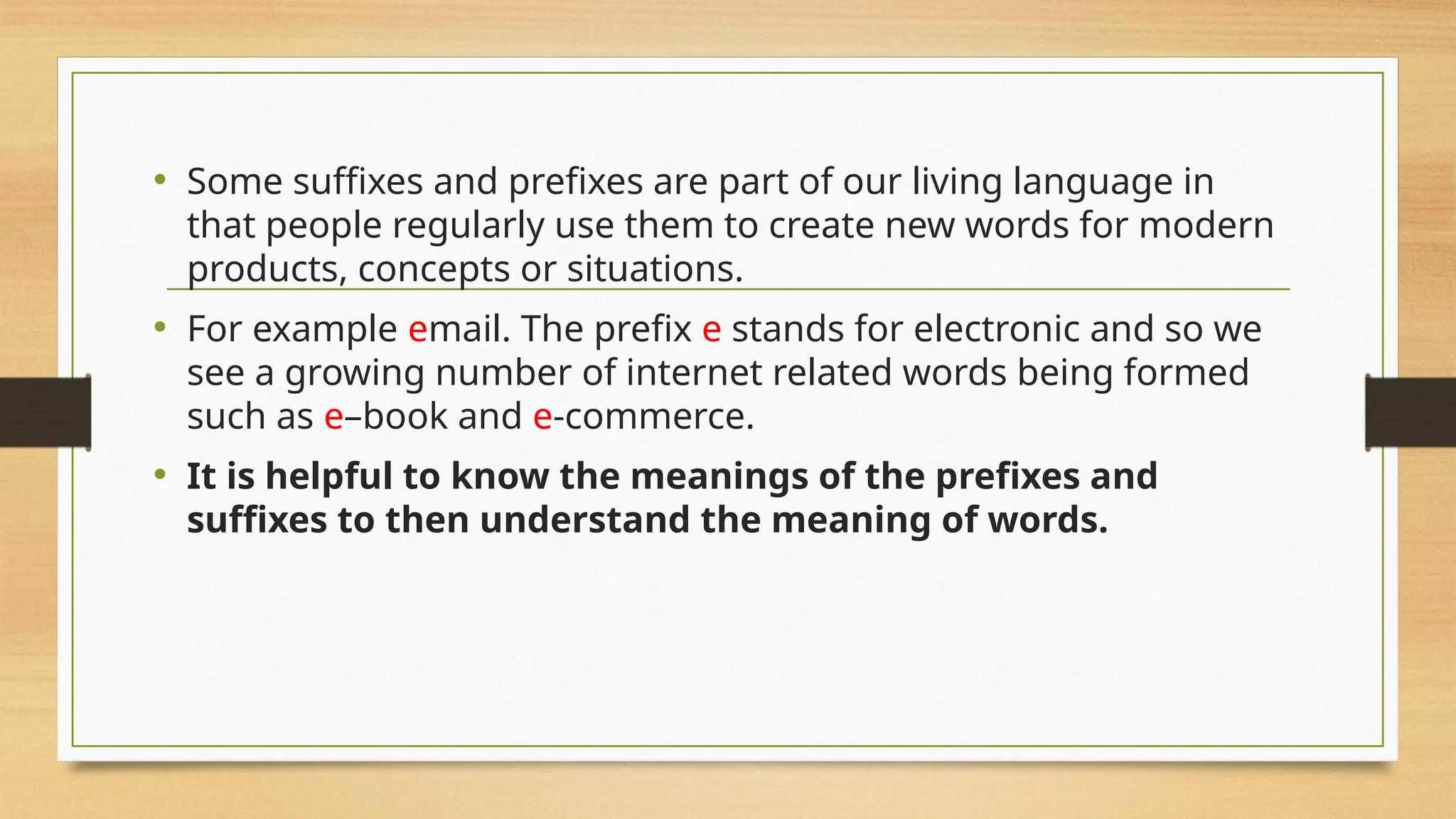
• For example email. The prefix e stands for electronic and so we
see a growing number of internet related words being formed
such as e–book and e-commerce.
• It is helpful to know the meanings of the prefixes and
suffixes to then understand the meaning of words.
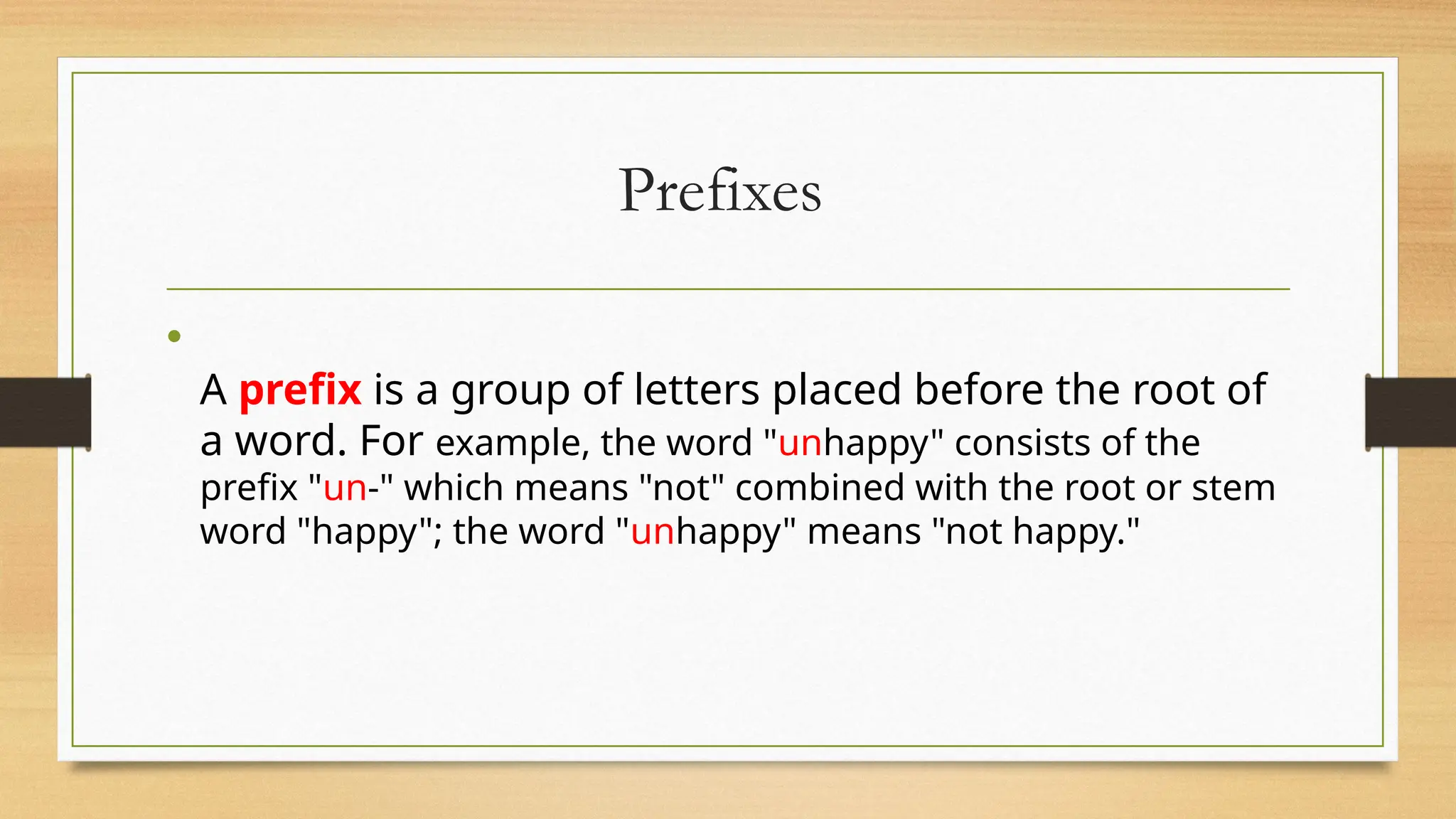
Prefixes
•
A prefix is a group of letters placed before the root of
a word. For example, the word "unhappy" consists of the
prefix "un-" which means "not" combined with the root or stem
word "happy"; the word "unhappy" means "not happy."
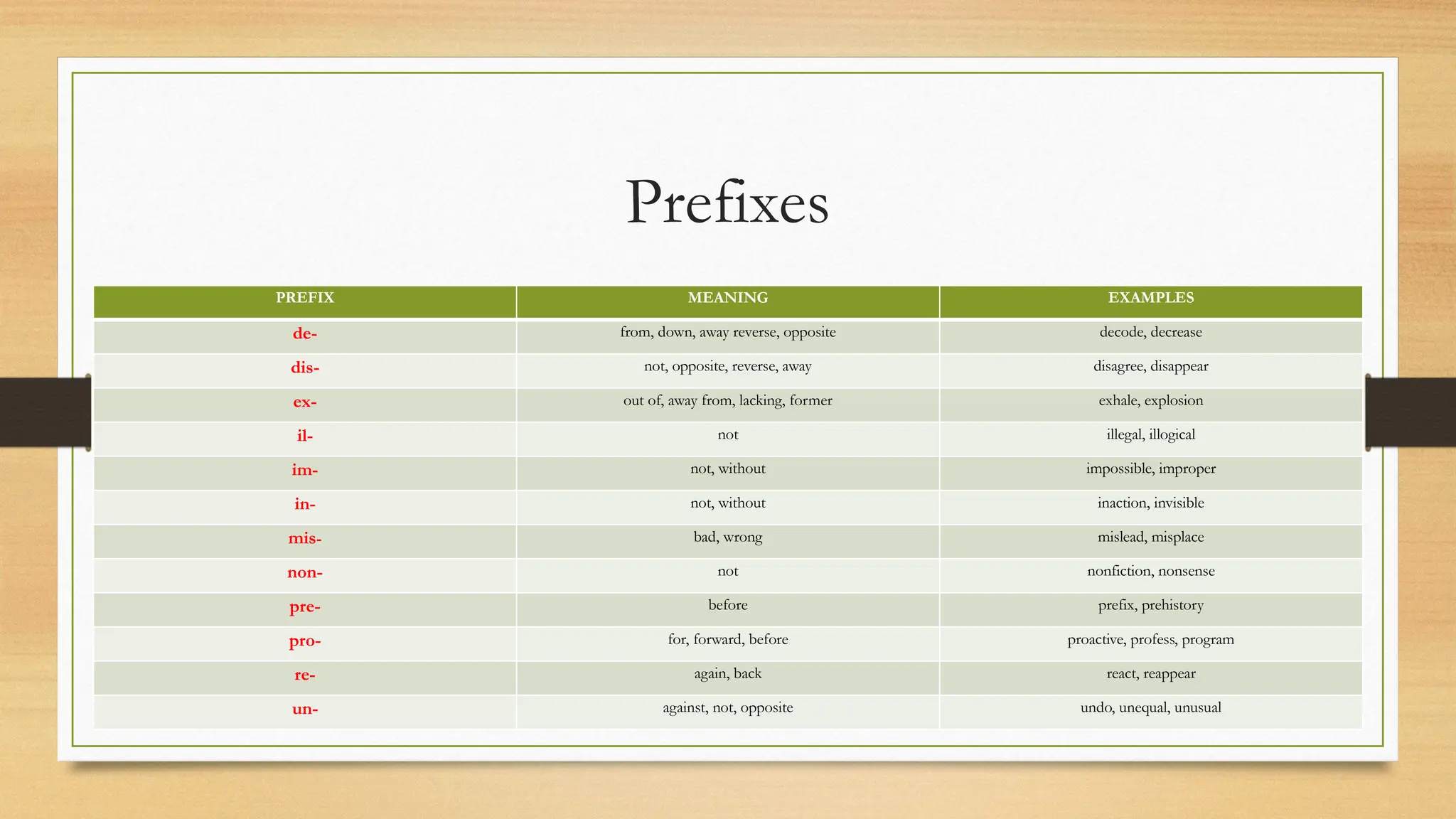
Prefixes
PREFIX MEANING EXAMPLES
de- from, down, away reverse, opposite decode, decrease
dis- not, opposite, reverse, away disagree, disappear
ex- out of, away from, lacking, former exhale, explosion
il- not illegal, illogical
im- not, without impossible, improper
in- not, without inaction, invisible
mis- bad, wrong mislead, misplace
non- not nonfiction, nonsense
pre- before prefix, prehistory
pro- for, forward, before proactive, profess, program
re- again, back react, reappear
un- against, not, opposite undo, unequal, unusual
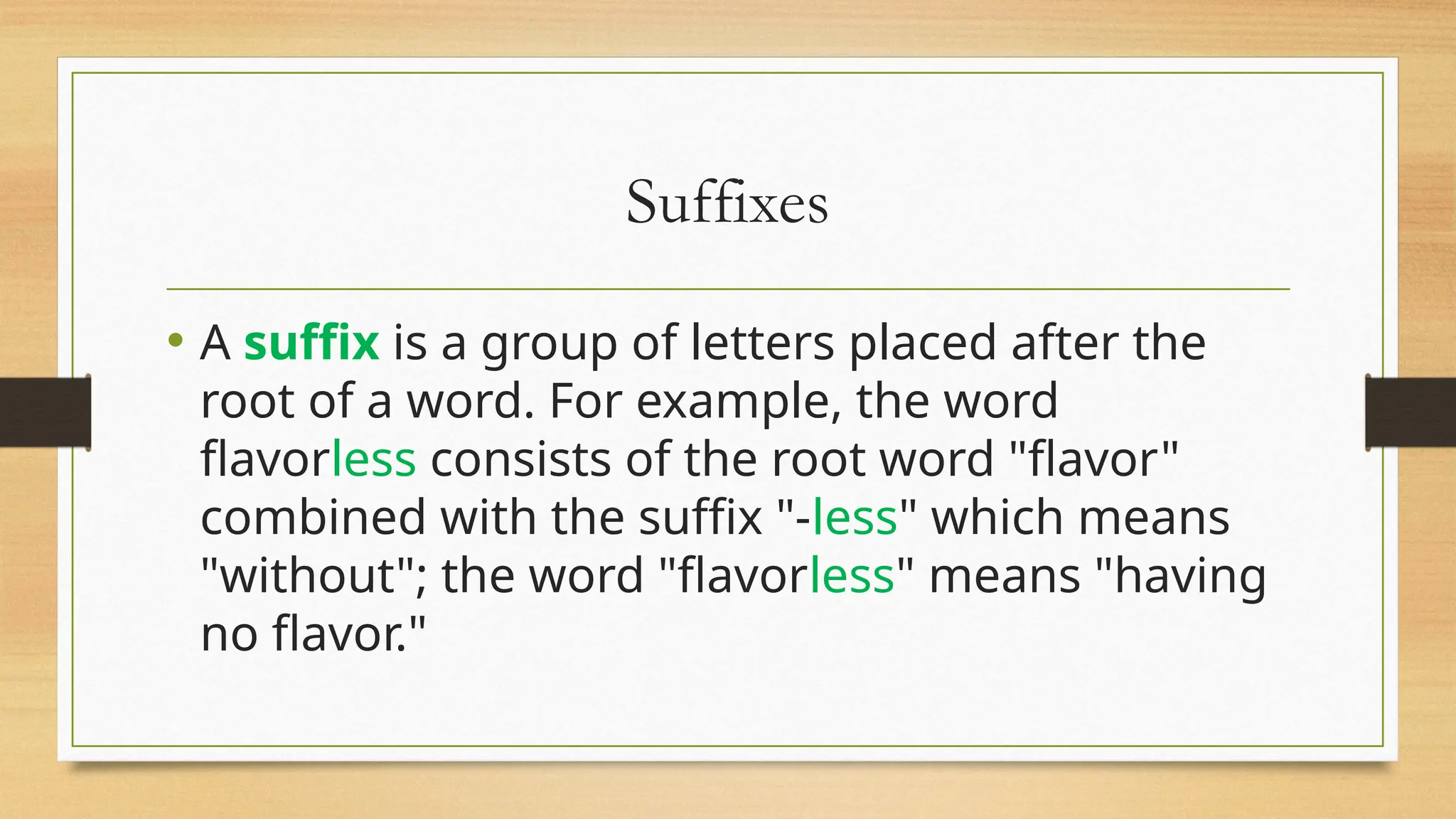
Suffixes
• A suffix is a group of letters placed after the
root of a word. For example, the word
flavorless consists of the root word "flavor"
combined with the suffix "-less" which means
"without"; the word "flavorless" means "having
no flavor."
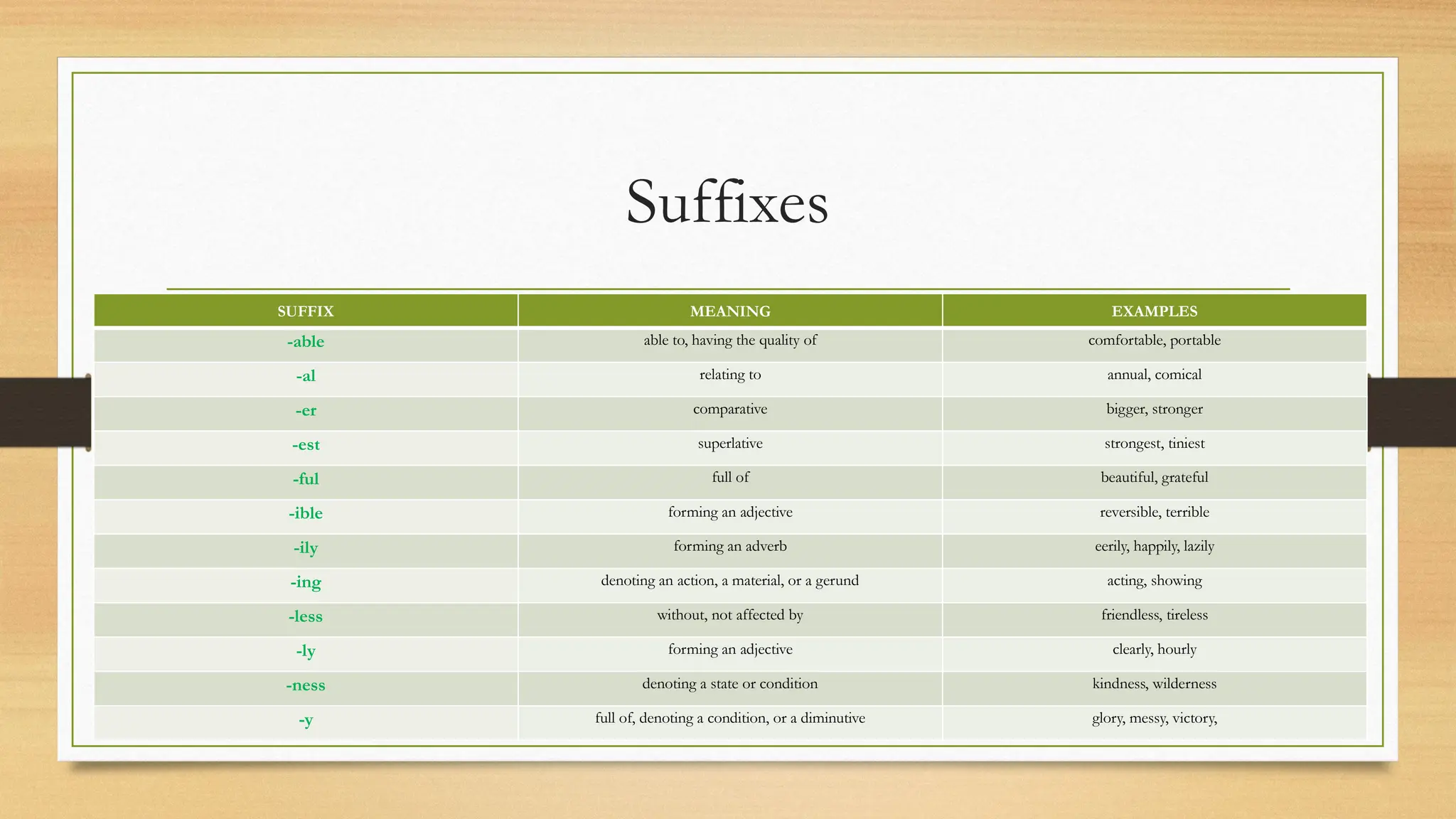
Suffixes
SUFFIX MEANING EXAMPLES
-able able to, having the quality of comfortable, portable
-al relating to annual, comical
-er comparative bigger, stronger
-est superlative strongest, tiniest
-ful full of beautiful, grateful
-ible forming an adjective reversible, terrible
-ily forming an adverb eerily, happily, lazily
-ing denoting an action, a material, or a gerund acting, showing
-less without, not affected by friendless, tireless
-ly forming an adjective clearly, hourly
-ness denoting a state or condition kindness, wilderness
-y full of, denoting a condition, or a diminutive glory, messy, victory,
• Remember that these lists of prefixes and suffixes do not cover
all suffixes and prefixes. There are many others.
• Have a play with words and see what words you can come up
with!

Prefixes and suffixes.pptx prefixes and sufixxes prefixes ans

  • 1.
  • 2.
    Prefixes • Prefixes areadded to the beginning of a word to make a new word with a different meaning. For example: • Unhappy • Illegal • Impossible • Multicultural
  • 3.
    Suffixes • Suffixes areadded to the end of a main word. This often changes the word to a different part of speech. For example a verb to an adjective. • Harmless • Restful • Childish • Likeable
  • 4.
    • Some suffixesand prefixes are part of our living language in that people regularly use them to create new words for modern products, concepts or situations. • For example email. The prefix e stands for electronic and so we see a growing number of internet related words being formed such as e–book and e-commerce. • It is helpful to know the meanings of the prefixes and suffixes to then understand the meaning of words.
  • 5.
    Prefixes • A prefix isa group of letters placed before the root of a word. For example, the word "unhappy" consists of the prefix "un-" which means "not" combined with the root or stem word "happy"; the word "unhappy" means "not happy."
  • 6.
    Prefixes PREFIX MEANING EXAMPLES de-from, down, away reverse, opposite decode, decrease dis- not, opposite, reverse, away disagree, disappear ex- out of, away from, lacking, former exhale, explosion il- not illegal, illogical im- not, without impossible, improper in- not, without inaction, invisible mis- bad, wrong mislead, misplace non- not nonfiction, nonsense pre- before prefix, prehistory pro- for, forward, before proactive, profess, program re- again, back react, reappear un- against, not, opposite undo, unequal, unusual
  • 7.
    Suffixes • A suffixis a group of letters placed after the root of a word. For example, the word flavorless consists of the root word "flavor" combined with the suffix "-less" which means "without"; the word "flavorless" means "having no flavor."
  • 8.
    Suffixes SUFFIX MEANING EXAMPLES -ableable to, having the quality of comfortable, portable -al relating to annual, comical -er comparative bigger, stronger -est superlative strongest, tiniest -ful full of beautiful, grateful -ible forming an adjective reversible, terrible -ily forming an adverb eerily, happily, lazily -ing denoting an action, a material, or a gerund acting, showing -less without, not affected by friendless, tireless -ly forming an adjective clearly, hourly -ness denoting a state or condition kindness, wilderness -y full of, denoting a condition, or a diminutive glory, messy, victory,
  • 9.
    • Remember thatthese lists of prefixes and suffixes do not cover all suffixes and prefixes. There are many others. • Have a play with words and see what words you can come up with!