LEARNING OBJECTIVES:
At the end of the lesson the students are
able to:
a. Identify the referee hand signals in
volleyball;
b. Perform the referee hand signals in
volleyball;
c. Appreciate the importance of referee
hand signal in volleyball.
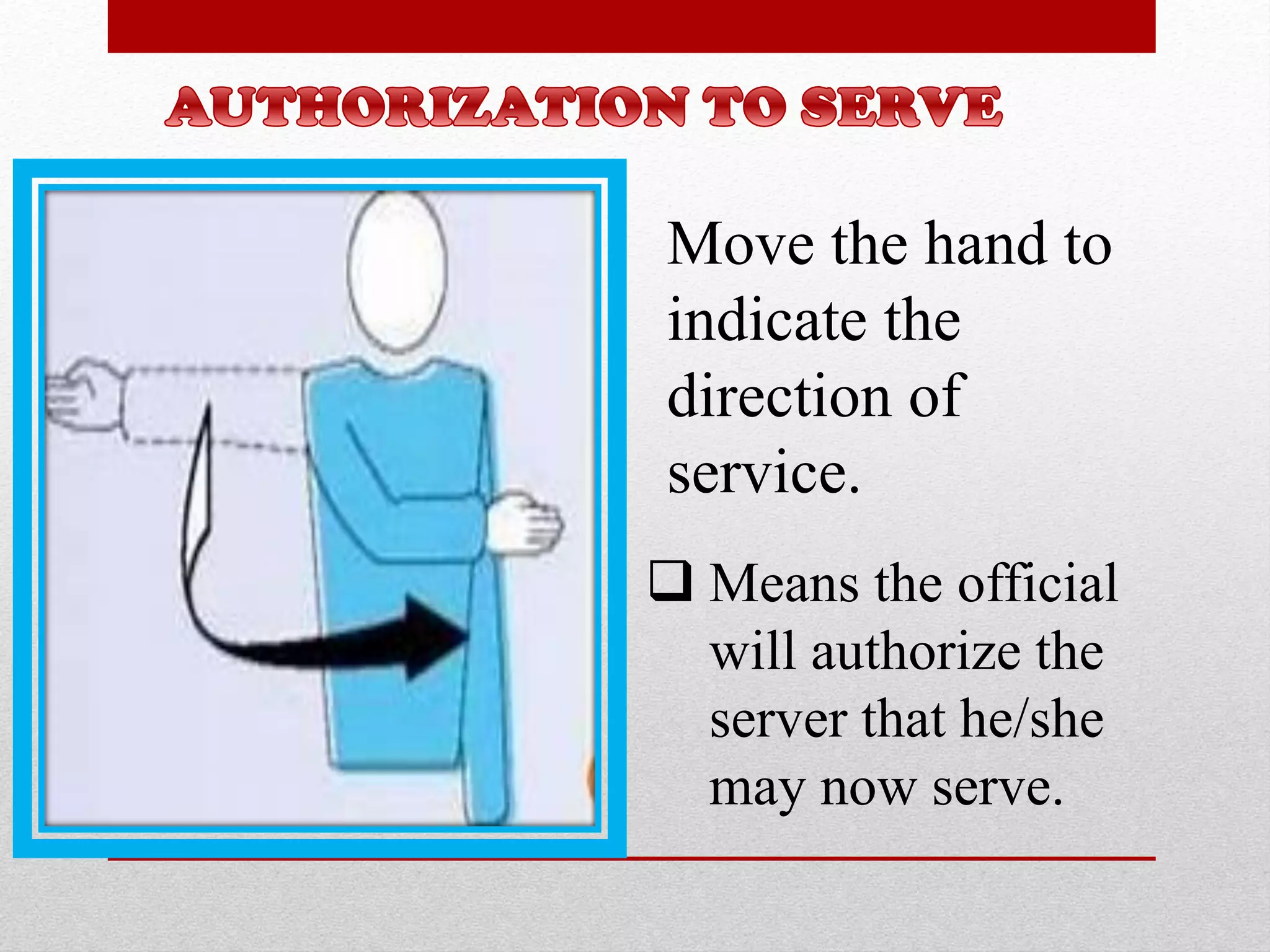
Move the hand to
indicate the
direction of
service.
 Means the official
will authorize the
server that he/she
may now serve.
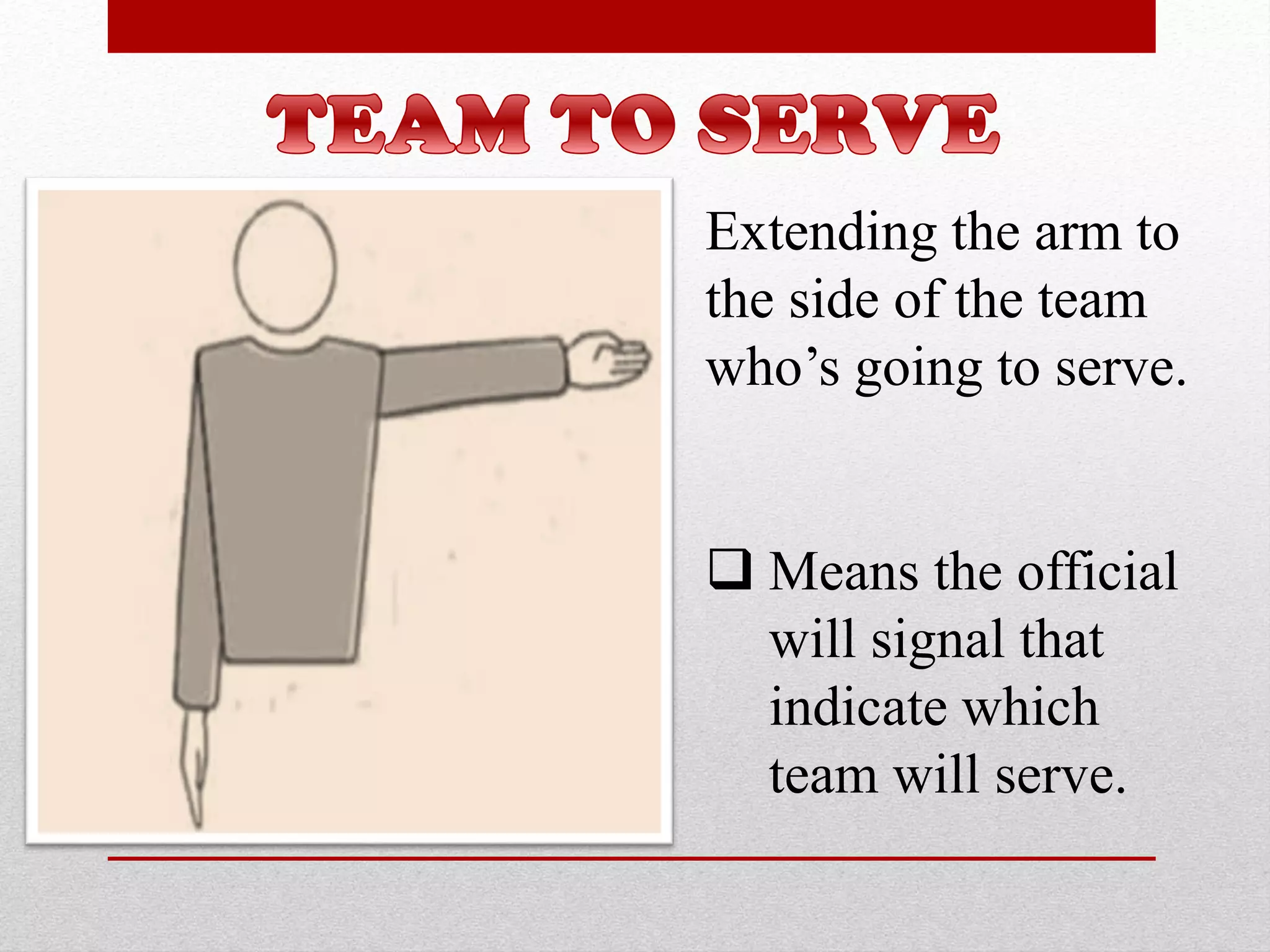
Extending the arm to
the side of the team
who’s going to serve.
 Means the official
will signal that
indicate which
team will serve.
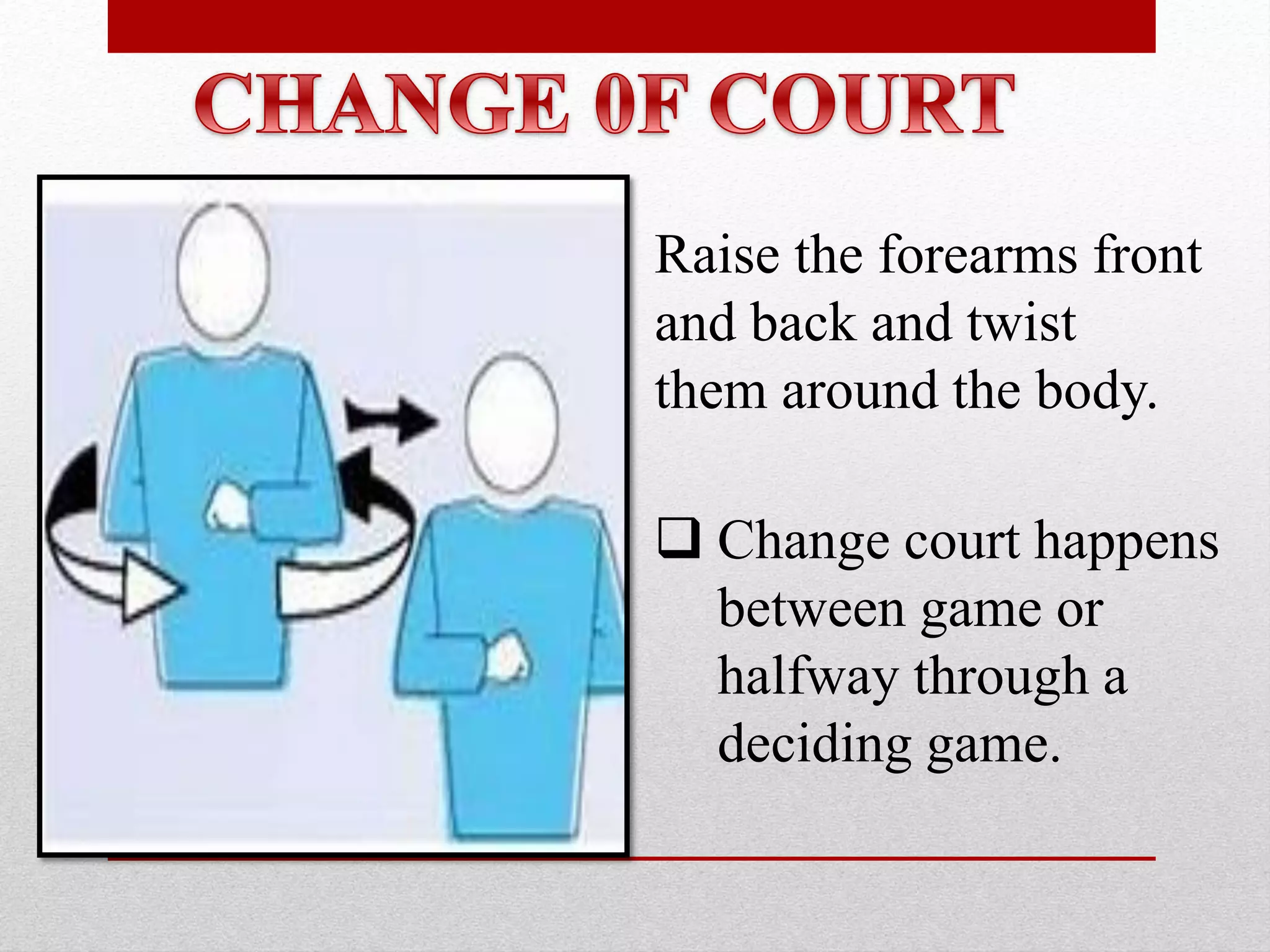
Raise the forearms front
and back and twist
them around the body.
 Change court happens
between game or
halfway through a
deciding game.
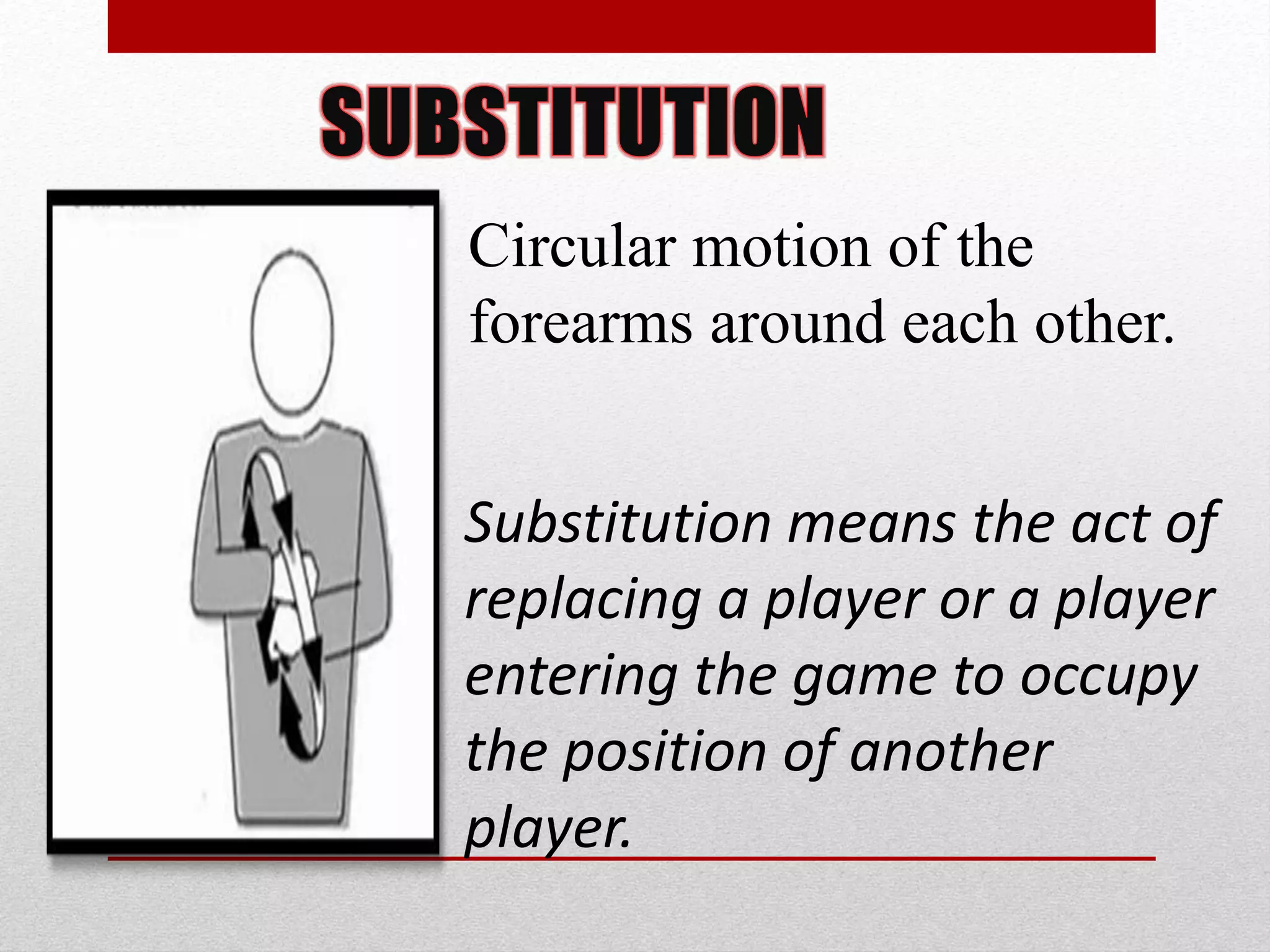
Circular motion of the
forearms around each other.
Substitution means the act of
replacing a player or a player
entering the game to occupy
the position of another
player.
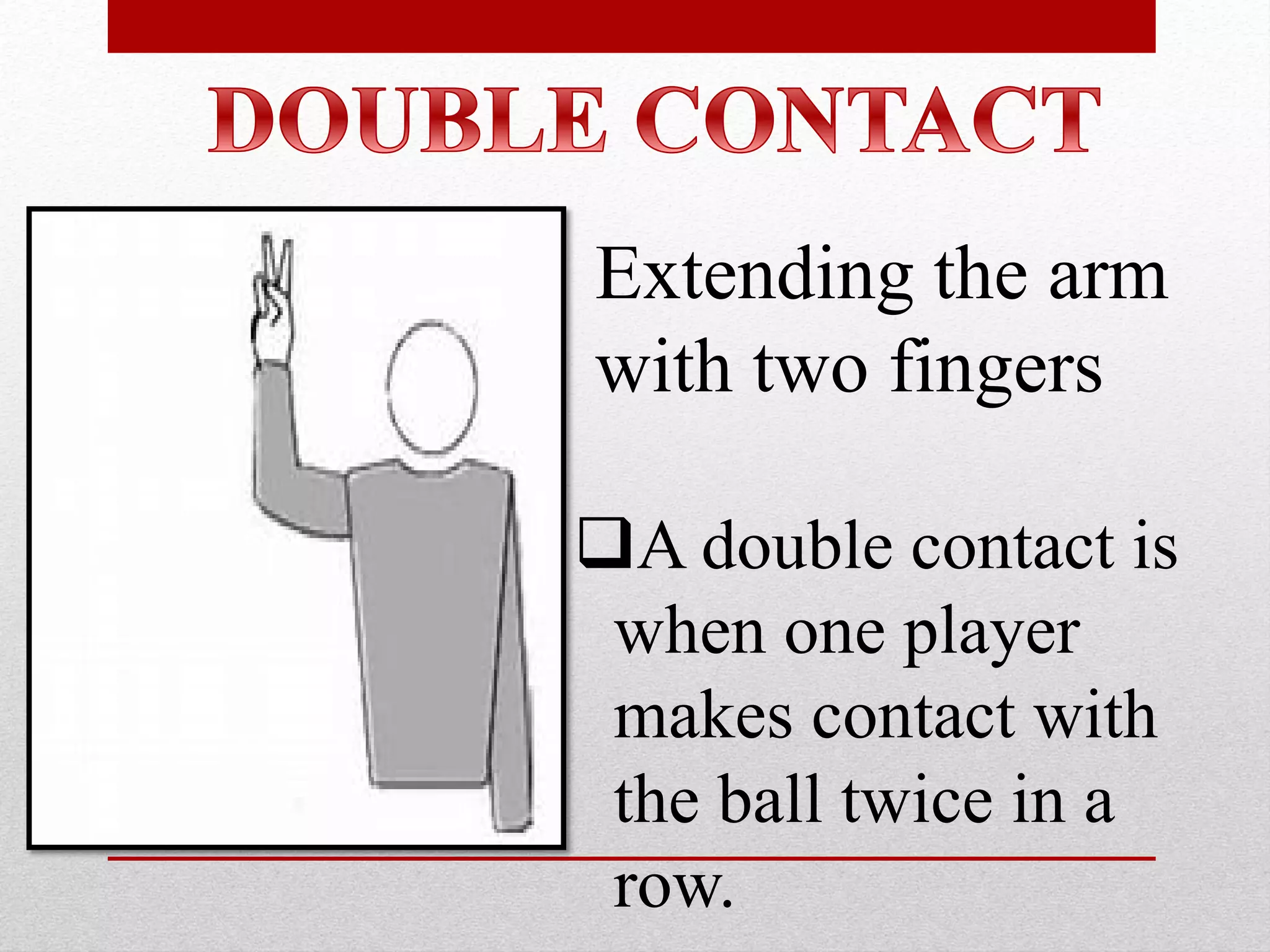
A double contact is
when one player
makes contact with
the ball twice in a
row.
Extending the arm
with two fingers
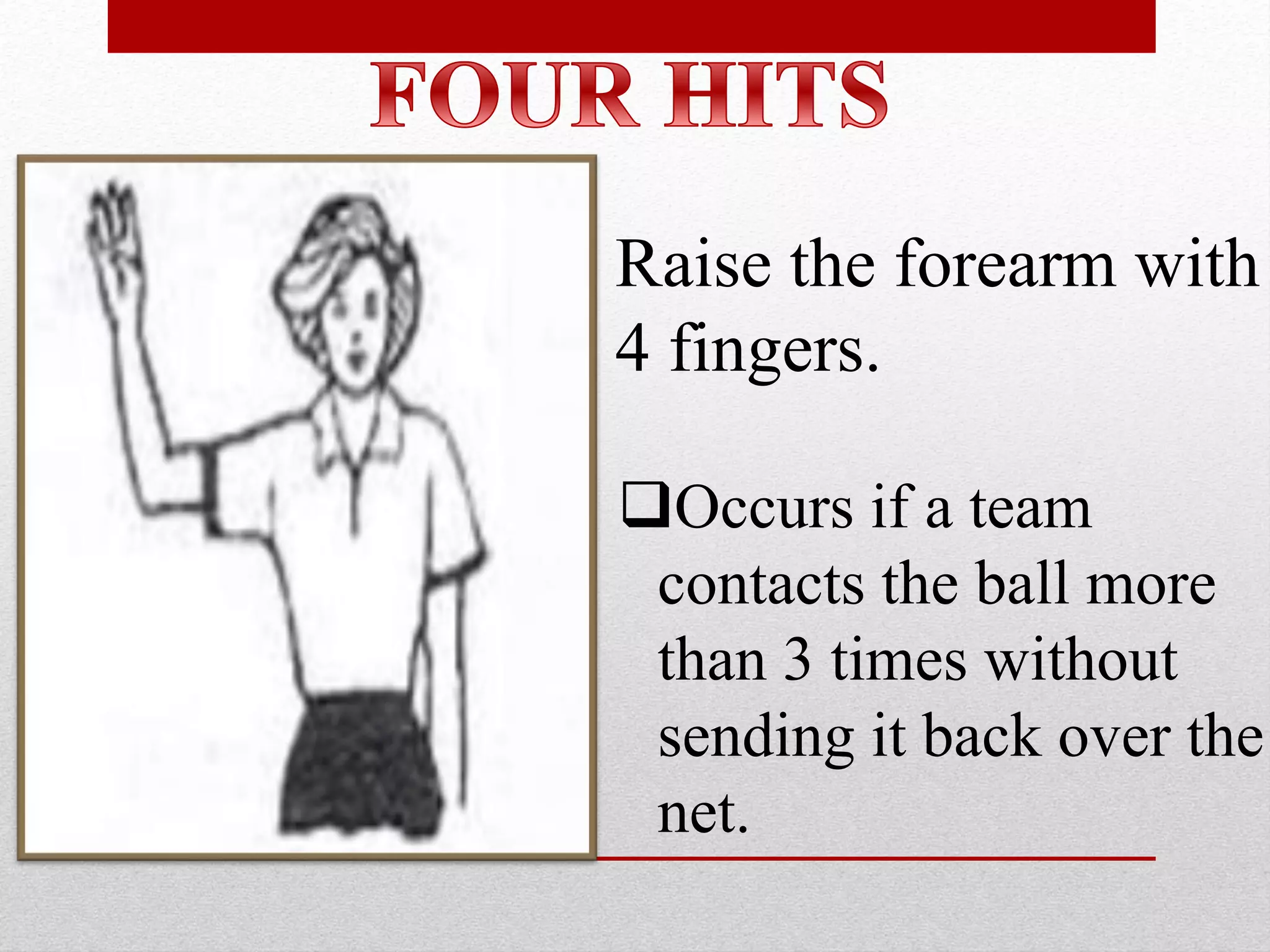
Raise the forearm with
4 fingers.
Occurs if a team
contacts the ball more
than 3 times without
sending it back over the
net.
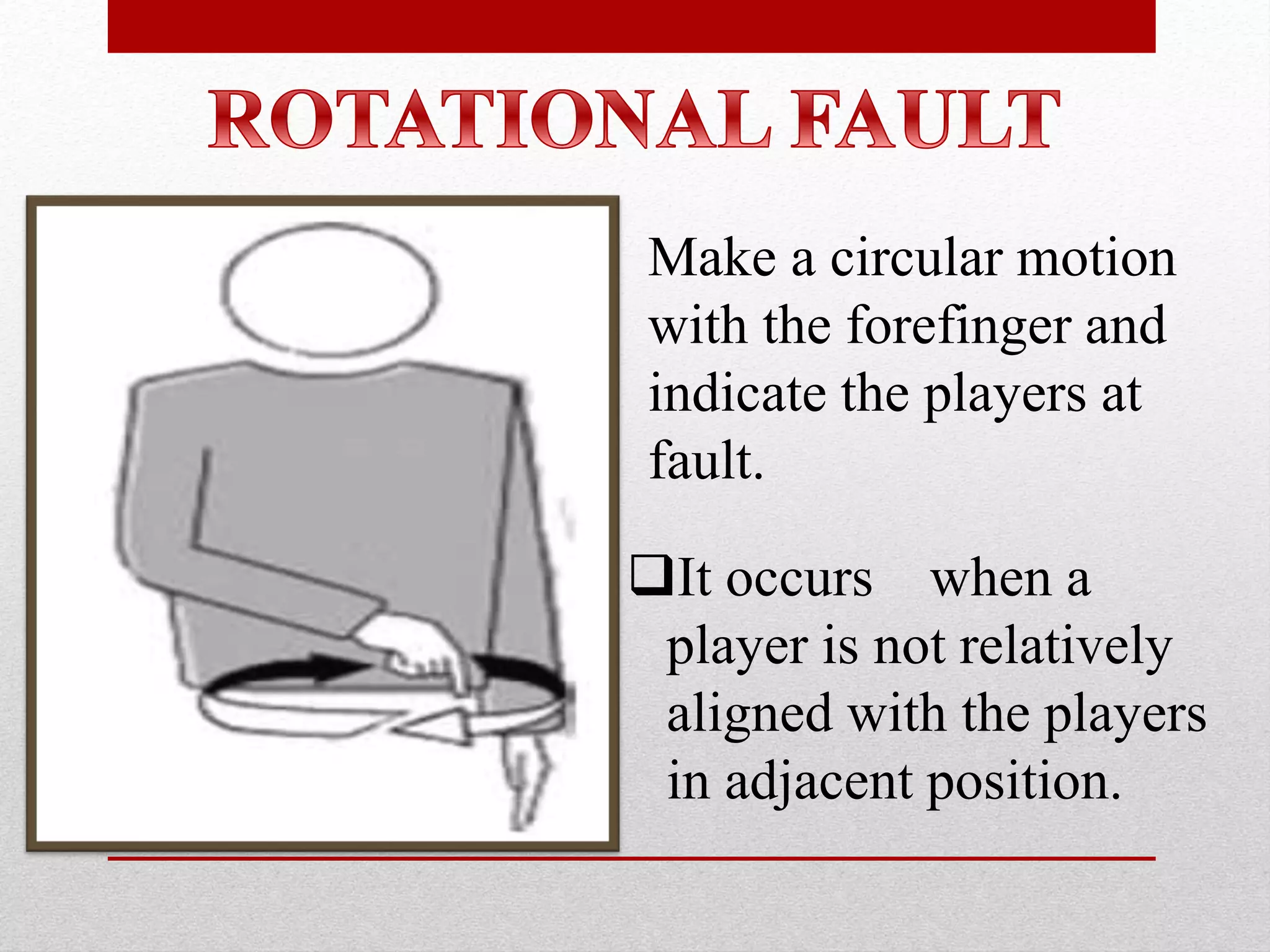
Make a circular motion
with the forefinger and
indicate the players at
fault.
It occurs when a
player is not relatively
aligned with the players
in adjacent position.
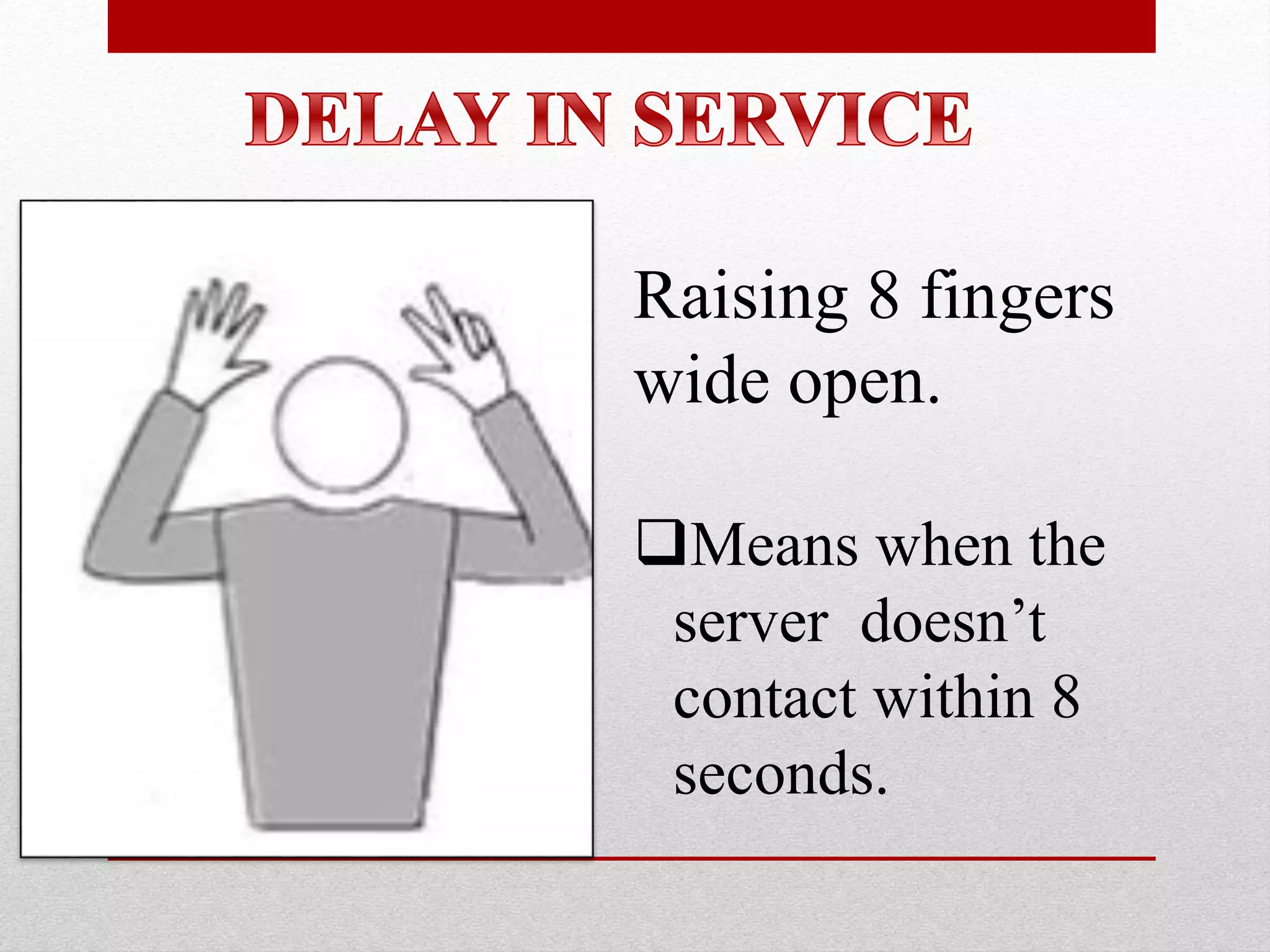
Raising 8 fingers
wide open.
Means when the
server doesn’t
contact within 8
seconds.
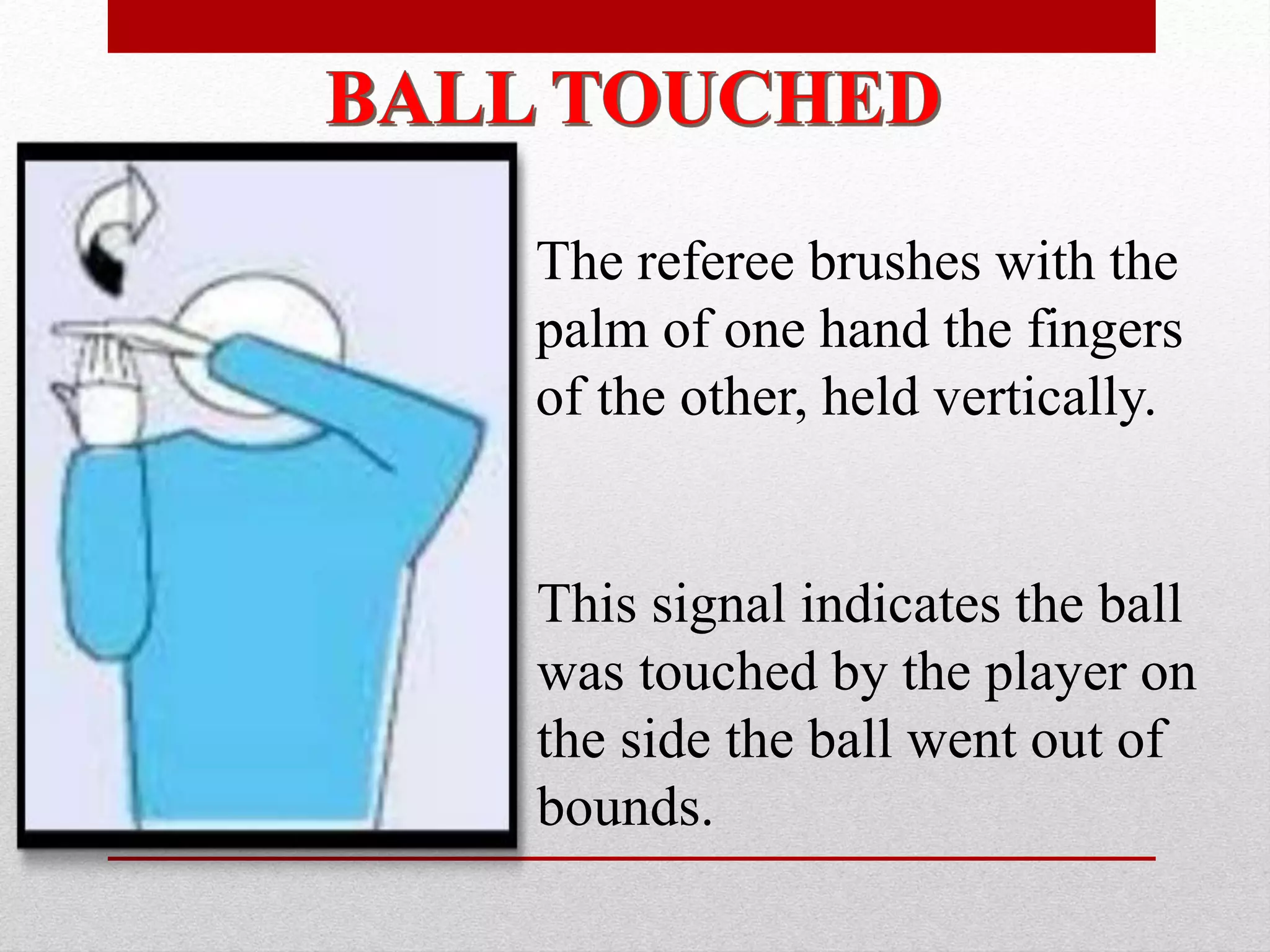
The referee brushes with the
palm of one hand the fingers
of the other, held vertically.
This signal indicates the ball
was touched by the player on
the side the ball went out of
bounds.
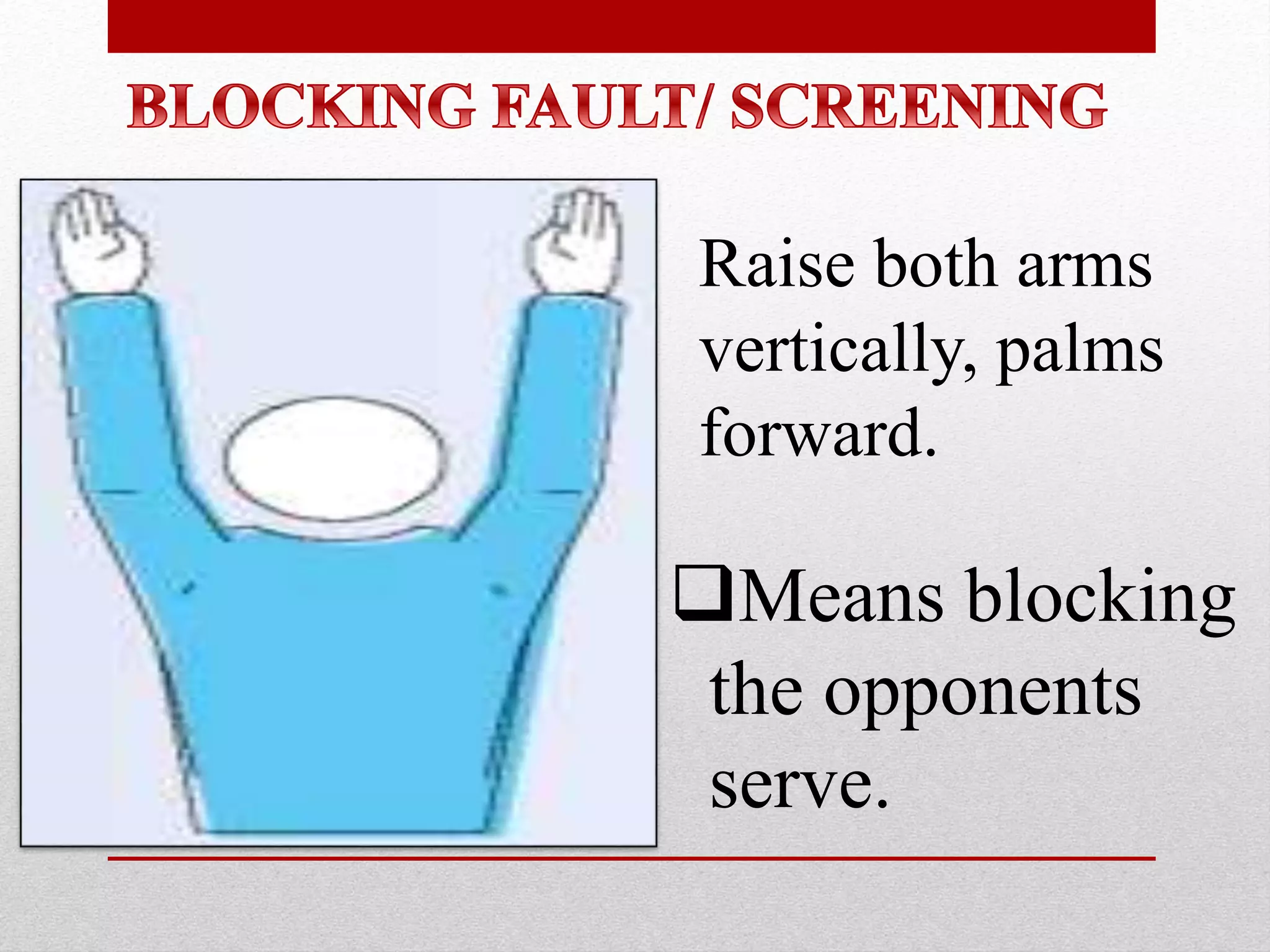
Raise both arms
vertically, palms
forward.
Means blocking
the opponents
serve.
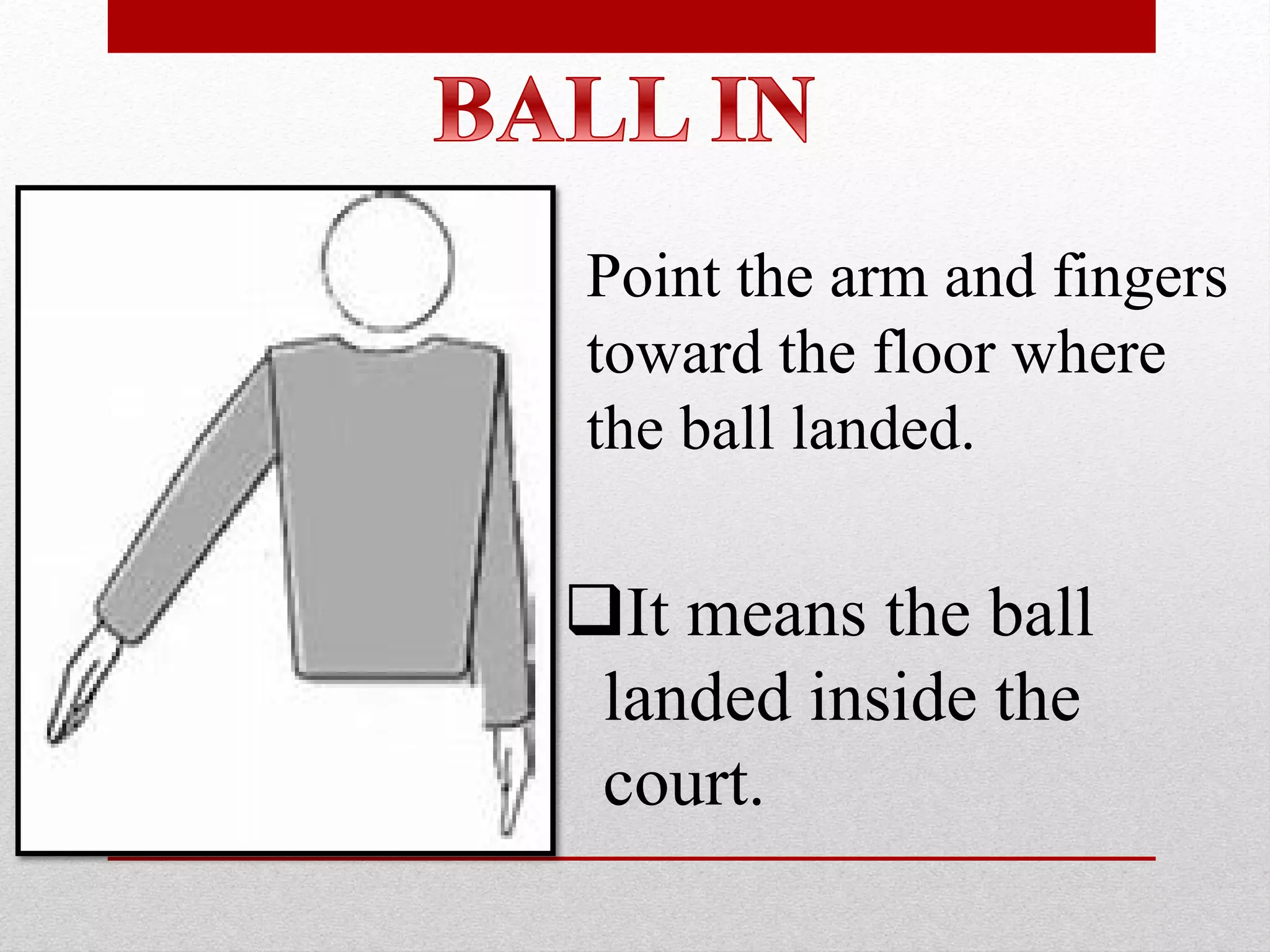
Point the arm and fingers
toward the floor where
the ball landed.
It means the ball
landed inside the
court.
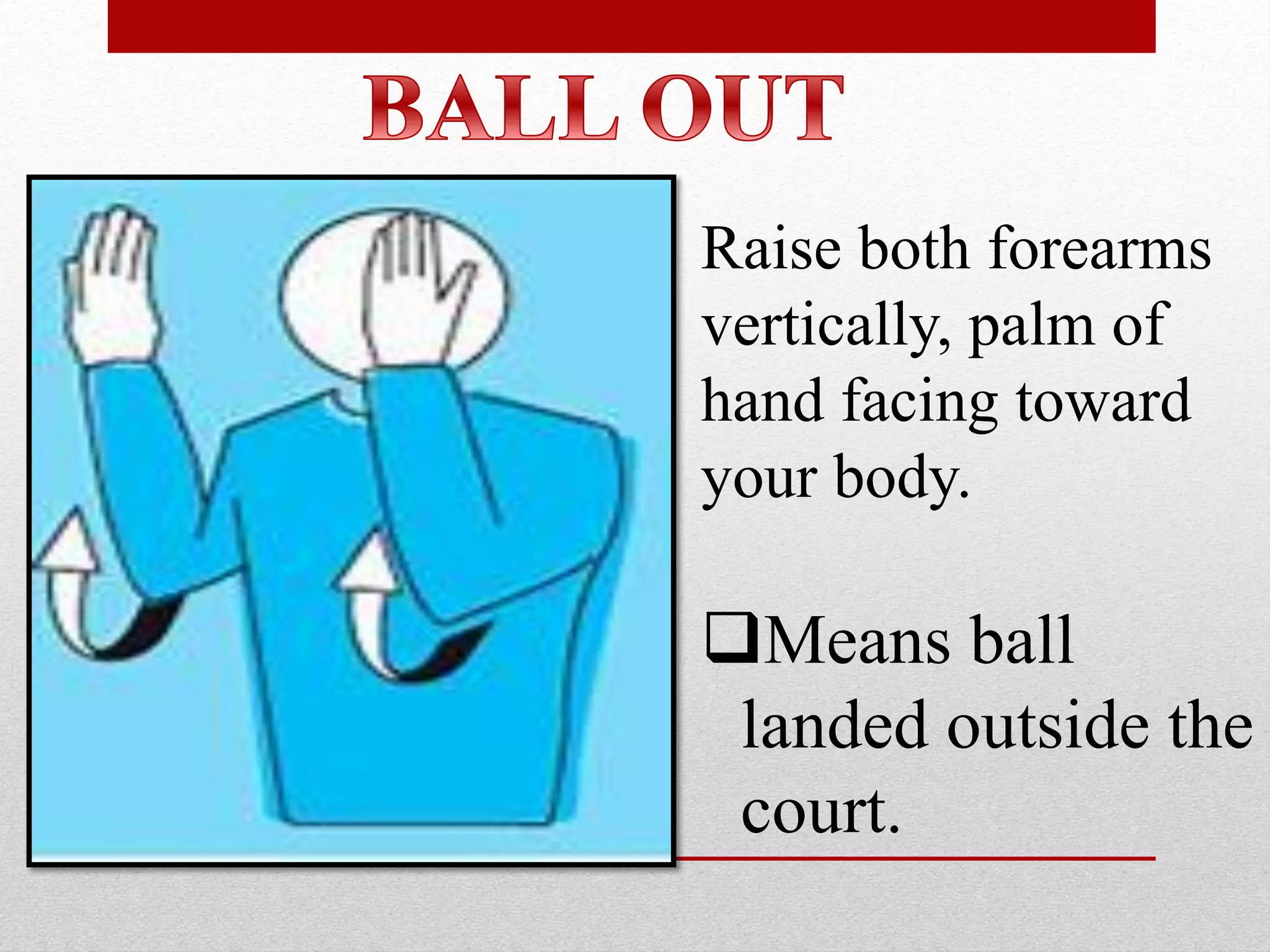
Raise both forearms
vertically, palm of
hand facing toward
your body.
Means ball
landed outside the
court.
Showing yellow
card for penalty.
Cause by
unsportsmanlike conduct
or showing bad attitude
inside the court.
Showing Yellow and
Red card
Repeated rude conduct
or offensive conduct.
 The player will leave
the game and shall play
the rest of the game.
Show Red and Yellow
cards separately.
The player must leave the
playing area and his/her team
is declared incomplete for the
match.
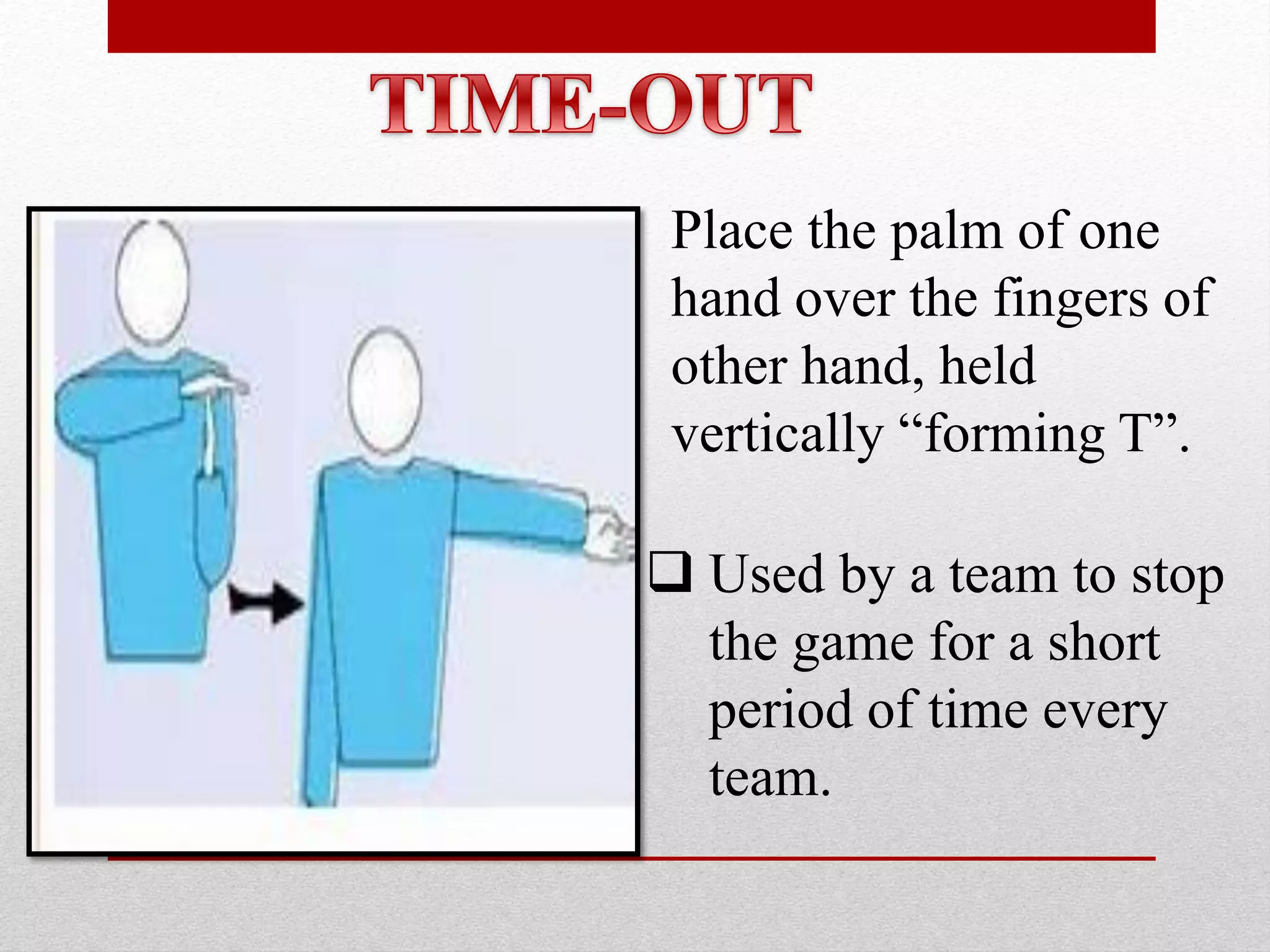
Place the palm of one
hand over the fingers of
other hand, held
vertically “forming T”.
 Used by a team to stop
the game for a short
period of time every
team.
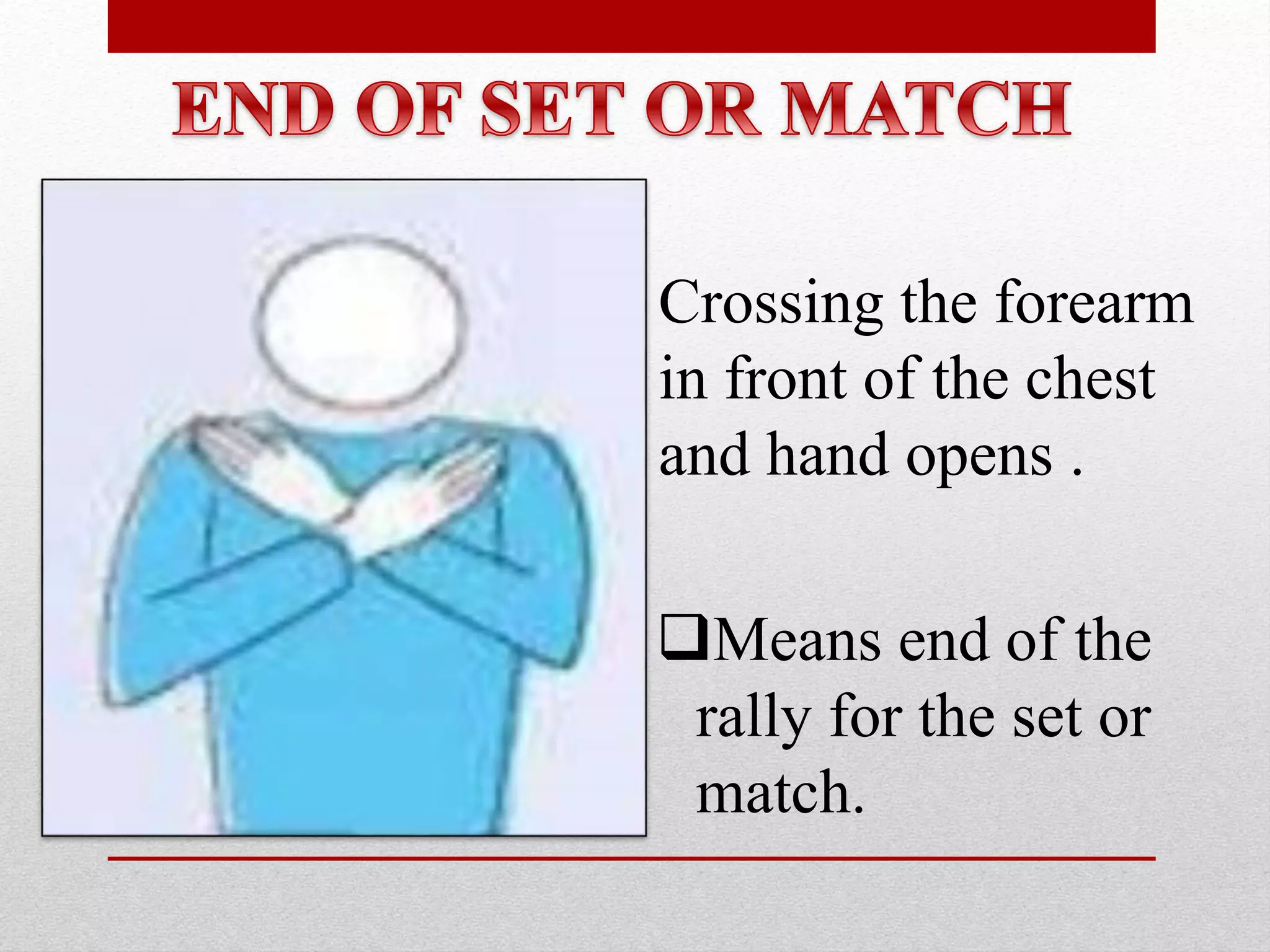
Crossing the forearm
in front of the chest
and hand opens .
Means end of the
rally for the set or
match.
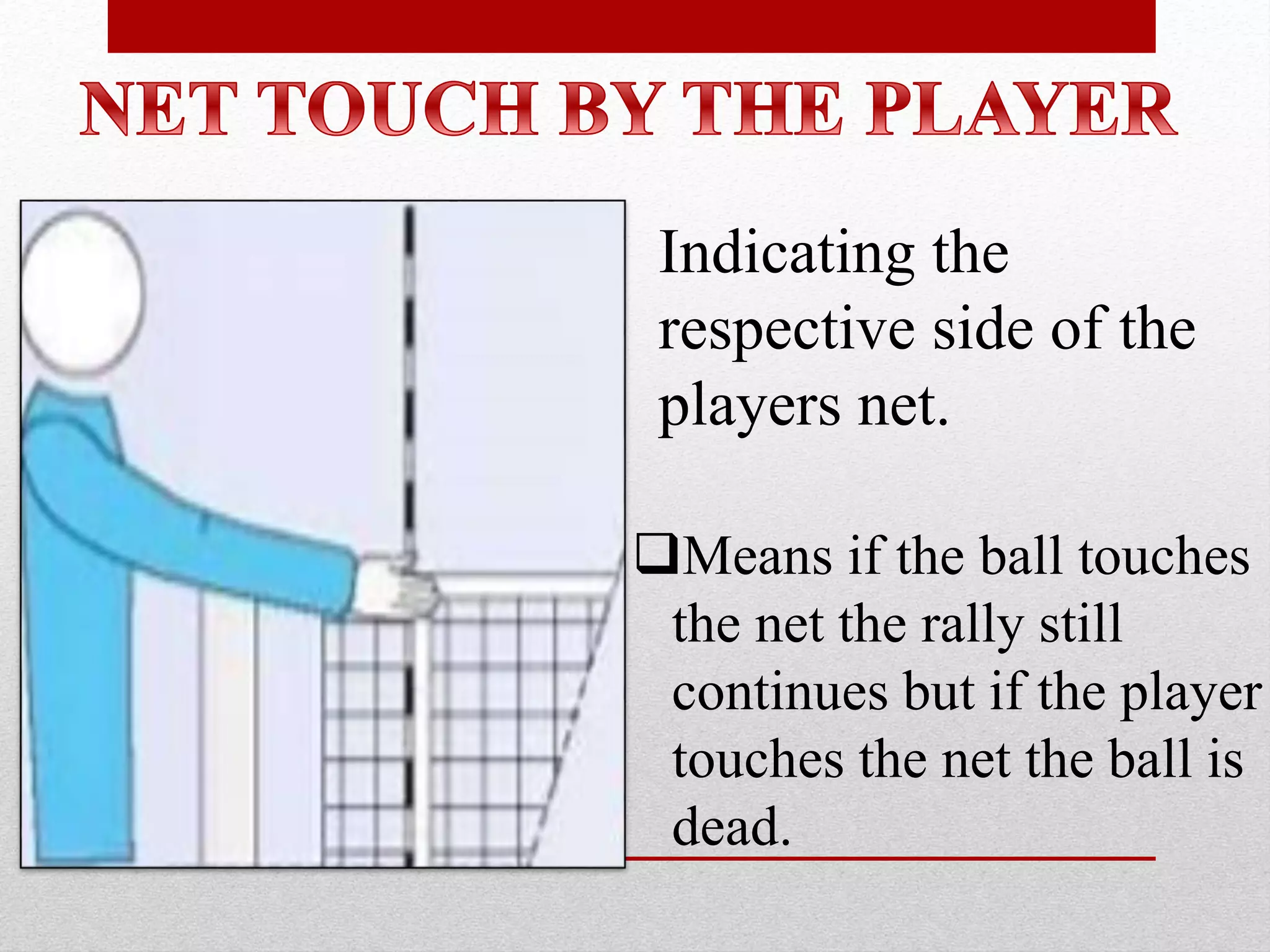
Indicating the
respective side of the
players net.
Means if the ball touches
the net the rally still
continues but if the player
touches the net the ball is
dead.
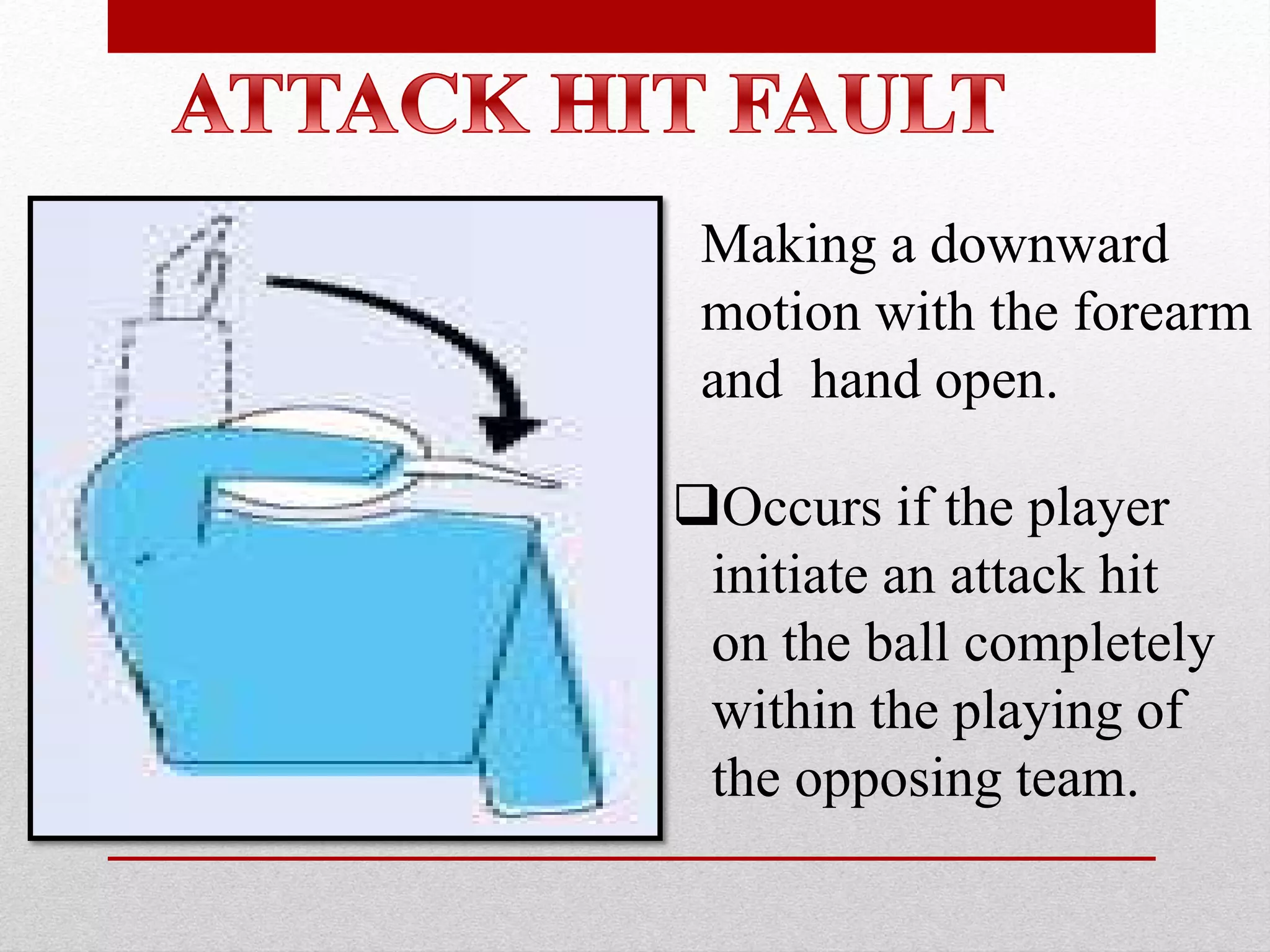
Making a downward
motion with the forearm
and hand open.
Occurs if the player
initiate an attack hit
on the ball completely
within the playing of
the opposing team.
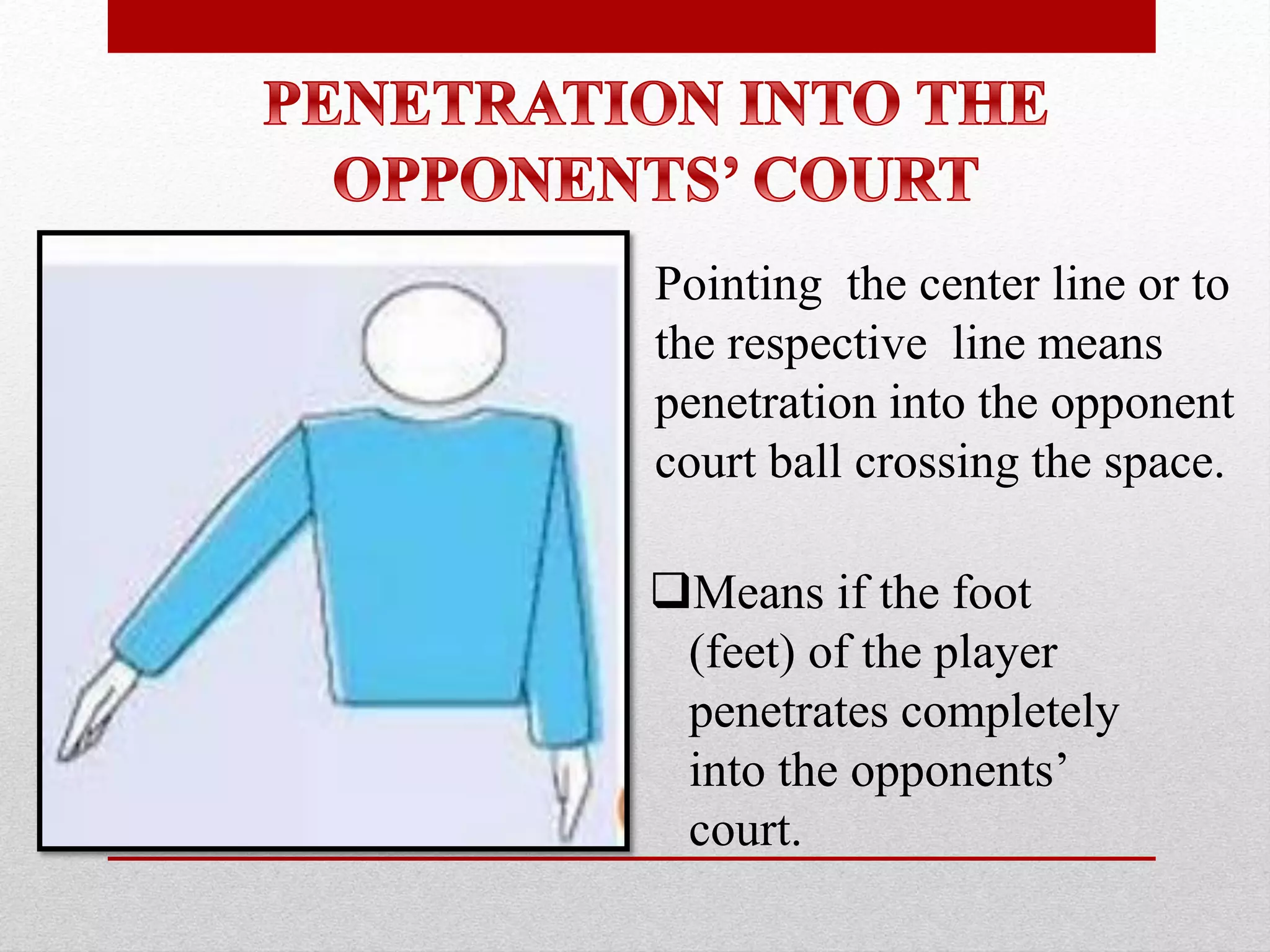
Pointing the center line or to
the respective line means
penetration into the opponent
court ball crossing the space.
Means if the foot
(feet) of the player
penetrates completely
into the opponents’
court.
PPT-HAND-SIGNAL-IN-VOLLEYBALL.pdf

PPT-HAND-SIGNAL-IN-VOLLEYBALL.pdf

  • 1.
    LEARNING OBJECTIVES: At theend of the lesson the students are able to: a. Identify the referee hand signals in volleyball; b. Perform the referee hand signals in volleyball; c. Appreciate the importance of referee hand signal in volleyball.
  • 3.
    Move the handto indicate the direction of service.  Means the official will authorize the server that he/she may now serve.
  • 4.
    Extending the armto the side of the team who’s going to serve.  Means the official will signal that indicate which team will serve.
  • 5.
    Raise the forearmsfront and back and twist them around the body.  Change court happens between game or halfway through a deciding game.
  • 6.
    Circular motion ofthe forearms around each other. Substitution means the act of replacing a player or a player entering the game to occupy the position of another player.
  • 7.
    A double contactis when one player makes contact with the ball twice in a row. Extending the arm with two fingers
  • 8.
    Raise the forearmwith 4 fingers. Occurs if a team contacts the ball more than 3 times without sending it back over the net.
  • 9.
    Make a circularmotion with the forefinger and indicate the players at fault. It occurs when a player is not relatively aligned with the players in adjacent position.
  • 10.
    Raising 8 fingers wideopen. Means when the server doesn’t contact within 8 seconds.
  • 11.
    The referee brusheswith the palm of one hand the fingers of the other, held vertically. This signal indicates the ball was touched by the player on the side the ball went out of bounds.
  • 12.
    Raise both arms vertically,palms forward. Means blocking the opponents serve.
  • 13.
    Point the armand fingers toward the floor where the ball landed. It means the ball landed inside the court.
  • 14.
    Raise both forearms vertically,palm of hand facing toward your body. Means ball landed outside the court.
  • 15.
    Showing yellow card forpenalty. Cause by unsportsmanlike conduct or showing bad attitude inside the court.
  • 16.
    Showing Yellow and Redcard Repeated rude conduct or offensive conduct.  The player will leave the game and shall play the rest of the game.
  • 17.
    Show Red andYellow cards separately. The player must leave the playing area and his/her team is declared incomplete for the match.
  • 18.
    Place the palmof one hand over the fingers of other hand, held vertically “forming T”.  Used by a team to stop the game for a short period of time every team.
  • 19.
    Crossing the forearm infront of the chest and hand opens . Means end of the rally for the set or match.
  • 20.
    Indicating the respective sideof the players net. Means if the ball touches the net the rally still continues but if the player touches the net the ball is dead.
  • 21.
    Making a downward motionwith the forearm and hand open. Occurs if the player initiate an attack hit on the ball completely within the playing of the opposing team.
  • 22.
    Pointing the centerline or to the respective line means penetration into the opponent court ball crossing the space. Means if the foot (feet) of the player penetrates completely into the opponents’ court.