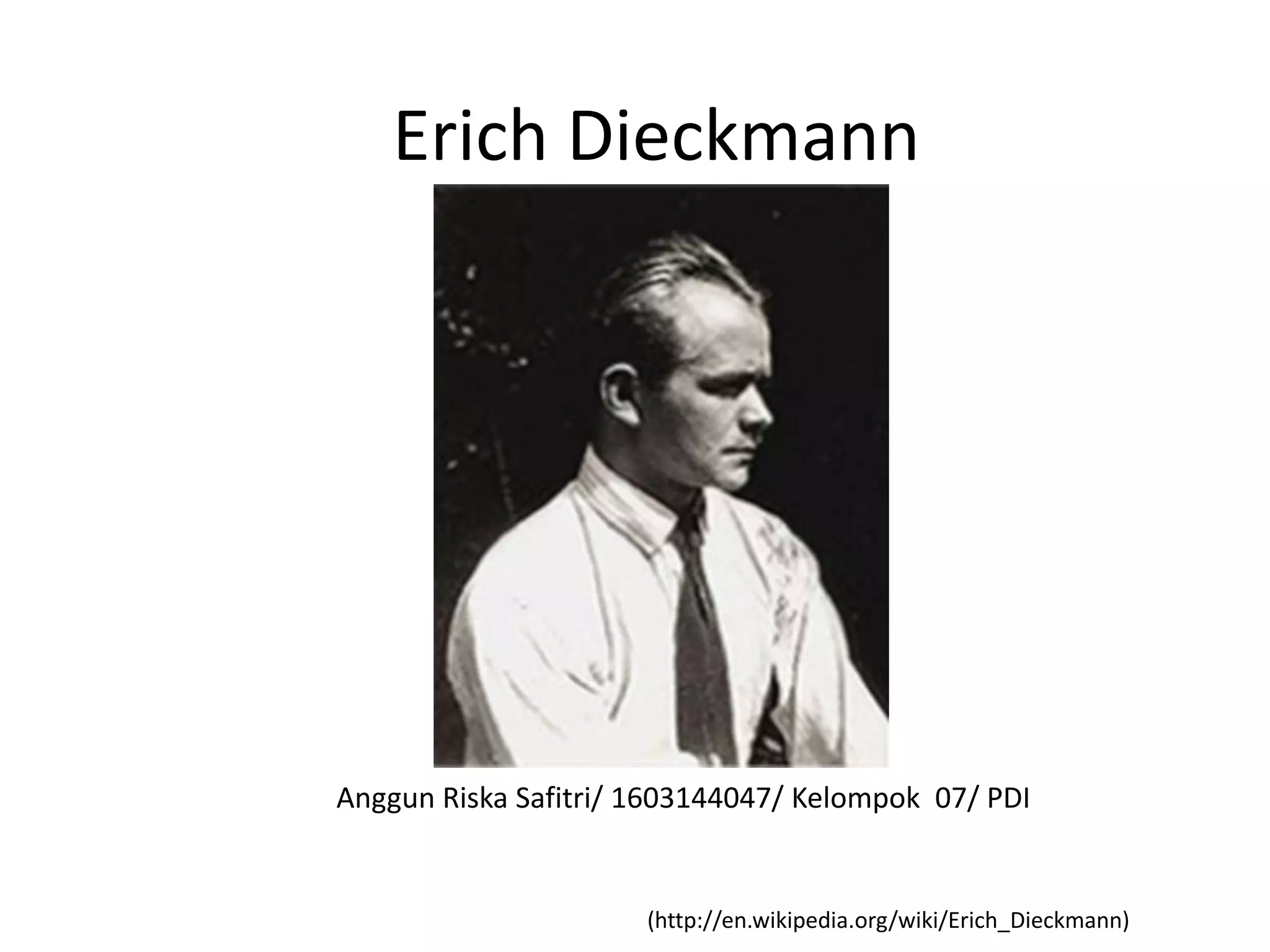
Erich Dieckmann
Anggun Riska Safitri/ 1603144047/ Kelompok 07/ PDI
(http://en.wikipedia.org/wiki/Erich_Dieckmann)
Erich
Dieckmann
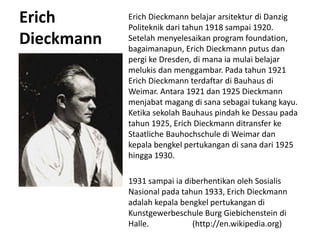
Erich Dieckmann belajar arsitektur di Danzig
Politeknik dari tahun 1918 sampai 1920.
Setelah menyelesaikan program foundation,
bagaimanapun, Erich Dieckmann putus dan
pergi ke Dresden, di mana ia mulai belajar
melukis dan menggambar. Pada tahun 1921
Erich Dieckmann terdaftar di Bauhaus di
Weimar. Antara 1921 dan 1925 Dieckmann
menjabat magang di sana sebagai tukang kayu.
Ketika sekolah Bauhaus pindah ke Dessau pada
tahun 1925, Erich Dieckmann ditransfer ke
Staatliche Bauhochschule di Weimar dan
kepala bengkel pertukangan di sana dari 1925
hingga 1930.
1931 sampai ia diberhentikan oleh Sosialis
Nasional pada tahun 1933, Erich Dieckmann
adalah kepala bengkel pertukangan di
Kunstgewerbeschule Burg Giebichenstein di
Halle. (http://en.wikipedia.org)
Erich
Dieckmann
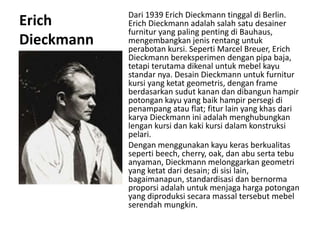
Dari 1939 Erich Dieckmann tinggal di Berlin.
Erich Dieckmann adalah salah satu desainer
furnitur yang paling penting di Bauhaus,
mengembangkan jenis rentang untuk
perabotan kursi. Seperti Marcel Breuer, Erich
Dieckmann bereksperimen dengan pipa baja,
tetapi terutama dikenal untuk mebel kayu
standar nya. Desain Dieckmann untuk furnitur
kursi yang ketat geometris, dengan frame
berdasarkan sudut kanan dan dibangun hampir
potongan kayu yang baik hampir persegi di
penampang atau flat; fitur lain yang khas dari
karya Dieckmann ini adalah menghubungkan
lengan kursi dan kaki kursi dalam konstruksi
pelari.
Dengan menggunakan kayu keras berkualitas
seperti beech, cherry, oak, dan abu serta tebu
anyaman, Dieckmann melonggarkan geometri
yang ketat dari desain; di sisi lain,
bagaimanapun, standardisasi dan bernorma
proporsi adalah untuk menjaga harga potongan
yang diproduksi secara massal tersebut mebel
serendah mungkin.
KARYA-KARYA
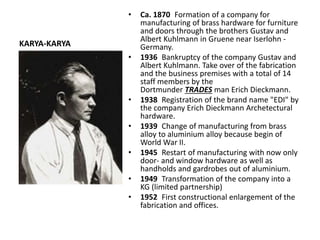
• Ca. 1870 Formation of a company for
manufacturing of brass hardware for furniture
and doors through the brothers Gustav and
Albert Kuhlmann in Gruene near Iserlohn -
Germany.
• 1936 Bankruptcy of the company Gustav and
Albert Kuhlmann. Take over of the fabrication
and the business premises with a total of 14
staff members by the
Dortmunder TRADES man Erich Dieckmann.
• 1938 Registration of the brand name "EDI" by
the company Erich Dieckmann Archetectural
hardware.
• 1939 Change of manufacturing from brass
alloy to aluminium alloy because begin of
World War II.
• 1945 Restart of manufacturing with now only
door- and window hardware as well as
handholds and gardrobes out of aluminium.
• 1949 Transformation of the company into a
KG (limited partnership)
• 1952 First constructional enlargement of the
fabrication and offices.
KARYA- KARYA
• 1954 Foundation of the sister company "NORMBAU Erich
Dieckmann GmbH" with registered office in Kehl (later Renchen)
through Erich Dieckmann and his son Dieter Dieckmann. (This
business was sold by Dieter Dieckmann in 1991 to the british
company "Newman Tonks" - today "Ingersol-Rand").
• 1962 Transformation of the company Erich Dieckmann KG into a
limited liability company.
• 1968 Son Rudolf Dieckmann enters the company as a second
executive.
• 1968 Absorption of the neighbour company OVENTROP. Integration
of the plant and the assortment (shelves for stores) into the
company Erich Dieckmann.
• 1970 Building of an another production hall at the headquarters.
• 1971 Erich Dieckmann leaves the MANAGEMENT of the company.
Rudolf Dieckmann becomes exclusive manager.
• From 1972 Successful installation of a new assortment for building
centers and hardware stores.
• 1977 Buillding of another expansion hall.
• 1982 Construction of factory II also in Iserlohn/Gruene - Germany.
• 1982 Shareholding of the french company "FFA-Le Fer Forge
d'Alsace". (Sale of the share in 1997).
• 1992 Further expansion buildings at factory II.
• 1996 After retirement of Rudolf Dieckmann his son Rainer
Dieckmann takes over the management of the company.
• From 1997 Exports to West- and East Europe, Asia und Africa gain
growing importance for the company.
• 2003 Buying of company MAWEX GmbH in Neustadt/Hesse -
Germany.
KARYA-KARYA
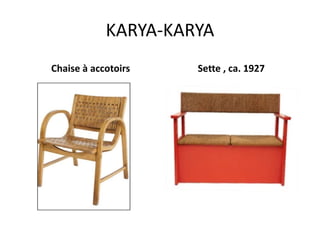
Chaise à accotoirs Sette , ca. 1927
KARYA- KARYA
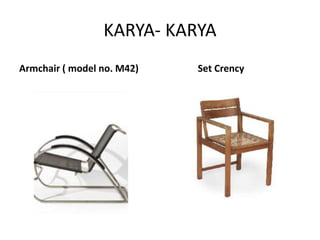
Armchair ( model no. M42) Set Crency
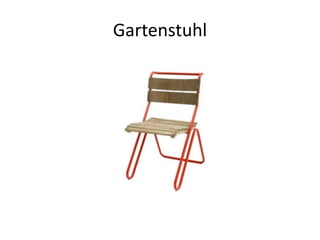
Gartenstuhl

Ppt anggun

  • 1.
    Erich Dieckmann Anggun RiskaSafitri/ 1603144047/ Kelompok 07/ PDI (http://en.wikipedia.org/wiki/Erich_Dieckmann)
  • 2.
    Erich Dieckmann Erich Dieckmann belajararsitektur di Danzig Politeknik dari tahun 1918 sampai 1920. Setelah menyelesaikan program foundation, bagaimanapun, Erich Dieckmann putus dan pergi ke Dresden, di mana ia mulai belajar melukis dan menggambar. Pada tahun 1921 Erich Dieckmann terdaftar di Bauhaus di Weimar. Antara 1921 dan 1925 Dieckmann menjabat magang di sana sebagai tukang kayu. Ketika sekolah Bauhaus pindah ke Dessau pada tahun 1925, Erich Dieckmann ditransfer ke Staatliche Bauhochschule di Weimar dan kepala bengkel pertukangan di sana dari 1925 hingga 1930. 1931 sampai ia diberhentikan oleh Sosialis Nasional pada tahun 1933, Erich Dieckmann adalah kepala bengkel pertukangan di Kunstgewerbeschule Burg Giebichenstein di Halle. (http://en.wikipedia.org)
  • 3.
    Erich Dieckmann Dari 1939 ErichDieckmann tinggal di Berlin. Erich Dieckmann adalah salah satu desainer furnitur yang paling penting di Bauhaus, mengembangkan jenis rentang untuk perabotan kursi. Seperti Marcel Breuer, Erich Dieckmann bereksperimen dengan pipa baja, tetapi terutama dikenal untuk mebel kayu standar nya. Desain Dieckmann untuk furnitur kursi yang ketat geometris, dengan frame berdasarkan sudut kanan dan dibangun hampir potongan kayu yang baik hampir persegi di penampang atau flat; fitur lain yang khas dari karya Dieckmann ini adalah menghubungkan lengan kursi dan kaki kursi dalam konstruksi pelari. Dengan menggunakan kayu keras berkualitas seperti beech, cherry, oak, dan abu serta tebu anyaman, Dieckmann melonggarkan geometri yang ketat dari desain; di sisi lain, bagaimanapun, standardisasi dan bernorma proporsi adalah untuk menjaga harga potongan yang diproduksi secara massal tersebut mebel serendah mungkin.
  • 4.
    KARYA-KARYA • Ca. 1870Formation of a company for manufacturing of brass hardware for furniture and doors through the brothers Gustav and Albert Kuhlmann in Gruene near Iserlohn - Germany. • 1936 Bankruptcy of the company Gustav and Albert Kuhlmann. Take over of the fabrication and the business premises with a total of 14 staff members by the Dortmunder TRADES man Erich Dieckmann. • 1938 Registration of the brand name "EDI" by the company Erich Dieckmann Archetectural hardware. • 1939 Change of manufacturing from brass alloy to aluminium alloy because begin of World War II. • 1945 Restart of manufacturing with now only door- and window hardware as well as handholds and gardrobes out of aluminium. • 1949 Transformation of the company into a KG (limited partnership) • 1952 First constructional enlargement of the fabrication and offices.
  • 5.
    KARYA- KARYA • 1954Foundation of the sister company "NORMBAU Erich Dieckmann GmbH" with registered office in Kehl (later Renchen) through Erich Dieckmann and his son Dieter Dieckmann. (This business was sold by Dieter Dieckmann in 1991 to the british company "Newman Tonks" - today "Ingersol-Rand"). • 1962 Transformation of the company Erich Dieckmann KG into a limited liability company. • 1968 Son Rudolf Dieckmann enters the company as a second executive. • 1968 Absorption of the neighbour company OVENTROP. Integration of the plant and the assortment (shelves for stores) into the company Erich Dieckmann. • 1970 Building of an another production hall at the headquarters. • 1971 Erich Dieckmann leaves the MANAGEMENT of the company. Rudolf Dieckmann becomes exclusive manager. • From 1972 Successful installation of a new assortment for building centers and hardware stores. • 1977 Buillding of another expansion hall. • 1982 Construction of factory II also in Iserlohn/Gruene - Germany. • 1982 Shareholding of the french company "FFA-Le Fer Forge d'Alsace". (Sale of the share in 1997). • 1992 Further expansion buildings at factory II. • 1996 After retirement of Rudolf Dieckmann his son Rainer Dieckmann takes over the management of the company. • From 1997 Exports to West- and East Europe, Asia und Africa gain growing importance for the company. • 2003 Buying of company MAWEX GmbH in Neustadt/Hesse - Germany.
  • 6.
  • 7.
    KARYA- KARYA Armchair (model no. M42) Set Crency
  • 8.