POWDERS in Pharmaceuticals
• Powder is a mixture of finely divided drugs and/or chemicals in dry form.
Powders can be used internally and externally (e.g., external applications to
the skin).
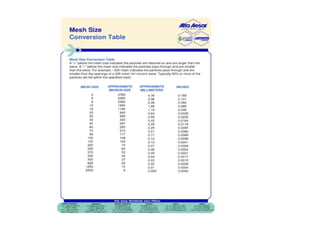
• Powders generally range from 0.1 to 10 micron in size. The size of the
particles are often expressed as a number which corresponds to the mesh
screen size of a sieve. The screen size indicates the number of openings in
the mesh screen per linear inch. For example, a # 40 sieve has 40 openings
per inch in the screen mesh. Particles that can sift through that mesh are
said to be "40 mesh" size.
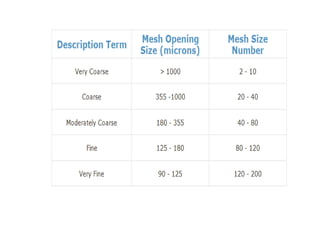
• -The particle size of powders is standardized according to the USP
descriptive terms, such as-
• very fine,
• fine,
• moderately coarse,
• coarse,
• very coarse.
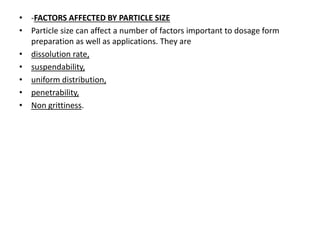
• -FACTORS AFFECTED BY PARTICLE SIZE
• Particle size can affect a number of factors important to dosage form
preparation as well as applications. They are
• dissolution rate,
• suspendability,
• uniform distribution,
• penetrability,
• Non grittiness.
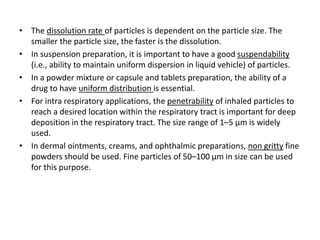
• The dissolution rate of particles is dependent on the particle size. The
smaller the particle size, the faster is the dissolution.
• In suspension preparation, it is important to have a good suspendability
(i.e., ability to maintain uniform dispersion in liquid vehicle) of particles.
• In a powder mixture or capsule and tablets preparation, the ability of a
drug to have uniform distribution is essential.
• For intra respiratory applications, the penetrability of inhaled particles to
reach a desired location within the respiratory tract is important for deep
deposition in the respiratory tract. The size range of 1–5 μm is widely
used.
• In dermal ointments, creams, and ophthalmic preparations, non gritty fine
powders should be used. Fine particles of 50–100 μm in size can be used
for this purpose.
• -REDUCTION OF PARTICLE SIZE
• Reducing the particle size of a powder will result in an uniform distribution
of particle sizes.The process of reducing the particle size is
called comminution.
There are three methods of comminution:
1. Trituration is the continuous rubbing or grinding of the powder in a mortar
with a pestle.
2. Pulverization by Intervention is used with hard crystalline powders that do
not crush or triturate easily, or gummy-type substances.
3. Levigation is commonly used in small-scale preparation of ointments and
suspensions to reduce the particle size and grittiness of the added powders.
Advantages of Powders:
• Good chemical stability compared with fluids.
• Useful for bulky drugs with large dose, e.g. indigestion powder.
• Easy to swallow even in large bulk, especially if mixed with drink food
(useful for stomach- tube feeding)
• The smaller particle size of powders causes more rapid dissolution in body
fluids, increases drug bioavailability, and decreases gastric irritation
compared with tablets.
Disadvantages of Powders
• 1. Patient may misunderstand the correct method of use. Without clear
instruction, patients may inhale through the nose a drug intended for oral
administration. In oral administration, it may have to be clear whether the
drug has to be dissolved first in water or taken as it is.
• 2. It is undesirable to take bitter or unpleasant tasting drugs by oral
administration.
• 3. It is difficult to protect powders containing hygroscopic, deliquescent
(tending to melt or dissolve in humid environment), or aromatic materials
from decomposition.
• 4. Uniform, individually wrapped doses of powders (sachets) are required
and this may increase the manufacturing expense.
• 5. Powder must be a homogeneous blend of all of the components and
must be of the most advantageous particle size. The particle size of a drug
influences the rate of solubility in water. It may also influence the
biological activity of a drug.
• Classification of Powders
1.Divided powders and Bulk powders which are mixed with water prior to
administration.
2. Dusting powders which are applied locally.
Divided Powders are dispensed in the form of individual doses and generally
are dispensed in papers, properly folded (chartulae). They also may be
dispensed in metal foil, small heat-sealed plastic bags or other containers.
Bulk Powders may be classified as
• oral powders,
• dentifrices,
• douche powders,
• dusting powders,
• insuffiations
• triturations.
• Oral Powders - These generally are supplied as finely divided powders or
effervescent granules. The finely divided powders are intended to be
suspended or dissolved in water or mixed with soft foods, prior to
administration. Antacids and laxative powders frequently are administered
in this form
• Dusting Powders -These are locally applied nontoxic preparations that are
intended to have no systemic action.
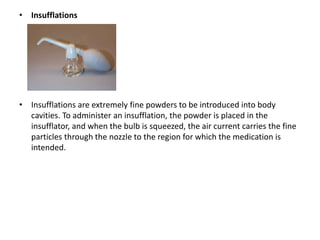
• Insufflations
• Insufflations are extremely fine powders to be introduced into body
cavities. To administer an insufflation, the powder is placed in the
insufflator, and when the bulb is squeezed, the air current carries the fine
particles through the nozzle to the region for which the medication is
intended.
• Powder Sprays
Powders dispensed under pressure will deliver targeted and uniform
application at the desired site. Also, in an aerosol container medicated
powders may be maintained in a sterile condition. The powder particles must
be a definite size range to prevent clogging of the valve orifice and to provide
uniformity of application. In general, powders that are to be packaged as
powder sprays must not contain particles greater than 50 microns if they are
to be sprayed successfully.
• Effervescent Powders
• Mixture of organic acid and alkali effervesces when subjected to water
due to reaction between the acid and the base with evolution of CO2 .
• Examples: Citric or tartaric acids with sodium carbonate or bicarbonate
Uses: The liberated carbon dioxide has the following advantages:
• It masks the bitter and nauseous taste.
• It promotes gastric secretions.
• It acts as a carminative.
• psychological impression at the patient.
• Effervescent Powders Formulation: - Bulk powders or divided powders -
Packed in separate packages of contrasting colors. - The contents are
mixed in a quantity of water at the time of dosing. - The liquid is
consumed just after the reaction begin to subside.
Douche Powders
These products are completely soluble and are intended to be dissolved in
water prior to use as antiseptics or cleansing agents for a body cavity.
eg for vaginal use, nasal, otic or ophthalmic use.
Dispensing in wide-mouth glass jars serves to protect against loss of volatile
materials and permits easy access by the patient.
Dentifrices
These may be prepared in the form of a bulk powder, generally containing a
soap or detergent, mild abrasive and an anticariogenic agent.
Triturations - These are dilutions of potent powdered drugs, prepared by
intimately mixing them with a suitable diluent in a definite proportion by
weight. The pharmacist sometimes prepares triturations of poisonous
substances, eg, atropine, in a convenient concentration using lactose as the
diluent, for use at the prescription counter.

PowerPoint presentation on Powders: pharma

  • 1.
  • 2.
    • Powder isa mixture of finely divided drugs and/or chemicals in dry form. Powders can be used internally and externally (e.g., external applications to the skin). • Powders generally range from 0.1 to 10 micron in size. The size of the particles are often expressed as a number which corresponds to the mesh screen size of a sieve. The screen size indicates the number of openings in the mesh screen per linear inch. For example, a # 40 sieve has 40 openings per inch in the screen mesh. Particles that can sift through that mesh are said to be "40 mesh" size.
  • 3.
    • -The particlesize of powders is standardized according to the USP descriptive terms, such as- • very fine, • fine, • moderately coarse, • coarse, • very coarse.
  • 6.
    • -FACTORS AFFECTEDBY PARTICLE SIZE • Particle size can affect a number of factors important to dosage form preparation as well as applications. They are • dissolution rate, • suspendability, • uniform distribution, • penetrability, • Non grittiness.
  • 7.
    • The dissolutionrate of particles is dependent on the particle size. The smaller the particle size, the faster is the dissolution. • In suspension preparation, it is important to have a good suspendability (i.e., ability to maintain uniform dispersion in liquid vehicle) of particles. • In a powder mixture or capsule and tablets preparation, the ability of a drug to have uniform distribution is essential. • For intra respiratory applications, the penetrability of inhaled particles to reach a desired location within the respiratory tract is important for deep deposition in the respiratory tract. The size range of 1–5 μm is widely used. • In dermal ointments, creams, and ophthalmic preparations, non gritty fine powders should be used. Fine particles of 50–100 μm in size can be used for this purpose.
  • 8.
    • -REDUCTION OFPARTICLE SIZE • Reducing the particle size of a powder will result in an uniform distribution of particle sizes.The process of reducing the particle size is called comminution. There are three methods of comminution: 1. Trituration is the continuous rubbing or grinding of the powder in a mortar with a pestle. 2. Pulverization by Intervention is used with hard crystalline powders that do not crush or triturate easily, or gummy-type substances. 3. Levigation is commonly used in small-scale preparation of ointments and suspensions to reduce the particle size and grittiness of the added powders.
  • 9.
    Advantages of Powders: •Good chemical stability compared with fluids. • Useful for bulky drugs with large dose, e.g. indigestion powder. • Easy to swallow even in large bulk, especially if mixed with drink food (useful for stomach- tube feeding) • The smaller particle size of powders causes more rapid dissolution in body fluids, increases drug bioavailability, and decreases gastric irritation compared with tablets.
  • 10.
    Disadvantages of Powders •1. Patient may misunderstand the correct method of use. Without clear instruction, patients may inhale through the nose a drug intended for oral administration. In oral administration, it may have to be clear whether the drug has to be dissolved first in water or taken as it is. • 2. It is undesirable to take bitter or unpleasant tasting drugs by oral administration. • 3. It is difficult to protect powders containing hygroscopic, deliquescent (tending to melt or dissolve in humid environment), or aromatic materials from decomposition. • 4. Uniform, individually wrapped doses of powders (sachets) are required and this may increase the manufacturing expense. • 5. Powder must be a homogeneous blend of all of the components and must be of the most advantageous particle size. The particle size of a drug influences the rate of solubility in water. It may also influence the biological activity of a drug.
  • 11.
    • Classification ofPowders 1.Divided powders and Bulk powders which are mixed with water prior to administration. 2. Dusting powders which are applied locally. Divided Powders are dispensed in the form of individual doses and generally are dispensed in papers, properly folded (chartulae). They also may be dispensed in metal foil, small heat-sealed plastic bags or other containers. Bulk Powders may be classified as • oral powders, • dentifrices, • douche powders, • dusting powders, • insuffiations • triturations.
  • 12.
    • Oral Powders- These generally are supplied as finely divided powders or effervescent granules. The finely divided powders are intended to be suspended or dissolved in water or mixed with soft foods, prior to administration. Antacids and laxative powders frequently are administered in this form • Dusting Powders -These are locally applied nontoxic preparations that are intended to have no systemic action.
  • 13.
    • Insufflations • Insufflationsare extremely fine powders to be introduced into body cavities. To administer an insufflation, the powder is placed in the insufflator, and when the bulb is squeezed, the air current carries the fine particles through the nozzle to the region for which the medication is intended.
  • 14.
    • Powder Sprays Powdersdispensed under pressure will deliver targeted and uniform application at the desired site. Also, in an aerosol container medicated powders may be maintained in a sterile condition. The powder particles must be a definite size range to prevent clogging of the valve orifice and to provide uniformity of application. In general, powders that are to be packaged as powder sprays must not contain particles greater than 50 microns if they are to be sprayed successfully.
  • 15.
    • Effervescent Powders •Mixture of organic acid and alkali effervesces when subjected to water due to reaction between the acid and the base with evolution of CO2 . • Examples: Citric or tartaric acids with sodium carbonate or bicarbonate Uses: The liberated carbon dioxide has the following advantages: • It masks the bitter and nauseous taste. • It promotes gastric secretions. • It acts as a carminative. • psychological impression at the patient. • Effervescent Powders Formulation: - Bulk powders or divided powders - Packed in separate packages of contrasting colors. - The contents are mixed in a quantity of water at the time of dosing. - The liquid is consumed just after the reaction begin to subside.
  • 16.
    Douche Powders These productsare completely soluble and are intended to be dissolved in water prior to use as antiseptics or cleansing agents for a body cavity. eg for vaginal use, nasal, otic or ophthalmic use. Dispensing in wide-mouth glass jars serves to protect against loss of volatile materials and permits easy access by the patient. Dentifrices These may be prepared in the form of a bulk powder, generally containing a soap or detergent, mild abrasive and an anticariogenic agent. Triturations - These are dilutions of potent powdered drugs, prepared by intimately mixing them with a suitable diluent in a definite proportion by weight. The pharmacist sometimes prepares triturations of poisonous substances, eg, atropine, in a convenient concentration using lactose as the diluent, for use at the prescription counter.