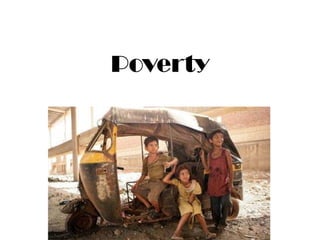
Poverty
Poverty
• Hunger
• Lack of shelter
• Sick and not being able to see a doctor
• Not having access to school and not knowing how
to read
• Not having a job, living one day at a time
• Losing a child to illness brought about by unclean
water
• Powerless, lack of representation and freedom
Effects of Poverty on children
• According to UNICEF:
• 22.000 children die every day due to poverty in
the World
• 27% - 28% of all children in developing countries
are underweight
• Amongst the 1.9 billion children in the developing
world:
- 1 in 3 children are without adequate shelter
- 1 in 5 children have no access to safe water
- 1 in 7 children have to access to health services
Poverty in India
• 27.5% of India’s population lives below the
poverty line, 75% of these people live in rural
areas
• 77% of Indians live on a daily income of Rs.20 a
day
• India’s poorest people include 50& of members
of scheduled tribes and 40% of people in
scheduled castes
• Poorest areas in India – Rajashtan, Madhya
Pradesh, Uttar Pradesh, Bihar, Jharkhand,
Chattissgarh, Orissa and West Bengal
Causes of Poverty in India
• Population of India is the 2nd largest country
• 68.84% of India’s total population live in Rural
areas
• Lack of Capital: Not able to do their farming
activities and earn, so they reach below the
poverty line
• Lack of literacy: 50% of children living in these
areas leave school before the 5th grade
• School drop outs, due to:
• Lack of interest
• Work in farm fields
• Hours are long and pay in less, therefore no
incentive or motivation
• Most females, as they traditionally belong to
the household
Large families
• Two main reasons:
• No proper family planning in the rural areas
among the villagers, which increases the
population
• People living in one single family due to
traditional joint family norms, this increases the
burden of number of people to be fed in the
house and also increases the expenses
• Lack of Alternate Employment Opportunities
other than agriculture
Government’s initiatives
• For employment:
• Jawahar Gram Samriddhi Yojana (Formerly
knows as Jawahar Rozgar Yojana)
• Training Rural Youth self employment TRYSEM
Scheme
• Sampurna Gramin Rozgar Yojana
• National Rural Employment Guarantee
Scheme
• For Family Planning: Family planning. Welfare
Program for Population Control
• For Farmers Insurance: Group Life Insurance
for Rural Areas & Agricultural Income
Insurance Scheme
Urban India
• The bulk of the Urban Poor are living in extremely deprived
conditions with insufficient physical amenities like:
• Low-cost water supply
• Improper Sanitation
• Bad Sewage and Drainage System
• Very less social services relating to health care, nutrition,
pre-school and non-formal education
• Poverty level is below 10% in Delhi, Goa and Punjab.
Poverty level is below 50% in Bihar, Orissa.
Poverty level is between 30% - 40% in NorthEastern States
of Assam, Tripura and Meghalaya and in Southern States of
Tamil Nadu and Uttar Pradesh
Role of NGOs
• 2 approaches:
1) Supply-side/Micro-tasks:
Provision of basic public services
provision of social and economic providers
2)Demand-side/Macro-tasks:
Articulator of the people’s voice
Mobilize and clarify demand for services from
Government and the market
What can we do?
• Sustainable use of resources
• Pay taxes, can be used for eradication of others
• Widening the concept of employment
• Ensuring financial services to the poor
• Recognizing every single human being as a potential
entrepreneur
• Recognizing social entrepreneurs as potential agents
for creating a world of peace, harmony and progress
• Recognizing the role f globalization and information
and technology in reducing poverty
• Thank you

Poverty issues&ideas

  • 1.
  • 2.
    Poverty • Hunger • Lackof shelter • Sick and not being able to see a doctor • Not having access to school and not knowing how to read • Not having a job, living one day at a time • Losing a child to illness brought about by unclean water • Powerless, lack of representation and freedom
  • 4.
    Effects of Povertyon children • According to UNICEF: • 22.000 children die every day due to poverty in the World • 27% - 28% of all children in developing countries are underweight • Amongst the 1.9 billion children in the developing world: - 1 in 3 children are without adequate shelter - 1 in 5 children have no access to safe water - 1 in 7 children have to access to health services
  • 5.
    Poverty in India •27.5% of India’s population lives below the poverty line, 75% of these people live in rural areas • 77% of Indians live on a daily income of Rs.20 a day • India’s poorest people include 50& of members of scheduled tribes and 40% of people in scheduled castes • Poorest areas in India – Rajashtan, Madhya Pradesh, Uttar Pradesh, Bihar, Jharkhand, Chattissgarh, Orissa and West Bengal
  • 6.
    Causes of Povertyin India • Population of India is the 2nd largest country • 68.84% of India’s total population live in Rural areas • Lack of Capital: Not able to do their farming activities and earn, so they reach below the poverty line • Lack of literacy: 50% of children living in these areas leave school before the 5th grade
  • 7.
    • School dropouts, due to: • Lack of interest • Work in farm fields • Hours are long and pay in less, therefore no incentive or motivation • Most females, as they traditionally belong to the household
  • 8.
    Large families • Twomain reasons: • No proper family planning in the rural areas among the villagers, which increases the population • People living in one single family due to traditional joint family norms, this increases the burden of number of people to be fed in the house and also increases the expenses • Lack of Alternate Employment Opportunities other than agriculture
  • 9.
    Government’s initiatives • Foremployment: • Jawahar Gram Samriddhi Yojana (Formerly knows as Jawahar Rozgar Yojana) • Training Rural Youth self employment TRYSEM Scheme • Sampurna Gramin Rozgar Yojana • National Rural Employment Guarantee Scheme
  • 10.
    • For FamilyPlanning: Family planning. Welfare Program for Population Control • For Farmers Insurance: Group Life Insurance for Rural Areas & Agricultural Income Insurance Scheme
  • 11.
    Urban India • Thebulk of the Urban Poor are living in extremely deprived conditions with insufficient physical amenities like: • Low-cost water supply • Improper Sanitation • Bad Sewage and Drainage System • Very less social services relating to health care, nutrition, pre-school and non-formal education • Poverty level is below 10% in Delhi, Goa and Punjab. Poverty level is below 50% in Bihar, Orissa. Poverty level is between 30% - 40% in NorthEastern States of Assam, Tripura and Meghalaya and in Southern States of Tamil Nadu and Uttar Pradesh
  • 12.
    Role of NGOs •2 approaches: 1) Supply-side/Micro-tasks: Provision of basic public services provision of social and economic providers 2)Demand-side/Macro-tasks: Articulator of the people’s voice Mobilize and clarify demand for services from Government and the market
  • 13.
    What can wedo? • Sustainable use of resources • Pay taxes, can be used for eradication of others • Widening the concept of employment • Ensuring financial services to the poor • Recognizing every single human being as a potential entrepreneur • Recognizing social entrepreneurs as potential agents for creating a world of peace, harmony and progress • Recognizing the role f globalization and information and technology in reducing poverty
  • 14.