Posttranslational Modification 
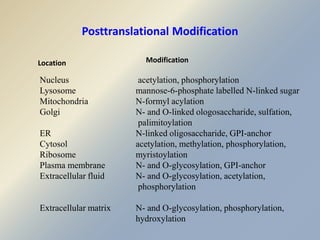
Location Modification 
Nucleus acetylation, phosphorylation 
Lysosome mannose-6-phosphate labelled N-linked sugar 
Mitochondria N-formyl acylation 
Golgi N- and O-linked ologosaccharide, sulfation, 
palimitoylation 
ER N-linked oligosaccharide, GPI-anchor 
Cytosol acetylation, methylation, phosphorylation, 
Ribosome myristoylation 
Plasma membrane N- and O-glycosylation, GPI-anchor 
Extracellular fluid N- and O-glycosylation, acetylation, 
phosphorylation 
Extracellular matrix N- and O-glycosylation, phosphorylation, 
hydroxylation
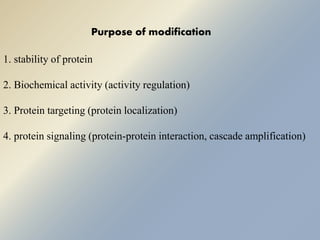
Purpose of modification 
1. stability of protein 
2. Biochemical activity (activity regulation) 
3. Protein targeting (protein localization) 
4. protein signaling (protein-protein interaction, cascade amplification)
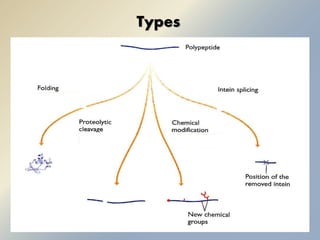
Types
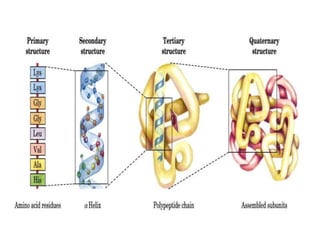
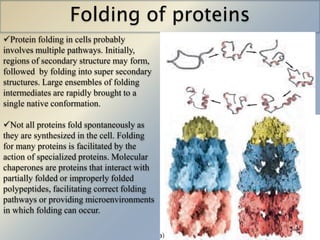
Folding of proteins 
Protein folding in cells probably 
involves multiple pathways. Initially, 
regions of secondary structure may form, 
followed by folding into super secondary 
structures. Large ensembles of folding 
intermediates are rapidly brought to a 
single native conformation. 
Not all proteins fold spontaneously as 
they are synthesized in the cell. Folding 
for many proteins is facilitated by the 
action of specialized proteins. Molecular 
chaperones are proteins that interact with 
partially folded or improperly folded 
polypeptides, facilitating correct folding 
pathways or providing microenvironments 
in which folding can occur.
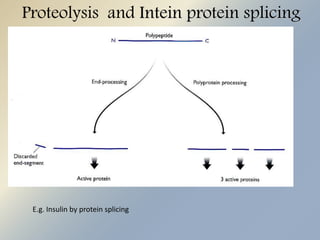
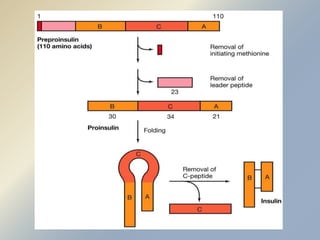
Proteolysis and Intein protein splicing 
E.g. Insulin by protein splicing
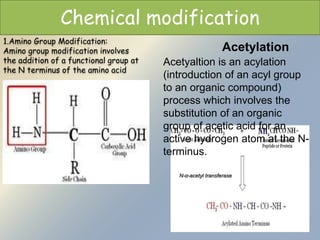
Chemical modification 
1.Amino Group Modification: 
Amino group modification involves 
the addition of a functional group at 
the N terminus of the amino acid 
Acetylation 
Acetyaltion is an acylation 
(introduction of an acyl group 
to an organic compound) 
process which involves the 
substitution of an organic 
group of acetic acid for an 
active hydrogen atom at the N-terminus. 
N-α-acetyl transferase
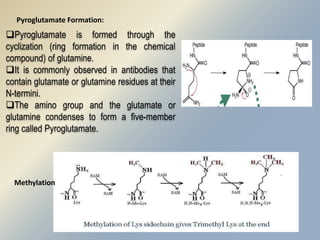
Pyroglutamate Formation: 
Pyroglutamate is formed through the 
cyclization (ring formation in the chemical 
compound) of glutamine. 
It is commonly observed in antibodies that 
contain glutamate or glutamine residues at their 
N-termini. 
The amino group and the glutamate or 
glutamine condenses to form a five-member 
ring called Pyroglutamate. 
Methylation
Glycosylation 
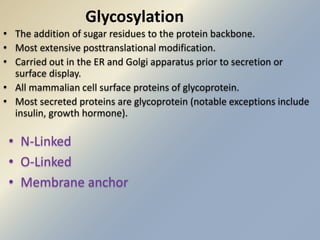
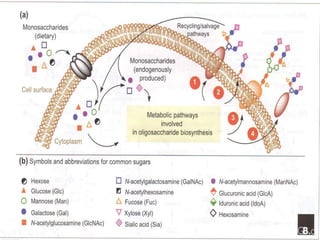
• The addition of sugar residues to the protein backbone. 
• Most extensive posttranslational modification. 
• Carried out in the ER and Golgi apparatus prior to secretion or 
surface display. 
• All mammalian cell surface proteins of glycoprotein. 
• Most secreted proteins are glycoprotein (notable exceptions include 
insulin, growth hormone). 
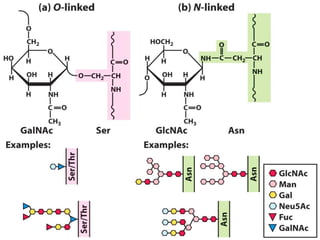
• N-Linked 
• O-Linked 
• Membrane anchor
Contd….
GPI Anchoring 
• The membrane bound proteins are prevalent in most Eukaryotic 
systems and serve to regulate the release of molecules from cell 
surfaces and exchange of membrane molecules. 
• Specifically they play a critical role in the recognition of enzymatic 
and antigenic molecules as well receptor mediated signal transduction 
pathways. 
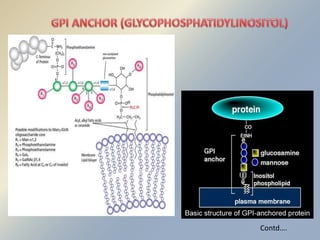
• Proteins destined for anchorage onto a membrane surface are first 
adhered at the carboxyterminus (c-terminal region) to a 
phosphodeister linkage system. 
• This is comprised of the adsorption of phospothanolamine to a core of 
trimannosyl-non-acetylated Glucosamine. This Glucosamine structure 
is then linked to phosphatidylinositol, which is then finally adhered to 
the lipid bilayer via another phosphodeister linker. Solubilization of 
the membrane bound protein is achieved via cleavage of the 
phosphatidynisotil bond by Phospholipase C.
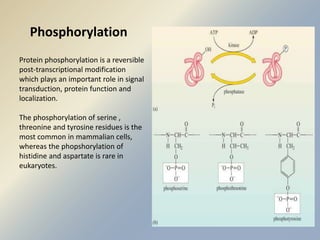
Phosphorylation 
Protein phosphorylation is a reversible 
post-transcriptional modification 
which plays an important role in signal 
transduction, protein function and 
localization. 
The phosphorylation of serine , 
threonine and tyrosine residues is the 
most common in mammalian cells, 
whereas the phopshorylation of 
histidine and aspartate is rare in 
eukaryotes.
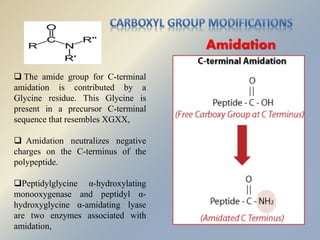
Amidation 
 The amide group for C-terminal 
amidation is contributed by a 
Glycine residue. This Glycine is 
present in a precursor C-terminal 
sequence that resembles XGXX, 
 Amidation neutralizes negative 
charges on the C-terminus of the 
polypeptide. 
Peptidylglycine α-hydroxylating 
monooxygenase and peptidyl α- 
hydroxyglycine α-amidating lyase 
are two enzymes associated with 
amidation,
Sumoylation 
• Small Ubiquitin-related Modifier proteins, or SUMO proteins, 
are small proteins that covalently attach to proteins in a 
process known as sumoylation. 
• As its name suggests, SUMO proteins and ubiquitin are similar 
proteins sharing many characteristics including the sequence 
of enzymatic reactions directing either process 
• unlike ubiquitin, SUMO proteins do not act as proteolytic 
signals. SUMOylation has been associated with various 
cellular functions and processes including cell cycle 
regulation, DNA repair, chromosomal maintenance, modifying 
cytoplasmic signal transduction, nuclear import and 
subnuclear compartmentalization, DNA repair, transcription 
regulation, and stress response
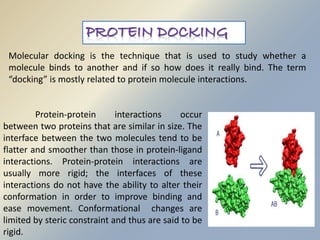
Molecular docking is the technique that is used to study whether a 
molecule binds to another and if so how does it really bind. The term 
“docking” is mostly related to protein molecule interactions. 
Protein-protein interactions occur 
between two proteins that are similar in size. The 
interface between the two molecules tend to be 
flatter and smoother than those in protein-ligand 
interactions. Protein-protein interactions are 
usually more rigid; the interfaces of these 
interactions do not have the ability to alter their 
conformation in order to improve binding and 
ease movement. Conformational changes are 
limited by steric constraint and thus are said to be 
rigid.
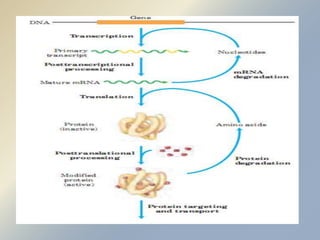
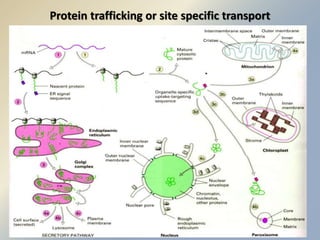
Protein trafficking or site specific transport
Post tranlational modification

Post tranlational modification

  • 5.
    Posttranslational Modification LocationModification Nucleus acetylation, phosphorylation Lysosome mannose-6-phosphate labelled N-linked sugar Mitochondria N-formyl acylation Golgi N- and O-linked ologosaccharide, sulfation, palimitoylation ER N-linked oligosaccharide, GPI-anchor Cytosol acetylation, methylation, phosphorylation, Ribosome myristoylation Plasma membrane N- and O-glycosylation, GPI-anchor Extracellular fluid N- and O-glycosylation, acetylation, phosphorylation Extracellular matrix N- and O-glycosylation, phosphorylation, hydroxylation
  • 6.
    Purpose of modification 1. stability of protein 2. Biochemical activity (activity regulation) 3. Protein targeting (protein localization) 4. protein signaling (protein-protein interaction, cascade amplification)
  • 7.
  • 8.
    Folding of proteins Protein folding in cells probably involves multiple pathways. Initially, regions of secondary structure may form, followed by folding into super secondary structures. Large ensembles of folding intermediates are rapidly brought to a single native conformation. Not all proteins fold spontaneously as they are synthesized in the cell. Folding for many proteins is facilitated by the action of specialized proteins. Molecular chaperones are proteins that interact with partially folded or improperly folded polypeptides, facilitating correct folding pathways or providing microenvironments in which folding can occur.
  • 9.
    Proteolysis and Inteinprotein splicing E.g. Insulin by protein splicing
  • 11.
    Chemical modification 1.AminoGroup Modification: Amino group modification involves the addition of a functional group at the N terminus of the amino acid Acetylation Acetyaltion is an acylation (introduction of an acyl group to an organic compound) process which involves the substitution of an organic group of acetic acid for an active hydrogen atom at the N-terminus. N-α-acetyl transferase
  • 12.
    Pyroglutamate Formation: Pyroglutamateis formed through the cyclization (ring formation in the chemical compound) of glutamine. It is commonly observed in antibodies that contain glutamate or glutamine residues at their N-termini. The amino group and the glutamate or glutamine condenses to form a five-member ring called Pyroglutamate. Methylation
  • 13.
    Glycosylation • Theaddition of sugar residues to the protein backbone. • Most extensive posttranslational modification. • Carried out in the ER and Golgi apparatus prior to secretion or surface display. • All mammalian cell surface proteins of glycoprotein. • Most secreted proteins are glycoprotein (notable exceptions include insulin, growth hormone). • N-Linked • O-Linked • Membrane anchor
  • 16.
  • 17.
    GPI Anchoring •The membrane bound proteins are prevalent in most Eukaryotic systems and serve to regulate the release of molecules from cell surfaces and exchange of membrane molecules. • Specifically they play a critical role in the recognition of enzymatic and antigenic molecules as well receptor mediated signal transduction pathways. • Proteins destined for anchorage onto a membrane surface are first adhered at the carboxyterminus (c-terminal region) to a phosphodeister linkage system. • This is comprised of the adsorption of phospothanolamine to a core of trimannosyl-non-acetylated Glucosamine. This Glucosamine structure is then linked to phosphatidylinositol, which is then finally adhered to the lipid bilayer via another phosphodeister linker. Solubilization of the membrane bound protein is achieved via cleavage of the phosphatidynisotil bond by Phospholipase C.
  • 18.
    Phosphorylation Protein phosphorylationis a reversible post-transcriptional modification which plays an important role in signal transduction, protein function and localization. The phosphorylation of serine , threonine and tyrosine residues is the most common in mammalian cells, whereas the phopshorylation of histidine and aspartate is rare in eukaryotes.
  • 19.
    Amidation  Theamide group for C-terminal amidation is contributed by a Glycine residue. This Glycine is present in a precursor C-terminal sequence that resembles XGXX,  Amidation neutralizes negative charges on the C-terminus of the polypeptide. Peptidylglycine α-hydroxylating monooxygenase and peptidyl α- hydroxyglycine α-amidating lyase are two enzymes associated with amidation,
  • 20.
    Sumoylation • SmallUbiquitin-related Modifier proteins, or SUMO proteins, are small proteins that covalently attach to proteins in a process known as sumoylation. • As its name suggests, SUMO proteins and ubiquitin are similar proteins sharing many characteristics including the sequence of enzymatic reactions directing either process • unlike ubiquitin, SUMO proteins do not act as proteolytic signals. SUMOylation has been associated with various cellular functions and processes including cell cycle regulation, DNA repair, chromosomal maintenance, modifying cytoplasmic signal transduction, nuclear import and subnuclear compartmentalization, DNA repair, transcription regulation, and stress response
  • 24.
    Molecular docking isthe technique that is used to study whether a molecule binds to another and if so how does it really bind. The term “docking” is mostly related to protein molecule interactions. Protein-protein interactions occur between two proteins that are similar in size. The interface between the two molecules tend to be flatter and smoother than those in protein-ligand interactions. Protein-protein interactions are usually more rigid; the interfaces of these interactions do not have the ability to alter their conformation in order to improve binding and ease movement. Conformational changes are limited by steric constraint and thus are said to be rigid.

  • 25.
    Protein trafficking orsite specific transport