Post Translational Modifications
of Proteins
• It is the chemical modification of protein after
its translation.
• Key role in functional Proteomics.
• They regulate activity, localization and
interaction with other cellular molecules such
as proteins, nucleic acids, lipids and cofactors.
Introduction
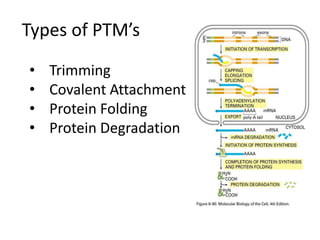
Types of PTM’s
• Trimming
• Covalent Attachment
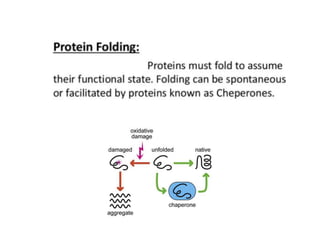
• Protein Folding
• Protein Degradation
Trimming
• Insulin is synthesized in the cells and it is in
inactive form that it is can’t perform it’s
function.
• For the proper functioning of the insulin, its post
translational modifications occurs that have
involve the removal of the part of protein to
convert it into three dimensional and fully active
form
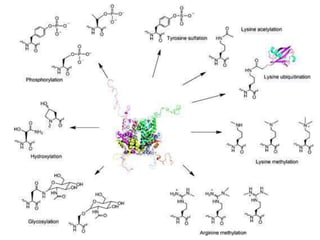
• Phosphorylation
• Glycosylation
• Ubiquitination
• S-Nitrosylation
• Methylation
• N-Acetylation
• Lipidation
• Proteolysis
Types of Post Translational
Modifications of Proteins
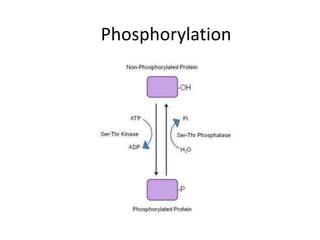
Phosphorylation
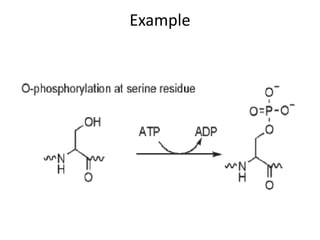
• Addition of phosphate group to a protein.
• Principally on serine, threonine or tyrosine
residues.
• Also known as Phospho regulation.
• Critical role in cell cycle, growth, apoptosis
and signal transduction pathways.
Protein kinases
ATP + protein ———————> phosphoprotein + ADP
Phosphorylation
Example
• The covalent attachment of oligosaccharides
• Addition of glycosyl group or carbohydrate
group to a protein.
• Principally on Asparagine, hydroxylysine,
serine or threonine.
• Significant effect on protein folding,
conformation, distribution, stability and
activity.
Glycosylation
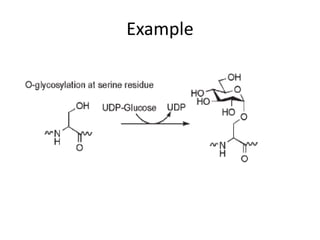
Example
• N-Linked glycans
– attached to nitrogen of Asparagine or arginine side
chains.
• O-Linked glycans
– attached to hydroxy oxygen of serine,threonine
• Phospho glycans
– linked through the phosphate of serine.
• C-Linked glycans
– Rare form, Sugar is added to a carbon on tryptophan
side chain.
Classes of Glycans
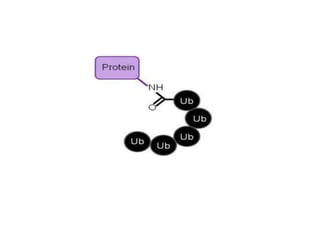
• Ubiquitin is a small regulatory protein that can
be attached to the proteins and label them for
destruction.
• Effects in cell cycle regulation, control of
proliferation and differentiation, programmed
cell death (apoptosis), DNA repair, immune
and inflammatory processes and organelle
biogenesis.
Ubiquitination
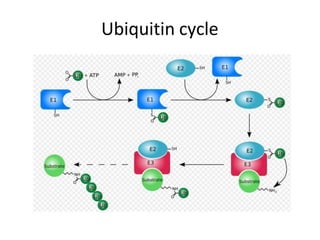
Ubiquitin cycle
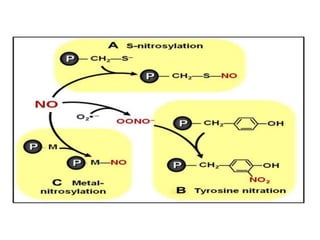
• Nitrosyl (NO) group is added to the protein.
• NO a chemical messanger that reacts with free
cysteine residues to form S-nitrothiols.
• Used by cells to stabilize proteins, regulate
gene expression.
S-Nitrosylation
• Addition of methyl group to a protein.
• Usually at lysine or arginine residues.
• Binds on nitrogen and oxygen of proteins
• Methyl donor is S-adenosylmethionine (SAM)
• Enzyme for this is methyltransferase
• Methylation of lysine residues in histones in
DNA is important regulator of chromatin
structure
Alkylation/Methylation
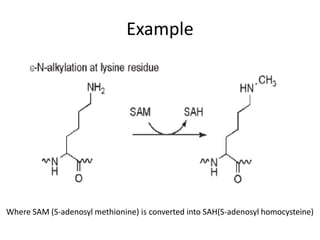
Example
Where SAM (S-adenosyl methionine) is converted into SAH(S-adenosyl homocysteine)
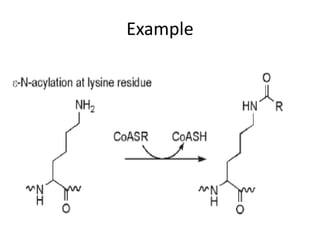
• Addition of acetyl group to the nitrogen.
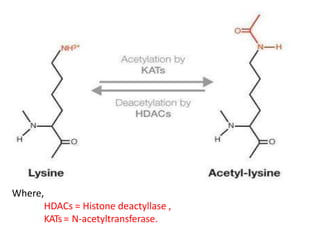
• Histones are acetylated on lysine residues in
the N-terminal tail as a part of gene
regulation.
• Involved in regulation of transcription factors,
effector proteins, molecular chaperons and
cytoskeletal proteins.
• Methionine aminopeptidase (MAP) is an
enzyme responsible for N-terminal acetylation
N-Acetylation
Example
Where,
HDACs = Histone deactyllase ,
KATs= N-acetyltransferase.
• Lipidation attachment of a lipid group, such as
a fatty acid, covalently to a protein.
• In general, lipidation helps in cellular
localization and targeting signals, membrane
tethering and as mediator of protein-protein
interactions.
Lipidation
• C-terminal glycosyl phosphatidylinositol (GPI)
anchor
• N-terminal myristoylation
• S-palmitoylation
• S-prenylation
Types of lipidation
C-terminal glycosyl
phosphatidylinositol (GPI) anchor
• GPI anchors tether cell surface proteins to the
plasma membrane
• GPI-anchored proteins are often localized to
cholesterol- and sphingolipid-rich lipids, which
act as signaling platforms on the plasma
membrane.
N-myristoylation
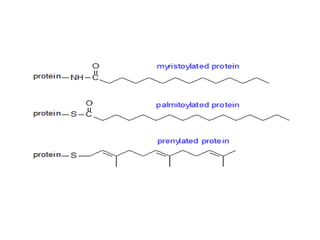
• It is the attachment of myristoyl group a 14-
carbon saturated fatty acid (C14) to a protein.
• It is facilitated by N-myristoyltransferase (NMT)
and uses myristoyl-CoA as the substrate.
S-palmitoylation
• It is addition of C16 palmitoyl group from
palmitoyl-CoA
• Palmitoyl acyl transferases (PATs)enzyme
favors this step.
• Reversed by thioesterases
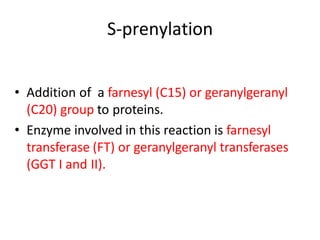
S-prenylation
• Addition of a farnesyl (C15) or geranylgeranyl
(C20) group to proteins.
• Enzyme involved in this reaction is farnesyl
transferase (FT) or geranylgeranyl transferases
(GGT I and II).
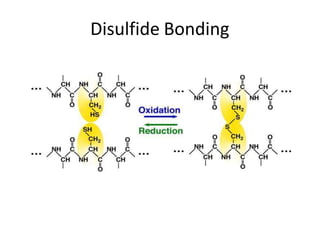
Disulfide Bonding
• Disulfide bonds are covalent bonds formed
between two cysteine residues (R-S-S-R).
• These bonds contribute to the correct folding of
proteins as other elements of secondary
structure
Disulfide Bonding
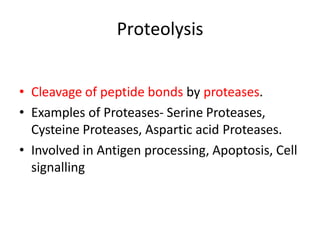
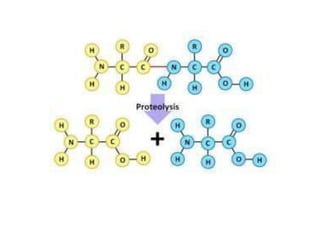
• Cleavage of peptide bonds by proteases.
• Examples of Proteases- Serine Proteases,
Cysteine Proteases, Aspartic acid Proteases.
• Involved in Antigen processing, Apoptosis, Cell
signalling
Proteolysis
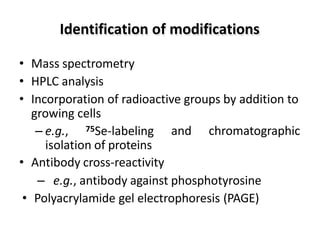
• Mass spectrometry
• HPLC analysis
• Incorporation of radioactive groups by addition to
growing cells
and chromatographic
– e.g., 75Se-labeling
isolation of proteins
• Antibody cross-reactivity
– e.g., antibody against phosphotyrosine
• Polyacrylamide gel electrophoresis (PAGE)
Identification of modifications
THANK YOU

post translational modification.pptx

  • 1.
  • 2.
    • It isthe chemical modification of protein after its translation. • Key role in functional Proteomics. • They regulate activity, localization and interaction with other cellular molecules such as proteins, nucleic acids, lipids and cofactors. Introduction
  • 3.
    Types of PTM’s •Trimming • Covalent Attachment • Protein Folding • Protein Degradation
  • 4.
    Trimming • Insulin issynthesized in the cells and it is in inactive form that it is can’t perform it’s function. • For the proper functioning of the insulin, its post translational modifications occurs that have involve the removal of the part of protein to convert it into three dimensional and fully active form
  • 6.
    • Phosphorylation • Glycosylation •Ubiquitination • S-Nitrosylation • Methylation • N-Acetylation • Lipidation • Proteolysis Types of Post Translational Modifications of Proteins
  • 8.
    Phosphorylation • Addition ofphosphate group to a protein. • Principally on serine, threonine or tyrosine residues. • Also known as Phospho regulation. • Critical role in cell cycle, growth, apoptosis and signal transduction pathways. Protein kinases ATP + protein ———————> phosphoprotein + ADP
  • 9.
  • 10.
  • 11.
    • The covalentattachment of oligosaccharides • Addition of glycosyl group or carbohydrate group to a protein. • Principally on Asparagine, hydroxylysine, serine or threonine. • Significant effect on protein folding, conformation, distribution, stability and activity. Glycosylation
  • 12.
  • 13.
    • N-Linked glycans –attached to nitrogen of Asparagine or arginine side chains. • O-Linked glycans – attached to hydroxy oxygen of serine,threonine • Phospho glycans – linked through the phosphate of serine. • C-Linked glycans – Rare form, Sugar is added to a carbon on tryptophan side chain. Classes of Glycans
  • 14.
    • Ubiquitin isa small regulatory protein that can be attached to the proteins and label them for destruction. • Effects in cell cycle regulation, control of proliferation and differentiation, programmed cell death (apoptosis), DNA repair, immune and inflammatory processes and organelle biogenesis. Ubiquitination
  • 15.
  • 17.
    • Nitrosyl (NO)group is added to the protein. • NO a chemical messanger that reacts with free cysteine residues to form S-nitrothiols. • Used by cells to stabilize proteins, regulate gene expression. S-Nitrosylation
  • 19.
    • Addition ofmethyl group to a protein. • Usually at lysine or arginine residues. • Binds on nitrogen and oxygen of proteins • Methyl donor is S-adenosylmethionine (SAM) • Enzyme for this is methyltransferase • Methylation of lysine residues in histones in DNA is important regulator of chromatin structure Alkylation/Methylation
  • 20.
    Example Where SAM (S-adenosylmethionine) is converted into SAH(S-adenosyl homocysteine)
  • 21.
    • Addition ofacetyl group to the nitrogen. • Histones are acetylated on lysine residues in the N-terminal tail as a part of gene regulation. • Involved in regulation of transcription factors, effector proteins, molecular chaperons and cytoskeletal proteins. • Methionine aminopeptidase (MAP) is an enzyme responsible for N-terminal acetylation N-Acetylation
  • 22.
  • 23.
    Where, HDACs = Histonedeactyllase , KATs= N-acetyltransferase.
  • 24.
    • Lipidation attachmentof a lipid group, such as a fatty acid, covalently to a protein. • In general, lipidation helps in cellular localization and targeting signals, membrane tethering and as mediator of protein-protein interactions. Lipidation
  • 25.
    • C-terminal glycosylphosphatidylinositol (GPI) anchor • N-terminal myristoylation • S-palmitoylation • S-prenylation Types of lipidation
  • 26.
    C-terminal glycosyl phosphatidylinositol (GPI)anchor • GPI anchors tether cell surface proteins to the plasma membrane • GPI-anchored proteins are often localized to cholesterol- and sphingolipid-rich lipids, which act as signaling platforms on the plasma membrane.
  • 27.
    N-myristoylation • It isthe attachment of myristoyl group a 14- carbon saturated fatty acid (C14) to a protein. • It is facilitated by N-myristoyltransferase (NMT) and uses myristoyl-CoA as the substrate.
  • 28.
    S-palmitoylation • It isaddition of C16 palmitoyl group from palmitoyl-CoA • Palmitoyl acyl transferases (PATs)enzyme favors this step. • Reversed by thioesterases
  • 30.
    S-prenylation • Addition ofa farnesyl (C15) or geranylgeranyl (C20) group to proteins. • Enzyme involved in this reaction is farnesyl transferase (FT) or geranylgeranyl transferases (GGT I and II).
  • 31.
    Disulfide Bonding • Disulfidebonds are covalent bonds formed between two cysteine residues (R-S-S-R). • These bonds contribute to the correct folding of proteins as other elements of secondary structure
  • 32.
  • 34.
    • Cleavage ofpeptide bonds by proteases. • Examples of Proteases- Serine Proteases, Cysteine Proteases, Aspartic acid Proteases. • Involved in Antigen processing, Apoptosis, Cell signalling Proteolysis
  • 37.
    • Mass spectrometry •HPLC analysis • Incorporation of radioactive groups by addition to growing cells and chromatographic – e.g., 75Se-labeling isolation of proteins • Antibody cross-reactivity – e.g., antibody against phosphotyrosine • Polyacrylamide gel electrophoresis (PAGE) Identification of modifications
  • 40.