POLLUTION
POLLUTION?
What is
 the introduction of harmful
materials into the environment.
 These harmful materials are called
pollutants. Pollutants can be natural,
such as volcanic ash. They can also be
created by human activity, such as trash
or runoff produced by factories.
Pollutants damage the quality of air,
water, and land.
TYPES OF
POLLUTION
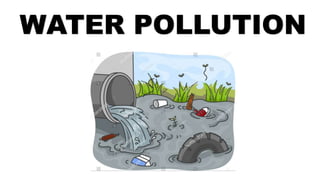
WATER POLLUTION
Water pollution is any
contamination of water with
chemicals or other hazardous
substances that are
detrimental to human, animal,
or plant health.
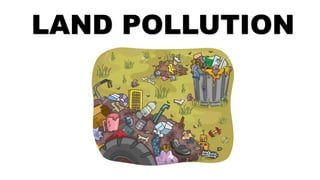
LAND POLLUTION
Land pollution refers to the
deterioration of the earth's land
surfaces at and below ground
level. It is caused by the
accumulation of solid and liquid
waste materials that contaminate
groundwater and soil.
AIR POLLUTION
Air pollution is contamination of the
indoor or outdoor environment by
any chemical, physical or biological
agent that modifies the natural
characteristics of the atmosphere.
Vehicle emissions, fuel oils and natural gas
to heat homes, by-products of
manufacturing and power generation,
particularly coal-fueled power plants, and
fumes from chemical production are the
primary sources of human-made air
pollution.
NOISE POLLUTION
Noise pollution is an invisible danger. It
cannot be seen, but it is present
nonetheless, both on land and under the
sea. Noise pollution is considered to be any
unwanted or disturbing sound that affects
the health and well-being of humans and
other organisms.
What is the main cause of noise
pollution?
Some of its major causes are vehicles,
aircraft, industrial machines, loudspeakers,
crackers, etc. When used at high volume,
some other appliances also contribute to
noise pollution, like television, transistor,
radio, etc.
How can we save the
ENVIRONMENT?
1. Reduce, reuse, and recycle.
Cut down on what you throw away. Follow the
three "R's" to conserve natural resources and
landfill space.
2. Volunteer.
Volunteer for
cleanups in your
community. You
can get involved in
protecting your
watershed, too.
3. Educate.
When you further your own education, you can help
others understand the importance and value of our
natural resources.
4. Conserve water.
The less water you use,
the less runoff and
wastewater that
eventually end up in the
ocean.
5. Shop wisely.
Buy less plastic
and bring a
reusable
shopping bag.
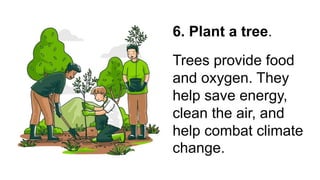
6. Plant a tree.
Trees provide food
and oxygen. They
help save energy,
clean the air, and
help combat climate
change.
7. Clean-up drives are an effective way
to clear waste from natural habitats.
POLLUTION.pptx

POLLUTION.pptx

  • 1.
  • 2.
    POLLUTION? What is  theintroduction of harmful materials into the environment.
  • 3.
     These harmfulmaterials are called pollutants. Pollutants can be natural, such as volcanic ash. They can also be created by human activity, such as trash or runoff produced by factories. Pollutants damage the quality of air, water, and land.
  • 4.
  • 5.
  • 6.
    Water pollution isany contamination of water with chemicals or other hazardous substances that are detrimental to human, animal, or plant health.
  • 7.
  • 8.
    Land pollution refersto the deterioration of the earth's land surfaces at and below ground level. It is caused by the accumulation of solid and liquid waste materials that contaminate groundwater and soil.
  • 9.
  • 10.
    Air pollution iscontamination of the indoor or outdoor environment by any chemical, physical or biological agent that modifies the natural characteristics of the atmosphere.
  • 11.
    Vehicle emissions, fueloils and natural gas to heat homes, by-products of manufacturing and power generation, particularly coal-fueled power plants, and fumes from chemical production are the primary sources of human-made air pollution.
  • 12.
  • 13.
    Noise pollution isan invisible danger. It cannot be seen, but it is present nonetheless, both on land and under the sea. Noise pollution is considered to be any unwanted or disturbing sound that affects the health and well-being of humans and other organisms.
  • 14.
    What is themain cause of noise pollution? Some of its major causes are vehicles, aircraft, industrial machines, loudspeakers, crackers, etc. When used at high volume, some other appliances also contribute to noise pollution, like television, transistor, radio, etc.
  • 15.
    How can wesave the ENVIRONMENT?
  • 16.
    1. Reduce, reuse,and recycle. Cut down on what you throw away. Follow the three "R's" to conserve natural resources and landfill space.
  • 17.
    2. Volunteer. Volunteer for cleanupsin your community. You can get involved in protecting your watershed, too.
  • 18.
    3. Educate. When youfurther your own education, you can help others understand the importance and value of our natural resources.
  • 19.
    4. Conserve water. Theless water you use, the less runoff and wastewater that eventually end up in the ocean.
  • 20.
    5. Shop wisely. Buyless plastic and bring a reusable shopping bag.
  • 21.
    6. Plant atree. Trees provide food and oxygen. They help save energy, clean the air, and help combat climate change.
  • 22.
    7. Clean-up drivesare an effective way to clear waste from natural habitats.