POLLUTION
11v grade O.Enkh-Ujin
What is pollution?
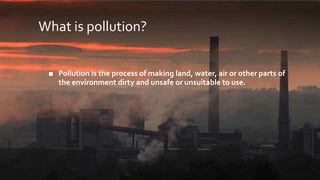
■ Pollution is the process of making land, water, air or other parts of
the environment dirty and unsafe or unsuitable to use.
Do you think one person does it all?
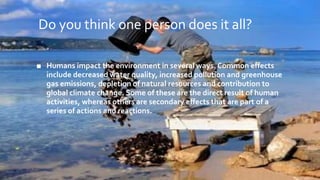
■ Humans impact the environment in several ways. Common effects
include decreased water quality, increased pollution and greenhouse
gas emissions, depletion of natural resources and contribution to
global climate change. Some of these are the direct result of human
activities, whereas others are secondary effects that are part of a
series of actions and reactions.
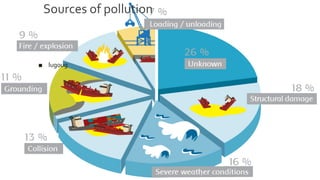
Sources of pollution
■ lugoug
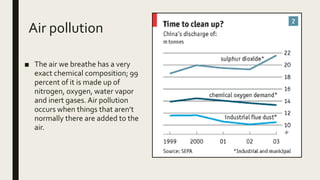
Air pollution
■ The air we breathe has a very
exact chemical composition; 99
percent of it is made up of
nitrogen, oxygen, water vapor
and inert gases. Air pollution
occurs when things that aren’t
normally there are added to the
air.
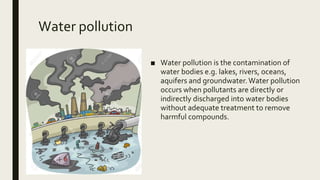
Water pollution
■ Water pollution is the contamination of
water bodies e.g. lakes, rivers, oceans,
aquifers and groundwater.Water pollution
occurs when pollutants are directly or
indirectly discharged into water bodies
without adequate treatment to remove
harmful compounds.
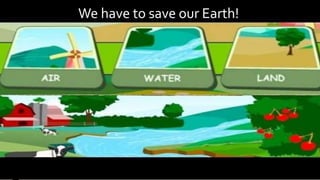
We have to save our Earth!
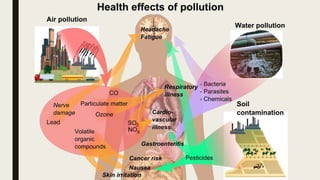
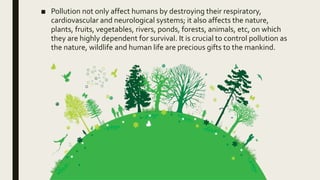
■ Pollution not only affect humans by destroying their respiratory,
cardiovascular and neurological systems; it also affects the nature,
plants, fruits, vegetables, rivers, ponds, forests, animals, etc, on which
they are highly dependent for survival. It is crucial to control pollution as
the nature, wildlife and human life are precious gifts to the mankind.

Pollution11v

  • 1.
  • 2.
    What is pollution? ■Pollution is the process of making land, water, air or other parts of the environment dirty and unsafe or unsuitable to use.
  • 3.
    Do you thinkone person does it all? ■ Humans impact the environment in several ways. Common effects include decreased water quality, increased pollution and greenhouse gas emissions, depletion of natural resources and contribution to global climate change. Some of these are the direct result of human activities, whereas others are secondary effects that are part of a series of actions and reactions.
  • 4.
  • 5.
    Air pollution ■ Theair we breathe has a very exact chemical composition; 99 percent of it is made up of nitrogen, oxygen, water vapor and inert gases. Air pollution occurs when things that aren’t normally there are added to the air.
  • 6.
    Water pollution ■ Waterpollution is the contamination of water bodies e.g. lakes, rivers, oceans, aquifers and groundwater.Water pollution occurs when pollutants are directly or indirectly discharged into water bodies without adequate treatment to remove harmful compounds.
  • 9.
    We have tosave our Earth!
  • 10.
    ■ Pollution notonly affect humans by destroying their respiratory, cardiovascular and neurological systems; it also affects the nature, plants, fruits, vegetables, rivers, ponds, forests, animals, etc, on which they are highly dependent for survival. It is crucial to control pollution as the nature, wildlife and human life are precious gifts to the mankind.

Editor's Notes

  • #3 This can be done through the introduction of a contaminant into a natural environment, but the contaminant doesn't need to be tangible. Things as simple as light, sound and temperature can be considered pollutants when introduced artificially into an environment.