BY SUGARSWEET
ef
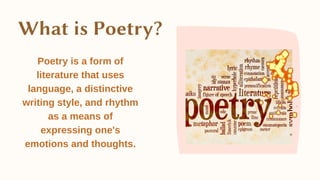
Poetry is a form of
literature that uses
language, a distinctive
writing style, and rhythm
as a means of
expressing one's
emotions and thoughts.
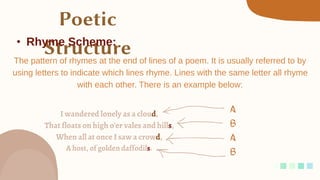
I wandered lonely as a cloud,
That floats on high o'er vales and hills,
When all at once I saw a crowd,
A host, of golden daffodils.
• Rhyme Scheme:
The pattern of rhymes at the end of lines of a poem. It is usually referred to by
using letters to indicate which lines rhyme. Lines with the same letter all rhyme
with each other. There is an example below:
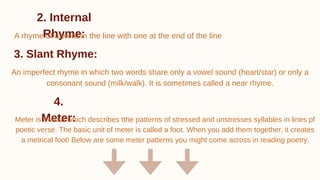
2. Internal
Rhyme:
A rhyme of a word in the line with one at the end of the line
3. Slant Rhyme:
An imperfect rhyme in which two words share only a vowel sound (heart/star) or only a
consonant sound (milk/walk). It is sometimes called a near rhyme.
4.
Meter:
Meter is a word which describes tthe patterns of stressed and unstresses syllables in lines pf
poetic verse. The basic unit of meter is called a foot. When you add them together, it creates
a metrical foot! Below are some meter patterns you might come across in reading poetry.
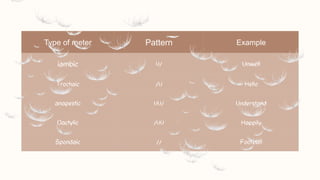
Type of meter Pattern Example
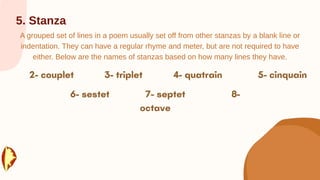
5. Stanza
A grouped set of lines in a poem usually set off from other stanzas by a blank line or
indentation. They can have a regular rhyme and meter, but are not required to have
either. Below are the names of stanzas based on how many lines they have.
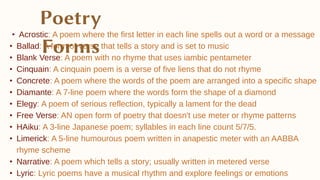
• Acrostic: A poem where the first letter in each line spells out a word or a message
• Ballad: A form of verse that tells a story and is set to music
• Blank Verse: A poem with no rhyme that uses iambic pentameter
• Cinquain: A cinquain poem is a verse of five liens that do not rhyme
• Concrete: A poem where the words of the poem are arranged into a specific shape
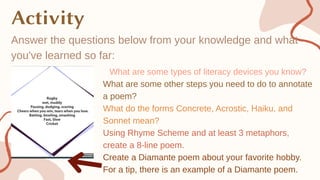
• Diamante: A 7-line poem where the words form the shape of a diamond
• Elegy: A poem of serious reflection, typically a lament for the dead
• Free Verse: AN open form of poetry that doesn't use meter or rhyme patterns
• HAiku: A 3-line Japanese poem; syllables in each line count 5/7/5.
• Limerick: A 5-line humourous poem written in anapestic meter with an AABBA
rhyme scheme
• Narrative: A poem which tells a story; usually written in metered verse
• Lyric: Lyric poems have a musical rhythm and explore feelings or emotions
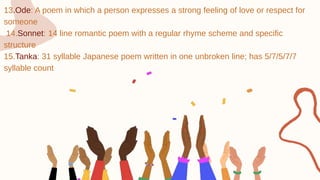
13.Ode: A poem in which a person expresses a strong feeling of love or respect for
someone
14.Sonnet: 14 line romantic poem with a regular rhyme scheme and specific
structure
15.Tanka: 31 syllable Japanese poem written in one unbroken line; has 5/7/5/7/7
syllable count
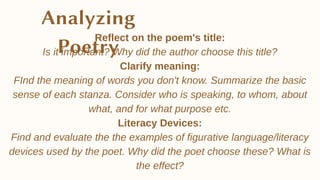
Reflect on the poem's title:
Is it important? Why did the author choose this title?
Clarify meaning:
FInd the meaning of words you don't know. Summarize the basic
sense of each stanza. Consider who is speaking, to whom, about
what, and for what purpose etc.
Literacy Devices:
Find and evaluate the the examples of figurative language/literacy
devices used by the poet. Why did the poet choose these? What is
the effect?
Answer the questions below from your knowledge and what
you've learned so far:
What are some types of literacy devices you know?
What are some other steps you need to do to annotate
a poem?
What do the forms Concrete, Acrostic, Haiku, and
Sonnet mean?
Using Rhyme Scheme and at least 3 metaphors,
create a 8-line poem.
Create a Diamante poem about your favorite hobby.
For a tip, there is an example of a Diamante poem.
Thank you

Poetry.pptx

  • 1.
  • 2.
    ef Poetry is aform of literature that uses language, a distinctive writing style, and rhythm as a means of expressing one's emotions and thoughts.
  • 3.
    I wandered lonelyas a cloud, That floats on high o'er vales and hills, When all at once I saw a crowd, A host, of golden daffodils. • Rhyme Scheme: The pattern of rhymes at the end of lines of a poem. It is usually referred to by using letters to indicate which lines rhyme. Lines with the same letter all rhyme with each other. There is an example below:
  • 4.
    2. Internal Rhyme: A rhymeof a word in the line with one at the end of the line 3. Slant Rhyme: An imperfect rhyme in which two words share only a vowel sound (heart/star) or only a consonant sound (milk/walk). It is sometimes called a near rhyme. 4. Meter: Meter is a word which describes tthe patterns of stressed and unstresses syllables in lines pf poetic verse. The basic unit of meter is called a foot. When you add them together, it creates a metrical foot! Below are some meter patterns you might come across in reading poetry.
  • 5.
    Type of meterPattern Example
  • 6.
    5. Stanza A groupedset of lines in a poem usually set off from other stanzas by a blank line or indentation. They can have a regular rhyme and meter, but are not required to have either. Below are the names of stanzas based on how many lines they have.
  • 7.
    • Acrostic: Apoem where the first letter in each line spells out a word or a message • Ballad: A form of verse that tells a story and is set to music • Blank Verse: A poem with no rhyme that uses iambic pentameter • Cinquain: A cinquain poem is a verse of five liens that do not rhyme • Concrete: A poem where the words of the poem are arranged into a specific shape • Diamante: A 7-line poem where the words form the shape of a diamond • Elegy: A poem of serious reflection, typically a lament for the dead • Free Verse: AN open form of poetry that doesn't use meter or rhyme patterns • HAiku: A 3-line Japanese poem; syllables in each line count 5/7/5. • Limerick: A 5-line humourous poem written in anapestic meter with an AABBA rhyme scheme • Narrative: A poem which tells a story; usually written in metered verse • Lyric: Lyric poems have a musical rhythm and explore feelings or emotions
  • 8.
    13.Ode: A poemin which a person expresses a strong feeling of love or respect for someone 14.Sonnet: 14 line romantic poem with a regular rhyme scheme and specific structure 15.Tanka: 31 syllable Japanese poem written in one unbroken line; has 5/7/5/7/7 syllable count
  • 9.
    Reflect on thepoem's title: Is it important? Why did the author choose this title? Clarify meaning: FInd the meaning of words you don't know. Summarize the basic sense of each stanza. Consider who is speaking, to whom, about what, and for what purpose etc. Literacy Devices: Find and evaluate the the examples of figurative language/literacy devices used by the poet. Why did the poet choose these? What is the effect?
  • 10.
    Answer the questionsbelow from your knowledge and what you've learned so far: What are some types of literacy devices you know? What are some other steps you need to do to annotate a poem? What do the forms Concrete, Acrostic, Haiku, and Sonnet mean? Using Rhyme Scheme and at least 3 metaphors, create a 8-line poem. Create a Diamante poem about your favorite hobby. For a tip, there is an example of a Diamante poem.
  • 11.