MS.R.JEEVA M.Sc., M.Phil.,
HEAD & ASSISTANT PROFESSOR
DEPARTMENT OF MICROBIOLOGY
SRI SARADA NIKETAN COLLEGE OF
SCIENCE FOR WOMEN,KARUR
PLANT DISEASE
SYMPTOMS,PATHOGENS,CONTROL
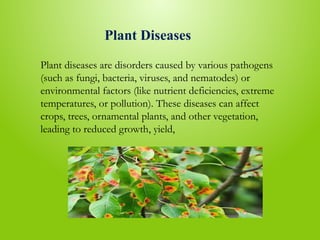
Plant Diseases
Plant diseases are disorders caused by various pathogens
(such as fungi, bacteria, viruses, and nematodes) or
environmental factors (like nutrient deficiencies, extreme
temperatures, or pollution). These diseases can affect
crops, trees, ornamental plants, and other vegetation,
leading to reduced growth, yield,
Plant disease pathogens may be spread
in many ways
• by wind
• rain
• animals
• soil
• vegetative propagation
• contaminated equipment and tools
• infected seed stock
symptoms:
 Dead spot in leaves or bark
 Unwanted colour or shape
 Swelling on root or branches
1. Fungal Diseases
Fungi are among the most common pathogens that cause plant
diseases. They thrive in warm, moist conditions and often attack plants
when they are stressed.
 Powdery Mildew: A white, powdery fungal growth on leaves, stems,
and buds. It affects many types of plants, including roses, cucumbers,
and lilacs.
 Downy Mildew: A similar fungal infection that causes yellowing and
curling of leaves, often with a grayish, downy growth on the underside.
 Rusts: Characterized by orange, yellow, or red pustules that appear on
the leaves, stems, or flowers of affected plants. Rusts can significantly
reduce crop yields.
 Blight: Caused by several fungal species (like Phytophthora), blight leads
to the rapid yellowing and wilting of leaves, stems, and fruit. Common
in tomatoes, potatoes, and beans.
2. Bacterial Diseases
Bacterial pathogens can cause a range of symptoms,
from wilting and leaf spots to soft rots and galls.
 Bacterial Wilt: Caused by Ralstonia solanacearum, this
disease causes sudden wilting in plants like tomatoes,
peppers, and potatoes.
 Bacterial Spot: Affects fruits and leaves, causing water-
soaked lesions and often leading to premature fruit
drop. It’s common in tomatoes, peppers, and stone
fruits.
 Fire Blight: Affects apples, pears, and other members
of the Rosaceae family, causing branches to wilt and die
rapidly, often turning dark and resembling a burned
appearance.
3. Viral Diseases
Viral infections are often difficult to control once
they have infected a plant. Symptoms can include mottled
or yellowing leaves, stunted growth, and deformation of
flowers or fruit.
 Tobacco Mosaic Virus (TMV): A virus that causes
mottled, yellowing leaves and stunted growth in a wide
range of plants, including tomatoes, peppers, and
tobacco.
 Cucumber Mosaic Virus (CMV): This virus causes
yellowing, curling, and mosaic patterns on the leaves of
cucumbers, melons, and other vegetables.
 Tomato Spotted Wilt Virus (TSWV): Causes dark
spots on leaves and fruit, stunted growth, and
yellowing. It's spread by thrips.
4. Nematode Diseases
Nematodes are microscopic worms that
attack plant roots. They can cause root rot, stunted
growth, and yellowing of leaves.
 Root Knot Nematodes: These nematodes
cause galls or knots to form on roots, affecting
nutrient and water uptake. They are particularly
damaging to crops like tomatoes, peppers, and
potatoes.
 Cyst Nematodes: Form cysts on the roots,
stunting plant growth and causing yield
reductions. Common in soybeans, potatoes, and
carrots.
Environmental Stress and Disorders
While not caused by pathogens, environmental
factors can also lead to plant diseases or disorders.
 Nutrient Deficiencies: A lack of essential nutrients
(like nitrogen, phosphorus, potassium, or iron) can
cause chlorosis (yellowing), stunted growth, and
other symptoms.
 Heat Stress: Excessive heat can cause wilting, leaf
scorch, and reduced plant vigor.
 Drought Stress: Prolonged lack of water can lead to
wilting, leaf drop, and root damage.
 Frost Damage: Exposure to freezing temperatures
can cause cell death in plants, leading to browning,
blackening, and wilting of leaves.
Prevention and Management:
 Good Cultural Practices: Proper spacing, watering, and
pruning can help prevent many diseases. Avoiding
wetting the foliage during watering can minimize fungal
infections.
 Resistant Varieties: Planting disease-resistant varieties
can significantly reduce the impact of common diseases.
 Fungicides and Bactericides: These can be used to
manage some fungal and bacterial diseases, but they
should be applied according to recommended guidelines
to avoid resistance development.
 Crop Rotation: Helps reduce the buildup of pathogens
in the soil by alternating plant families.
 Sanitation: Removing infected plant material and
cleaning tools between uses can prevent the spread of
diseases.
Plant disease symptoms,pathogens,control

Plant disease symptoms,pathogens,control

  • 1.
    MS.R.JEEVA M.Sc., M.Phil., HEAD& ASSISTANT PROFESSOR DEPARTMENT OF MICROBIOLOGY SRI SARADA NIKETAN COLLEGE OF SCIENCE FOR WOMEN,KARUR PLANT DISEASE SYMPTOMS,PATHOGENS,CONTROL
  • 2.
    Plant Diseases Plant diseasesare disorders caused by various pathogens (such as fungi, bacteria, viruses, and nematodes) or environmental factors (like nutrient deficiencies, extreme temperatures, or pollution). These diseases can affect crops, trees, ornamental plants, and other vegetation, leading to reduced growth, yield,
  • 3.
    Plant disease pathogensmay be spread in many ways • by wind • rain • animals • soil • vegetative propagation • contaminated equipment and tools • infected seed stock
  • 4.
    symptoms:  Dead spotin leaves or bark  Unwanted colour or shape  Swelling on root or branches 1. Fungal Diseases Fungi are among the most common pathogens that cause plant diseases. They thrive in warm, moist conditions and often attack plants when they are stressed.  Powdery Mildew: A white, powdery fungal growth on leaves, stems, and buds. It affects many types of plants, including roses, cucumbers, and lilacs.  Downy Mildew: A similar fungal infection that causes yellowing and curling of leaves, often with a grayish, downy growth on the underside.  Rusts: Characterized by orange, yellow, or red pustules that appear on the leaves, stems, or flowers of affected plants. Rusts can significantly reduce crop yields.  Blight: Caused by several fungal species (like Phytophthora), blight leads to the rapid yellowing and wilting of leaves, stems, and fruit. Common in tomatoes, potatoes, and beans.
  • 5.
    2. Bacterial Diseases Bacterialpathogens can cause a range of symptoms, from wilting and leaf spots to soft rots and galls.  Bacterial Wilt: Caused by Ralstonia solanacearum, this disease causes sudden wilting in plants like tomatoes, peppers, and potatoes.  Bacterial Spot: Affects fruits and leaves, causing water- soaked lesions and often leading to premature fruit drop. It’s common in tomatoes, peppers, and stone fruits.  Fire Blight: Affects apples, pears, and other members of the Rosaceae family, causing branches to wilt and die rapidly, often turning dark and resembling a burned appearance.
  • 6.
    3. Viral Diseases Viralinfections are often difficult to control once they have infected a plant. Symptoms can include mottled or yellowing leaves, stunted growth, and deformation of flowers or fruit.  Tobacco Mosaic Virus (TMV): A virus that causes mottled, yellowing leaves and stunted growth in a wide range of plants, including tomatoes, peppers, and tobacco.  Cucumber Mosaic Virus (CMV): This virus causes yellowing, curling, and mosaic patterns on the leaves of cucumbers, melons, and other vegetables.  Tomato Spotted Wilt Virus (TSWV): Causes dark spots on leaves and fruit, stunted growth, and yellowing. It's spread by thrips.
  • 7.
    4. Nematode Diseases Nematodesare microscopic worms that attack plant roots. They can cause root rot, stunted growth, and yellowing of leaves.  Root Knot Nematodes: These nematodes cause galls or knots to form on roots, affecting nutrient and water uptake. They are particularly damaging to crops like tomatoes, peppers, and potatoes.  Cyst Nematodes: Form cysts on the roots, stunting plant growth and causing yield reductions. Common in soybeans, potatoes, and carrots.
  • 8.
    Environmental Stress andDisorders While not caused by pathogens, environmental factors can also lead to plant diseases or disorders.  Nutrient Deficiencies: A lack of essential nutrients (like nitrogen, phosphorus, potassium, or iron) can cause chlorosis (yellowing), stunted growth, and other symptoms.  Heat Stress: Excessive heat can cause wilting, leaf scorch, and reduced plant vigor.  Drought Stress: Prolonged lack of water can lead to wilting, leaf drop, and root damage.  Frost Damage: Exposure to freezing temperatures can cause cell death in plants, leading to browning, blackening, and wilting of leaves.
  • 9.
    Prevention and Management: Good Cultural Practices: Proper spacing, watering, and pruning can help prevent many diseases. Avoiding wetting the foliage during watering can minimize fungal infections.  Resistant Varieties: Planting disease-resistant varieties can significantly reduce the impact of common diseases.  Fungicides and Bactericides: These can be used to manage some fungal and bacterial diseases, but they should be applied according to recommended guidelines to avoid resistance development.  Crop Rotation: Helps reduce the buildup of pathogens in the soil by alternating plant families.  Sanitation: Removing infected plant material and cleaning tools between uses can prevent the spread of diseases.