PLACENTA
ABRUPTION
GROUP TWO (2)
DEFINITION
•Placenta abruption is an abnormal implantation of the
placenta in the lower segment of the uterus near or over
the cervical os instead of attaching to the fundus.
•It is one of the antepartum hemorrhage where the
bleeding occurs due to premature separation of normally
situated placenta.
INCIDENCE
•Placenta previa affects approximately
1 in 200 term pregnancies
Perinatal mortality 15 to 20%
Maternal mortality 2 to 5%
PATHOGENESIS
• Premature separation is initiated by hemorrhage into the decidua's
basalis.
• The collected blood (decidual haematoma)
• The decidual hematoma may be small and self limited
• If major spiral artery ruptures, a big hematoma is formed.
• As the uterus remains distended by the conceptus, it fails to contract
and therefore fails to compress the torn bleeding points.
RISK FACTORS
The following are the risk factors associated with Placenta Abruption:
• History of previous placenta previa
• History of previous cesarean birth
• History of prior suction curettage
• Advanced maternal age
• Multifetal gestation, multiparity, or closely spaced pregnancies
• Smoking
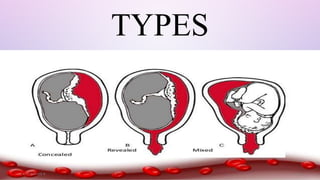
TYPES
REVEALED
•The blood insinuates
downward the membranes
and desidua.
•The blood comes out the
cervical canal to be visible
externally.
CONCEALED
• The blood collect behind the
separated placenta or collected
in between the membranes.
• The collected blood is
prevented from coming out the
cervix by presenting parts on
lower segment.
MIXED
•Some parts of the blood collects
inside(concealed) and a part is
expelled out (revealed).
MANAGEMENT
•MANAGEMENT OPTIONS :
1.IMMEDIATE DELIVERY
2.MANAGEMENT OF COMPLICATION
3.EXPECTANT MANAGEMENT
IMMEDIATE DELIVERY
• THE PATIENT IN LABOUR
•LABOUR IS ACCELERATED BY LOW RUPTURE OF THE MEMBRAES,OXYTOCIN DRIP
MAY BE STARTED TO ACCELERATE LABOUR
•VAGINAL DELIVEY IS FAVORED IN CASE WITH
1. PLACENTAL ABRUPTION WITH DEAD FETUS
2. DIC IS PRESENT
• THE PATIENT NOT IN LABOUR
a) INDUCTION OF THE LABOUR
b) CESAREAN SECTION
MANAGEMENT OF
COMPLICATION
•Retro placental clot is expelled simultaneously with
delivery of baby
•- Oxytocin
•CESAREAN SECTION
• Indications
- Severe abruption with live fetus & very rapid delivery is needed
EXPECTANT
MANAGEMENT
•If bleeding is mild ,no fetal distress , immature fetus
•The goal of the expectant management is prolong the
pregnancy with hope of improving maturity and survival.
•Patient should be monitored in the labour ward for 24-48
hrs to further separation of the placenta may cause fetal
death and maternal complication.
COMPLICATIONS
•MATERNAL COMPLICATIONS:
• ACUTE TUBULAR NECROSIS
• COUVELAIRE UTERUS: REFERS TO BLOOD EXTRAVASATING BETWEEN THE
MYOMETRIAL FIBERS.
• POSTPARTUM HEMORRHAGE
• FETO-MATERNAL HAEMORRHAGE.
• MATERNAL MORTALITY
• RECURRENCE: 10% AFTER 1ST ATTACK, 25% AFTER 2ND ATTACK
CONT’D
•Fetal complications:
• Impaired fetal growth and/or Hypoxic
Ischemic Encephalopathy (HIE)
REFERENCES
• BERGAKKER, S. A. (2010). CASE REPORT: MANAGEMENT OF ELECTIVE CESAREAN
• DELIVERY IN THE PRESENCE OF PLACENTA PREVIAAND PLACENTAACCRETA. AANA JOURNAL,
• 78(5), 380-384.
• CHAMBERLAIN, G. (2006). BRITISH MATERNAL MORTALITY IN THE 19TH AND EARLY 20TH
• CENTURIES. JOURNAL OF THE ROYAL SOCIETY OF MEDICINE, 99(11), 559-563.
• KIM, K. J., & CHA, S. J. (2011). SUPRACERVICAL CERCLAGE WITH INTRACAVITARY
• BALLOON TO CONTROL BLEEDING ASSOCIATED WITH PLACENTA PREVIA. JOURNAL OF
PERINATAL
• MEDICINE, 39, 477-481.

PLACENTA ABRUPTION. DEFINITION AND CAUSES

  • 1.
  • 2.
    DEFINITION •Placenta abruption isan abnormal implantation of the placenta in the lower segment of the uterus near or over the cervical os instead of attaching to the fundus. •It is one of the antepartum hemorrhage where the bleeding occurs due to premature separation of normally situated placenta.
  • 4.
    INCIDENCE •Placenta previa affectsapproximately 1 in 200 term pregnancies Perinatal mortality 15 to 20% Maternal mortality 2 to 5%
  • 5.
    PATHOGENESIS • Premature separationis initiated by hemorrhage into the decidua's basalis. • The collected blood (decidual haematoma) • The decidual hematoma may be small and self limited • If major spiral artery ruptures, a big hematoma is formed. • As the uterus remains distended by the conceptus, it fails to contract and therefore fails to compress the torn bleeding points.
  • 6.
    RISK FACTORS The followingare the risk factors associated with Placenta Abruption: • History of previous placenta previa • History of previous cesarean birth • History of prior suction curettage • Advanced maternal age • Multifetal gestation, multiparity, or closely spaced pregnancies • Smoking
  • 7.
  • 8.
    REVEALED •The blood insinuates downwardthe membranes and desidua. •The blood comes out the cervical canal to be visible externally.
  • 9.
    CONCEALED • The bloodcollect behind the separated placenta or collected in between the membranes. • The collected blood is prevented from coming out the cervix by presenting parts on lower segment.
  • 10.
    MIXED •Some parts ofthe blood collects inside(concealed) and a part is expelled out (revealed).
  • 11.
    MANAGEMENT •MANAGEMENT OPTIONS : 1.IMMEDIATEDELIVERY 2.MANAGEMENT OF COMPLICATION 3.EXPECTANT MANAGEMENT
  • 12.
    IMMEDIATE DELIVERY • THEPATIENT IN LABOUR •LABOUR IS ACCELERATED BY LOW RUPTURE OF THE MEMBRAES,OXYTOCIN DRIP MAY BE STARTED TO ACCELERATE LABOUR •VAGINAL DELIVEY IS FAVORED IN CASE WITH 1. PLACENTAL ABRUPTION WITH DEAD FETUS 2. DIC IS PRESENT • THE PATIENT NOT IN LABOUR a) INDUCTION OF THE LABOUR b) CESAREAN SECTION
  • 13.
    MANAGEMENT OF COMPLICATION •Retro placentalclot is expelled simultaneously with delivery of baby •- Oxytocin •CESAREAN SECTION • Indications - Severe abruption with live fetus & very rapid delivery is needed
  • 14.
    EXPECTANT MANAGEMENT •If bleeding ismild ,no fetal distress , immature fetus •The goal of the expectant management is prolong the pregnancy with hope of improving maturity and survival. •Patient should be monitored in the labour ward for 24-48 hrs to further separation of the placenta may cause fetal death and maternal complication.
  • 15.
    COMPLICATIONS •MATERNAL COMPLICATIONS: • ACUTETUBULAR NECROSIS • COUVELAIRE UTERUS: REFERS TO BLOOD EXTRAVASATING BETWEEN THE MYOMETRIAL FIBERS. • POSTPARTUM HEMORRHAGE • FETO-MATERNAL HAEMORRHAGE. • MATERNAL MORTALITY • RECURRENCE: 10% AFTER 1ST ATTACK, 25% AFTER 2ND ATTACK
  • 16.
    CONT’D •Fetal complications: • Impairedfetal growth and/or Hypoxic Ischemic Encephalopathy (HIE)
  • 17.
    REFERENCES • BERGAKKER, S.A. (2010). CASE REPORT: MANAGEMENT OF ELECTIVE CESAREAN • DELIVERY IN THE PRESENCE OF PLACENTA PREVIAAND PLACENTAACCRETA. AANA JOURNAL, • 78(5), 380-384. • CHAMBERLAIN, G. (2006). BRITISH MATERNAL MORTALITY IN THE 19TH AND EARLY 20TH • CENTURIES. JOURNAL OF THE ROYAL SOCIETY OF MEDICINE, 99(11), 559-563. • KIM, K. J., & CHA, S. J. (2011). SUPRACERVICAL CERCLAGE WITH INTRACAVITARY • BALLOON TO CONTROL BLEEDING ASSOCIATED WITH PLACENTA PREVIA. JOURNAL OF PERINATAL • MEDICINE, 39, 477-481.