Pipefitter Vocational
Programs: Guide to Managing
Hazardous Materials and
Situations
Pipefitters are responsible for maintaining, repairing, and installing
various pipefitting systems, such as water and drainage systems, gas
lines, and sewage systems. As part of their job, skilled pipefitters may
be required to handle hazardous materials and work in dangerous
situations. Therefore, pipefitters must receive proper training and
certification at vocational programs to do so safely and effectively. In
this article, let's explore the various types of hazardous materials,
situations that skilled pipefitters may encounter, and the training and
vocational programs requirements to handle them.
Types Of Hazardous Materials And Situations
Pipefitters may encounter a range of hazardous materials and
situations in their line of work, including:
Asbestos
It is a mineral fiber that was once commonly used in construction
materials due to its durability, fire resistance, and insulation properties.
However, chronic asbestos exposure can result in serious health issues,
including asbestosis and lung cancer. Additionally, pipefitters at a
pipefitter training program could come into contact with asbestos
when dealing with ancient pipes, insulation, or other construction
materials.
Mold
It is a fungus that thrives in moist, warm places like restrooms and
kitchens. Numerous health issues, such as allergic responses, asthma,
and respiratory infections, can be brought on by mould exposure.
Additionally, pipefitters could come upon mold while repairing pipes or
fixtures in wet places.
Lead
It is a poisonous metal previously widely used in pipefitting
components, including pipes, solder, and pipes. Lead exposure can
result in significant health issues, especially in children, such as
behavioral issues, learning difficulties, and developmental delays. Also,
pipefitters at pipefitter training may come into contact with lead when
repairing outdated pipes or fixtures.
Chemicals
While working on pipefitting systems, pipefitters may come into
contact with various chemicals, including drain cleaners, solvents, and
adhesives. When exposed, these compounds can irritate the skin and
eyes and create respiratory troubles and other health concerns.
Confined Spaces
Pipefitters may be forced to operate in tight locations like utility tunnels
or crawl spaces, which can be dangerous owing to the possibility of an
explosion, asphyxia, or other mishaps.
How To Handle Hazardous Materials And Situations?
Education And Certification
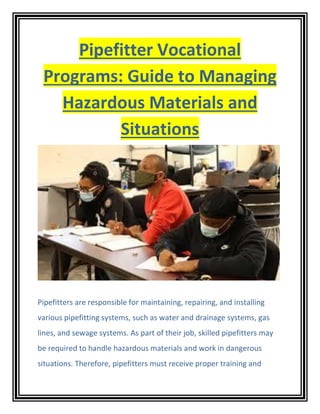
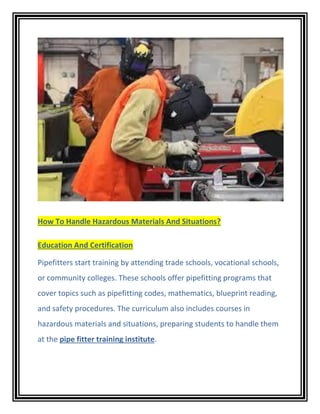
Pipefitters start training by attending trade schools, vocational schools,
or community colleges. These schools offer pipefitting programs that
cover topics such as pipefitting codes, mathematics, blueprint reading,
and safety procedures. The curriculum also includes courses in
hazardous materials and situations, preparing students to handle them
at the pipe fitter training institute.
After vocational colleges, pipefitters must obtain certification from
their state's licensing board. The board ensures that pipefitters have
met the educational requirements and have passed a certification exam
that tests their knowledge of pipefitting codes, safety procedures, and
hazardous materials handling.
On-The-Job Training
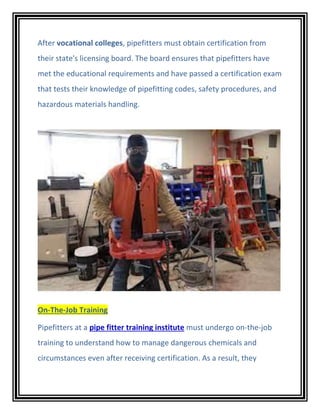
Pipefitters at a pipe fitter training institute must undergo on-the-job
training to understand how to manage dangerous chemicals and
circumstances even after receiving certification. As a result, they
frequently work as apprentices for more experienced pipefitters who
instruct them on installing, fixing, and maintaining pipefitting systems.
Apprenticeships usually span four to five years and feature practical
instruction in handling difficult circumstances and materials.
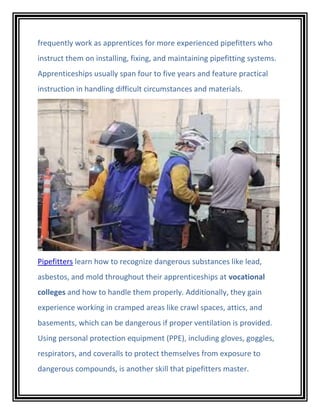
Pipefitters learn how to recognize dangerous substances like lead,
asbestos, and mold throughout their apprenticeships at vocational
colleges and how to handle them properly. Additionally, they gain
experience working in cramped areas like crawl spaces, attics, and
basements, which can be dangerous if proper ventilation is provided.
Using personal protection equipment (PPE), including gloves, goggles,
respirators, and coveralls to protect themselves from exposure to
dangerous compounds, is another skill that pipefitters master.
OSHA Training
The OSHA is a federal agency that sets safety standards for workers in
the United States. Pipefitters must comply with OSHA regulations,
requiring employers to provide workers with a safe and healthy
workplace.
OSHA offers a pipe fitter training course that teaches pipefitters how
to safely handle hazardous materials and situations. The training covers
hazard communication, respiratory protection, confined space entry,
and fall protection. OSHA training also emphasizes the importance of
PPE and teaches pipefitters how to select and use the appropriate
equipment.
Continuing Education
Pipefitters must keep up with the latest developments in pipefitting
technology and safety procedures. Continuing education programs
allow pipefitters to learn new skills, stay current on pipefitting codes
and regulations, and learn about new hazardous materials and
situations.
Continuing pipefitting vocational programs include classroom training,
online courses, workshops, and seminars. These programs cover
various topics like green pipefitting and energy-efficient pipefitting
systems. They also cover hazardous materials and situations such as
lead, asbestos, mold, and gas leaks.
Conclusion
Pipefitters play a crucial role in maintaining safe pipefitting systems.
Therefore, handling hazardous materials and situations is essential to
their job. A pipe fitter training course, on-the-job training, and
education are critical components of pipefitters' training to handle
dangerous materials and conditions. Pipefitters can work safely and
efficiently with proper training.

Pipefiting Vocational Programs: Guide To Safe Pipefitting

  • 1.
    Pipefitter Vocational Programs: Guideto Managing Hazardous Materials and Situations Pipefitters are responsible for maintaining, repairing, and installing various pipefitting systems, such as water and drainage systems, gas lines, and sewage systems. As part of their job, skilled pipefitters may be required to handle hazardous materials and work in dangerous situations. Therefore, pipefitters must receive proper training and
  • 2.
    certification at vocationalprograms to do so safely and effectively. In this article, let's explore the various types of hazardous materials, situations that skilled pipefitters may encounter, and the training and vocational programs requirements to handle them. Types Of Hazardous Materials And Situations Pipefitters may encounter a range of hazardous materials and situations in their line of work, including:
  • 3.
    Asbestos It is amineral fiber that was once commonly used in construction materials due to its durability, fire resistance, and insulation properties. However, chronic asbestos exposure can result in serious health issues, including asbestosis and lung cancer. Additionally, pipefitters at a pipefitter training program could come into contact with asbestos when dealing with ancient pipes, insulation, or other construction materials. Mold It is a fungus that thrives in moist, warm places like restrooms and kitchens. Numerous health issues, such as allergic responses, asthma,
  • 4.
    and respiratory infections,can be brought on by mould exposure. Additionally, pipefitters could come upon mold while repairing pipes or fixtures in wet places. Lead It is a poisonous metal previously widely used in pipefitting components, including pipes, solder, and pipes. Lead exposure can result in significant health issues, especially in children, such as behavioral issues, learning difficulties, and developmental delays. Also, pipefitters at pipefitter training may come into contact with lead when repairing outdated pipes or fixtures.
  • 5.
    Chemicals While working onpipefitting systems, pipefitters may come into contact with various chemicals, including drain cleaners, solvents, and adhesives. When exposed, these compounds can irritate the skin and eyes and create respiratory troubles and other health concerns. Confined Spaces Pipefitters may be forced to operate in tight locations like utility tunnels or crawl spaces, which can be dangerous owing to the possibility of an explosion, asphyxia, or other mishaps.
  • 6.
    How To HandleHazardous Materials And Situations? Education And Certification Pipefitters start training by attending trade schools, vocational schools, or community colleges. These schools offer pipefitting programs that cover topics such as pipefitting codes, mathematics, blueprint reading, and safety procedures. The curriculum also includes courses in hazardous materials and situations, preparing students to handle them at the pipe fitter training institute.
  • 7.
    After vocational colleges,pipefitters must obtain certification from their state's licensing board. The board ensures that pipefitters have met the educational requirements and have passed a certification exam that tests their knowledge of pipefitting codes, safety procedures, and hazardous materials handling. On-The-Job Training Pipefitters at a pipe fitter training institute must undergo on-the-job training to understand how to manage dangerous chemicals and circumstances even after receiving certification. As a result, they
  • 8.
    frequently work asapprentices for more experienced pipefitters who instruct them on installing, fixing, and maintaining pipefitting systems. Apprenticeships usually span four to five years and feature practical instruction in handling difficult circumstances and materials. Pipefitters learn how to recognize dangerous substances like lead, asbestos, and mold throughout their apprenticeships at vocational colleges and how to handle them properly. Additionally, they gain experience working in cramped areas like crawl spaces, attics, and basements, which can be dangerous if proper ventilation is provided. Using personal protection equipment (PPE), including gloves, goggles, respirators, and coveralls to protect themselves from exposure to dangerous compounds, is another skill that pipefitters master.
  • 9.
    OSHA Training The OSHAis a federal agency that sets safety standards for workers in the United States. Pipefitters must comply with OSHA regulations, requiring employers to provide workers with a safe and healthy workplace. OSHA offers a pipe fitter training course that teaches pipefitters how to safely handle hazardous materials and situations. The training covers hazard communication, respiratory protection, confined space entry, and fall protection. OSHA training also emphasizes the importance of PPE and teaches pipefitters how to select and use the appropriate equipment. Continuing Education Pipefitters must keep up with the latest developments in pipefitting technology and safety procedures. Continuing education programs allow pipefitters to learn new skills, stay current on pipefitting codes and regulations, and learn about new hazardous materials and situations. Continuing pipefitting vocational programs include classroom training, online courses, workshops, and seminars. These programs cover various topics like green pipefitting and energy-efficient pipefitting
  • 10.
    systems. They alsocover hazardous materials and situations such as lead, asbestos, mold, and gas leaks. Conclusion Pipefitters play a crucial role in maintaining safe pipefitting systems. Therefore, handling hazardous materials and situations is essential to their job. A pipe fitter training course, on-the-job training, and education are critical components of pipefitters' training to handle dangerous materials and conditions. Pipefitters can work safely and efficiently with proper training.