Introduction
PHP web development is a dynamic and versatile field that
involves creating interactive and dynamic websites using the
PHP programming language. PHP, which stands for Hypertext
Preprocessor, is one of the most popular scripting languages
for web development due to its ease of use, flexibility, and
robustness. In PHP web development, developers use PHP to
write server-side scripts that generate dynamic content on
web pages. This content can range from simple text and
images to complex features like user authentication, database
interaction, and e-commerce functionalities. PHP is often
used in conjunction with HTML, CSS, and JavaScript to create
complete and engaging web experiences. In PHP, variables
are used to store and manipulate data. They act as
placeholders for values that can be used throughout your
code. Variables in PHP have a dollar sign ($) followed by the
variable name. Variables are fundamental to programming in
PHP (and most other languages) because they enable you to
store and manipulate data dynamically, making your code
more flexible and powerful.
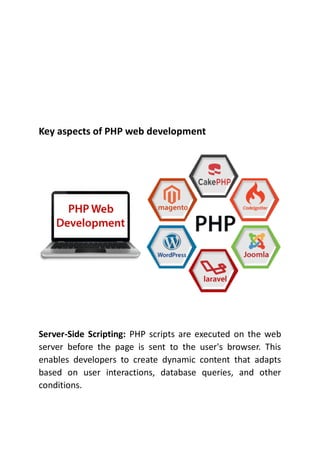
Key aspects of PHP web development
Server-Side Scripting: PHP scripts are executed on the web
server before the page is sent to the user's browser. This
enables developers to create dynamic content that adapts
based on user interactions, database queries, and other
conditions.
Database Integration: PHP is frequently used to interact with
databases, such as MySQL, PostgreSQL, or MongoDB. This
allows for the storage and retrieval of data that can be
displayed on web pages or used for various functionalities.
Frameworks and Libraries: PHP has a wide range of
frameworks and libraries, such as Laravel, Symfony, and
CodeIgniter, which streamline the development process by
providing pre-built modules, templating engines, and other
tools.
Content Management Systems (CMS): Many popular CMS
platforms, like WordPress, Joomla, and Drupal, are built using
PHP. These systems allow users to create and manage
websites without extensive coding knowledge.
E-commerce Solutions: PHP is often used to develop e-
commerce websites, integrating payment gateways, shopping
carts, and order processing systems.
Security: Developers must pay attention to security best
practices to prevent vulnerabilities like SQL injection and
cross-site scripting (XSS) attacks.
Scalability: PHP applications can be scaled horizontally or
vertically to accommodate growing user bases and increased
demands.
User Authentication and Authorization: PHP allows
developers to implement user registration, login systems, and
access control mechanisms to secure web applications.
Whether you're a beginner or an experienced developer, mastering PHP web
development opens up a world of opportunities to create dynamic and
functional websites. With a strong understanding of PHP, you can build
everything from personal blogs and portfolio sites to complex web applications
that serve millions of users.
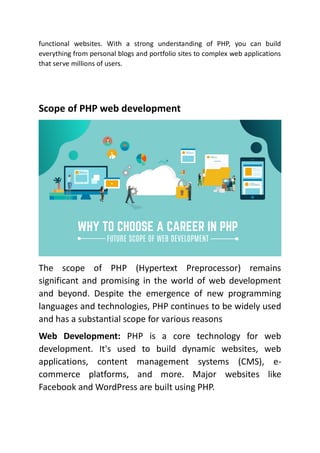
Scope of PHP web development
The scope of PHP (Hypertext Preprocessor) remains
significant and promising in the world of web development
and beyond. Despite the emergence of new programming
languages and technologies, PHP continues to be widely used
and has a substantial scope for various reasons
Web Development: PHP is a core technology for web
development. It's used to build dynamic websites, web
applications, content management systems (CMS), e-
commerce platforms, and more. Major websites like
Facebook and WordPress are built using PHP.
Ease of Use: PHP's syntax is simple and similar to C and Perl,
making it accessible for beginners. It serves as a great starting
point for those new to programming.
Large Community and Resources: PHP has a vast and active
community of developers, which translates to a wealth of
online resources, forums, and tutorials. This community
support aids developers in troubleshooting and sharing
knowledge.
Frameworks and CMS: PHP has numerous frameworks (e.g.,
Laravel, Symfony, CodeIgniter) that simplify and expedite web
development by offering pre-built modules and tools.
Additionally, popular content management systems like
WordPress, Joomla, and Drupal are PHP-based.
Server-Side Scripting: PHP's primary use is server-side
scripting, handling tasks like form processing, data
manipulation, and database interactions. This makes it crucial
for websites that require real-time data updates.
Open Source: PHP is open source, which means it's free to
use, modify, and distribute. This encourages widespread
adoption and continuous improvement.
Rapid Development: PHP's scripting nature allows developers
to see immediate results without the need for compilation,
making development faster.
Integration: PHP can be easily integrated with various
databases, such as MySQL, PostgreSQL, and SQLite, allowing
developers to create dynamic applications with ease.
Job Opportunities: The demand for PHP developers remains
steady due to the large number of existing PHP-based
websites and the ongoing development of new projects.
Legacy Systems: Many older websites and applications are
built using PHP, ensuring a need for PHP developers to
maintain and update these systems.
Cloud and APIs: PHP is also used in building APIs (Application
Programming Interfaces) for communication between
different software applications, and it can be integrated into
cloud computing services.
Versatility: Beyond web development, PHP can also be used
for command-line scripting, generating PDFs, image
manipulation, and more.
While newer languages and technologies have emerged, PHP's established
presence, versatility, and the continuous evolution of the language through
updates and community contributions ensure that its scope remains strong. It's
a valuable skill for both beginners and experienced developers aiming to excel
in web development and related fields.
https://excellenceacademy.co.in/php-training-course-in-
mohali/

PHP .pdf

  • 1.
    Introduction PHP web developmentis a dynamic and versatile field that involves creating interactive and dynamic websites using the PHP programming language. PHP, which stands for Hypertext Preprocessor, is one of the most popular scripting languages for web development due to its ease of use, flexibility, and robustness. In PHP web development, developers use PHP to write server-side scripts that generate dynamic content on web pages. This content can range from simple text and images to complex features like user authentication, database interaction, and e-commerce functionalities. PHP is often used in conjunction with HTML, CSS, and JavaScript to create complete and engaging web experiences. In PHP, variables are used to store and manipulate data. They act as placeholders for values that can be used throughout your code. Variables in PHP have a dollar sign ($) followed by the variable name. Variables are fundamental to programming in PHP (and most other languages) because they enable you to store and manipulate data dynamically, making your code more flexible and powerful.
  • 2.
    Key aspects ofPHP web development Server-Side Scripting: PHP scripts are executed on the web server before the page is sent to the user's browser. This enables developers to create dynamic content that adapts based on user interactions, database queries, and other conditions.
  • 3.
    Database Integration: PHPis frequently used to interact with databases, such as MySQL, PostgreSQL, or MongoDB. This allows for the storage and retrieval of data that can be displayed on web pages or used for various functionalities. Frameworks and Libraries: PHP has a wide range of frameworks and libraries, such as Laravel, Symfony, and CodeIgniter, which streamline the development process by providing pre-built modules, templating engines, and other tools. Content Management Systems (CMS): Many popular CMS platforms, like WordPress, Joomla, and Drupal, are built using PHP. These systems allow users to create and manage websites without extensive coding knowledge. E-commerce Solutions: PHP is often used to develop e- commerce websites, integrating payment gateways, shopping carts, and order processing systems. Security: Developers must pay attention to security best practices to prevent vulnerabilities like SQL injection and cross-site scripting (XSS) attacks. Scalability: PHP applications can be scaled horizontally or vertically to accommodate growing user bases and increased demands. User Authentication and Authorization: PHP allows developers to implement user registration, login systems, and access control mechanisms to secure web applications. Whether you're a beginner or an experienced developer, mastering PHP web development opens up a world of opportunities to create dynamic and
  • 4.
    functional websites. Witha strong understanding of PHP, you can build everything from personal blogs and portfolio sites to complex web applications that serve millions of users. Scope of PHP web development The scope of PHP (Hypertext Preprocessor) remains significant and promising in the world of web development and beyond. Despite the emergence of new programming languages and technologies, PHP continues to be widely used and has a substantial scope for various reasons Web Development: PHP is a core technology for web development. It's used to build dynamic websites, web applications, content management systems (CMS), e- commerce platforms, and more. Major websites like Facebook and WordPress are built using PHP.
  • 5.
    Ease of Use:PHP's syntax is simple and similar to C and Perl, making it accessible for beginners. It serves as a great starting point for those new to programming. Large Community and Resources: PHP has a vast and active community of developers, which translates to a wealth of online resources, forums, and tutorials. This community support aids developers in troubleshooting and sharing knowledge. Frameworks and CMS: PHP has numerous frameworks (e.g., Laravel, Symfony, CodeIgniter) that simplify and expedite web development by offering pre-built modules and tools. Additionally, popular content management systems like WordPress, Joomla, and Drupal are PHP-based. Server-Side Scripting: PHP's primary use is server-side scripting, handling tasks like form processing, data manipulation, and database interactions. This makes it crucial for websites that require real-time data updates. Open Source: PHP is open source, which means it's free to use, modify, and distribute. This encourages widespread adoption and continuous improvement. Rapid Development: PHP's scripting nature allows developers to see immediate results without the need for compilation, making development faster. Integration: PHP can be easily integrated with various databases, such as MySQL, PostgreSQL, and SQLite, allowing developers to create dynamic applications with ease.
  • 6.
    Job Opportunities: Thedemand for PHP developers remains steady due to the large number of existing PHP-based websites and the ongoing development of new projects. Legacy Systems: Many older websites and applications are built using PHP, ensuring a need for PHP developers to maintain and update these systems. Cloud and APIs: PHP is also used in building APIs (Application Programming Interfaces) for communication between different software applications, and it can be integrated into cloud computing services. Versatility: Beyond web development, PHP can also be used for command-line scripting, generating PDFs, image manipulation, and more. While newer languages and technologies have emerged, PHP's established presence, versatility, and the continuous evolution of the language through updates and community contributions ensure that its scope remains strong. It's a valuable skill for both beginners and experienced developers aiming to excel in web development and related fields. https://excellenceacademy.co.in/php-training-course-in- mohali/