SLEEVEFACE
„Sleeveface‟ is when a person obscures a part of their body with
an image to create a believable illusion.

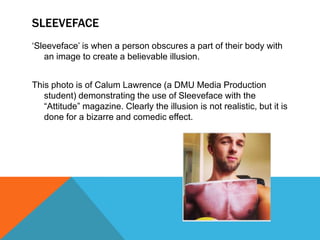
This photo is of Calum Lawrence (a DMU Media Production
student) demonstrating the use of Sleeveface with the
“Attitude” magazine. Clearly the illusion is not realistic, but it is
done for a bizarre and comedic effect.
HISTORY OF SLEEVEFACE
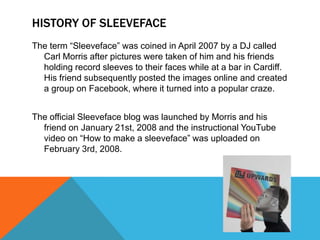
The term “Sleeveface” was coined in April 2007 by a DJ called
Carl Morris after pictures were taken of him and his friends
holding record sleeves to their faces while at a bar in Cardiff.
His friend subsequently posted the images online and created
a group on Facebook, where it turned into a popular craze.
The official Sleeveface blog was launched by Morris and his
friend on January 21st, 2008 and the instructional YouTube
video on “How to make a sleeveface” was uploaded on
February 3rd, 2008.
DEAR PHOTOGRAPH
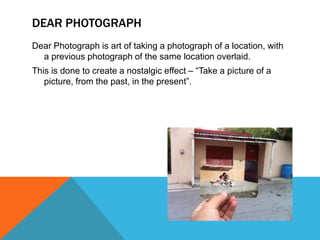
Dear Photograph is art of taking a photograph of a location, with
a previous photograph of the same location overlaid.
This is done to create a nostalgic effect – “Take a picture of a
picture, from the past, in the present”.
HISTORY OF DEAR PHOTOGRAPH
When a 21-year-old Ontario-based online media expert Taylor
Jones posted a couple of family pictures on his blog, little did
he know that „Dear Photograph‟ will eventually grow into a
huge Internet nostalgia forum with 20,000 visits a day. These
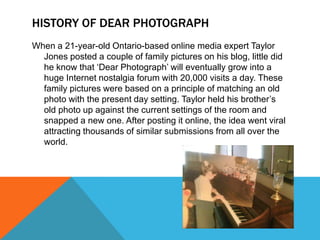
family pictures were based on a principle of matching an old
photo with the present day setting. Taylor held his brother‟s
old photo up against the current settings of the room and
snapped a new one. After posting it online, the idea went viral
attracting thousands of similar submissions from all over the
world.
COMPARE & CONTRAST

Similarities

Differences

Both include a use of illusions, by
holding up a picture that was taken
previously

Sleeveface involves human
interaction/body parts

Both need a precise placement of
the photos to create a certain
effect

Dear Photograph is done for
nostalgia/emotional effect, while
Sleeveface is done for comedic
effect
OUR VIEWS
We found both to be very interesting concepts, so we decided to
create our own Sleevefaces and Dear Photographs (one
being one of Calum on the earlier slide).
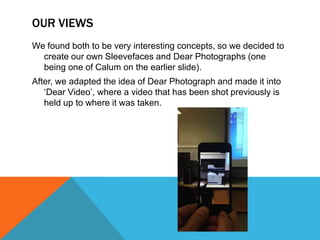
After, we adapted the idea of Dear Photograph and made it into
„Dear Video‟, where a video that has been shot previously is
held up to where it was taken.
BIBLIOGRAPHY
SLEEVEFACE [WWW]. Available from: http://www.sleeveface.com/
[Accessed 26/11/13]
KNOW YOUR MEME [WWW]. Available from:
http://knowyourmeme.com/memes/sleeveface [Accessed
26/11/13]
DEAR PHOTOGRAPH [WWW]. Available from:
http://dearphotograph.com/ [Accessed 26/11/13]
DEMILKED [WWW]. Available from: http://www.demilked.com/dearphotographs/ [Accessed 26/11/13]

Sleeveface & Dear Photograph

  • 2.
    SLEEVEFACE „Sleeveface‟ is whena person obscures a part of their body with an image to create a believable illusion. This photo is of Calum Lawrence (a DMU Media Production student) demonstrating the use of Sleeveface with the “Attitude” magazine. Clearly the illusion is not realistic, but it is done for a bizarre and comedic effect.
  • 3.
    HISTORY OF SLEEVEFACE Theterm “Sleeveface” was coined in April 2007 by a DJ called Carl Morris after pictures were taken of him and his friends holding record sleeves to their faces while at a bar in Cardiff. His friend subsequently posted the images online and created a group on Facebook, where it turned into a popular craze. The official Sleeveface blog was launched by Morris and his friend on January 21st, 2008 and the instructional YouTube video on “How to make a sleeveface” was uploaded on February 3rd, 2008.
  • 4.
    DEAR PHOTOGRAPH Dear Photographis art of taking a photograph of a location, with a previous photograph of the same location overlaid. This is done to create a nostalgic effect – “Take a picture of a picture, from the past, in the present”.
  • 5.
    HISTORY OF DEARPHOTOGRAPH When a 21-year-old Ontario-based online media expert Taylor Jones posted a couple of family pictures on his blog, little did he know that „Dear Photograph‟ will eventually grow into a huge Internet nostalgia forum with 20,000 visits a day. These family pictures were based on a principle of matching an old photo with the present day setting. Taylor held his brother‟s old photo up against the current settings of the room and snapped a new one. After posting it online, the idea went viral attracting thousands of similar submissions from all over the world.
  • 6.
    COMPARE & CONTRAST Similarities Differences Bothinclude a use of illusions, by holding up a picture that was taken previously Sleeveface involves human interaction/body parts Both need a precise placement of the photos to create a certain effect Dear Photograph is done for nostalgia/emotional effect, while Sleeveface is done for comedic effect
  • 7.
    OUR VIEWS We foundboth to be very interesting concepts, so we decided to create our own Sleevefaces and Dear Photographs (one being one of Calum on the earlier slide). After, we adapted the idea of Dear Photograph and made it into „Dear Video‟, where a video that has been shot previously is held up to where it was taken.
  • 8.
    BIBLIOGRAPHY SLEEVEFACE [WWW]. Availablefrom: http://www.sleeveface.com/ [Accessed 26/11/13] KNOW YOUR MEME [WWW]. Available from: http://knowyourmeme.com/memes/sleeveface [Accessed 26/11/13] DEAR PHOTOGRAPH [WWW]. Available from: http://dearphotograph.com/ [Accessed 26/11/13] DEMILKED [WWW]. Available from: http://www.demilked.com/dearphotographs/ [Accessed 26/11/13]