This image from the late 1800’s has the black
and white how the wet technology was used also
during this time the invention of the collodion
process which had many chemicals and time
consuming.
http://2.bp.blogspot.com/-
zIgP5xTXiT4/UAaJjXMBomI/AAAAAAABcM8/1f8Q2QqjC
EU/s1600/America's+Children+1850-1930+(36).jpg
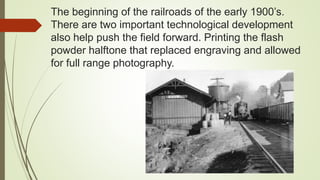
The beginning of the railroads of the early 1900’s.
There are two important technological development
also help push the field forward. Printing the flash
powder halftone that replaced engraving and allowed
for full range photography.
Photographic Technology
 Continued: This was great for the use of printing photos which speed up the
process from the 1800’s. Also the early 1900’s the technology would adapt mostly
daily paper. Flash powder allowed for candid indoor photography for the
photojournalist. The article was by Jack Riis This was also part of the pre-digital
era of photojournalism.
Photographic technology
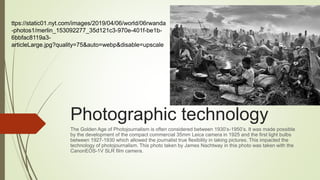
The Golden Age of Photojournalism is often considered between 1930’s-1950’s. It was made possible
by the development of the compact commercial 35mm Leica camera in 1925 and the first light bulbs
between 1927-1930 which allowed the journalist true flexibility in taking pictures. This impacted the
technology of photojournalism. This photo taken by James Nachtway in this photo was taken with the
CanonEOS-1V SLR film camera.
ttps://static01.nyt.com/images/2019/04/06/world/06rwanda
-photos1/merlin_153092277_35d121c3-970e-401f-be1b-
6bbfac8119a3-
articleLarge.jpg?quality=75&auto=webp&disable=upscale
Photographic Technology
As early as the Cimean War in the mid-19th century photographer were using novel
technology of the class plate camera. As stated this technology the beginning that
paved the way for photojournalism/photojournalist to become great uses of film
and photos.
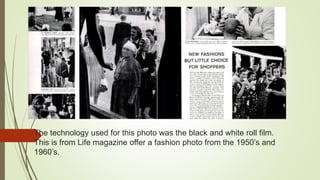
The technology used for this photo was the black and white roll film.
This is from Life magazine offer a fashion photo from the 1950’s and
1960’s.
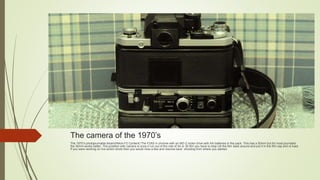
The camera of the 1970’s
The 1970’s photojournalist dream(Nikon F2 Content) The F2AS in chrome with an MD-2 motor drive with AA batteries in the pack. This has a 50mm but for most journalist
the 35mm works better. The problem with camera is once it run out of the role of 24 or 36 film you have to stop roll the film back around and put it in the film cap and re load.
If you were working on live action shots then you would miss a few and resume back shooting from where you started.
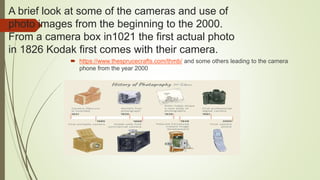
A brief look at some of the cameras and use of
photo images from the beginning to the 2000.
From a camera box in1021 the first actual photo
in 1826 Kodak first comes with their camera.
 https://www.thesprucecrafts.com/thmb/ and some others leading to the camera
phone from the year 2000
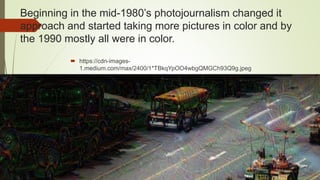
Beginning in the mid-1980’s photojournalism changed it
approach and started taking more pictures in color and by
the 1990 mostly all were in color.
 https://cdn-images-
1.medium.com/max/2400/1*TBkqYpOO4wbgQMGCh93Q9g.jpeg
 http://res.cloudinary.com/yaffa-publishing/image/fetch/
This photo was taken in Dakur in by the
JewishWatch World magazine. This was taken
in 2007 and resurface for the article about the
genocide we see that the image is in color and it
is using digital camera as its technology. By this
time photojournalist are becoming more artistic
with their images.
In this image the question remain what will
photojournalism be like in the future. The
photojournalist of tomorrow will have to be
unique and creative as the competetion
Photographic technology

Photographic technology

  • 1.
    This image fromthe late 1800’s has the black and white how the wet technology was used also during this time the invention of the collodion process which had many chemicals and time consuming. http://2.bp.blogspot.com/- zIgP5xTXiT4/UAaJjXMBomI/AAAAAAABcM8/1f8Q2QqjC EU/s1600/America's+Children+1850-1930+(36).jpg
  • 2.
    The beginning ofthe railroads of the early 1900’s. There are two important technological development also help push the field forward. Printing the flash powder halftone that replaced engraving and allowed for full range photography.
  • 3.
    Photographic Technology  Continued:This was great for the use of printing photos which speed up the process from the 1800’s. Also the early 1900’s the technology would adapt mostly daily paper. Flash powder allowed for candid indoor photography for the photojournalist. The article was by Jack Riis This was also part of the pre-digital era of photojournalism.
  • 4.
    Photographic technology The GoldenAge of Photojournalism is often considered between 1930’s-1950’s. It was made possible by the development of the compact commercial 35mm Leica camera in 1925 and the first light bulbs between 1927-1930 which allowed the journalist true flexibility in taking pictures. This impacted the technology of photojournalism. This photo taken by James Nachtway in this photo was taken with the CanonEOS-1V SLR film camera. ttps://static01.nyt.com/images/2019/04/06/world/06rwanda -photos1/merlin_153092277_35d121c3-970e-401f-be1b- 6bbfac8119a3- articleLarge.jpg?quality=75&auto=webp&disable=upscale
  • 5.
    Photographic Technology As earlyas the Cimean War in the mid-19th century photographer were using novel technology of the class plate camera. As stated this technology the beginning that paved the way for photojournalism/photojournalist to become great uses of film and photos.
  • 6.
    The technology usedfor this photo was the black and white roll film. This is from Life magazine offer a fashion photo from the 1950’s and 1960’s.
  • 7.
    The camera ofthe 1970’s The 1970’s photojournalist dream(Nikon F2 Content) The F2AS in chrome with an MD-2 motor drive with AA batteries in the pack. This has a 50mm but for most journalist the 35mm works better. The problem with camera is once it run out of the role of 24 or 36 film you have to stop roll the film back around and put it in the film cap and re load. If you were working on live action shots then you would miss a few and resume back shooting from where you started.
  • 8.
    A brief lookat some of the cameras and use of photo images from the beginning to the 2000. From a camera box in1021 the first actual photo in 1826 Kodak first comes with their camera.  https://www.thesprucecrafts.com/thmb/ and some others leading to the camera phone from the year 2000
  • 9.
    Beginning in themid-1980’s photojournalism changed it approach and started taking more pictures in color and by the 1990 mostly all were in color.  https://cdn-images- 1.medium.com/max/2400/1*TBkqYpOO4wbgQMGCh93Q9g.jpeg
  • 10.
  • 11.
    This photo wastaken in Dakur in by the JewishWatch World magazine. This was taken in 2007 and resurface for the article about the genocide we see that the image is in color and it is using digital camera as its technology. By this time photojournalist are becoming more artistic with their images.
  • 13.
    In this imagethe question remain what will photojournalism be like in the future. The photojournalist of tomorrow will have to be unique and creative as the competetion