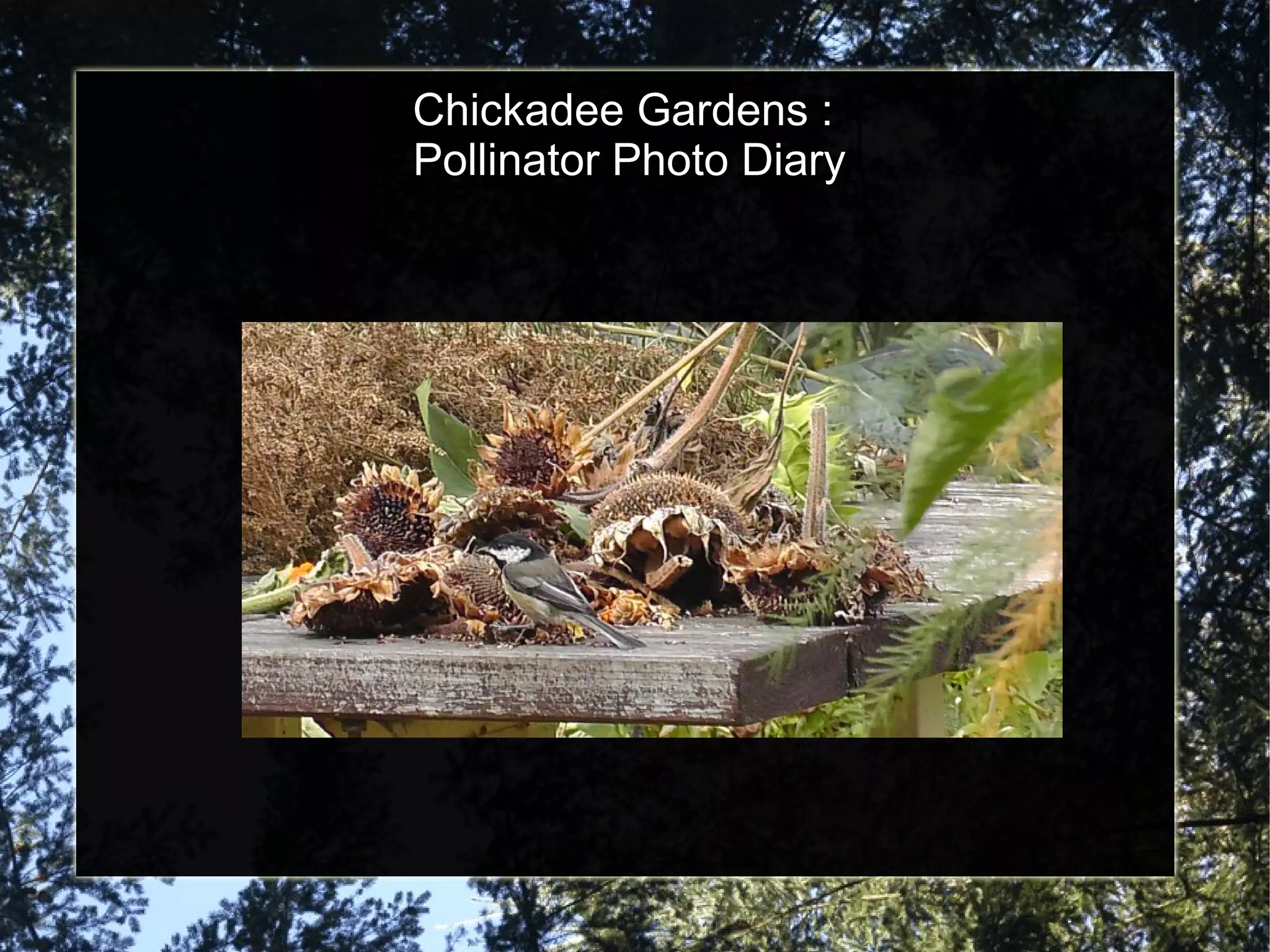
Chickadee Gardens : 
Pollinator Photo Diary
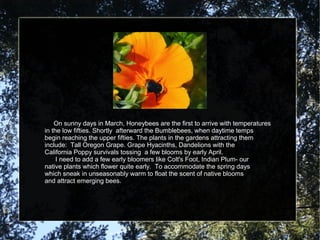
On sunny days in March, Honeybees are the first to arrive with temperatures 
in the low fifties. Shortly afterward the Bumblebees, when daytime temps 
begin reaching the upper fifties. The plants in the gardens attracting them 
include: Tall Oregon Grape. Grape Hyacinths, Dandelions with the 
California Poppy survivals tossing a few blooms by early April. 
I need to add a few early bloomers like Colt's Foot, Indian Plum- our 
native plants which flower quite early. To accommodate the spring days 
which sneak in unseasonably warm to float the scent of native blooms 
and attract emerging bees.
April 
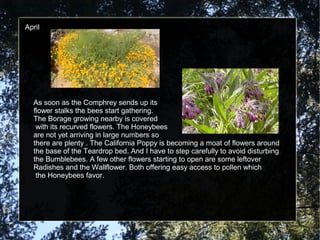
As soon as the Comphrey sends up its 
flower stalks the bees start gathering. 
The Borage growing nearby is covered 
with its recurved flowers. The Honeybees 
are not yet arriving in large numbers so 
there are plenty . The California Poppy is becoming a moat of flowers around 
the base of the Teardrop bed. And I have to step carefully to avoid disturbing 
the Bumblebees. A few other flowers starting to open are some leftover 
Radishes and the Wallflower. Both offering easy access to pollen which 
the Honeybees favor.
May 
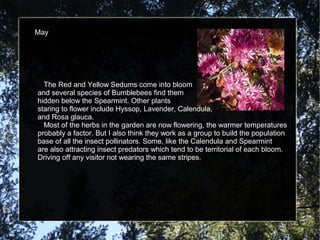
The Red and Yellow Sedums come into bloom 
and several species of Bumblebees find them 
hidden below the Spearmint. Other plants 
staring to flower include Hyssop, Lavender, Calendula, 
and Rosa glauca. 
Most of the herbs in the garden are now flowering, the warmer temperatures 
probably a factor. But I also think they work as a group to build the population 
base of all the insect pollinators. Some, like the Calendula and Spearmint 
are also attracting insect predators which tend to be territorial of each bloom. 
Driving off any visitor not wearing the same stripes.
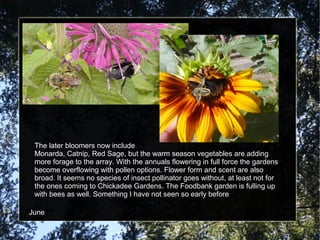
The later bloomers now include 
Monarda, Catnip, Red Sage, but the warm season vegetables are adding 
more forage to the array. With the annuals flowering in full force the gardens 
become overflowing with pollen options. Flower form and scent are also 
broad. It seems no species of insect pollinator goes without, at least not for 
the ones coming to Chickadee Gardens. The Foodbank garden is fulling up 
with bees as well. Something I have not seen so early before 
June
July 
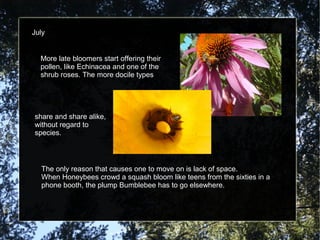
More late bloomers start offering their 
pollen, like Echinacea and one of the 
shrub roses. The more docile types 
share and share alike, 
without regard to 
species. 
The only reason that causes one to move on is lack of space. 
When Honeybees crowd a squash bloom like teens from the sixties in a 
phone booth, the plump Bumblebee has to go elsewhere.
August 
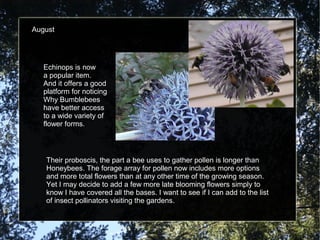
Echinops is now 
a popular item. 
And it offers a good 
platform for noticing 
Why Bumblebees 
have better access 
to a wide variety of 
flower forms. 
Their proboscis, the part a bee uses to gather pollen is longer than 
Honeybees. The forage array for pollen now includes more options 
and more total flowers than at any other time of the growing season. 
Yet I may decide to add a few more late blooming flowers simply to 
know I have covered all the bases. I want to see if I can add to the list 
of insect pollinators visiting the gardens.
September 
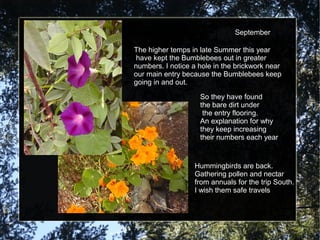
The higher temps in late Summer this year 
have kept the Bumblebees out in greater 
numbers. I notice a hole in the brickwork near 
our main entry because the Bumblebees keep 
going in and out. 
So they have found 
the bare dirt under 
the entry flooring. 
An explanation for why 
they keep increasing 
their numbers each year 
Hummingbirds are back. 
Gathering pollen and nectar 
from annuals for the trip South. 
I wish them safe travels

Photo journal

  • 1.
    Chickadee Gardens : Pollinator Photo Diary
  • 2.
    On sunny daysin March, Honeybees are the first to arrive with temperatures in the low fifties. Shortly afterward the Bumblebees, when daytime temps begin reaching the upper fifties. The plants in the gardens attracting them include: Tall Oregon Grape. Grape Hyacinths, Dandelions with the California Poppy survivals tossing a few blooms by early April. I need to add a few early bloomers like Colt's Foot, Indian Plum- our native plants which flower quite early. To accommodate the spring days which sneak in unseasonably warm to float the scent of native blooms and attract emerging bees.
  • 3.
    April As soonas the Comphrey sends up its flower stalks the bees start gathering. The Borage growing nearby is covered with its recurved flowers. The Honeybees are not yet arriving in large numbers so there are plenty . The California Poppy is becoming a moat of flowers around the base of the Teardrop bed. And I have to step carefully to avoid disturbing the Bumblebees. A few other flowers starting to open are some leftover Radishes and the Wallflower. Both offering easy access to pollen which the Honeybees favor.
  • 4.
    May The Redand Yellow Sedums come into bloom and several species of Bumblebees find them hidden below the Spearmint. Other plants staring to flower include Hyssop, Lavender, Calendula, and Rosa glauca. Most of the herbs in the garden are now flowering, the warmer temperatures probably a factor. But I also think they work as a group to build the population base of all the insect pollinators. Some, like the Calendula and Spearmint are also attracting insect predators which tend to be territorial of each bloom. Driving off any visitor not wearing the same stripes.
  • 5.
    The later bloomersnow include Monarda, Catnip, Red Sage, but the warm season vegetables are adding more forage to the array. With the annuals flowering in full force the gardens become overflowing with pollen options. Flower form and scent are also broad. It seems no species of insect pollinator goes without, at least not for the ones coming to Chickadee Gardens. The Foodbank garden is fulling up with bees as well. Something I have not seen so early before June
  • 6.
    July More latebloomers start offering their pollen, like Echinacea and one of the shrub roses. The more docile types share and share alike, without regard to species. The only reason that causes one to move on is lack of space. When Honeybees crowd a squash bloom like teens from the sixties in a phone booth, the plump Bumblebee has to go elsewhere.
  • 7.
    August Echinops isnow a popular item. And it offers a good platform for noticing Why Bumblebees have better access to a wide variety of flower forms. Their proboscis, the part a bee uses to gather pollen is longer than Honeybees. The forage array for pollen now includes more options and more total flowers than at any other time of the growing season. Yet I may decide to add a few more late blooming flowers simply to know I have covered all the bases. I want to see if I can add to the list of insect pollinators visiting the gardens.
  • 8.
    September The highertemps in late Summer this year have kept the Bumblebees out in greater numbers. I notice a hole in the brickwork near our main entry because the Bumblebees keep going in and out. So they have found the bare dirt under the entry flooring. An explanation for why they keep increasing their numbers each year Hummingbirds are back. Gathering pollen and nectar from annuals for the trip South. I wish them safe travels