Lecture 9
Phospholipids
Phospholipids
 These are complex or compound lipids containing
phosphoric acid, in addition to fatty acids,
nitrogenous base and alcohol
 There are two classes of phospholipids
 Glycerophospholipids (containing glycerol as the
alcohol)
 Sphingophospholipids (containing sphingosine as
the alcohol)
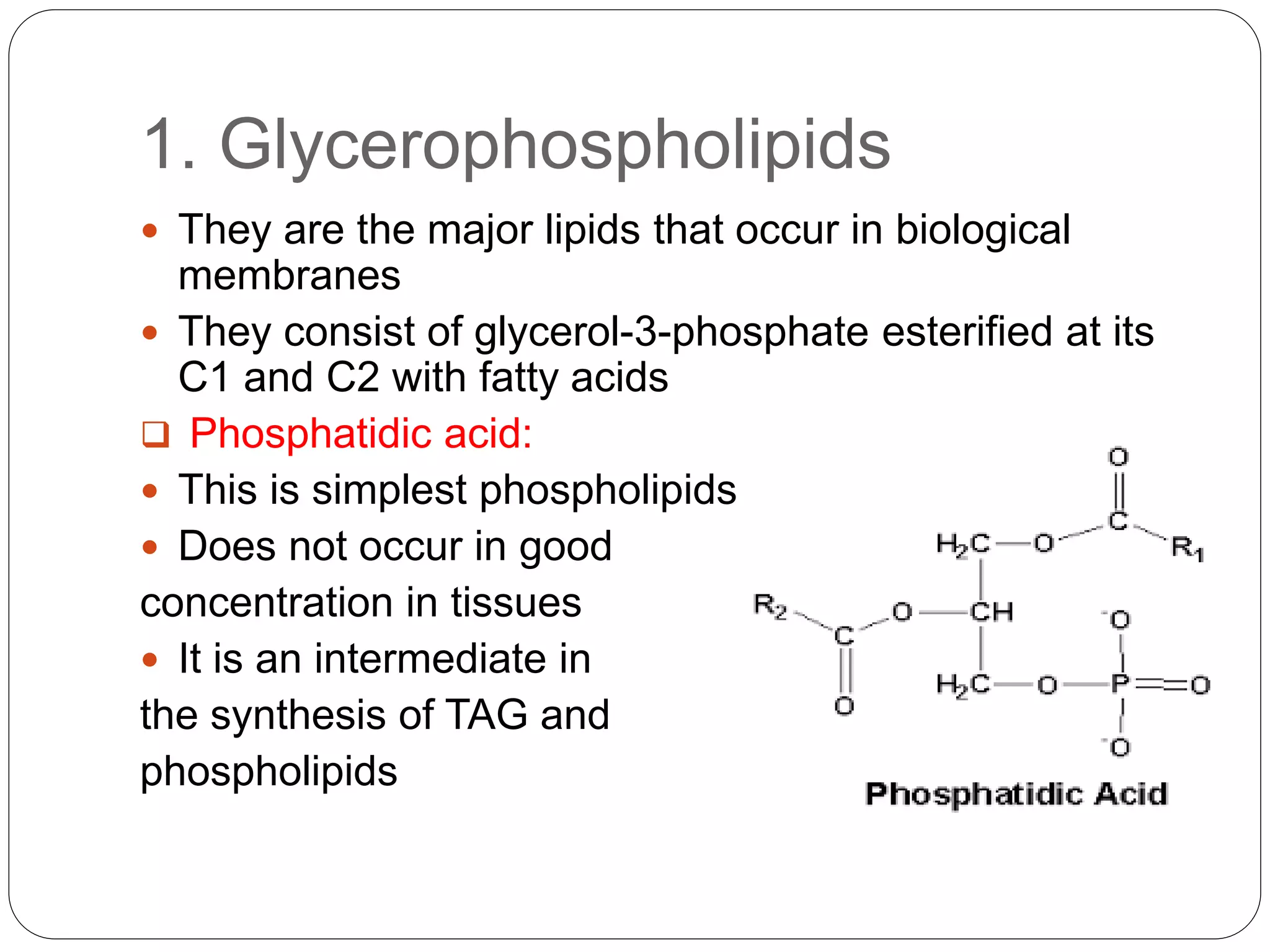
1. Glycerophospholipids
 They are the major lipids that occur in biological
membranes
 They consist of glycerol-3-phosphate esterified at its
C1 and C2 with fatty acids
 Phosphatidic acid:
 This is simplest phospholipids
 Does not occur in good
concentration in tissues
 It is an intermediate in
the synthesis of TAG and
phospholipids
 lecithins:
 These are the most abundant
group of phospholipids in the
cell membrane
 Chemically lecithin
(Greek: Lecithos-Egg yolk) is a
phophatidic acid with choline as a base
 Cephalins:
Ethanolamine is the
nitrogenous base present
in cephalins
 Phosphotidylinositol (PI):
Inositol is attached to phosphatidic acid to give PI
This is an important component of cell membranes
The action of certain hormone is mediated through
PI
Phosphotidylserine:
The amino acid serine is attached in this group
 Plasmalogens:
When fatty acid is attached by ether
linkage at C1 of glycerol in
Glycerophospholipids, the resultant
compound is plasmalogen
 Cardiolipin:
It was first isolated from the
heart muscles
It consist of two molecules of
phosphotidic acid held by an
additional glycerol through phosphate
group
An important component of inner mitochondrial membrane
2.Sphingomyelins:
 Sphingosine is atttached by an amide linkage to a
fatty acid to produce Ceramide
 They are the important constituents of myelin and
are found in good quantity in brain and nervous
tissues
 Ceramide act as a second messenger by
regulating programmed cell death
 A ceramide containing 30-carbon fatty acid is a
major component of skin and it regulates skin’s
water permeability
Functions of phospholipids
1. In association with proteins phospholipids form the
structural components of membranes and regulate
membrane permeability
2. Phospholipids in the mitochondria maintain the
conformation of electron transport chain
components and thus cellular respiration
3. They participate in the absorption of fats from the
intestine
4. They are essential for the synthesis of different
lipoproteins and thus participate in transport of lipids
5. The prevent accumulation of fats in liver (lipotropic
factors)
6.They participate in the transport of cholesterol
and thus help in the removal of cholesterol from
the body
7.They act as surfactants (respiratory distress
syndrome)
8. Cephalin participate in the blood clotting
9. Phosphotidyl inositol is the source of second
messenger that are involved in the action of some
hormones
Glycolipids
 Thy are the important constituents of cell
membrane and nervous tissues
 Cerobrosides is the simplest glycolipids
 The contain ceramide and one or more sugars
 Gangliosides are primarily found in ganglions
Lipoproteins
 They are molecular complexes of lipids with
proteins
 They are transport vehicles for lipids in the
circulation
 There are five types of lipoproteins
 Chylomicrons
VLDL
HDL
Free fatty acid albumin complex
Steroids
 They are the compounds containing cyclic steroid
nucleus (or ring) namely CPPP
 It consists of phenanathrene nucleus (ring A, B
and C) to which a cyclopentane ring (D) is
attached
 There are several steroids in the biological
system. These include cholesterol, bile acids,
vitamin D, sex hormones
 If the steroid contains one or more hydroxyl
groups it is commonly known as sterol
Cholesterol
 Exclusively found in animals is the most abundant
animal sterol
 It is widely distributed in all cells and is a major
component of cell membranes and lipoproteins
 Cholesterol (Greek: Chole-bile) as first isolated
from bile
 Cholesterol literally means “solid alcohol from
bile”
Structure and occurrence
 C27H46O
 As a structural component of plasma membranes,
cholesterol is an important determinant of
membrane permeability properties
 It is yellowish crystalline solid
 It is insoluble in water and soluble in organic
solvents
Functions
 It is a poor conductor of heat and electricity
 It is present in abundance in nervous tissues
 It appears that cholesterol function as an
insulating cover for the transmission of electrical
impulses in the nervous tissues
 It has a role in synthesis of bile acids, hormones
and vitamin D

Phospholipids

  • 1.
  • 2.
    Phospholipids  These arecomplex or compound lipids containing phosphoric acid, in addition to fatty acids, nitrogenous base and alcohol  There are two classes of phospholipids  Glycerophospholipids (containing glycerol as the alcohol)  Sphingophospholipids (containing sphingosine as the alcohol)
  • 3.
    1. Glycerophospholipids  Theyare the major lipids that occur in biological membranes  They consist of glycerol-3-phosphate esterified at its C1 and C2 with fatty acids  Phosphatidic acid:  This is simplest phospholipids  Does not occur in good concentration in tissues  It is an intermediate in the synthesis of TAG and phospholipids
  • 4.
     lecithins:  Theseare the most abundant group of phospholipids in the cell membrane  Chemically lecithin (Greek: Lecithos-Egg yolk) is a phophatidic acid with choline as a base  Cephalins: Ethanolamine is the nitrogenous base present in cephalins
  • 5.
     Phosphotidylinositol (PI): Inositolis attached to phosphatidic acid to give PI This is an important component of cell membranes The action of certain hormone is mediated through PI
  • 6.
    Phosphotidylserine: The amino acidserine is attached in this group
  • 7.
     Plasmalogens: When fattyacid is attached by ether linkage at C1 of glycerol in Glycerophospholipids, the resultant compound is plasmalogen  Cardiolipin: It was first isolated from the heart muscles It consist of two molecules of phosphotidic acid held by an additional glycerol through phosphate group An important component of inner mitochondrial membrane
  • 8.
    2.Sphingomyelins:  Sphingosine isatttached by an amide linkage to a fatty acid to produce Ceramide  They are the important constituents of myelin and are found in good quantity in brain and nervous tissues  Ceramide act as a second messenger by regulating programmed cell death  A ceramide containing 30-carbon fatty acid is a major component of skin and it regulates skin’s water permeability
  • 9.
    Functions of phospholipids 1.In association with proteins phospholipids form the structural components of membranes and regulate membrane permeability 2. Phospholipids in the mitochondria maintain the conformation of electron transport chain components and thus cellular respiration 3. They participate in the absorption of fats from the intestine 4. They are essential for the synthesis of different lipoproteins and thus participate in transport of lipids 5. The prevent accumulation of fats in liver (lipotropic factors)
  • 10.
    6.They participate inthe transport of cholesterol and thus help in the removal of cholesterol from the body 7.They act as surfactants (respiratory distress syndrome) 8. Cephalin participate in the blood clotting 9. Phosphotidyl inositol is the source of second messenger that are involved in the action of some hormones
  • 11.
  • 12.
     Thy arethe important constituents of cell membrane and nervous tissues  Cerobrosides is the simplest glycolipids  The contain ceramide and one or more sugars  Gangliosides are primarily found in ganglions
  • 13.
  • 14.
     They aremolecular complexes of lipids with proteins  They are transport vehicles for lipids in the circulation  There are five types of lipoproteins  Chylomicrons VLDL HDL Free fatty acid albumin complex
  • 15.
  • 16.
     They arethe compounds containing cyclic steroid nucleus (or ring) namely CPPP  It consists of phenanathrene nucleus (ring A, B and C) to which a cyclopentane ring (D) is attached  There are several steroids in the biological system. These include cholesterol, bile acids, vitamin D, sex hormones  If the steroid contains one or more hydroxyl groups it is commonly known as sterol
  • 18.
    Cholesterol  Exclusively foundin animals is the most abundant animal sterol  It is widely distributed in all cells and is a major component of cell membranes and lipoproteins  Cholesterol (Greek: Chole-bile) as first isolated from bile  Cholesterol literally means “solid alcohol from bile”
  • 19.
    Structure and occurrence C27H46O  As a structural component of plasma membranes, cholesterol is an important determinant of membrane permeability properties  It is yellowish crystalline solid  It is insoluble in water and soluble in organic solvents
  • 20.
    Functions  It isa poor conductor of heat and electricity  It is present in abundance in nervous tissues  It appears that cholesterol function as an insulating cover for the transmission of electrical impulses in the nervous tissues  It has a role in synthesis of bile acids, hormones and vitamin D