The American Heart Association (AHA)
recommends that a triglyceride level of 100
mg/dL or lower is considered "optimal." The
AHA says this optimal level would improve your
heart health. However, the AHA doesn't
recommend drug treatment to reach this level.
Instead, for those trying to lower their
triglycerides to this level, lifestyle changes
such as diet, weight loss and physical activity
are encouraged. That's because triglycerides
usually respond well to dietary and lifestyle
changes.
 Triglycerides are a type of fat found in your
blood. Your body uses them for energy.
 You need some triglycerides for good health. But
high triglycerides might raise your risk of heart
disease and may be a sign of metabolic
syndrome.
 Metabolic syndrome is the combination of high
blood pressure, high blood sugar, too much fat
around the waist, low HDL ("good") cholesterol,
and high triglycerides. Metabolic syndrome
increases your risk for heart disease, diabetes,
and stroke.
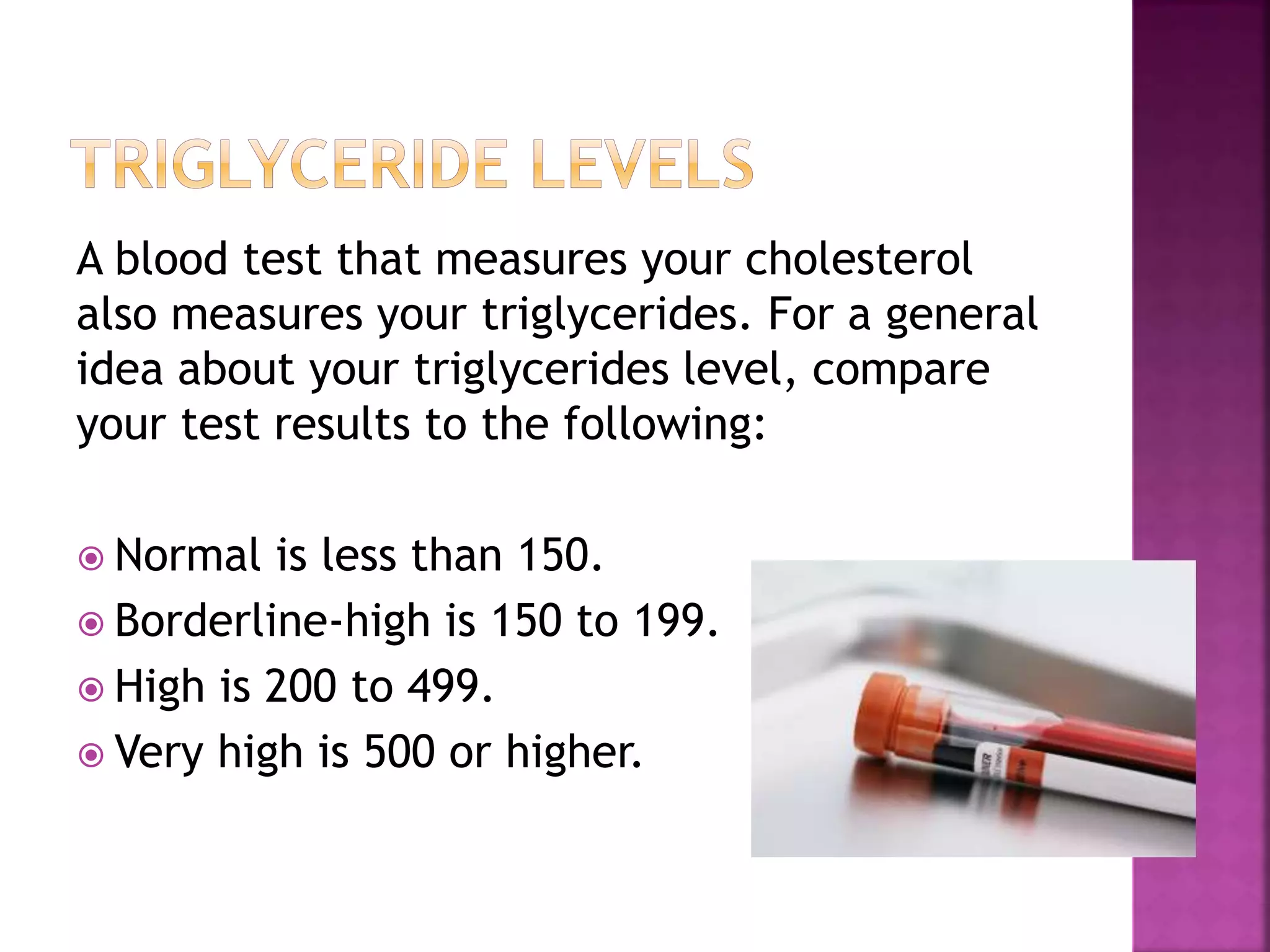
A blood test that measures your cholesterol
also measures your triglycerides. For a general
idea about your triglycerides level, compare
your test results to the following:
 Normal is less than 150.
 Borderline-high is 150 to 199.
 High is 200 to 499.
 Very high is 500 or higher.
High triglycerides are usually caused by other
conditions, such as:
 Obesity.
 Poorly controlled diabetes.
 An underactive thyroid (hypothyroidism).
 Kidney disease.
 Regularly eating more calories than you burn.
 Drinking a lot of alcohol.
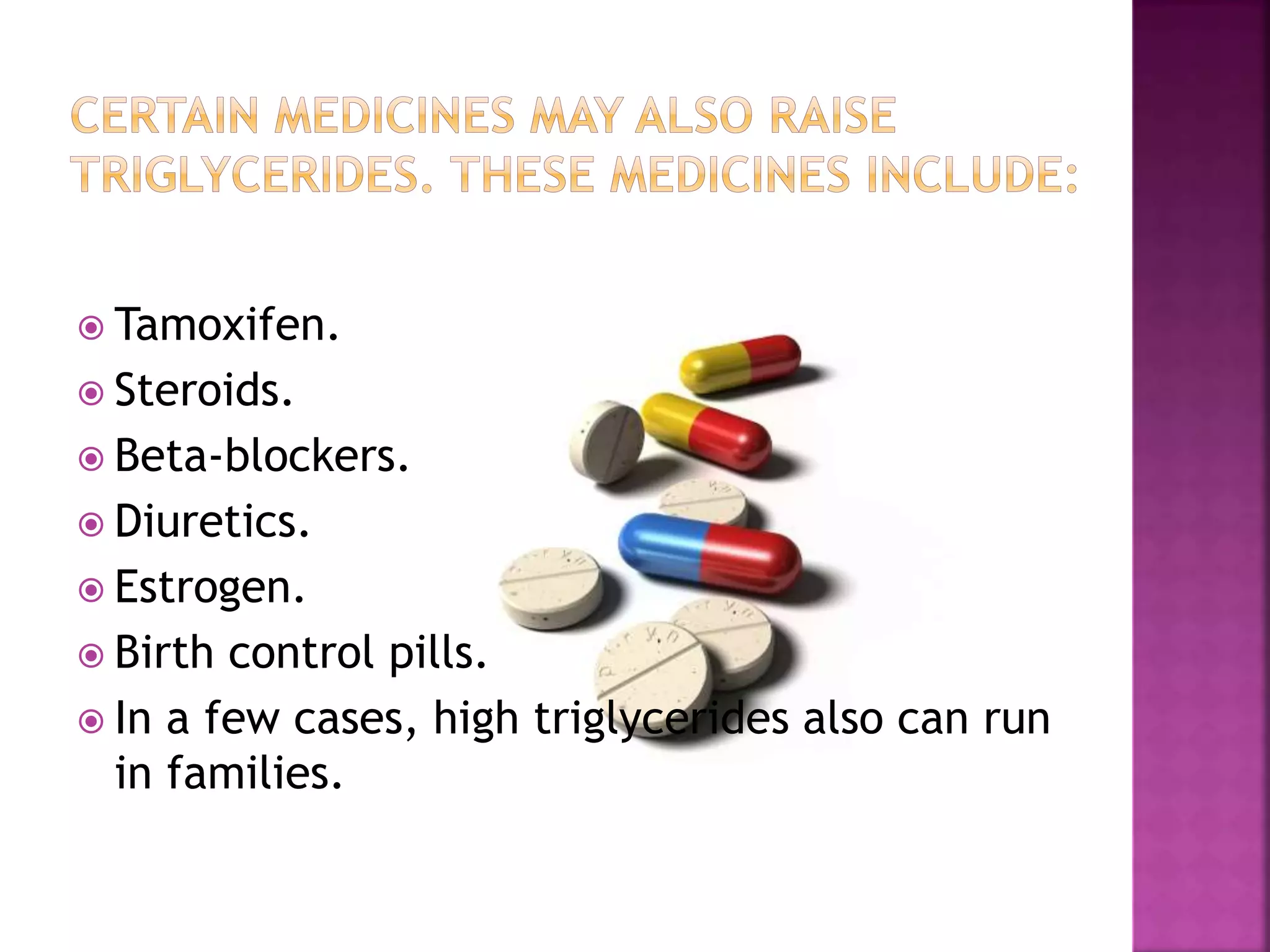
 Tamoxifen.
 Steroids.
 Beta-blockers.
 Diuretics.
 Estrogen.
 Birth control pills.
 In a few cases, high triglycerides also can run
in families.
To reduce blood triglyceride levels:
 Control your weight
 Be physically active
 Don’t smoke
 Limit alcohol intake
 Limit simple sugars and sugar-sweetened
beverages.
 Sometimes, medication also is needed.
 http://www.mayoclinic.org/diseases-
conditions/high-blood-
cholesterol/multimedia/vid-20078212
 http://www.nhlbi.nih.gov/health/public/hea
rt/chol/chol_tlc.pdf

About triglycerides

  • 2.
    The American HeartAssociation (AHA) recommends that a triglyceride level of 100 mg/dL or lower is considered "optimal." The AHA says this optimal level would improve your heart health. However, the AHA doesn't recommend drug treatment to reach this level. Instead, for those trying to lower their triglycerides to this level, lifestyle changes such as diet, weight loss and physical activity are encouraged. That's because triglycerides usually respond well to dietary and lifestyle changes.
  • 3.
     Triglycerides area type of fat found in your blood. Your body uses them for energy.  You need some triglycerides for good health. But high triglycerides might raise your risk of heart disease and may be a sign of metabolic syndrome.  Metabolic syndrome is the combination of high blood pressure, high blood sugar, too much fat around the waist, low HDL ("good") cholesterol, and high triglycerides. Metabolic syndrome increases your risk for heart disease, diabetes, and stroke.
  • 4.
    A blood testthat measures your cholesterol also measures your triglycerides. For a general idea about your triglycerides level, compare your test results to the following:  Normal is less than 150.  Borderline-high is 150 to 199.  High is 200 to 499.  Very high is 500 or higher.
  • 5.
    High triglycerides areusually caused by other conditions, such as:  Obesity.  Poorly controlled diabetes.  An underactive thyroid (hypothyroidism).  Kidney disease.  Regularly eating more calories than you burn.  Drinking a lot of alcohol.
  • 6.
     Tamoxifen.  Steroids. Beta-blockers.  Diuretics.  Estrogen.  Birth control pills.  In a few cases, high triglycerides also can run in families.
  • 7.
    To reduce bloodtriglyceride levels:  Control your weight  Be physically active  Don’t smoke  Limit alcohol intake  Limit simple sugars and sugar-sweetened beverages.  Sometimes, medication also is needed.
  • 8.