@Samar Sarky
@Samar Sarky
Consonants
@Samar Sarky
@Samar Sarky
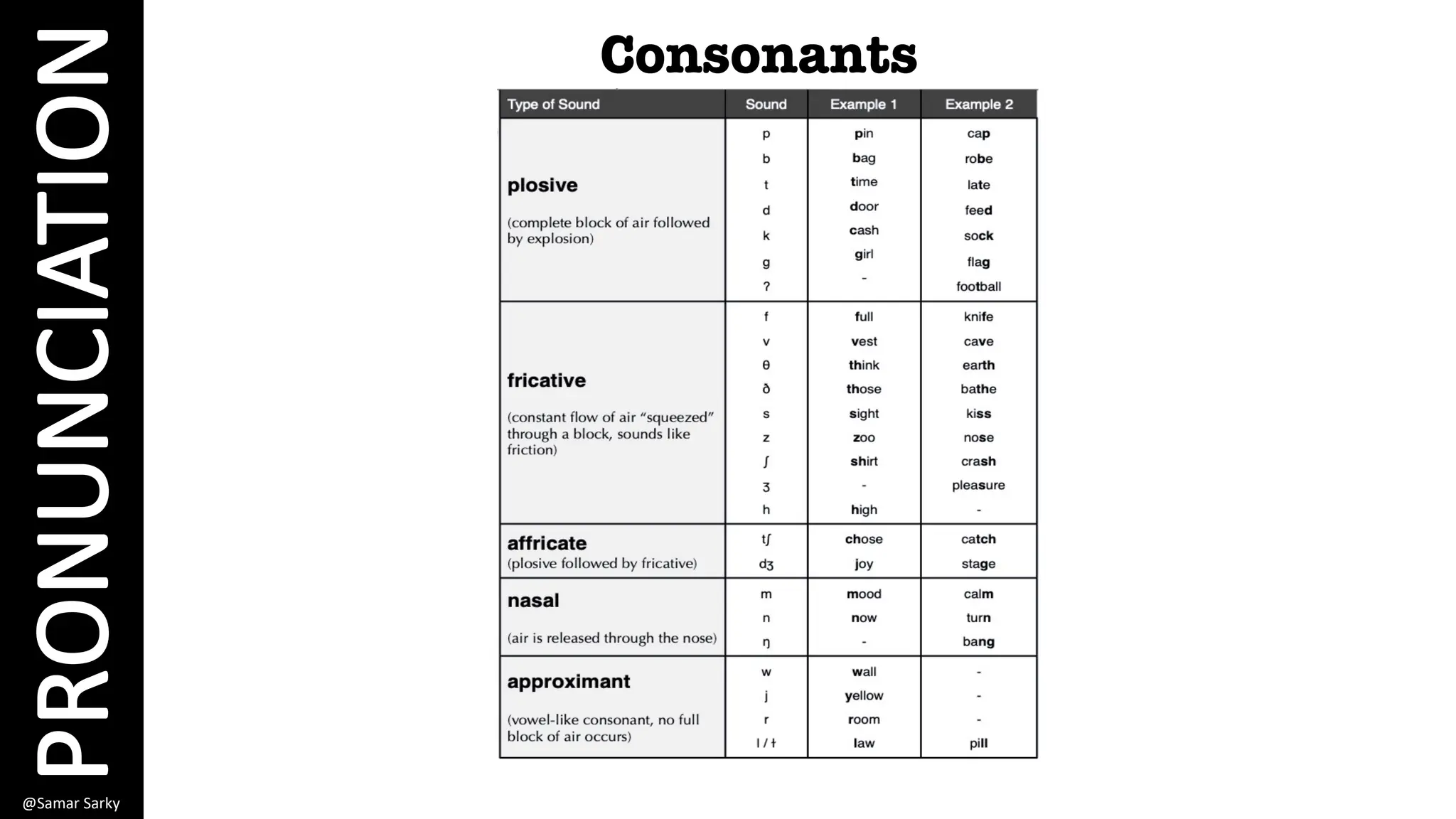
Consonants
@Samar Sarky
@Samar Sarky
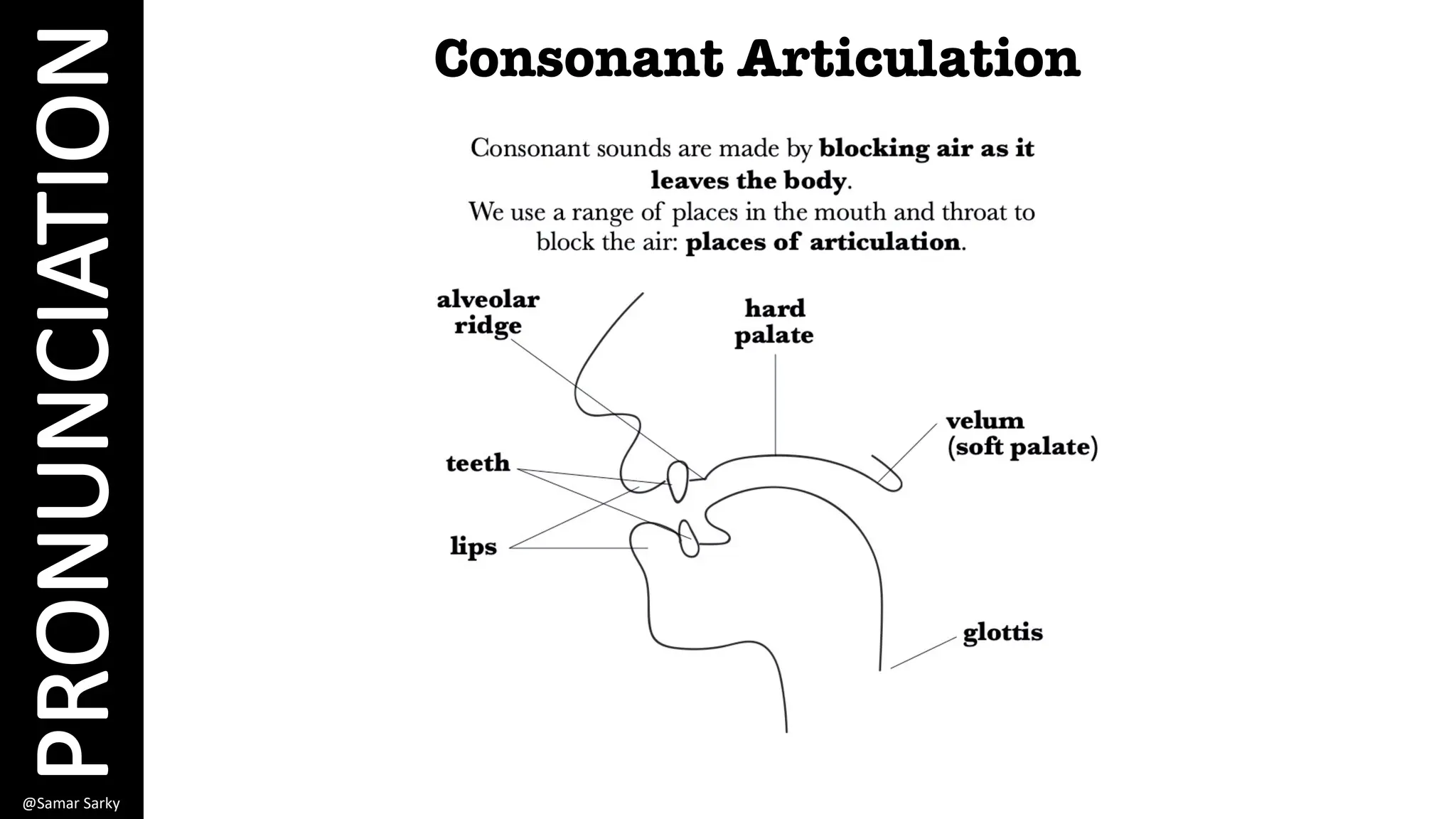
Consonant Articulation
@Samar Sarky
@Samar Sarky
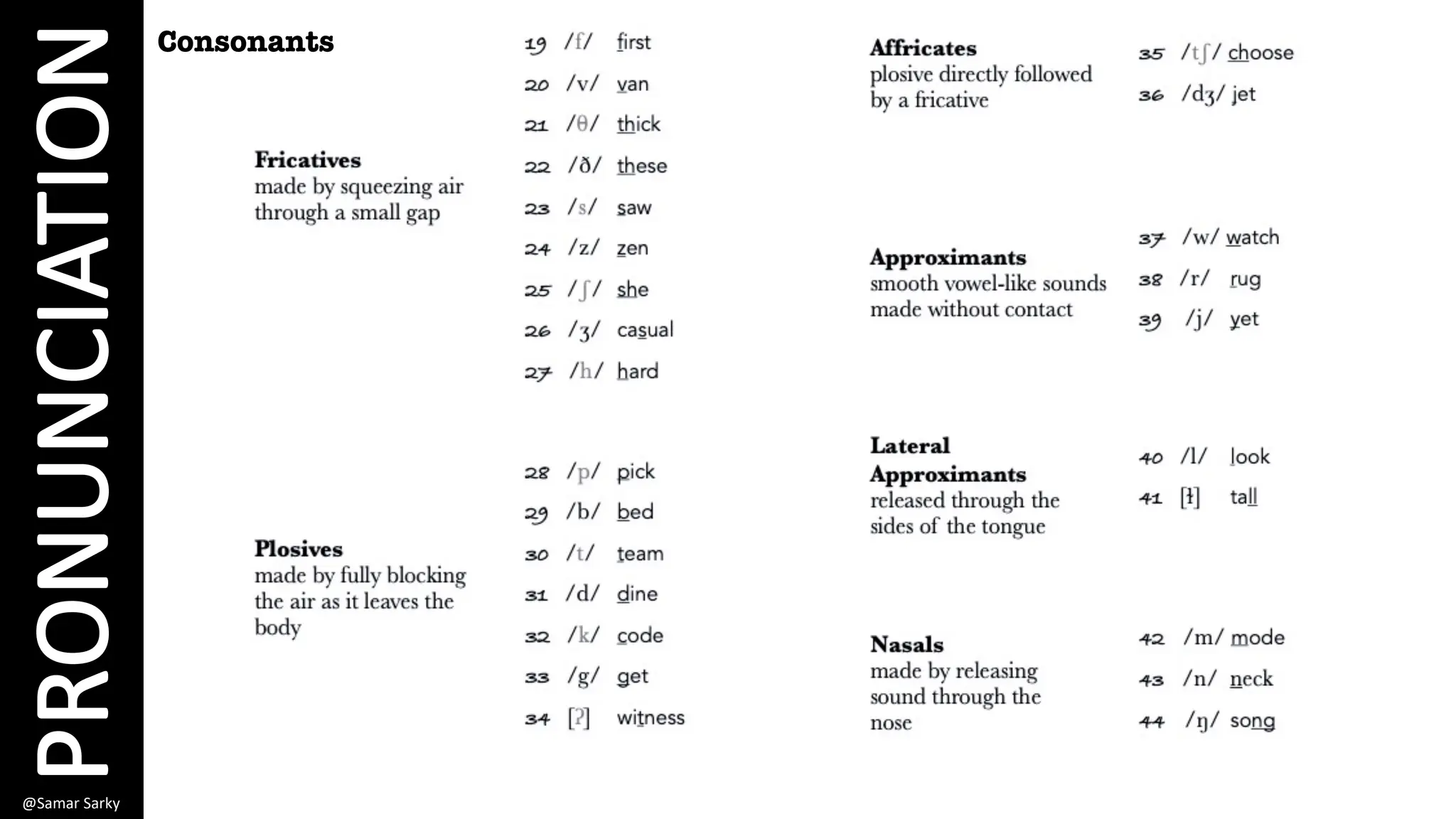
Consonants
@Samar Sarky
@Samar Sarky
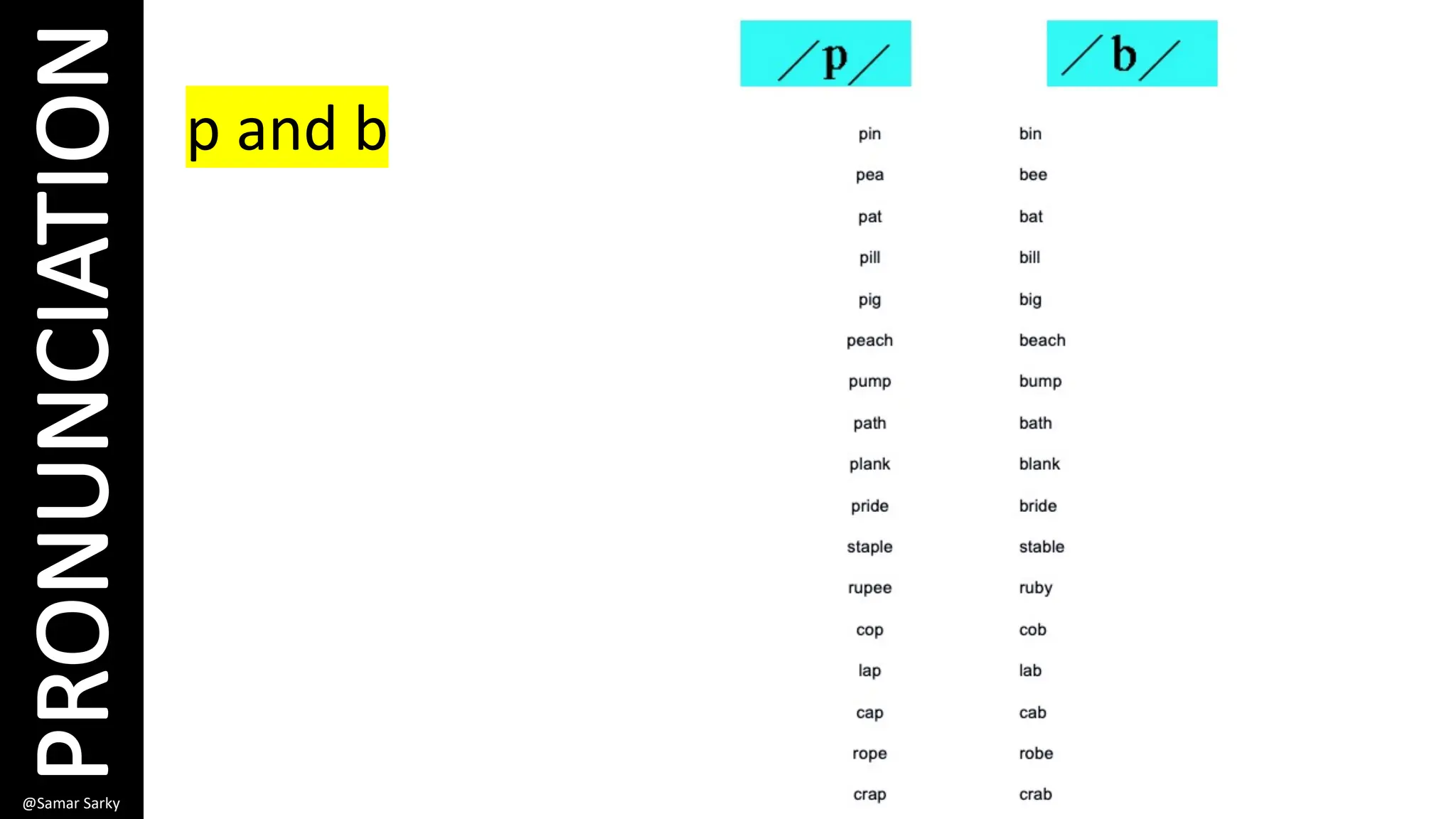
p and b
@Samar Sarky
@Samar Sarky
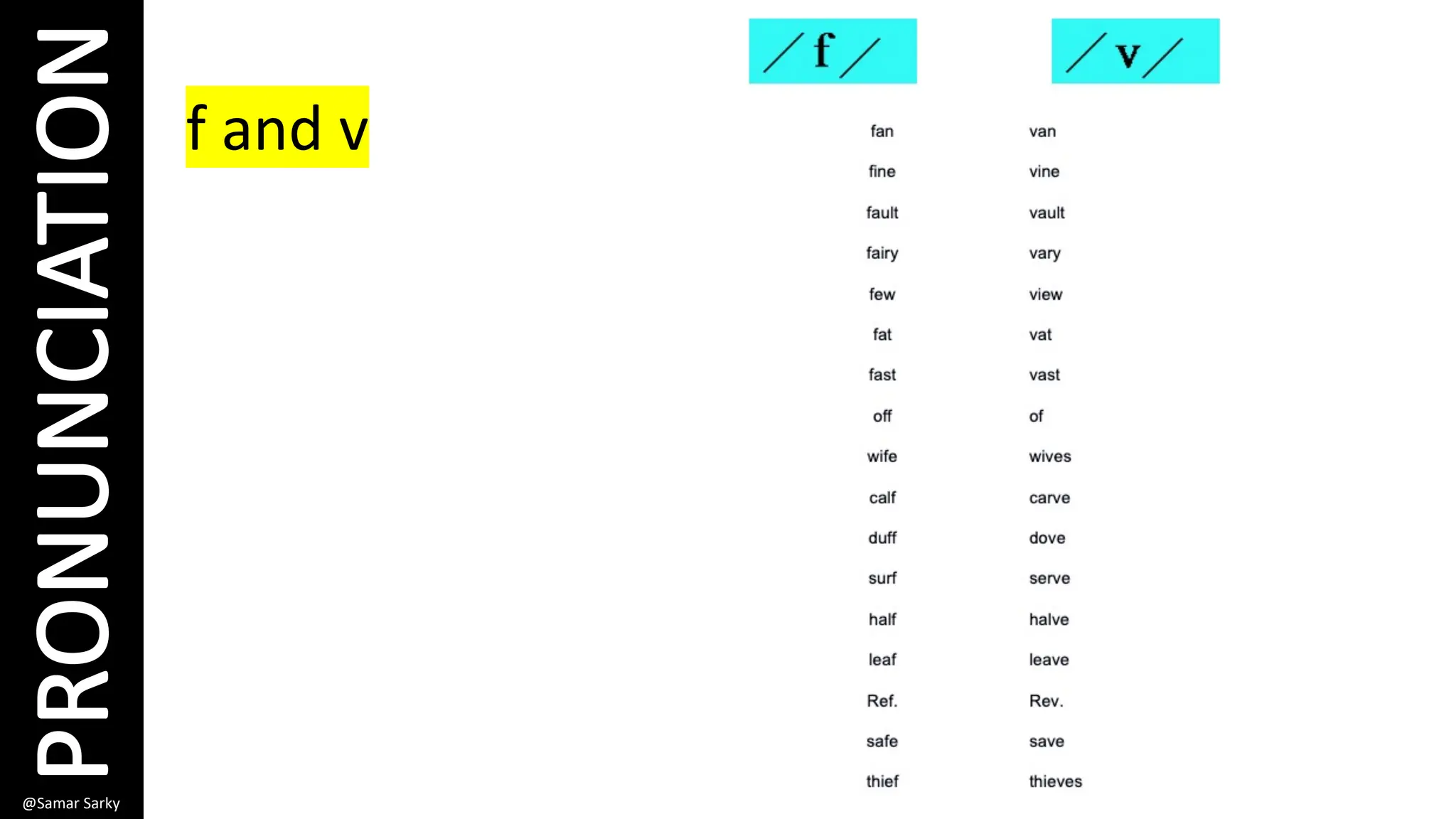
f and v
@Samar Sarky
@Samar Sarky
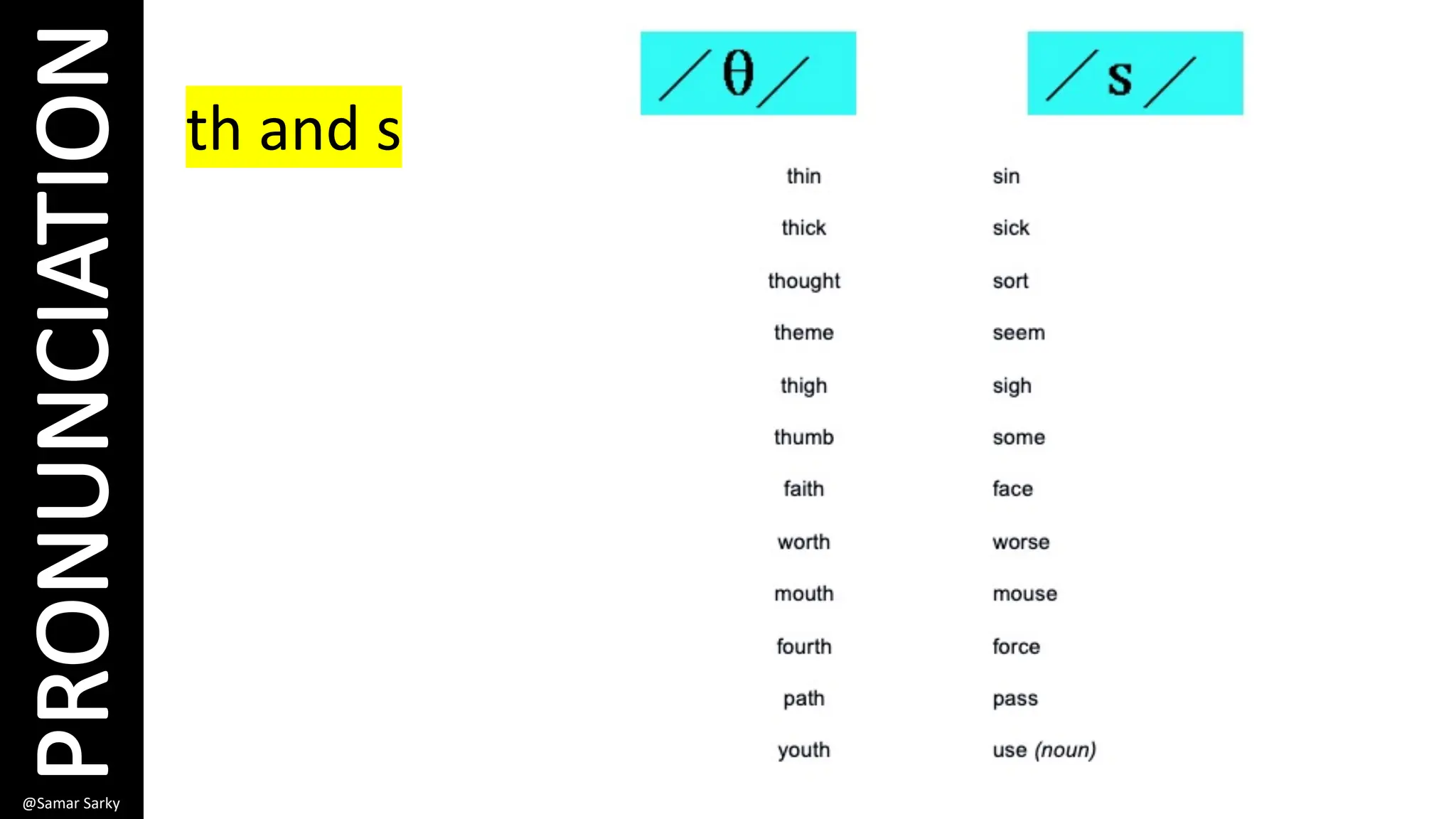
th and s
@Samar Sarky
@Samar Sarky
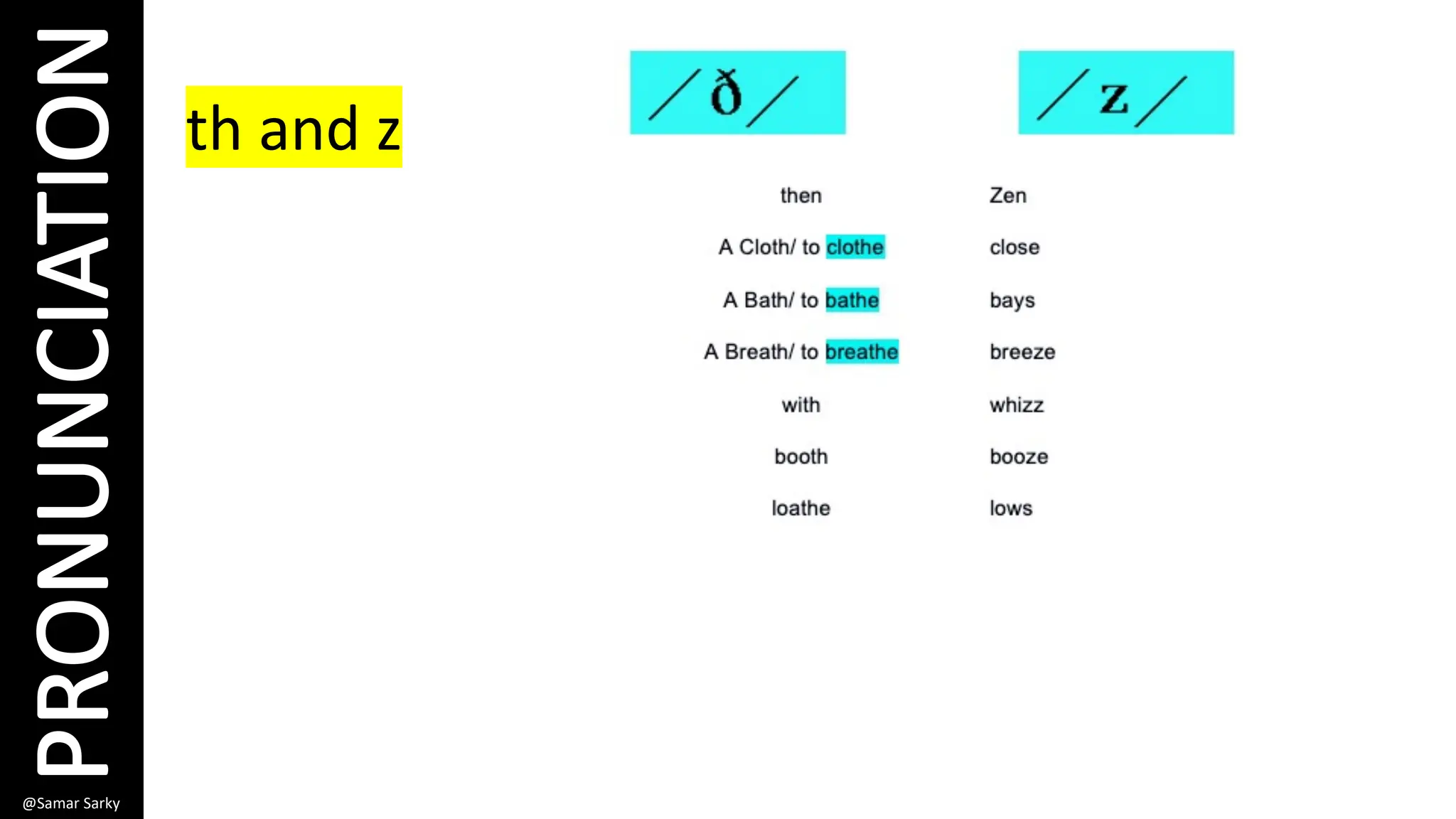
th and z
@Samar Sarky
@Samar Sarky
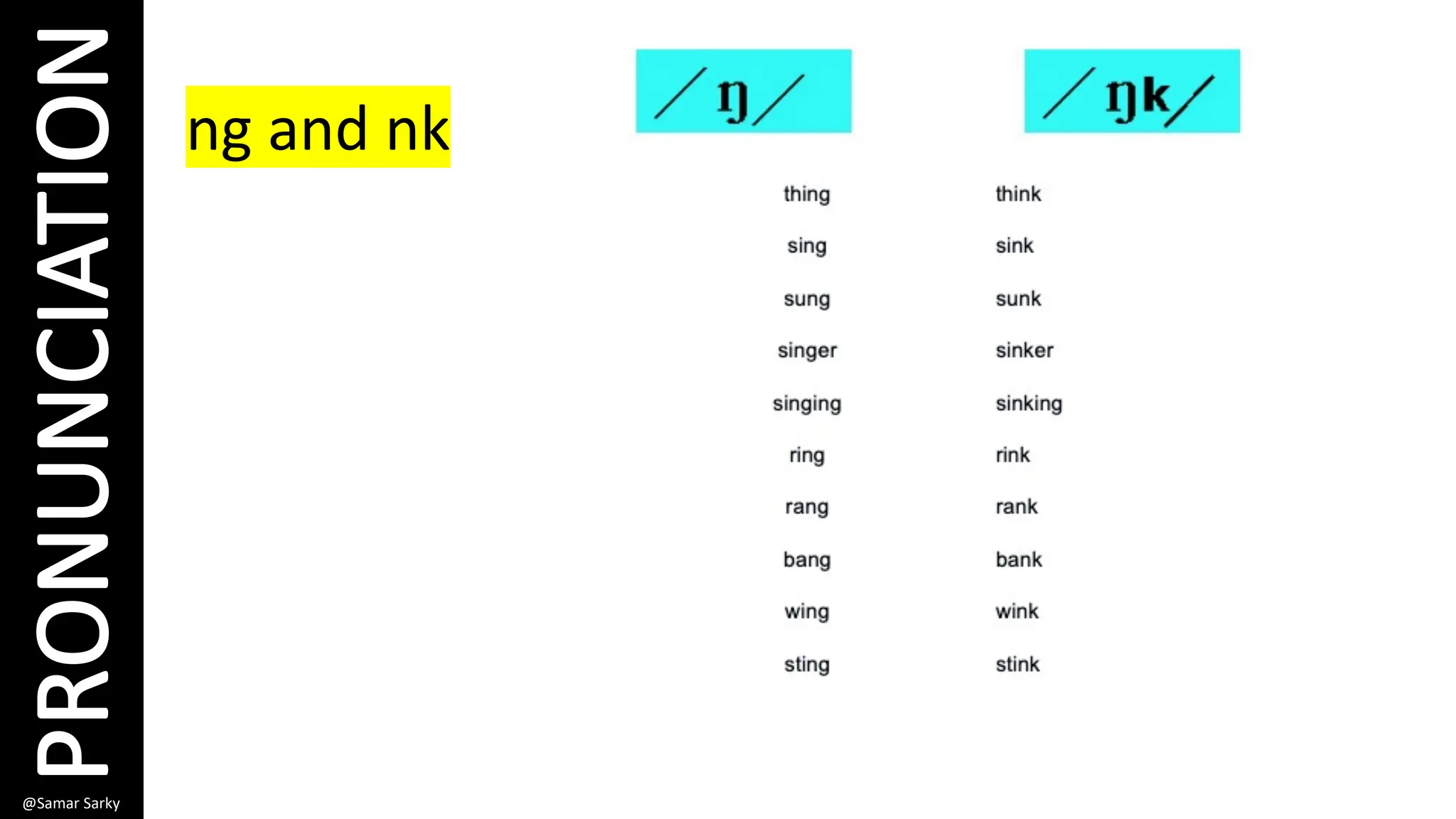
ng and nk
@Samar Sarky
@Samar Sarky
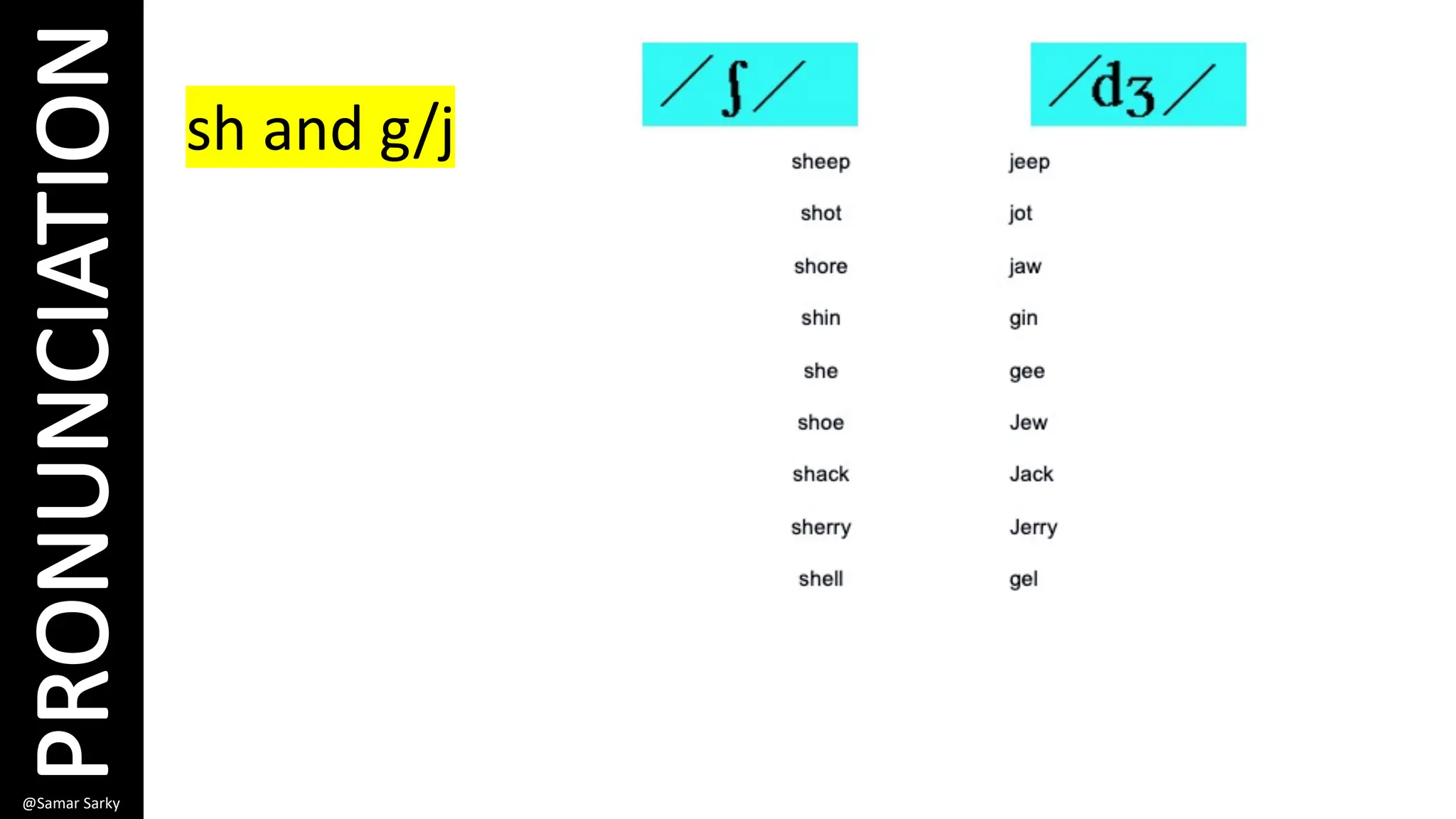
sh and g/j
@Samar Sarky
@Samar Sarky
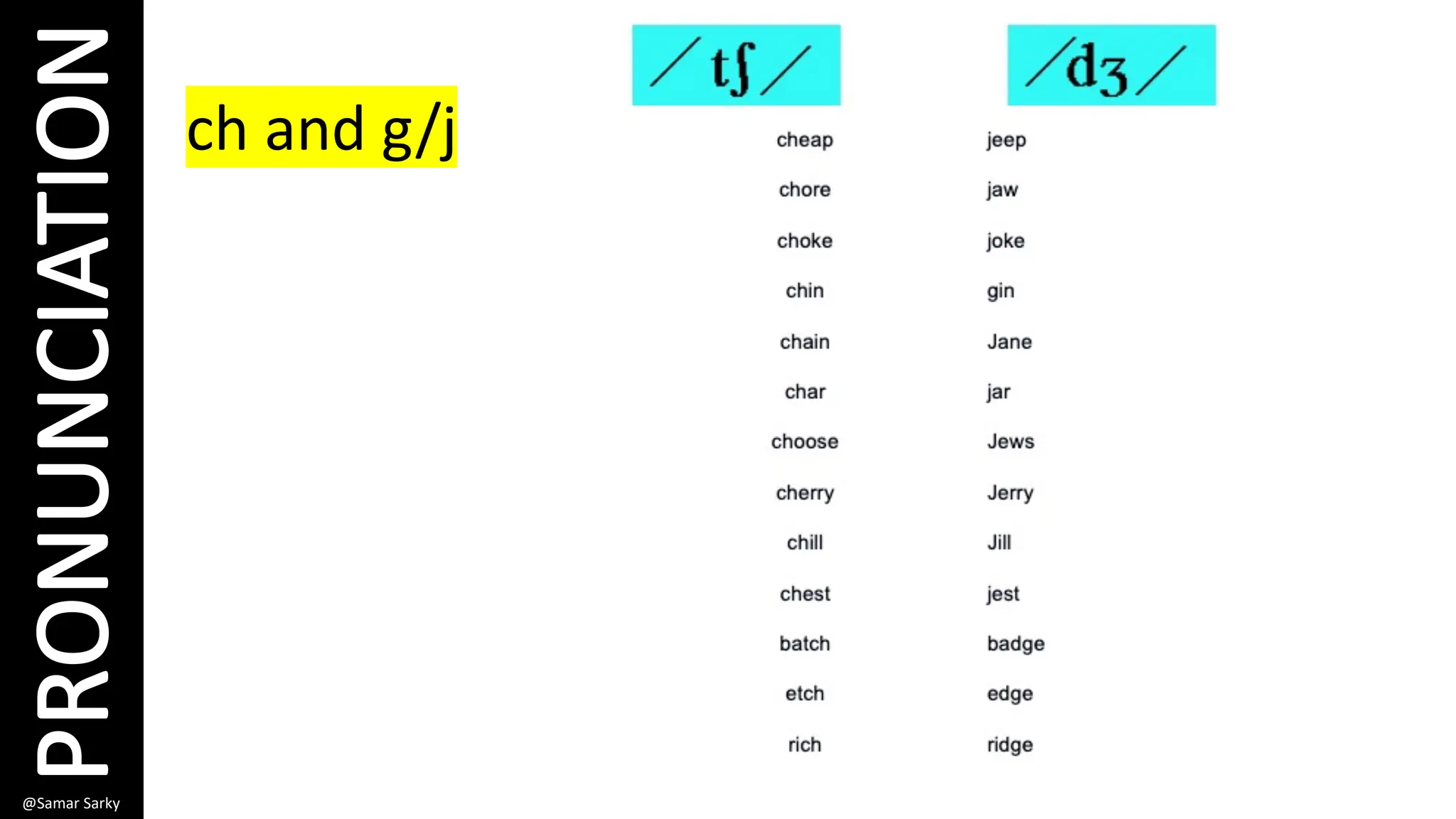
ch and g/j
@Samar Sarky
@Samar Sarky
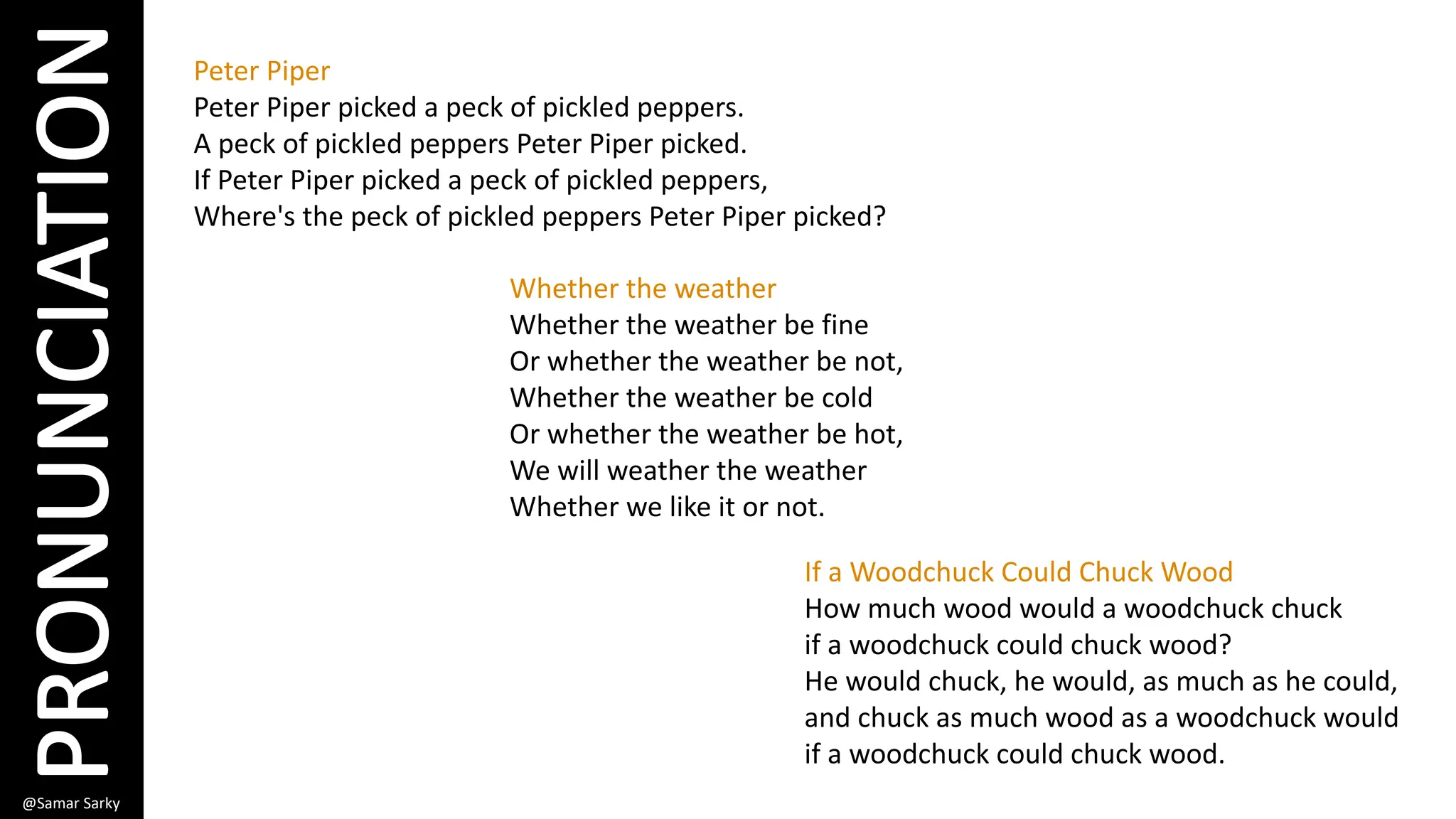
Peter Piper
Peter Piper picked a peck of pickled peppers.
A peck of pickled peppers Peter Piper picked.
If Peter Piper picked a peck of pickled peppers,
Where's the peck of pickled peppers Peter Piper picked?
If a Woodchuck Could Chuck Wood
How much wood would a woodchuck chuck
if a woodchuck could chuck wood?
He would chuck, he would, as much as he could,
and chuck as much wood as a woodchuck would
if a woodchuck could chuck wood.
Whether the weather
Whether the weather be fine
Or whether the weather be not,
Whether the weather be cold
Or whether the weather be hot,
We will weather the weather
Whether we like it or not.
@Samar Sarky
@Samar Sarky
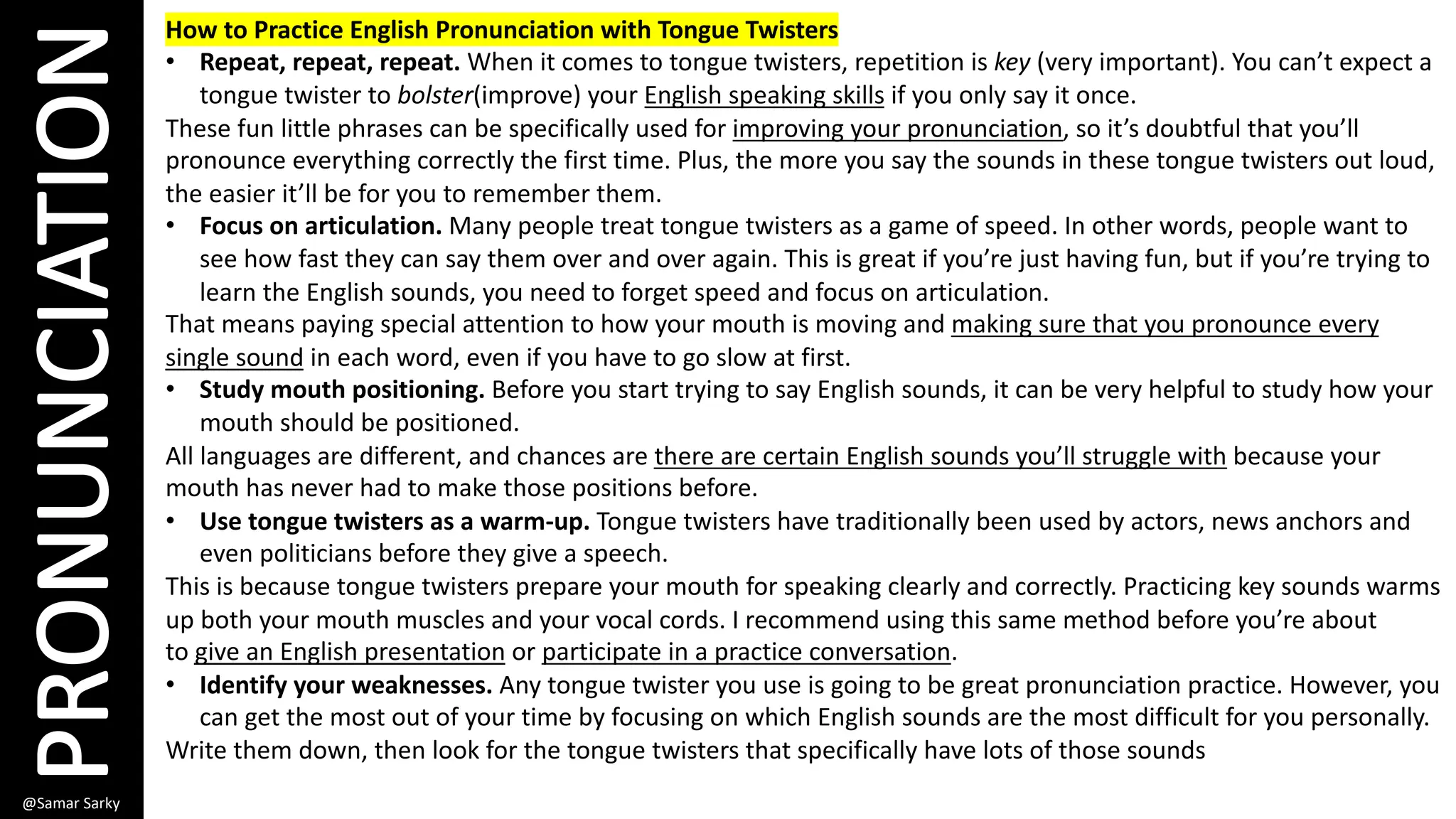
How to Practice English Pronunciation with Tongue Twisters
• Repeat, repeat, repeat. When it comes to tongue twisters, repetition is key (very important). You can’t expect a
tongue twister to bolster(improve) your English speaking skills if you only say it once.
These fun little phrases can be specifically used for improving your pronunciation, so it’s doubtful that you’ll
pronounce everything correctly the first time. Plus, the more you say the sounds in these tongue twisters out loud,
the easier it’ll be for you to remember them.
• Focus on articulation. Many people treat tongue twisters as a game of speed. In other words, people want to
see how fast they can say them over and over again. This is great if you’re just having fun, but if you’re trying to
learn the English sounds, you need to forget speed and focus on articulation.
That means paying special attention to how your mouth is moving and making sure that you pronounce every
single sound in each word, even if you have to go slow at first.
• Study mouth positioning. Before you start trying to say English sounds, it can be very helpful to study how your
mouth should be positioned.
All languages are different, and chances are there are certain English sounds you’ll struggle with because your
mouth has never had to make those positions before.
• Use tongue twisters as a warm-up. Tongue twisters have traditionally been used by actors, news anchors and
even politicians before they give a speech.
This is because tongue twisters prepare your mouth for speaking clearly and correctly. Practicing key sounds warms
up both your mouth muscles and your vocal cords. I recommend using this same method before you’re about
to give an English presentation or participate in a practice conversation.
• Identify your weaknesses. Any tongue twister you use is going to be great pronunciation practice. However, you
can get the most out of your time by focusing on which English sounds are the most difficult for you personally.
Write them down, then look for the tongue twisters that specifically have lots of those sounds

Phonatics Rules pronunciation Consonants.pdf

  • 1.
  • 2.
  • 3.
  • 4.
  • 5.
  • 6.
  • 7.
  • 8.
  • 9.
  • 10.
  • 11.
  • 12.
    @Samar Sarky @Samar Sarky PeterPiper Peter Piper picked a peck of pickled peppers. A peck of pickled peppers Peter Piper picked. If Peter Piper picked a peck of pickled peppers, Where's the peck of pickled peppers Peter Piper picked? If a Woodchuck Could Chuck Wood How much wood would a woodchuck chuck if a woodchuck could chuck wood? He would chuck, he would, as much as he could, and chuck as much wood as a woodchuck would if a woodchuck could chuck wood. Whether the weather Whether the weather be fine Or whether the weather be not, Whether the weather be cold Or whether the weather be hot, We will weather the weather Whether we like it or not.
  • 13.
    @Samar Sarky @Samar Sarky Howto Practice English Pronunciation with Tongue Twisters • Repeat, repeat, repeat. When it comes to tongue twisters, repetition is key (very important). You can’t expect a tongue twister to bolster(improve) your English speaking skills if you only say it once. These fun little phrases can be specifically used for improving your pronunciation, so it’s doubtful that you’ll pronounce everything correctly the first time. Plus, the more you say the sounds in these tongue twisters out loud, the easier it’ll be for you to remember them. • Focus on articulation. Many people treat tongue twisters as a game of speed. In other words, people want to see how fast they can say them over and over again. This is great if you’re just having fun, but if you’re trying to learn the English sounds, you need to forget speed and focus on articulation. That means paying special attention to how your mouth is moving and making sure that you pronounce every single sound in each word, even if you have to go slow at first. • Study mouth positioning. Before you start trying to say English sounds, it can be very helpful to study how your mouth should be positioned. All languages are different, and chances are there are certain English sounds you’ll struggle with because your mouth has never had to make those positions before. • Use tongue twisters as a warm-up. Tongue twisters have traditionally been used by actors, news anchors and even politicians before they give a speech. This is because tongue twisters prepare your mouth for speaking clearly and correctly. Practicing key sounds warms up both your mouth muscles and your vocal cords. I recommend using this same method before you’re about to give an English presentation or participate in a practice conversation. • Identify your weaknesses. Any tongue twister you use is going to be great pronunciation practice. However, you can get the most out of your time by focusing on which English sounds are the most difficult for you personally. Write them down, then look for the tongue twisters that specifically have lots of those sounds