EDU.O1
KNOWLEDGE AND CURRICULUM:
PHILOSOPHICALAND
SOCIOLOGICAL PERSPECTIVES
Sherba E S
No. 12, English
CSI College of Education,
Parassala
ARISTOTLE-CONCEPT OF REALISM-
TAXONOMY OF LIVING ORGANISM
Contents
o Aristotle
o Realism
o Taxonomy
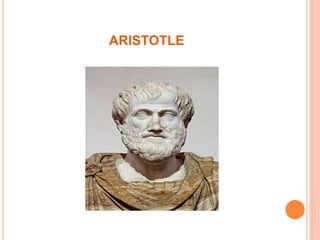
ARISTOTLE
 Aristotle (384–322 BC) was a
Greek philosopher and polymath during the Classical
period in Ancient Greece
 He was the disciple of Plato
 He founded the Lyceum, the Peripatetic school of
philosophy, and the Aristotelian tradition
 His writings may in
biology, zoology, metaphysics, logic, ethics, aesthetics, p
oetry, theatre, music, rhetoric, psychology, linguistics, ec
onomics, politics, meteorology and geology.
 His philosophy has exerted a unique influence on almost
every form of knowledge in the West and it continues to
be a subject of contemporary philosophical discussion.
 Aristotle was born in the city of Stagira in Northern
Greece.
 At seventeen or eighteen years of age he joined Plato's
Academy in Athens and remained there until the age of
thirty-seven
 Shortly after Plato died, Aristotle left Athens and, at the
request of Philip II of Macedon, tutored Alexander the
Great beginning in 343 BC
 Dante called him “the master of those who know".
 Aristotle has been called "the father of logic", "the father
of biology", "the father of political science", "the father
of zoology", "the father of embryology", "the father of
natural law", "the father of scientific method", "the father
of rhetoric", "the father of psychology", "the father of
realism", "the father of criticism", "the father of
individualism", "the father of teleology", and "the father
of meteorology".
CONCEPT OF REALISM
 “Realism means a belief or theory which looks upon
the world as it seems to us to be a mere
phenomenon.”——Swami Ram Tirth
o The study of the world we live in.
o In Realism the word ‘real’ denotes actual or the
existing. It indicates those things or events which
exist in the world in its own right.
o It opposes the thing or event which is imaginary or
fictitious
 It holds the view that knowledge acquired through
senses is true and what we observe and perceive
through our own senses is real and the true entity
of the world.
 It says that physical world is objective and factual
whereas personal feelings and desires are
subjective and secondary.
 This philosophy is also known as objectivism
 Aristotle is generally regarded as the father of
Realism
 John Locke, Erasmas, Rabelias, Comenius,
Bertrand Russell, Francis Bacon, Milton are the
chief protagonists of Realism
 According to C.V. Good, “Realism is the doctrine
that objective reality or the material universe exists
independently of conscious mind, its nature and
properties are being affected by being known.”
 There are various aspects of education such as
curriculum, teaching methodology, discipline, aims
of education and the like which are influenced by
realistic education.
 The ultimate reality is the world of physical objects.
The focus is on the body/objects
 Truth is objective-what can be observed
 Aristotle, a student of Plato who broke with his
mentor’s idealist philosophy, is called the father of
both Realism and the scientific method.
 The Realist curriculum emphasizes the subject
matter of the physical world, particularly science
and mathematics
TAXONOMY OF LIVING ORGANISMS
 Aristotle is said to have written 150 philosophical
treatises.
 Many, however, are thought to be "lecture notes"
instead of complete, polished treatises, and a few
may not be the work
 His observations on the anatomy of octopus,
cuttlefish, crustaceans, and many other marine
invertebrates are remarkably accurate
 Aristotle described the embryological development of a
chick; he distinguished whales and dolphins from fish
 he described the chambered stomachs of ruminants and
the social organization of bees
 he noticed that some sharks give birth to live young
 Aristotle's classification of animals grouped together
animals with similar characters into genera (used in a
much broader sense than present-day biologists use the
term) and then distinguished the species within the
genera.
 He divided the animals into two types: those with
blood, and those without blood (or at least without
red blood).
 The blooded animals, corresponding to
the vertebrates, included five genera: viviparous
quadrupeds (mammals), birds, oviparous
quadrupeds (reptiles and amphibians), fishes, and
whales (which Aristotle did not realize were
mammals).
 The bloodless animals were classified as
cephalopods (such as the octopus); crustaceans;
insects (which included the spiders, scorpions, and
centipedes, in addition to what we now define as
insects); shelled animals (such as
most molluscs and echinoderms); and "zoophytes,"
or "plant-animals," which supposedly resembled
plants in their form -- such as most cnidarians.
WRITINGS OF ARISTOTLE
 history of science
 History of Animals
 Generation of Animals
 Movement of Animals
 Progression of Animals
 Parts of Animals
 On the Soul
THANK YOU

Philo ppt

  • 1.
    EDU.O1 KNOWLEDGE AND CURRICULUM: PHILOSOPHICALAND SOCIOLOGICALPERSPECTIVES Sherba E S No. 12, English CSI College of Education, Parassala
  • 2.
    ARISTOTLE-CONCEPT OF REALISM- TAXONOMYOF LIVING ORGANISM Contents o Aristotle o Realism o Taxonomy
  • 3.
  • 4.
     Aristotle (384–322BC) was a Greek philosopher and polymath during the Classical period in Ancient Greece  He was the disciple of Plato  He founded the Lyceum, the Peripatetic school of philosophy, and the Aristotelian tradition  His writings may in biology, zoology, metaphysics, logic, ethics, aesthetics, p oetry, theatre, music, rhetoric, psychology, linguistics, ec onomics, politics, meteorology and geology.  His philosophy has exerted a unique influence on almost every form of knowledge in the West and it continues to be a subject of contemporary philosophical discussion.
  • 5.
     Aristotle wasborn in the city of Stagira in Northern Greece.  At seventeen or eighteen years of age he joined Plato's Academy in Athens and remained there until the age of thirty-seven  Shortly after Plato died, Aristotle left Athens and, at the request of Philip II of Macedon, tutored Alexander the Great beginning in 343 BC  Dante called him “the master of those who know".
  • 6.
     Aristotle hasbeen called "the father of logic", "the father of biology", "the father of political science", "the father of zoology", "the father of embryology", "the father of natural law", "the father of scientific method", "the father of rhetoric", "the father of psychology", "the father of realism", "the father of criticism", "the father of individualism", "the father of teleology", and "the father of meteorology".
  • 7.
    CONCEPT OF REALISM “Realism means a belief or theory which looks upon the world as it seems to us to be a mere phenomenon.”——Swami Ram Tirth o The study of the world we live in. o In Realism the word ‘real’ denotes actual or the existing. It indicates those things or events which exist in the world in its own right. o It opposes the thing or event which is imaginary or fictitious
  • 8.
     It holdsthe view that knowledge acquired through senses is true and what we observe and perceive through our own senses is real and the true entity of the world.  It says that physical world is objective and factual whereas personal feelings and desires are subjective and secondary.  This philosophy is also known as objectivism  Aristotle is generally regarded as the father of Realism
  • 9.
     John Locke,Erasmas, Rabelias, Comenius, Bertrand Russell, Francis Bacon, Milton are the chief protagonists of Realism  According to C.V. Good, “Realism is the doctrine that objective reality or the material universe exists independently of conscious mind, its nature and properties are being affected by being known.”  There are various aspects of education such as curriculum, teaching methodology, discipline, aims of education and the like which are influenced by realistic education.
  • 10.
     The ultimatereality is the world of physical objects. The focus is on the body/objects  Truth is objective-what can be observed  Aristotle, a student of Plato who broke with his mentor’s idealist philosophy, is called the father of both Realism and the scientific method.  The Realist curriculum emphasizes the subject matter of the physical world, particularly science and mathematics
  • 11.
    TAXONOMY OF LIVINGORGANISMS  Aristotle is said to have written 150 philosophical treatises.  Many, however, are thought to be "lecture notes" instead of complete, polished treatises, and a few may not be the work  His observations on the anatomy of octopus, cuttlefish, crustaceans, and many other marine invertebrates are remarkably accurate
  • 12.
     Aristotle describedthe embryological development of a chick; he distinguished whales and dolphins from fish  he described the chambered stomachs of ruminants and the social organization of bees  he noticed that some sharks give birth to live young  Aristotle's classification of animals grouped together animals with similar characters into genera (used in a much broader sense than present-day biologists use the term) and then distinguished the species within the genera.
  • 13.
     He dividedthe animals into two types: those with blood, and those without blood (or at least without red blood).  The blooded animals, corresponding to the vertebrates, included five genera: viviparous quadrupeds (mammals), birds, oviparous quadrupeds (reptiles and amphibians), fishes, and whales (which Aristotle did not realize were mammals).
  • 14.
     The bloodlessanimals were classified as cephalopods (such as the octopus); crustaceans; insects (which included the spiders, scorpions, and centipedes, in addition to what we now define as insects); shelled animals (such as most molluscs and echinoderms); and "zoophytes," or "plant-animals," which supposedly resembled plants in their form -- such as most cnidarians.
  • 15.
    WRITINGS OF ARISTOTLE history of science  History of Animals  Generation of Animals  Movement of Animals  Progression of Animals  Parts of Animals  On the Soul
  • 16.