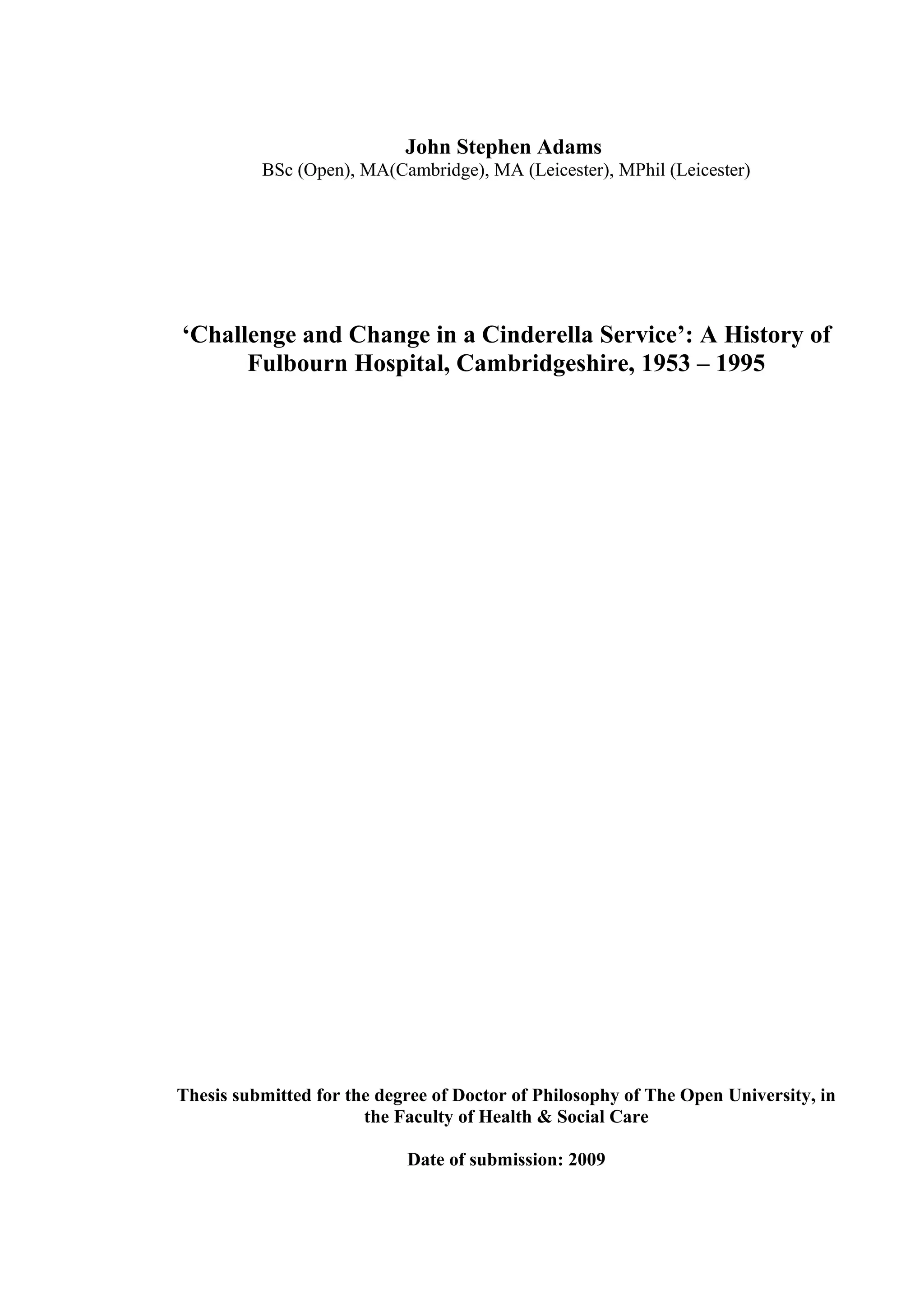
John Stephen Adams
BSc (Open), MA(Cambridge), MA (Leicester), MPhil (Leicester)
‘Challenge and Change in a Cinderella Service’: A History of
Fulbourn Hospital, Cambridgeshire, 1953 – 1995
Thesis submitted for the degree of Doctor of Philosophy of The Open University, in
the Faculty of Health & Social Care
Date of submission: 2009
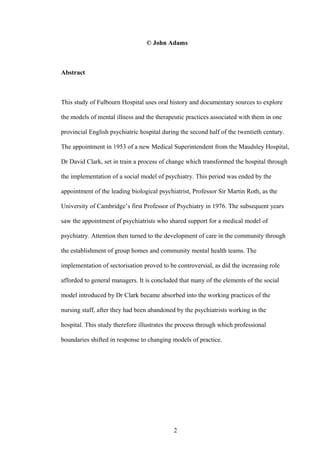
© John Adams
Abstract
This study of Fulbourn Hospital uses oral history and documentary sources to explore
the models of mental illness and the therapeutic practices associated with them in one
provincial English psychiatric hospital during the second half of the twentieth century.
The appointment in 1953 of a new Medical Superintendent from the Maudsley Hospital,
Dr David Clark, set in train a process of change which transformed the hospital through
the implementation of a social model of psychiatry. This period was ended by the
appointment of the leading biological psychiatrist, Professor Sir Martin Roth, as the
University of Cambridge’s first Professor of Psychiatry in 1976. The subsequent years
saw the appointment of psychiatrists who shared support for a medical model of
psychiatry. Attention then turned to the development of care in the community through
the establishment of group homes and community mental health teams. The
implementation of sectorisation proved to be controversial, as did the increasing role
afforded to general managers. It is concluded that many of the elements of the social
model introduced by Dr Clark became absorbed into the working practices of the
nursing staff, after they had been abandoned by the psychiatrists working in the
hospital. This study therefore illustrates the process through which professional
boundaries shifted in response to changing models of practice.
2
Contents
Chapter 1: Introduction 8
Chapter 2: The History of Mental Health Care: A Review of the
Literature
15
Chapter 3: Research Methodology 48
Chapter 4: The New Superintendent 86
Chapter 5: Winds of Change 122
Chapter 6: Hereward House and Westerlands: The Creation
of a ‘Therapeutic Community Proper’
157
Chapter 7: ‘Social Therapy’ in Practice 203
Chapter 8: Nursing Reforms at Fulbourn 237
Chapter 9: The Critics of the Fulbourn Regime 265
Chapter 10: Reaching Out from the Institution 303
Chapter 11: Conclusion 346
Appendix 1:[Removed] 361
Appendix 2: Brief biographies of oral history interviewees 365
Bibliography 369
Tables
Table 1: Chronological list of oral history material (Ch. 3) 75
Table 2: Work groups of patients 1954 and 1961 (Ch. 4) 115
Table 3: Percentage of work groups discharged (Ch. 4) 116
Table 4: Diagnoses of patients (Ch. 6) 161
3
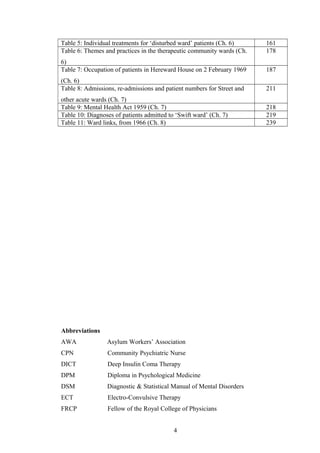
Table 5: Individual treatments for ‘disturbed ward’ patients (Ch. 6) 161
Table 6: Themes and practices in the therapeutic community wards (Ch.
6)
178
Table 7: Occupation of patients in Hereward House on 2 February 1969
(Ch. 6)
187
Table 8: Admissions, re-admissions and patient numbers for Street and
other acute wards (Ch. 7)
211
Table 9: Mental Health Act 1959 (Ch. 7) 218
Table 10: Diagnoses of patients admitted to ‘Swift ward’ (Ch. 7) 219
Table 11: Ward links, from 1966 (Ch. 8) 239
Abbreviations
AWA Asylum Workers’ Association
CPN Community Psychiatric Nurse
DICT Deep Insulin Coma Therapy
DPM Diploma in Psychological Medicine
DSM Diagnostic & Statistical Manual of Mental Disorders
ECT Electro-Convulsive Therapy
FRCP Fellow of the Royal College of Physicians
4
GNC General Nursing Council
GP General Practitioner
GPI General Paralysis of the Insane
ICD International Classification of Diseases
LREC Local Research Ethics Committee
MPA Medico-Psychological Association
MRCP Member of the Royal College of Physicians
MRCPsych Member of the Royal College of Psychiatrists
NAWU National Asylum Workers’ Union
NHS National Health Service
RMN Registered Mental Nurse
SRN State Registered Nurse
WHO World Health Organisation
Illustrations
Illustrations removed for copyright reasons.
5
Dedication
To Gwen Adams and Anna Adams.
Acknowledgements
A doctoral study employing oral history as one of its main sources necessarily relies
upon the active assistance of many people, but responsibility for any errors, and for the
interpretations drawn from source material, remains mine alone.
6
The initial debt is owed to my colleague Nick Smithson, who first encouraged me to
embark on this journey of discovery, putting his own historical resources at my disposal
and introducing me to Dr David Clark. This study could not have been undertaken
without the assistance of the twenty-six other individuals who agreed to be interviewed.
They were unfailingly helpful and hospitable, despite the demands that I was making
upon their personal schedules. Librarians and archivists have provided much valuable
help and advice. At the Open University, Professor Pam Shakespeare facilitated the
transformation of a personal enthusiasm into a project proposal. Dr Sheena Rolph and
Professor Dorothy Atkinson supervised the study in a wholly supportive manner, and I
am very grateful to them for their judicious balance of critical appraisal and positive
encouragement, sustained over the last six years. Professor Joanna Bornat and Dr Tessa
Muncey generously agreed to act as critical readers for final drafts of the study. Finally,
this thesis is dedicated to my mother and to my wife, who have lived with my
enthusiasm for the history of some of the less fashionable corners of the health and
social services for over two decades.
7

PhD title + abstr

  • 1.
    John Stephen Adams BSc(Open), MA(Cambridge), MA (Leicester), MPhil (Leicester) ‘Challenge and Change in a Cinderella Service’: A History of Fulbourn Hospital, Cambridgeshire, 1953 – 1995 Thesis submitted for the degree of Doctor of Philosophy of The Open University, in the Faculty of Health & Social Care Date of submission: 2009
  • 2.
    © John Adams Abstract Thisstudy of Fulbourn Hospital uses oral history and documentary sources to explore the models of mental illness and the therapeutic practices associated with them in one provincial English psychiatric hospital during the second half of the twentieth century. The appointment in 1953 of a new Medical Superintendent from the Maudsley Hospital, Dr David Clark, set in train a process of change which transformed the hospital through the implementation of a social model of psychiatry. This period was ended by the appointment of the leading biological psychiatrist, Professor Sir Martin Roth, as the University of Cambridge’s first Professor of Psychiatry in 1976. The subsequent years saw the appointment of psychiatrists who shared support for a medical model of psychiatry. Attention then turned to the development of care in the community through the establishment of group homes and community mental health teams. The implementation of sectorisation proved to be controversial, as did the increasing role afforded to general managers. It is concluded that many of the elements of the social model introduced by Dr Clark became absorbed into the working practices of the nursing staff, after they had been abandoned by the psychiatrists working in the hospital. This study therefore illustrates the process through which professional boundaries shifted in response to changing models of practice. 2
  • 3.
    Contents Chapter 1: Introduction8 Chapter 2: The History of Mental Health Care: A Review of the Literature 15 Chapter 3: Research Methodology 48 Chapter 4: The New Superintendent 86 Chapter 5: Winds of Change 122 Chapter 6: Hereward House and Westerlands: The Creation of a ‘Therapeutic Community Proper’ 157 Chapter 7: ‘Social Therapy’ in Practice 203 Chapter 8: Nursing Reforms at Fulbourn 237 Chapter 9: The Critics of the Fulbourn Regime 265 Chapter 10: Reaching Out from the Institution 303 Chapter 11: Conclusion 346 Appendix 1:[Removed] 361 Appendix 2: Brief biographies of oral history interviewees 365 Bibliography 369 Tables Table 1: Chronological list of oral history material (Ch. 3) 75 Table 2: Work groups of patients 1954 and 1961 (Ch. 4) 115 Table 3: Percentage of work groups discharged (Ch. 4) 116 Table 4: Diagnoses of patients (Ch. 6) 161 3
  • 4.
    Table 5: Individualtreatments for ‘disturbed ward’ patients (Ch. 6) 161 Table 6: Themes and practices in the therapeutic community wards (Ch. 6) 178 Table 7: Occupation of patients in Hereward House on 2 February 1969 (Ch. 6) 187 Table 8: Admissions, re-admissions and patient numbers for Street and other acute wards (Ch. 7) 211 Table 9: Mental Health Act 1959 (Ch. 7) 218 Table 10: Diagnoses of patients admitted to ‘Swift ward’ (Ch. 7) 219 Table 11: Ward links, from 1966 (Ch. 8) 239 Abbreviations AWA Asylum Workers’ Association CPN Community Psychiatric Nurse DICT Deep Insulin Coma Therapy DPM Diploma in Psychological Medicine DSM Diagnostic & Statistical Manual of Mental Disorders ECT Electro-Convulsive Therapy FRCP Fellow of the Royal College of Physicians 4
  • 5.
    GNC General NursingCouncil GP General Practitioner GPI General Paralysis of the Insane ICD International Classification of Diseases LREC Local Research Ethics Committee MPA Medico-Psychological Association MRCP Member of the Royal College of Physicians MRCPsych Member of the Royal College of Psychiatrists NAWU National Asylum Workers’ Union NHS National Health Service RMN Registered Mental Nurse SRN State Registered Nurse WHO World Health Organisation Illustrations Illustrations removed for copyright reasons. 5
  • 6.
    Dedication To Gwen Adamsand Anna Adams. Acknowledgements A doctoral study employing oral history as one of its main sources necessarily relies upon the active assistance of many people, but responsibility for any errors, and for the interpretations drawn from source material, remains mine alone. 6
  • 7.
    The initial debtis owed to my colleague Nick Smithson, who first encouraged me to embark on this journey of discovery, putting his own historical resources at my disposal and introducing me to Dr David Clark. This study could not have been undertaken without the assistance of the twenty-six other individuals who agreed to be interviewed. They were unfailingly helpful and hospitable, despite the demands that I was making upon their personal schedules. Librarians and archivists have provided much valuable help and advice. At the Open University, Professor Pam Shakespeare facilitated the transformation of a personal enthusiasm into a project proposal. Dr Sheena Rolph and Professor Dorothy Atkinson supervised the study in a wholly supportive manner, and I am very grateful to them for their judicious balance of critical appraisal and positive encouragement, sustained over the last six years. Professor Joanna Bornat and Dr Tessa Muncey generously agreed to act as critical readers for final drafts of the study. Finally, this thesis is dedicated to my mother and to my wife, who have lived with my enthusiasm for the history of some of the less fashionable corners of the health and social services for over two decades. 7