Getting the bigger picture
From course design to curriculum development
Overview
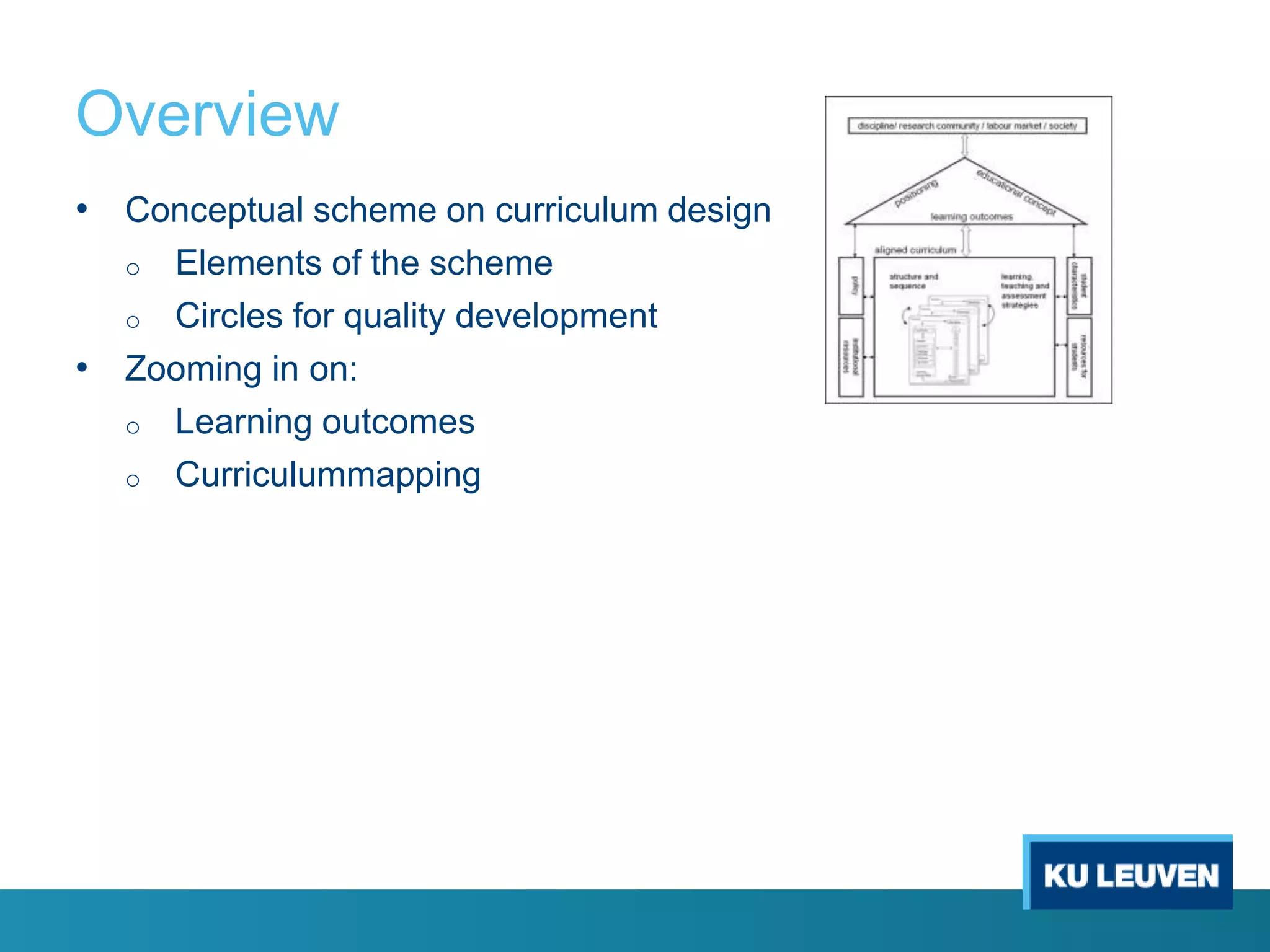
• Conceptual scheme on curriculum design
Elements of the scheme
o Circles for quality development
Zooming in on:
o Learning outcomes
o Curriculummapping
o

•
Conceptual scheme on curriculum design

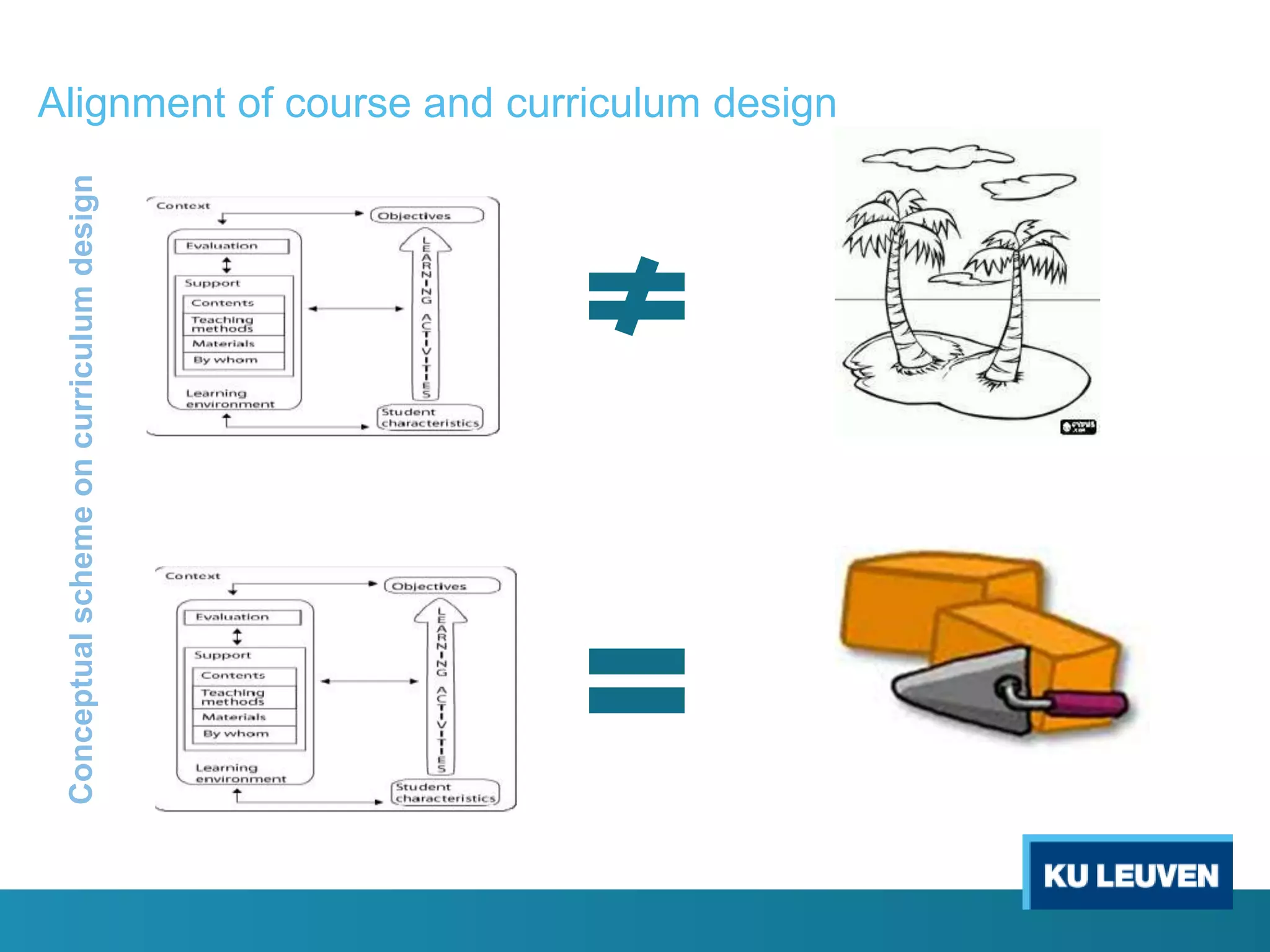
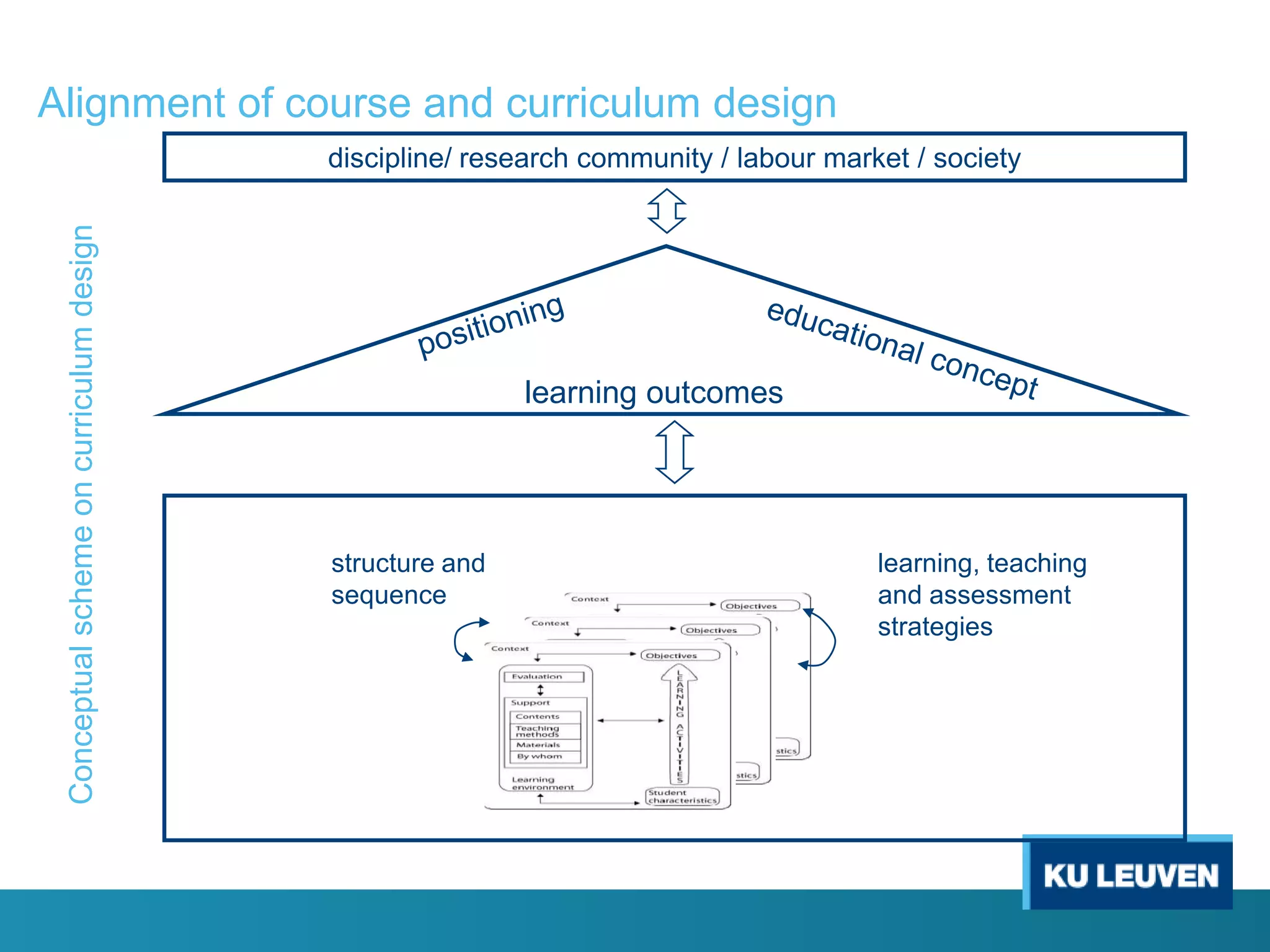
Alignment of course and curriculum design
Conceptual scheme on curriculum design

Alignment of course and curriculum design
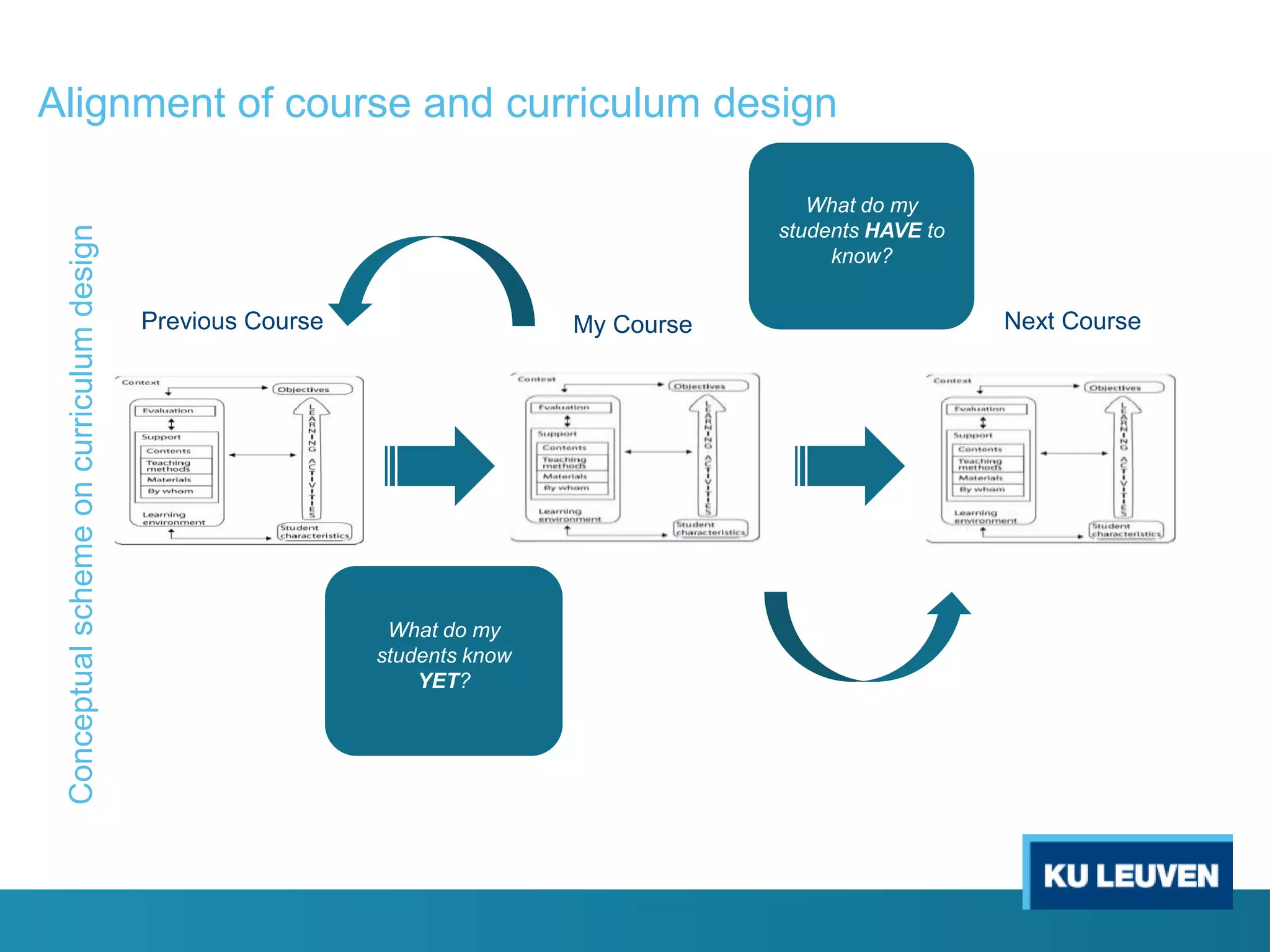
What do my
students HAVE to
know?

Previous Course

My Course

What do my
students know
YET?

Next Course
Alignment of course and curriculum design

Conceptual scheme on curriculum design

sign
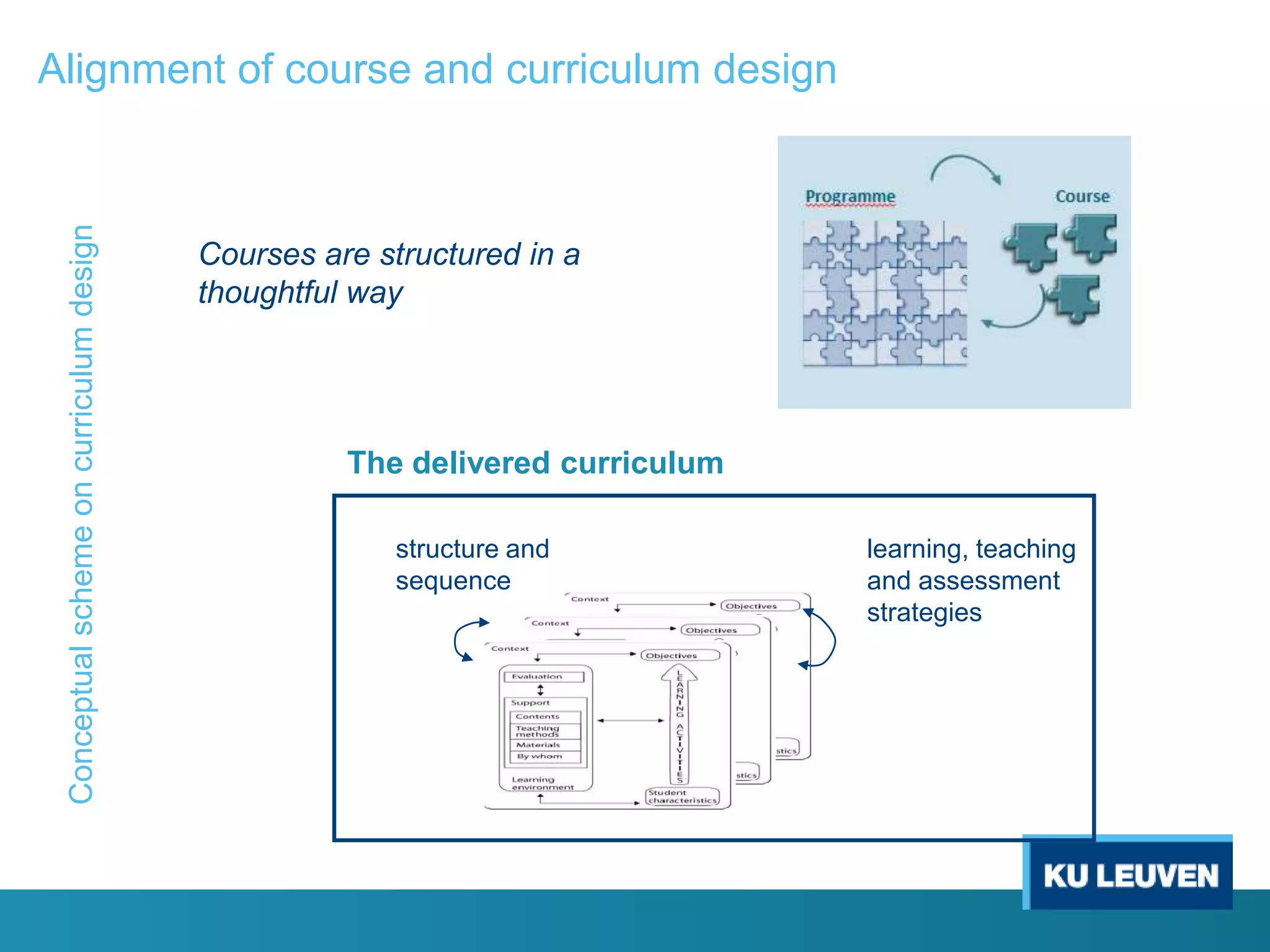
Courses are structured in a
thoughtful way

The delivered curriculum
structure and
sequence

learning, teaching
and assessment
strategies
Conceptual scheme on curriculum design

Alignment of course and curriculum design
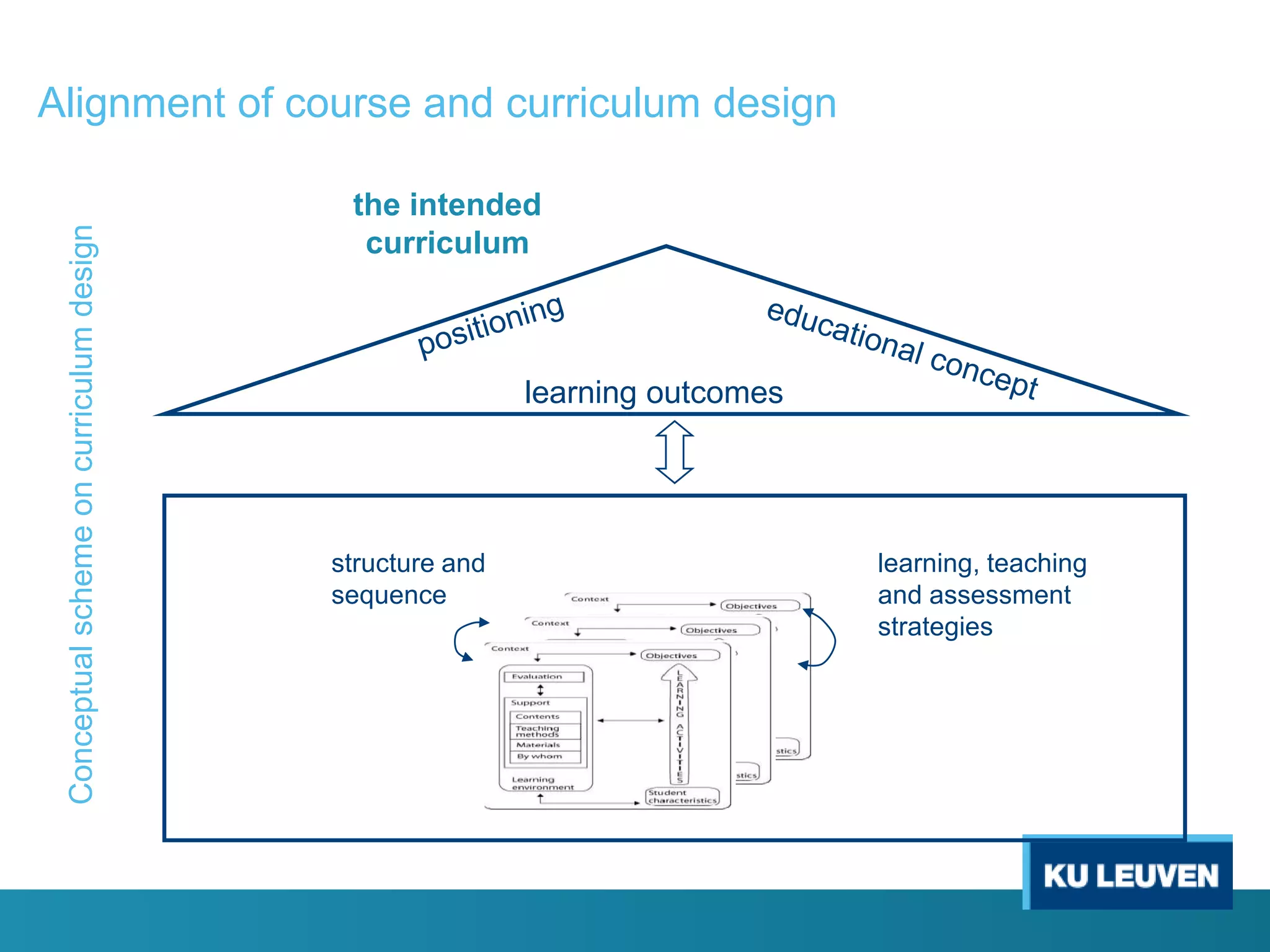
the intended
curriculum

learning outcomes

structure and
sequence

learning, teaching
and assessment
strategies
Conceptual scheme on curriculum design

Alignment of course and curriculum design
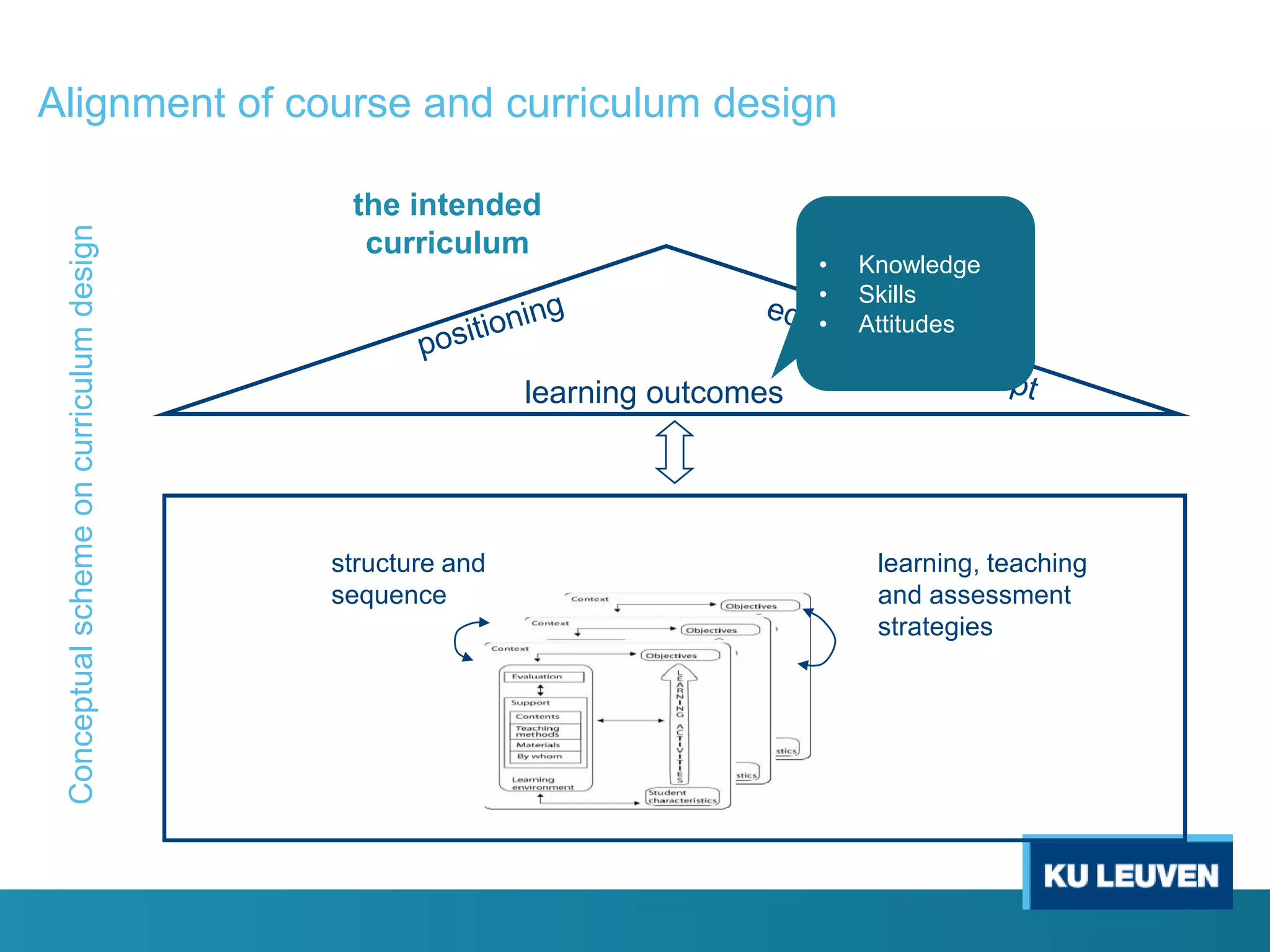
the intended
curriculum

•
•
•

Knowledge
Skills
Attitudes

learning outcomes

structure and
sequence

learning, teaching
and assessment
strategies
Conceptual scheme on curriculum design

Alignment of course and curriculum design
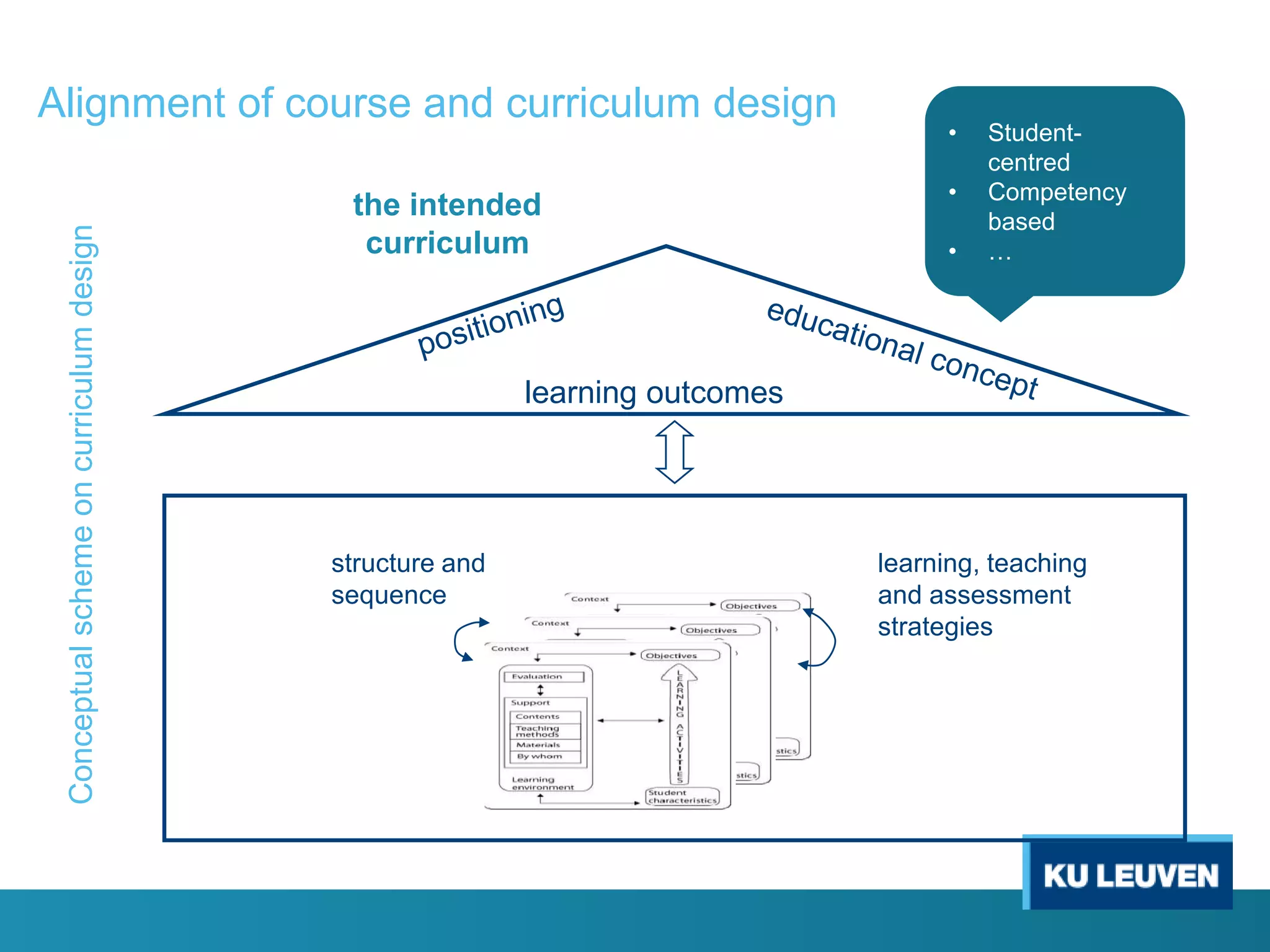
the intended
curriculum

•
•
•

Studentcentred
Competency
based
…

learning outcomes

structure and
sequence

learning, teaching
and assessment
strategies
Conceptual scheme on curriculum design

Alignment of course and curriculum design
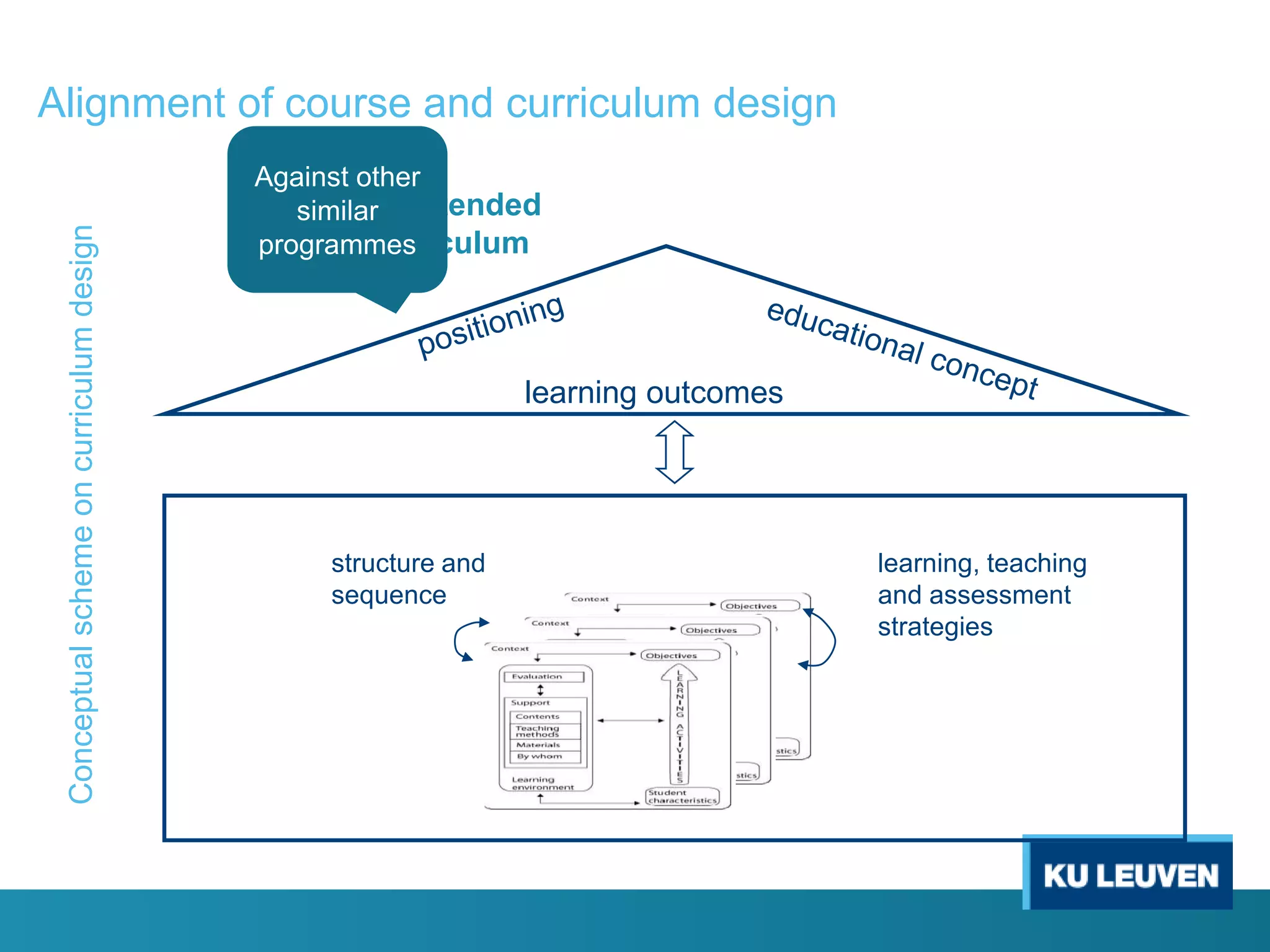
Against other
the
similar intended
curriculum
programmes

learning outcomes

structure and
sequence

learning, teaching
and assessment
strategies
Alignment of course and curriculum design
Conceptual scheme on curriculum design

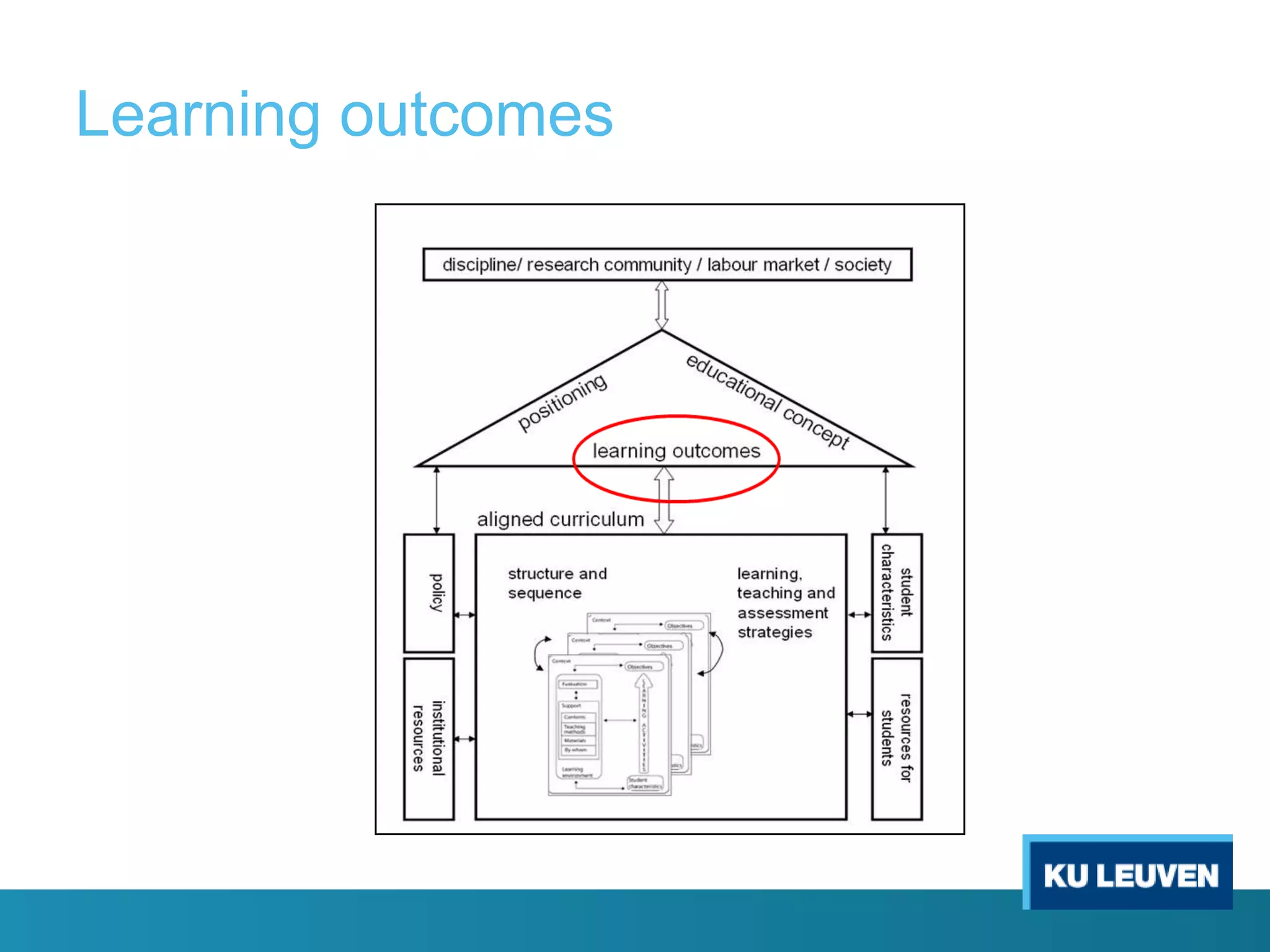
discipline/ research community / labour market / society

learning outcomes

structure and
sequence

learning, teaching
and assessment
strategies
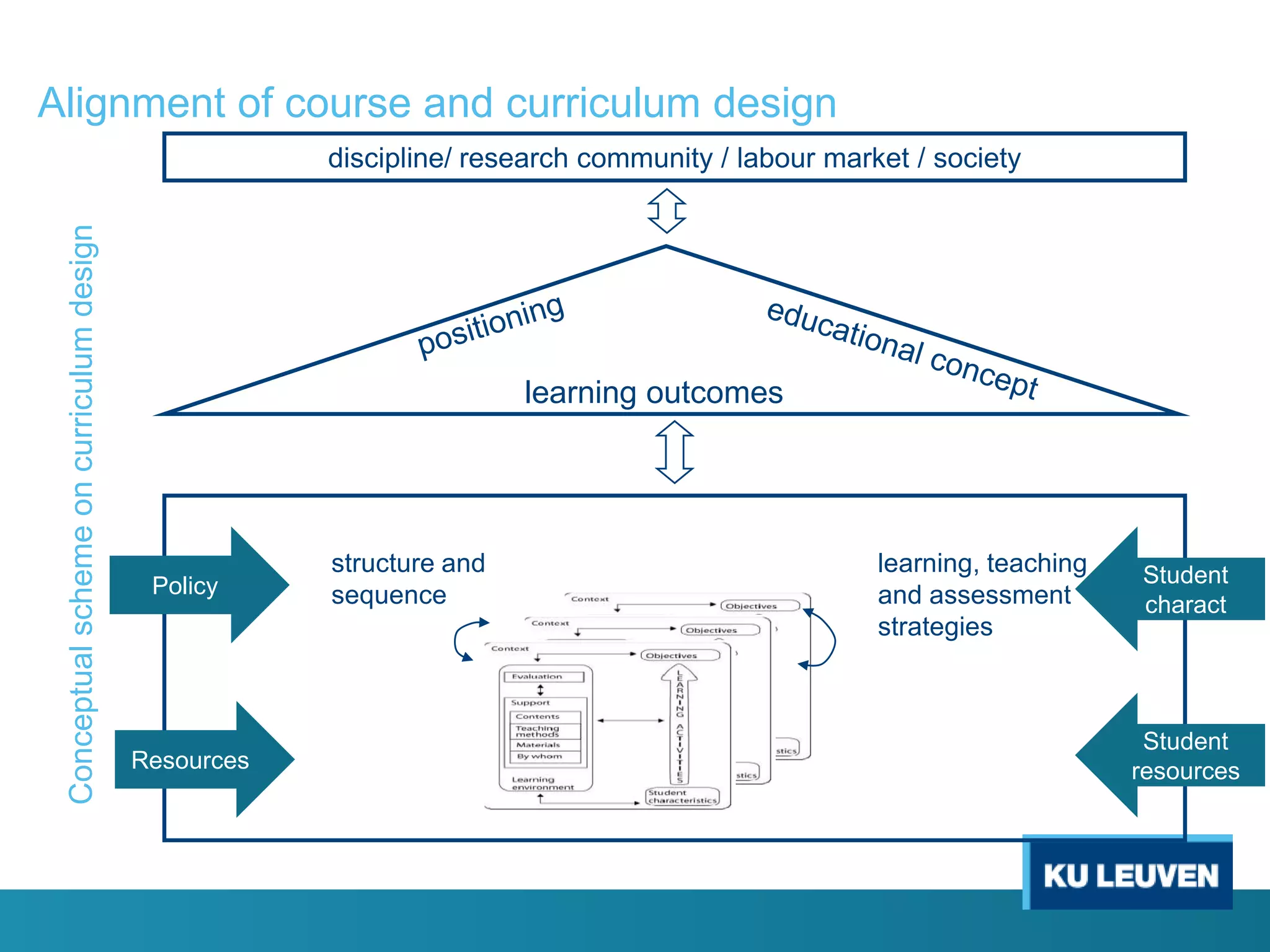
Alignment of course and curriculum design
Conceptual scheme on curriculum design

discipline/ research community / labour market / society

learning outcomes

Policy

Resources

structure and
sequence

learning, teaching
and assessment
strategies

Student
charact

Student
resources
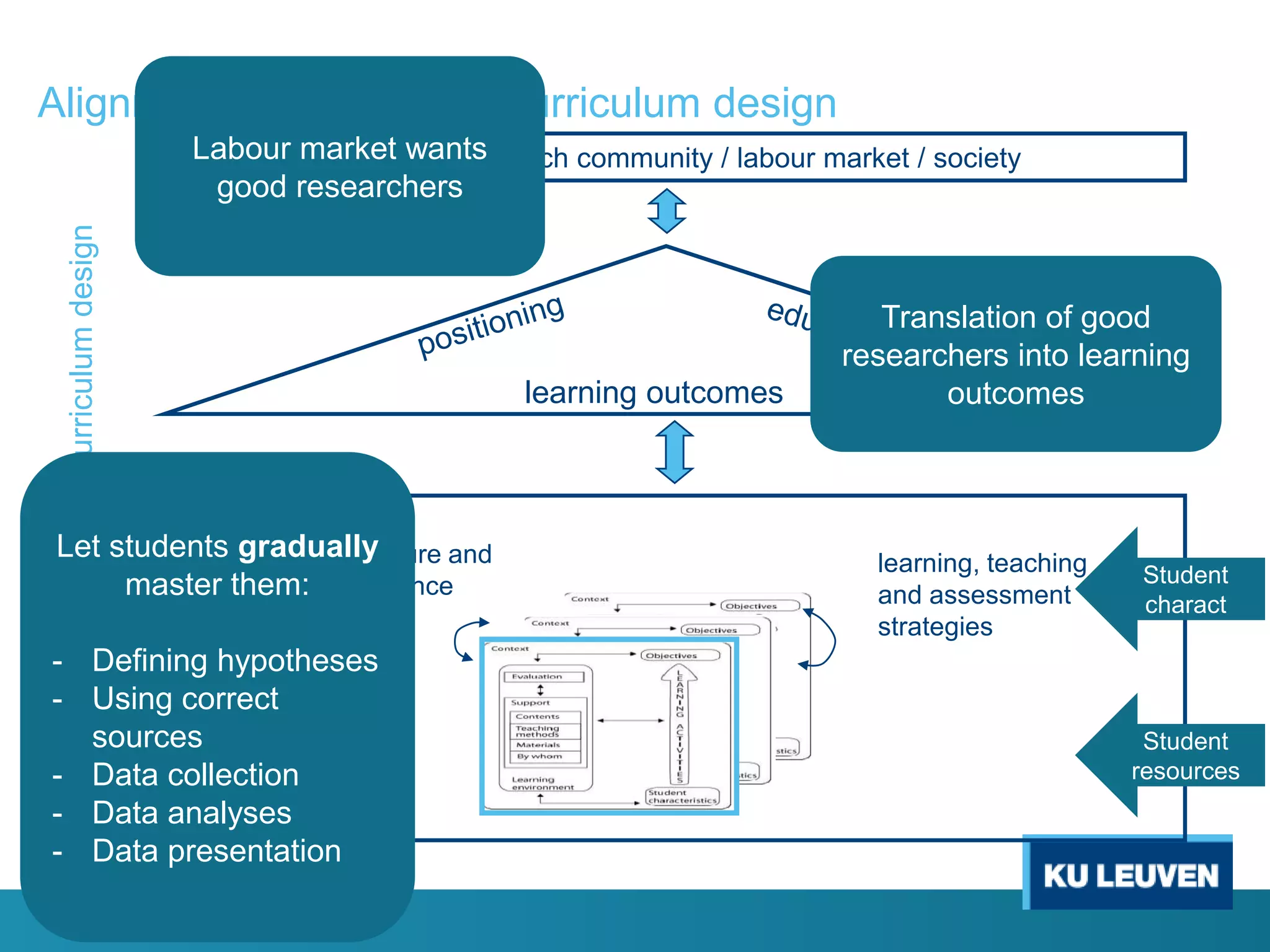
Alignment of course and curriculum design
Conceptual scheme on curriculum design

Labour market wants
discipline/ research community / labour market / society
good researchers

Let students gradually
structure and
Policy
master them: sequence

- Defining hypotheses
- Using correct
sources
Resources
- Data collection
- Data analyses
- Data presentation

learning outcomes

Translation of good
researchers into learning
outcomes

learning, teaching
and assessment
strategies

Student
charact

Student
resources
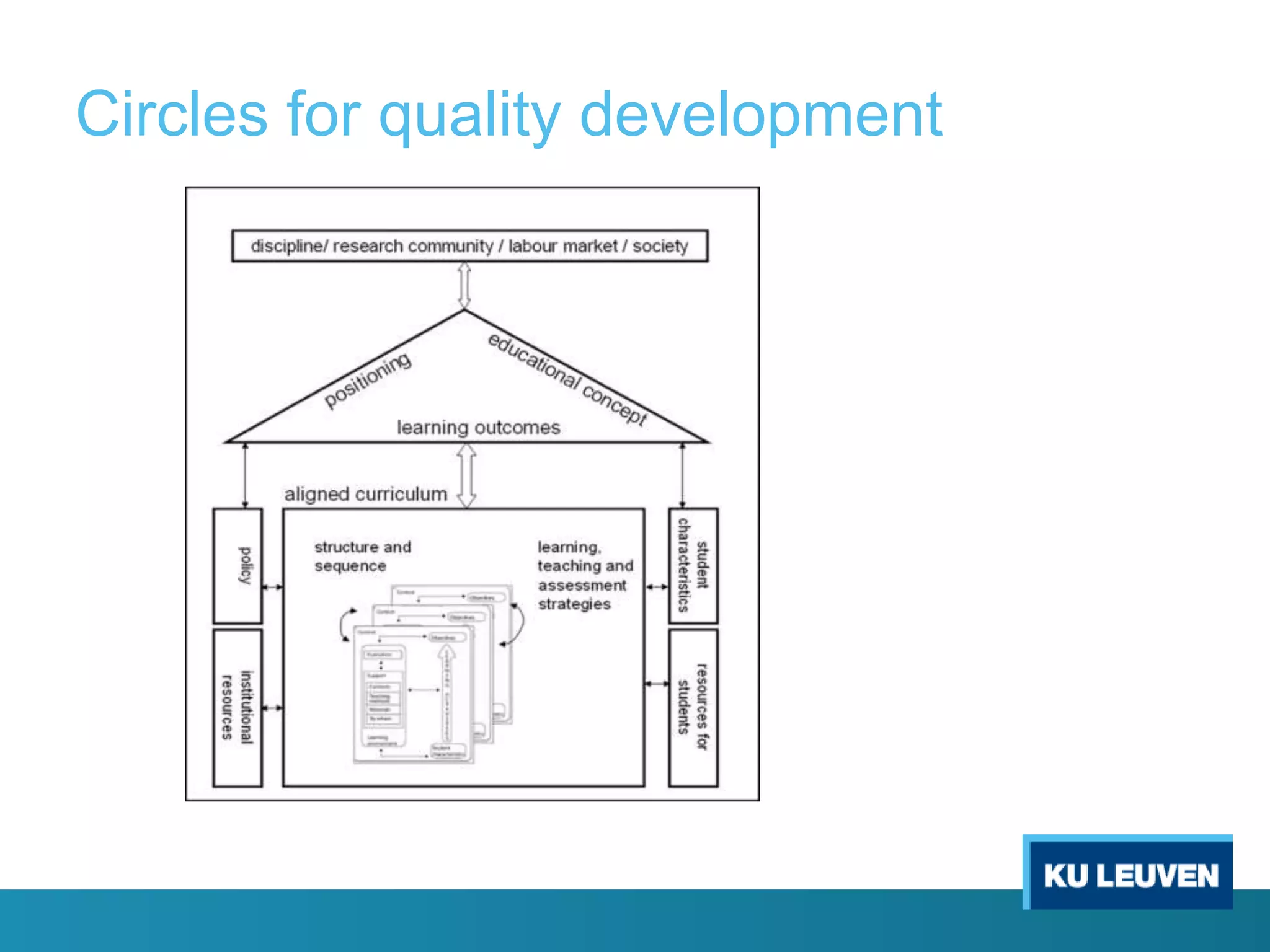
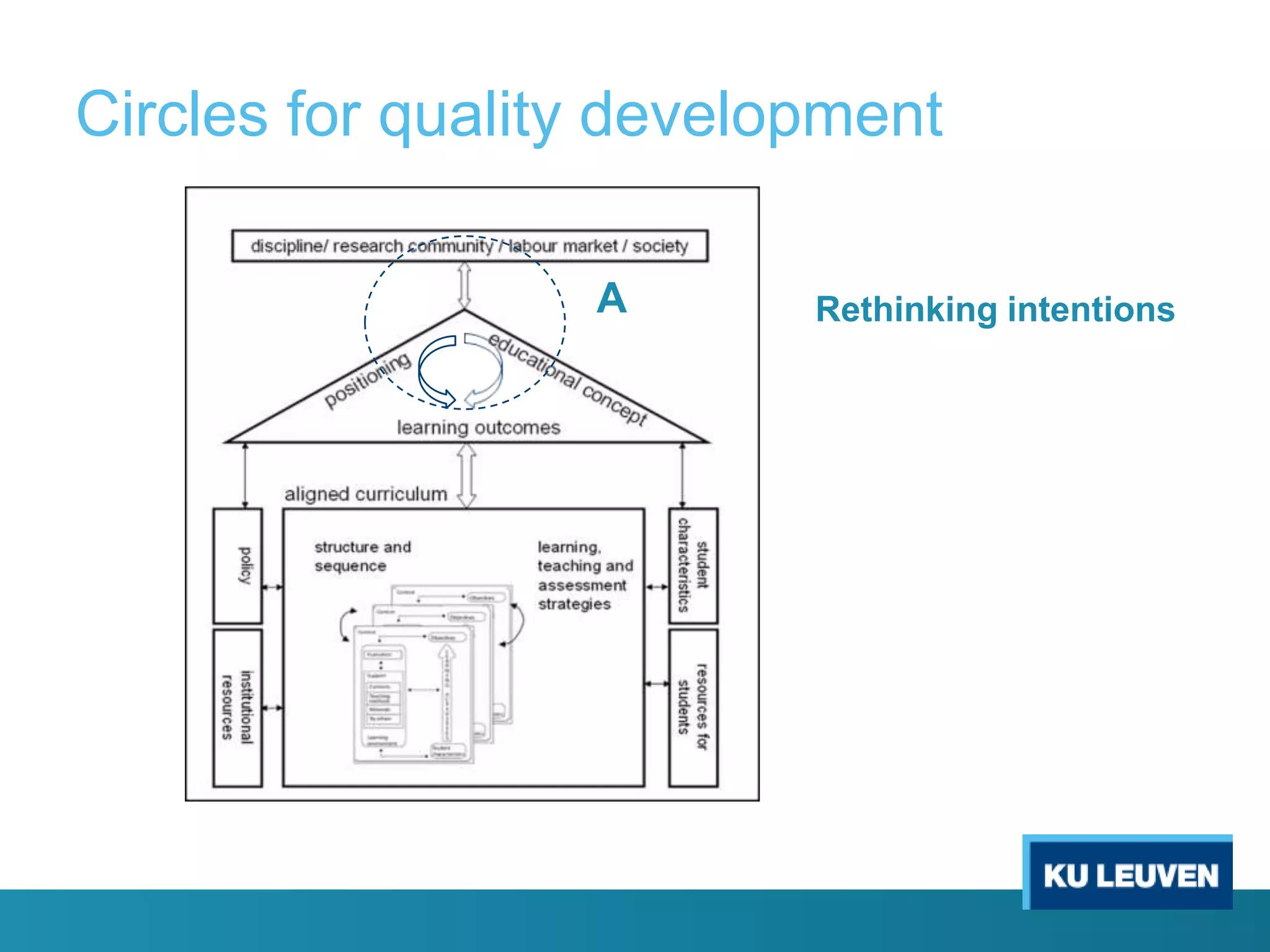
Circles for quality development
A

Rethinking intentions
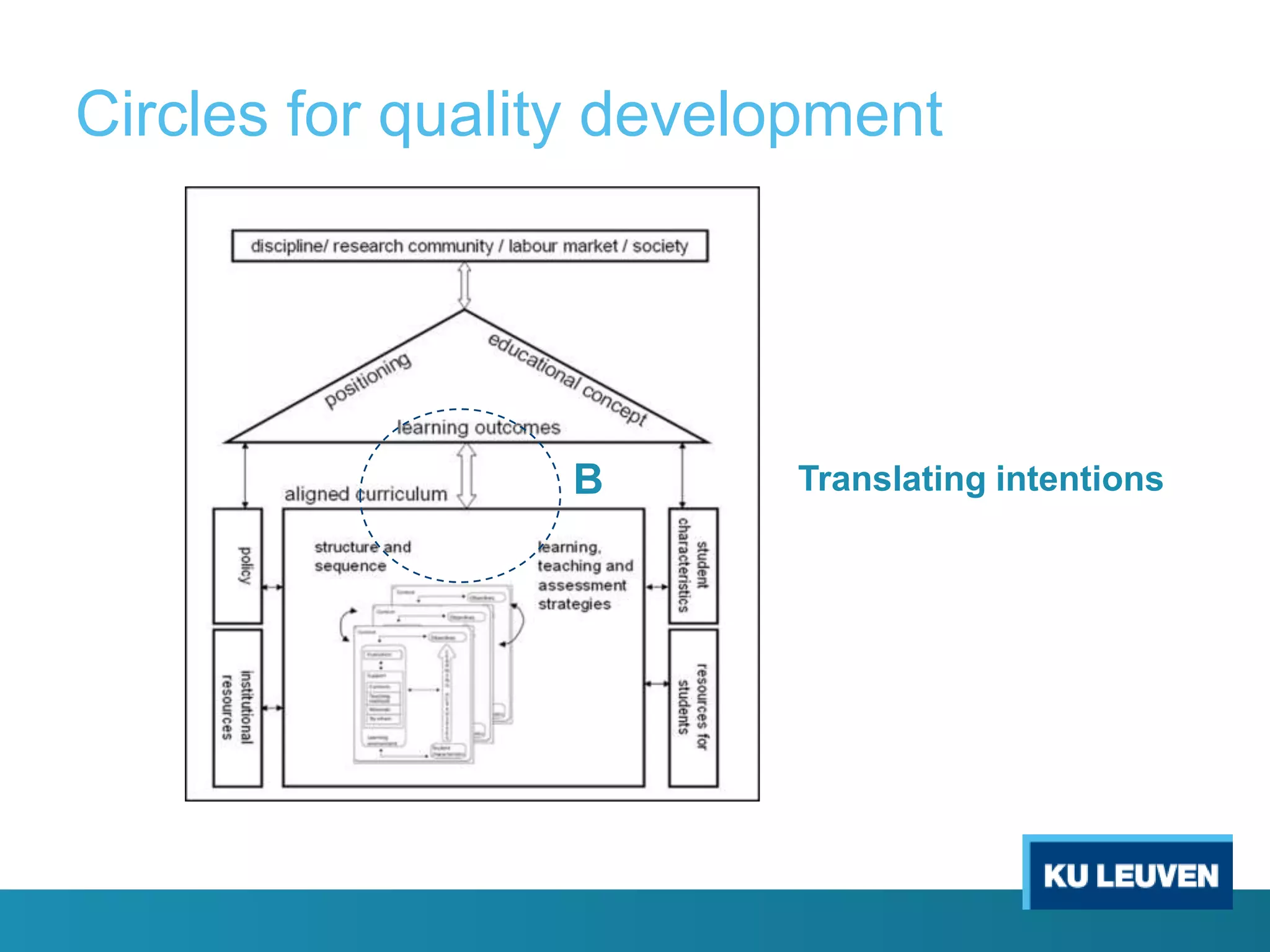
Circles for quality development

B

Translating intentions
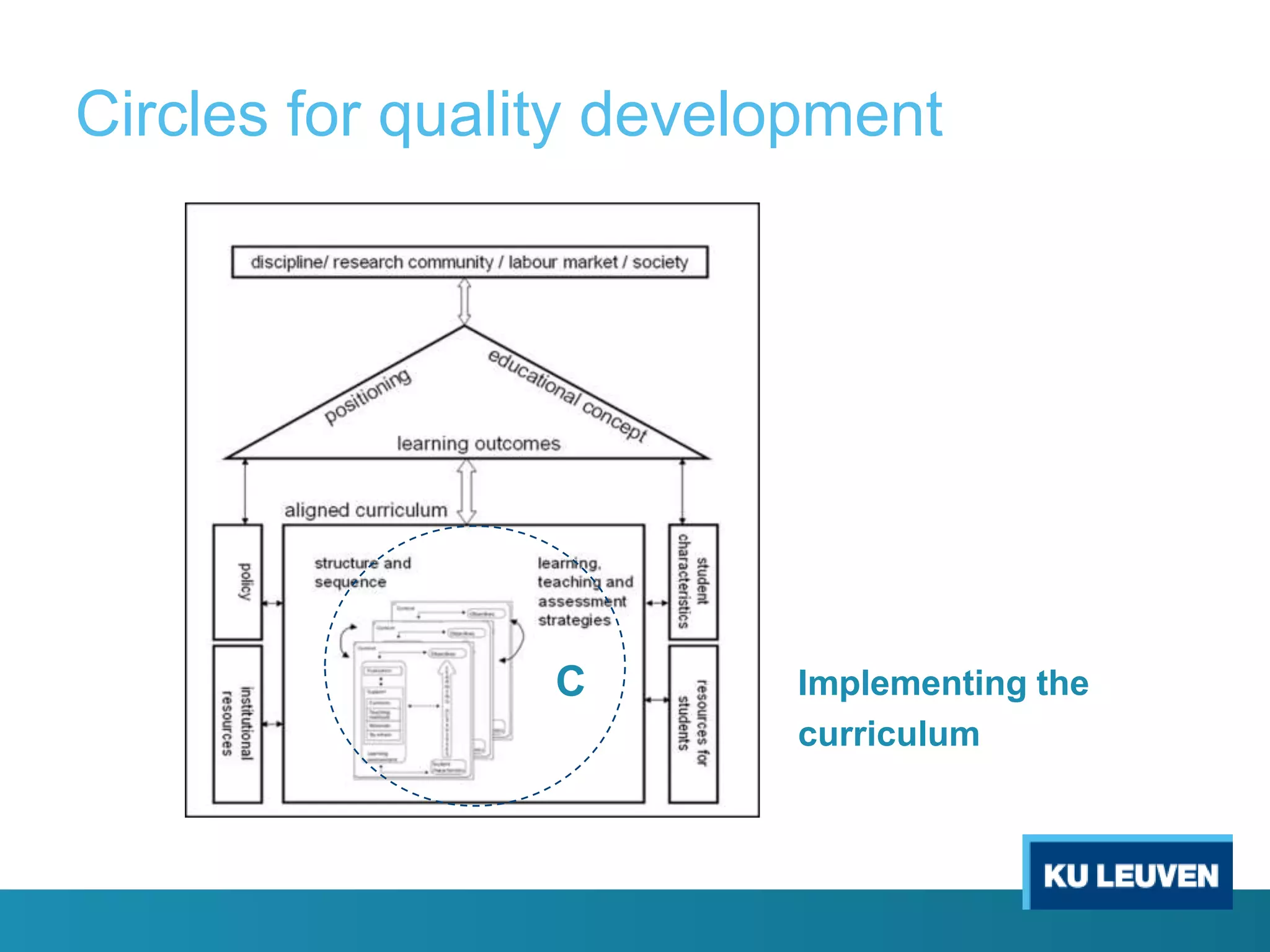
Circles for quality development

C

Implementing the
curriculum
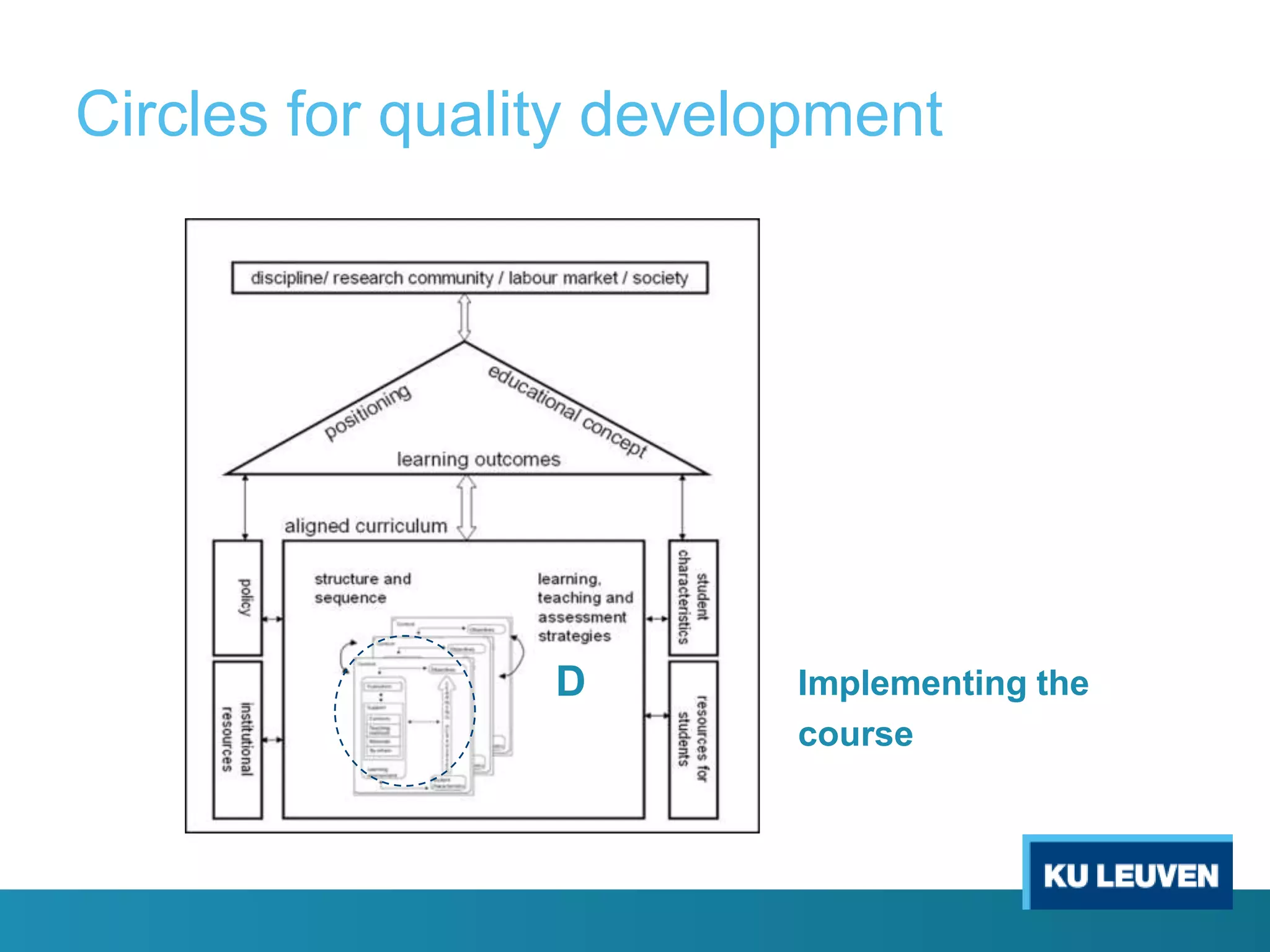
Circles for quality development

D

Implementing the
course
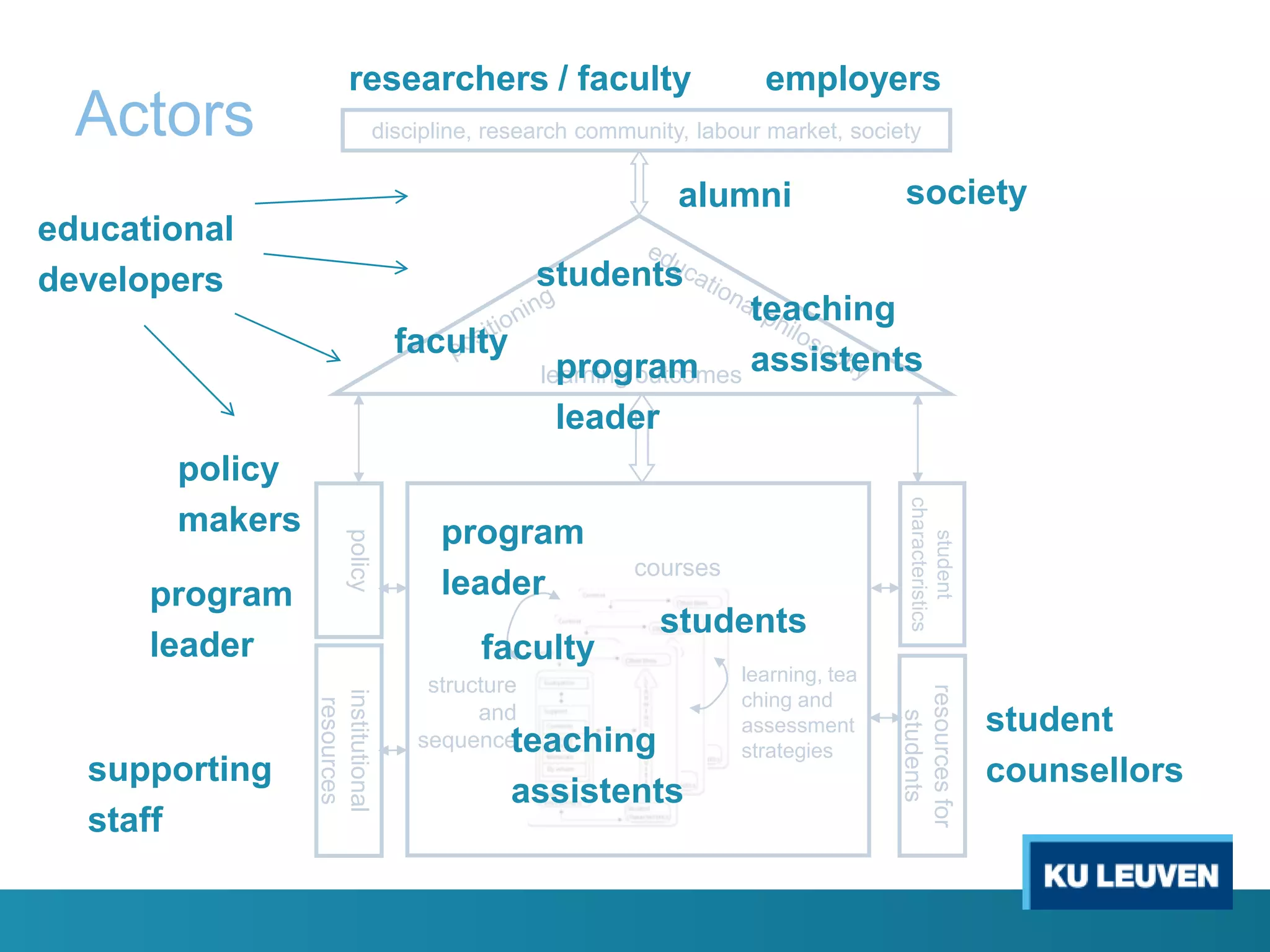
Actors

researchers / faculty

employers

discipline, research community, labour market, society

alumni
educational
developers

program
leader

courses

faculty

students

structure
and
sequence
teaching

assistents

learning, tea
ching and
assessment
strategies

resources for
students

institutional
resources

supporting
staff

teaching
faculty
program
learning outcomes assistents
leader
student
characteristics

program
leader

students

policy
startenu

policy
makers

society

student
counsellors
Added value of the scheme
- Common language

- A tool for quality development

- Different pathways
Zooming in on
learning outcomes
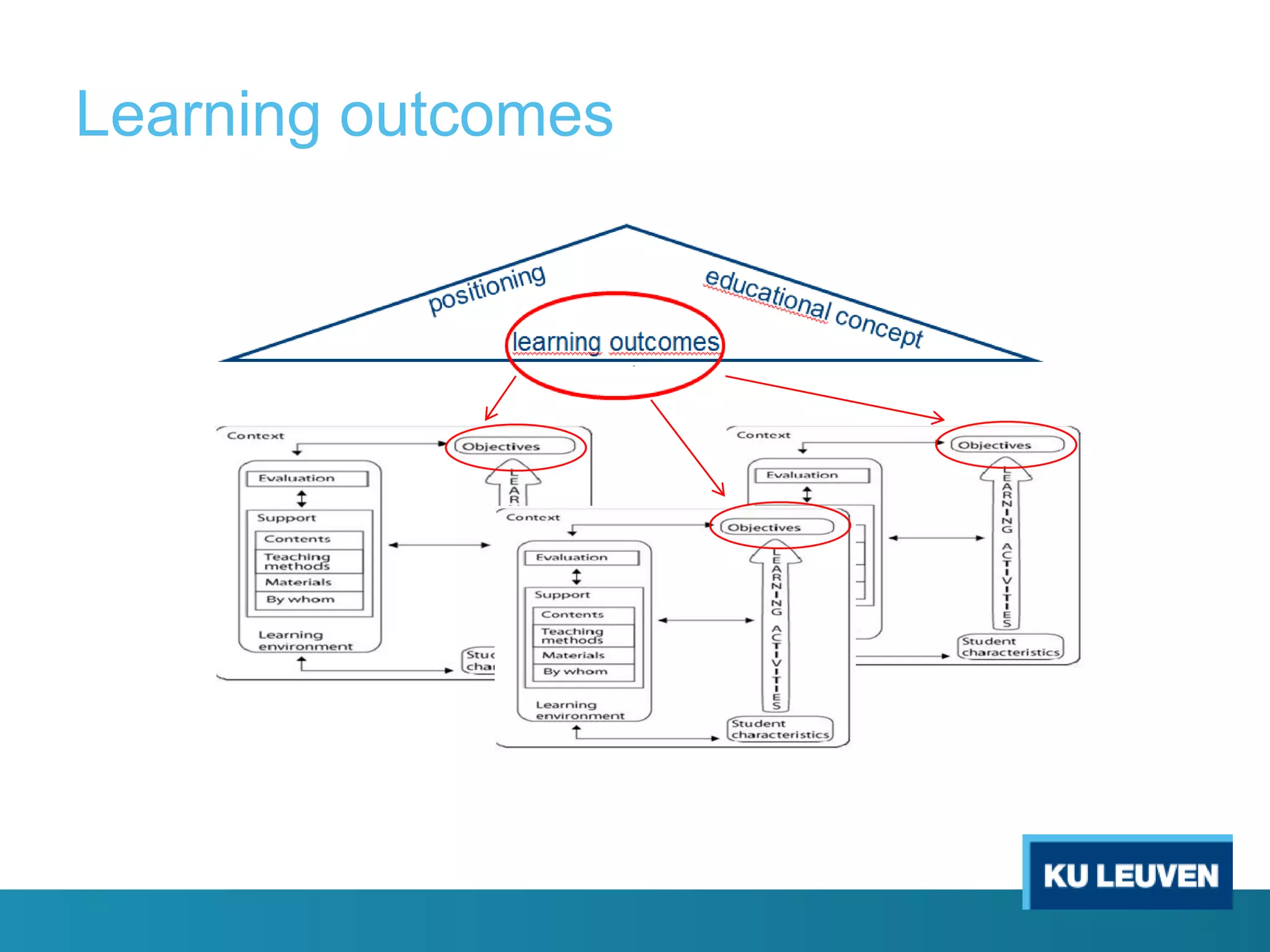
Learning outcomes
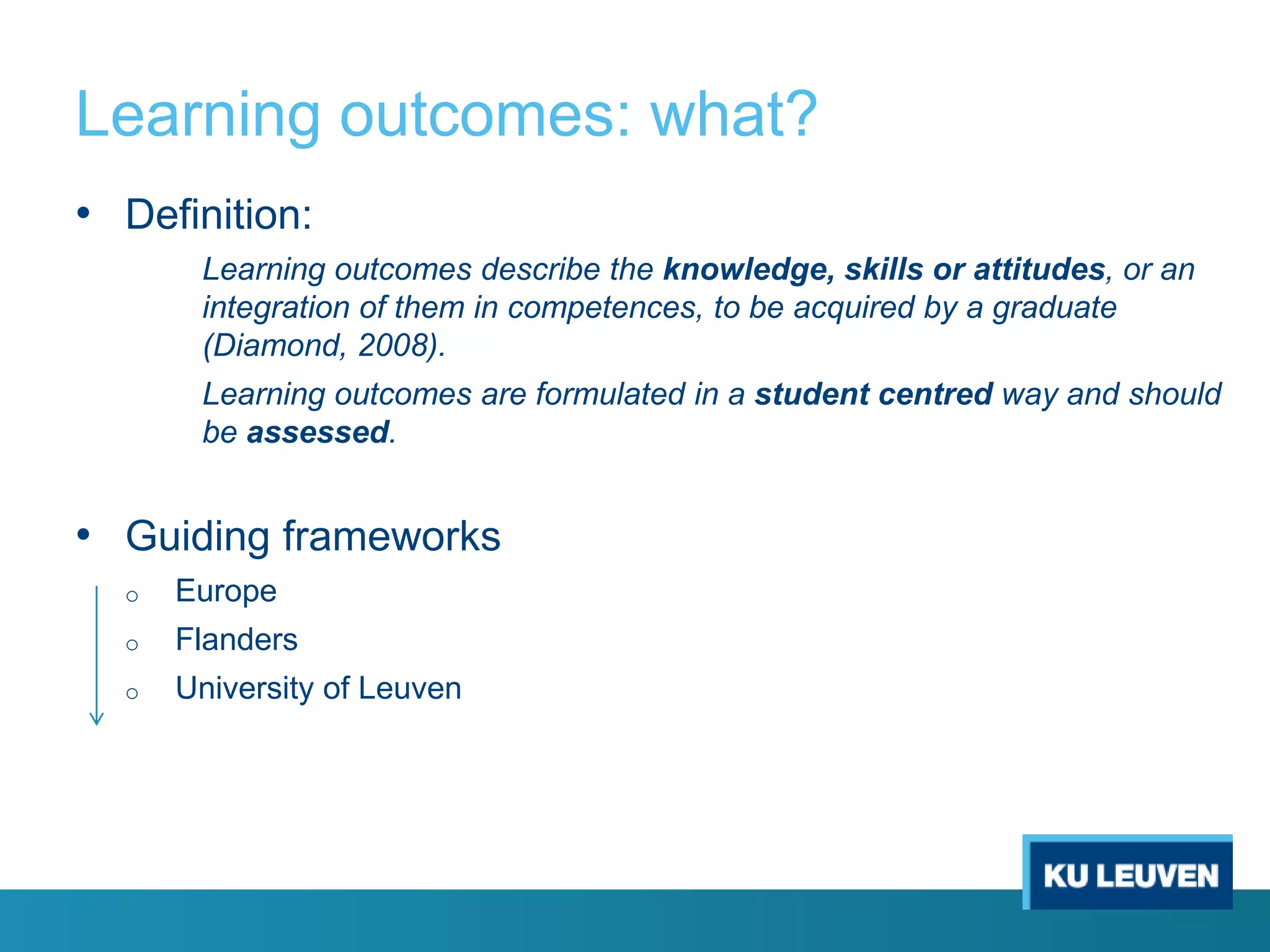
Learning outcomes: what?
• Definition:
Learning outcomes describe the knowledge, skills or attitudes, or an
integration of them in competences, to be acquired by a graduate
(Diamond, 2008).
Learning outcomes are formulated in a student centred way and should
be assessed.

• Guiding frameworks
o

Europe

o

Flanders

o

University of Leuven
Learning outcomes
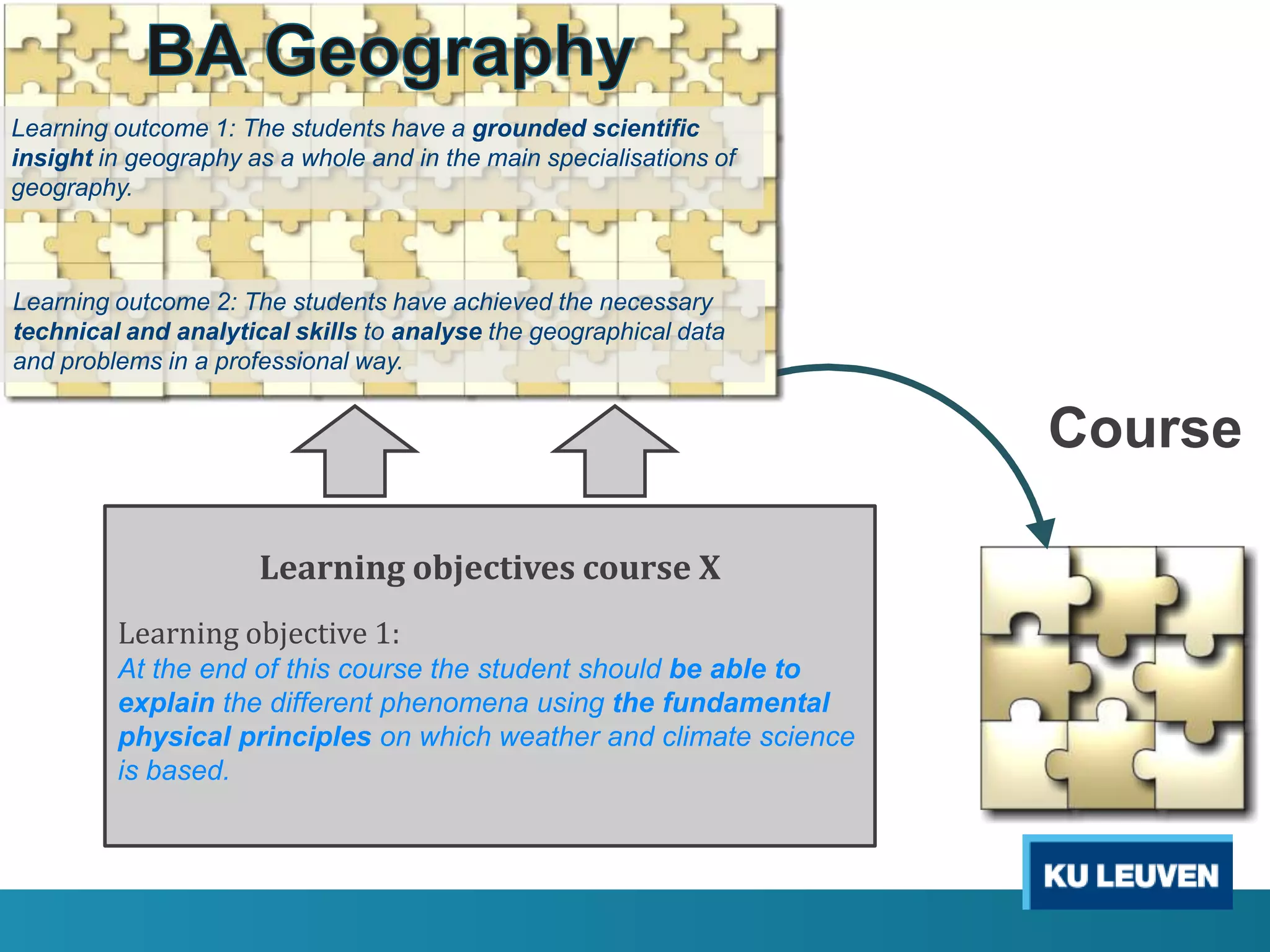
Learning outcome 1: The students have a grounded scientific
insight in geography as a whole and in the main specialisations of
geography.

Learning outcome 2: The students have achieved the necessary
technical and analytical skills to analyse the geographical data
and problems in a professional way.

Course
Learning objectives course X
Learning objective 1:
At the end of this course the student should be able to
explain the different phenomena using the fundamental
physical principles on which weather and climate science
is based.
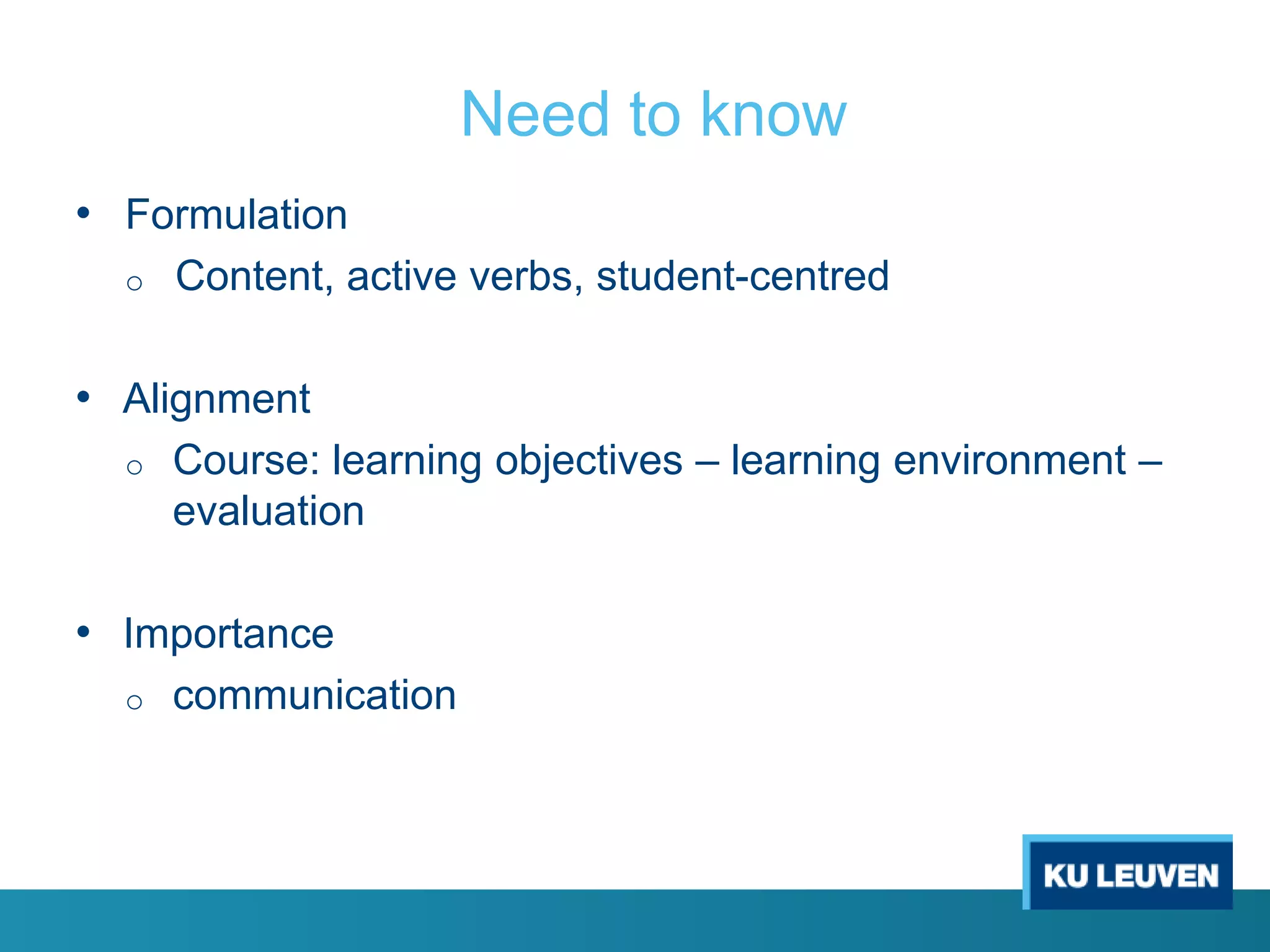
Need to know
• Formulation
o

Content, active verbs, student-centred

• Alignment
o

Course: learning objectives – learning environment –
evaluation

• Importance
o

communication
Zooming in on
curriculummapping
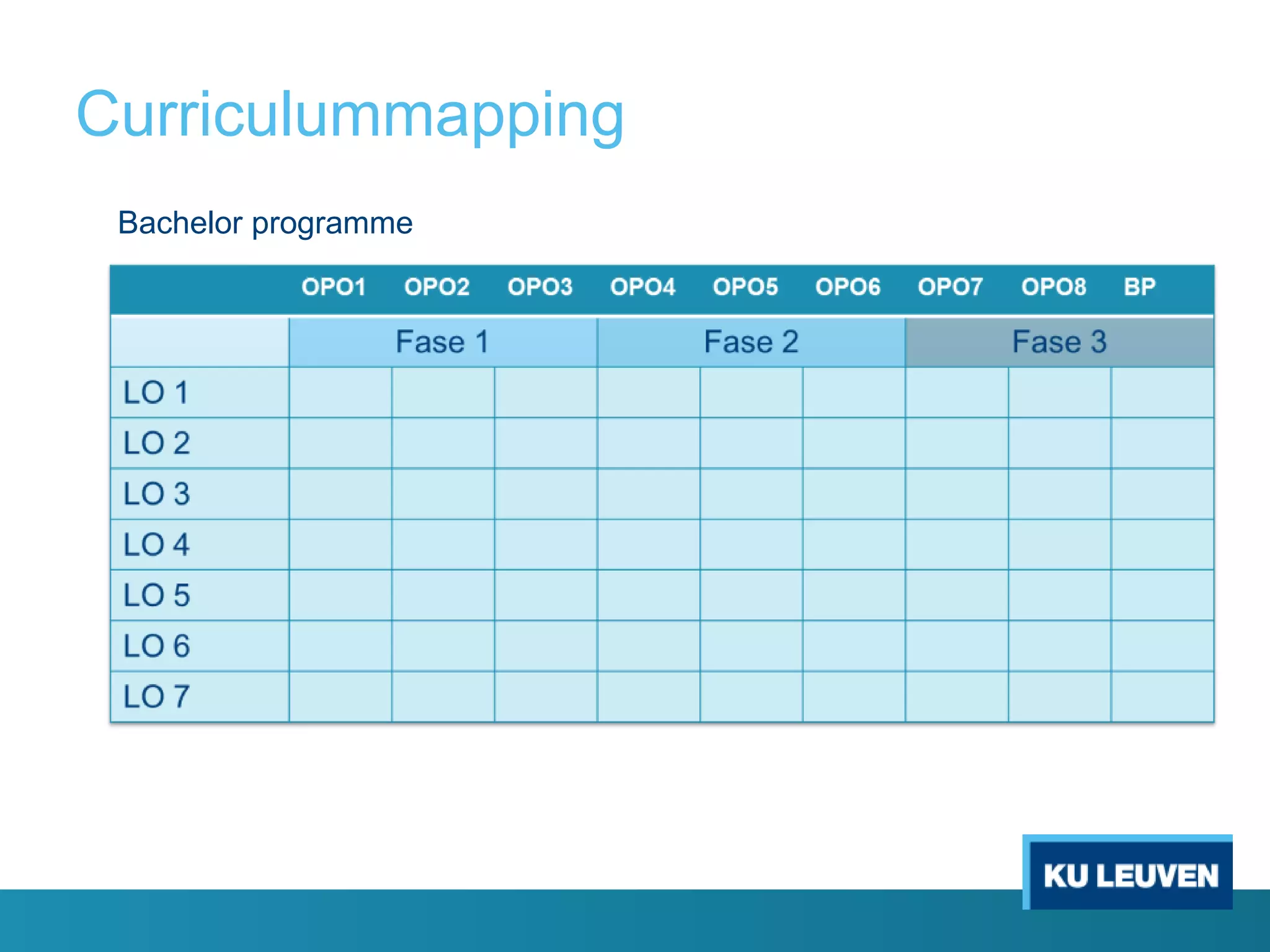
Curriculummapping
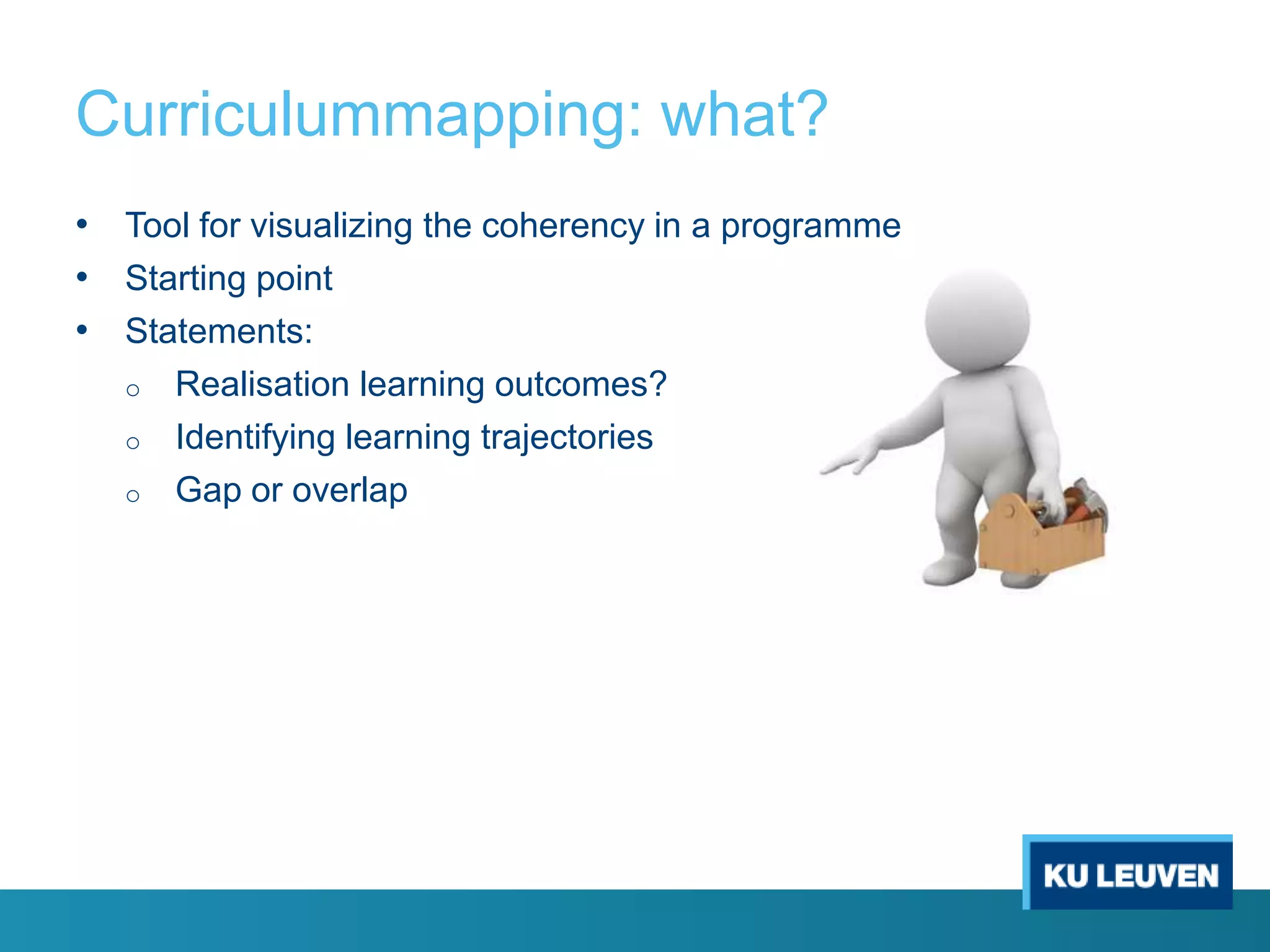
Curriculummapping: what?
• Tool for visualizing the coherency in a programme
• Starting point
• Statements:
o
o

o

Realisation learning outcomes?
Identifying learning trajectories
Gap or overlap
Curriculummapping
Bachelor programme
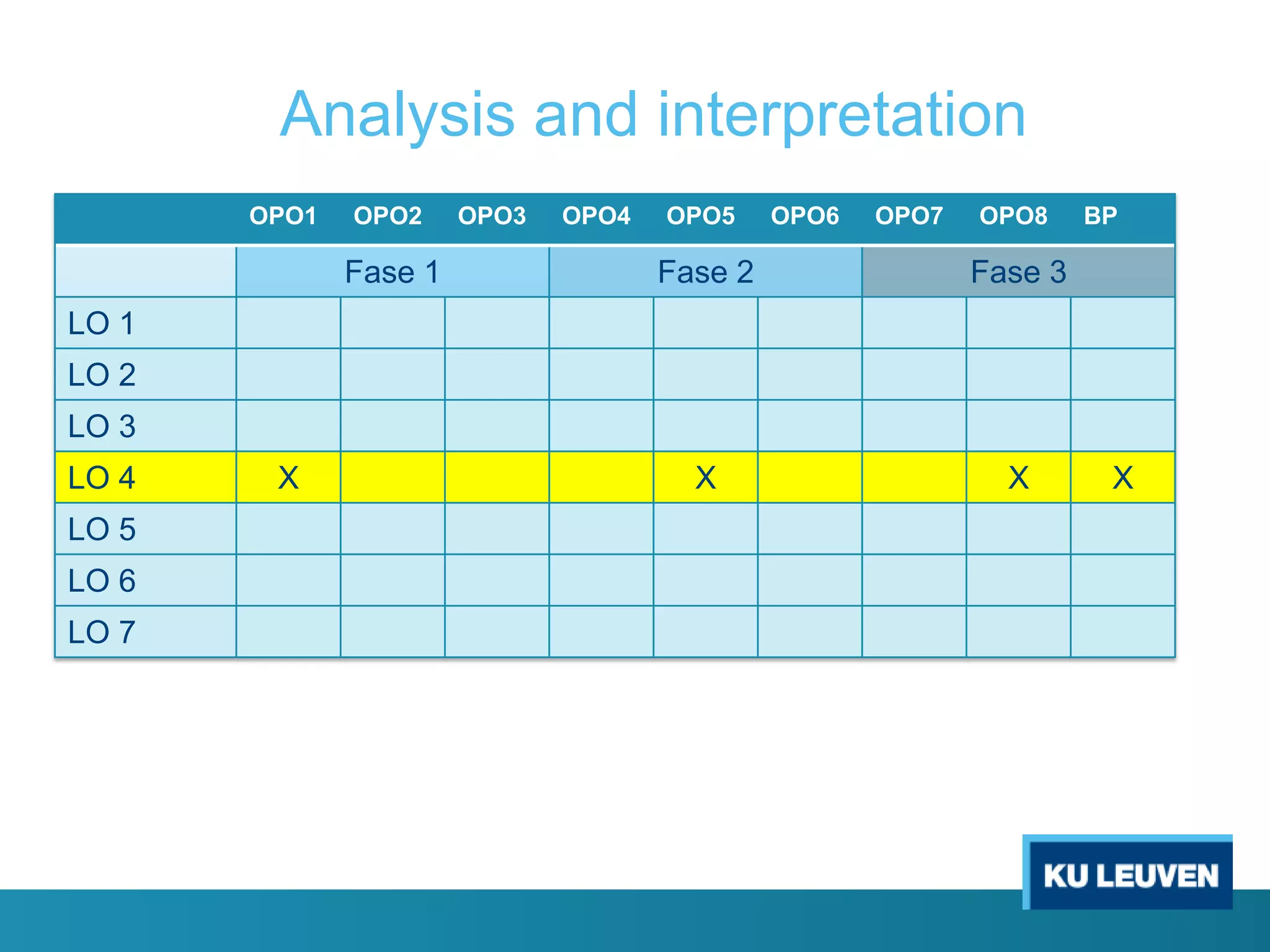
Analysis and interpretation
OPO1

OPO2

Fase 1

OPO3

OPO4

OPO5

OPO6

OPO7

OPO8

Fase 2

Fase 3

X

X

BP

LO 1
LO 2
LO 3
LO 4
LO 5
LO 6
LO 7

X

X
Analysis and interpretation
OPO1

OPO2

Fase 1

OPO3

OPO4

OPO5

OPO6

OPO7

OPO8

X

LO 3

X

X

LO 2

Fase 3

X

LO 1

Fase 2

BP

X

LO 4

X

LO 5

X

LO 6

X

LO 7

X

X
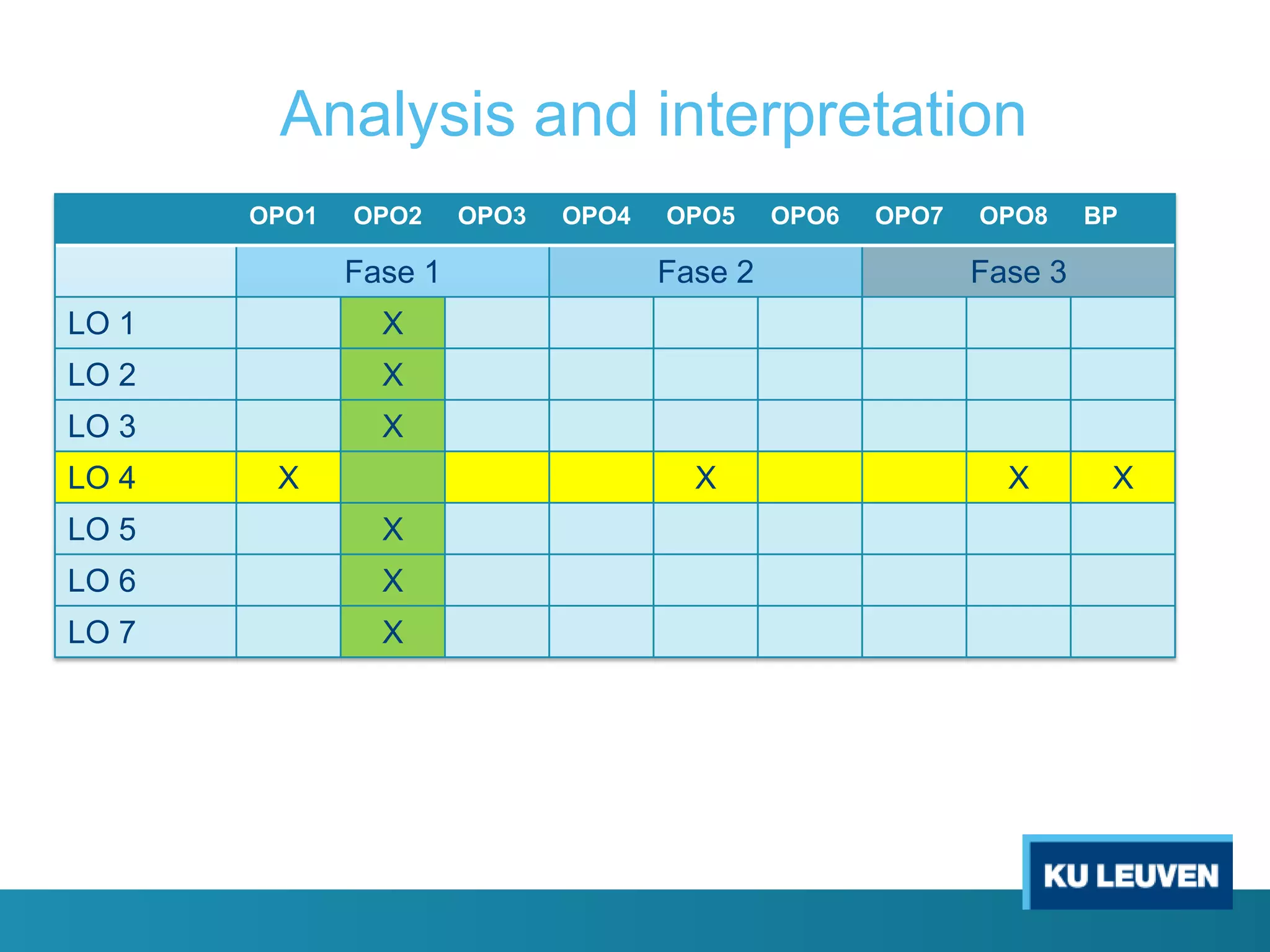
Analysis and interpretation
OPO1

OPO2

Fase 1

OPO3

OPO4

OPO5

OPO6

OPO7

OPO8

X

LO 3

X

X

LO 2

Fase 3

X

LO 1

Fase 2

BP

X

LO 4

X

LO 5

X

LO 6

X

LO 7

X

X
X
References
•

Biggs, J., Aligning teaching for constructing learning, cf.
http://www.heacademy.ac.uk/assets/York/documents/resources/resourcedatabase/id477
_aligning_teaching_for_constructing_learning.pdf ;

•

Diamond, R.M. (2008). Designing and assessing courses and curricula: A practical guide
(3th Ed.).San Francisco: Jossey-Bass.

•

Huyghe, S., Creten, H., Totté, N., Clement, M., Buelens, H. (2009). Alignment of course
and curriculum design: implications for faculty development. EARLI 2009: Fostering
Communities of Learners. Book of abstracts. EARLI. Amsterdam, 25-29 August 2009.

•

Kennedy, D. et al.(2006). Writing and Using Learning Outcomes: a Practical Guide, in
EUA Bologna Handbook, Froment E. et al. (Eds), article C 3.4-1, Berlin, Raabe.

PetrSU curriculum development

  • 1.
    Getting the biggerpicture From course design to curriculum development
  • 2.
    Overview • Conceptual schemeon curriculum design Elements of the scheme o Circles for quality development Zooming in on: o Learning outcomes o Curriculummapping o •
  • 3.
    Conceptual scheme oncurriculum design Alignment of course and curriculum design
  • 4.
    Conceptual scheme oncurriculum design Alignment of course and curriculum design What do my students HAVE to know? Previous Course My Course What do my students know YET? Next Course
  • 5.
    Alignment of courseand curriculum design Conceptual scheme on curriculum design sign Courses are structured in a thoughtful way The delivered curriculum structure and sequence learning, teaching and assessment strategies
  • 6.
    Conceptual scheme oncurriculum design Alignment of course and curriculum design the intended curriculum learning outcomes structure and sequence learning, teaching and assessment strategies
  • 7.
    Conceptual scheme oncurriculum design Alignment of course and curriculum design the intended curriculum • • • Knowledge Skills Attitudes learning outcomes structure and sequence learning, teaching and assessment strategies
  • 8.
    Conceptual scheme oncurriculum design Alignment of course and curriculum design the intended curriculum • • • Studentcentred Competency based … learning outcomes structure and sequence learning, teaching and assessment strategies
  • 9.
    Conceptual scheme oncurriculum design Alignment of course and curriculum design Against other the similar intended curriculum programmes learning outcomes structure and sequence learning, teaching and assessment strategies
  • 10.
    Alignment of courseand curriculum design Conceptual scheme on curriculum design discipline/ research community / labour market / society learning outcomes structure and sequence learning, teaching and assessment strategies
  • 11.
    Alignment of courseand curriculum design Conceptual scheme on curriculum design discipline/ research community / labour market / society learning outcomes Policy Resources structure and sequence learning, teaching and assessment strategies Student charact Student resources
  • 12.
    Alignment of courseand curriculum design Conceptual scheme on curriculum design Labour market wants discipline/ research community / labour market / society good researchers Let students gradually structure and Policy master them: sequence - Defining hypotheses - Using correct sources Resources - Data collection - Data analyses - Data presentation learning outcomes Translation of good researchers into learning outcomes learning, teaching and assessment strategies Student charact Student resources
  • 13.
  • 14.
    Circles for qualitydevelopment A Rethinking intentions
  • 15.
    Circles for qualitydevelopment B Translating intentions
  • 16.
    Circles for qualitydevelopment C Implementing the curriculum
  • 17.
    Circles for qualitydevelopment D Implementing the course
  • 18.
    Actors researchers / faculty employers discipline,research community, labour market, society alumni educational developers program leader courses faculty students structure and sequence teaching assistents learning, tea ching and assessment strategies resources for students institutional resources supporting staff teaching faculty program learning outcomes assistents leader student characteristics program leader students policy startenu policy makers society student counsellors
  • 19.
    Added value ofthe scheme - Common language - A tool for quality development - Different pathways
  • 20.
  • 21.
  • 22.
    Learning outcomes: what? •Definition: Learning outcomes describe the knowledge, skills or attitudes, or an integration of them in competences, to be acquired by a graduate (Diamond, 2008). Learning outcomes are formulated in a student centred way and should be assessed. • Guiding frameworks o Europe o Flanders o University of Leuven
  • 23.
  • 24.
    Learning outcome 1:The students have a grounded scientific insight in geography as a whole and in the main specialisations of geography. Learning outcome 2: The students have achieved the necessary technical and analytical skills to analyse the geographical data and problems in a professional way. Course Learning objectives course X Learning objective 1: At the end of this course the student should be able to explain the different phenomena using the fundamental physical principles on which weather and climate science is based.
  • 25.
    Need to know •Formulation o Content, active verbs, student-centred • Alignment o Course: learning objectives – learning environment – evaluation • Importance o communication
  • 26.
  • 27.
  • 28.
    Curriculummapping: what? • Toolfor visualizing the coherency in a programme • Starting point • Statements: o o o Realisation learning outcomes? Identifying learning trajectories Gap or overlap
  • 29.
  • 30.
    Analysis and interpretation OPO1 OPO2 Fase1 OPO3 OPO4 OPO5 OPO6 OPO7 OPO8 Fase 2 Fase 3 X X BP LO 1 LO 2 LO 3 LO 4 LO 5 LO 6 LO 7 X X
  • 31.
    Analysis and interpretation OPO1 OPO2 Fase1 OPO3 OPO4 OPO5 OPO6 OPO7 OPO8 X LO 3 X X LO 2 Fase 3 X LO 1 Fase 2 BP X LO 4 X LO 5 X LO 6 X LO 7 X X
  • 32.
    Analysis and interpretation OPO1 OPO2 Fase1 OPO3 OPO4 OPO5 OPO6 OPO7 OPO8 X LO 3 X X LO 2 Fase 3 X LO 1 Fase 2 BP X LO 4 X LO 5 X LO 6 X LO 7 X X X
  • 33.
    References • Biggs, J., Aligningteaching for constructing learning, cf. http://www.heacademy.ac.uk/assets/York/documents/resources/resourcedatabase/id477 _aligning_teaching_for_constructing_learning.pdf ; • Diamond, R.M. (2008). Designing and assessing courses and curricula: A practical guide (3th Ed.).San Francisco: Jossey-Bass. • Huyghe, S., Creten, H., Totté, N., Clement, M., Buelens, H. (2009). Alignment of course and curriculum design: implications for faculty development. EARLI 2009: Fostering Communities of Learners. Book of abstracts. EARLI. Amsterdam, 25-29 August 2009. • Kennedy, D. et al.(2006). Writing and Using Learning Outcomes: a Practical Guide, in EUA Bologna Handbook, Froment E. et al. (Eds), article C 3.4-1, Berlin, Raabe.