Onderwijskundig Ontwerpen
Het   effectief   inzetten van technologie   in   de
                  onderwijsleerpraktijk.

Vrijdag            11         januari         2013

Stijn                 Van                   Laer
KU Leuven, Directie Onderwijs en Leren KU Leuven,
Departement Onderwijsontwikkeling en ondersteuning,
Cel Academische Vorming
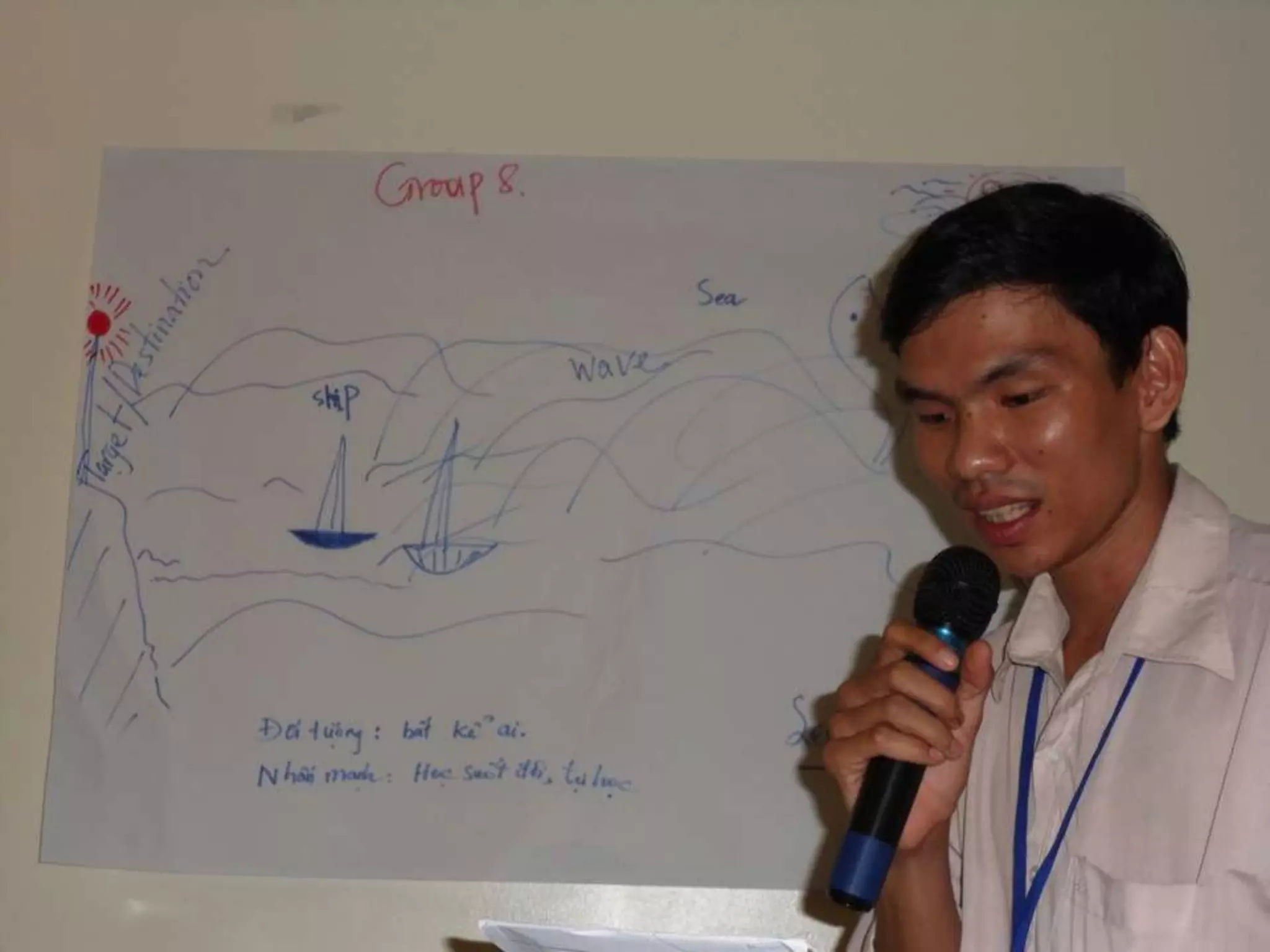
1: Teken onderwijzen…

              Wil er iemand kort
              vertellen wat hij/zij
                   tekende?
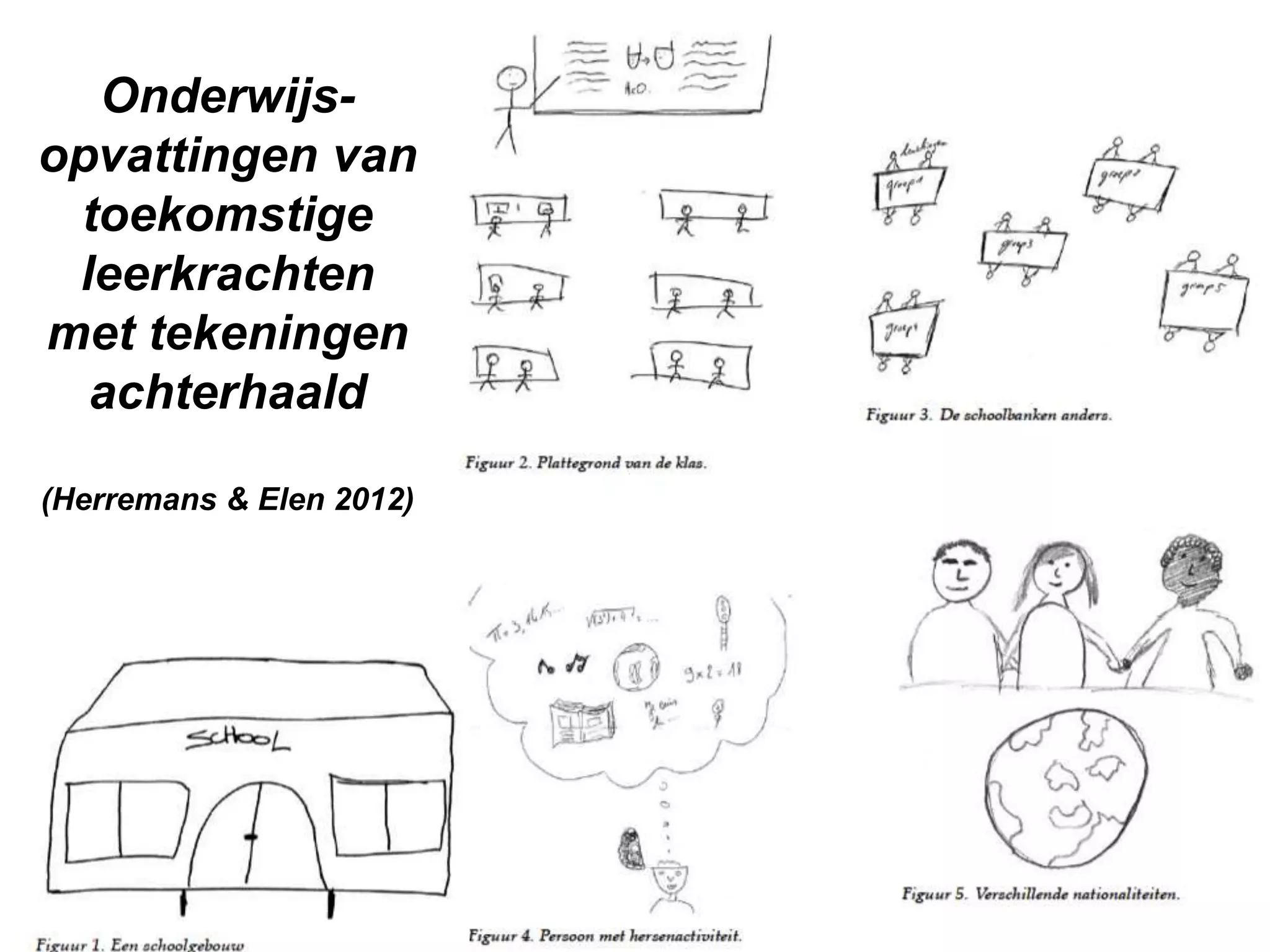
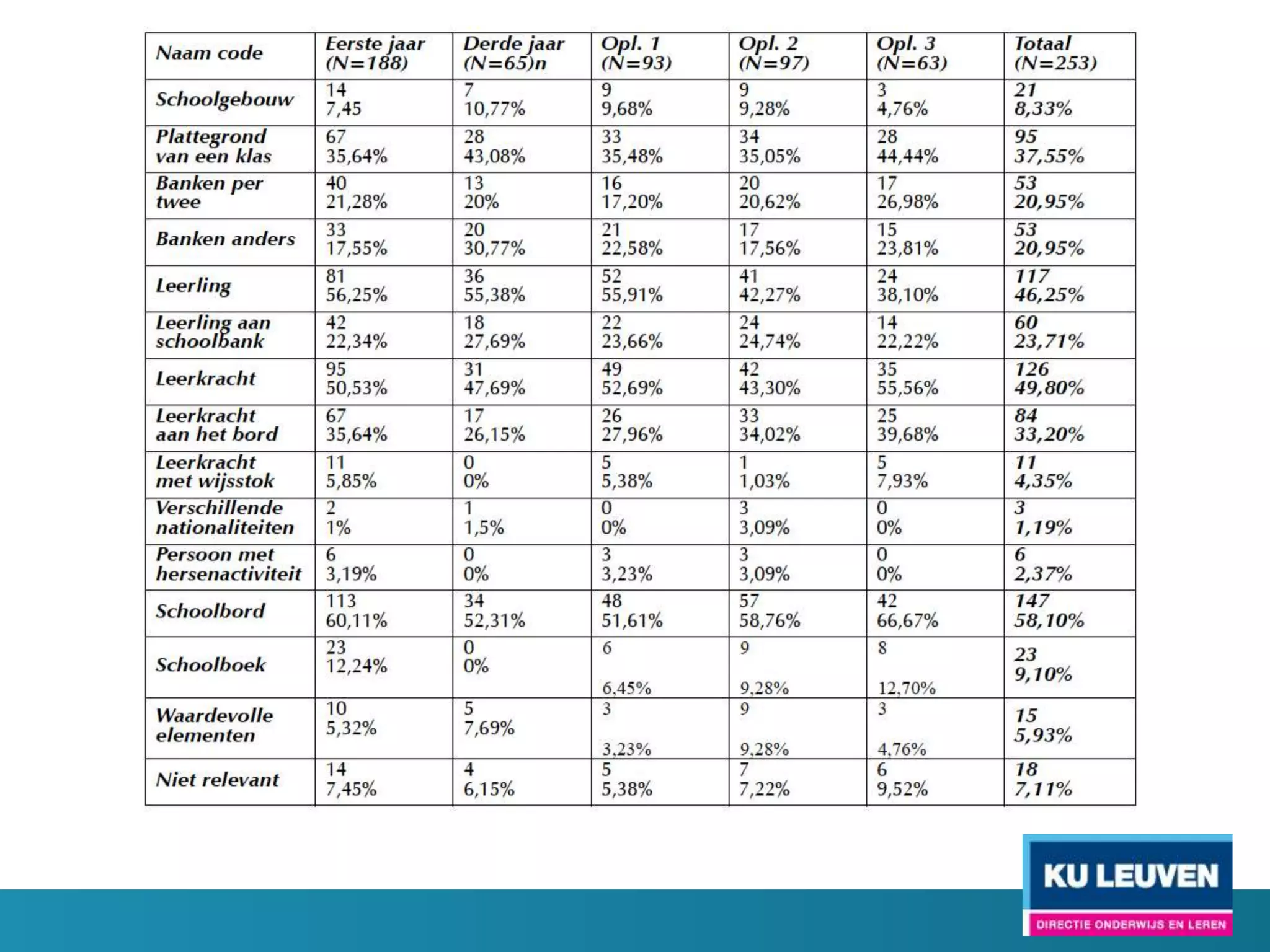
Onderwijs-
opvattingen van
 toekomstige
 leerkrachten
met tekeningen
  achterhaald

(Herremans & Elen 2012)
Overzicht
1. Technologie als doel
2. Technologie als middel
3. Technologie en didactiek
4. Leersituatie en leeromgeving
5. Onderwijskundig ontwerpen
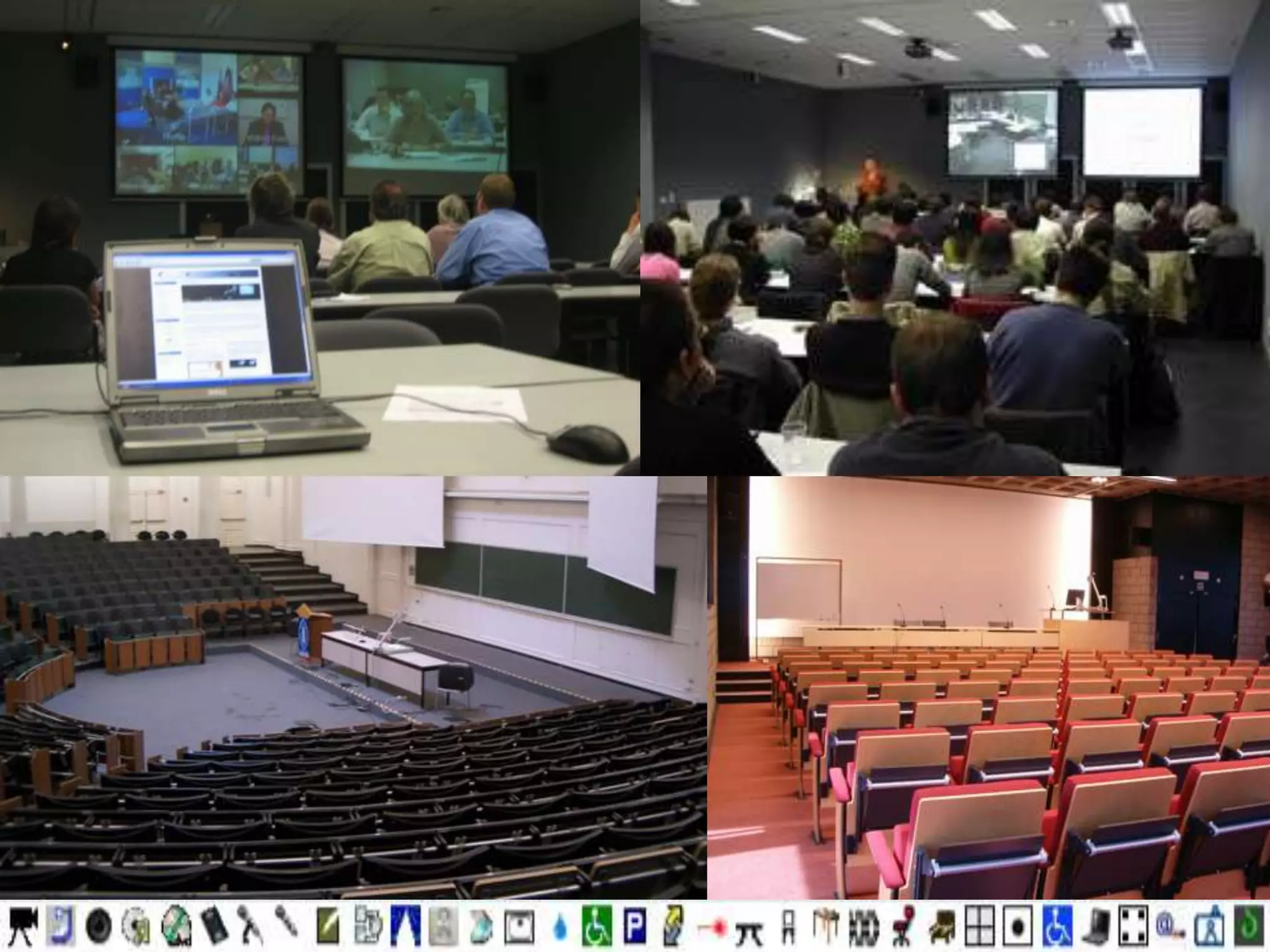
6. Bewegend beeld als ondersteunend medium
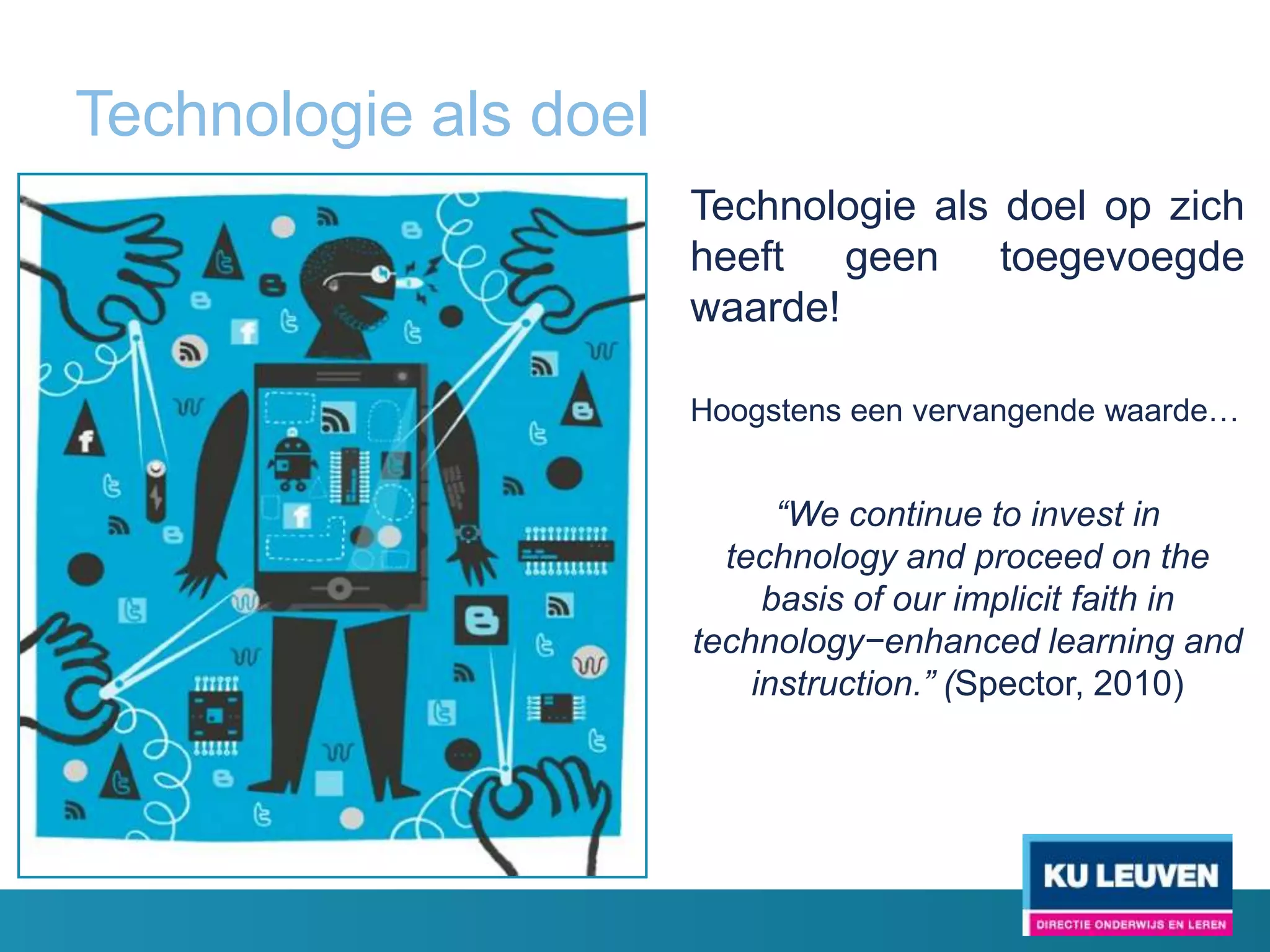
Technologie als doel
                       Technologie als doel op zich
                       heeft geen toegevoegde
                       waarde!

                       Hoogstens een vervangende waarde…


                             “We continue to invest in
                         technology and proceed on the
                            basis of our implicit faith in
                       technology−enhanced learning and
                           instruction.” (Spector, 2010)
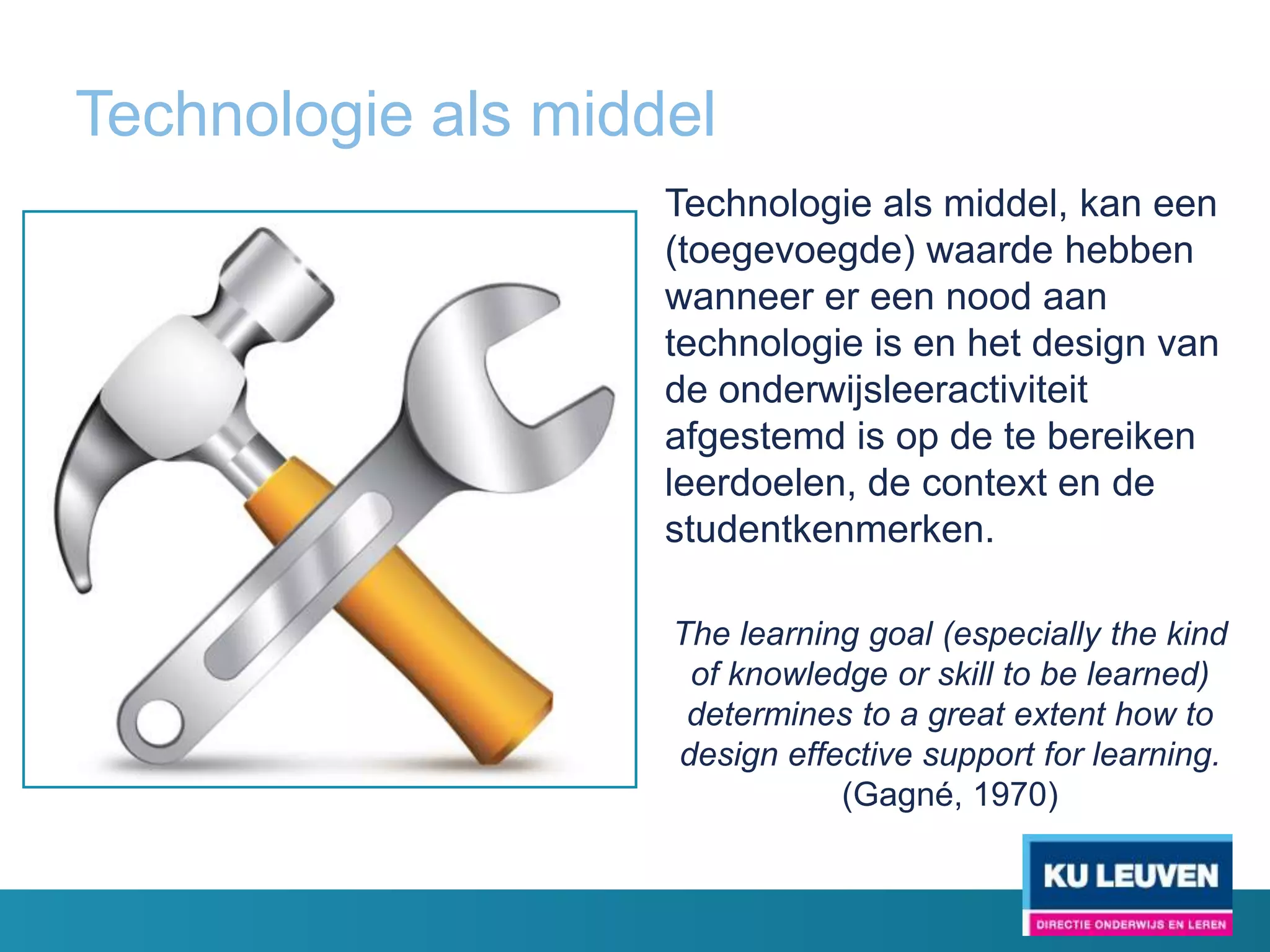
Technologie als middel
                    Technologie als middel, kan een
                    (toegevoegde) waarde hebben
                    wanneer er een nood aan
                    technologie is en het design van
                    de onderwijsleeractiviteit
                    afgestemd is op de te bereiken
                    leerdoelen, de context en de
                    studentkenmerken.

                    The learning goal (especially the kind
                     of knowledge or skill to be learned)
                     determines to a great extent how to
                    design effective support for learning.
                               (Gagné, 1970)
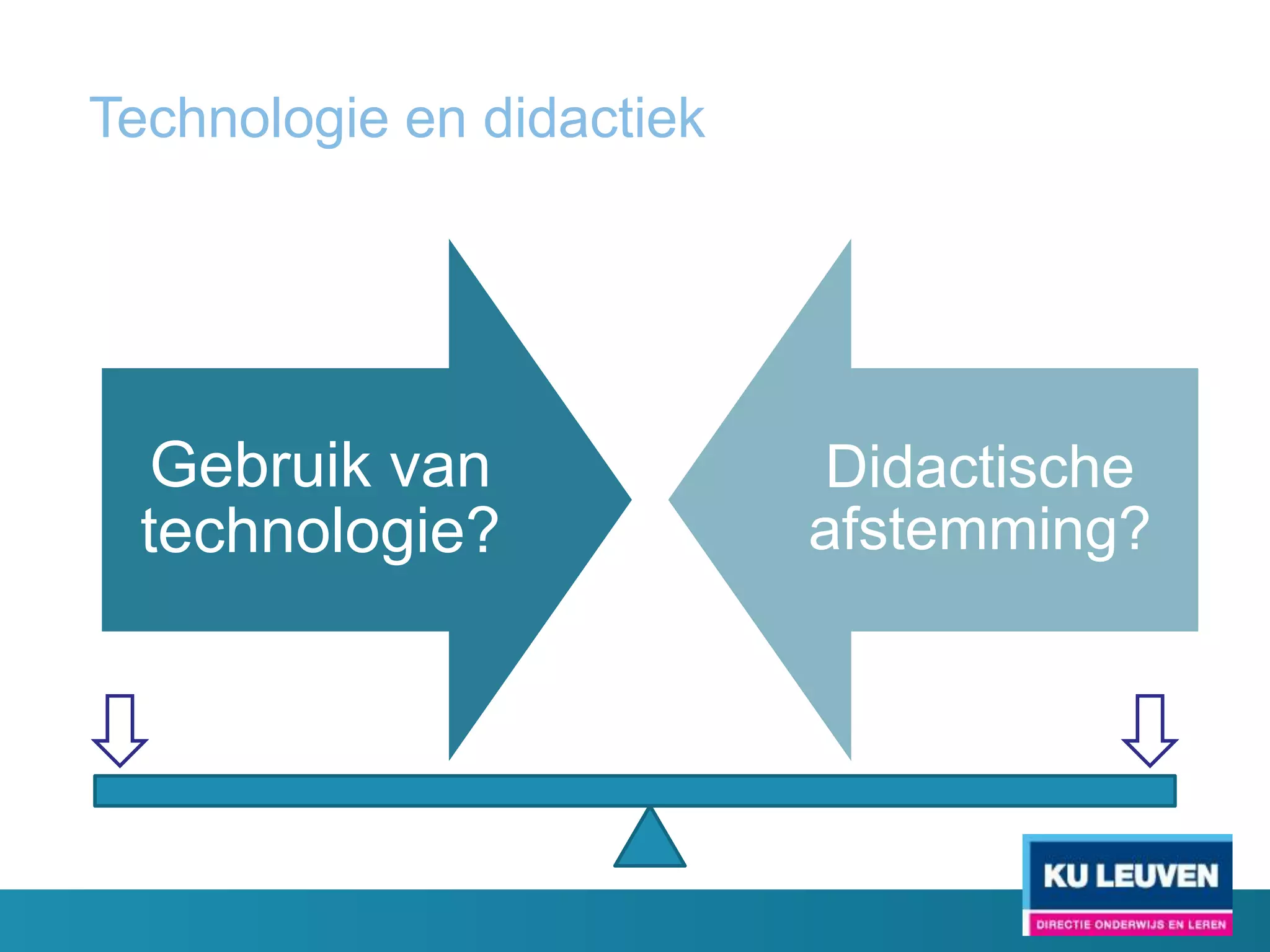
Technologie en didactiek


   Gebruik van             Didactische
  technologie?             afstemming?
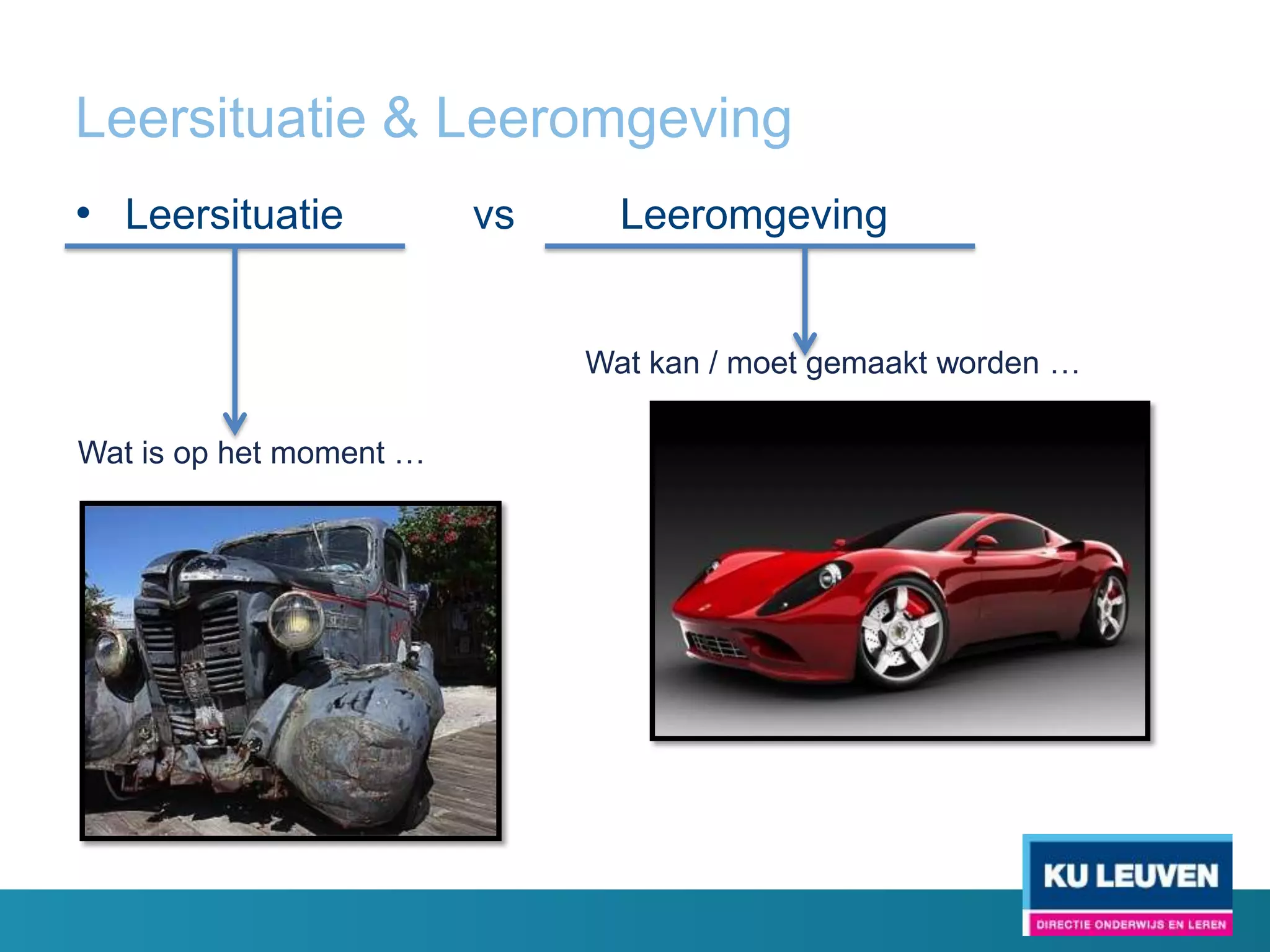
Leersituatie & Leeromgeving
• Leersituatie           vs     Leeromgeving


                              Wat kan / moet gemaakt worden …

Wat is op het moment …
Onderwijskundig Ontwerpen (Instructional Design)
Onderwijskundig ontwerpen (instructional design)
The process by which instruction is improved through the
analysis of learning needs and a systematic design and
development of learning environments and materials.
(Morrison, Ross, & Kemp, 2004).


Instructional designers often use technology and multimedia
              as tools to enhance instruction.
AudioVisual Instruction Movement


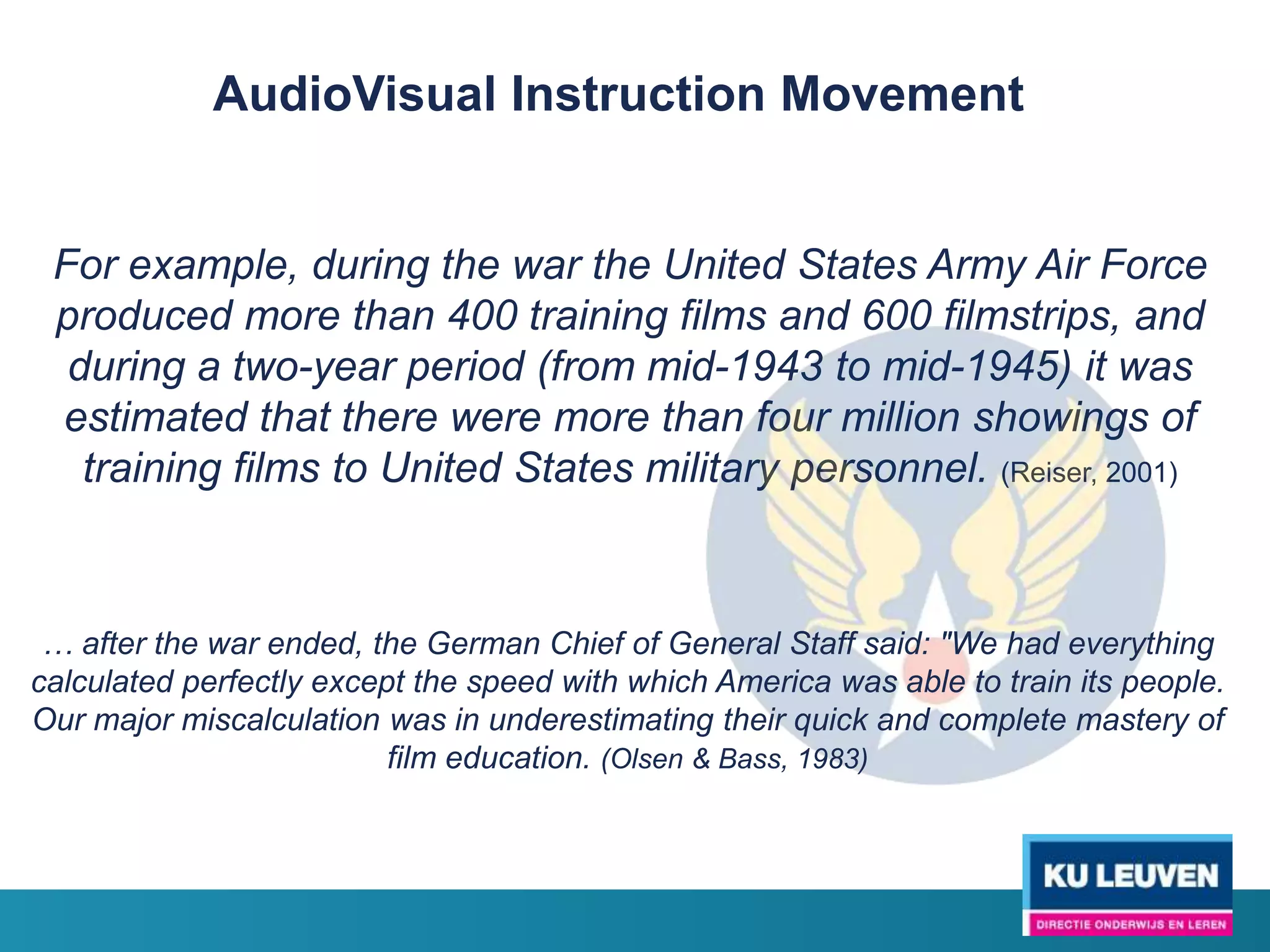
 For example, during the war the United States Army Air Force
 produced more than 400 training films and 600 filmstrips, and
  during a two-year period (from mid-1943 to mid-1945) it was
 estimated that there were more than four million showings of
   training films to United States military personnel. (Reiser, 2001)


 … after the war ended, the German Chief of General Staff said: "We had everything
calculated perfectly except the speed with which America was able to train its people.
Our major miscalculation was in underestimating their quick and complete mastery of
                          film education. (Olsen & Bass, 1983)
Verschillende ontwerpmodellen (ID-modellen)
 •   4C-ID Model (Jeroen van Merriënboer)
 •   Algo-Heuristic Theory (Lev Landa)
 •   ARCS (John Keller)
 •   ASSURE (Heinich, Molenda, Russel, and Smaldino)
 •   Backward Design (Wiggins & McTighe)
 •   Conditions of Learning (Robert Gagne)
 •   Component Display Theory (David Merrill)
 •   Criterion Referenced Instruction (Robert Mager)
 •   Integrative Learning Design Framework for Online Learning
     (Debbaugh)
 •   Spiral Model (Boehm)
 •   Rapid Prototyping (Tripp & Bichelmeyer)
 •   Kemp Design Model (Morrison, Ross, and Kemp)
 •   Organizational Elements Model (OEM) (Roger Kaufman)
 •   Transactional Distance (Michael Moore)
 •   …
ADDIE-model
• Het ADDIE model is een generisch model vaak gebruikt
  door Instructional Designers en Training Developers.

• De    vijf fasen - Analysis, Design, Development,
  Implementation, en Evaluation - representeren een
  dynamische, flexibele leidraad voor het bouwen van
  effectieve      trainingen     en      ondersteuning.

• De meeste huidige ontwerpmodellen (ID-modellen) zijn
  Spin-offs of variaties op het ADDIE-model.
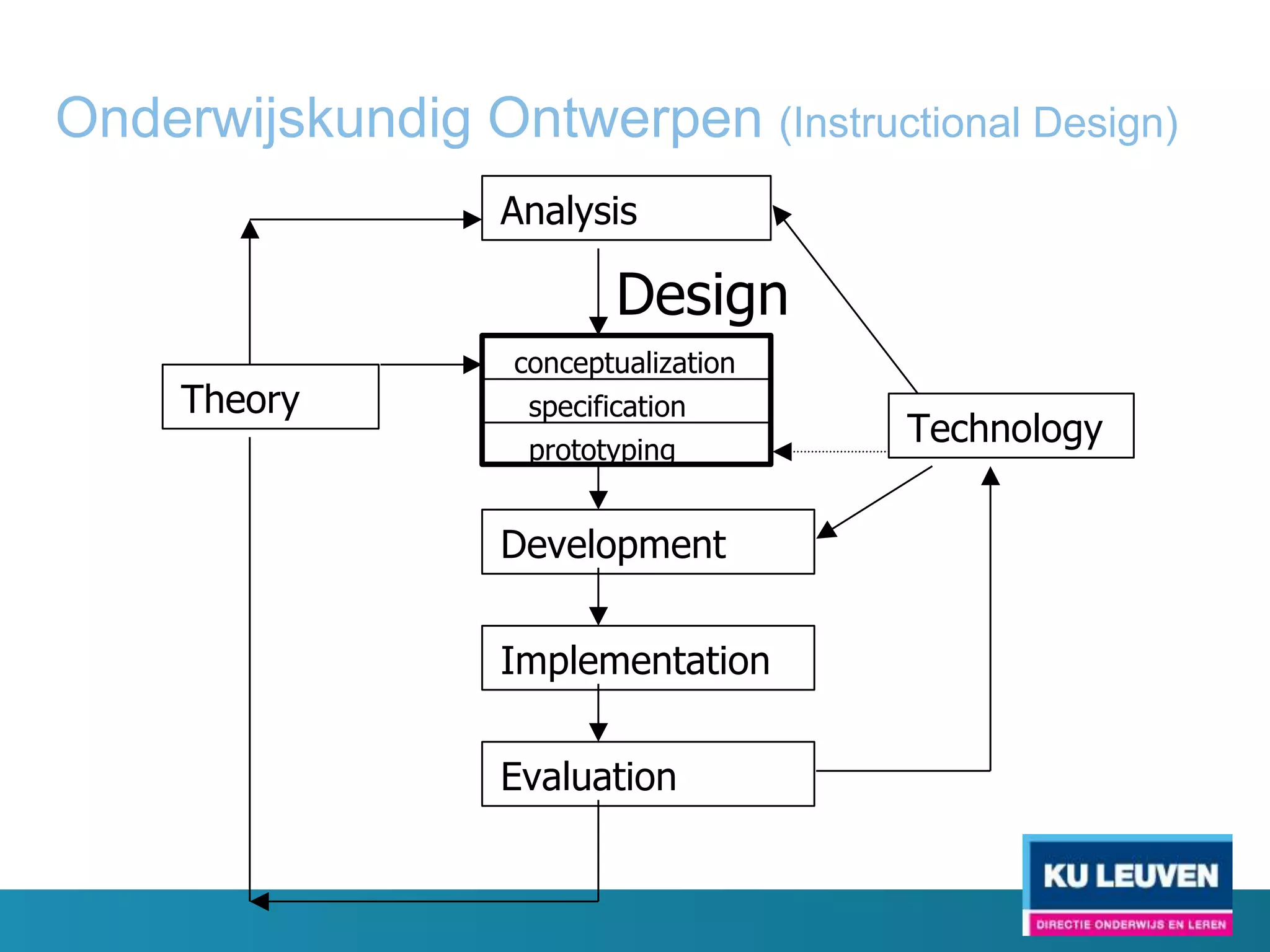
Onderwijskundig Ontwerpen (Instructional Design)
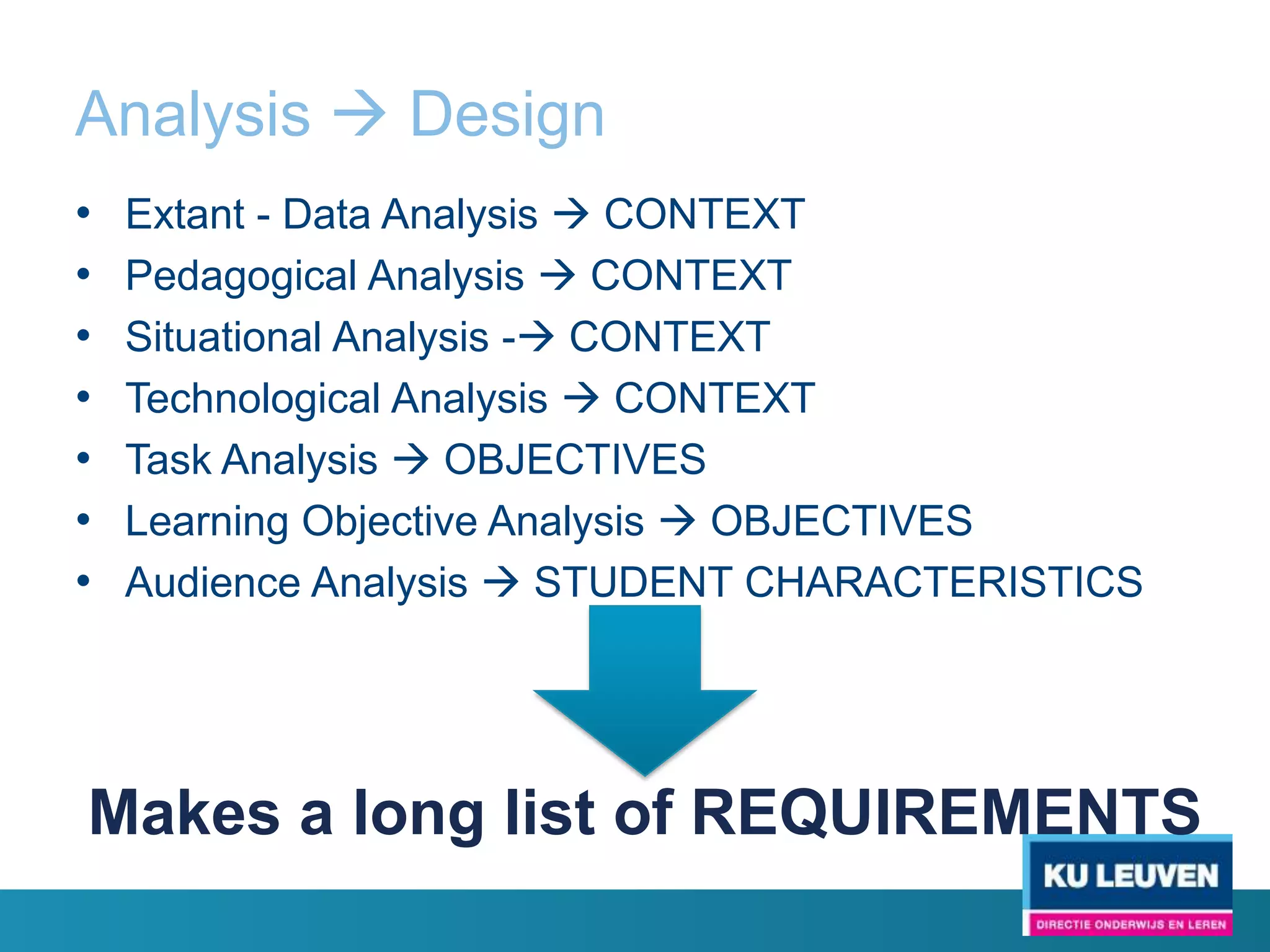
                   Analysis

                           Design
                   conceptualization
     Theory         specification
                    prototyping
                                       Technology

                   Development


                   Implementation


                   Evaluation
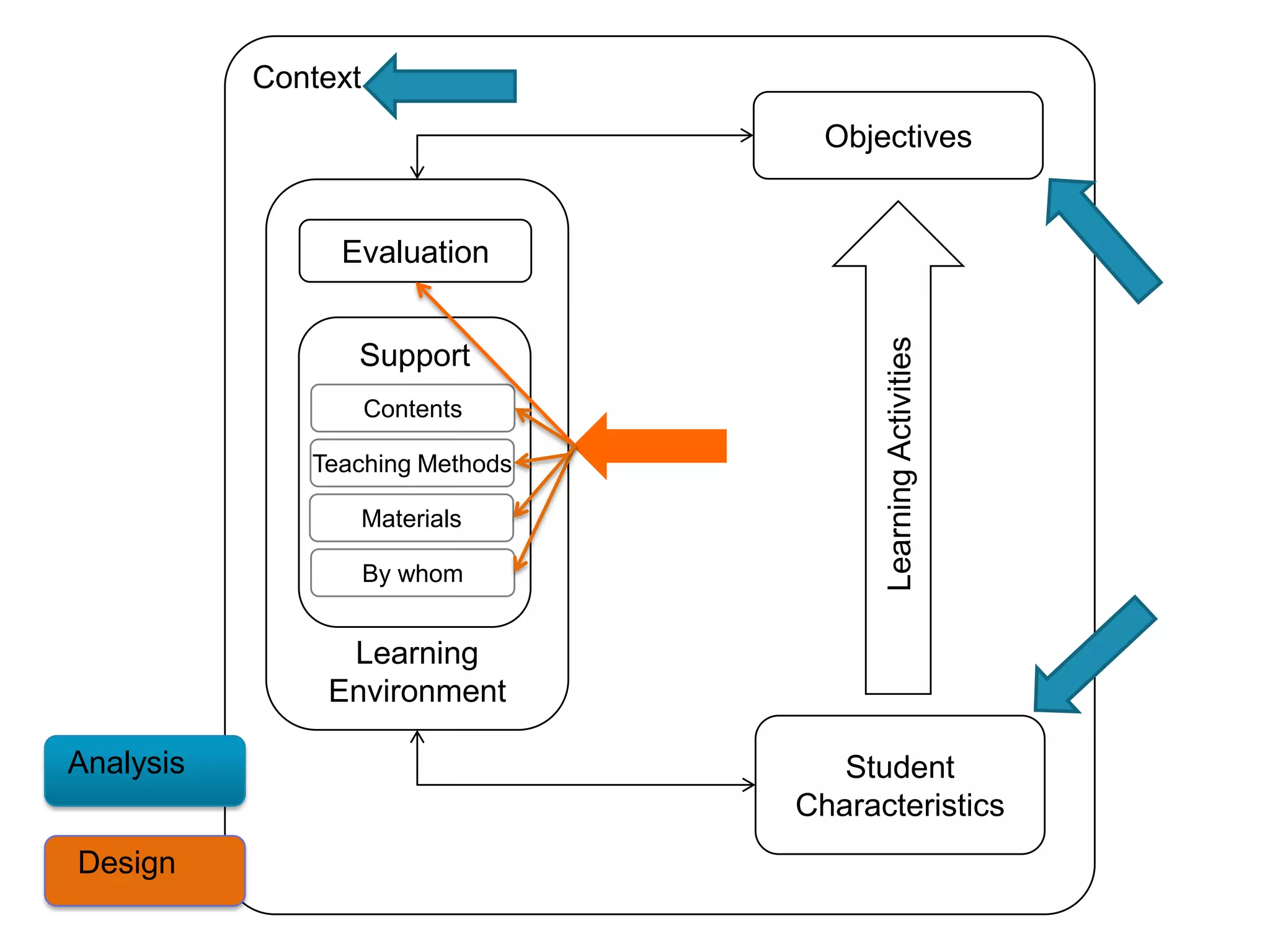
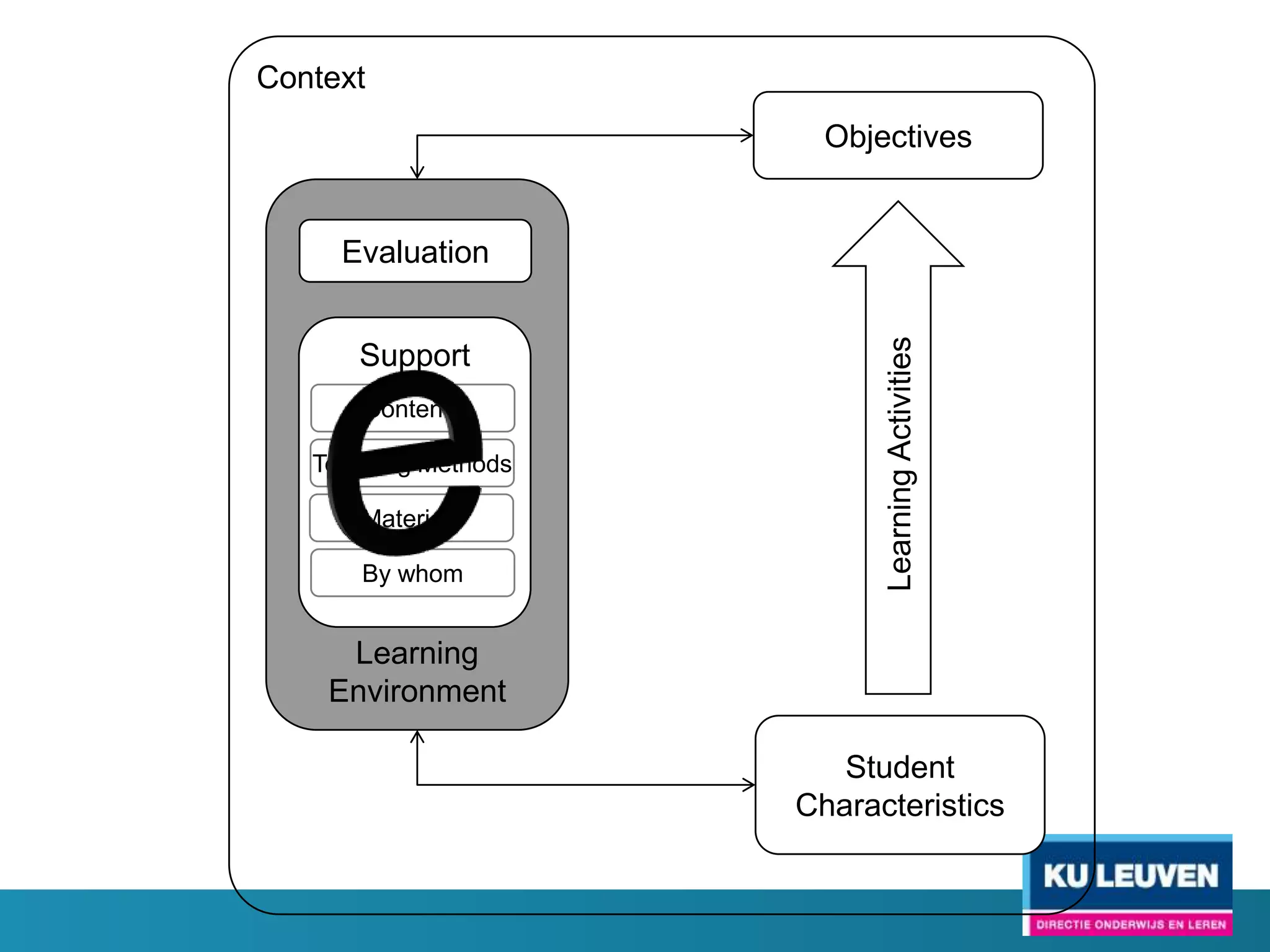
Context
                                   Objectives


                Evaluation


                                       Learning Activities
                 Support
                     Contents

              Teaching Methods

                     Materials

                     By whom


                Learning
               Environment

Analysis                            Student
                                 Characteristics
Design
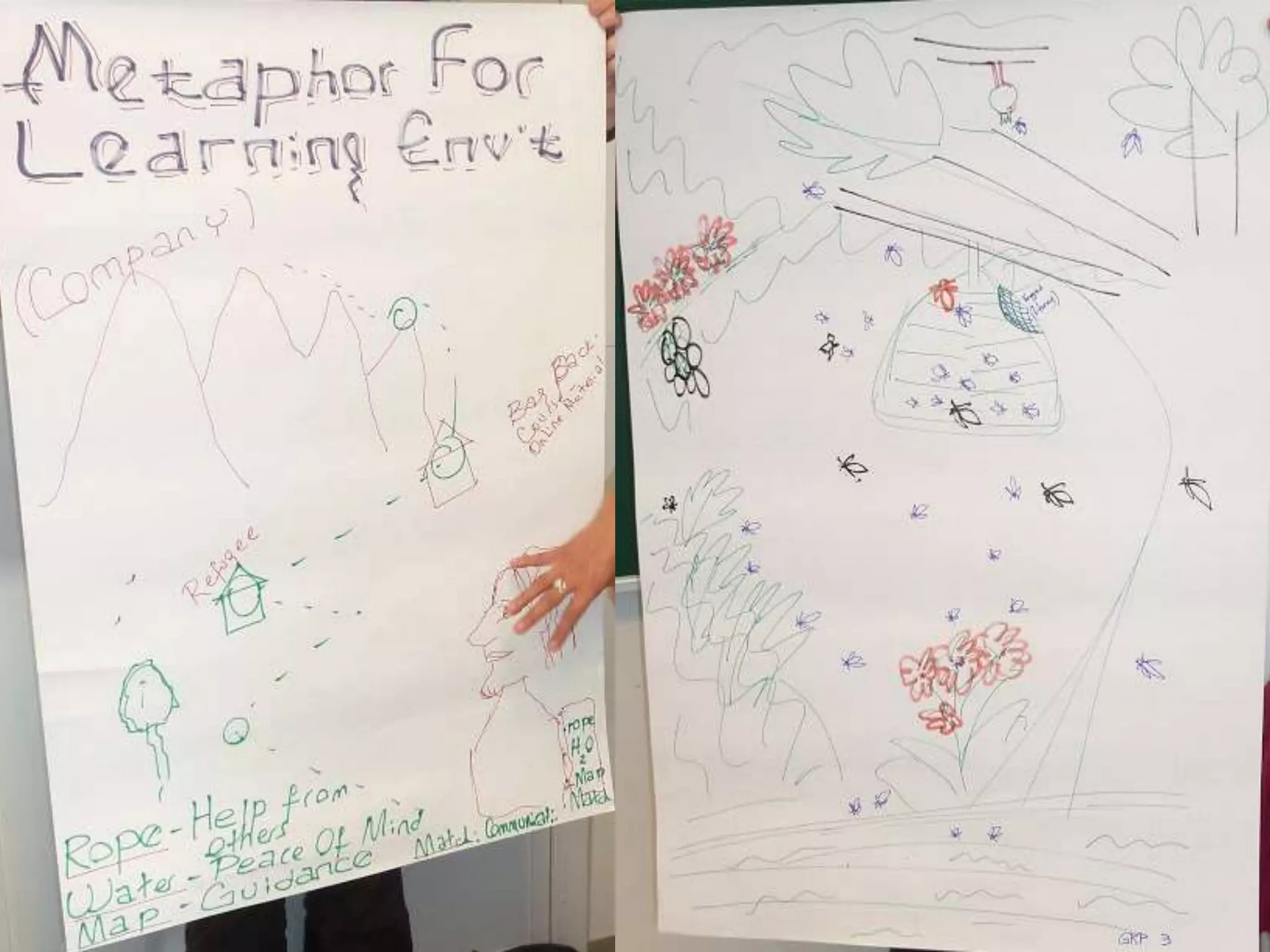
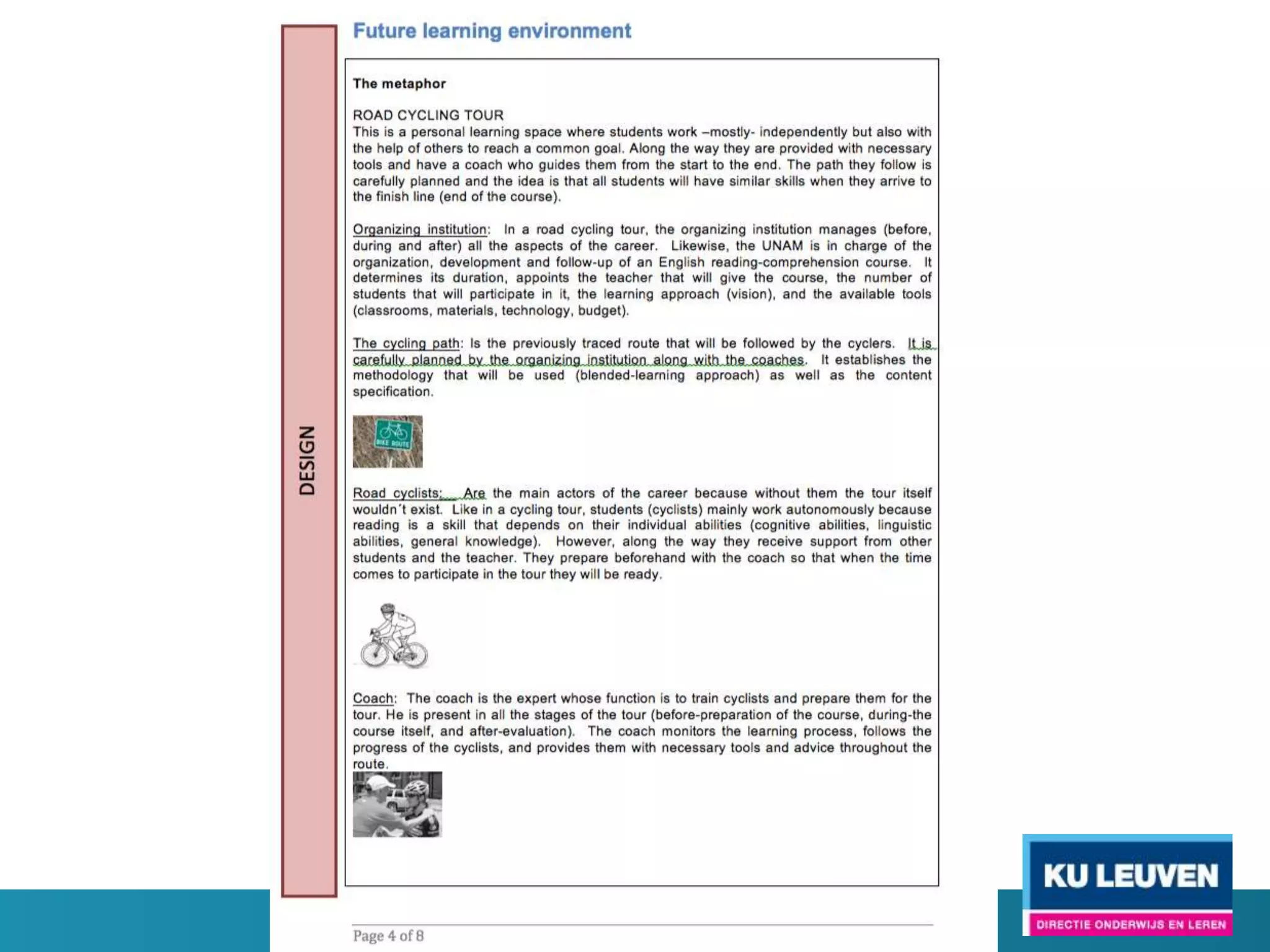
Design of the Learning Environment (I)
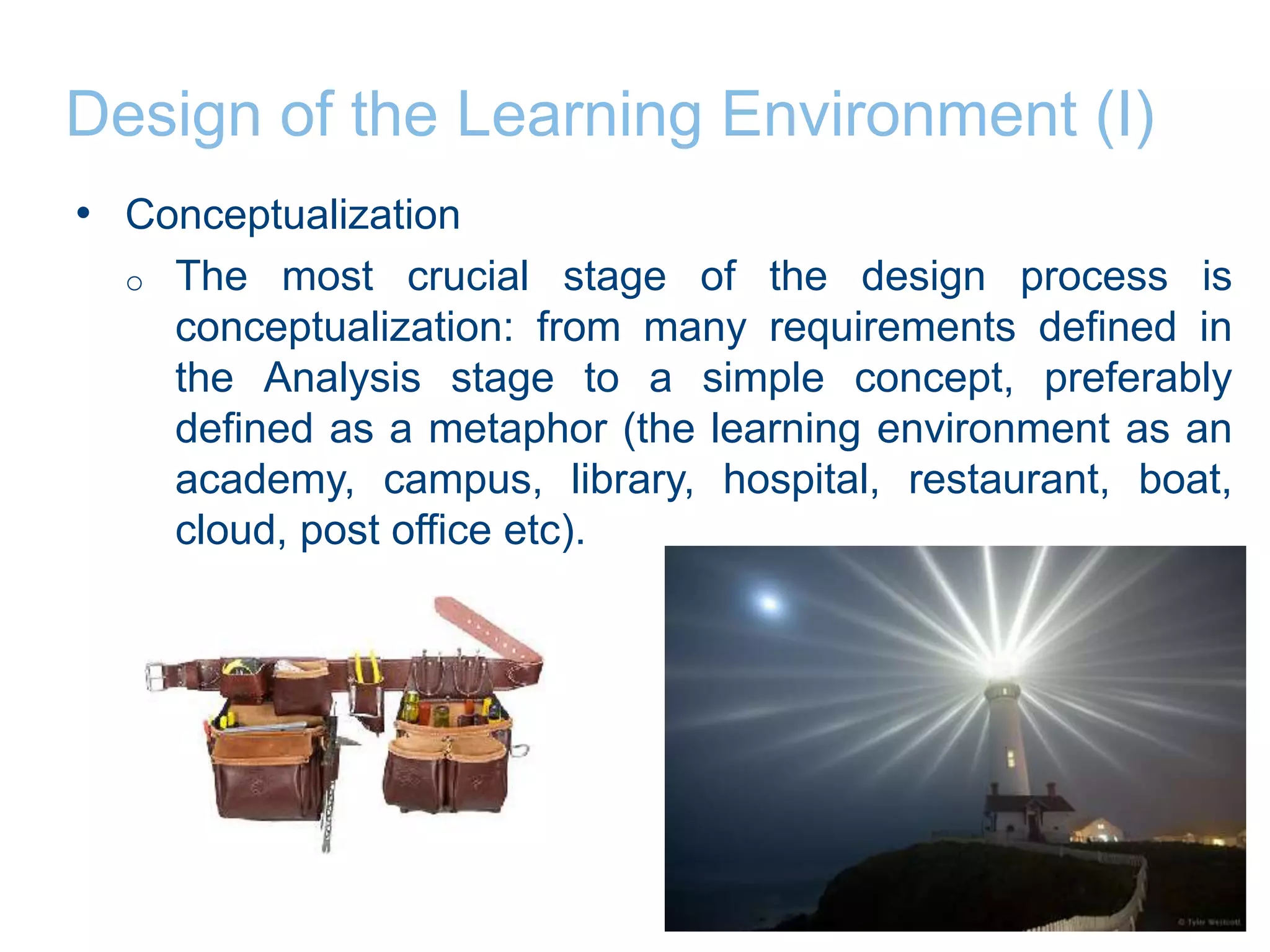
• Conceptualization
  o   The most crucial stage of the design process is
      conceptualization: from many requirements defined in
      the Analysis stage to a simple concept, preferably
      defined as a metaphor (the learning environment as an
      academy, campus, library, hospital, restaurant, boat,
      cloud, post office etc).
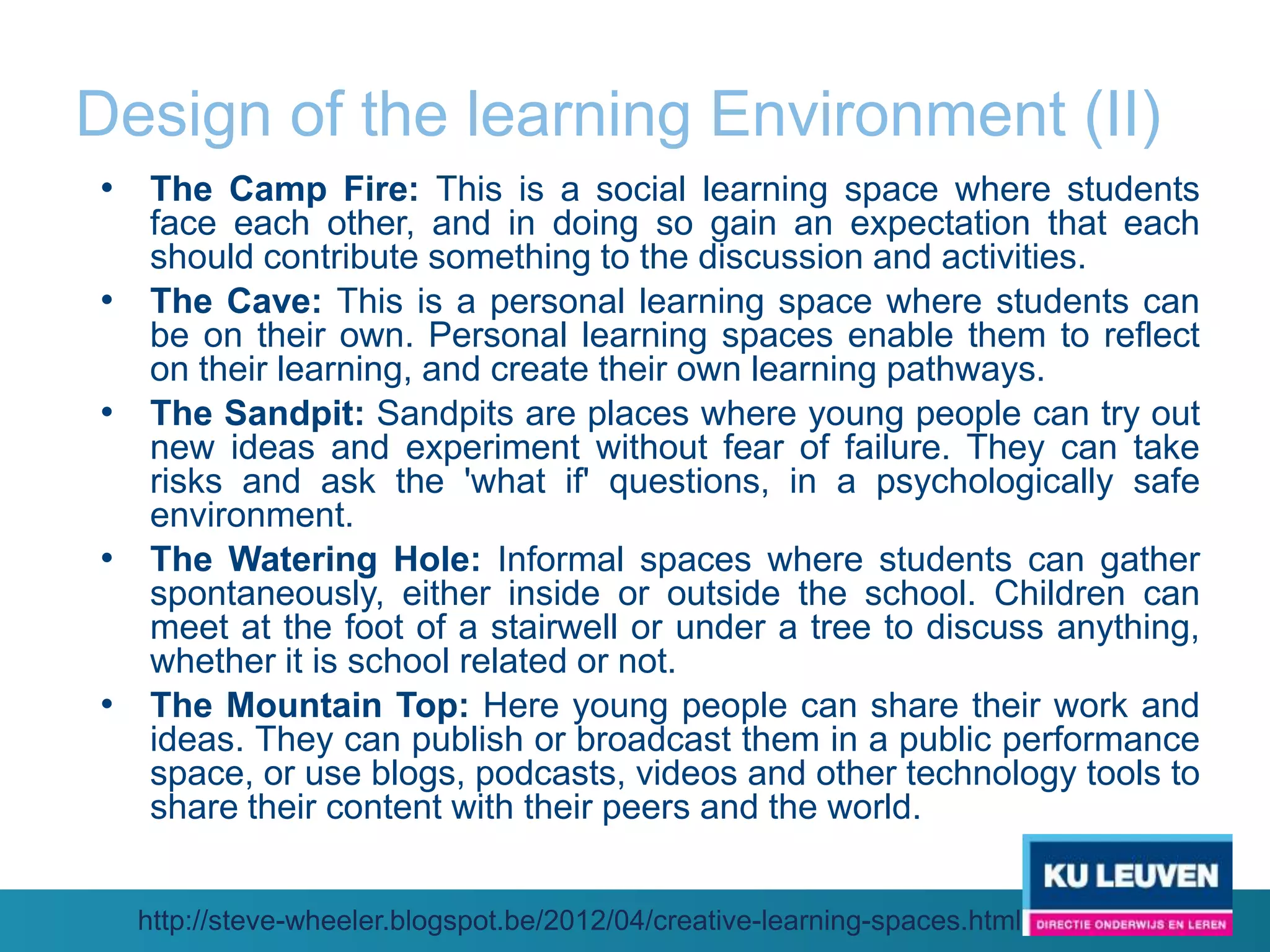
Design of the learning Environment (II)
• The Camp Fire: This is a social learning space where students
    face each other, and in doing so gain an expectation that each
    should contribute something to the discussion and activities.
•   The Cave: This is a personal learning space where students can
    be on their own. Personal learning spaces enable them to reflect
    on their learning, and create their own learning pathways.
•   The Sandpit: Sandpits are places where young people can try out
    new ideas and experiment without fear of failure. They can take
    risks and ask the 'what if' questions, in a psychologically safe
    environment.
•   The Watering Hole: Informal spaces where students can gather
    spontaneously, either inside or outside the school. Children can
    meet at the foot of a stairwell or under a tree to discuss anything,
    whether it is school related or not.
•   The Mountain Top: Here young people can share their work and
    ideas. They can publish or broadcast them in a public performance
    space, or use blogs, podcasts, videos and other technology tools to
    share their content with their peers and the world.


    http://steve-wheeler.blogspot.be/2012/04/creative-learning-spaces.html
Rol van technologie?
Context
                        Objectives


     Evaluation


                            Learning Activities
      Support
       Contents

   Teaching Methods

      Materials

      By whom


     Learning
    Environment

                         Student
                      Characteristics
Context
                        Objectives

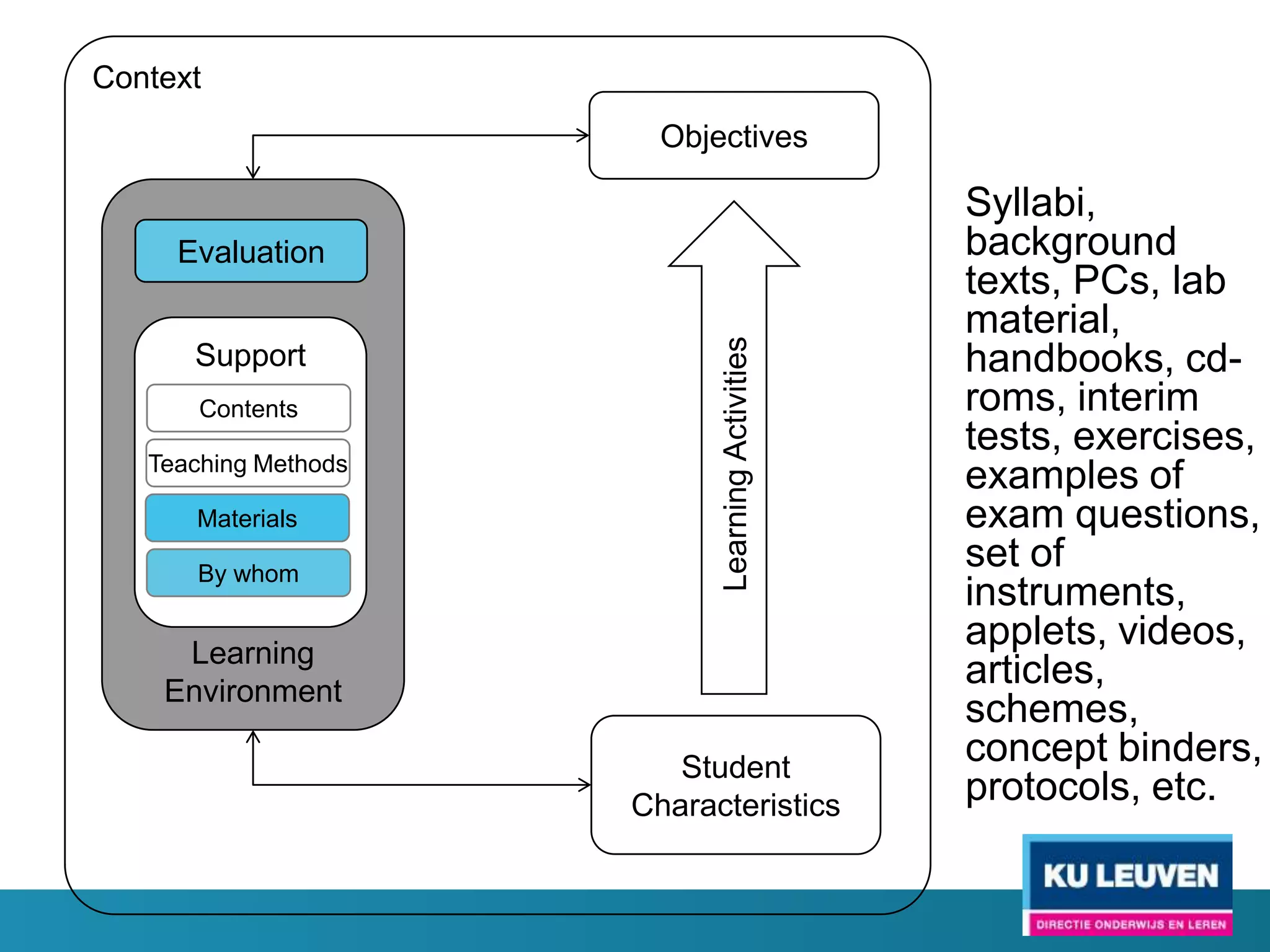
                                                  Syllabi,
     Evaluation                                   background
                                                  texts, PCs, lab
                                                  material,


                            Learning Activities
      Support                                     handbooks, cd-
       Contents                                   roms, interim
                                                  tests, exercises,
   Teaching Methods
                                                  examples of
      Materials                                   exam questions,
      By whom
                                                  set of
                                                  instruments,
     Learning
                                                  applets, videos,
    Environment
                                                  articles,
                                                  schemes,
                         Student
                                                  concept binders,
                      Characteristics
                                                  protocols, etc.
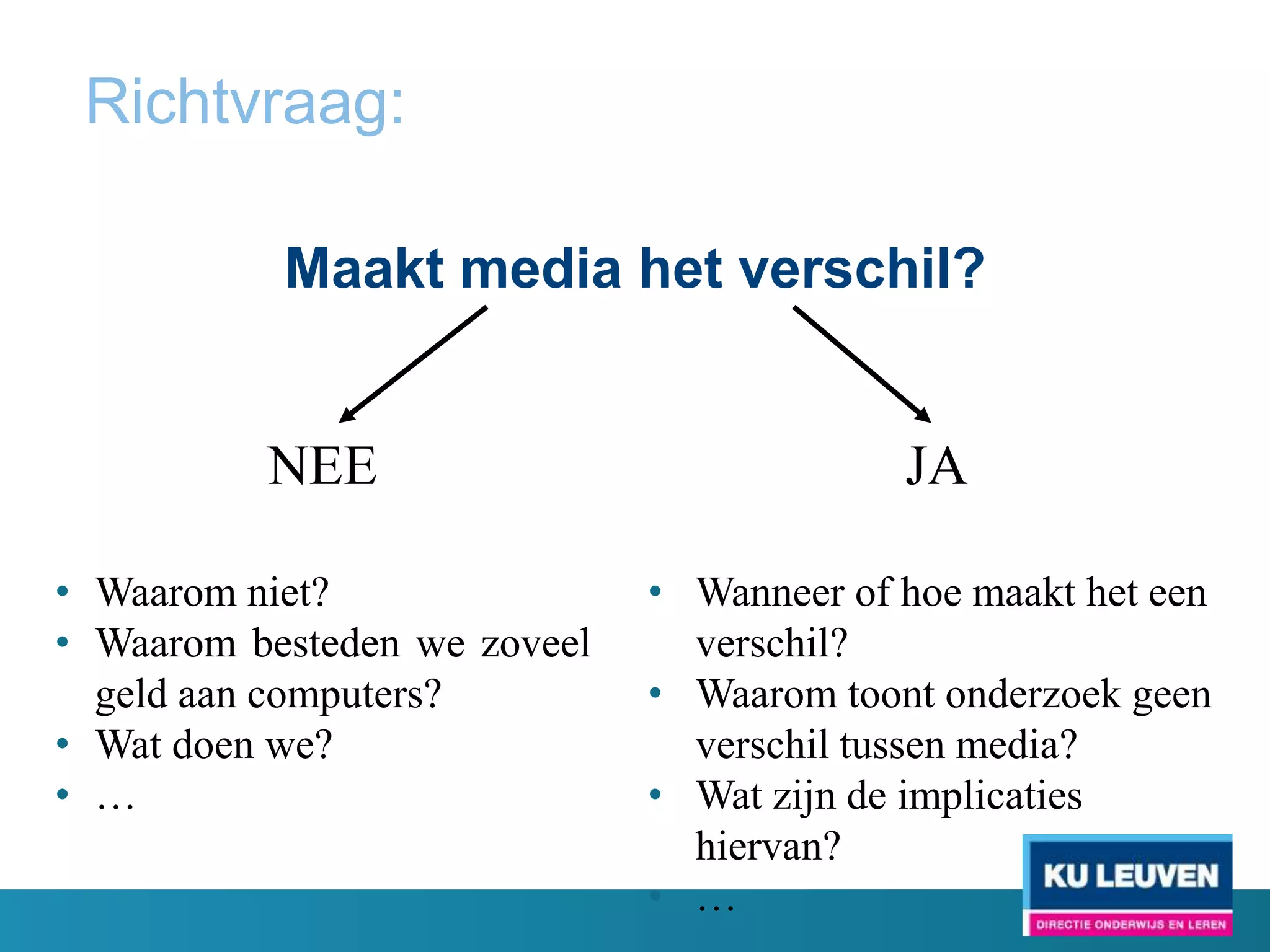
Richtvraag:

           Maakt media het verschil?


          NEE                              JA

• Waarom niet?                • Wanneer of hoe maakt het een
• Waarom besteden we zoveel     verschil?
  geld aan computers?         • Waarom toont onderzoek geen
• Wat doen we?                  verschil tussen media?
• …                           • Wat zijn de implicaties
                                hiervan?
                              • …
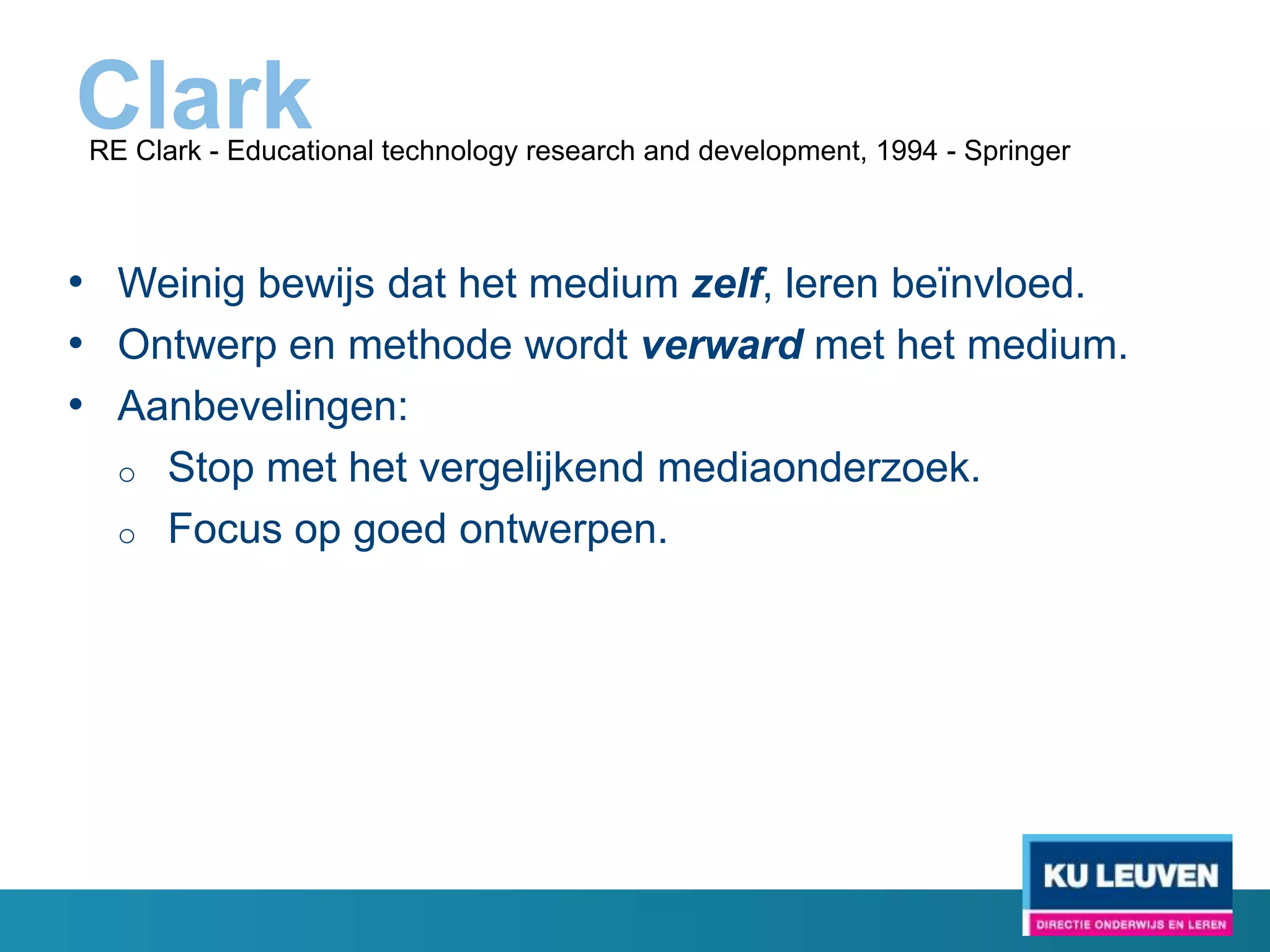
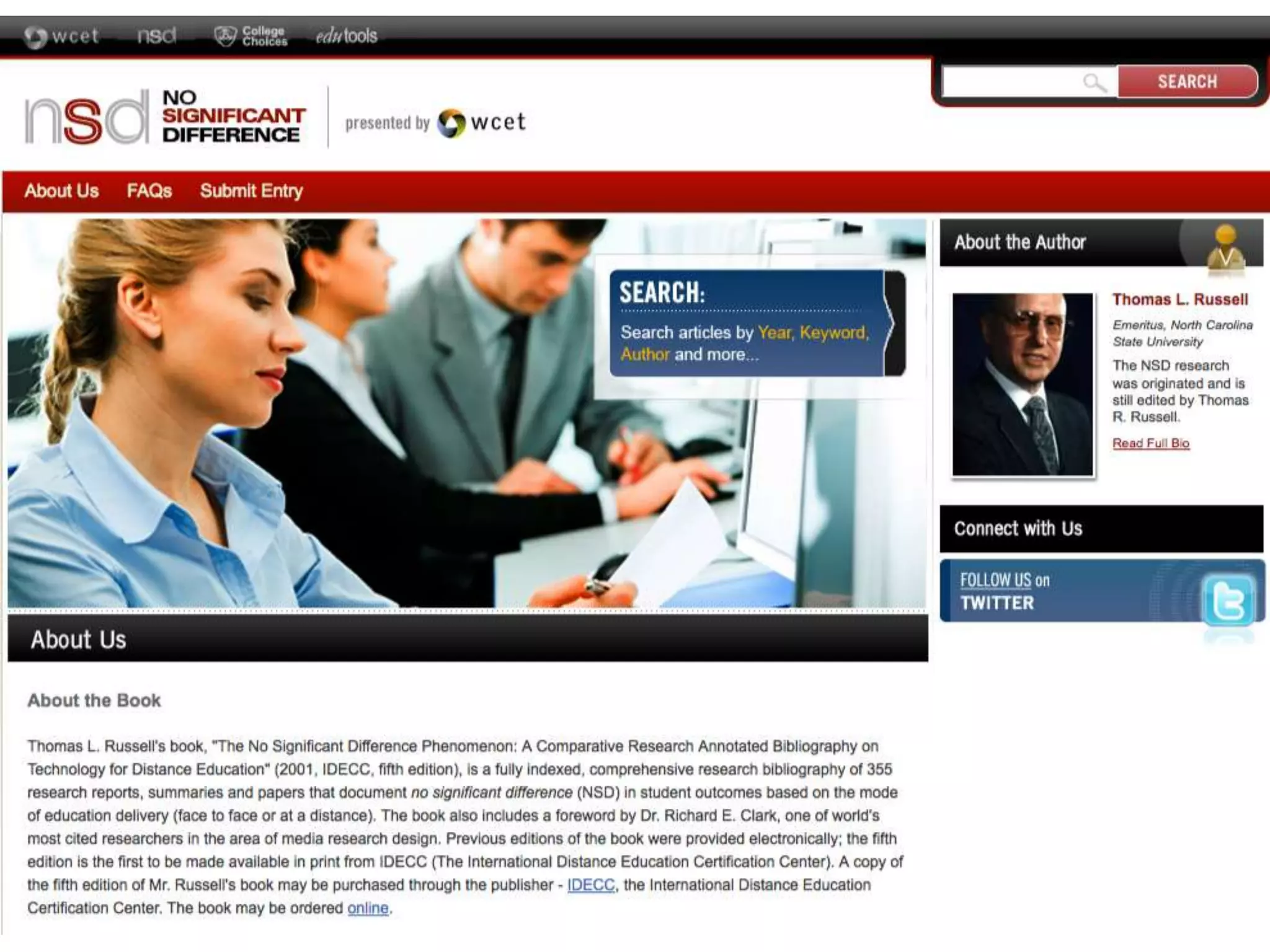
Clark
 RE Clark - Educational technology research and development, 1994 - Springer


• Weinig bewijs dat het medium zelf, leren beïnvloed.
• Ontwerp en methode wordt verward met het medium.
• Aanbevelingen:
   o   Stop met het vergelijkend mediaonderzoek.
   o   Focus op goed ontwerpen.
Kozma
RB Kozma - Educational Technology Research and Development, 1994 - Springer


•   Het medium is belangrijk(soms).
•   Wat zijn de voordelen van boeken?
•   Wat zijn de voordelen van televisie?
•   Wat zijn de voordelen van computers?
•   Wat zijn de voordelen van multimedia?
Tot slot

Een       zeer     specifieke
omschrijving van wat de
‘right tool for the job’ is,
vergemakkelijkt je zoektocht
aanzienlijk!
Blended Learning,
Afstandsonderwijs,
etc.
Achtergrondinformatie
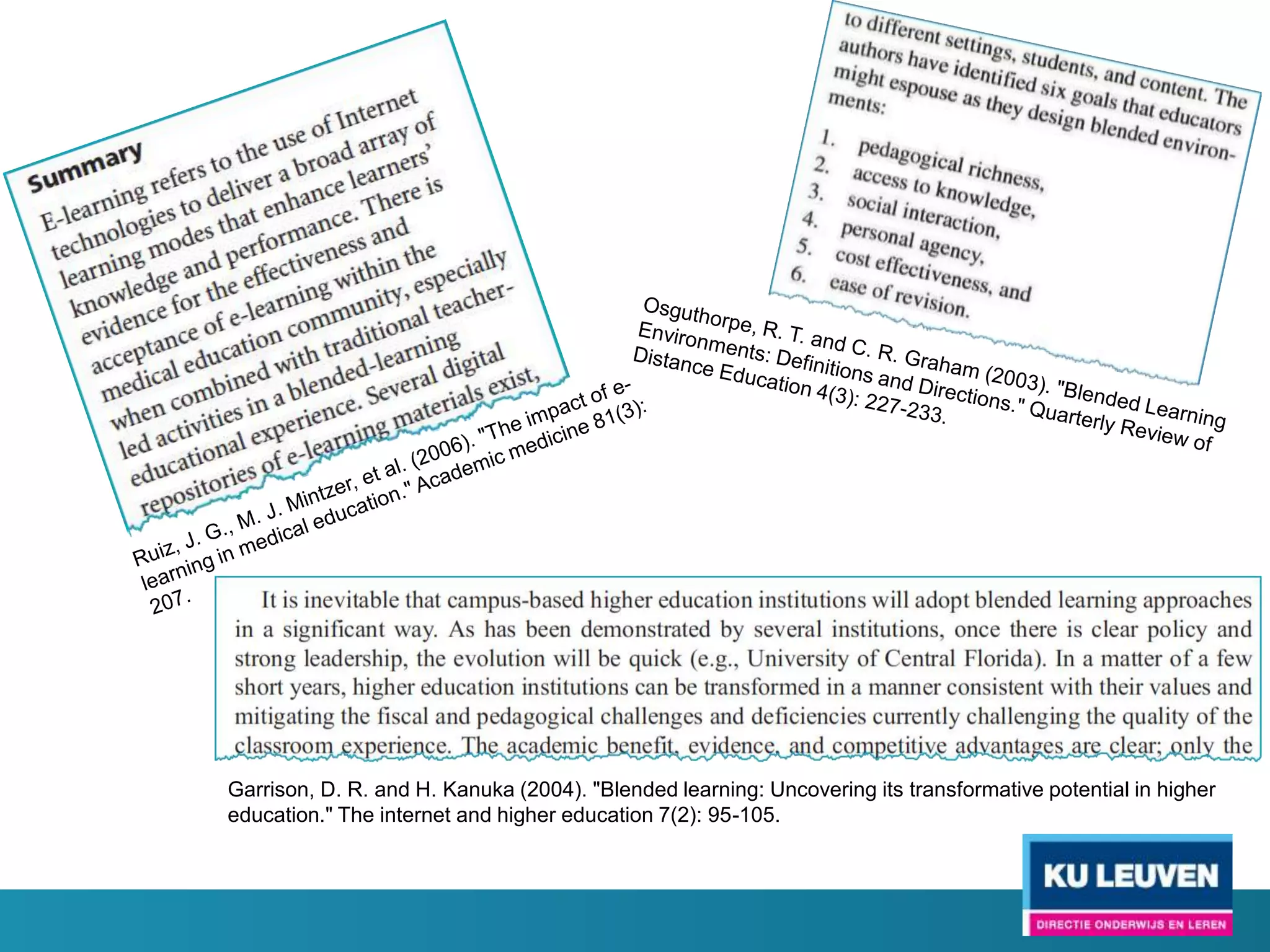
Garrison, D. R. and H. Kanuka (2004). "Blended learning: Uncovering its transformative potential in higher
education." The internet and higher education 7(2): 95-105.
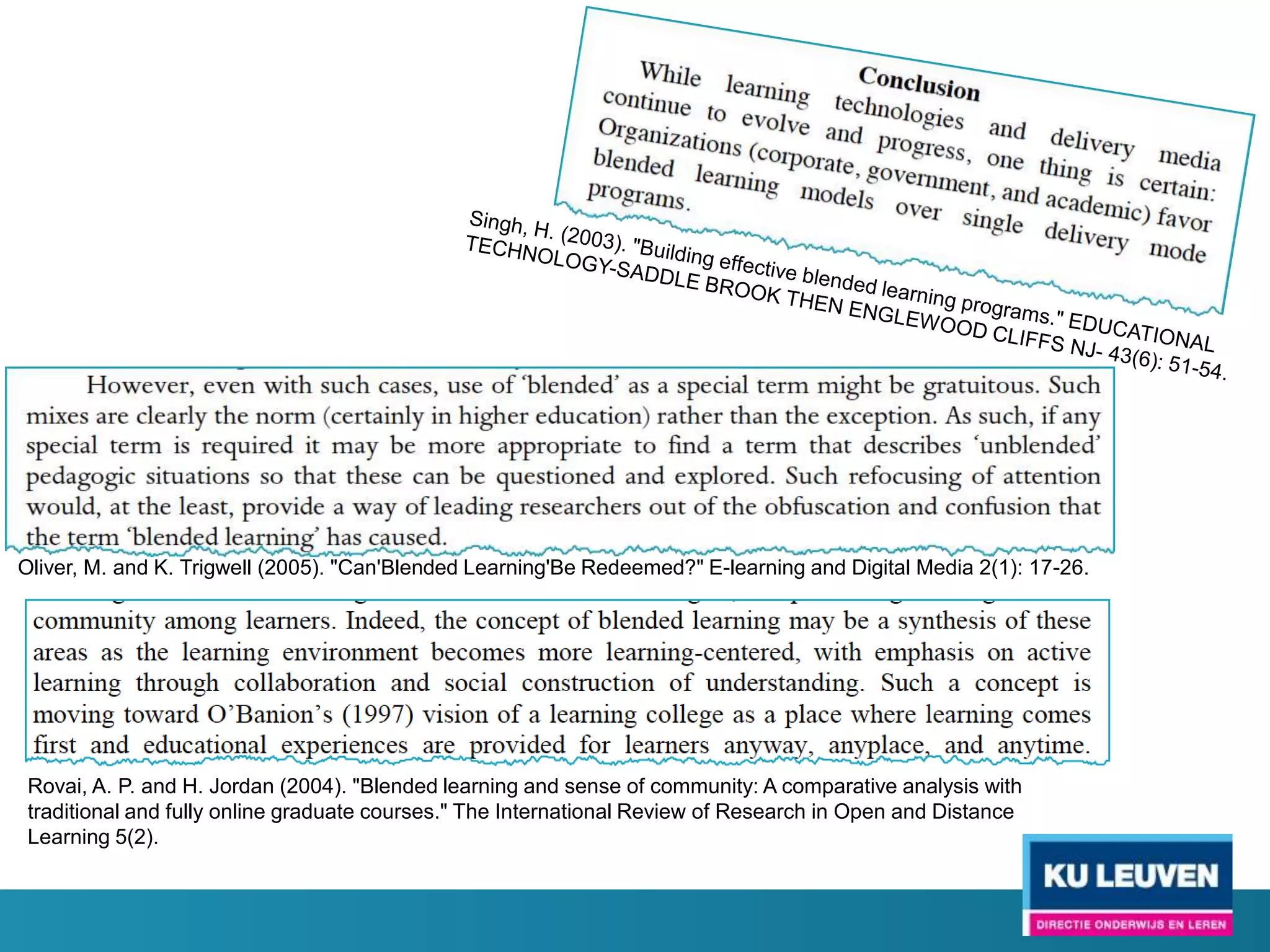
Oliver, M. and K. Trigwell (2005). "Can'Blended Learning'Be Redeemed?" E-learning and Digital Media 2(1): 17-26.


 Rovai, A. P. and H. Jordan (2004). "Blended learning and sense of community: A comparative analysis with
 traditional and fully online graduate courses." The International Review of Research in Open and Distance
 Learning 5(2).
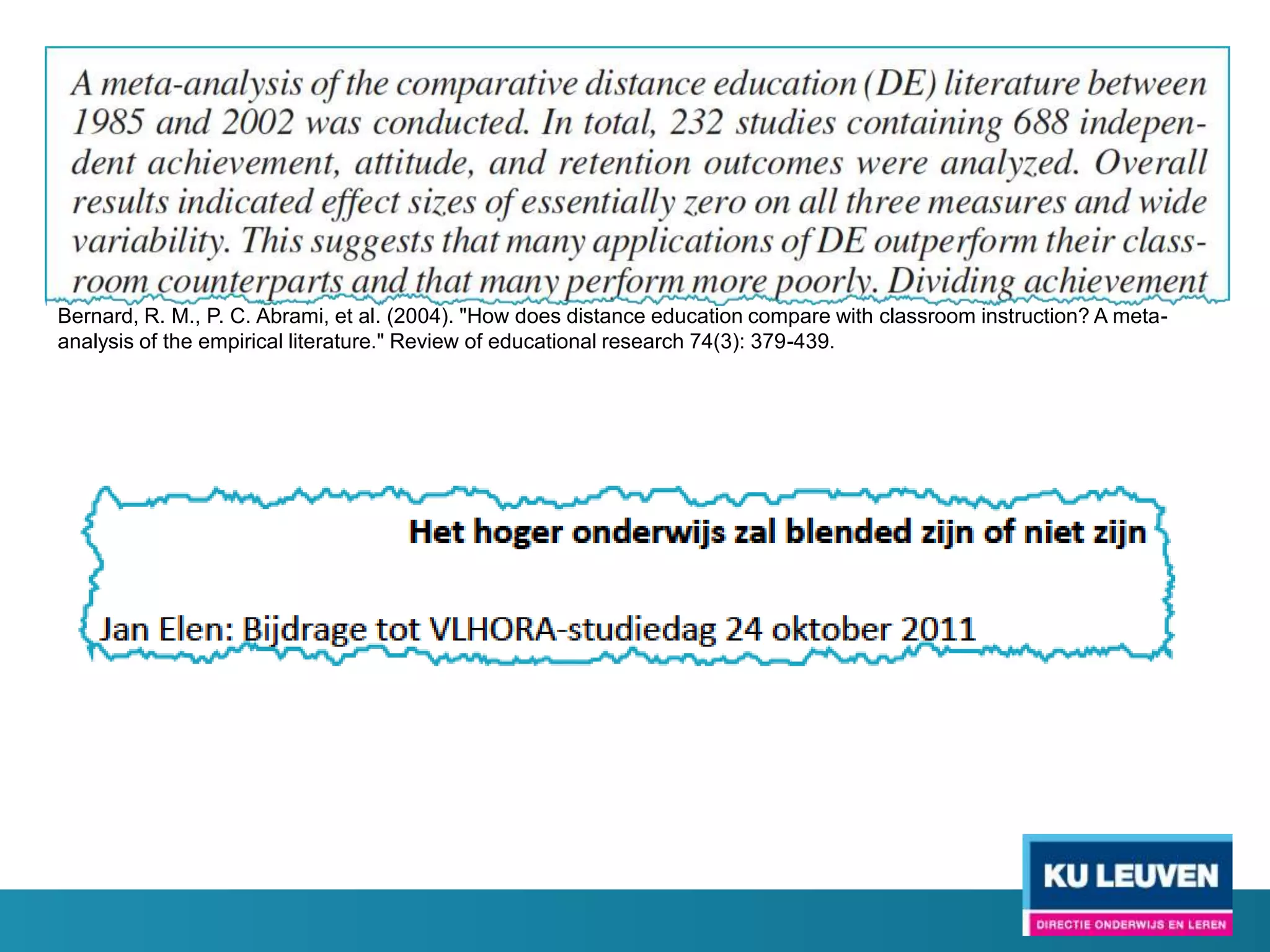
Bernard, R. M., P. C. Abrami, et al. (2004). "How does distance education compare with classroom instruction? A meta-
analysis of the empirical literature." Review of educational research 74(3): 379-439.
Vragen?
E-mail: stijn.vanlaer@kuleuven.be
Twitter: @Stijn_Van_Laer
Facebook: Stijn Van Laer

Oo hub 20130111

  • 1.
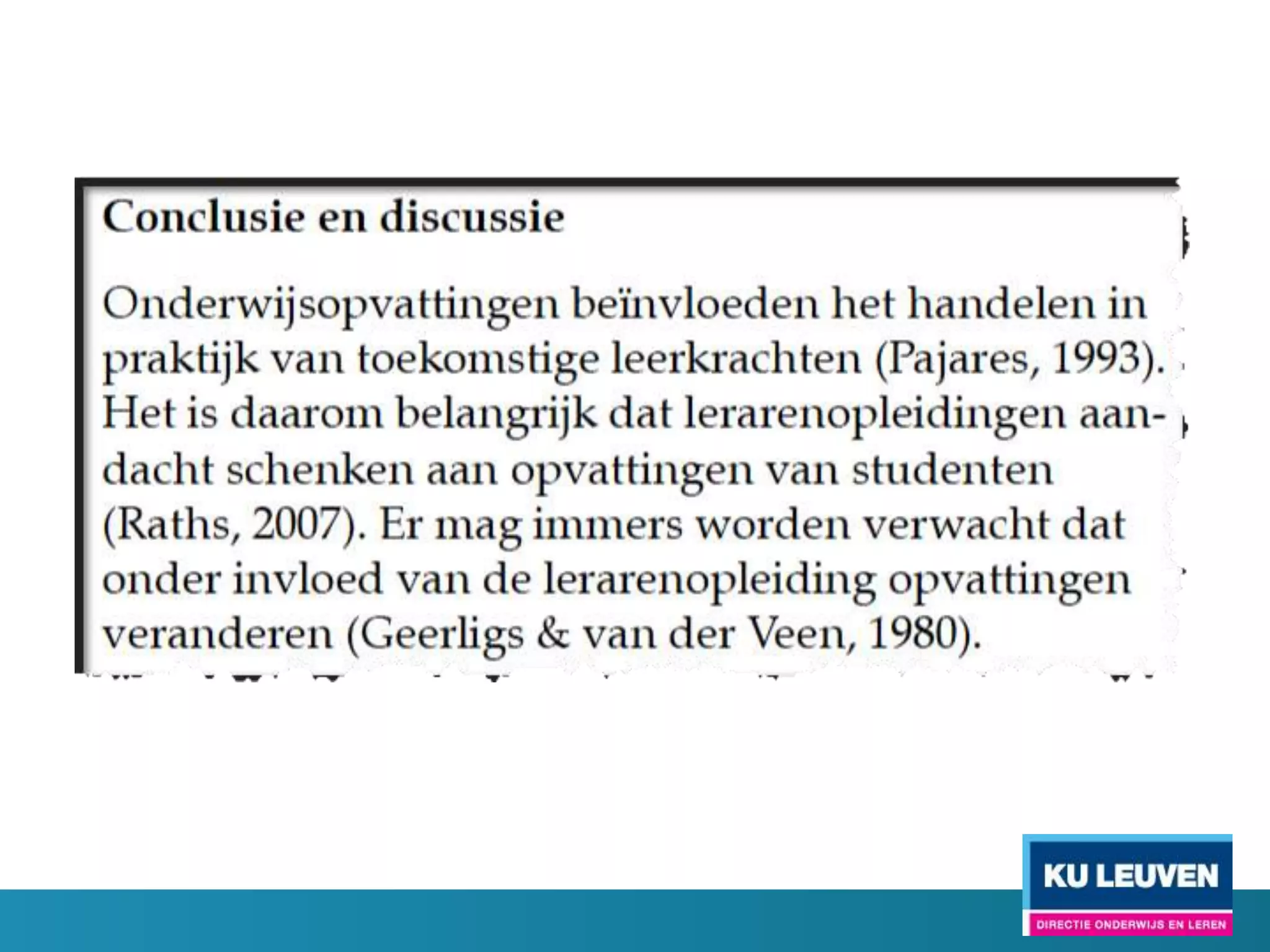
    Onderwijskundig Ontwerpen Het effectief inzetten van technologie in de onderwijsleerpraktijk. Vrijdag 11 januari 2013 Stijn Van Laer KU Leuven, Directie Onderwijs en Leren KU Leuven, Departement Onderwijsontwikkeling en ondersteuning, Cel Academische Vorming
  • 2.
  • 3.
    1: Teken onderwijzen… Wil er iemand kort vertellen wat hij/zij tekende?
  • 4.
    Onderwijs- opvattingen van toekomstige leerkrachten met tekeningen achterhaald (Herremans & Elen 2012)
  • 7.
    Overzicht 1. Technologie alsdoel 2. Technologie als middel 3. Technologie en didactiek 4. Leersituatie en leeromgeving 5. Onderwijskundig ontwerpen 6. Bewegend beeld als ondersteunend medium
  • 8.
    Technologie als doel Technologie als doel op zich heeft geen toegevoegde waarde! Hoogstens een vervangende waarde… “We continue to invest in technology and proceed on the basis of our implicit faith in technology−enhanced learning and instruction.” (Spector, 2010)
  • 9.
    Technologie als middel Technologie als middel, kan een (toegevoegde) waarde hebben wanneer er een nood aan technologie is en het design van de onderwijsleeractiviteit afgestemd is op de te bereiken leerdoelen, de context en de studentkenmerken. The learning goal (especially the kind of knowledge or skill to be learned) determines to a great extent how to design effective support for learning. (Gagné, 1970)
  • 10.
    Technologie en didactiek Gebruik van Didactische technologie? afstemming?
  • 11.
    Leersituatie & Leeromgeving •Leersituatie vs Leeromgeving Wat kan / moet gemaakt worden … Wat is op het moment …
  • 12.
  • 13.
    Onderwijskundig ontwerpen (instructionaldesign) The process by which instruction is improved through the analysis of learning needs and a systematic design and development of learning environments and materials. (Morrison, Ross, & Kemp, 2004). Instructional designers often use technology and multimedia as tools to enhance instruction.
  • 14.
    AudioVisual Instruction Movement For example, during the war the United States Army Air Force produced more than 400 training films and 600 filmstrips, and during a two-year period (from mid-1943 to mid-1945) it was estimated that there were more than four million showings of training films to United States military personnel. (Reiser, 2001) … after the war ended, the German Chief of General Staff said: "We had everything calculated perfectly except the speed with which America was able to train its people. Our major miscalculation was in underestimating their quick and complete mastery of film education. (Olsen & Bass, 1983)
  • 15.
    Verschillende ontwerpmodellen (ID-modellen) • 4C-ID Model (Jeroen van Merriënboer) • Algo-Heuristic Theory (Lev Landa) • ARCS (John Keller) • ASSURE (Heinich, Molenda, Russel, and Smaldino) • Backward Design (Wiggins & McTighe) • Conditions of Learning (Robert Gagne) • Component Display Theory (David Merrill) • Criterion Referenced Instruction (Robert Mager) • Integrative Learning Design Framework for Online Learning (Debbaugh) • Spiral Model (Boehm) • Rapid Prototyping (Tripp & Bichelmeyer) • Kemp Design Model (Morrison, Ross, and Kemp) • Organizational Elements Model (OEM) (Roger Kaufman) • Transactional Distance (Michael Moore) • …
  • 16.
    ADDIE-model • Het ADDIEmodel is een generisch model vaak gebruikt door Instructional Designers en Training Developers. • De vijf fasen - Analysis, Design, Development, Implementation, en Evaluation - representeren een dynamische, flexibele leidraad voor het bouwen van effectieve trainingen en ondersteuning. • De meeste huidige ontwerpmodellen (ID-modellen) zijn Spin-offs of variaties op het ADDIE-model.
  • 17.
    Onderwijskundig Ontwerpen (InstructionalDesign) Analysis Design conceptualization Theory specification prototyping Technology Development Implementation Evaluation
  • 18.
    Context Objectives Evaluation Learning Activities Support Contents Teaching Methods Materials By whom Learning Environment Analysis Student Characteristics Design
  • 20.
    Design of theLearning Environment (I) • Conceptualization o The most crucial stage of the design process is conceptualization: from many requirements defined in the Analysis stage to a simple concept, preferably defined as a metaphor (the learning environment as an academy, campus, library, hospital, restaurant, boat, cloud, post office etc).
  • 21.
    Design of thelearning Environment (II) • The Camp Fire: This is a social learning space where students face each other, and in doing so gain an expectation that each should contribute something to the discussion and activities. • The Cave: This is a personal learning space where students can be on their own. Personal learning spaces enable them to reflect on their learning, and create their own learning pathways. • The Sandpit: Sandpits are places where young people can try out new ideas and experiment without fear of failure. They can take risks and ask the 'what if' questions, in a psychologically safe environment. • The Watering Hole: Informal spaces where students can gather spontaneously, either inside or outside the school. Children can meet at the foot of a stairwell or under a tree to discuss anything, whether it is school related or not. • The Mountain Top: Here young people can share their work and ideas. They can publish or broadcast them in a public performance space, or use blogs, podcasts, videos and other technology tools to share their content with their peers and the world. http://steve-wheeler.blogspot.be/2012/04/creative-learning-spaces.html
  • 26.
  • 27.
    Context Objectives Evaluation Learning Activities Support Contents Teaching Methods Materials By whom Learning Environment Student Characteristics
  • 28.
    Context Objectives Syllabi, Evaluation background texts, PCs, lab material, Learning Activities Support handbooks, cd- Contents roms, interim tests, exercises, Teaching Methods examples of Materials exam questions, By whom set of instruments, Learning applets, videos, Environment articles, schemes, Student concept binders, Characteristics protocols, etc.
  • 29.
    Richtvraag: Maakt media het verschil? NEE JA • Waarom niet? • Wanneer of hoe maakt het een • Waarom besteden we zoveel verschil? geld aan computers? • Waarom toont onderzoek geen • Wat doen we? verschil tussen media? • … • Wat zijn de implicaties hiervan? • …
  • 30.
    Clark RE Clark- Educational technology research and development, 1994 - Springer • Weinig bewijs dat het medium zelf, leren beïnvloed. • Ontwerp en methode wordt verward met het medium. • Aanbevelingen: o Stop met het vergelijkend mediaonderzoek. o Focus op goed ontwerpen.
  • 32.
    Kozma RB Kozma -Educational Technology Research and Development, 1994 - Springer • Het medium is belangrijk(soms). • Wat zijn de voordelen van boeken? • Wat zijn de voordelen van televisie? • Wat zijn de voordelen van computers? • Wat zijn de voordelen van multimedia?
  • 39.
    Tot slot Een zeer specifieke omschrijving van wat de ‘right tool for the job’ is, vergemakkelijkt je zoektocht aanzienlijk!
  • 40.
  • 42.
    Garrison, D. R.and H. Kanuka (2004). "Blended learning: Uncovering its transformative potential in higher education." The internet and higher education 7(2): 95-105.
  • 43.
    Oliver, M. andK. Trigwell (2005). "Can'Blended Learning'Be Redeemed?" E-learning and Digital Media 2(1): 17-26. Rovai, A. P. and H. Jordan (2004). "Blended learning and sense of community: A comparative analysis with traditional and fully online graduate courses." The International Review of Research in Open and Distance Learning 5(2).
  • 44.
    Bernard, R. M.,P. C. Abrami, et al. (2004). "How does distance education compare with classroom instruction? A meta- analysis of the empirical literature." Review of educational research 74(3): 379-439.
  • 45.

Editor's Notes

  • #19 At the K.U.Leuven we answer this question by using this scheme. It visualizes the different basic components of an educational practice and the connections between these components.Analysis & Design is everywhere.
  • #28 Link with e-learning: learning environment can be partially (blended) or completely online.More on “blended” learning?
  • #29 Apart from teaching methods, students can also be supported by offering them study material and challenging them to become actively involved in the subject matter. Examples are: syllabi, background texts, PCs, lab material, handbooks, cd-roms, interim tests, exercises, examples of exam questions, set of instruments, applets, videos, schemes, concept binders, protocols, etc.