Downloaded 551 times






![What is Curriculum Mapping?[Curriculum] Mapping is a verb… and then using these maps to make instructional decision.How do we improve the path students follow?](https://image.slidesharecdn.com/curriculummapping-final-100202122503-phpapp01/75/Introduction-to-Curriculum-Mapping-21-2048.jpg)
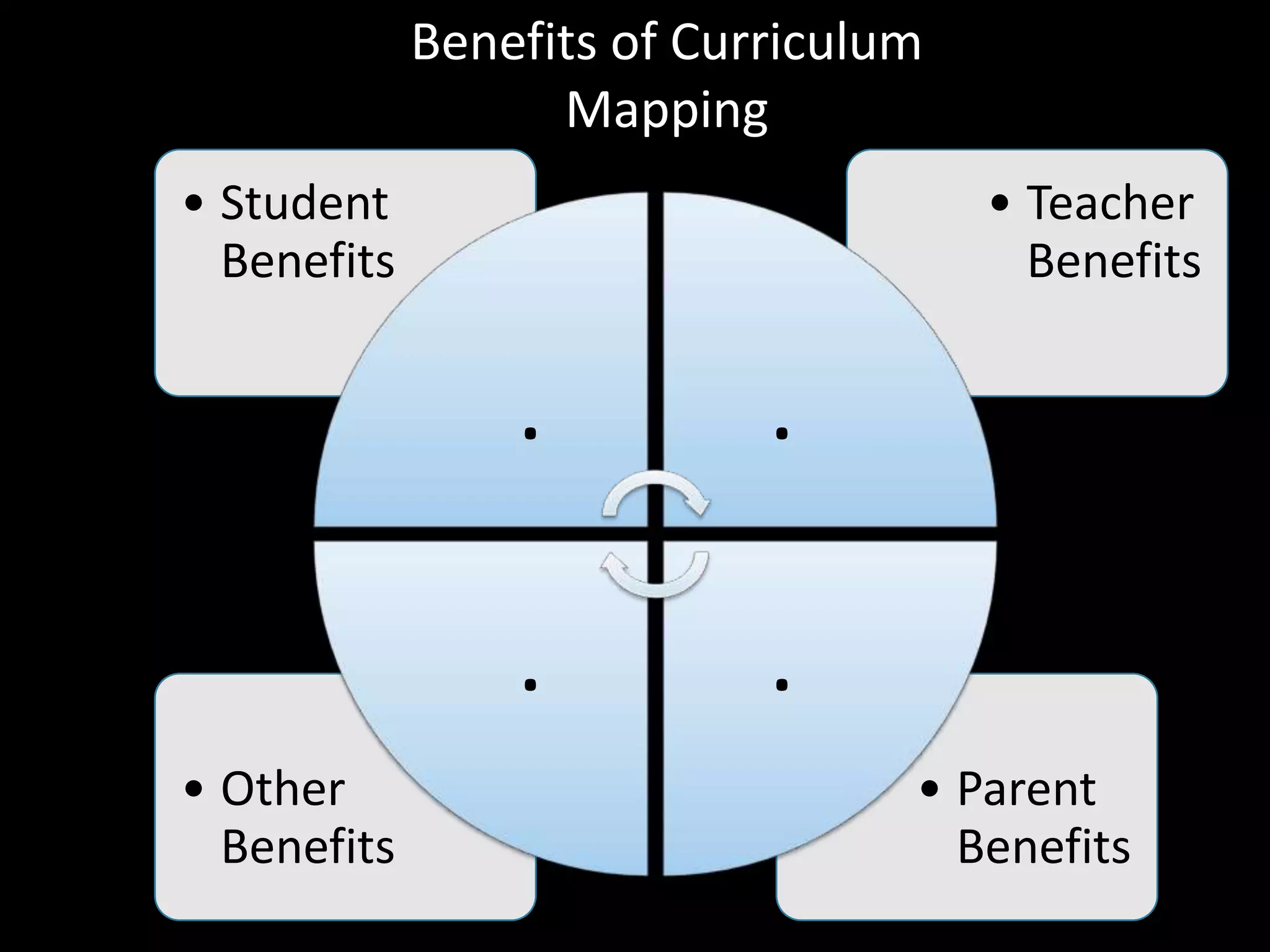


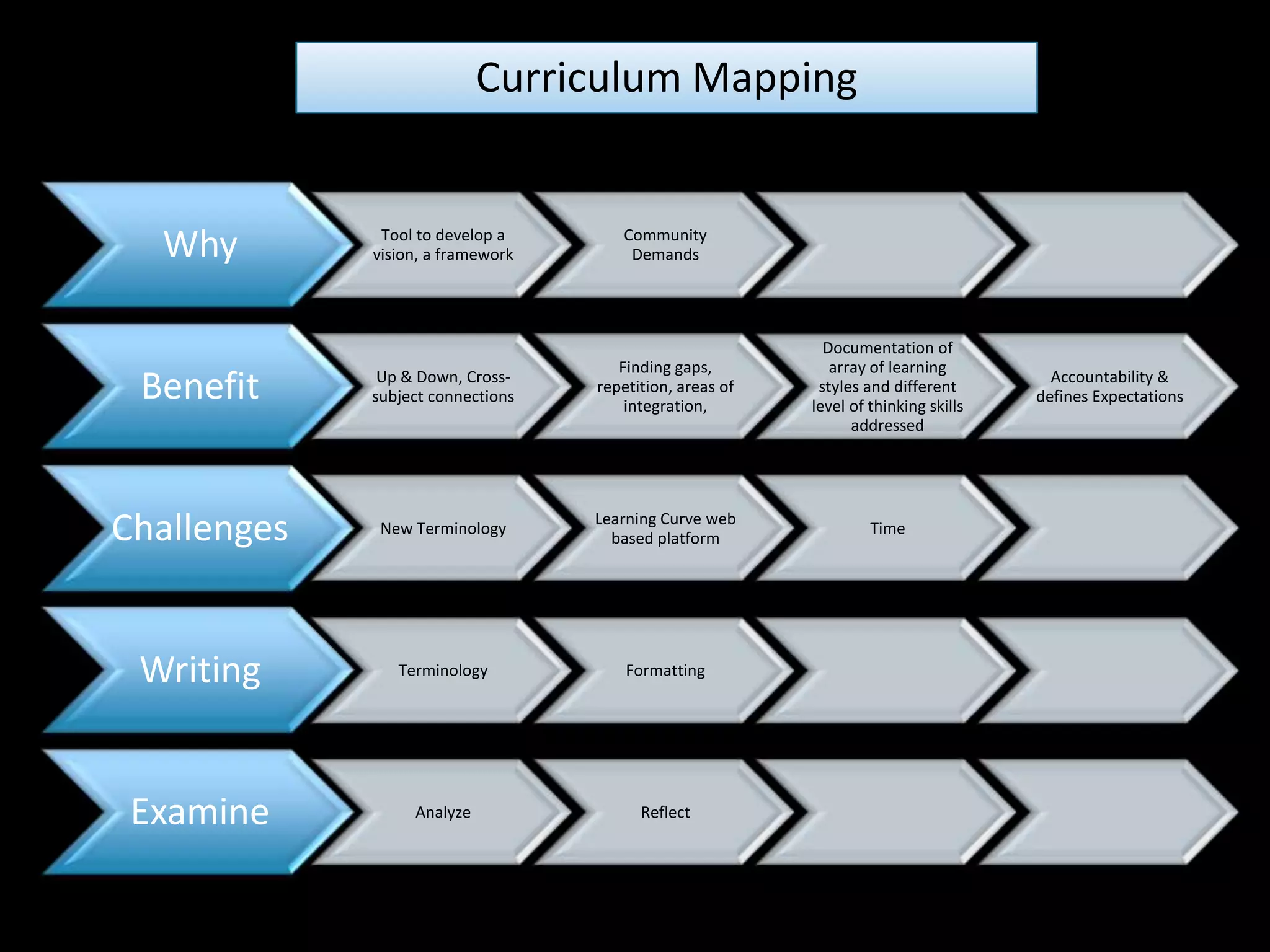
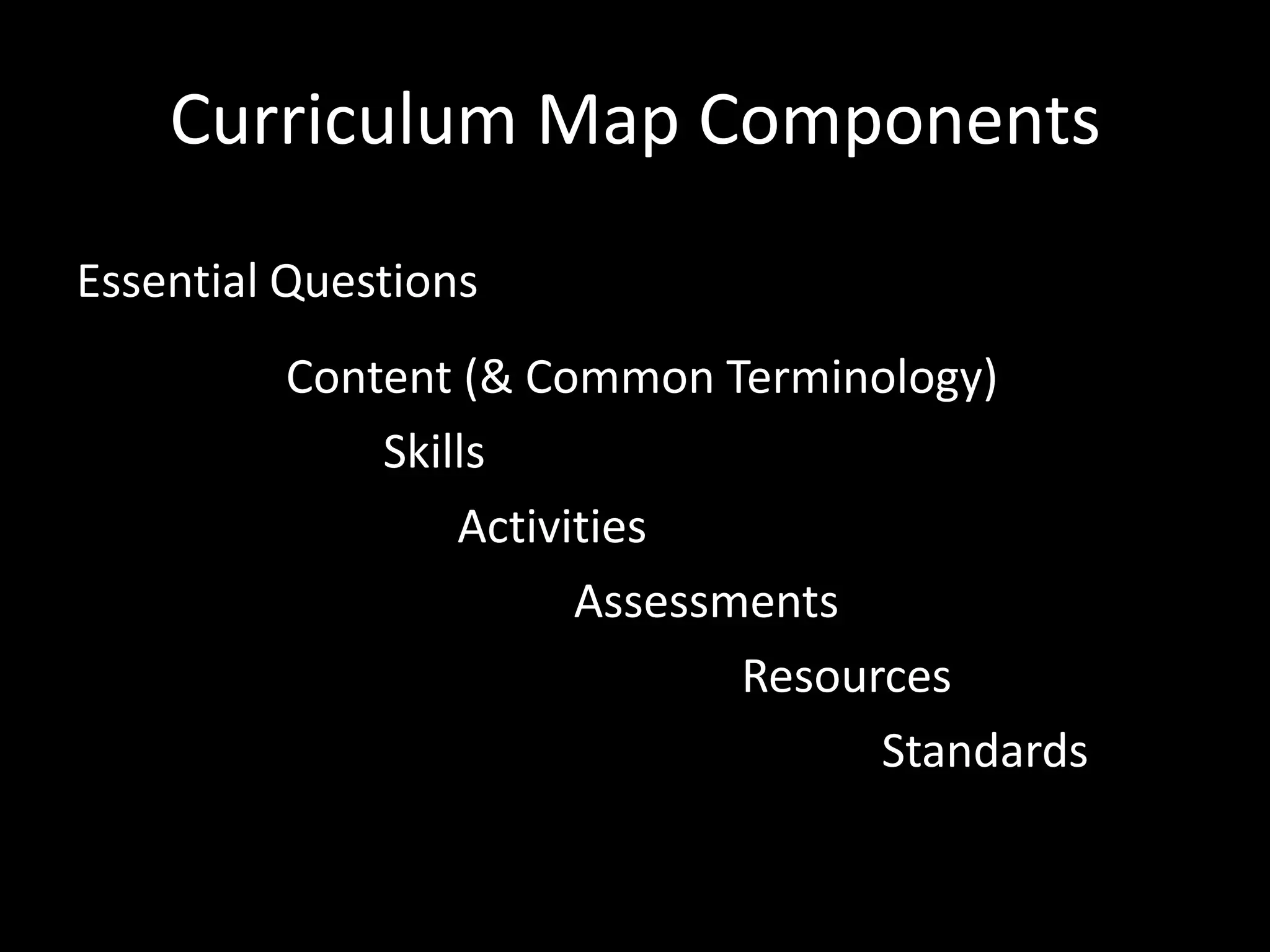
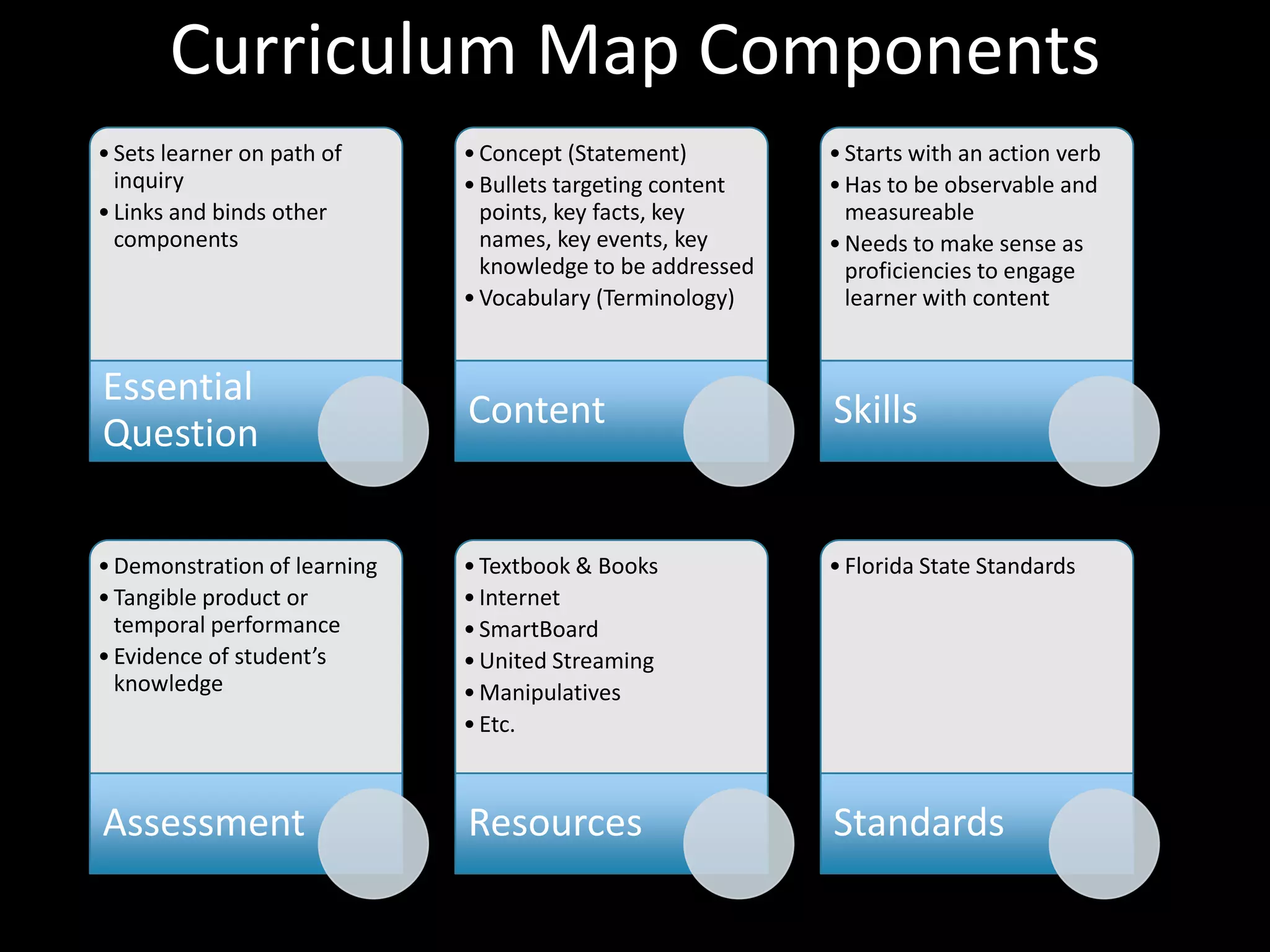



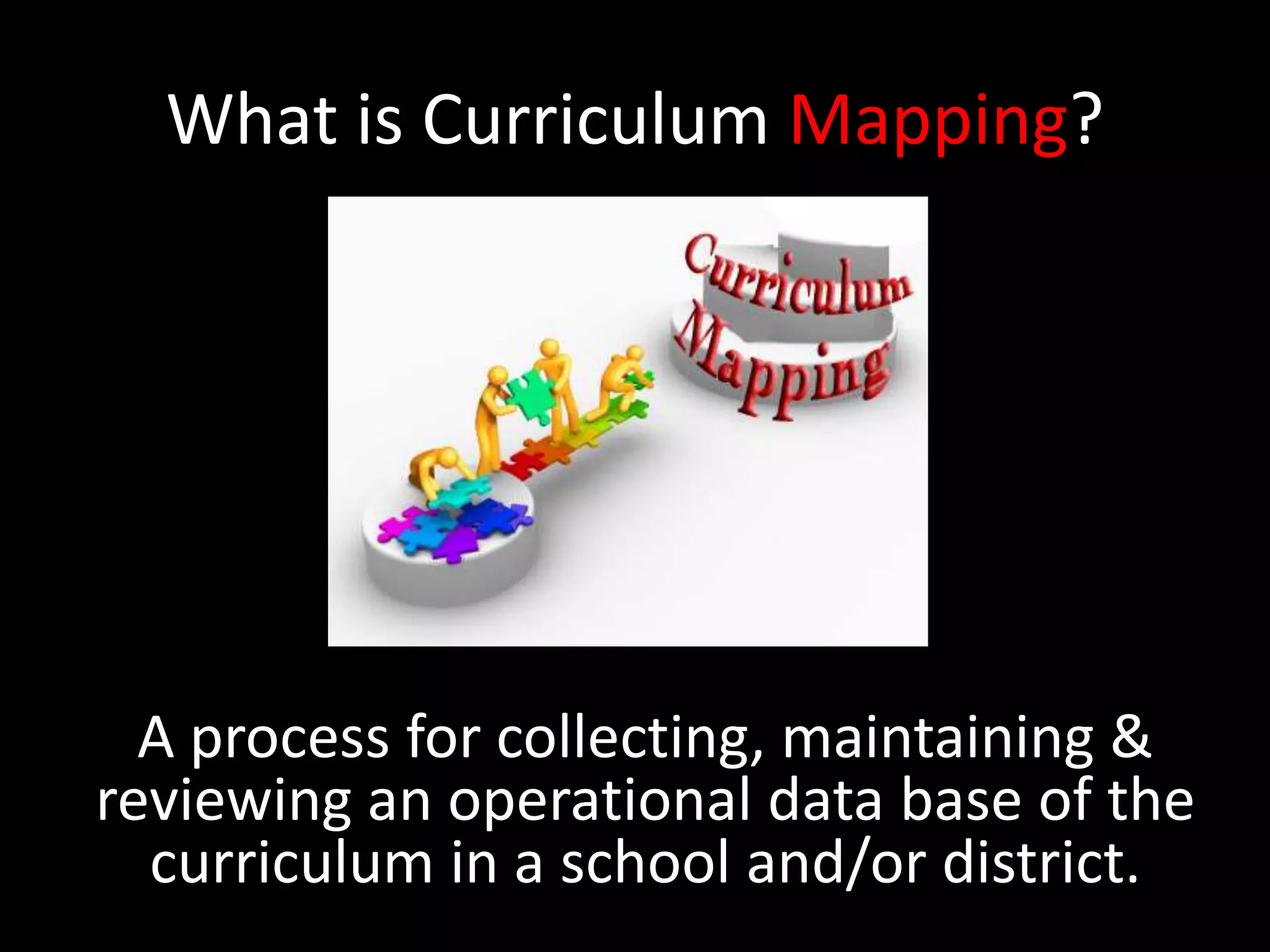
This document provides an introduction to curriculum mapping. It defines curriculum mapping as a process for collecting, maintaining, and reviewing an operational database of the curriculum in a school or district. Curriculum mapping involves documenting essential questions, content, skills, activities, assessments, and standards for different subjects and using this information to make instructional decisions and improve the path that students follow. The document discusses the benefits of curriculum mapping and provides examples of components to include in a curriculum map, such as essential questions, content, skills, and assessments. It also outlines a timeline for the curriculum mapping process.
An introduction to the presentation on curriculum mapping by Silvia Rosenthal Tolisano, dated January 29th, 2010.
The focus is on defining desired student behaviors in the classroom setting for engagement and learning.
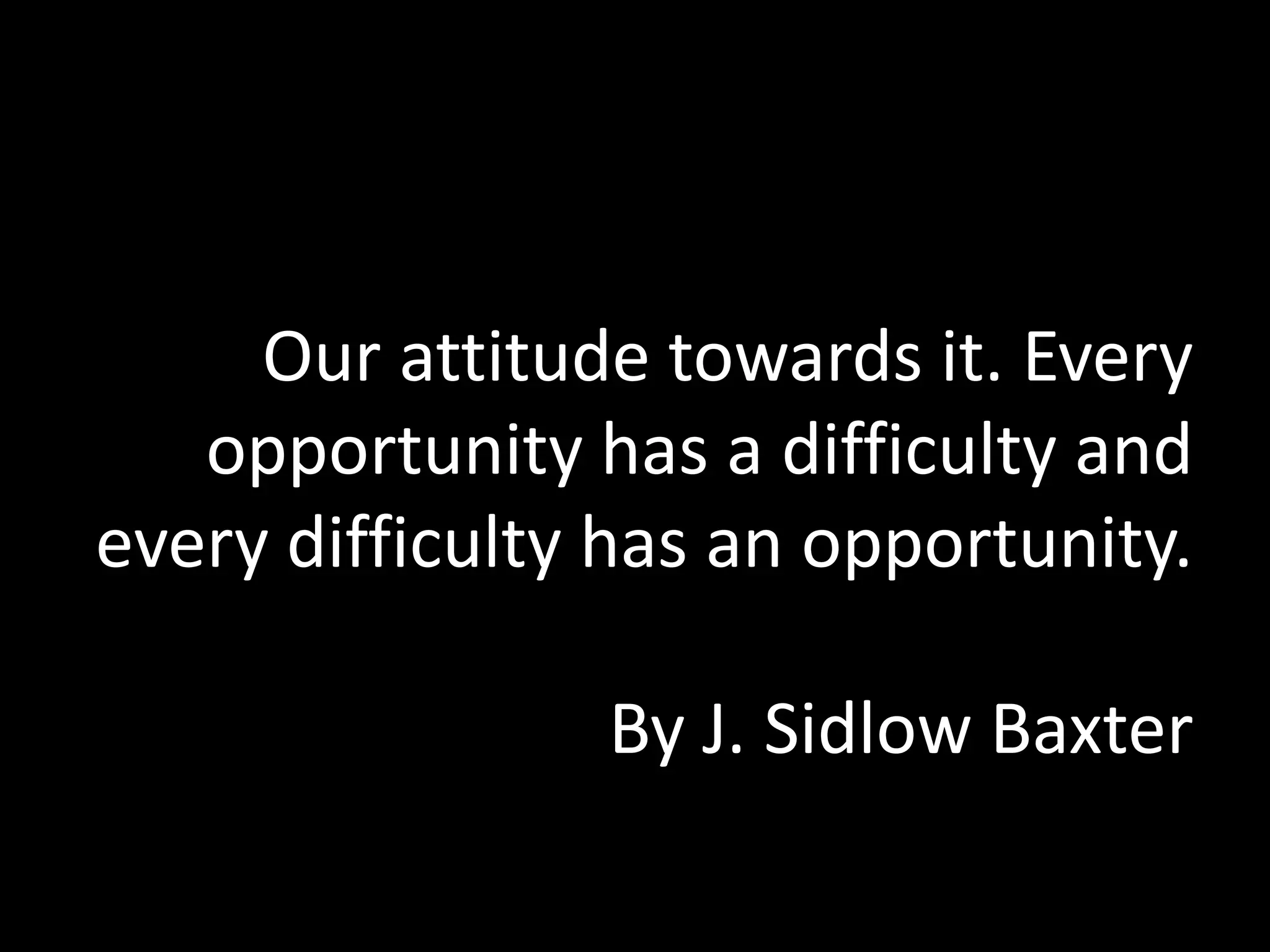
Discussion on the perception of obstacles as opportunities and the importance of attitude in overcoming challenges.
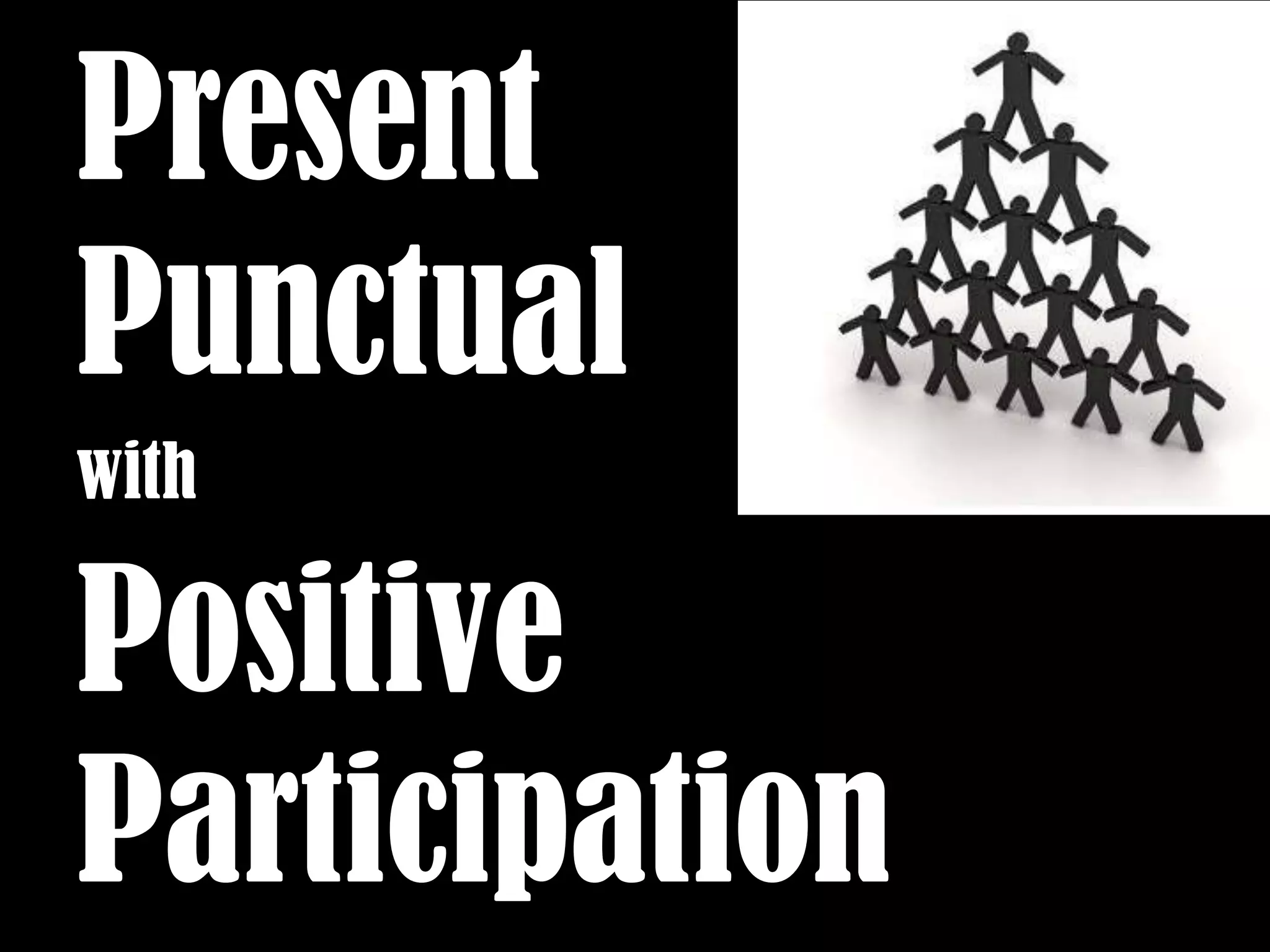
Indicators of student presence: Presence, punctuality, positive engagement, and participation are essential.
The importance of collaborative effort in curriculum planning and the choice to engage or step back.
Definition and process of curriculum mapping, how it aids instructional decisions, and improves student pathways.
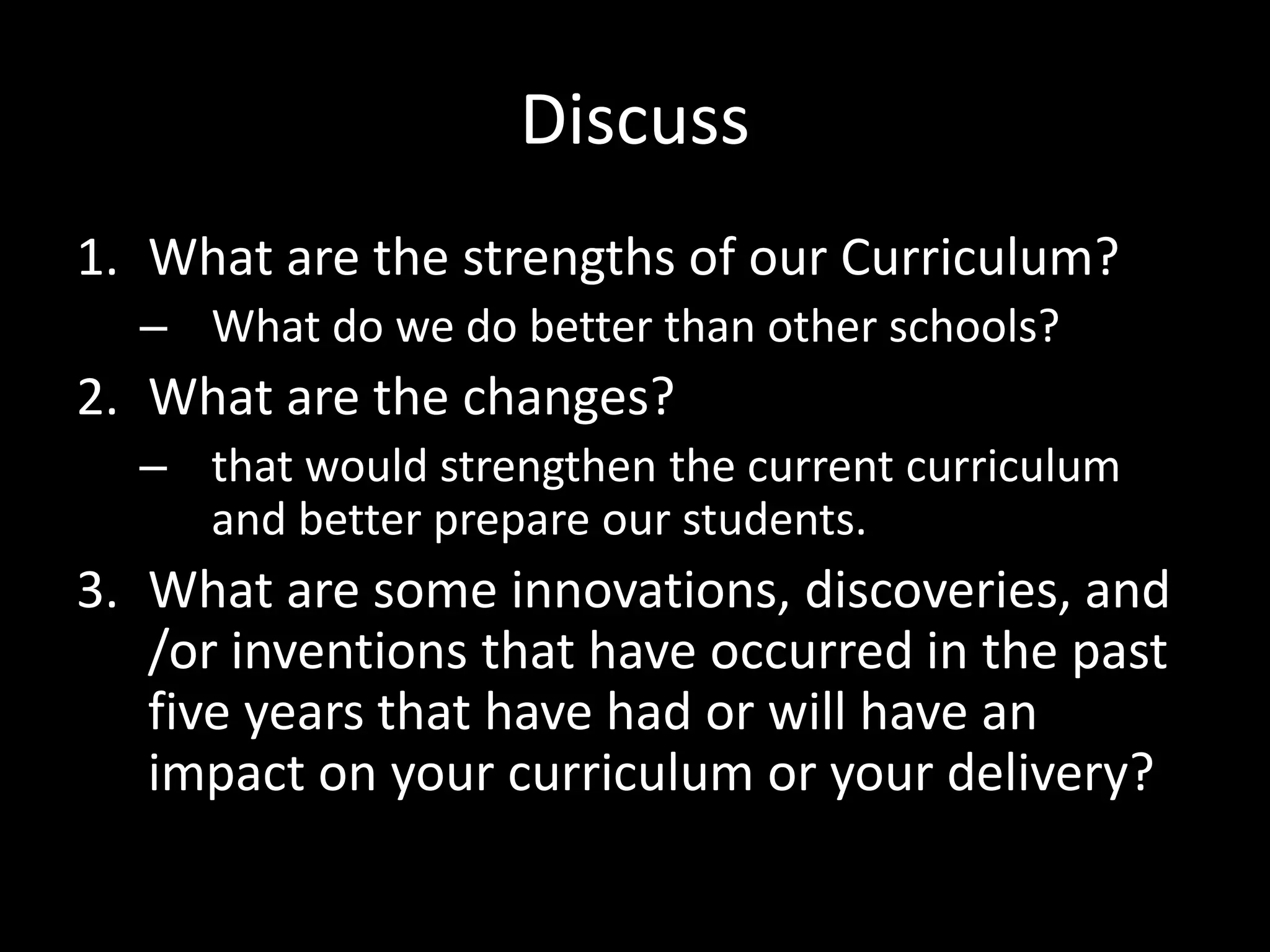
Discussion on curriculum strengths, potential changes, and innovations that can enhance educational delivery.
Benefits of curriculum mapping and collaborative efforts; defining a curriculum map and its essential components.
Exploration of the reasons for implementing curriculum mapping in relation to school goals.
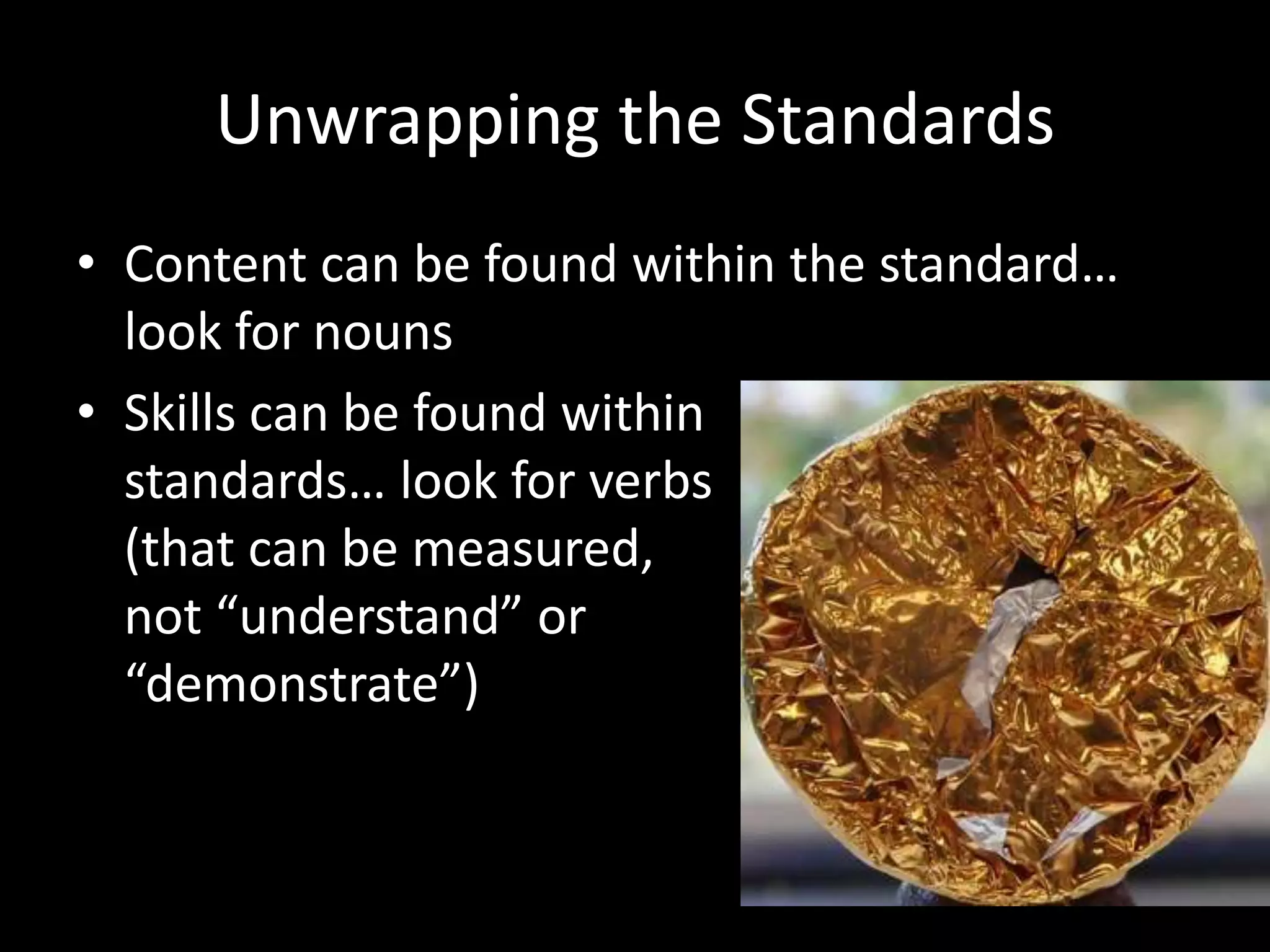
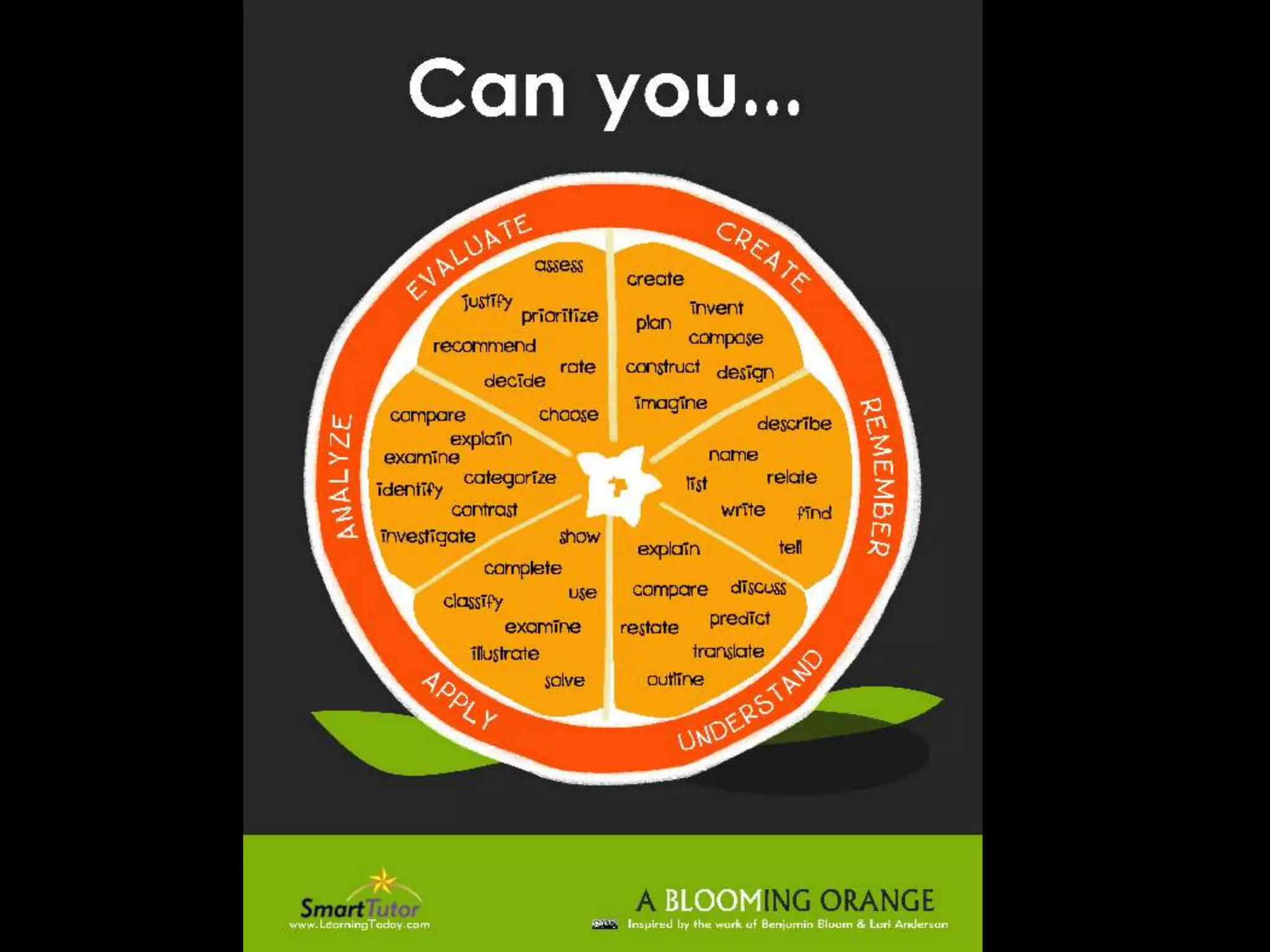
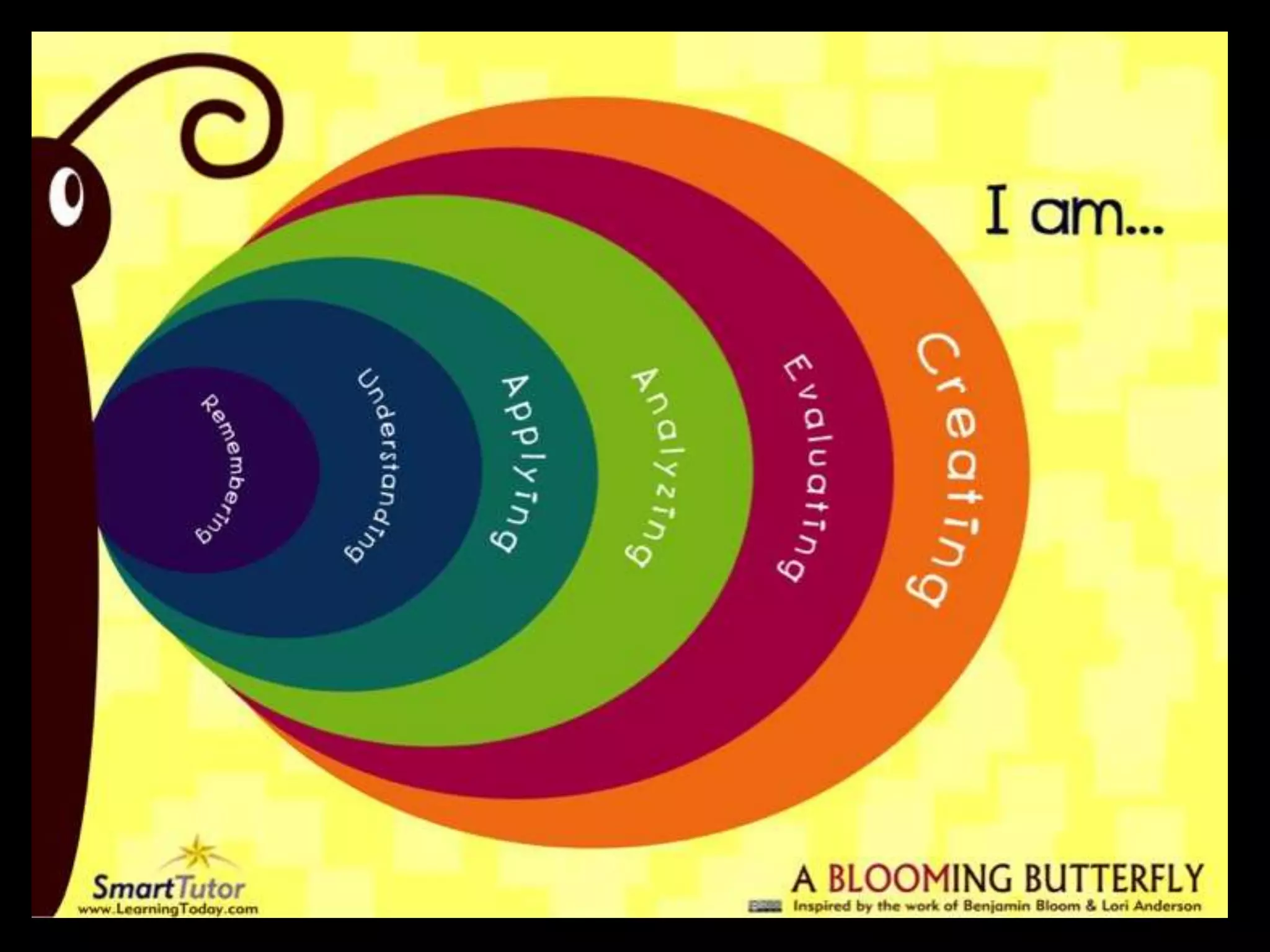
Components of a curriculum map including essential questions, content, skills, activities, assessments, resources, and standards.
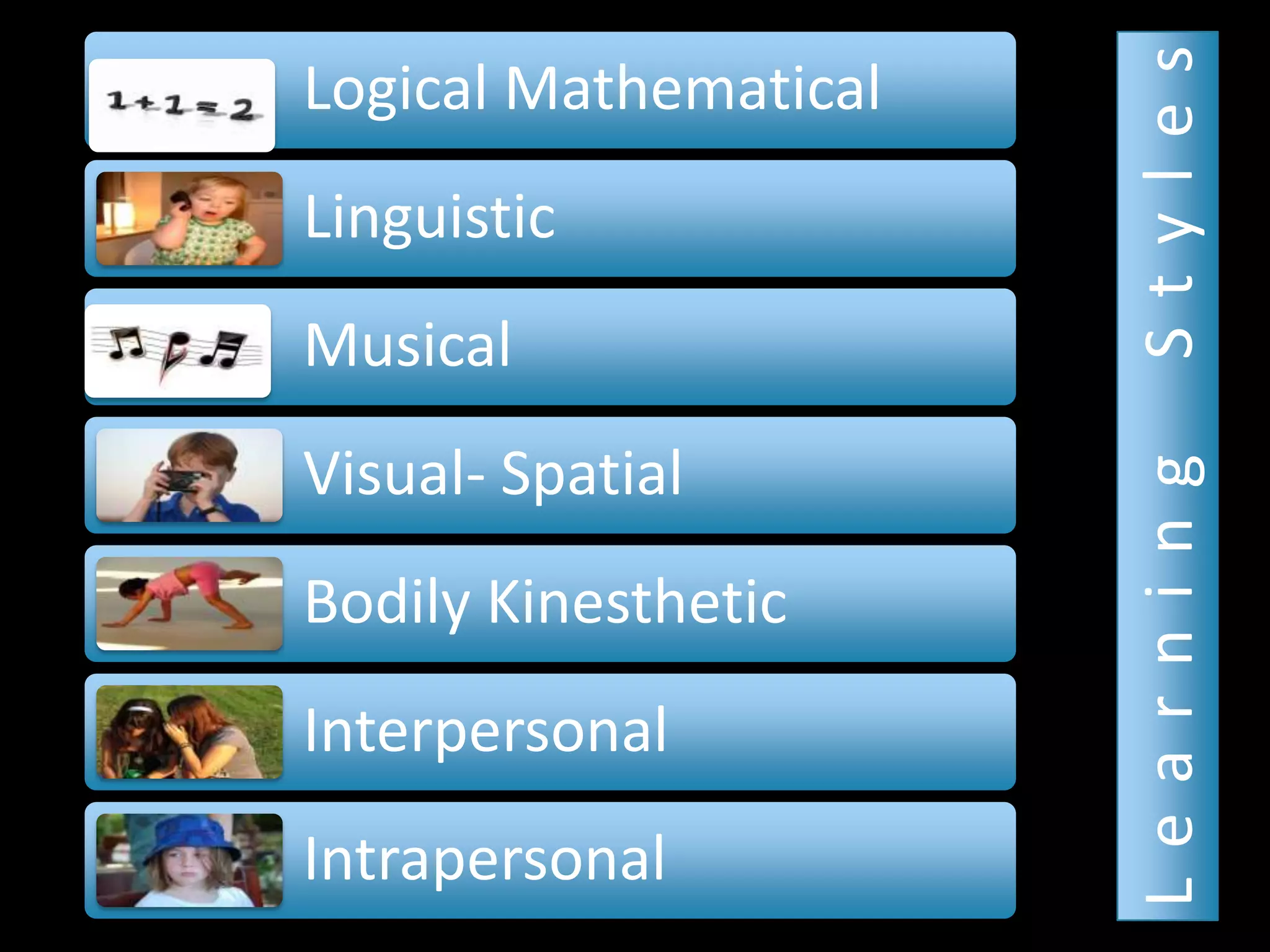
Focus on learning styles and critical non-negotiables along with BIG ideas in Language Arts.
Discussion of planning time for curriculum mapping along with a proposed timeline for implementation.
Links for additional resources regarding curriculum mapping workshops and credits for images used in the presentation.


