Types of Guidance and
their impact upon
effective performance
Learning Objectives
 Describe different types of guidance
 Evaluate critically these guidance
types
Recap of the stages of
learning.
 What are the three stages of
learning?
 Cognitive
 Associative
 Autonomous
 Identify the key features to each
stage.
Types of guidance.
 Visual guidance.
 Verbal guidance.
 Manual
 Mechanical guidance.
 http://www.peshare.co.uk/videos/view/2
Visual guidance.
 What forms of visual guidance might
be used in the process of learning?
 Demonstrations
 Video/film/TV/slow motion.
 Poster/slides
 Modify the display (e.g. target areas
on a badminton court for the over-
head clear)
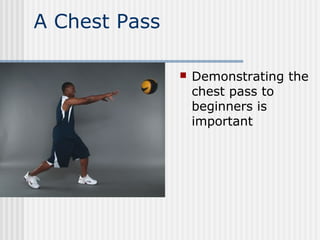
A Chest Pass
 Demonstrating the
chest pass to
beginners is
important
Visual Guidance
 Used at all stages of learning, which
phase of learning would it be especially
good?
 Cognitive Phase – Why?
At what stage of learning would
you use Visual Guidance?
 Usually the dominant sense, it helps form a
mental pic of what to learn
 Important that correct demo’s are used, why?
 Key aspects of the skill must be emphasised.
(selective attention)
 Demo’s can be combined with verbal guidance
Other Visual Guidance
 Wall Charts
 Pictures
 Diagrams
 These are all useful for highlighting technical
points particularly for what skills?
 Complex skills
 All not as good as dynamic visual aids
 Modifying a display – marking out an area in a
badminton court to serve to on a clipboard
Visual Guidance
 Modifying a court on a clipboard, will
reduce overload of information
 Bright coloured equipment can help
beginners focus on what’s important
Where else is visual
learning used?
 Modern day teams/ind now use
video analysis.
 Why?
 See where they can improve, and
set targets for themselves
 See a mental picture of what they
should do
Drawbacks to Visual
guidance
 Demo’s must be accurate (asking for
someone else to demo)
 Complex skills may contain too
much info to demo
 Static visual aids may not give
enough info + may not keep
learners attention
Verbal Guidance
 Frequently used
 Normally with Visual guidance (focus
on important parts)
What was important when you
received the verbal guidance?
 It is important that verbal guidance is:
 Clear/precise
 Relatively short
 Appropriate to the level of performer
 Not over used
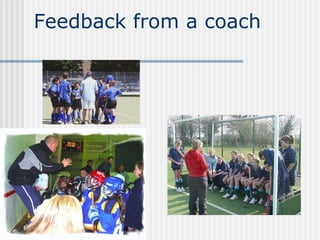
Feedback from a coach
Drawbacks to Verbal
guidance
 Teacher/Coach must be able to get the
info across – learners must be able to
relate info to the skill
 Amount of info must be limited
 Complex skills may be difficult to explain
– learner can become bored
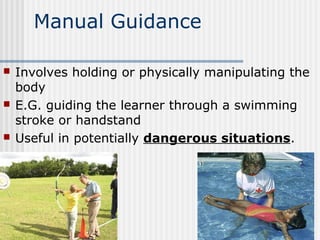
Manual Guidance
 Involves holding or physically manipulating the
body
 E.G. guiding the learner through a swimming
stroke or handstand
 Useful in potentially dangerous situations.
Mechanical guidance.
 Mechanical is similar to manual, but using
equipment instead of your body E.G. float in
swimming
 E.g. using a float in swimming, or a harness in
trampolining
 Learner can experience the spatial and timing of
the movement (kinaesthetic sense of part of the
movement)
 Can improve confidence of beginners
 Manual and mechanical guidance are useful in
the cognitive phase of learning
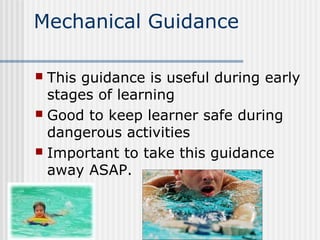
Mechanical Guidance
 This guidance is useful during early
stages of learning
 Good to keep learner safe during
dangerous activities
 Important to take this guidance
away ASAP.
Drawbacks to
mechanical/manual guidance
 Feel of movement is not the same
as doing it yourself
 Limited to early learners
 Eliminates mistakes, so no
correction is done
 Difficult with a large group
Task
 Connect the guidance types to the
best learning phase; explain why
you’ve chosen these.
 Complete Advantages and
Disadvantages sheet
FLASHCARDS
 A revision tool

PEShare.co.uk Shared Resource

  • 1.
    Types of Guidanceand their impact upon effective performance
  • 2.
    Learning Objectives  Describedifferent types of guidance  Evaluate critically these guidance types
  • 3.
    Recap of thestages of learning.  What are the three stages of learning?  Cognitive  Associative  Autonomous  Identify the key features to each stage.
  • 4.
    Types of guidance. Visual guidance.  Verbal guidance.  Manual  Mechanical guidance.  http://www.peshare.co.uk/videos/view/2
  • 5.
    Visual guidance.  Whatforms of visual guidance might be used in the process of learning?  Demonstrations  Video/film/TV/slow motion.  Poster/slides  Modify the display (e.g. target areas on a badminton court for the over- head clear)
  • 6.
    A Chest Pass Demonstrating the chest pass to beginners is important
  • 7.
    Visual Guidance  Usedat all stages of learning, which phase of learning would it be especially good?  Cognitive Phase – Why?
  • 8.
    At what stageof learning would you use Visual Guidance?  Usually the dominant sense, it helps form a mental pic of what to learn  Important that correct demo’s are used, why?  Key aspects of the skill must be emphasised. (selective attention)  Demo’s can be combined with verbal guidance
  • 9.
    Other Visual Guidance Wall Charts  Pictures  Diagrams  These are all useful for highlighting technical points particularly for what skills?  Complex skills  All not as good as dynamic visual aids  Modifying a display – marking out an area in a badminton court to serve to on a clipboard
  • 10.
    Visual Guidance  Modifyinga court on a clipboard, will reduce overload of information  Bright coloured equipment can help beginners focus on what’s important
  • 11.
    Where else isvisual learning used?  Modern day teams/ind now use video analysis.  Why?  See where they can improve, and set targets for themselves  See a mental picture of what they should do
  • 12.
    Drawbacks to Visual guidance Demo’s must be accurate (asking for someone else to demo)  Complex skills may contain too much info to demo  Static visual aids may not give enough info + may not keep learners attention
  • 13.
    Verbal Guidance  Frequentlyused  Normally with Visual guidance (focus on important parts)
  • 14.
    What was importantwhen you received the verbal guidance?  It is important that verbal guidance is:  Clear/precise  Relatively short  Appropriate to the level of performer  Not over used
  • 15.
  • 16.
    Drawbacks to Verbal guidance Teacher/Coach must be able to get the info across – learners must be able to relate info to the skill  Amount of info must be limited  Complex skills may be difficult to explain – learner can become bored
  • 17.
    Manual Guidance  Involvesholding or physically manipulating the body  E.G. guiding the learner through a swimming stroke or handstand  Useful in potentially dangerous situations.
  • 18.
    Mechanical guidance.  Mechanicalis similar to manual, but using equipment instead of your body E.G. float in swimming  E.g. using a float in swimming, or a harness in trampolining  Learner can experience the spatial and timing of the movement (kinaesthetic sense of part of the movement)  Can improve confidence of beginners  Manual and mechanical guidance are useful in the cognitive phase of learning
  • 19.
    Mechanical Guidance  Thisguidance is useful during early stages of learning  Good to keep learner safe during dangerous activities  Important to take this guidance away ASAP.
  • 20.
    Drawbacks to mechanical/manual guidance Feel of movement is not the same as doing it yourself  Limited to early learners  Eliminates mistakes, so no correction is done  Difficult with a large group
  • 21.
    Task  Connect theguidance types to the best learning phase; explain why you’ve chosen these.  Complete Advantages and Disadvantages sheet
  • 22.