REVIEW THE PREVIOUS
LESSON
DEAL OR NO DEAL
Say “ Deal “ if the statement is correct and “ No Deal” if
the statement is incorrect”
1. Being able to create friendship and new
attachment is critical in the development of
adolescents as they transcend to young adulthood.
2. Mini-surveys are carefully focused on a specific
topic. It contains only five to ten questions.
DEAL OR NO DEAL
Say “ Deal “ if the statement is correct and “ No Deal” if
the statement is incorrect”.
3. A mini-survey can be completed in three to seven
weeks compared to large surveys that can take a year
before the whole process is completed and the results
are analyzed .
4. Use short, simple sentences of less than sixteen
words. However, sensitive questions may require a
louder voice
DEAL OR NO DEAL
Say “ Deal “ if the statement is correct and “ No Deal” if
the statement is incorrect”.
5. Filipino relationships are observed in the family,
school, community, and other agencies.
PICTURE ANALYSIS
What is the picture all about?
PICTURE ANALYSIS
What is the picture all about?
PICTURE ANALYSIS
What is the picture all about?
FAMILY
STRUCTURES
AND LEGACIES
FAMIL
Y
• Family comes from the Latin word familia
which means group of people living in the
household. Family could be related by blood,
by birth, or by other relationship.
• Family is the basic unit of society. It is the
smallest organization in the community. It is
said to be a group of individual living together
in one household.
FAMIL
Y
•Family comes in different forms. It could
vary from one family to another. It is
usually composed of mother, father and
children; some other includes
grandparents, aunts, uncles, cousins, and
other relatives.
TYPES OF FAMILY STRUCTURES
Nuclear Family
•It is also known as “conjugal” or
“traditional” family, consisting of
married couples and their
offspring.
•Example: Mother, father, and
EXTENDED FAMILY
• This type of family includes all relatives in
proximity, such as grandparents, aunts, uncles,
and cousins. These relatives typically live
together, and all share daily household duties.
• Example: A family living together with mother,
father, children, grandparents, aunts, uncles,
and other relatives in one roof
SINGLE PARENT
FAMILY
• This family type includes one parent and
their children only. A single parent family
could be the result of a divorce, the death of
one parent, or even a single parent adoption.
• Example: Father with his children or a mother
with her children living in one household
STEP
FAMILY
• A family where the parents have divorced and
remarried, bringing children from other
unions together to form a new nuclear family.
It is also known as “blended” family because
two families were combined.
• Example: Mother, children, stepfather, and his
kids Father, children, stepmother, and her kids
FOSTER FAMILY
•A family includes parent who serves as
a temporary guardian for one or more
children to whom they may or may not
be biologically related.
•Example: Parents, children, foster child
ADOPTED/ADOPTIVE FAMILY
•A family wherein parents may adopt a
child to whom they share no blood
relationship, or one parent may. Adopt
the child of the other parent.
•Example: Parents (mother and
father), adopted child
BI-RACIAL OR MULTI-RACIAL FAMILY
•A family wherein parents are
from different races
•Example: Filipina
mother, American
father, children
TRANS-RACIAL ADOPTIVE FAMILY
•A family wherein parents
adopted a child with a different
race
•Example: American
parents, adopted Filipino
CONDITIONALLY SEPARATED FAMILY
• A family wherein one of the family members is
conditionally separated from the others. This
separation may be due to their job or
employment or could be due to
hospitalization.
• Example: A family living together except for
the father working abroad or a family living
together except for the eldest child serving
CHILDLESS FAMILY
• Married couple
without children
• Example: Mother and
father only
GAY OR LESBIAN FAMILY
•A family wherein one or both
parents have a different sexual
orientation and part of the LGBT
community
•Example: A lesbian mother and
her children with a gay father
MIGRANT
FAMILY
•It is a family who settles together in
different place; it could be from one
place to another due to some
circumstances such as the father’s job.
•Example: A family who migrated from a
place because the father is a military
officer
IMMIGRANT FAMILY
• A family wherein one or both parents are
already an immigrant of other country. Their
children may be or may not be an immigrant.
• Example: Santos family whose mom is already
an immigrant of Canada their mother is
already a Canadian citizen but the rest of the
family members are not.
FAMILY
•The most important people in the
lives of young children are their
parents.
•There are also people that act parent roles
in caring and protecting children’s overall
well- being.
•They are known as “guardians”.
•Each of us have legacies passed from
our ancestors, from generation to
generation
such as culture, traditions, and customs.
No matter who we are, where we live, we
have one thing in common-heritage.
•This heritage is transferred to us by our
parents whether good or bad. This
heritage is also called legacy, which
could be passed to us socially,
• Transferring positive legacy to children is a delicate
and important task of adults in the family. It helps
dictate the future progress and development of
a child.
• It is important to remember that passing on a spiritual,
emotional, and social legacy is a process, not an
event. If parents do not intentionally pass a legacy
consistent to their beliefs, culture will pass along its
own, often leading to a negative end. Parents are
responsible on the process; God is responsible for
the product.
THE EMOTIONAL LEGACY
A strong emotional legacy:
•provides a safe environment in
which deep emotional roots can
grow
• fosters confidence through
stability
THE EMOTIONAL LEGACY
•nurtures a strong sense of
positive identity
• creates a “resting place” for the
soul
• demonstrates unconditional
love
THE SOCIAL LEGACY
Key building blocks of children’s social legacy include:
• respect, beginning with themselves and working
out to other people
• responsibility, fostered by respect for themselves,
that is cultivated by assigning children duties within
the family, making them accountable for their
actions, and giving them room to make wrong
choices once in a while
THE SOCIAL LEGACY
• unconditional love and acceptance by their parents,
combined with conditional acceptance when the
parents discipline for bad behavior or actions
• the setting of social boundaries concerning how to
relate to God, authority, peers, the environment and
siblings
• rules that are given within a loving relationship
THE SPIRITUAL LEGACY
• The Spiritual Legacy is the least in priority, but that is
a mistake. As spiritual beings, we adopt attitudes and
beliefs about spiritual matters from one person or
another. Parents need to take the initiative and present
faith to their children.
• We must recognize that passing a spiritual legacy
means more than encouraging our children to
attend church, as important as that is.
THE SPIRITUAL LEGACY
• The church is there to support parents in raising
their children. But it cannot do the raising; only
parents can.
• Parents are primary in spiritual upbringing.
Children, perceive God the way they perceive their
parents. If parents are loving, affirming, forgiving
and yet strong in what they believe, children will
think of God that way.
Personal-Development_module-7  FAMILY STRUCTURES.pptx

Personal-Development_module-7 FAMILY STRUCTURES.pptx

  • 1.
  • 2.
    DEAL OR NODEAL Say “ Deal “ if the statement is correct and “ No Deal” if the statement is incorrect” 1. Being able to create friendship and new attachment is critical in the development of adolescents as they transcend to young adulthood. 2. Mini-surveys are carefully focused on a specific topic. It contains only five to ten questions.
  • 3.
    DEAL OR NODEAL Say “ Deal “ if the statement is correct and “ No Deal” if the statement is incorrect”. 3. A mini-survey can be completed in three to seven weeks compared to large surveys that can take a year before the whole process is completed and the results are analyzed . 4. Use short, simple sentences of less than sixteen words. However, sensitive questions may require a louder voice
  • 4.
    DEAL OR NODEAL Say “ Deal “ if the statement is correct and “ No Deal” if the statement is incorrect”. 5. Filipino relationships are observed in the family, school, community, and other agencies.
  • 5.
    PICTURE ANALYSIS What isthe picture all about?
  • 6.
    PICTURE ANALYSIS What isthe picture all about?
  • 7.
    PICTURE ANALYSIS What isthe picture all about?
  • 8.
  • 9.
    FAMIL Y • Family comesfrom the Latin word familia which means group of people living in the household. Family could be related by blood, by birth, or by other relationship. • Family is the basic unit of society. It is the smallest organization in the community. It is said to be a group of individual living together in one household.
  • 10.
    FAMIL Y •Family comes indifferent forms. It could vary from one family to another. It is usually composed of mother, father and children; some other includes grandparents, aunts, uncles, cousins, and other relatives.
  • 11.
    TYPES OF FAMILYSTRUCTURES Nuclear Family •It is also known as “conjugal” or “traditional” family, consisting of married couples and their offspring. •Example: Mother, father, and
  • 12.
    EXTENDED FAMILY • Thistype of family includes all relatives in proximity, such as grandparents, aunts, uncles, and cousins. These relatives typically live together, and all share daily household duties. • Example: A family living together with mother, father, children, grandparents, aunts, uncles, and other relatives in one roof
  • 13.
    SINGLE PARENT FAMILY • Thisfamily type includes one parent and their children only. A single parent family could be the result of a divorce, the death of one parent, or even a single parent adoption. • Example: Father with his children or a mother with her children living in one household
  • 14.
    STEP FAMILY • A familywhere the parents have divorced and remarried, bringing children from other unions together to form a new nuclear family. It is also known as “blended” family because two families were combined. • Example: Mother, children, stepfather, and his kids Father, children, stepmother, and her kids
  • 15.
    FOSTER FAMILY •A familyincludes parent who serves as a temporary guardian for one or more children to whom they may or may not be biologically related. •Example: Parents, children, foster child
  • 16.
    ADOPTED/ADOPTIVE FAMILY •A familywherein parents may adopt a child to whom they share no blood relationship, or one parent may. Adopt the child of the other parent. •Example: Parents (mother and father), adopted child
  • 17.
    BI-RACIAL OR MULTI-RACIALFAMILY •A family wherein parents are from different races •Example: Filipina mother, American father, children
  • 18.
    TRANS-RACIAL ADOPTIVE FAMILY •Afamily wherein parents adopted a child with a different race •Example: American parents, adopted Filipino
  • 19.
    CONDITIONALLY SEPARATED FAMILY •A family wherein one of the family members is conditionally separated from the others. This separation may be due to their job or employment or could be due to hospitalization. • Example: A family living together except for the father working abroad or a family living together except for the eldest child serving
  • 20.
    CHILDLESS FAMILY • Marriedcouple without children • Example: Mother and father only
  • 21.
    GAY OR LESBIANFAMILY •A family wherein one or both parents have a different sexual orientation and part of the LGBT community •Example: A lesbian mother and her children with a gay father
  • 22.
    MIGRANT FAMILY •It is afamily who settles together in different place; it could be from one place to another due to some circumstances such as the father’s job. •Example: A family who migrated from a place because the father is a military officer
  • 23.
    IMMIGRANT FAMILY • Afamily wherein one or both parents are already an immigrant of other country. Their children may be or may not be an immigrant. • Example: Santos family whose mom is already an immigrant of Canada their mother is already a Canadian citizen but the rest of the family members are not.
  • 24.
    FAMILY •The most importantpeople in the lives of young children are their parents. •There are also people that act parent roles in caring and protecting children’s overall well- being. •They are known as “guardians”.
  • 25.
    •Each of ushave legacies passed from our ancestors, from generation to generation such as culture, traditions, and customs. No matter who we are, where we live, we have one thing in common-heritage. •This heritage is transferred to us by our parents whether good or bad. This heritage is also called legacy, which could be passed to us socially,
  • 26.
    • Transferring positivelegacy to children is a delicate and important task of adults in the family. It helps dictate the future progress and development of a child. • It is important to remember that passing on a spiritual, emotional, and social legacy is a process, not an event. If parents do not intentionally pass a legacy consistent to their beliefs, culture will pass along its own, often leading to a negative end. Parents are responsible on the process; God is responsible for the product.
  • 27.
    THE EMOTIONAL LEGACY Astrong emotional legacy: •provides a safe environment in which deep emotional roots can grow • fosters confidence through stability
  • 28.
    THE EMOTIONAL LEGACY •nurturesa strong sense of positive identity • creates a “resting place” for the soul • demonstrates unconditional love
  • 29.
    THE SOCIAL LEGACY Keybuilding blocks of children’s social legacy include: • respect, beginning with themselves and working out to other people • responsibility, fostered by respect for themselves, that is cultivated by assigning children duties within the family, making them accountable for their actions, and giving them room to make wrong choices once in a while
  • 30.
    THE SOCIAL LEGACY •unconditional love and acceptance by their parents, combined with conditional acceptance when the parents discipline for bad behavior or actions • the setting of social boundaries concerning how to relate to God, authority, peers, the environment and siblings • rules that are given within a loving relationship
  • 31.
    THE SPIRITUAL LEGACY •The Spiritual Legacy is the least in priority, but that is a mistake. As spiritual beings, we adopt attitudes and beliefs about spiritual matters from one person or another. Parents need to take the initiative and present faith to their children. • We must recognize that passing a spiritual legacy means more than encouraging our children to attend church, as important as that is.
  • 32.
    THE SPIRITUAL LEGACY •The church is there to support parents in raising their children. But it cannot do the raising; only parents can. • Parents are primary in spiritual upbringing. Children, perceive God the way they perceive their parents. If parents are loving, affirming, forgiving and yet strong in what they believe, children will think of God that way.

Editor's Notes

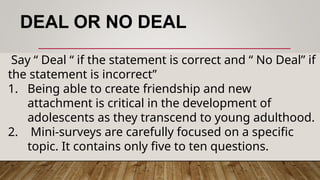
  • #5 This is a family tree. It is useful tool for gathering information about a person’s family.
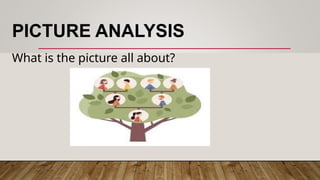
  • #6 This is all about extended family. A family living together with mother, father, children, grandparents, aunts, uncles, and other relatives in one roof
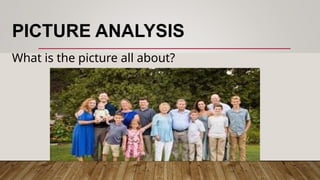
  • #7 This is single parent family. a mother with her children living in one household
  • #8 Our next topic is all about Family Structures and legacies. Do you have any idea when you hear the word,” Family”. Yes, very good. Another volunteer pls. yes, excellent . How about the word family structures? Family structures means what makes a family . How about legacy? LEGACY MEANSTHE GOOD WORKS ,GOOD ACCOMPLISHMENTS THAT YOU WILL PASS FROM ONE GENERATION TO ANOTHER GENERATION. EXAMPLE: IF YOUR GRANDMOTHER GAVE YOU 3 HECTARES OF LOT. YOU WILL REMEMBER IT. Another if your grandmother taught you good deeds and you are portraying it , that is a legacy.
  • #9 Do you think we consider husband and wife as family? The student will answer. No, family must be composed of mother , father and a child . Remember : Family consists ot the people who support and love you, and the people you can confide and trust.
  • #10 This means that this group of persons will love you unconditionally( they will accept you even in good or worst )
  • #11 Example: me and my husband roger together with our daughter alyssa.
  • #12 Don’t forget that extended family includes not only parents and children but also other RELATIVES.
  • #13 A SINGLE PARENT IS SOMEONE WHO IS UNMARRIED, WIDOWED OR DIVORCED AND NOT MARRIED. This can be headed by a mother, father, uncle, grandparent or aunt.
  • #14 Step families can also include children from the current relationship.
  • #15 It is a family that takes the child or children for temporary period of time.
  • #16 Means: where the parents have adopted a child who is not biologically related( hindi kadugo) . This happens because either husband or wife is suffering from illnesses wherein they cannot bear a child( baog) or my problema sa semilya or sa ovary ng babae.
  • #17 Different races means it is a categorization of humans based on shared physical or social qualities . ( Example: American- white skinned, Filipino- TAN SKIN , AFRICAN- BLACK SKINNED