Peer Assessment
Peer Assessment
• What is it?
  – Assessing the work of others against an official
    assessment criteria.
• Why do it?
  – To give others useful feedback and hints on how
    they can improve their work
  – To help ourselves understand more about how our
    work is marked and reflect on our own work
  – To get ideas on how to improve our own work
Design Cycle
• We have just completed the Analysis stage of
  the Design Cycle.
• This included:
  – An introduction to the problem/task/Unit Q
  – Researching answers to your guiding questions
  – A Design Brief
  – A Design Specification
  – A Test Plan
  – An evaluation of your performance so far
Assessing this work
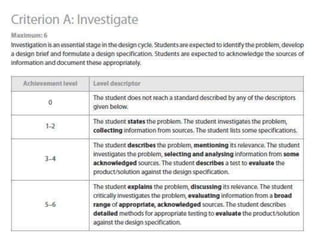
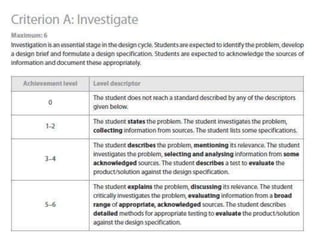
• We need to assess this work against the
  Assessment Criteria, which is…
The Terminology
• Pay close attention to the words in bold on
  the criteria. They mark the difference between
  the levels that are awarded…
Your First Task
• You need to get into pairs
• You have 25 minutes to assess someone else’s
  Analysis work that I will provide you with
• You need to make sure you are very strict with
  the marking against the criteria
• You need to make sure the student has included
  all the different sections of work and that nothing
  is missing
• Fill in the feedback sheet I have linked to on the
  blog
Task Two: Feedback
• We will now feed back to the students who’s
  work you have marked in a class discussion.
• Discuss the level you have given and reason
  why you have given that level.
• Any suggestions for improvements?
• Anything you think the person did very well?
Task Three
• Your next task is to consider your own work and
  identify some areas for improvement.
• You have been studying the Assessment Criteria
  throughout this lesson and have hopefully considered
  whether your own work meets the highest level of this
  criteria.
• It is unlikely that everyone in this class has already
  achieved a level 6 for this, so take 10 minutes to
  consider what level you consider your work to be and
  then list some ideas for improvements that can raise
  your work up a level.
Homework
• Carry out the improvements you have
  suggested in the last activity in order to
  improve your work and raise its level.

Peer assessment

  • 1.
  • 2.
    Peer Assessment • Whatis it? – Assessing the work of others against an official assessment criteria. • Why do it? – To give others useful feedback and hints on how they can improve their work – To help ourselves understand more about how our work is marked and reflect on our own work – To get ideas on how to improve our own work
  • 3.
    Design Cycle • Wehave just completed the Analysis stage of the Design Cycle. • This included: – An introduction to the problem/task/Unit Q – Researching answers to your guiding questions – A Design Brief – A Design Specification – A Test Plan – An evaluation of your performance so far
  • 4.
    Assessing this work •We need to assess this work against the Assessment Criteria, which is…
  • 5.
    The Terminology • Payclose attention to the words in bold on the criteria. They mark the difference between the levels that are awarded…
  • 6.
    Your First Task •You need to get into pairs • You have 25 minutes to assess someone else’s Analysis work that I will provide you with • You need to make sure you are very strict with the marking against the criteria • You need to make sure the student has included all the different sections of work and that nothing is missing • Fill in the feedback sheet I have linked to on the blog
  • 7.
    Task Two: Feedback •We will now feed back to the students who’s work you have marked in a class discussion. • Discuss the level you have given and reason why you have given that level. • Any suggestions for improvements? • Anything you think the person did very well?
  • 8.
    Task Three • Yournext task is to consider your own work and identify some areas for improvement. • You have been studying the Assessment Criteria throughout this lesson and have hopefully considered whether your own work meets the highest level of this criteria. • It is unlikely that everyone in this class has already achieved a level 6 for this, so take 10 minutes to consider what level you consider your work to be and then list some ideas for improvements that can raise your work up a level.
  • 9.
    Homework • Carry outthe improvements you have suggested in the last activity in order to improve your work and raise its level.