PEDIATRIC PERIOPERATIVE
FLUID MANAGEMENT
PRESENTERS: Machera
Abel
FACILITATOR: Dr. Lukansola
Outline
• Introduction
• Types of fluid
• Preoperative fasting
• Preoperative fluid deficit
• Intraoperative fluid
• Postoperative fluid management
• Journal presentation
Introduction
• Intravenous fluid therapy is an integrated and lifesaving part of the
treatment of patients undergoing surgery.
• Perioperative fluid therapy It is the administration of intravenous
fluids before, during, and after surgery at the right time and in the
right amounts.
• The goal of perioperative intravenous fluid therapy is to maintain or
restore circulation with an adequate fluid and electrolyte balance,
thereby creating the preconditions for a favourable outcome for the
patient.
Body fluid composition
• Body fluid compartments consist of intracellular and extracellular
compartments, with the extracellular further divided into interstitial
and plasma volumes.
• IV free water distributes evenly across total body water, isotonic
crystalloids stay in the extracellular compartment, and colloid
solutions expand plasma volume when the endothelial glycocalyx is
intact.
• In fetuses and premature newborns, most of the total body water is
extracellular (60-70% of body weight), decreasing to 40% in term
babies and 30% in older infants.
• Electrolyte composition remains consistent throughout life, but the
size of fluid compartments changes with age.
Goals of Perioperative Fluid management
i. Maintain or correct fluid balance (dehydration, hypovolemia)
ii. Maintain or correct plasma constitution (electrolytes)
iii. Secure sufficient circulation (in combination with vasoactive and/or
cardioactive substances)
iv. Secure sufficient oxygen delivery to organs (in combination with
oxygen therapy)
Principles of fluid therapy
i. Replace losses or deficits
ii. Continue Maintenance
iii. Anticipate additional on-going losses.
iv. Anticipate excess fluid intake
TYPES OF FLUIDS
i. Crystalloid fluids
ii. Colloid fluids
iii. Blood products
Crystalloids
• Crystalloids are solutions containing electrolytes and other low-molecular-
weight substances.
• Crystalloids can be further sub-grouped into Isotonic, hypotonic, and
hypertonic fluids
• Fluids with ionic concentrations resembling extracellular fluid are called
balanced solutions.
• Organic anions are added to balanced solutions to reduce chloride
concentrations and the risk of iatrogenic hyperchloraemic acidosis.
• Lactate serves this purpose in lactated Ringer’s solution, also acting as a
buffer and substrate for hepatic bicarbonate synthesis. Acetate and gluconate
serve a similar purpose in Plasma-Lyte solution
Isotonic Solution
• They have tonicities close to that of plasma as termed ISOTONIC.
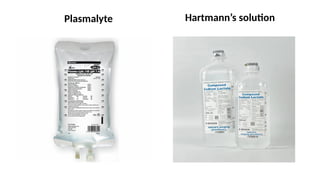
• Common examples are : 0.9% Saline, Ringer’s Lactate, D5-1/4NS and
Plasmalyte.
• Balanced electrolyte solutions- (low-[Cl–] crystalloids, which have
preserved ionic “balance” by replacing Cl– with lactate, gluconate, or
acetate) such as lactated Ringer’s solution or PlasmaLyte are most
commonly used for replacement.
Uses of Isotonic Solution
• ECFV depletion of any cause since hypotonic solutions can cause
dangerous hyponatremia in the setting of ECFV depletion.
• Post-operative management
• Shock from any cause
• Hemorrhage
• Burns
Plasmalyte Hartmann’s solution
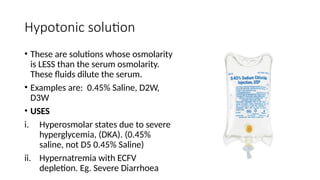
Hypotonic solution
• These are solutions whose osmolarity
is LESS than the serum osmolarity.
These fluids dilute the serum.
• Examples are: 0.45% Saline, D2W,
D3W
• USES
i. Hyperosmolar states due to severe
hyperglycemia, (DKA). (0.45%
saline, not D5 0.45% Saline)
ii. Hypernatremia with ECFV
depletion. Eg. Severe Diarrhoea
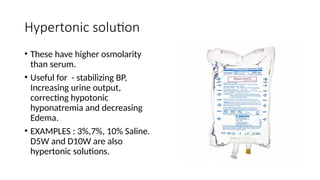
Hypertonic solution
• These have higher osmolarity
than serum.
• Useful for - stabilizing BP,
Increasing urine output,
correcting hypotonic
hyponatremia and decreasing
Edema.
• EXAMPLES : 3%,7%, 10% Saline.
D5W and D10W are also
hypertonic solutions.
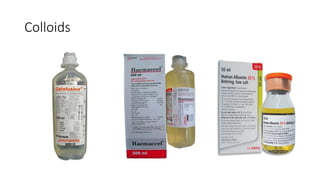
Colloids
• Colloids contain homogeneous non-crystalline particles suspended in
balanced crystalloid or isotonic saline.
• These particles tend to remain within the bloodstream after infusion,
thus increasing intravascular oncotic pressure and expanding plasma
volume.
• Colloids are either artificial (hydroxyethyl starch [HES], gelatins and
dextrans) or derived from donated blood (albumin and fractionated
blood products).
Colloids
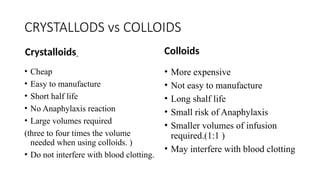
CRYSTALLODS vs COLLOIDS
Crystalloids
• Cheap
• Easy to manufacture
• Short half life
• No Anaphylaxis reaction
• Large volumes required
(three to four times the volume
needed when using colloids. )
• Do not interfere with blood clotting.
Colloids
• More expensive
• Not easy to manufacture
• Long shalf life
• Small risk of Anaphylaxis
• Smaller volumes of infusion
required.(1:1 )
• May interfere with blood clotting
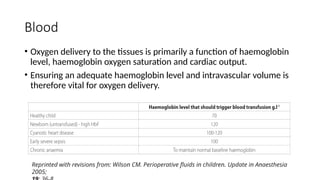
Blood
• Oxygen delivery to the tissues is primarily a function of haemoglobin
level, haemoglobin oxygen saturation and cardiac output.
• Ensuring an adequate haemoglobin level and intravascular volume is
therefore vital for oxygen delivery.
Reprinted with revisions from: Wilson CM. Perioperative fluids in children. Update in Anaesthesia
2005;
Selection of Fluid
• Balanced crystalloid solutions:
• Balanced electrolyte solution (eg, Ringer's lactate, Plasmalyte) rather
than normal saline or colloid to;
i. Maintain intraoperative normovolemia.
ii. Replacement of lost blood on a 1.5:1.0 volume basis until a
transfusion threshold is met.
CONT.
• Colloid solutions:
• During blood loss, some clinicians prefer to administer colloid (e.g. albumin) on a
1:1 volume basis until a transfusion threshold is met.
• We minimize colloid use due to insignificant hemodynamic benefits compared
with crystalloids.
• Blood transfusion:
• Red blood cells (RBCs) are used to replace blood loss when a transfusion
threshold is met.
• Decisions regarding transfusion of plasma derivatives (eg, fresh frozen plasma
[FFP]) are based on estimates of blood loss and evidence of abnormal
hemostasis.
Preoperative fasting
• Fasting is essential as it decreases the risk of regurgitation; aspiration;
and the associated life-threatening sequelae of airway obstruction,
chemical pneumonitis and bacterial pneumonia
• Fasting before surgery has the potential to induce dehydration and a
number of neurohumoral and metabolic responses, resulting in
ketosis and catabolism (glycogenolysis, lipolysis and proteolysis).
• Prolonged fasting can cause hunger, thirst, anxiety and distress
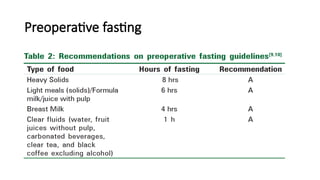
• Studies have shown that the stomach empties itself within 1 hr of
clear fluids without increased risk of pulmonary aspiration.
Preoperative fasting
Preoperative fluid deficits
• Euvolaemia is expected in the elective surgical setting when clear oral
fluids are promoted before surgery.
• For children undergoing emergency surgery, there may be significant
fluid deficits caused by burns, fever, sepsis, bleeding or
gastrointestinal losses (vomiting, gastric tube drainage, and diarrhea).
• The fluid deficit to be replaced is the maintenance fluid requirement
(multiplied by the hours since last oral intake) added to preoperative
external and third space losses.
• Replace 50% over the first hour, then 25% over each of the next two
hours.
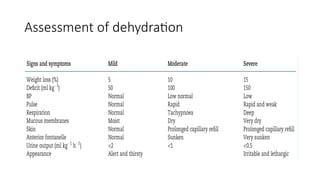
Assessment of dehydration
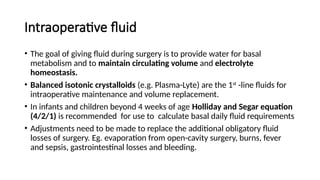
Intraoperative fluid
• The goal of giving fluid during surgery is to provide water for basal
metabolism and to maintain circulating volume and electrolyte
homeostasis.
• Balanced isotonic crystalloids (e.g. Plasma-Lyte) are the 1st
-line fluids for
intraoperative maintenance and volume replacement.
• In infants and children beyond 4 weeks of age Holliday and Segar equation
(4/2/1) is recommended for use to calculate basal daily fluid requirements
• Adjustments need to be made to replace the additional obligatory fluid
losses of surgery. Eg. evaporation from open-cavity surgery, burns, fever
and sepsis, gastrointestinal losses and bleeding.
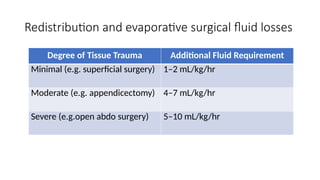
Redistribution and evaporative surgical fluid losses
Degree of Tissue Trauma Additional Fluid Requirement
Minimal (e.g. superficial surgery) 1–2 mL/kg/hr
Moderate (e.g. appendicectomy) 4–7 mL/kg/hr
Severe (e.g.open abdo surgery) 5–10 mL/kg/hr
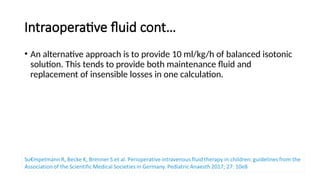
Intraoperative fluid cont…
• An alternative approach is to provide 10 ml/kg/h of balanced isotonic
solution. This tends to provide both maintenance fluid and
replacement of insensible losses in one calculation.
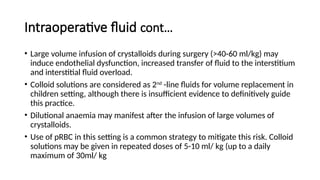
Intraoperative fluid cont…
• Large volume infusion of crystalloids during surgery (>40-60 ml/kg) may
induce endothelial dysfunction, increased transfer of fluid to the interstitium
and interstitial fluid overload.
• Colloid solutions are considered as 2nd
-line fluids for volume replacement in
children setting, although there is insufficient evidence to definitively guide
this practice.
• Dilutional anaemia may manifest after the infusion of large volumes of
crystalloids.
• Use of pRBC in this setting is a common strategy to mitigate this risk. Colloid
solutions may be given in repeated doses of 5-10 ml/ kg (up to a daily
maximum of 30ml/ kg
Glucose containing fluids
• For normal healthy babies glucose supplementation is not routinely
necessary .
• Glucose should be supplemented in children with risk of glucose
impairment including neonate, children with malnutrition,
hypermetabolism, liver failure, hypothermia, mitochondrial disorders,
beta-blocker therapy or critical illness.
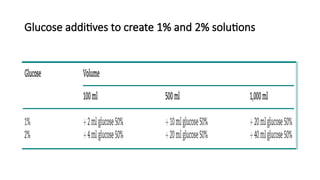
• Where glucose is provided, the addition of 1-2% glucose to intraop
maintenance fluid is sufficient to prevent hypoglycemia and ketosis,
without causing hyperglycemia.
• Routine use of 5% glucose is associated with hyperglycemia
Glucose additives to create 1% and 2% solutions
Postoperative fluid management
• Early return to oral intake and enteral hydration is encouraged after
surgery.
• IV fluid therapy is used when enteral hydration is insufficient to
maintain fluid and electrolyte balance.
• Preferred fluid: isotonic balanced salt solution Plasma-Lyte with
dextrose 5%.
• Maintenance rates calculated using the Holliday and Segar 4/2/1
formula.
• After major surgery, reduce rates by 30-50% to account for increased
ADH secretion and avoid hyponatremia.
Postoperative fluid management cont…
• Plasma electrolyte levels should be tested daily during IV fluid
infusions.
• Ongoing clinical assessments of volume status, fluid losses, and
electrolyte status are critical.
• Fluid administration rate, type, and additives should be adjusted
based on patient needs.
• IV fluid therapy should be as short as possible, considering nutritional
needs and potential total parenteral nutrition if enteral intake is
delayed.
Fluid responsiveness
• The static assessment of fluid status from clinical signs is unreliable for
predicting fluid responsiveness.
• Variables, such as HR, systolic arterial pressure, central venous pressure
and pulmonary artery occlusion pressure, have all been shown to have
low predictive value for determining the usefulness of i.v. fluids to
improve haemodynamics in children.
• Dynamic variables, such as pulse pressure variation, stroke volume
variation, respiratory variation in inferior vena cava diameter,
oesophageal Doppler indices and plethysmographic waveform
techniques, also have inconclusive or conflicting evidence, rendering their
clinical usefulness uncertain
Journal presentation
Overview
• Title
• Abstract
• Introduction
• Methods
• Results
• Discussion
• Conclusion
• Critique
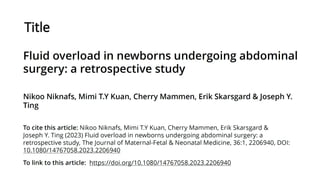
Title
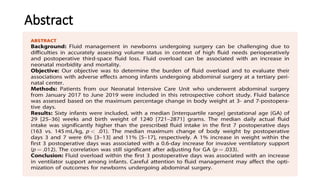
Abstract
Introduction
• Fluid management in newborns undergoing surgery can be
challenging due to difficulties in accurately assessing volume status in
the context of high fluid needs perioperatively and postoperative
third-space fluid loss
• Preterm infants are particularly vulnerable to fluid overload because
of their underdeveloped cardiovascular and renal systems, making
them less capable of managing large fluid volumes.
• Tools like weight, urine output, and renal function tests may not
accurately reflect intravascular and interstitial volume, especially in
newborns after abdominal surgery.
Introduction cont..
Problem statement
• Fluid overload (FO) after pediatric abdominal surgery can cause acute kidney
injury (AKI), increased morbidity, and complications like abdominal compartment
syndrome and mesenteric ischemia, due to fluid shifts, third spacing, and
evaporative losses, while postoperative antidiuretic hormone secretion may
exacerbate water retention and bowel edema; but there is limited literature on
fluid balance in newborns after abdominal surgery, highlighting the need for
further research on risk factors and outcomes
Objective
• To determine the burden of fluid overload and to evaluate their associations with
adverse effects among infants undergoing abdominal surgery at a tertiary
perinatal center.
Methodology
Study design
• Retrospective cohort study done at tertiary level NICU between January
2017 and June 2019.
• Participants
• Inclusion Criteria:
• Infants who underwent abdominal surgeries and were admitted to the NICU
for postoperative care.
• Exclusion Criteria:
• Those who had multiple congenital anomalies, including CHD or kidney
disease, and those who died <24 hours after surgery
Methodology cont..
• Data were extracted from paper and electronic medical charts. Fluid
management was assessed from 3 days pre-operation to 7 days post-
operation.
Methodology cont…
Independent variables
• Gestational age (GA) was defined as the best obstetric estimate
Dependent variables
• Primary outcome
• fluid balance at postoperative day 3 and day 7. obtained from % daily weight
change
• Secondary outcomes
• mortality, duration of mechanical ventilation, AKI, days to start enteral feeds,
post-op sepsis, length of hospital stay, bronchopulmonary dysplasia (BPD), and
high-grade intraventricular hemorrhage (IVH)
Methodology cont….
• Actual fluid intake (mL/kg/day) referred to the total volume of fluid the
patient received in the previous 24h, including parenteral nutrition,
fluid boluses, transfusions, flushes through intravenous (IV) lines,
medications, and fluid to keep the IV line open.
• Prescribed fluid intake referred to the amount of fluid on the
physicians’ orders on the patient records.
• the impact of fluid balance among infants with surgery performed <7
days of life (DoL) and >7 DoL was analyzed separately.
Methodology cont..
• Statistical analysis
• Patient demographics and clinical characteristics were reported as median
(interquartile range [IQR]) and proportion (%) for continuous and categorical
variables, respectively.
• Odds ratio and 95% confidence interval were calculated using univariate logistic
regression analyses to quantify the association between adverse outcomes and
FO.
• Multivariable logistic regression was performed after adjusting for potential
confounders and other covariates based on the findings of the univariate analysis.
• R (v.4.0.3) using R-studio (v.1.3.1073) was used for statistical analysis, with p<.05
to be considered statistically significant.
Results
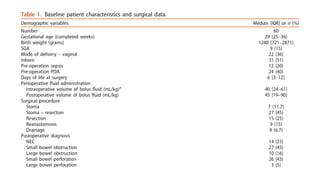
• Between January 2017 and June 2019, 83 newborns underwent abdominal
surgery.
• Sixty patients were included in this study, with a median [IQR] gestational age
of 29 weeks [25–36] and a median [IQR] birth weight of 1240 g [721–2871].
• Surgery was conducted at a median [IQR] of 6 DoL [3–12], with 32 patients
having surgery before 7 DoL and 28 patients having surgery on or after 7 DoL
• The actual median daily fluid intake was 178 mL/kg on postoperative days 0–2
and 163 mL/kg from postoperative days 3 to 7, which were significantly higher
than the median prescribed fluid volume of 145 mL/kg (p<.01).
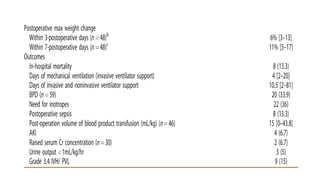
• The maximum median [IQR] percentage of weight change was 6% [3–13] and
11% [5–17] in postoperative days 3 and 7, respectively
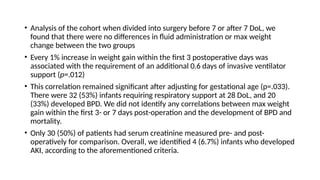
• Analysis of the cohort when divided into surgery before 7 or after 7 DoL, we
found that there were no differences in fluid administration or max weight
change between the two groups
• Every 1% increase in weight gain within the first 3 postoperative days was
associated with the requirement of an additional 0.6 days of invasive ventilator
support (p=.012)
• This correlation remained significant after adjusting for gestational age (p=.033).
There were 32 (53%) infants requiring respiratory support at 28 DoL, and 20
(33%) developed BPD. We did not identify any correlations between max weight
gain within the first 3- or 7 days post-operation and the development of BPD and
mortality.
• Only 30 (50%) of patients had serum creatinine measured pre- and post-
operatively for comparison. Overall, we identified 4 (6.7%) infants who developed
AKI, according to the aforementioned criteria.
Discussion
• Fluid overload was associated with a longer duration of ventilation, and FO could
be an independent risk factor for multi-organ dysfunction rather than just a
marker of disease severity.
• The underlying mechanism of association between FO and an increase in invasive
ventilation durations could be fluid accumulation in the lungs, endothelial
dysfunction, increased risk of patent ductus arteriosus (PDA), or pulmonary
edema in the context of prematurity.
• It is also possible that an increase in circulating inflammatory cytokines due to the
stress of surgery and underlying disease could cause more injury to the lungs in
these circumstances.
• The longer duration of ventilator support could potentially lead to a further
increase in lung injury and consequently, increase the risk of BPD.
• The increased weight change in our patients is likely due to generous
amounts of administered fluid, which was consistently higher than
the ordered fluid intake.
Conclusion
• In newborns undergoing abdominal surgery, fluid overload in the first
3 postoperative days was positively associated with increased
duration of invasive ventilator support.
• Judicious post-operative fluid management may be beneficial to
improve respiratory outcomes.
Critique
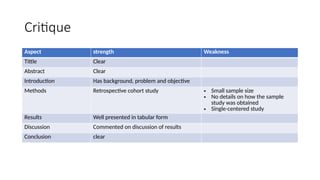
Aspect strength Weakness
Tittle Clear
Abstract Clear
Introduction Has background, problem and objective
Methods Retrospective cohort study • Small sample size
• No details on how the sample
study was obtained
• Single-centered study
Results Well presented in tabular form
Discussion Commented on discussion of results
Conclusion clear

Pediatrics Fluid management.pptx (MUHIMBILI)

  • 1.
    PEDIATRIC PERIOPERATIVE FLUID MANAGEMENT PRESENTERS:Machera Abel FACILITATOR: Dr. Lukansola
  • 2.
    Outline • Introduction • Typesof fluid • Preoperative fasting • Preoperative fluid deficit • Intraoperative fluid • Postoperative fluid management • Journal presentation
  • 3.
    Introduction • Intravenous fluidtherapy is an integrated and lifesaving part of the treatment of patients undergoing surgery. • Perioperative fluid therapy It is the administration of intravenous fluids before, during, and after surgery at the right time and in the right amounts. • The goal of perioperative intravenous fluid therapy is to maintain or restore circulation with an adequate fluid and electrolyte balance, thereby creating the preconditions for a favourable outcome for the patient.
  • 4.
    Body fluid composition •Body fluid compartments consist of intracellular and extracellular compartments, with the extracellular further divided into interstitial and plasma volumes. • IV free water distributes evenly across total body water, isotonic crystalloids stay in the extracellular compartment, and colloid solutions expand plasma volume when the endothelial glycocalyx is intact. • In fetuses and premature newborns, most of the total body water is extracellular (60-70% of body weight), decreasing to 40% in term babies and 30% in older infants. • Electrolyte composition remains consistent throughout life, but the size of fluid compartments changes with age.
  • 5.
    Goals of PerioperativeFluid management i. Maintain or correct fluid balance (dehydration, hypovolemia) ii. Maintain or correct plasma constitution (electrolytes) iii. Secure sufficient circulation (in combination with vasoactive and/or cardioactive substances) iv. Secure sufficient oxygen delivery to organs (in combination with oxygen therapy)
  • 6.
    Principles of fluidtherapy i. Replace losses or deficits ii. Continue Maintenance iii. Anticipate additional on-going losses. iv. Anticipate excess fluid intake
  • 7.
    TYPES OF FLUIDS i.Crystalloid fluids ii. Colloid fluids iii. Blood products
  • 8.
    Crystalloids • Crystalloids aresolutions containing electrolytes and other low-molecular- weight substances. • Crystalloids can be further sub-grouped into Isotonic, hypotonic, and hypertonic fluids • Fluids with ionic concentrations resembling extracellular fluid are called balanced solutions. • Organic anions are added to balanced solutions to reduce chloride concentrations and the risk of iatrogenic hyperchloraemic acidosis. • Lactate serves this purpose in lactated Ringer’s solution, also acting as a buffer and substrate for hepatic bicarbonate synthesis. Acetate and gluconate serve a similar purpose in Plasma-Lyte solution
  • 9.
    Isotonic Solution • Theyhave tonicities close to that of plasma as termed ISOTONIC. • Common examples are : 0.9% Saline, Ringer’s Lactate, D5-1/4NS and Plasmalyte. • Balanced electrolyte solutions- (low-[Cl–] crystalloids, which have preserved ionic “balance” by replacing Cl– with lactate, gluconate, or acetate) such as lactated Ringer’s solution or PlasmaLyte are most commonly used for replacement.
  • 10.
    Uses of IsotonicSolution • ECFV depletion of any cause since hypotonic solutions can cause dangerous hyponatremia in the setting of ECFV depletion. • Post-operative management • Shock from any cause • Hemorrhage • Burns
  • 11.
  • 12.
    Hypotonic solution • Theseare solutions whose osmolarity is LESS than the serum osmolarity. These fluids dilute the serum. • Examples are: 0.45% Saline, D2W, D3W • USES i. Hyperosmolar states due to severe hyperglycemia, (DKA). (0.45% saline, not D5 0.45% Saline) ii. Hypernatremia with ECFV depletion. Eg. Severe Diarrhoea
  • 13.
    Hypertonic solution • Thesehave higher osmolarity than serum. • Useful for - stabilizing BP, Increasing urine output, correcting hypotonic hyponatremia and decreasing Edema. • EXAMPLES : 3%,7%, 10% Saline. D5W and D10W are also hypertonic solutions.
  • 14.
    Colloids • Colloids containhomogeneous non-crystalline particles suspended in balanced crystalloid or isotonic saline. • These particles tend to remain within the bloodstream after infusion, thus increasing intravascular oncotic pressure and expanding plasma volume. • Colloids are either artificial (hydroxyethyl starch [HES], gelatins and dextrans) or derived from donated blood (albumin and fractionated blood products).
  • 15.
  • 16.
    CRYSTALLODS vs COLLOIDS Crystalloids •Cheap • Easy to manufacture • Short half life • No Anaphylaxis reaction • Large volumes required (three to four times the volume needed when using colloids. ) • Do not interfere with blood clotting. Colloids • More expensive • Not easy to manufacture • Long shalf life • Small risk of Anaphylaxis • Smaller volumes of infusion required.(1:1 ) • May interfere with blood clotting
  • 17.
    Blood • Oxygen deliveryto the tissues is primarily a function of haemoglobin level, haemoglobin oxygen saturation and cardiac output. • Ensuring an adequate haemoglobin level and intravascular volume is therefore vital for oxygen delivery. Reprinted with revisions from: Wilson CM. Perioperative fluids in children. Update in Anaesthesia 2005;
  • 18.
    Selection of Fluid •Balanced crystalloid solutions: • Balanced electrolyte solution (eg, Ringer's lactate, Plasmalyte) rather than normal saline or colloid to; i. Maintain intraoperative normovolemia. ii. Replacement of lost blood on a 1.5:1.0 volume basis until a transfusion threshold is met.
  • 19.
    CONT. • Colloid solutions: •During blood loss, some clinicians prefer to administer colloid (e.g. albumin) on a 1:1 volume basis until a transfusion threshold is met. • We minimize colloid use due to insignificant hemodynamic benefits compared with crystalloids. • Blood transfusion: • Red blood cells (RBCs) are used to replace blood loss when a transfusion threshold is met. • Decisions regarding transfusion of plasma derivatives (eg, fresh frozen plasma [FFP]) are based on estimates of blood loss and evidence of abnormal hemostasis.
  • 20.
    Preoperative fasting • Fastingis essential as it decreases the risk of regurgitation; aspiration; and the associated life-threatening sequelae of airway obstruction, chemical pneumonitis and bacterial pneumonia • Fasting before surgery has the potential to induce dehydration and a number of neurohumoral and metabolic responses, resulting in ketosis and catabolism (glycogenolysis, lipolysis and proteolysis). • Prolonged fasting can cause hunger, thirst, anxiety and distress • Studies have shown that the stomach empties itself within 1 hr of clear fluids without increased risk of pulmonary aspiration.
  • 21.
  • 22.
    Preoperative fluid deficits •Euvolaemia is expected in the elective surgical setting when clear oral fluids are promoted before surgery. • For children undergoing emergency surgery, there may be significant fluid deficits caused by burns, fever, sepsis, bleeding or gastrointestinal losses (vomiting, gastric tube drainage, and diarrhea). • The fluid deficit to be replaced is the maintenance fluid requirement (multiplied by the hours since last oral intake) added to preoperative external and third space losses. • Replace 50% over the first hour, then 25% over each of the next two hours.
  • 23.
  • 24.
    Intraoperative fluid • Thegoal of giving fluid during surgery is to provide water for basal metabolism and to maintain circulating volume and electrolyte homeostasis. • Balanced isotonic crystalloids (e.g. Plasma-Lyte) are the 1st -line fluids for intraoperative maintenance and volume replacement. • In infants and children beyond 4 weeks of age Holliday and Segar equation (4/2/1) is recommended for use to calculate basal daily fluid requirements • Adjustments need to be made to replace the additional obligatory fluid losses of surgery. Eg. evaporation from open-cavity surgery, burns, fever and sepsis, gastrointestinal losses and bleeding.
  • 25.
    Redistribution and evaporativesurgical fluid losses Degree of Tissue Trauma Additional Fluid Requirement Minimal (e.g. superficial surgery) 1–2 mL/kg/hr Moderate (e.g. appendicectomy) 4–7 mL/kg/hr Severe (e.g.open abdo surgery) 5–10 mL/kg/hr
  • 26.
    Intraoperative fluid cont… •An alternative approach is to provide 10 ml/kg/h of balanced isotonic solution. This tends to provide both maintenance fluid and replacement of insensible losses in one calculation.
  • 27.
    Intraoperative fluid cont… •Large volume infusion of crystalloids during surgery (>40-60 ml/kg) may induce endothelial dysfunction, increased transfer of fluid to the interstitium and interstitial fluid overload. • Colloid solutions are considered as 2nd -line fluids for volume replacement in children setting, although there is insufficient evidence to definitively guide this practice. • Dilutional anaemia may manifest after the infusion of large volumes of crystalloids. • Use of pRBC in this setting is a common strategy to mitigate this risk. Colloid solutions may be given in repeated doses of 5-10 ml/ kg (up to a daily maximum of 30ml/ kg
  • 28.
    Glucose containing fluids •For normal healthy babies glucose supplementation is not routinely necessary . • Glucose should be supplemented in children with risk of glucose impairment including neonate, children with malnutrition, hypermetabolism, liver failure, hypothermia, mitochondrial disorders, beta-blocker therapy or critical illness. • Where glucose is provided, the addition of 1-2% glucose to intraop maintenance fluid is sufficient to prevent hypoglycemia and ketosis, without causing hyperglycemia. • Routine use of 5% glucose is associated with hyperglycemia
  • 29.
    Glucose additives tocreate 1% and 2% solutions
  • 30.
    Postoperative fluid management •Early return to oral intake and enteral hydration is encouraged after surgery. • IV fluid therapy is used when enteral hydration is insufficient to maintain fluid and electrolyte balance. • Preferred fluid: isotonic balanced salt solution Plasma-Lyte with dextrose 5%. • Maintenance rates calculated using the Holliday and Segar 4/2/1 formula. • After major surgery, reduce rates by 30-50% to account for increased ADH secretion and avoid hyponatremia.
  • 31.
    Postoperative fluid managementcont… • Plasma electrolyte levels should be tested daily during IV fluid infusions. • Ongoing clinical assessments of volume status, fluid losses, and electrolyte status are critical. • Fluid administration rate, type, and additives should be adjusted based on patient needs. • IV fluid therapy should be as short as possible, considering nutritional needs and potential total parenteral nutrition if enteral intake is delayed.
  • 32.
    Fluid responsiveness • Thestatic assessment of fluid status from clinical signs is unreliable for predicting fluid responsiveness. • Variables, such as HR, systolic arterial pressure, central venous pressure and pulmonary artery occlusion pressure, have all been shown to have low predictive value for determining the usefulness of i.v. fluids to improve haemodynamics in children. • Dynamic variables, such as pulse pressure variation, stroke volume variation, respiratory variation in inferior vena cava diameter, oesophageal Doppler indices and plethysmographic waveform techniques, also have inconclusive or conflicting evidence, rendering their clinical usefulness uncertain
  • 33.
    Journal presentation Overview • Title •Abstract • Introduction • Methods • Results • Discussion • Conclusion • Critique
  • 34.
  • 35.
  • 36.
    Introduction • Fluid managementin newborns undergoing surgery can be challenging due to difficulties in accurately assessing volume status in the context of high fluid needs perioperatively and postoperative third-space fluid loss • Preterm infants are particularly vulnerable to fluid overload because of their underdeveloped cardiovascular and renal systems, making them less capable of managing large fluid volumes. • Tools like weight, urine output, and renal function tests may not accurately reflect intravascular and interstitial volume, especially in newborns after abdominal surgery.
  • 37.
    Introduction cont.. Problem statement •Fluid overload (FO) after pediatric abdominal surgery can cause acute kidney injury (AKI), increased morbidity, and complications like abdominal compartment syndrome and mesenteric ischemia, due to fluid shifts, third spacing, and evaporative losses, while postoperative antidiuretic hormone secretion may exacerbate water retention and bowel edema; but there is limited literature on fluid balance in newborns after abdominal surgery, highlighting the need for further research on risk factors and outcomes Objective • To determine the burden of fluid overload and to evaluate their associations with adverse effects among infants undergoing abdominal surgery at a tertiary perinatal center.
  • 38.
    Methodology Study design • Retrospectivecohort study done at tertiary level NICU between January 2017 and June 2019. • Participants • Inclusion Criteria: • Infants who underwent abdominal surgeries and were admitted to the NICU for postoperative care. • Exclusion Criteria: • Those who had multiple congenital anomalies, including CHD or kidney disease, and those who died <24 hours after surgery
  • 39.
    Methodology cont.. • Datawere extracted from paper and electronic medical charts. Fluid management was assessed from 3 days pre-operation to 7 days post- operation.
  • 40.
    Methodology cont… Independent variables •Gestational age (GA) was defined as the best obstetric estimate Dependent variables • Primary outcome • fluid balance at postoperative day 3 and day 7. obtained from % daily weight change • Secondary outcomes • mortality, duration of mechanical ventilation, AKI, days to start enteral feeds, post-op sepsis, length of hospital stay, bronchopulmonary dysplasia (BPD), and high-grade intraventricular hemorrhage (IVH)
  • 41.
    Methodology cont…. • Actualfluid intake (mL/kg/day) referred to the total volume of fluid the patient received in the previous 24h, including parenteral nutrition, fluid boluses, transfusions, flushes through intravenous (IV) lines, medications, and fluid to keep the IV line open. • Prescribed fluid intake referred to the amount of fluid on the physicians’ orders on the patient records. • the impact of fluid balance among infants with surgery performed <7 days of life (DoL) and >7 DoL was analyzed separately.
  • 42.
    Methodology cont.. • Statisticalanalysis • Patient demographics and clinical characteristics were reported as median (interquartile range [IQR]) and proportion (%) for continuous and categorical variables, respectively. • Odds ratio and 95% confidence interval were calculated using univariate logistic regression analyses to quantify the association between adverse outcomes and FO. • Multivariable logistic regression was performed after adjusting for potential confounders and other covariates based on the findings of the univariate analysis. • R (v.4.0.3) using R-studio (v.1.3.1073) was used for statistical analysis, with p<.05 to be considered statistically significant.
  • 43.
    Results • Between January2017 and June 2019, 83 newborns underwent abdominal surgery. • Sixty patients were included in this study, with a median [IQR] gestational age of 29 weeks [25–36] and a median [IQR] birth weight of 1240 g [721–2871]. • Surgery was conducted at a median [IQR] of 6 DoL [3–12], with 32 patients having surgery before 7 DoL and 28 patients having surgery on or after 7 DoL • The actual median daily fluid intake was 178 mL/kg on postoperative days 0–2 and 163 mL/kg from postoperative days 3 to 7, which were significantly higher than the median prescribed fluid volume of 145 mL/kg (p<.01). • The maximum median [IQR] percentage of weight change was 6% [3–13] and 11% [5–17] in postoperative days 3 and 7, respectively
  • 46.
    • Analysis ofthe cohort when divided into surgery before 7 or after 7 DoL, we found that there were no differences in fluid administration or max weight change between the two groups • Every 1% increase in weight gain within the first 3 postoperative days was associated with the requirement of an additional 0.6 days of invasive ventilator support (p=.012) • This correlation remained significant after adjusting for gestational age (p=.033). There were 32 (53%) infants requiring respiratory support at 28 DoL, and 20 (33%) developed BPD. We did not identify any correlations between max weight gain within the first 3- or 7 days post-operation and the development of BPD and mortality. • Only 30 (50%) of patients had serum creatinine measured pre- and post- operatively for comparison. Overall, we identified 4 (6.7%) infants who developed AKI, according to the aforementioned criteria.
  • 47.
    Discussion • Fluid overloadwas associated with a longer duration of ventilation, and FO could be an independent risk factor for multi-organ dysfunction rather than just a marker of disease severity. • The underlying mechanism of association between FO and an increase in invasive ventilation durations could be fluid accumulation in the lungs, endothelial dysfunction, increased risk of patent ductus arteriosus (PDA), or pulmonary edema in the context of prematurity. • It is also possible that an increase in circulating inflammatory cytokines due to the stress of surgery and underlying disease could cause more injury to the lungs in these circumstances. • The longer duration of ventilator support could potentially lead to a further increase in lung injury and consequently, increase the risk of BPD.
  • 48.
    • The increasedweight change in our patients is likely due to generous amounts of administered fluid, which was consistently higher than the ordered fluid intake.
  • 49.
    Conclusion • In newbornsundergoing abdominal surgery, fluid overload in the first 3 postoperative days was positively associated with increased duration of invasive ventilator support. • Judicious post-operative fluid management may be beneficial to improve respiratory outcomes.
  • 50.
    Critique Aspect strength Weakness TittleClear Abstract Clear Introduction Has background, problem and objective Methods Retrospective cohort study • Small sample size • No details on how the sample study was obtained • Single-centered study Results Well presented in tabular form Discussion Commented on discussion of results Conclusion clear

Editor's Notes

  • #20 Promoting clear oral fluid intake before surgery may also improve intraoperative haemodynamic stability and reduce nausea and delirium after surgery
  • #21 The Association of Paediatric Anaesthetists of Great Britain and Ireland, Australian and New Zealand College of Anaesthetists, European Society of Anaesthesiology and Intensive Care, European Society for Paediatric Anaesthesiology and all recommend clear oral fluid fasting times of 1 h before elective surgery
  • #28 In long surgeries glucose should be monitored closely
  • #40 was calculated as following: (daily postoperative weight – preoperative weight)/preoperative weight 100%)
  • #44 SGA: small for gestation age; PDA: patent ductus arteriosus; NEC: necrotizing enterocolitis; AKI: acute kidney injury; BPD: bronchopulmonary dysplasia; IVH: intraventricular hemorrhage; PVL: periventricular leukomalacia.
  • #45 SGA: small for gestation age; PDA: patent ductus arteriosus; NEC: necrotizing enterocolitis; AKI: acute kidney injury; BPD: bronchopulmonary dysplasia; IVH: intraventricular hemorrhage; PVL: periventricular leukomalacia.