Positions of 6 person high
performance teams
Team leader
Airway
monitory
Medication
Compressor
Timer recorder
Evaluate :
-primary assessment
-secondary assessment
-Diagnostic assessment
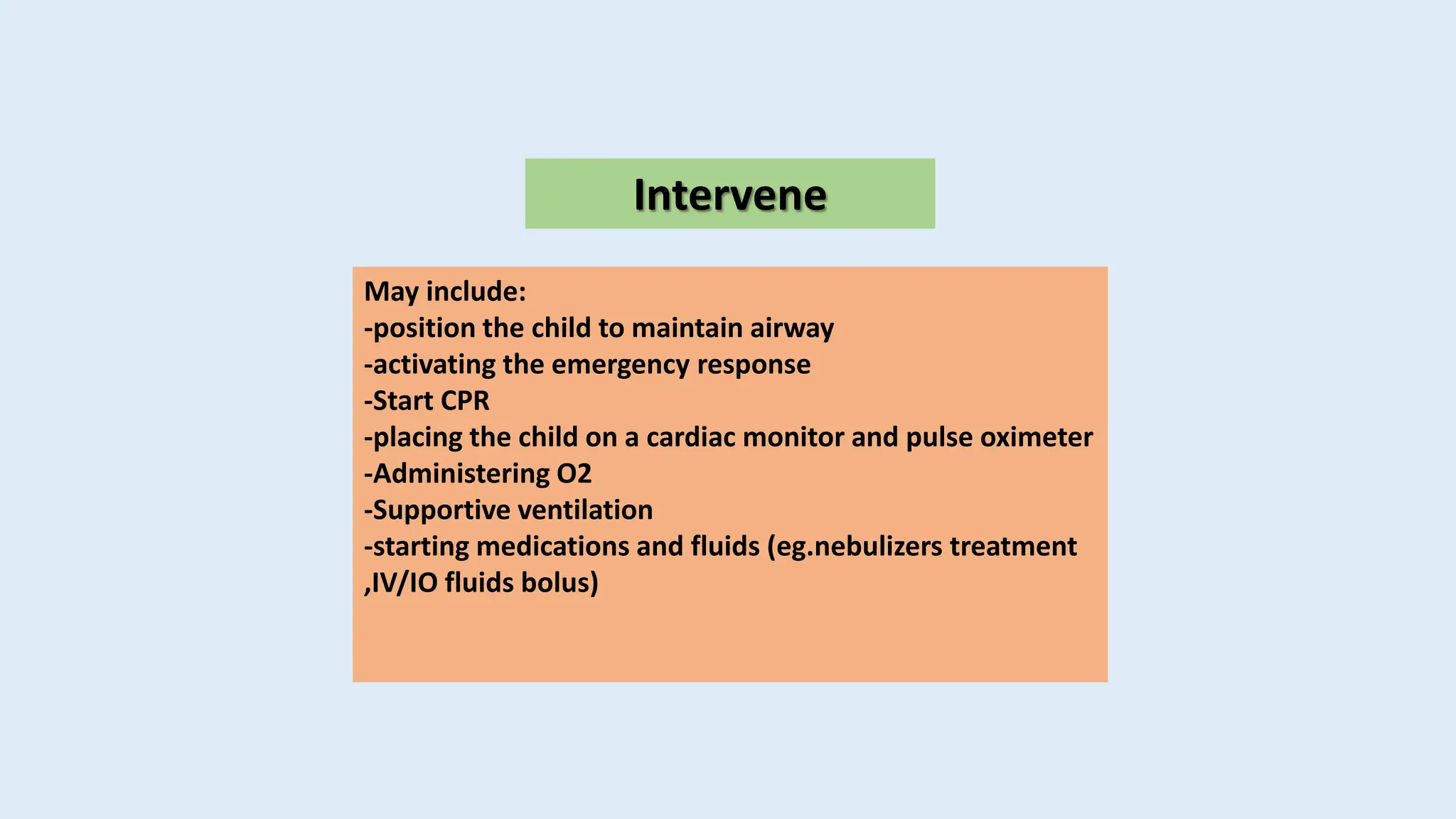
Intervene
Identify
Identify
type Severity
Respiratory :
-upper airway obstruction
-lower airway obstruction
-lunge tissue diseases
Disordered control of breathing
-Respiratory distress
Respiratory failure
Circulatory :
-hypovolemic shock
-distributive shock
-Cardiogenic shock
-Obstructive shock
-Compensated shock
-Hypotensive shock
Type and severity of potential problems
Intervene
May include:
-position the child to maintain airway
-activating the emergency response
-Start CPR
-placing the child on a cardiac monitor and pulse oximeter
-Administering O2
-Supportive ventilation
-starting medications and fluids (eg.nebulizers treatment
,IV/IO fluids bolus)
Evaluate
-After each intervention
-When the child condition
changes or deteriorates
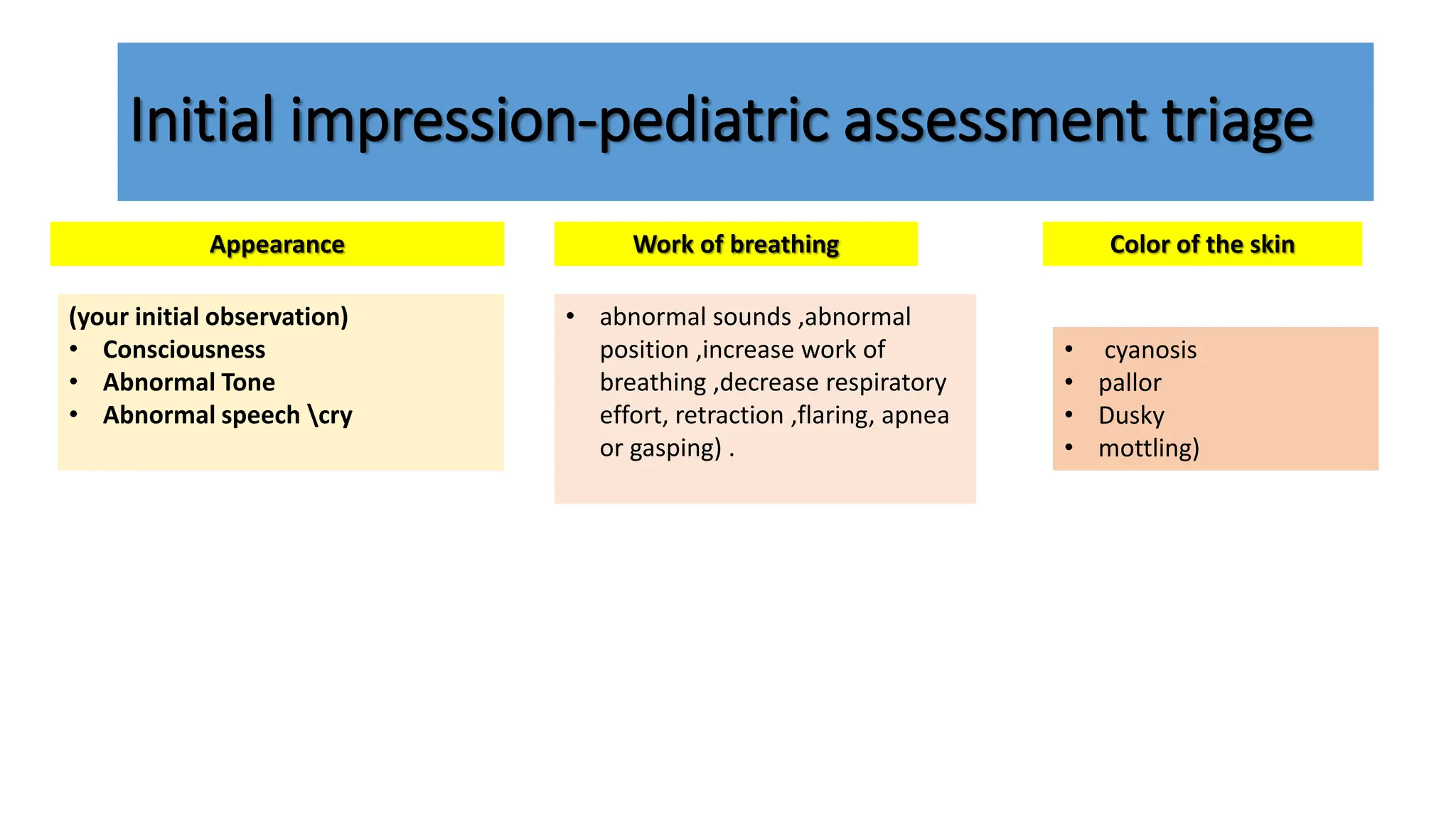
Initial impression-pediatric assessment triage
(your initial observation)
• Consciousness
• Abnormal Tone
• Abnormal speech cry
Appearance
• abnormal sounds ,abnormal
position ,increase work of
breathing ,decrease respiratory
effort, retraction ,flaring, apnea
or gasping) .
Work of breathing
• cyanosis
• pallor
• Dusky
• mottling)
Color of the skin
Clinical assessment tools
Clinical assessment Brief description
Primary assessment ABCDE
Secondary assessment A focused history and a focused examination
Diagnostic assessment -labs
-Radiographs
-Or any advanced tests that help to identify
the child physiologic condition and diagnosis
Primary assessment
Assessment:
• respiratory rate
• Chest rise
• Noisy breathing (grunting
,stridor or wheezing )
• Effort and using of accessory
muscle (nasal flaring ,head
bobbing, retraction, apnea )
• pulse oximetry.
Intervention:
-provide high flow oxygen
-Bag mask ventilation
-Advanced airway
-avoid excessive ventilation
Air way
• if the air way is patent?
• Is the air way clear ?
• If no ,intervene :
-Maintain air way patency by
position
-Suction as indicated
-Advanced airway
(e,supraglottic airway or
endotracheal tube).
-
Breathing
Assessment
• Hear rate .
• Peripheral pulses + central
• Blood pressure
• Capillary refill
• Skin color and temp
Interventions:
-obtain IV/IO access
Consider fluids resuscitation
Circulation
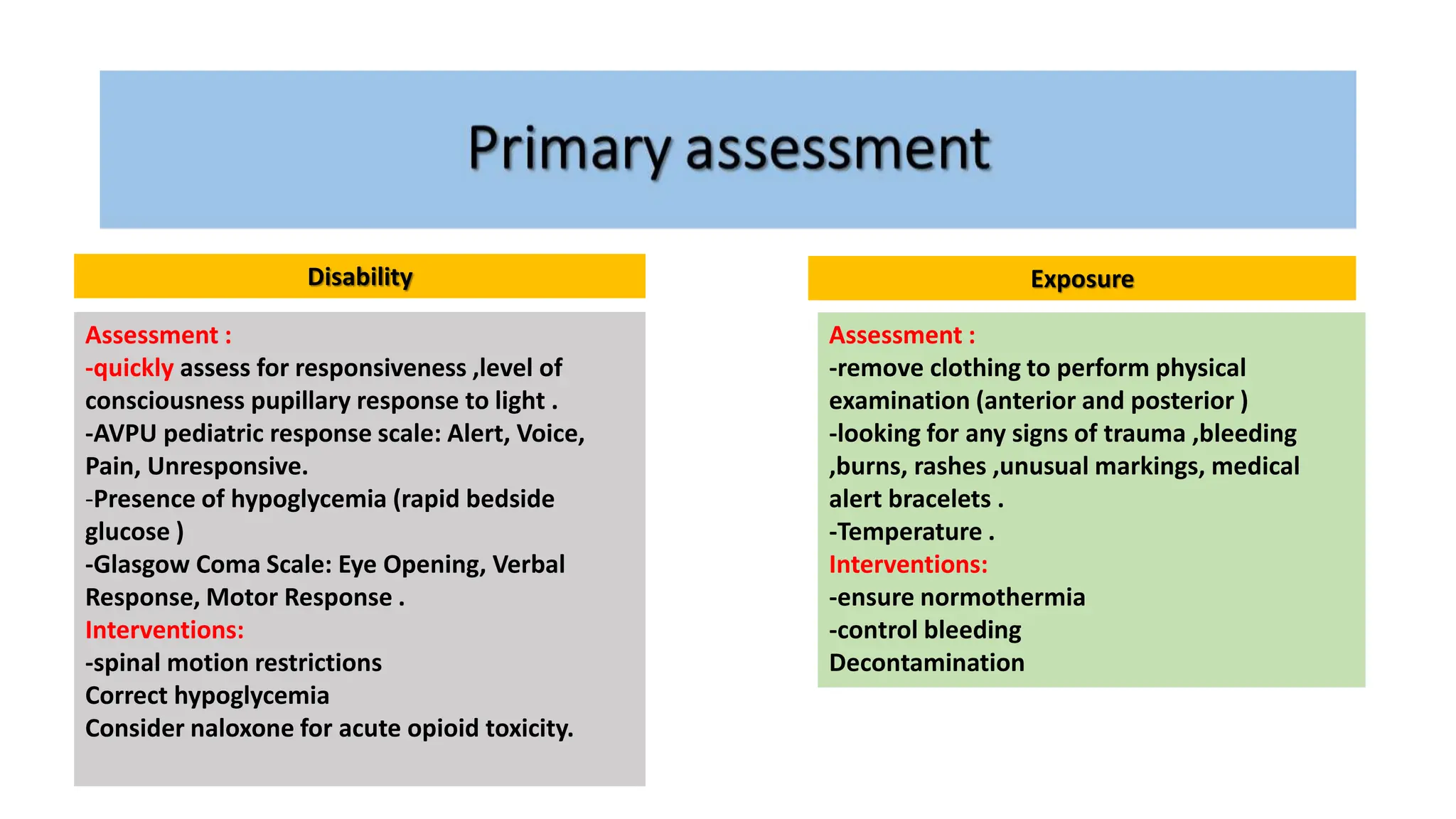
Assessment :
-quickly assess for responsiveness ,level of
consciousness pupillary response to light .
-AVPU pediatric response scale: Alert, Voice,
Pain, Unresponsive.
-Presence of hypoglycemia (rapid bedside
glucose )
-Glasgow Coma Scale: Eye Opening, Verbal
Response, Motor Response .
Interventions:
-spinal motion restrictions
Correct hypoglycemia
Consider naloxone for acute opioid toxicity.
Disability Exposure
Assessment :
-remove clothing to perform physical
examination (anterior and posterior )
-looking for any signs of trauma ,bleeding
,burns, rashes ,unusual markings, medical
alert bracelets .
-Temperature .
Interventions:
-ensure normothermia
-control bleeding
Decontamination
Secondary assessment
●This portion of the evaluation includes a thorough head to toe physical examination, as well as a
focused medical history that consists of the "SAMPLE" history:
•S: Signs and symptoms
•A: Allergies (medication ,foods ,latex, etc )
•M: Medications (over the counter ,vitamins ,inhalers, herbal supplements ,medication that can
be found in the child environment )
•P: -health history (premature birth ,previous illnesses ,hospitalization )
-significant underlying medical problems (asthma ,COPD ,cong.heart diseases ,aarythmia
,congenital airway abnormality, seizures ,head injury ,brain
tumores,diabetes,hydrocephalus,neuromuscular diseases) .
-past surgeries
-immunization status
•L: Last meal (time and nature of last intake of liquid or food (including breast feeding or bottle
feeding in infant )
time between the last meal and presentation of current illness can affect treatment and
management of the condition eg.possible anesthesia ,possible intubation .
•E: -Events leading to current illness or injury (eg. onset sudden or gradual ,type of injury )
-treatment during interval from onset of disease or injury until evaluation .
Focused physical
examination
Head to toe examination
Illness Areas to evaluate
Respiratory distress -Nose /mouth (signs of obstruction,
nasal congestion ,stridor ,mucosal
edema )
-Chest/lung
-Heart (tachycardia ,gallop ,or murmur)
-level of alertness (eg. anxiety secondary
to hypoxia )
Suspected heart failure and /or
arrhythmias
-Heart (gallop or murmur )
-Lungs (crackles ,SOB ,intolerance of
supine position )
-Abdomen( hepatomegaly (RHF)
-Extremities (peripheral edema )
Trauma -Abdomen
-Chest
Some examples of areas to assess during physical examination for certain illnesses
and injuries
Diagnostic assessment
-ABG
-VBG
-CBG
-FBC
-central venous O2 saturation
-central venous pressure monitoring
-invasive arterial pressure monitoring
-CXR
-ECG
-ECHO
-PEFR
References

pediatric pediatrics advanced ,pals.pptx

  • 2.
    Positions of 6person high performance teams Team leader Airway monitory Medication Compressor Timer recorder
  • 3.
    Evaluate : -primary assessment -secondaryassessment -Diagnostic assessment Intervene Identify
  • 4.
    Identify type Severity Respiratory : -upperairway obstruction -lower airway obstruction -lunge tissue diseases Disordered control of breathing -Respiratory distress Respiratory failure Circulatory : -hypovolemic shock -distributive shock -Cardiogenic shock -Obstructive shock -Compensated shock -Hypotensive shock Type and severity of potential problems
  • 5.
    Intervene May include: -position thechild to maintain airway -activating the emergency response -Start CPR -placing the child on a cardiac monitor and pulse oximeter -Administering O2 -Supportive ventilation -starting medications and fluids (eg.nebulizers treatment ,IV/IO fluids bolus)
  • 6.
    Evaluate -After each intervention -Whenthe child condition changes or deteriorates
  • 9.
    Initial impression-pediatric assessmenttriage (your initial observation) • Consciousness • Abnormal Tone • Abnormal speech cry Appearance • abnormal sounds ,abnormal position ,increase work of breathing ,decrease respiratory effort, retraction ,flaring, apnea or gasping) . Work of breathing • cyanosis • pallor • Dusky • mottling) Color of the skin
  • 10.
    Clinical assessment tools Clinicalassessment Brief description Primary assessment ABCDE Secondary assessment A focused history and a focused examination Diagnostic assessment -labs -Radiographs -Or any advanced tests that help to identify the child physiologic condition and diagnosis
  • 11.
    Primary assessment Assessment: • respiratoryrate • Chest rise • Noisy breathing (grunting ,stridor or wheezing ) • Effort and using of accessory muscle (nasal flaring ,head bobbing, retraction, apnea ) • pulse oximetry. Intervention: -provide high flow oxygen -Bag mask ventilation -Advanced airway -avoid excessive ventilation Air way • if the air way is patent? • Is the air way clear ? • If no ,intervene : -Maintain air way patency by position -Suction as indicated -Advanced airway (e,supraglottic airway or endotracheal tube). - Breathing Assessment • Hear rate . • Peripheral pulses + central • Blood pressure • Capillary refill • Skin color and temp Interventions: -obtain IV/IO access Consider fluids resuscitation Circulation
  • 12.
    Assessment : -quickly assessfor responsiveness ,level of consciousness pupillary response to light . -AVPU pediatric response scale: Alert, Voice, Pain, Unresponsive. -Presence of hypoglycemia (rapid bedside glucose ) -Glasgow Coma Scale: Eye Opening, Verbal Response, Motor Response . Interventions: -spinal motion restrictions Correct hypoglycemia Consider naloxone for acute opioid toxicity. Disability Exposure Assessment : -remove clothing to perform physical examination (anterior and posterior ) -looking for any signs of trauma ,bleeding ,burns, rashes ,unusual markings, medical alert bracelets . -Temperature . Interventions: -ensure normothermia -control bleeding Decontamination
  • 13.
    Secondary assessment ●This portionof the evaluation includes a thorough head to toe physical examination, as well as a focused medical history that consists of the "SAMPLE" history: •S: Signs and symptoms •A: Allergies (medication ,foods ,latex, etc ) •M: Medications (over the counter ,vitamins ,inhalers, herbal supplements ,medication that can be found in the child environment ) •P: -health history (premature birth ,previous illnesses ,hospitalization ) -significant underlying medical problems (asthma ,COPD ,cong.heart diseases ,aarythmia ,congenital airway abnormality, seizures ,head injury ,brain tumores,diabetes,hydrocephalus,neuromuscular diseases) . -past surgeries -immunization status
  • 14.
    •L: Last meal(time and nature of last intake of liquid or food (including breast feeding or bottle feeding in infant ) time between the last meal and presentation of current illness can affect treatment and management of the condition eg.possible anesthesia ,possible intubation . •E: -Events leading to current illness or injury (eg. onset sudden or gradual ,type of injury ) -treatment during interval from onset of disease or injury until evaluation .
  • 15.
    Focused physical examination Head totoe examination Illness Areas to evaluate Respiratory distress -Nose /mouth (signs of obstruction, nasal congestion ,stridor ,mucosal edema ) -Chest/lung -Heart (tachycardia ,gallop ,or murmur) -level of alertness (eg. anxiety secondary to hypoxia ) Suspected heart failure and /or arrhythmias -Heart (gallop or murmur ) -Lungs (crackles ,SOB ,intolerance of supine position ) -Abdomen( hepatomegaly (RHF) -Extremities (peripheral edema ) Trauma -Abdomen -Chest Some examples of areas to assess during physical examination for certain illnesses and injuries
  • 16.
    Diagnostic assessment -ABG -VBG -CBG -FBC -central venousO2 saturation -central venous pressure monitoring -invasive arterial pressure monitoring -CXR -ECG -ECHO -PEFR
  • 20.