
Pick one strip of paper.
One by one, execute the
movement that you
picked. Wait for the
whistle before doing the
movement.
Process Questions:
1. How do you feel after doing the
movement? Was it hard or easy?
2. When do we use this kind of
movement?
3. Can these movements be a form of
exercise?
These are movements that allow
the body to move from one point in
space to another. It came from two
words, “locos” which means place
and “motor” which means
movement.
1. STEP - This is the basis of all
locomotor movements. It is defined
as transfer of weight from one foot
to the other.
2. WALK- Series of steps executed
by both of your feet alternately in
any direction.
3. RUN - Series of walks executed
quickly in any direction wherein
only one foot stays on the ground
while the other is off the ground.
4. JUMP - This movement is
simply described by having both
feet lose its contact with the
ground.
DANCE is a series of movements
executed by the performer in time
and space and accompanied by
music and harmonized with stage
sets and props.
A. MOVEMENT is the basic
element of a dance. Through
movements, the dancers can bring
out the inner state or condition to
enable them to communicate with
their audience.
B. CONTENT is the message or
story of the dance. It expresses an
attitude, or convey feelings or
emotions.
C. MUSIC serves as background to
set the mood or merely a rhythmic
accompaniment to the movement.
D. SPECTACLE combination of
movement, music, costume, props
and stage décor plus the technical
skill all work together to capture
the audience’s attention.
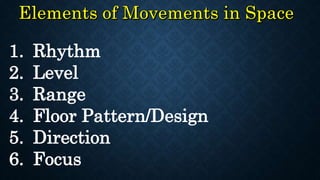
1. Rhythm
2. Level
3. Range
4. Floor Pattern/Design
5. Direction
6. Focus
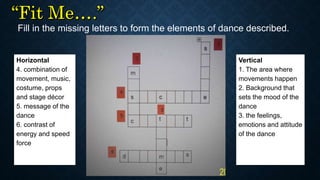
Fill in the missing letters to form the elements of dance described.
Horizontal
4. combination of
movement, music,
costume, props
and stage décor
5. message of the
dance
6. contrast of
energy and speed
force
Vertical
1. The area where
movements happen
2. Background that
sets the mood of the
dance
3. the feelings,
emotions and attitude
of the dance
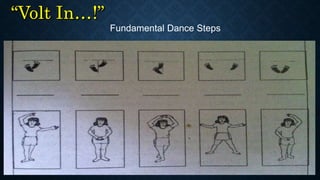
Fundamental Dance Steps
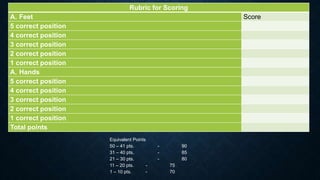
Rubric for Scoring
A. Feet Score
5 correct position
4 correct position
3 correct position
2 correct position
1 correct position
A. Hands
5 correct position
4 correct position
3 correct position
2 correct position
1 correct position
Total points
Equivalent Points
50 – 41 pts. - 90
31 – 40 pts. - 85
21 – 30 pts. - 80
11 – 20 pts. - 75
1 – 10 pts. - 70
Make a research regarding non –
locomotor movements.

PE 9

  • 2.
    Pick one stripof paper. One by one, execute the movement that you picked. Wait for the whistle before doing the movement.
  • 4.
    Process Questions: 1. Howdo you feel after doing the movement? Was it hard or easy? 2. When do we use this kind of movement? 3. Can these movements be a form of exercise?
  • 5.
    These are movementsthat allow the body to move from one point in space to another. It came from two words, “locos” which means place and “motor” which means movement.
  • 6.
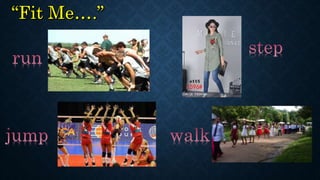
    1. STEP -This is the basis of all locomotor movements. It is defined as transfer of weight from one foot to the other.
  • 7.
    2. WALK- Seriesof steps executed by both of your feet alternately in any direction.
  • 8.
    3. RUN -Series of walks executed quickly in any direction wherein only one foot stays on the ground while the other is off the ground.
  • 9.
    4. JUMP -This movement is simply described by having both feet lose its contact with the ground.
  • 11.
    DANCE is aseries of movements executed by the performer in time and space and accompanied by music and harmonized with stage sets and props.
  • 12.
    A. MOVEMENT isthe basic element of a dance. Through movements, the dancers can bring out the inner state or condition to enable them to communicate with their audience.
  • 13.
    B. CONTENT isthe message or story of the dance. It expresses an attitude, or convey feelings or emotions.
  • 14.
    C. MUSIC servesas background to set the mood or merely a rhythmic accompaniment to the movement.
  • 15.
    D. SPECTACLE combinationof movement, music, costume, props and stage décor plus the technical skill all work together to capture the audience’s attention.
  • 16.
    1. Rhythm 2. Level 3.Range 4. Floor Pattern/Design 5. Direction 6. Focus
  • 17.
    Fill in themissing letters to form the elements of dance described. Horizontal 4. combination of movement, music, costume, props and stage décor 5. message of the dance 6. contrast of energy and speed force Vertical 1. The area where movements happen 2. Background that sets the mood of the dance 3. the feelings, emotions and attitude of the dance
  • 18.
  • 19.
    Rubric for Scoring A.Feet Score 5 correct position 4 correct position 3 correct position 2 correct position 1 correct position A. Hands 5 correct position 4 correct position 3 correct position 2 correct position 1 correct position Total points Equivalent Points 50 – 41 pts. - 90 31 – 40 pts. - 85 21 – 30 pts. - 80 11 – 20 pts. - 75 1 – 10 pts. - 70
  • 20.
    Make a researchregarding non – locomotor movements.

Editor's Notes

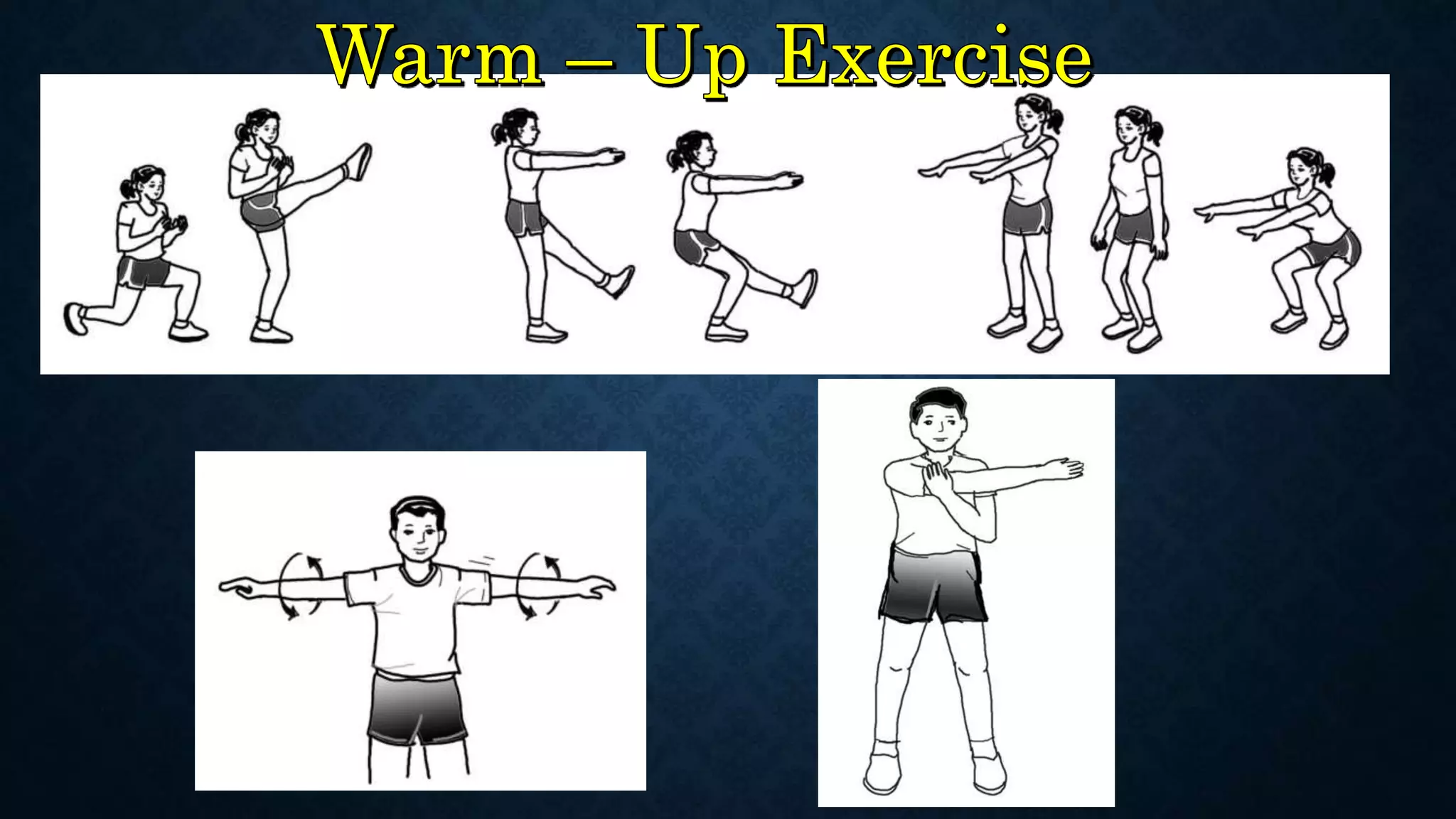
  • #2 Ask the students to stand up and do the warm – up exercises that was flash on the board.
  • #3 Allow a minute for the students to prepare.
  • #7  It prepares you to move in any direction you wish to go. Try one! Stand with your weight equally distributed to both of your feet. Now, let your right foot carry it all. You got it! That’s what you call a step.
  • #8 In executing a walk, observe that there’s this moment when both feet are in contact with the ground while one foot supports the weight and transfers it to the other.
  • #9 In executing a walk, observe that there’s this moment when both feet are in contact with the ground while one foot supports the weight and transfers it to the other.
  • #10 There five ways to do it:  Take off from one foot and land on the same;  Take off from one foot and land on the other;  Take off from one foot and land on both feet;  Take off from both feet and land on one foot; and  Take off from both feet and land on both.
  • #11 There five ways to do it:  Take off from one foot and land on the same;  Take off from one foot and land on the other;  Take off from one foot and land on both feet;  Take off from both feet and land on one foot; and  Take off from both feet and land on both.
  • #12 There five ways to do it:  Take off from one foot and land on the same;  Take off from one foot and land on the other;  Take off from one foot and land on both feet;  Take off from both feet and land on one foot; and  Take off from both feet and land on both.
  • #13 There five ways to do it:  Take off from one foot and land on the same;  Take off from one foot and land on the other;  Take off from one foot and land on both feet;  Take off from both feet and land on one foot; and  Take off from both feet and land on both.
  • #14 There five ways to do it:  Take off from one foot and land on the same;  Take off from one foot and land on the other;  Take off from one foot and land on both feet;  Take off from both feet and land on one foot; and  Take off from both feet and land on both.
  • #15 There five ways to do it:  Take off from one foot and land on the same;  Take off from one foot and land on the other;  Take off from one foot and land on both feet;  Take off from both feet and land on one foot; and  Take off from both feet and land on both.
  • #16 There five ways to do it:  Take off from one foot and land on the same;  Take off from one foot and land on the other;  Take off from one foot and land on both feet;  Take off from both feet and land on one foot; and  Take off from both feet and land on both.
  • #17 There five ways to do it:  Take off from one foot and land on the same;  Take off from one foot and land on the other;  Take off from one foot and land on both feet;  Take off from both feet and land on one foot; and  Take off from both feet and land on both.
  • #18 There five ways to do it:  Take off from one foot and land on the same;  Take off from one foot and land on the other;  Take off from one foot and land on both feet;  Take off from both feet and land on one foot; and  Take off from both feet and land on both.
  • #19 There five ways to do it:  Take off from one foot and land on the same;  Take off from one foot and land on the other;  Take off from one foot and land on both feet;  Take off from both feet and land on one foot; and  Take off from both feet and land on both.