RDF Ontology Hackathon
#pbcorerdf15
What is PBCore?
• XML schema developed by public
broadcasting community
• Descriptive, intellectual property, and
technical metadata about video and audio
• Under further development by the AAPB and
PBCore Advisory Group
PBCore Development Goals
• Launch updated schema (2.1) in Spring 2015
• Update and create better documentation
• Create new and improved website
• Continue educating orgs about the schema
• Conduct outreach to the community
• ...and develop an RDF ontology
Why RDF?
• Growing number of PBCore users contributing to
Hydra community
• Migration from Fedora 3  Fedora 4
• Opportunity to take advantage of RDF data
streams
• Forthcoming use case: WGBH and Indiana
University project to migrate HydraDAM to
Fedora 4
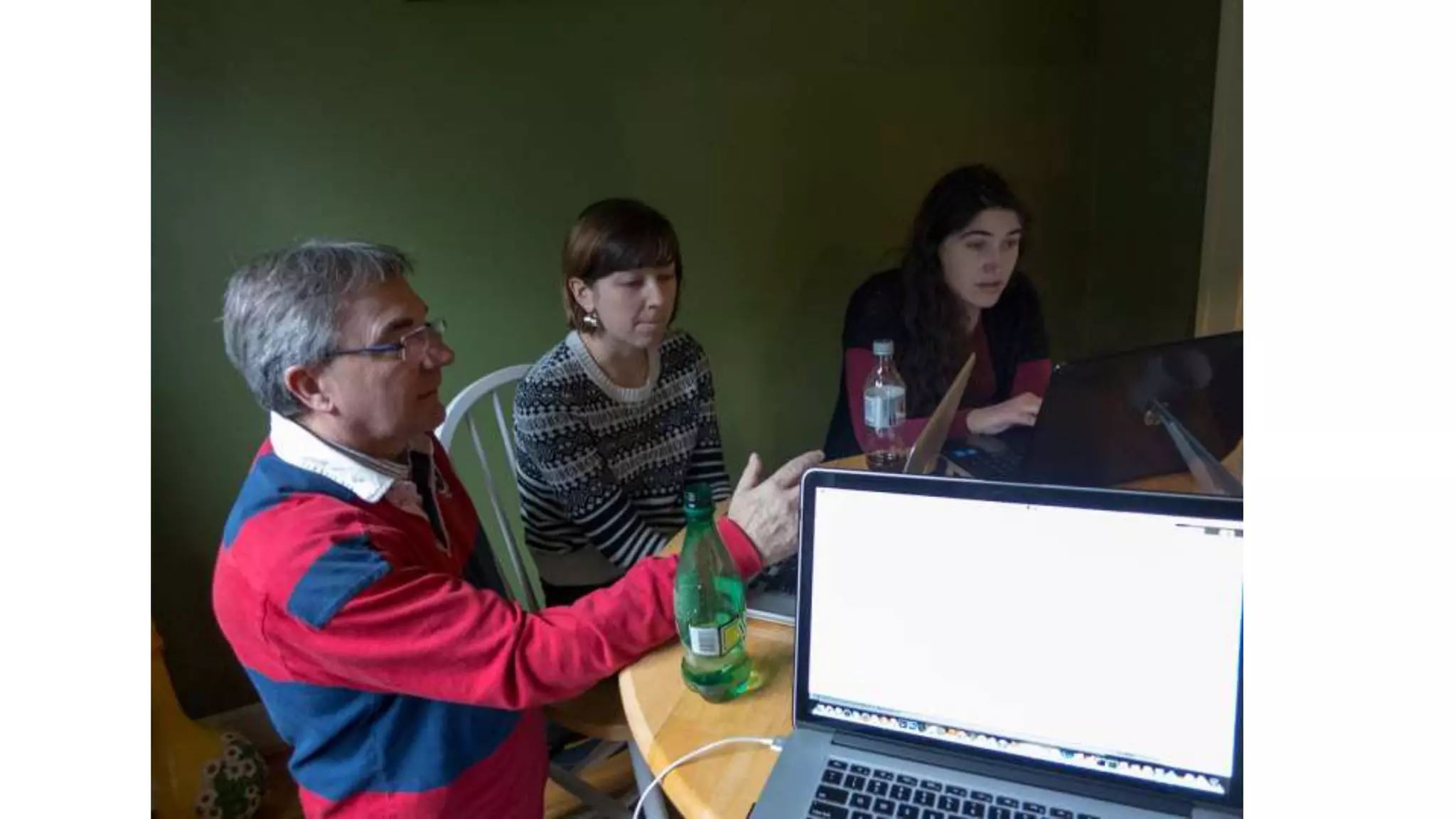
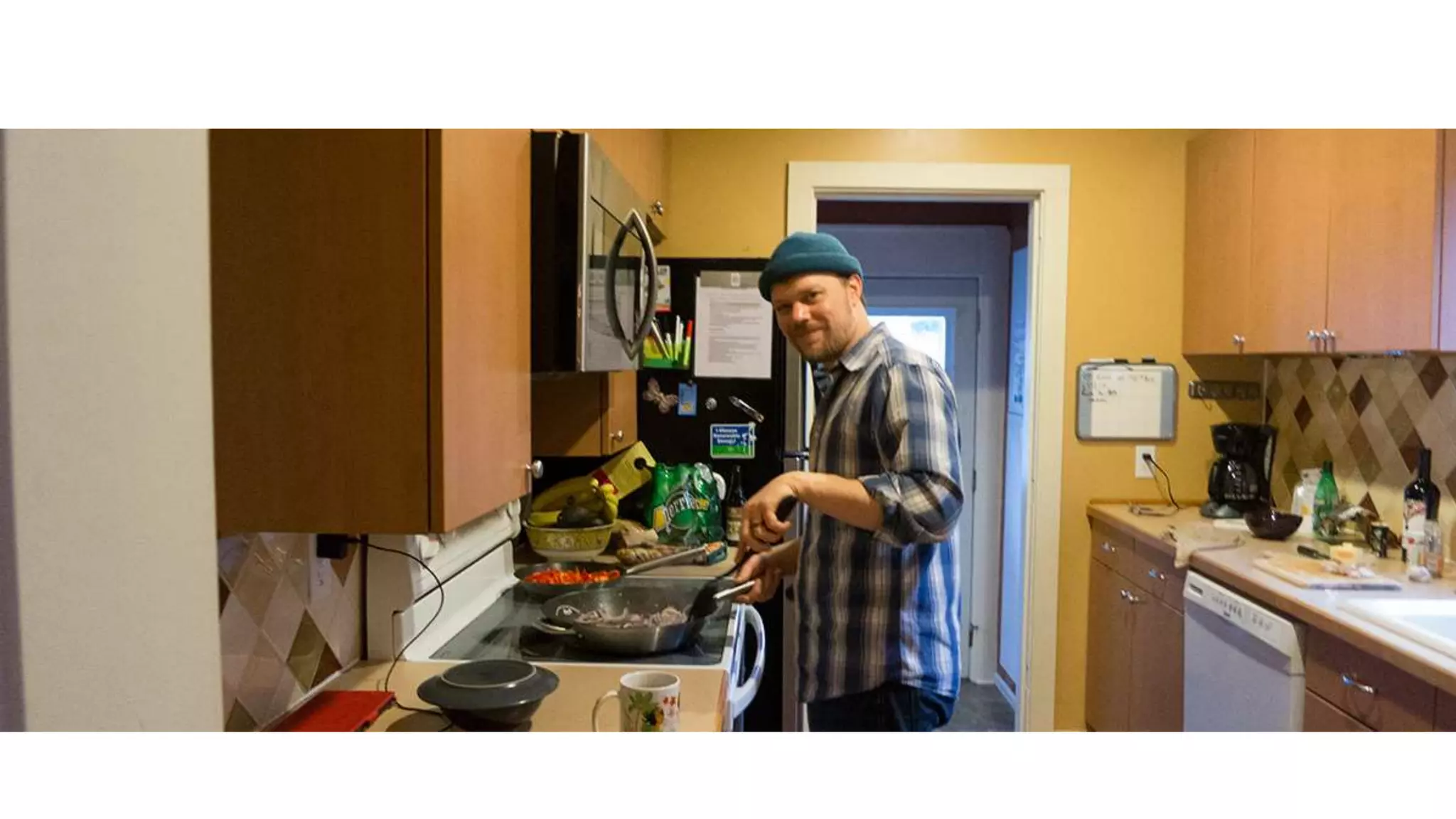
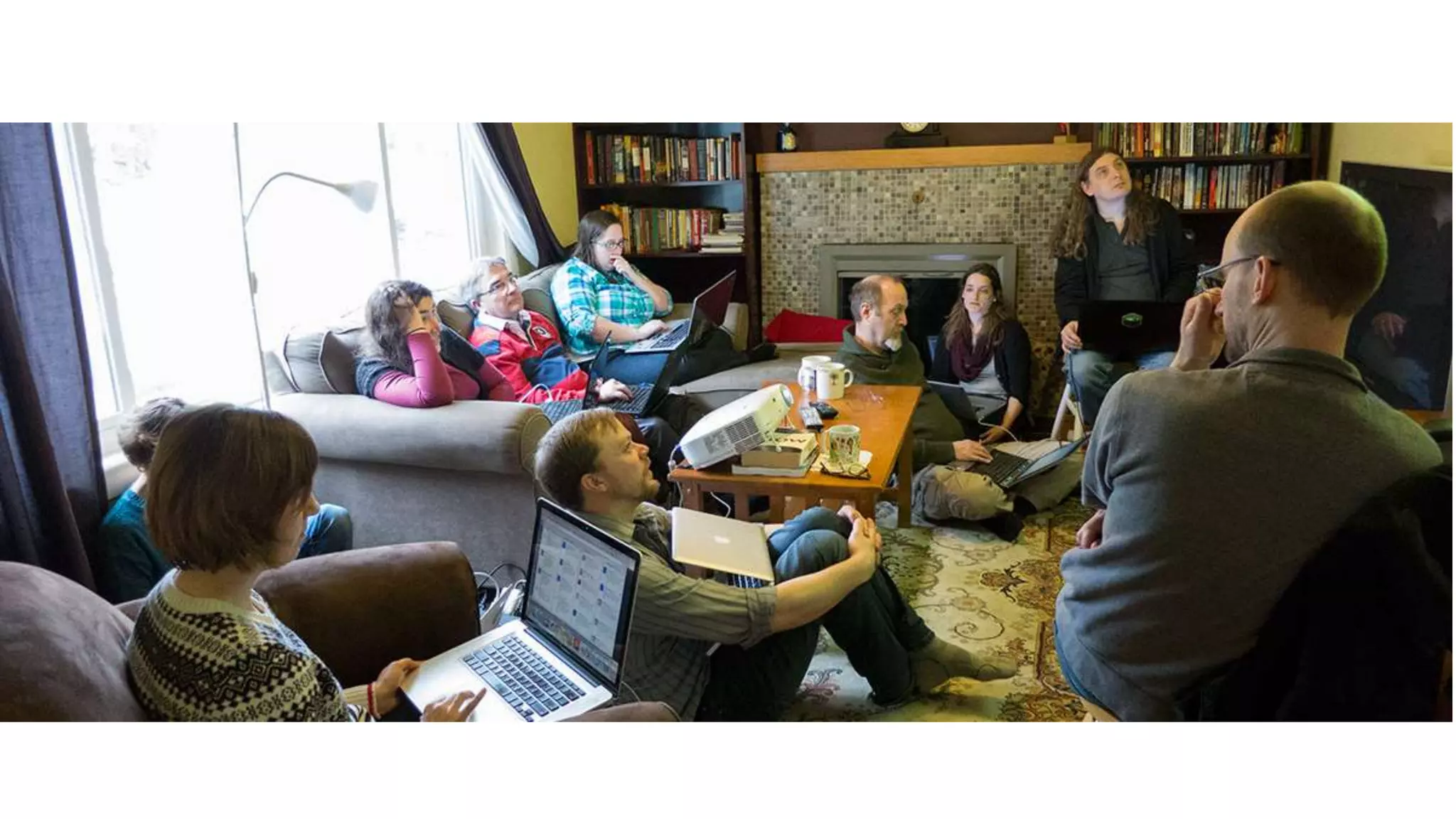
#pbcorerdf15 participants
#pbcorerdf15
• Reviewed existing ontologies including
– PREMIS
– VRACore
– MODS
– BIBFRAME
– EBUCore
• Ultimately decided to conduct gap analysis
between PBCore XML & EBUCore RDF
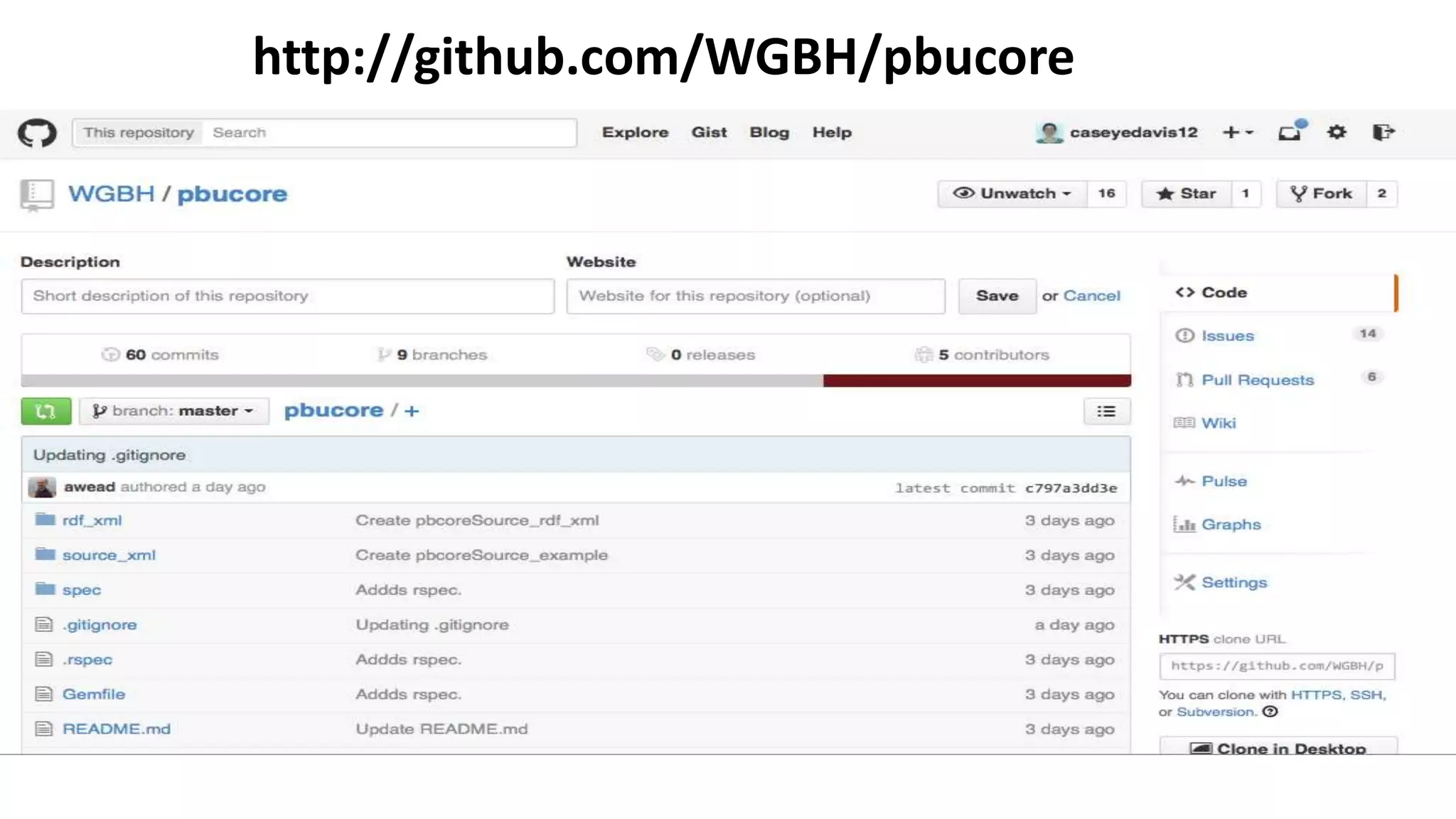
http://github.com/WGBH/pbucore
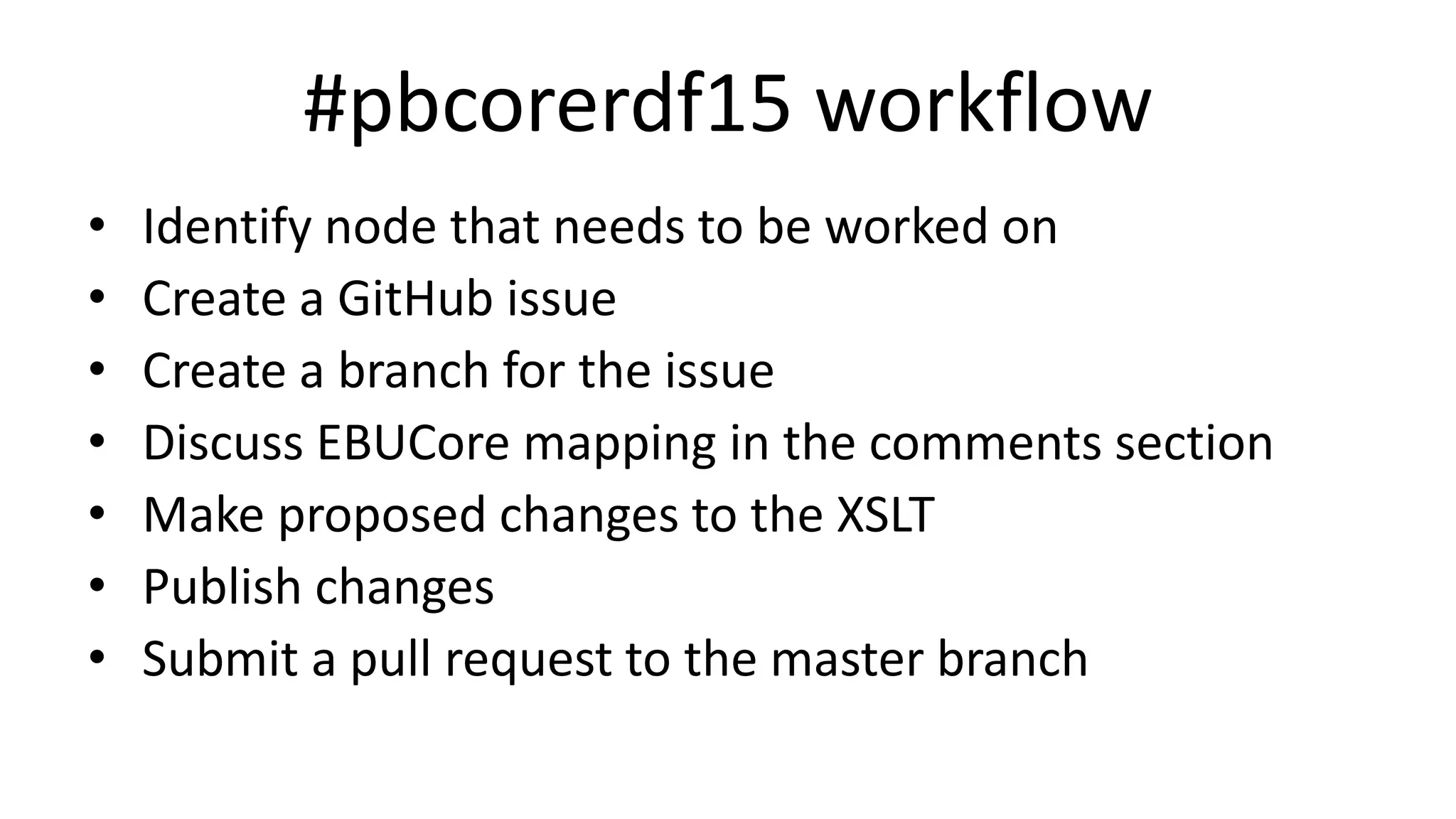
#pbcorerdf15 workflow
• Identify node that needs to be worked on
• Create a GitHub issue
• Create a branch for the issue
• Discuss EBUCore mapping in the comments section
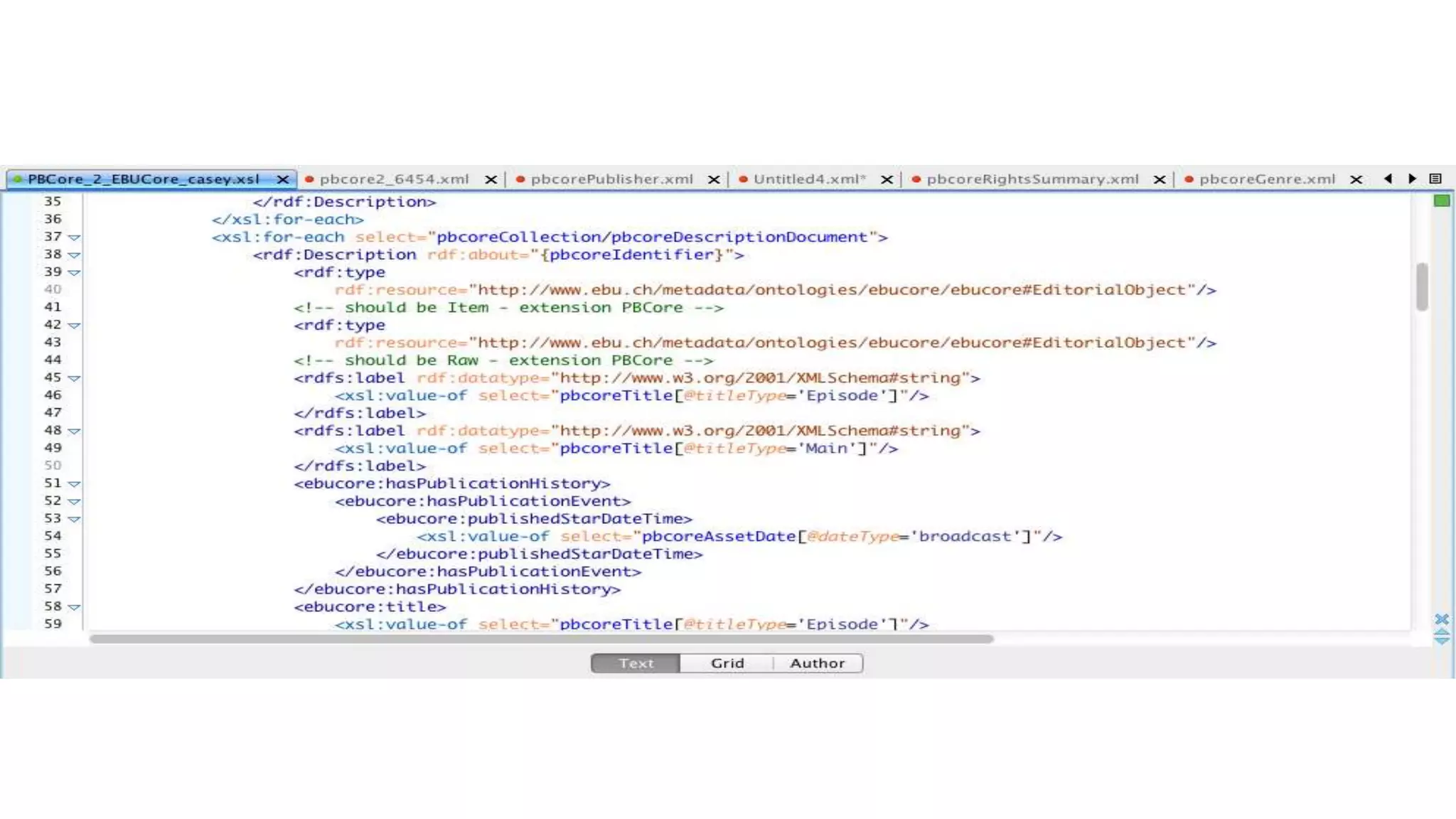
• Make proposed changes to the XSLT
• Publish changes
• Submit a pull request to the master branch
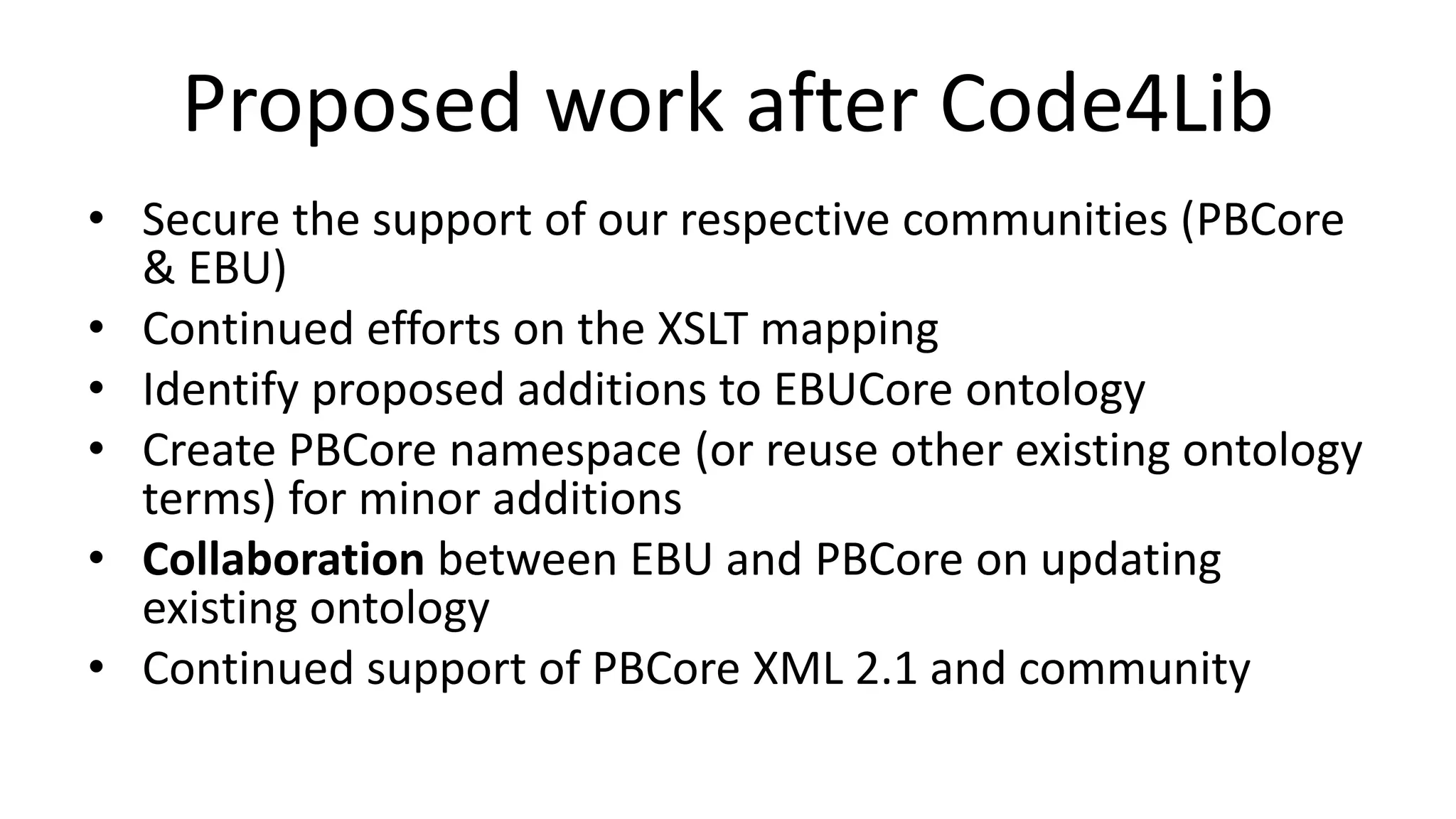
Proposed work after Code4Lib
• Secure the support of our respective communities (PBCore
& EBU)
• Continued efforts on the XSLT mapping
• Identify proposed additions to EBUCore ontology
• Create PBCore namespace (or reuse other existing ontology
terms) for minor additions
• Collaboration between EBU and PBCore on updating
existing ontology
• Continued support of PBCore XML 2.1 and community
Takeaways
• Face-to-face meetings so much more efficient
than virtual meetings
• No need to reinvent the wheel; build upon
existing work already well established
• International collaboration
Many thanks!!!
• Karen Cariani, WGBH
• Jean-Pierre Evain, EBU
• Rebecca Fraimow, WGBH
• Jack Brighton, Illinois Public
Media
• Peggy Griesinger, Museum
of Modern Art (MOMA)
• Glenn Clatworthy, PBS
• Rebecca Guenther, New York
University
• Julie Louise Hardesty, Indiana
University
• Cliff Ingham, City of
Bloomington
• Laurence Cook, MetaCirque
• Adam Wead, Penn State
• Andrew Myers, WGBH
• Casey E. Davis, WGBH

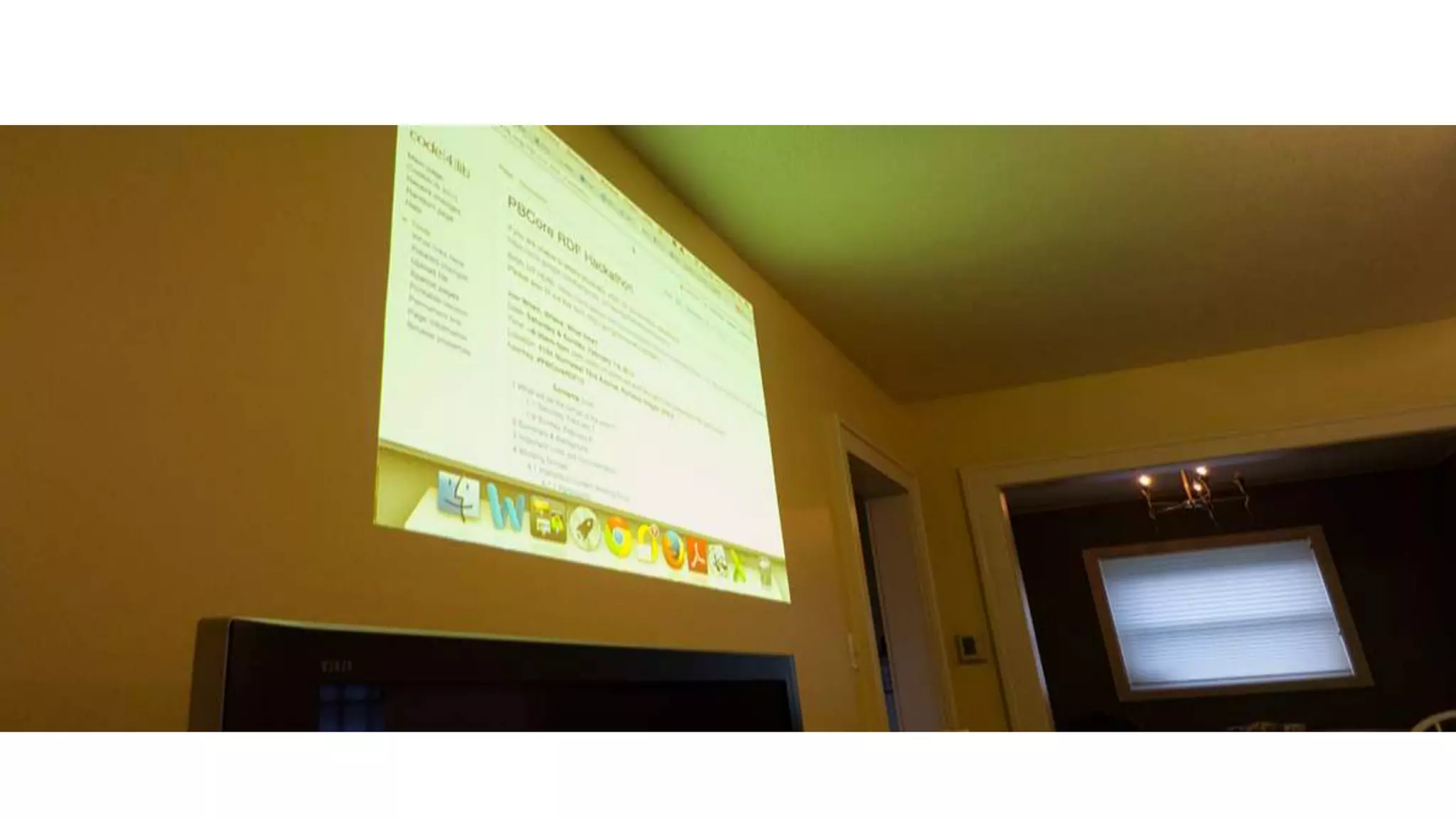
PBCore RDF Ontology Hackathon | Code4Lib 2015

  • 1.
  • 2.
    What is PBCore? •XML schema developed by public broadcasting community • Descriptive, intellectual property, and technical metadata about video and audio • Under further development by the AAPB and PBCore Advisory Group
  • 3.
    PBCore Development Goals •Launch updated schema (2.1) in Spring 2015 • Update and create better documentation • Create new and improved website • Continue educating orgs about the schema • Conduct outreach to the community • ...and develop an RDF ontology
  • 4.
    Why RDF? • Growingnumber of PBCore users contributing to Hydra community • Migration from Fedora 3  Fedora 4 • Opportunity to take advantage of RDF data streams • Forthcoming use case: WGBH and Indiana University project to migrate HydraDAM to Fedora 4
  • 5.
  • 6.
    #pbcorerdf15 • Reviewed existingontologies including – PREMIS – VRACore – MODS – BIBFRAME – EBUCore • Ultimately decided to conduct gap analysis between PBCore XML & EBUCore RDF
  • 7.
  • 9.
    #pbcorerdf15 workflow • Identifynode that needs to be worked on • Create a GitHub issue • Create a branch for the issue • Discuss EBUCore mapping in the comments section • Make proposed changes to the XSLT • Publish changes • Submit a pull request to the master branch
  • 10.
    Proposed work afterCode4Lib • Secure the support of our respective communities (PBCore & EBU) • Continued efforts on the XSLT mapping • Identify proposed additions to EBUCore ontology • Create PBCore namespace (or reuse other existing ontology terms) for minor additions • Collaboration between EBU and PBCore on updating existing ontology • Continued support of PBCore XML 2.1 and community
  • 15.
    Takeaways • Face-to-face meetingsso much more efficient than virtual meetings • No need to reinvent the wheel; build upon existing work already well established • International collaboration
  • 16.
    Many thanks!!! • KarenCariani, WGBH • Jean-Pierre Evain, EBU • Rebecca Fraimow, WGBH • Jack Brighton, Illinois Public Media • Peggy Griesinger, Museum of Modern Art (MOMA) • Glenn Clatworthy, PBS • Rebecca Guenther, New York University • Julie Louise Hardesty, Indiana University • Cliff Ingham, City of Bloomington • Laurence Cook, MetaCirque • Adam Wead, Penn State • Andrew Myers, WGBH • Casey E. Davis, WGBH