PATHOPHYSIOLOGY
PREDISPOSING FACTORS
• Age
• Hereditary
PRECIPITATING FACTORS
• Obesity
• Dietary intake
• Stress
• Lifestyle
INSULIN RESISTANCE
DERANGED INSULIN RELEASE
↑ed hepatic glucose uptake
↓ed glucose uptake
Hyperglycemia
DM (TYPE II)
S/S:
 Glycosuria
 Polyuria
 Nocturia
 Polydipsia
Diabetic ketoacidosis
S/S:
 Polyuria
 Polydipsia
 N and V
 Hypotension
 Tachycardia
 Fruity smell
Kussmaul breathing
NephropathyRetinopathy
Blindness
Atherosclerosis
Sugar deposits like fat in the
wall of the blood vessel
Myocardial infarction
Neuropathy
Skin break
Impaired pain sensation
Impaired host defenses
Infection
↑ed serum glucose level
Prone to injury
Blockage of tiny blood
vessels
↓ed blood supply in the eye
Blurry vision
Destruction of retinal blood
vessels
Death
Severe infection
↓ed size of the lumen
↓ed renal perfusion
Impaired renal function
Renal failure
Coma

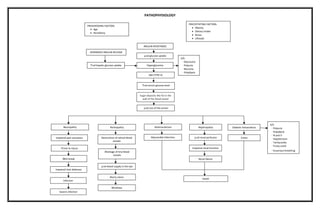
Pathophysiology of DM (Type 2)

  • 1.
    PATHOPHYSIOLOGY PREDISPOSING FACTORS • Age •Hereditary PRECIPITATING FACTORS • Obesity • Dietary intake • Stress • Lifestyle INSULIN RESISTANCE DERANGED INSULIN RELEASE ↑ed hepatic glucose uptake ↓ed glucose uptake Hyperglycemia DM (TYPE II) S/S:  Glycosuria  Polyuria  Nocturia  Polydipsia Diabetic ketoacidosis S/S:  Polyuria  Polydipsia  N and V  Hypotension  Tachycardia  Fruity smell Kussmaul breathing NephropathyRetinopathy Blindness Atherosclerosis Sugar deposits like fat in the wall of the blood vessel Myocardial infarction Neuropathy Skin break Impaired pain sensation Impaired host defenses Infection ↑ed serum glucose level Prone to injury Blockage of tiny blood vessels ↓ed blood supply in the eye Blurry vision Destruction of retinal blood vessels Death Severe infection ↓ed size of the lumen ↓ed renal perfusion Impaired renal function Renal failure Coma