PAST SIMPLE
ENGLISH II
LDII. OLIVIA I. ANDRADE GAMEZ
UNIVERSIDAD AUTONOMA DE SINALOA
ESCUELA SUPERIOR DE ENFERMERIA
MAZATLAN
SIMPLE PAST (PASADO SIMPLE)

 FUNCIONES DEL "SIMPLE
PAST"

 El "simple past" se utiliza para
hablar de una acción que
concluyó en un
tiempo anterior al actual. La
duración no es relevante. El
tiempo en que se sitúa la
acción puede ser el pasado
reciente o un pasado lejano.

 EJEMPLOS
 John Cabot sailed to America
in 1498.
 My father died last year.
 He lived in Fiji in 1976.
 We crossed the Channel
yesterday.
 Siempre se utiliza el "simple past" para
referirse a cuándo ocurrió algo, de
modo que va asociado a ciertas
expresiones temporales que indican:

 frecuencia: often, sometimes, always
I sometimes walked home at
lunchtime.
I often brought my lunch to school.

 un tiempo determinado: last week,
when I was a child, yesterday, six
weeks ago
We saw a good film last week.
Yesterday, I arrived in Geneva.
She finished her work atseven o'clock
I went to the theatre last night

 un tiempo indeterminado: the other
day, ages ago, a long time
ago People lived in caves a long time
ago.
FORMACIÓN DEL "SIMPLE PAST" CON
VERBOS REGULARES
Afirmativa
Sujeto + raíz + ed
I skipped.
Negativa
Sujeto + did not + infinitivo sin to
They didn't go.
Interrogativa
Did + sujeto + infinitivo sin to
Did she arrive?
Interrogativa negativa
Did not + sujeto + infinitivo sin to
Didn't you play?
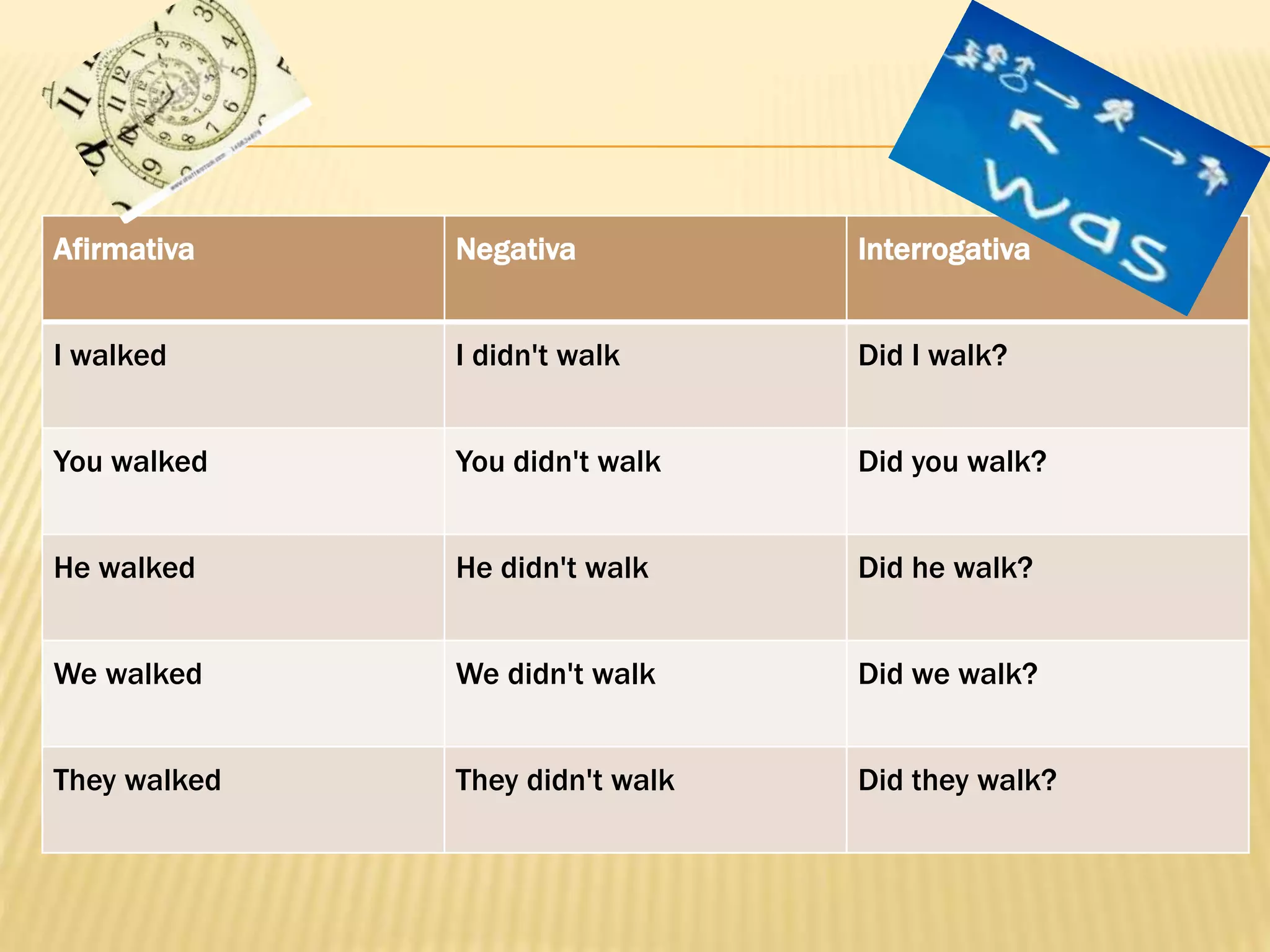
Afirmativa Negativa Interrogativa
I walked I didn't walk Did I walk?
You walked You didn't walk Did you walk?
He walked He didn't walk Did he walk?
We walked We didn't walk Did we walk?
They walked They didn't walk Did they walk?
"SIMPLE PAST" DE LOS VERBOS TO BE, TO HAVE,
TO DO
Sujeto Verbo
Be Have Do
I was had did
You were had did
He/She/It was had did
We were had did
You were had did
They were had did
CONSTRUCCIONES AFIRMATIVA, NEGATIVA E
INTERROGATIVA
 AFIRMATIVA
 La forma afirmativa del
"simple past" es sencilla.
 I was in Japan last year
 She had a headache
yesterday.
 We did our homework last
night.
 Para las formas negativa e
interrogativa del "simple
past" del verbo "do" como
verbo ordinario, se emplea
como auxiliar "do", e.g.
We didn't do our homework
last night.

La forma negativa del
verbo "have" en "simple
past" suele construirse
utilizando el auxiliar "do",
aunque en ocasiones solo se
añade not o la
contracción "n't".
EJEMPLOS
 They weren't in Rio last summer.
 We didn't have any money.
 We didn't have time to visit the Eiffel Tower.
 We didn't do our exercises this morning.
 Were they in Iceland last January?
 Did you have a bicycle when you were young?
 Did you do much climbing in Switzerland?
"SIMPLE PAST": VERBOS IRREGULARES
 Algunos verbos hacen el "simple past" de
forma irregular. Estos son los más comunes.
 TO GO
 He went to a club last night.
 Did he go to the cinema last night?
 He didn't go to bed early last night.
 TO GIVE
 We gave her a doll for her birthday.
 They didn't give John their new address.
 Did Barry give you my passport?
 TO COME
 My parents came to visit me last July.
 We didn't come because it was raining.
 Did he come to your party last week?
“Life can only be understood backwards; but it must be lived
forwards.”
― Søren Kierkegaard

Past simple presentation

  • 1.
    PAST SIMPLE ENGLISH II LDII.OLIVIA I. ANDRADE GAMEZ UNIVERSIDAD AUTONOMA DE SINALOA ESCUELA SUPERIOR DE ENFERMERIA MAZATLAN
  • 2.
    SIMPLE PAST (PASADOSIMPLE)   FUNCIONES DEL "SIMPLE PAST"   El "simple past" se utiliza para hablar de una acción que concluyó en un tiempo anterior al actual. La duración no es relevante. El tiempo en que se sitúa la acción puede ser el pasado reciente o un pasado lejano.   EJEMPLOS  John Cabot sailed to America in 1498.  My father died last year.  He lived in Fiji in 1976.  We crossed the Channel yesterday.  Siempre se utiliza el "simple past" para referirse a cuándo ocurrió algo, de modo que va asociado a ciertas expresiones temporales que indican:   frecuencia: often, sometimes, always I sometimes walked home at lunchtime. I often brought my lunch to school.   un tiempo determinado: last week, when I was a child, yesterday, six weeks ago We saw a good film last week. Yesterday, I arrived in Geneva. She finished her work atseven o'clock I went to the theatre last night   un tiempo indeterminado: the other day, ages ago, a long time ago People lived in caves a long time ago.
  • 3.
    FORMACIÓN DEL "SIMPLEPAST" CON VERBOS REGULARES Afirmativa Sujeto + raíz + ed I skipped. Negativa Sujeto + did not + infinitivo sin to They didn't go. Interrogativa Did + sujeto + infinitivo sin to Did she arrive? Interrogativa negativa Did not + sujeto + infinitivo sin to Didn't you play?
  • 4.
    Afirmativa Negativa Interrogativa Iwalked I didn't walk Did I walk? You walked You didn't walk Did you walk? He walked He didn't walk Did he walk? We walked We didn't walk Did we walk? They walked They didn't walk Did they walk?
  • 5.
    "SIMPLE PAST" DELOS VERBOS TO BE, TO HAVE, TO DO Sujeto Verbo Be Have Do I was had did You were had did He/She/It was had did We were had did You were had did They were had did
  • 6.
    CONSTRUCCIONES AFIRMATIVA, NEGATIVAE INTERROGATIVA  AFIRMATIVA  La forma afirmativa del "simple past" es sencilla.  I was in Japan last year  She had a headache yesterday.  We did our homework last night.  Para las formas negativa e interrogativa del "simple past" del verbo "do" como verbo ordinario, se emplea como auxiliar "do", e.g. We didn't do our homework last night.  La forma negativa del verbo "have" en "simple past" suele construirse utilizando el auxiliar "do", aunque en ocasiones solo se añade not o la contracción "n't".
  • 7.
    EJEMPLOS  They weren'tin Rio last summer.  We didn't have any money.  We didn't have time to visit the Eiffel Tower.  We didn't do our exercises this morning.  Were they in Iceland last January?  Did you have a bicycle when you were young?  Did you do much climbing in Switzerland?
  • 8.
    "SIMPLE PAST": VERBOSIRREGULARES  Algunos verbos hacen el "simple past" de forma irregular. Estos son los más comunes.  TO GO  He went to a club last night.  Did he go to the cinema last night?  He didn't go to bed early last night.
  • 9.
     TO GIVE We gave her a doll for her birthday.  They didn't give John their new address.  Did Barry give you my passport?  TO COME  My parents came to visit me last July.  We didn't come because it was raining.  Did he come to your party last week?
  • 10.
    “Life can onlybe understood backwards; but it must be lived forwards.” ― Søren Kierkegaard