Pasillo 
By Dafne
Origins 
19th Century Viceroyalty of New Granada 
(Panama, Ecuador, Venezuela, Colombia) in 
Bogotá (Colombia) 
Believed to originate from the Viennese Waltz 
with influences by the Spanish Paso Doble. 
Associated Colombian/ Ecuadorian (Nationalism) 
War of Independence 
National Musical Style of Ecuador
History 
Started being played by military bands 
(instrumental). 
Stopped being a festival genre and became more 
popular since the beginning of the 20th century. 
Went through a transition when the radio was 
introduced in the 1950s because of competition 
with other genres. 
Keeps transforming because of social, economic, 
and political changes.
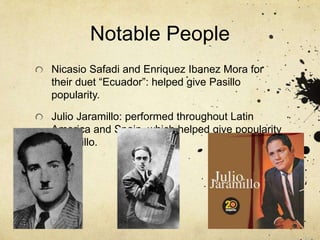
Notable People 
Nicasio Safadi and Enriquez Ibanez Mora for 
their duet “Ecuador”: helped give Pasillo 
popularity. 
Julio Jaramillo: performed throughout Latin 
America and Spain, which helped give popularity 
to Pasillo.
Instruments Used 
Guitar 
Rondin 
Mandolin 
Other stringed instruments
Lyrics 
1920s: about unfaithful women, angry and vulgar. 
National pride and respect to women. 
About Ecuadorian people and landscape. 
Sentimental 
Poetic 
Down tempo
Musical Example 
Julio Jaramillo- El Aguacate 
https://www.youtube.com/watch?v=tHMDpFCcyA 
A
Analysis 
Medium: Guitar, mandolin, male voices (2), string ensemble 
(chordophones) 
Meter: Triple 
Harmony: Minor, Homophonic, wide range 
Melody: Disjunct, long continuous lines 
Form: Intro | Verse 1 x2 | Chorus x2 | Verse 2 | Verse 3| Instrumental 
Verse 2 repeated | Verse 3 repeated x2 
Vocal: 2 male voices, 1st voice sings the first verse the first time, 2nd 
voice sings the first verse the second time, both sing the rest of the 
song in harmony, melancholic, use of crescendo and decrescendo, 
straight-tone 
Style: Pasillo, doubling 
Context: Ecuador, 20th century, love, pain
Works Cited 
"MUSICA.COM > J > Julio Jaramillo > El Aguacate." Letra de El 
Aguacate de Julio Jaramillo. N.p., n.d. Web. 31 Aug. 2014. 
<http://www.musica.com/letras.asp?letra=1012970>. 
"Other National Identities: Pasillo in Ecuador." Other National 
Identities: Pasillo in Ecuador. N.p., n.d. Web. 31 Aug. 2014. 
<http://othernationalidentities.blogspot.in/2013/02/pasillo-in-ecuador. 
html>. 
"Pasillo." Wikipedia. Wikimedia Foundation, 24 Aug. 2014. Web. 31 
Aug. 2014. <http://en.wikipedia.org/wiki/Pasillo>."Pasillo – The 
Rhythm of Ecuador - English Blog." Pasillo †
“ The Rhythm of Ecuador - English Blog. N.p., n.d. Web. 31 Aug. 
2014. <http://www.ecuador.com/blog/pasillo-the-rhythm-of-ecuador>. 
All images from Google Images

Pasillo

  • 1.
  • 2.
    Origins 19th CenturyViceroyalty of New Granada (Panama, Ecuador, Venezuela, Colombia) in Bogotá (Colombia) Believed to originate from the Viennese Waltz with influences by the Spanish Paso Doble. Associated Colombian/ Ecuadorian (Nationalism) War of Independence National Musical Style of Ecuador
  • 4.
    History Started beingplayed by military bands (instrumental). Stopped being a festival genre and became more popular since the beginning of the 20th century. Went through a transition when the radio was introduced in the 1950s because of competition with other genres. Keeps transforming because of social, economic, and political changes.
  • 5.
    Notable People NicasioSafadi and Enriquez Ibanez Mora for their duet “Ecuador”: helped give Pasillo popularity. Julio Jaramillo: performed throughout Latin America and Spain, which helped give popularity to Pasillo.
  • 6.
    Instruments Used Guitar Rondin Mandolin Other stringed instruments
  • 7.
    Lyrics 1920s: aboutunfaithful women, angry and vulgar. National pride and respect to women. About Ecuadorian people and landscape. Sentimental Poetic Down tempo
  • 8.
    Musical Example JulioJaramillo- El Aguacate https://www.youtube.com/watch?v=tHMDpFCcyA A
  • 9.
    Analysis Medium: Guitar,mandolin, male voices (2), string ensemble (chordophones) Meter: Triple Harmony: Minor, Homophonic, wide range Melody: Disjunct, long continuous lines Form: Intro | Verse 1 x2 | Chorus x2 | Verse 2 | Verse 3| Instrumental Verse 2 repeated | Verse 3 repeated x2 Vocal: 2 male voices, 1st voice sings the first verse the first time, 2nd voice sings the first verse the second time, both sing the rest of the song in harmony, melancholic, use of crescendo and decrescendo, straight-tone Style: Pasillo, doubling Context: Ecuador, 20th century, love, pain
  • 10.
    Works Cited "MUSICA.COM> J > Julio Jaramillo > El Aguacate." Letra de El Aguacate de Julio Jaramillo. N.p., n.d. Web. 31 Aug. 2014. <http://www.musica.com/letras.asp?letra=1012970>. "Other National Identities: Pasillo in Ecuador." Other National Identities: Pasillo in Ecuador. N.p., n.d. Web. 31 Aug. 2014. <http://othernationalidentities.blogspot.in/2013/02/pasillo-in-ecuador. html>. "Pasillo." Wikipedia. Wikimedia Foundation, 24 Aug. 2014. Web. 31 Aug. 2014. <http://en.wikipedia.org/wiki/Pasillo>."Pasillo – The Rhythm of Ecuador - English Blog." Pasillo †“ The Rhythm of Ecuador - English Blog. N.p., n.d. Web. 31 Aug. 2014. <http://www.ecuador.com/blog/pasillo-the-rhythm-of-ecuador>. All images from Google Images