Bariatric Surgery
Part 2
HOSAM M ATEF ;MD
SUEZ CANAL UNIVERSITY
‫الرحيم‬ ‫الرحمن‬ ‫هللا‬ ‫بسم‬
‫لي‬ ‫ويسر‬ ‫صدري‬ ‫لي‬ ‫اشرح‬ ‫رب‬
‫لساني‬ ‫من‬ ‫عقده‬ ‫واحلل‬ ‫امري‬
‫يفقهوا‬‫قولي‬
Introduction
• Bariatric  GREEK word : baros = weight and
iatrics = medical treatment
• Greatest health challenge in western countries
• UK: 23% men, 25 % women *
• USA: 200 million people are overweight**
Definition
• Excess of body fat
• Intake > Expenditure
• Genetic, behavioral, cultural and socioeconomic
factors
• Reduces quality of life and life expectancy
• Increased healthcare services demands (> 100
billion dollars)
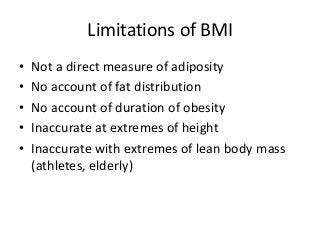
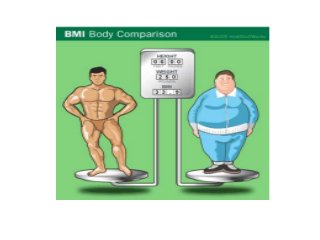
Limitations of BMI
• Not a direct measure of adiposity
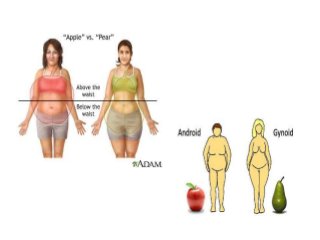
• No account of fat distribution
• No account of duration of obesity
• Inaccurate at extremes of height
• Inaccurate with extremes of lean body mass
(athletes, elderly)
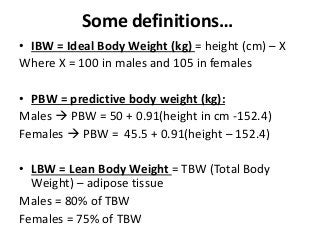
Some definitions…
• IBW = Ideal Body Weight (kg) = height (cm) – X
Where X = 100 in males and 105 in females
• PBW = predictive body weight (kg):
Males  PBW = 50 + 0.91(height in cm -152.4)
Females  PBW = 45.5 + 0.91(height – 152.4)
• LBW = Lean Body Weight = TBW (Total Body
Weight) – adipose tissue
Males = 80% of TBW
Females = 75% of TBW
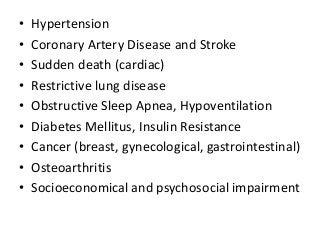
• Hypertension
• Coronary Artery Disease and Stroke
• Sudden death (cardiac)
• Restrictive lung disease
• Obstructive Sleep Apnea, Hypoventilation
• Diabetes Mellitus, Insulin Resistance
• Cancer (breast, gynecological, gastrointestinal)
• Osteoarthritis
• Socioeconomical and psychosocial impairment
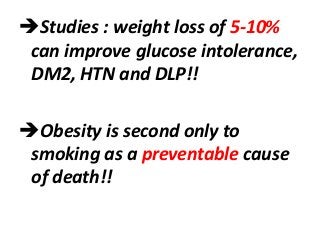
Studies : weight loss of 5-10%
can improve glucose intolerance,
DM2, HTN and DLP!!
Obesity is second only to
smoking as a preventable cause
of death!!
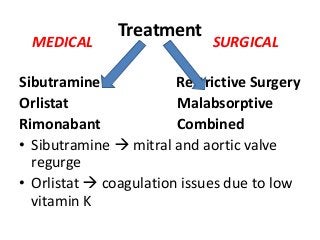
Treatment
MEDICAL SURGICAL
Sibutramine Restrictive Surgery
Orlistat Malabsorptive
Rimonabant Combined
• Sibutramine  mitral and aortic valve
regurge
• Orlistat  coagulation issues due to low
vitamin K
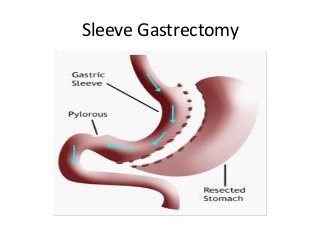
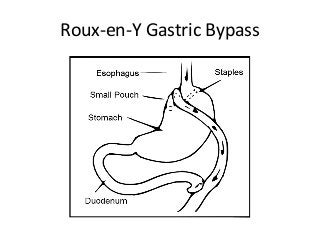
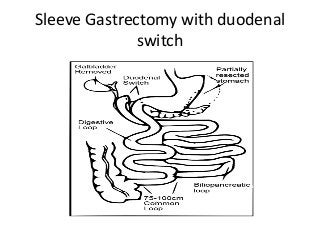
There are many types of bariatric surgeries…
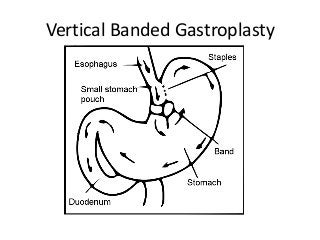
Vertical Banded Gastroplasty
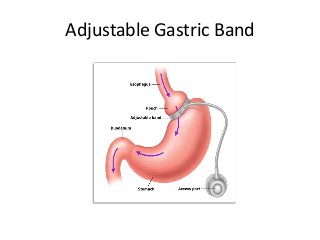
Adjustable Gastric Band
Sleeve Gastrectomy
Roux-en-Y Gastric Bypass
Sleeve Gastrectomy with duodenal
switch
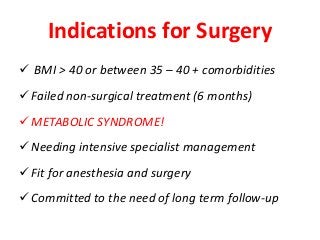
Indications for Surgery
 BMI > 40 or between 35 – 40 + comorbidities
Failed non-surgical treatment (6 months)
METABOLIC SYNDROME!
Needing intensive specialist management
Fit for anesthesia and surgery
Committed to the need of long term follow-up
Contraindications
• Unstable CAD
• Uncontrolled severe OSA
• Uncontrolled psychiatric disorder
• Mental retardation (IQ<60)
• Inability to understand the surgery
• Perceived inability to adhere to postoperative
restrictions
• Continued drug abuse
• Malignancy with a poor 5-year prognosis
Health benefits of
bariatric surgery
Improvement of Comorbidities
• Resolution of HTN, DM, DLP, OSA,
improvement of respiratory function,
of fatty liver, reversal of
cardiomyopathy of obesity,
decreased joint pain and improved
mobility
What the anesthesiologist
should know preoperatively?
The pathophysiological
changes associated with
obesity
Respiratory system
• Decreased chest wall compliance
• Decreased lung compliance
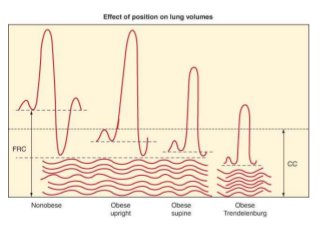
• Decreased FRC  decreased ERV 
decreased safe apnea time  rapid
desaturation  CC > FRC
• Decreased VCV/Q mismatch in the dependent
lower zones since they are underventilated
and overperfused
• ERV most sensitive predictor of pulmonary
function
Respiratory system (cont’d)
• Increased (A-a) O2 gradient
• Increased O2 consumption and CO2
production  high energy turnover
• Increased V/Q mismatch!!
• OSA  do polysomnography
preoperatively  need for CPAP?
OSA and OHS
• OSA: apneaic episodes secondary to
pharyngeal collapse during sleep
• airflow ceases, ongoing effort an
closed airway, > 10s, > 5 / hour, > 30/
night
• Snoring
• daytime somnolence and headaches
• hypoxemia, polycythemia, systemic
vasoconstriction, hypercarbia, pm
HTN, core pulmonale
OHS
• OHS: altered control of breathing,
diurnal variation, PaCO2> 5.9 kPA
with increased 1.3 kPA asleep, desat
not explained by obstruction,
decreased ventilatory response to
CO2, coexists with OSA
Cardiovascular system
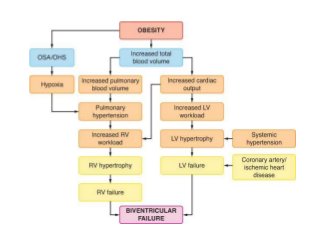
• Increased blood volume  fat!
• Atherosclerosis and hypercoagulability!
• Increased Cardiac Output  20-30 ml/kg
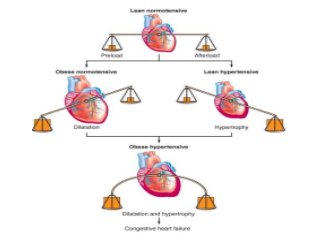
• LV wall stress  dilatation and hypertrophy 
obesity cardiomyopathy
• Sympathetic activation  HTN
• Arrythmias  fatty infiltration of conductive
system
• Increased LV size by hypertrophy and
dilation and increased risk of Afib
• Sympathetic activation is due to OSA
• OSA  RVH and RV failure and core
pulmonale
• Biventricular failure insues!!!!!!
Gastrointestinal system
• Increased gastric volume (> 25 mL) , faster
empty but larger gastric volume and residual
• Increased acidity (pH< 2.5)
• Increased risk of regurgitation and aspiration!!
• DM type 2
• Metabolic syndrome
• Fatty infiltration of liver , ↑ALT
• Hiatal hernia and GERD!
Musculo-skeletal and other systems
• Oestheoarthritis
• Compression fractures
• Urinary incontinence
• Skin infections (candidiasis)  wound
• Varicose veins
• Lymphoedema
• Hypothyroidism
Airway Changes
• Limitation of movement of atlantoaxial joint and
cervical spine  upper thoracic and low cervical fat
pads
• Excessive tissue folds in the mouth and pharynx
• Suprasternal, presternal and posterior cervical fat
• Short thick neck
• Very thick submental fat pad
• OSA  excessive tissue in lateral pharyngeal walls
How does this affect
drug dosing??
Effects on drug distribution
• Reduced total body water
• Increased total body fat
• Increased lean body mass
• Altered protein binding
• Increased blood volume
• Increased cardiac output
Loading Dose  Volume of Distribution
Maintenance Dose  Clearance
• Increased redistribution  increased T1/2
• Increased alpha-1-glycoprotein  decreased
free drug concentration
• drug mainly distributed to lean
tissues should have the loading dose
calculated on the basis of LBW.
• If the drug is equally distributed btw
adipose and lean then dosing should
be based on TBW
• For maintenance, a drug with similar
clearance btw obese and nonobese
should have maintenance calculated
based on LBW.
• However, a drug whose clearance
increases with obesity should have the
maintenance calculated based on
TBW.!!!!!!!!!!!
Effects on drug elimination
• Hepatic clearance  only phase II affected
• Renal clearance increased  increased RBF 
increased GFR (ex: increased dosing of
cimetidine and aminoglycosides antibiotics)
• Highly lipophilic (BZD, BrB)  increased VD 
dosed on TBW
• Less lipophilic (nondepolarizing muscle relaxants)
 no change  dosed on LBW
• Increased blood volume  increased plasma
concentrations of rapidly injected IV drugs
• Repeated injections  accumulation in fat 
increased duration of action
 Exceptions: Digoxin, Procainamide and
Remifentanil  highly lipophilic but dosed on
LBW
• Context sensitive half time is not affected but
dosing
• Adding 20% of estimated IBW dose of
hydrophilic meds is sufficient in obese
• SUX based on actual body weight bcz of the
increased activity of plasma
pseudocholinesterases in obese patients
Preoperative assessment
What should we focus on??
• Stabilizing comorbidities
• Identifying OSA symptoms
• Previous surgeries and previous anesthetics
• Difficult airway anticipation
NECK CIRCUMFERENCE!!:*
40 cm  5% risk
60 cm  35% risk
 BMI per se is not a predictor of a
difficult airway!
• 70% of obese are prone to OSA
• STOP-BANG questionnaire: Snoring,
Tired, Observed, Pressure blood, BMI,
Age, Neck circumference, Gender (male)
• OHS triad: obesity, daytime somnolence,
sleep-disordered breathing
Routine and specific lab tests
• Glucose, lipid profile
• Vitamin deficiencies
• Liver function tests
• ABG
• Lung function tests
• Polysomnography  initiate CPAP periop
• Echocardiography
• Polysomnography: AHI > 30 is a
warnign sign of rapid desat during
induction
• CPAP levels > 10 are a warning sign
for difficult face mask ventilation
Preoperative preparation
Avoid Sedatives!
Aspiration prophylaxis  PPIs, H2 antagonists
Thromboembolism prophylaxis
Intraoperatively…
We need:
Special equipment
Trained personnel
Anesthetic expertise!!
Positioning
• Special table with a bean bag
• Cushion gel pads  pressure on gluteal
muscles may lead to rhabdomyolysis!
• Proper positioning:
Modified Lloyd – Davis position = steep
trendelenburg with legs spread apart and
both arms out on arm boards
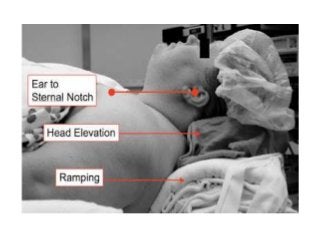
• Stacking = tip of the chin is at a
higher level than the chest
• BP cuff = 75 % of arm circumference
• Position :Supine = vena cava and
aortic compression
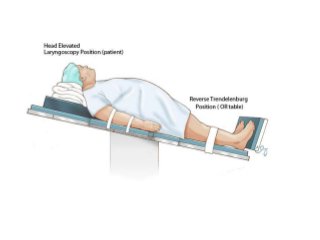
• Tren = worsens FRC
• Reverse trend = increased lung
compliance
• Prone = detrimental effects of lungs
ventilation and airway oxygenation
• Carpal tunnel is the most common
neuropathy following bariatric
surgery
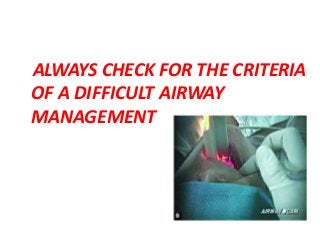
ALWAYS CHECK FOR THE CRITERIA
OF A DIFFICULT AIRWAY
MANAGEMENT
• Retrognathia, large neck,
protuberant teeth, limited neck
mobility ,pad of fat presternal ;
suprasternal ;neck ;upper thoracic ;
pharyngeal ; posterior cervical
Induction
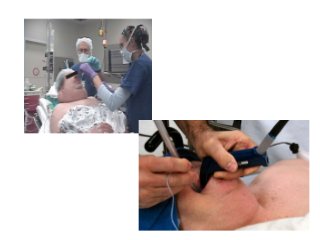
• Head-up position (HELP)
• Stacking
• Good preoxygenation
• Tidal volumes < 13 ml/kg
• PEEP and recruitment maneuvers
• PEEP is the only ventilatory
parameter that has been proven to
improve ventilatory function
• HELP: head elevated laryngoscopy
position
Induction Issues
Regurgitation*
Aspiration
Hypoxemia
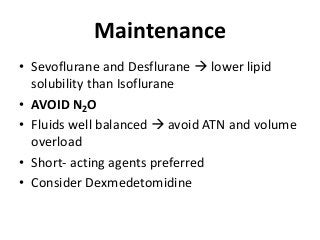
Maintenance
• Sevoflurane and Desflurane  lower lipid
solubility than Isoflurane
• AVOID N2O
• Fluids well balanced  avoid ATN and volume
overload
• Short- acting agents preferred
• Consider Dexmedetomidine
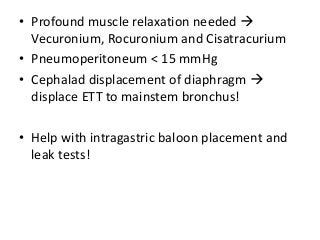
• Profound muscle relaxation needed 
Vecuronium, Rocuronium and Cisatracurium
• Pneumoperitoneum < 15 mmHg
• Cephalad displacement of diaphragm 
displace ETT to mainstem bronchus!
• Help with intragastric baloon placement and
leak tests!
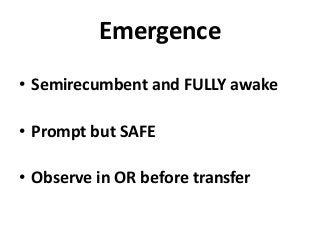
Emergence
• Semirecumbent and FULLY awake
• Prompt but SAFE
• Observe in OR before transfer
Recovery Room
• SKILLED personnel
• Watch ventilation
• Initiate CPAP or BiPAP if needed
• Use multimodal analgesia: opiods,
acetaminophen, tramadol, NSAIDs…weigh the
risks and benifits
Postoperatively…
• Initiate thrombophylaxis
• Continue analgesics
• Continue CPAP if initiated
• Antibioprophylaxis
• PPIs and gastric protection
• Fluid management
Complications of
bariatric surgery
Risk factors for complications
Male
Age > 65
Open surgery
Long operative time
Cardiac and respiratory comorbidities
Diabetes
Low case load
General complications
Infection
Hemorrhage
Incisionnal hernia
Bowel obstruction
Deep Venous Thrombosis
Specific complications
Anastomotic leak
Anastomotic stricture
Dumping syndrome
Nutritional deficiencies:
Vitamin B12
Thiamine
Protein
Vitamin A
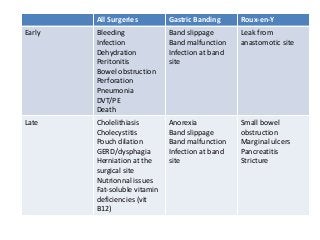
All Surgeries Gastric Banding Roux-en-Y
Early Bleeding
Infection
Dehydration
Peritonitis
Bowel obstruction
Perforation
Pneumonia
DVT/PE
Death
Band slippage
Band malfunction
Infection at band
site
Leak from
anastomotic site
Late Cholelithiasis
Cholecystitis
Pouch dilation
GERD/dysphagia
Herniation at the
surgical site
Nutrionnal issues
Fat-soluble vitamin
deficiencies (vit
B12)
Anorexia
Band slippage
Band malfunction
Infection at band
site
Small bowel
obstruction
Marginal ulcers
Pancreatitis
Stricture
In conclusion…
Health benefits
• Sustained loss of 65-80% of excess body
weight
• Resolution of:
Diabetes
Hypertension
Dyslipidemias
OSA
GERD
Low back pain and joint pain
Obesity and Heart-Rate Variability
What’s HRV?
• Variation in intervals between heartbeats
• Reflects cardiac autonomic modulation (
autonomic imbalance), heart rate variability
and cardiovascular disease risk factors
• Influenced in a favorable way by increased
parasympathetic activity
• Obesity  autonomic imbalance  increased
sympathetic and decreased parasympathetic
activities  increased workload and stress on
the heart  decreased HRV  risk factor for
heart diseases (MI, sudden death…)
• Weight loss  restored autonomic balance 
increase HRV  correlates with decreased
heart diseases!!!
Increased self-esteem and
participation in social activities!!
To Conclude…
Obesity…
Is a major healthcare problem
Increases co-morbidities and decreases the
quality of life
Is a daily challenge for the anesthesiologists
Needs extra care during the perioperative
period
Advancement in the anesthesia technology
has made a dramatic improvement
Bariatric surgery is a beneficial
and cost-effective healthcare
intervention!
Thank you!
Part 2 BARIATRIC ANESTHESIA

Part 2 BARIATRIC ANESTHESIA

  • 1.
    Bariatric Surgery Part 2 HOSAMM ATEF ;MD SUEZ CANAL UNIVERSITY
  • 2.
    ‫الرحيم‬ ‫الرحمن‬ ‫هللا‬‫بسم‬ ‫لي‬ ‫ويسر‬ ‫صدري‬ ‫لي‬ ‫اشرح‬ ‫رب‬ ‫لساني‬ ‫من‬ ‫عقده‬ ‫واحلل‬ ‫امري‬ ‫يفقهوا‬‫قولي‬
  • 3.
  • 4.
    • Bariatric GREEK word : baros = weight and iatrics = medical treatment • Greatest health challenge in western countries • UK: 23% men, 25 % women * • USA: 200 million people are overweight**
  • 5.
    Definition • Excess ofbody fat • Intake > Expenditure • Genetic, behavioral, cultural and socioeconomic factors • Reduces quality of life and life expectancy • Increased healthcare services demands (> 100 billion dollars)
  • 8.
    Limitations of BMI •Not a direct measure of adiposity • No account of fat distribution • No account of duration of obesity • Inaccurate at extremes of height • Inaccurate with extremes of lean body mass (athletes, elderly)
  • 11.
    Some definitions… • IBW= Ideal Body Weight (kg) = height (cm) – X Where X = 100 in males and 105 in females • PBW = predictive body weight (kg): Males  PBW = 50 + 0.91(height in cm -152.4) Females  PBW = 45.5 + 0.91(height – 152.4) • LBW = Lean Body Weight = TBW (Total Body Weight) – adipose tissue Males = 80% of TBW Females = 75% of TBW
  • 12.
    • Hypertension • CoronaryArtery Disease and Stroke • Sudden death (cardiac) • Restrictive lung disease • Obstructive Sleep Apnea, Hypoventilation • Diabetes Mellitus, Insulin Resistance • Cancer (breast, gynecological, gastrointestinal) • Osteoarthritis • Socioeconomical and psychosocial impairment
  • 14.
    Studies : weightloss of 5-10% can improve glucose intolerance, DM2, HTN and DLP!! Obesity is second only to smoking as a preventable cause of death!!
  • 15.
    Treatment MEDICAL SURGICAL Sibutramine RestrictiveSurgery Orlistat Malabsorptive Rimonabant Combined • Sibutramine  mitral and aortic valve regurge • Orlistat  coagulation issues due to low vitamin K
  • 16.
    There are manytypes of bariatric surgeries…
  • 17.
  • 18.
  • 19.
  • 20.
  • 21.
    Sleeve Gastrectomy withduodenal switch
  • 22.
    Indications for Surgery BMI > 40 or between 35 – 40 + comorbidities Failed non-surgical treatment (6 months) METABOLIC SYNDROME! Needing intensive specialist management Fit for anesthesia and surgery Committed to the need of long term follow-up
  • 23.
    Contraindications • Unstable CAD •Uncontrolled severe OSA • Uncontrolled psychiatric disorder • Mental retardation (IQ<60) • Inability to understand the surgery • Perceived inability to adhere to postoperative restrictions • Continued drug abuse • Malignancy with a poor 5-year prognosis
  • 24.
    Health benefits of bariatricsurgery Improvement of Comorbidities
  • 25.
    • Resolution ofHTN, DM, DLP, OSA, improvement of respiratory function, of fatty liver, reversal of cardiomyopathy of obesity, decreased joint pain and improved mobility
  • 26.
  • 27.
  • 28.
    Respiratory system • Decreasedchest wall compliance • Decreased lung compliance • Decreased FRC  decreased ERV  decreased safe apnea time  rapid desaturation  CC > FRC
  • 29.
    • Decreased VCV/Qmismatch in the dependent lower zones since they are underventilated and overperfused • ERV most sensitive predictor of pulmonary function
  • 31.
    Respiratory system (cont’d) •Increased (A-a) O2 gradient • Increased O2 consumption and CO2 production  high energy turnover • Increased V/Q mismatch!! • OSA  do polysomnography preoperatively  need for CPAP?
  • 32.
    OSA and OHS •OSA: apneaic episodes secondary to pharyngeal collapse during sleep • airflow ceases, ongoing effort an closed airway, > 10s, > 5 / hour, > 30/ night
  • 33.
    • Snoring • daytimesomnolence and headaches • hypoxemia, polycythemia, systemic vasoconstriction, hypercarbia, pm HTN, core pulmonale
  • 34.
    OHS • OHS: alteredcontrol of breathing, diurnal variation, PaCO2> 5.9 kPA with increased 1.3 kPA asleep, desat not explained by obstruction, decreased ventilatory response to CO2, coexists with OSA
  • 35.
    Cardiovascular system • Increasedblood volume  fat! • Atherosclerosis and hypercoagulability! • Increased Cardiac Output  20-30 ml/kg • LV wall stress  dilatation and hypertrophy  obesity cardiomyopathy • Sympathetic activation  HTN • Arrythmias  fatty infiltration of conductive system
  • 36.
    • Increased LVsize by hypertrophy and dilation and increased risk of Afib • Sympathetic activation is due to OSA • OSA  RVH and RV failure and core pulmonale • Biventricular failure insues!!!!!!
  • 39.
    Gastrointestinal system • Increasedgastric volume (> 25 mL) , faster empty but larger gastric volume and residual • Increased acidity (pH< 2.5) • Increased risk of regurgitation and aspiration!! • DM type 2 • Metabolic syndrome • Fatty infiltration of liver , ↑ALT • Hiatal hernia and GERD!
  • 40.
    Musculo-skeletal and othersystems • Oestheoarthritis • Compression fractures • Urinary incontinence • Skin infections (candidiasis)  wound • Varicose veins • Lymphoedema • Hypothyroidism
  • 41.
    Airway Changes • Limitationof movement of atlantoaxial joint and cervical spine  upper thoracic and low cervical fat pads • Excessive tissue folds in the mouth and pharynx • Suprasternal, presternal and posterior cervical fat • Short thick neck • Very thick submental fat pad • OSA  excessive tissue in lateral pharyngeal walls
  • 43.
    How does thisaffect drug dosing??
  • 44.
    Effects on drugdistribution • Reduced total body water • Increased total body fat • Increased lean body mass • Altered protein binding • Increased blood volume • Increased cardiac output
  • 45.
    Loading Dose Volume of Distribution Maintenance Dose  Clearance • Increased redistribution  increased T1/2 • Increased alpha-1-glycoprotein  decreased free drug concentration
  • 46.
    • drug mainlydistributed to lean tissues should have the loading dose calculated on the basis of LBW. • If the drug is equally distributed btw adipose and lean then dosing should be based on TBW
  • 47.
    • For maintenance,a drug with similar clearance btw obese and nonobese should have maintenance calculated based on LBW. • However, a drug whose clearance increases with obesity should have the maintenance calculated based on TBW.!!!!!!!!!!!
  • 48.
    Effects on drugelimination • Hepatic clearance  only phase II affected • Renal clearance increased  increased RBF  increased GFR (ex: increased dosing of cimetidine and aminoglycosides antibiotics)
  • 49.
    • Highly lipophilic(BZD, BrB)  increased VD  dosed on TBW • Less lipophilic (nondepolarizing muscle relaxants)  no change  dosed on LBW • Increased blood volume  increased plasma concentrations of rapidly injected IV drugs • Repeated injections  accumulation in fat  increased duration of action  Exceptions: Digoxin, Procainamide and Remifentanil  highly lipophilic but dosed on LBW
  • 50.
    • Context sensitivehalf time is not affected but dosing • Adding 20% of estimated IBW dose of hydrophilic meds is sufficient in obese • SUX based on actual body weight bcz of the increased activity of plasma pseudocholinesterases in obese patients
  • 51.
  • 52.
    • Stabilizing comorbidities •Identifying OSA symptoms • Previous surgeries and previous anesthetics • Difficult airway anticipation NECK CIRCUMFERENCE!!:* 40 cm  5% risk 60 cm  35% risk  BMI per se is not a predictor of a difficult airway!
  • 53.
    • 70% ofobese are prone to OSA • STOP-BANG questionnaire: Snoring, Tired, Observed, Pressure blood, BMI, Age, Neck circumference, Gender (male) • OHS triad: obesity, daytime somnolence, sleep-disordered breathing
  • 54.
    Routine and specificlab tests • Glucose, lipid profile • Vitamin deficiencies • Liver function tests • ABG • Lung function tests • Polysomnography  initiate CPAP periop • Echocardiography
  • 55.
    • Polysomnography: AHI> 30 is a warnign sign of rapid desat during induction • CPAP levels > 10 are a warning sign for difficult face mask ventilation
  • 56.
    Preoperative preparation Avoid Sedatives! Aspirationprophylaxis  PPIs, H2 antagonists Thromboembolism prophylaxis
  • 57.
  • 58.
    We need: Special equipment Trainedpersonnel Anesthetic expertise!!
  • 59.
  • 60.
    • Special tablewith a bean bag • Cushion gel pads  pressure on gluteal muscles may lead to rhabdomyolysis! • Proper positioning: Modified Lloyd – Davis position = steep trendelenburg with legs spread apart and both arms out on arm boards
  • 61.
    • Stacking =tip of the chin is at a higher level than the chest • BP cuff = 75 % of arm circumference • Position :Supine = vena cava and aortic compression
  • 62.
    • Tren =worsens FRC • Reverse trend = increased lung compliance • Prone = detrimental effects of lungs ventilation and airway oxygenation • Carpal tunnel is the most common neuropathy following bariatric surgery
  • 65.
    ALWAYS CHECK FORTHE CRITERIA OF A DIFFICULT AIRWAY MANAGEMENT
  • 66.
    • Retrognathia, largeneck, protuberant teeth, limited neck mobility ,pad of fat presternal ; suprasternal ;neck ;upper thoracic ; pharyngeal ; posterior cervical
  • 67.
    Induction • Head-up position(HELP) • Stacking • Good preoxygenation • Tidal volumes < 13 ml/kg • PEEP and recruitment maneuvers
  • 68.
    • PEEP isthe only ventilatory parameter that has been proven to improve ventilatory function • HELP: head elevated laryngoscopy position
  • 69.
  • 70.
    Maintenance • Sevoflurane andDesflurane  lower lipid solubility than Isoflurane • AVOID N2O • Fluids well balanced  avoid ATN and volume overload • Short- acting agents preferred • Consider Dexmedetomidine
  • 71.
    • Profound musclerelaxation needed  Vecuronium, Rocuronium and Cisatracurium • Pneumoperitoneum < 15 mmHg • Cephalad displacement of diaphragm  displace ETT to mainstem bronchus! • Help with intragastric baloon placement and leak tests!
  • 72.
    Emergence • Semirecumbent andFULLY awake • Prompt but SAFE • Observe in OR before transfer
  • 73.
    Recovery Room • SKILLEDpersonnel • Watch ventilation • Initiate CPAP or BiPAP if needed • Use multimodal analgesia: opiods, acetaminophen, tramadol, NSAIDs…weigh the risks and benifits
  • 74.
    Postoperatively… • Initiate thrombophylaxis •Continue analgesics • Continue CPAP if initiated • Antibioprophylaxis • PPIs and gastric protection • Fluid management
  • 75.
  • 76.
    Risk factors forcomplications Male Age > 65 Open surgery Long operative time Cardiac and respiratory comorbidities Diabetes Low case load
  • 77.
  • 78.
    Specific complications Anastomotic leak Anastomoticstricture Dumping syndrome Nutritional deficiencies: Vitamin B12 Thiamine Protein Vitamin A
  • 79.
    All Surgeries GastricBanding Roux-en-Y Early Bleeding Infection Dehydration Peritonitis Bowel obstruction Perforation Pneumonia DVT/PE Death Band slippage Band malfunction Infection at band site Leak from anastomotic site Late Cholelithiasis Cholecystitis Pouch dilation GERD/dysphagia Herniation at the surgical site Nutrionnal issues Fat-soluble vitamin deficiencies (vit B12) Anorexia Band slippage Band malfunction Infection at band site Small bowel obstruction Marginal ulcers Pancreatitis Stricture
  • 80.
  • 81.
    Health benefits • Sustainedloss of 65-80% of excess body weight • Resolution of: Diabetes Hypertension Dyslipidemias OSA GERD Low back pain and joint pain
  • 82.
    Obesity and Heart-RateVariability What’s HRV? • Variation in intervals between heartbeats • Reflects cardiac autonomic modulation ( autonomic imbalance), heart rate variability and cardiovascular disease risk factors • Influenced in a favorable way by increased parasympathetic activity
  • 83.
    • Obesity autonomic imbalance  increased sympathetic and decreased parasympathetic activities  increased workload and stress on the heart  decreased HRV  risk factor for heart diseases (MI, sudden death…) • Weight loss  restored autonomic balance  increase HRV  correlates with decreased heart diseases!!!
  • 84.
  • 85.
  • 86.
    Obesity… Is a majorhealthcare problem Increases co-morbidities and decreases the quality of life Is a daily challenge for the anesthesiologists Needs extra care during the perioperative period Advancement in the anesthesia technology has made a dramatic improvement
  • 87.
    Bariatric surgery isa beneficial and cost-effective healthcare intervention!
  • 88.

Editor's Notes