Palliative
Care
Definitions and
Opportunities
Chaplain Ted Taylor
Fellow in Hospice & Palliative Care
What is Palliative Care?
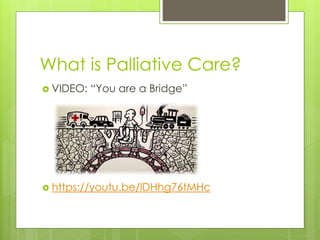
 VIDEO: “You are a Bridge”
 https://youtu.be/lDHhg76tMHc
Improves Quality of Life
 Treats people suffering from serious and chronic
illnesses
 Focuses on symptoms such as
 Physical pain
 Shortness of breath
 Fatigue
 Constipation / Nausea / Loss of appetite
 Difficulty sleeping
 Depression and other psychological distress
 Emotional pain
 Spiritual pain
Improves Quality of Life
 Helps people gain the strength to carry on
with daily life
 Improves the ability to tolerate medical
treatments
 Helps people have more control over their
care by improving their understanding of
treatment choices by considering the
goals of care
A Partnership of Care
 An interdisciplinary team approach
 Physician
 Nurse
 Social Worker
 Chaplain
 Pharmacist
 Dietitian
 Other practitioners / therapists
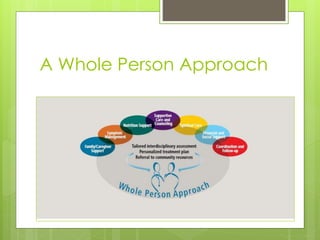
A Whole Person Approach
The Case for Palliative Care
 90 million people in the US are living with
serious / life-threatening illness
 This number will double in the next 25 years
 Most people living with serious illness
experience
 Inadequately treated symptoms
 Fragmented care
 Poor communication with practitioners
 Enormous strains on family caregivers
Growth & Barriers
 In 2001 almost no hospital-based palliative
care programs
 By 2011 63% of hospitals with 50+ beds
have a palliative care team
 Barriers to continued expansion
 WORKFORCE
 RESEARCH
 REIMBURSEMENT / INVESTMENT
Workforce Barriers
 Lack of trained physicians nationwide: 1:1,200
palliative care doctors
 1:71 cardiologists
 1:141 oncologists
 A new specialty (formally recognized in 2007)
 No Medicare funding for training due to cap
on GME expansion
 Increasing demand for nurses, other clinicians
certified in palliative care
Research
 Funding (NIH, Institute of Medicine) for
palliative care research not keeping pace
with the growth of the discipline
 Need to strengthen the knowledge base
supporting clinical practice
Access & Quality
 Business model based on cost avoidance,
not revenue generation
 Accreditation standards only just
beginning to require palliative care
Our Unique Opportunity
 Dartmouth Atlas Study
 NJ has the most aggressive & costly care at
the end of life than any other state
 Studies show higher utilization correlate
with
 Lower patient satisfaction
 Poorer clinical outcomes
 60 Minutes report: “The Cost of Dying: End
of Life Care” (August 2010)
EOL Planning
 Advance Directives (“5 Wishes”)
 Healthcare Proxy
 Living Will
 POLST

Palliative Care

  • 1.
    Palliative Care Definitions and Opportunities Chaplain TedTaylor Fellow in Hospice & Palliative Care
  • 2.
    What is PalliativeCare?  VIDEO: “You are a Bridge”  https://youtu.be/lDHhg76tMHc
  • 3.
    Improves Quality ofLife  Treats people suffering from serious and chronic illnesses  Focuses on symptoms such as  Physical pain  Shortness of breath  Fatigue  Constipation / Nausea / Loss of appetite  Difficulty sleeping  Depression and other psychological distress  Emotional pain  Spiritual pain
  • 4.
    Improves Quality ofLife  Helps people gain the strength to carry on with daily life  Improves the ability to tolerate medical treatments  Helps people have more control over their care by improving their understanding of treatment choices by considering the goals of care
  • 5.
    A Partnership ofCare  An interdisciplinary team approach  Physician  Nurse  Social Worker  Chaplain  Pharmacist  Dietitian  Other practitioners / therapists
  • 6.
  • 7.
    The Case forPalliative Care  90 million people in the US are living with serious / life-threatening illness  This number will double in the next 25 years  Most people living with serious illness experience  Inadequately treated symptoms  Fragmented care  Poor communication with practitioners  Enormous strains on family caregivers
  • 8.
    Growth & Barriers In 2001 almost no hospital-based palliative care programs  By 2011 63% of hospitals with 50+ beds have a palliative care team  Barriers to continued expansion  WORKFORCE  RESEARCH  REIMBURSEMENT / INVESTMENT
  • 9.
    Workforce Barriers  Lackof trained physicians nationwide: 1:1,200 palliative care doctors  1:71 cardiologists  1:141 oncologists  A new specialty (formally recognized in 2007)  No Medicare funding for training due to cap on GME expansion  Increasing demand for nurses, other clinicians certified in palliative care
  • 10.
    Research  Funding (NIH,Institute of Medicine) for palliative care research not keeping pace with the growth of the discipline  Need to strengthen the knowledge base supporting clinical practice
  • 11.
    Access & Quality Business model based on cost avoidance, not revenue generation  Accreditation standards only just beginning to require palliative care
  • 12.
    Our Unique Opportunity Dartmouth Atlas Study  NJ has the most aggressive & costly care at the end of life than any other state  Studies show higher utilization correlate with  Lower patient satisfaction  Poorer clinical outcomes  60 Minutes report: “The Cost of Dying: End of Life Care” (August 2010)
  • 13.
    EOL Planning  AdvanceDirectives (“5 Wishes”)  Healthcare Proxy  Living Will  POLST