Different Types of Paint Defect
GROUP 2
DISCUSSANTS
Of
PAINT
DEFFECTS
1. BOYET RABIS
2. JASHTINE OCAN
3. MYLENE CAPISTRANO
4. DAVE BALOLOY
5. JHON MICHAEL MALATE
6. ARIEL BADIOLA
7. JONNEL ALCANTARA
8. RICHMOND DELE CRUZ
9. JEFFREY CERTEZA
10. JERMHEL GAYOLA
INTRODUCTION
Spraying is the worst
possible way to apply
automotive coatings if
minimization of surface
defects is desired, but it is
the only way to obtain the
gloss, color effects, and
outstanding appearance
that car buyers demand.
Otherwise, defects may
occur in painting.
Painting not only gives a good
appearance to a structure but
also provides protection
against various infiltrative
actions such as corrosion,
decaying, weathering, etc. But
however, paint film also gets
deteriorated by these actions.
Hence the paint should be
selected based on many factors
such as type of surface, type of
environment, etc.
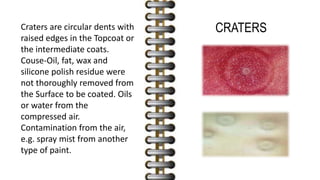
Craters are circular dents with
raised edges in the Topcoat or
the intermediate coats.
Couse-Oil, fat, wax and
silicone polish residue were
not thoroughly removed from
the Surface to be coated. Oils
or water from the
compressed air.
Contamination from the air,
e.g. spray mist from another
type of paint.
CRATERS
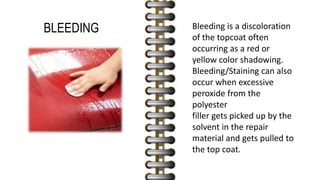
Bleeding is a discoloration
of the topcoat often
occurring as a red or
yellow color shadowing.
Bleeding/Staining can also
occur when excessive
peroxide from the
polyester
filler gets picked up by the
solvent in the repair
material and gets pulled to
the top coat.
BLEEDING
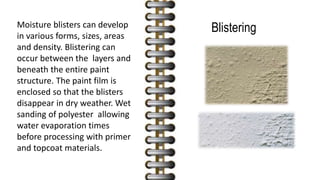
Moisture blisters can develop
in various forms, sizes, areas
and density. Blistering can
occur between the layers and
beneath the entire paint
structure. The paint film is
enclosed so that the blisters
disappear in dry weather. Wet
sanding of polyester allowing
water evaporation times
before processing with primer
and topcoat materials.
Blistering
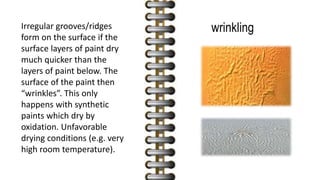
Irregular grooves/ridges
form on the surface if the
surface layers of paint dry
much quicker than the
layers of paint below. The
surface of the paint then
“wrinkles”. This only
happens with synthetic
paints which dry by
oxidation. Unfavorable
drying conditions (e.g. very
high room temperature).
wrinkling
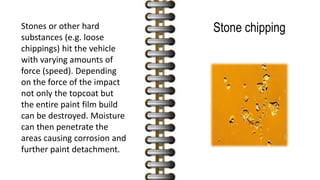
Stones or other hard
substances (e.g. loose
chippings) hit the vehicle
with varying amounts of
force (speed). Depending
on the force of the impact
not only the topcoat but
the entire paint film build
can be destroyed. Moisture
can then penetrate the
areas causing corrosion and
further paint detachment.
Stone chipping
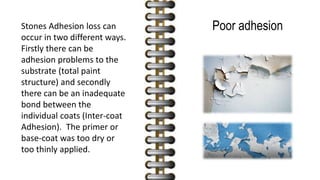
Stones Adhesion loss can
occur in two different ways.
Firstly there can be
adhesion problems to the
substrate (total paint
structure) and secondly
there can be an inadequate
bond between the
individual coats (Inter-coat
Adhesion). The primer or
base-coat was too dry or
too thinly applied.
Poor adhesion
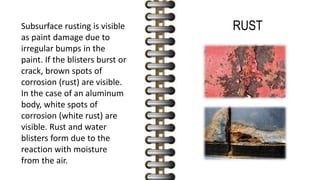
Subsurface rusting is visible
as paint damage due to
irregular bumps in the
paint. If the blisters burst or
crack, brown spots of
corrosion (rust) are visible.
In the case of an aluminum
body, white spots of
corrosion (white rust) are
visible. Rust and water
blisters form due to the
reaction with moisture
from the air.
RUST
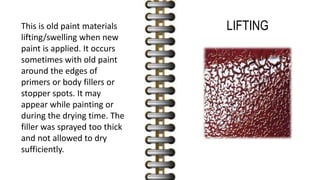
This is old paint materials
lifting/swelling when new
paint is applied. It occurs
sometimes with old paint
around the edges of
primers or body fillers or
stopper spots. It may
appear while painting or
during the drying time. The
filler was sprayed too thick
and not allowed to dry
sufficiently.
LIFTING
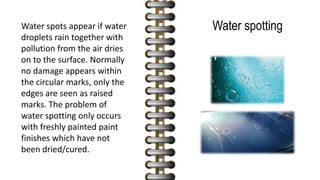
Water spots appear if water
droplets rain together with
pollution from the air dries
on to the surface. Normally
no damage appears within
the circular marks, only the
edges are seen as raised
marks. The problem of
water spotting only occurs
with freshly painted paint
finishes which have not
been dried/cured.
Water spotting
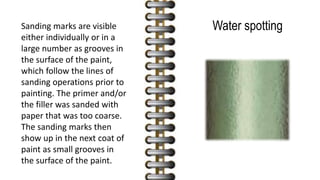
Sanding marks are visible
either individually or in a
large number as grooves in
the surface of the paint,
which follow the lines of
sanding operations prior to
painting. The primer and/or
the filler was sanded with
paper that was too coarse.
The sanding marks then
show up in the next coat of
paint as small grooves in
the surface of the paint.
Water spotting
You po
Thank

paint defect.pptx

  • 1.
    Different Types ofPaint Defect GROUP 2
  • 2.
    DISCUSSANTS Of PAINT DEFFECTS 1. BOYET RABIS 2.JASHTINE OCAN 3. MYLENE CAPISTRANO 4. DAVE BALOLOY 5. JHON MICHAEL MALATE 6. ARIEL BADIOLA 7. JONNEL ALCANTARA 8. RICHMOND DELE CRUZ 9. JEFFREY CERTEZA 10. JERMHEL GAYOLA
  • 3.
    INTRODUCTION Spraying is theworst possible way to apply automotive coatings if minimization of surface defects is desired, but it is the only way to obtain the gloss, color effects, and outstanding appearance that car buyers demand. Otherwise, defects may occur in painting. Painting not only gives a good appearance to a structure but also provides protection against various infiltrative actions such as corrosion, decaying, weathering, etc. But however, paint film also gets deteriorated by these actions. Hence the paint should be selected based on many factors such as type of surface, type of environment, etc.
  • 4.
    Craters are circulardents with raised edges in the Topcoat or the intermediate coats. Couse-Oil, fat, wax and silicone polish residue were not thoroughly removed from the Surface to be coated. Oils or water from the compressed air. Contamination from the air, e.g. spray mist from another type of paint. CRATERS
  • 5.
    Bleeding is adiscoloration of the topcoat often occurring as a red or yellow color shadowing. Bleeding/Staining can also occur when excessive peroxide from the polyester filler gets picked up by the solvent in the repair material and gets pulled to the top coat. BLEEDING
  • 6.
    Moisture blisters candevelop in various forms, sizes, areas and density. Blistering can occur between the layers and beneath the entire paint structure. The paint film is enclosed so that the blisters disappear in dry weather. Wet sanding of polyester allowing water evaporation times before processing with primer and topcoat materials. Blistering
  • 7.
    Irregular grooves/ridges form onthe surface if the surface layers of paint dry much quicker than the layers of paint below. The surface of the paint then “wrinkles”. This only happens with synthetic paints which dry by oxidation. Unfavorable drying conditions (e.g. very high room temperature). wrinkling
  • 8.
    Stones or otherhard substances (e.g. loose chippings) hit the vehicle with varying amounts of force (speed). Depending on the force of the impact not only the topcoat but the entire paint film build can be destroyed. Moisture can then penetrate the areas causing corrosion and further paint detachment. Stone chipping
  • 9.
    Stones Adhesion losscan occur in two different ways. Firstly there can be adhesion problems to the substrate (total paint structure) and secondly there can be an inadequate bond between the individual coats (Inter-coat Adhesion). The primer or base-coat was too dry or too thinly applied. Poor adhesion
  • 10.
    Subsurface rusting isvisible as paint damage due to irregular bumps in the paint. If the blisters burst or crack, brown spots of corrosion (rust) are visible. In the case of an aluminum body, white spots of corrosion (white rust) are visible. Rust and water blisters form due to the reaction with moisture from the air. RUST
  • 11.
    This is oldpaint materials lifting/swelling when new paint is applied. It occurs sometimes with old paint around the edges of primers or body fillers or stopper spots. It may appear while painting or during the drying time. The filler was sprayed too thick and not allowed to dry sufficiently. LIFTING
  • 12.
    Water spots appearif water droplets rain together with pollution from the air dries on to the surface. Normally no damage appears within the circular marks, only the edges are seen as raised marks. The problem of water spotting only occurs with freshly painted paint finishes which have not been dried/cured. Water spotting
  • 13.
    Sanding marks arevisible either individually or in a large number as grooves in the surface of the paint, which follow the lines of sanding operations prior to painting. The primer and/or the filler was sanded with paper that was too coarse. The sanding marks then show up in the next coat of paint as small grooves in the surface of the paint. Water spotting
  • 14.