➡️🌍📱👉COPY & PASTE LINK👉👉👉 https://dr-up-community.info/
VPN project offering both server and client solutions. The VPN uses the open-source protocol Shadowsocks, which provides Access to the open Internet, while traditional VPNs can block.
Introduction
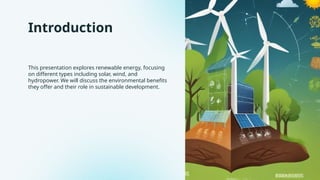
This presentation exploresrenewable energy, focusing
on different types including solar, wind, and
hydropower. We will discuss the environmental benefits
they offer and their role in sustainable development.
Solar Energy
Solar energyharnesses sunlight to generate electricity or heat. Photovoltaic cells convert sunlight
into electricity, while solar thermal systems collect and use heat for domestic hot water or
heating. The technology is scalable from small residential systems to large solar farms, making it
one of the fastest-growing renewable energy sources.
5.
Wind Energy
Wind energyis produced using wind turbines that convert kinetic energy from wind into
mechanical power and then electricity. It is a clean and renewable resource that can be harnessed
on both land (onshore) and at sea (offshore). Wind farms consist of multiple turbines grouped
together, providing significant energy output and reducing reliance on fossil fuels.
6.
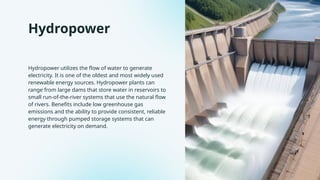
Hydropower
Hydropower utilizes theflow of water to generate
electricity. It is one of the oldest and most widely used
renewable energy sources. Hydropower plants can
range from large dams that store water in reservoirs to
small run-of-the-river systems that use the natural flow
of rivers. Benefits include low greenhouse gas
emissions and the ability to provide consistent, reliable
energy through pumped storage systems that can
generate electricity on demand.
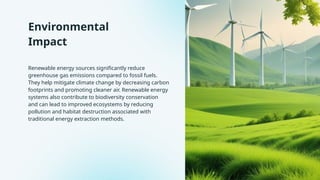
Environmental
Impact
Renewable energy sourcessignificantly reduce
greenhouse gas emissions compared to fossil fuels.
They help mitigate climate change by decreasing carbon
footprints and promoting cleaner air. Renewable energy
systems also contribute to biodiversity conservation
and can lead to improved ecosystems by reducing
pollution and habitat destruction associated with
traditional energy extraction methods.
9.
Economic Advantages
Investing inrenewable energy fosters job creation in manufacturing, installation, and
maintenance of energy systems. It also enhances energy security and stability by reducing
dependence on imported fuels. The decreasing cost of renewable technologies, particularly solar
and wind, makes them a cost-competitive option moving forward. This investment promotes local
economies and sustainability in energy markets.
10.
Energy Independence
Renewable energyallows countries to produce their own energy, reducing reliance on imported
fossil fuels and enhancing national security. By investing in local renewable resources,
governments can foster energy resilience and stabilize energy prices. This autonomy can lead to
greater energy security and support both political and economic stability for nations.
11.
Conclusions
Renewable energy notonly offers diverse types such as solar, wind, and hydropower but also
presents significant environmental and economic advantages. As technology continues to advance
and costs decrease, renewable energy plays a crucial role in achieving a sustainable future,
enhancing energy independence, and combating climate change.
12.
CRÉDITOS: Esta plantillaes una creación de Slidesgo, e incluye iconos ,
infografías e imágenes de Freepik
Thank you!
Do you have any questions?



![StartAllBack Crack + Keygen Key Free [2025]](https://cdn.slidesharecdn.com/ss_thumbnails/renewableenergy-250319151713-1622d198-thumbnail.jpg?width=640&height=640&fit=bounds)
![PhotoScape X Pro Crack Free Download [2025]](https://cdn.slidesharecdn.com/ss_thumbnails/renewableenergy-250319151634-eb90f846-thumbnail.jpg?width=640&height=640&fit=bounds)
![Final Cut Pro Crack Free Latest Version [2025]](https://cdn.slidesharecdn.com/ss_thumbnails/renewableenergy-250319150758-3987513c-thumbnail.jpg?width=640&height=640&fit=bounds)
![4K Tokkit Crack Free Download [Latest Version]](https://cdn.slidesharecdn.com/ss_thumbnails/renewableenergy-250319150624-2f28450c-thumbnail.jpg?width=640&height=640&fit=bounds)


![Grand Theft Auto V Crack For PC [Latest Free] Free Download](https://cdn.slidesharecdn.com/ss_thumbnails/renewableenergy-250319150922-2fef3f83-thumbnail.jpg?width=640&height=640&fit=bounds)


