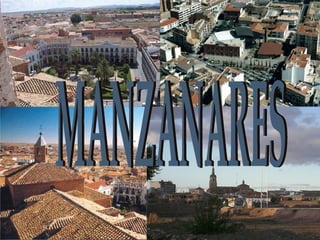
Location
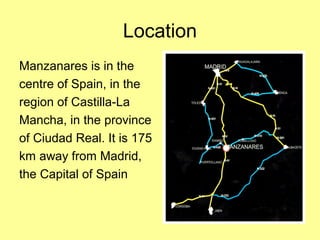
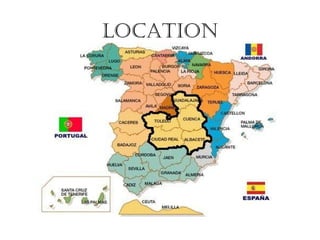
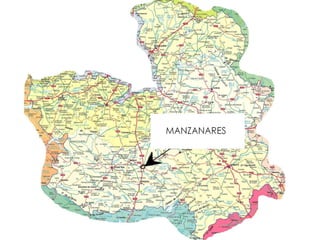
Manzanares is in the
centre of Spain, in the
region of Castilla-La
Mancha, in the province
of Ciudad Real. It is 175
km away from Madrid,
the Capital of Spain
LOCATION
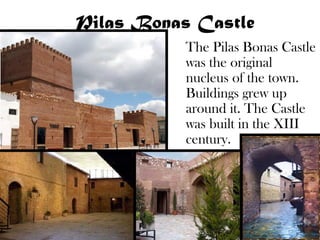
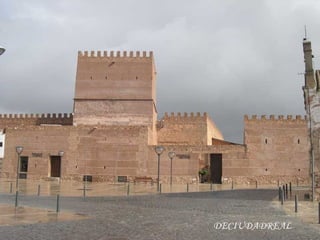
Pilas Bonas Castle
           The Pilas Bonas Castle
           was the original
           nucleus of the town.
           Buildings grew up
           around it. The Castle
           was built in the XIII
           century.
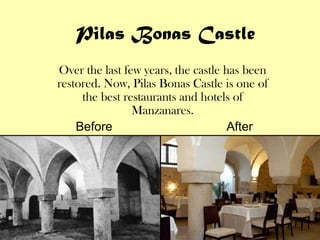
Pilas Bonas Castle
Over the last few years, the castle has been
restored. Now, Pilas Bonas Castle is one of
     the best restaurants and hotels of
                Manzanares.
    Before                           After
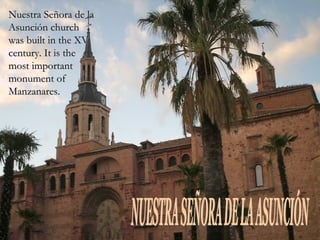
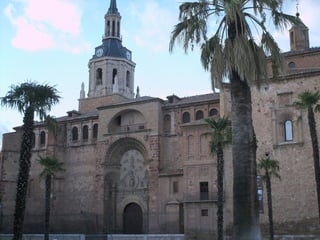
Nuestra Señora de la
Asunción church
was built in the XV
century. It is the
most important
monument of
Manzanares.
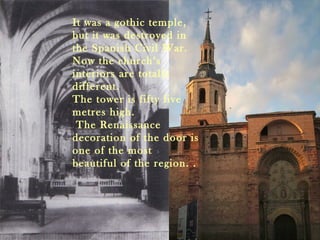
It was a gothic temple,
but it was destroyed in
the Spanish Civil War.
Now the church’s
interiors are totally
different.
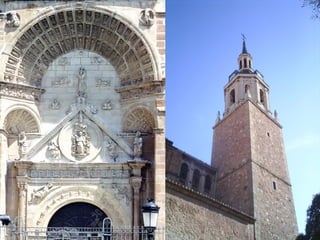
The tower is fifty five
metres high.
 The Renaissance
decoration of the door is
one of the most
beautiful of the region. .
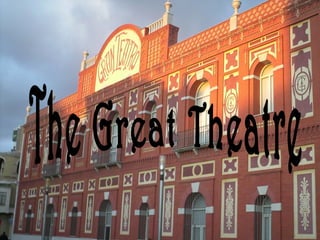
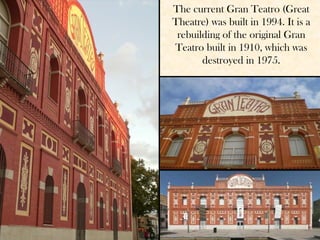
The current Gran Teatro (Great
Theatre) was built in 1994. It is a
 rebuilding of the original Gran
Teatro built in 1910, which was
       destroyed in 1975.
Lazarillo
Every year, the
International Festival of
Contemporary Theatre
takes place in the Gran
Teatro. It is one of the
most significant cultural
festivals of the town and the
region.
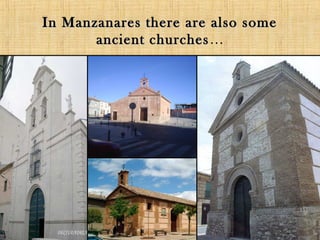
In Manzanares there are also some
       ancient churches…
               churches
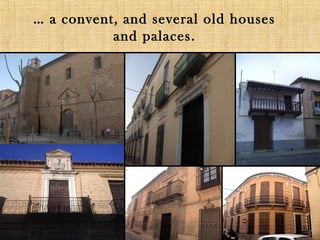
… a convent, and several old houses
           and palaces.
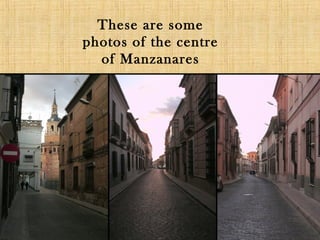
These are some
photos of the centre
  of Manzanares
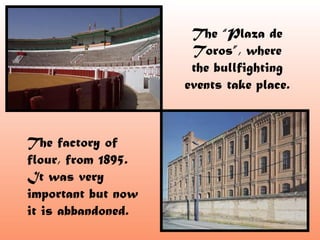
The “Plaza de
                     Toros”, where
                     the bullfighting
                    events take place.


The factory of
flour, from 1895.
It was very
important but now
it is abbandoned.
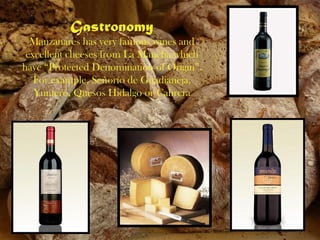
Gastronomy
  Manzanares has very famous wines and
 excellent cheeses from La Mancha which
have “Protected Denomination of Origin”.
   For example, Señorío de Guadianeja,
   Yuntero, Quesos Hidalgo or Cabrera
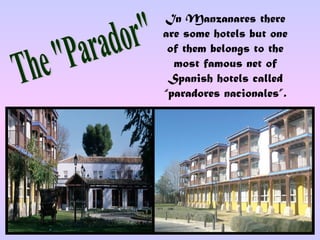
In Manzanares there
are some hotels but one
 of them belongs to the
  most famous net of
 Spanish hotels called
“paradores nacionales”.
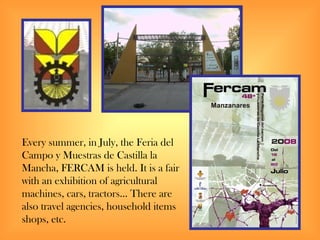
Every summer, in July, the Feria del
Campo y Muestras de Castilla la
Mancha, FERCAM is held. It is a fair
with an exhibition of agricultural
machines, cars, tractors… There are
also travel agencies, household items
shops, etc.
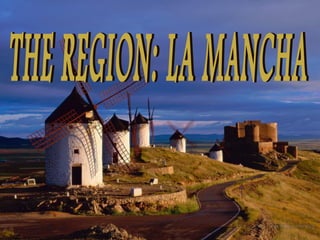
La zona, la region
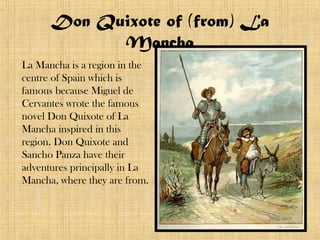
Don Quixote of (from) La
            Mancha
La Mancha is a region in the
centre of Spain which is
famous because Miguel de
Cervantes wrote the famous
novel Don Quixote of La
Mancha inspired in this
region. Don Quixote and
Sancho Panza have their
adventures principally in La
Mancha, where they are from.
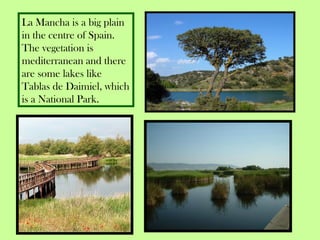
La Mancha is a big plain
in the centre of Spain.
The vegetation is
mediterranean and there
are some lakes like
Tablas de Daimiel, which
is a National Park.
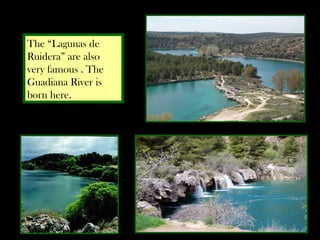
The “Lagunas de
Ruidera” are also
very famous . The
Guadiana River is
born here.
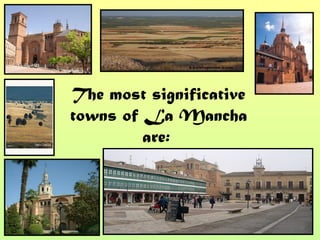
The most significative
towns of La Mancha
         are:
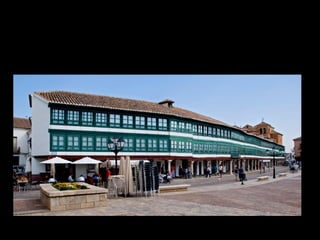
ALMAGRO
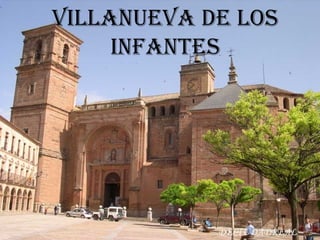
ViLLAnueVA de LOs
     infAntes
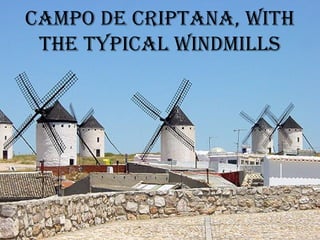
CAMpO de CRiptAnA, with
 the typiCAL windMiLLs
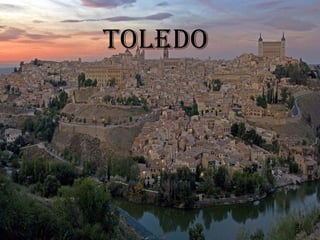
tOLedO
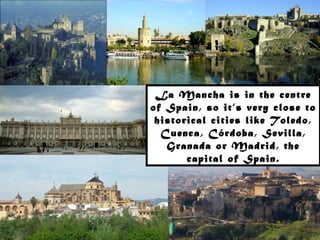
La Mancha is in the centre
of Spain, so it’s very close to
 historical cities like Toledo,
  Cuenca, Córdoba, Sevilla,
   Granada or Madrid, the
       capital of Spain.
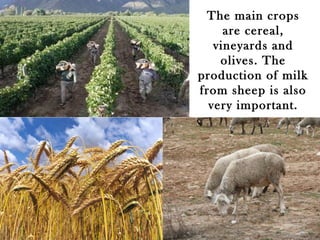
The main crops
     are cereal,
   vineyards and
    olives. The
production of milk
from sheep is also
  very important.
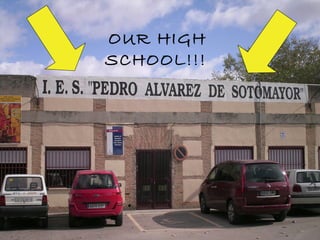
OUR HIGH
SCHOOL!!!
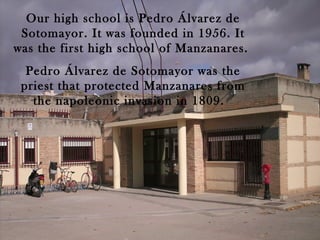
Our high school is Pedro Álvarez de
 Sotomayor. It was founded in 1956. It
was the first high school of Manzanares.
  Pedro Álvarez de Sotomayor was the
 priest that protected Manzanares from
   the napoleonic invasion in 1809.
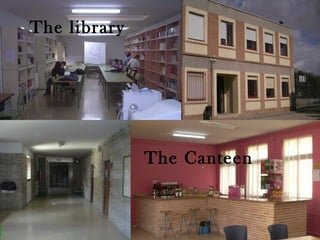
The library

• foto


               The Canteen
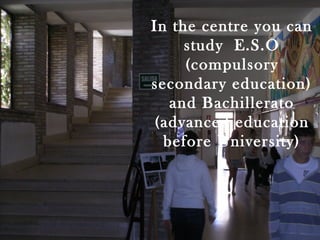
In the centre you can
     study E.S.O
     (compulsory
secondary education)
   and Bachillerato
(advanced education
  before University)
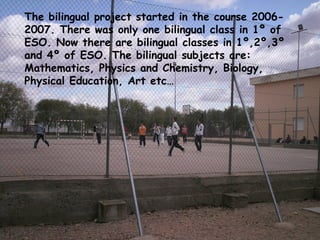
The bilingual project started in the course 2006-
2007. There was only one bilingual class in 1º of
ESO. Now there are bilingual classes in 1º,2º,3º
and 4º of ESO. The bilingual subjects are:
Mathematics, Physics and Chemistry, Biology,
Physical Education, Art etc…


• El proyecto bilingüe se inicio en el curso 2006-
  2007, fue el primer curso que el centro tuvo
  sección europea, en este año solo una clase de
  1º de la ESO dio clases en bilingüe: ingles,
  educación física y biología.
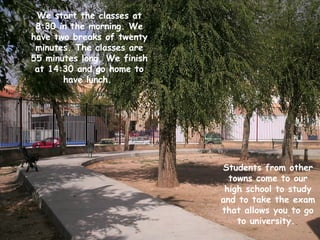
We start the classes at
 8:30 in the morning. We
have two breaks of twenty
 minutes. The classes are
55 minutes long. We finish
 at 14:30 and go home to
       have lunch.


                             Students from other
                               towns come to our
                              high school to study
                             and to take the exam
                             that allows you to go
                                 to university.
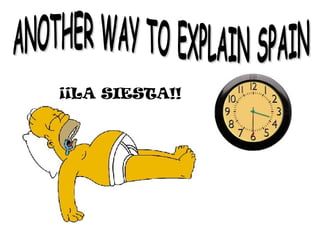
¡¡LA SIESTA!!
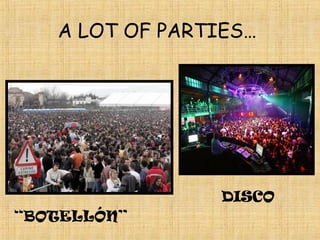
A LOT OF PARTIES…


                DISCO
“BOTELLÓN”
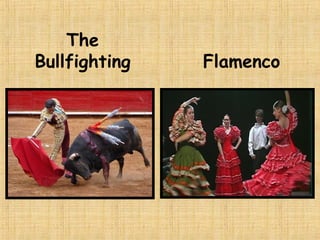
The
Bullfighting   Flamenco
TYPICAL SPANISH FOOD
OUR SCHOOL AND OUR AREA.

OUR SCHOOL AND OUR AREA.

  • 2.
    Location Manzanares is inthe centre of Spain, in the region of Castilla-La Mancha, in the province of Ciudad Real. It is 175 km away from Madrid, the Capital of Spain
  • 3.
  • 6.
    Pilas Bonas Castle The Pilas Bonas Castle was the original nucleus of the town. Buildings grew up around it. The Castle was built in the XIII century.
  • 7.
    Pilas Bonas Castle Overthe last few years, the castle has been restored. Now, Pilas Bonas Castle is one of the best restaurants and hotels of Manzanares. Before After
  • 9.
    Nuestra Señora dela Asunción church was built in the XV century. It is the most important monument of Manzanares.
  • 10.
    It was agothic temple, but it was destroyed in the Spanish Civil War. Now the church’s interiors are totally different. The tower is fifty five metres high. The Renaissance decoration of the door is one of the most beautiful of the region. .
  • 14.
    The current GranTeatro (Great Theatre) was built in 1994. It is a rebuilding of the original Gran Teatro built in 1910, which was destroyed in 1975.
  • 15.
    Lazarillo Every year, the InternationalFestival of Contemporary Theatre takes place in the Gran Teatro. It is one of the most significant cultural festivals of the town and the region.
  • 16.
    In Manzanares thereare also some ancient churches… churches
  • 17.
    … a convent,and several old houses and palaces.
  • 18.
    These are some photosof the centre of Manzanares
  • 19.
    The “Plaza de Toros”, where the bullfighting events take place. The factory of flour, from 1895. It was very important but now it is abbandoned.
  • 20.
    Gastronomy Manzanareshas very famous wines and excellent cheeses from La Mancha which have “Protected Denomination of Origin”. For example, Señorío de Guadianeja, Yuntero, Quesos Hidalgo or Cabrera
  • 21.
    In Manzanares there aresome hotels but one of them belongs to the most famous net of Spanish hotels called “paradores nacionales”.
  • 22.
    Every summer, inJuly, the Feria del Campo y Muestras de Castilla la Mancha, FERCAM is held. It is a fair with an exhibition of agricultural machines, cars, tractors… There are also travel agencies, household items shops, etc.
  • 23.
  • 24.
    Don Quixote of(from) La Mancha La Mancha is a region in the centre of Spain which is famous because Miguel de Cervantes wrote the famous novel Don Quixote of La Mancha inspired in this region. Don Quixote and Sancho Panza have their adventures principally in La Mancha, where they are from.
  • 25.
    La Mancha isa big plain in the centre of Spain. The vegetation is mediterranean and there are some lakes like Tablas de Daimiel, which is a National Park.
  • 26.
    The “Lagunas de Ruidera”are also very famous . The Guadiana River is born here.
  • 27.
  • 28.
  • 29.
  • 30.
    CAMpO de CRiptAnA,with the typiCAL windMiLLs
  • 31.
  • 32.
    La Mancha isin the centre of Spain, so it’s very close to historical cities like Toledo, Cuenca, Córdoba, Sevilla, Granada or Madrid, the capital of Spain.
  • 33.
    The main crops are cereal, vineyards and olives. The production of milk from sheep is also very important.
  • 34.
  • 35.
    Our high schoolis Pedro Álvarez de Sotomayor. It was founded in 1956. It was the first high school of Manzanares. Pedro Álvarez de Sotomayor was the priest that protected Manzanares from the napoleonic invasion in 1809.
  • 36.
  • 37.
    In the centreyou can study E.S.O (compulsory secondary education) and Bachillerato (advanced education before University)
  • 38.
    The bilingual projectstarted in the course 2006- 2007. There was only one bilingual class in 1º of ESO. Now there are bilingual classes in 1º,2º,3º and 4º of ESO. The bilingual subjects are: Mathematics, Physics and Chemistry, Biology, Physical Education, Art etc… • El proyecto bilingüe se inicio en el curso 2006- 2007, fue el primer curso que el centro tuvo sección europea, en este año solo una clase de 1º de la ESO dio clases en bilingüe: ingles, educación física y biología.
  • 39.
    We start theclasses at 8:30 in the morning. We have two breaks of twenty minutes. The classes are 55 minutes long. We finish at 14:30 and go home to have lunch. Students from other towns come to our high school to study and to take the exam that allows you to go to university.
  • 40.
  • 41.
    A LOT OFPARTIES… DISCO “BOTELLÓN”
  • 42.
  • 43.