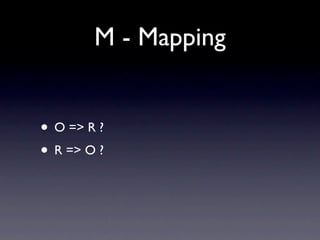
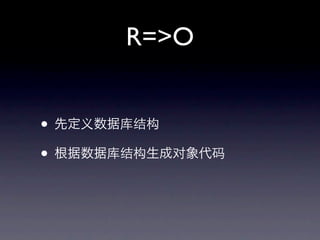
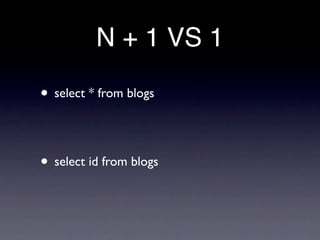
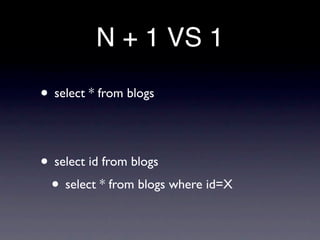
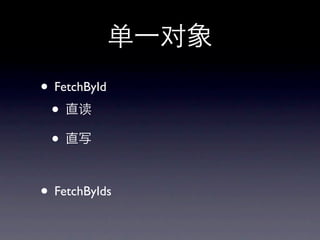
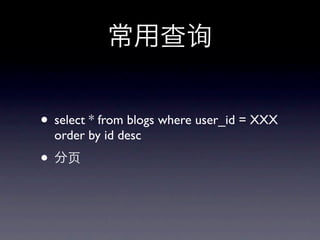
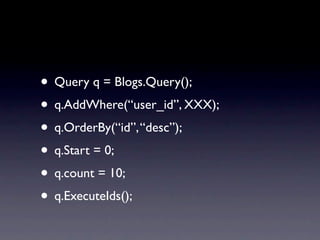
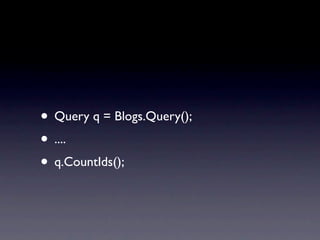
This document discusses the benefits of using an object-relational mapping (ORM) framework. It explains that ORMs allow developers to work with objects in code while the ORM handles the conversion between objects and relational data in the database. This avoids the need to write manual SQL queries and allows developers to focus on business logic rather than data access code. The document also provides examples of how ORMs can efficiently execute queries and fetch records from the database.





























![[Mas 500] Data Basics](https://cdn.slidesharecdn.com/ss_thumbnails/mas-500-4-data-basics-131120205428-phpapp02-thumbnail.jpg?width=640&height=640&fit=bounds)


