STRATEGIC
CHANGES
ORGANIZATION TRANSFORMATION
&
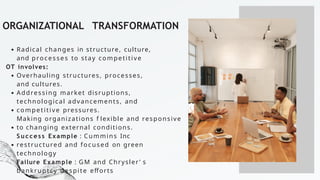
ORGANIZATIONAL TRANSFORMATION
Radical changes in structure, culture,
and processes to stay competitive
OT involves:
Overhauling structures, processes,
and cultures.
Addressing market disruptions,
technological advancements, and
competitive pressures.
Making organizations f lexible and responsive
to changing external conditions.
S u c c e s s Example : Cummins Inc
restructured and focused on green
technology
Failure Example : GM and Chrysler ’ s
bankruptcy despite efforts
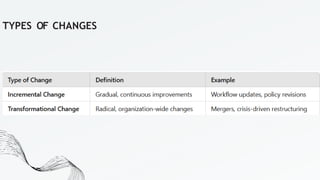
TYPES OF CHANGES
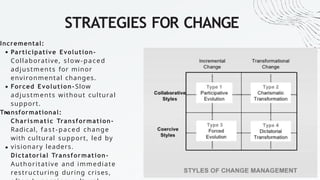
Incremental:
Participative Evolution-
Collaborative, slow-paced
adjustments for minor
environmental changes.
Forced Evolution-Slow
adjustments without cultural
support.
Transformational:
Charismatic Transformation-
Radical, fast- paced change
with cultural support, led by
visionary leaders.
Dictatorial Transformation-
Authoritative and immediate
restructuring during crises,
STRATEGIES FOR CHANGE
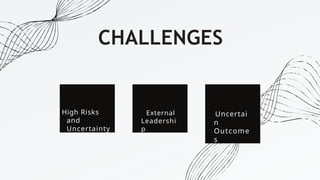
CHALLENGES
High Risks
and
Uncertainty
External
Leadershi
p
Uncertai
n
Outcome
s
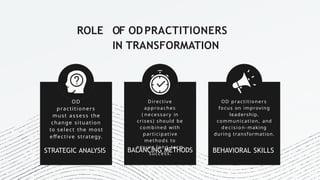
ROLE OF ODPRACTITIONERS
IN TRANSFORMATION
OD
practitioners
must assess the
change situation
to select the most
effective strategy.
Directive
approaches
( necessary in
crises) should be
combined with
participative
methods to
ensure long-term
success.
OD practitioners
focus on improving
leadership,
communication, and
d e c i s i o n - making
during transformation.
STRATEGIC ANALYSIS BALANCING METHODS BEHAVIORAL SKILLS
CORPORATE
CULTURE
Corporate Culture refers to the shared values, beliefs, and
behaviors in an organization that shape how employees
work and interact. I t evolves over time and is influenced
by the
organization' s leadership and history
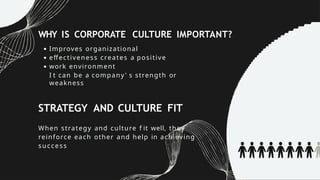
WHY IS CORPORATE CULTURE IMPORTANT?
Improves organizational
effectiveness creates a positive
work environment
I t can be a company ' s strength or
weakness
STRATEGY AND CULTURE FIT
When strategy and culture f it well, they
reinforce each other and help in achieving
success
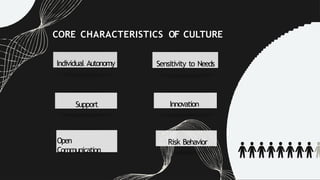
CORE CHARACTERISTICS OF CULTURE
Individual Autonomy
Support
Open
Communication
Innovation
Sensitivity to Needs
Risk Behavior
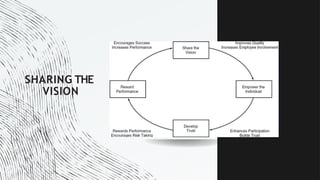
SHARING THE
VISION
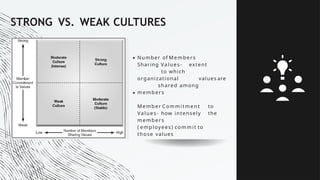
STRONG VS. WEAK CULTURES
Number of Members
Sharing Values- extent
to which
organizational values are
shared among
members
Member Commitment to
Values- how intensely the
members
( employees) commit to
those values
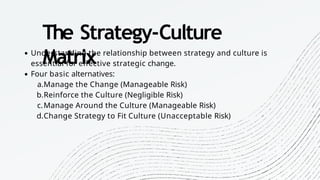
The Strategy-Culture
Matrix
Understanding the relationship between strategy and culture is
essential for effective strategic change.
Four basic alternatives:
a.Manage the Change (Manageable Risk)
b.Reinforce the Culture (Negligible Risk)
c.Manage Around the Culture (Manageable Risk)
d.Change Strategy to Fit Culture (Unacceptable Risk)
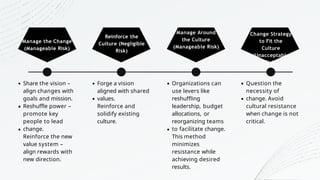
Manage the Change
(Manageable Risk)
Reinforce the
Culture (Negligible
Risk)
Manage Around
the Culture
(Manageable Risk)
Change Strategy
to Fit the
Culture
(Unacceptable
Risk)
Share the vision –
align changes with
goals and mission.
Reshuffle power –
promote key
people to lead
change.
Reinforce the new
value system –
align rewards with
new direction.
Forge a vision
aligned with shared
values.
Reinforce and
solidify existing
culture.
Organizations can
use levers like
reshuffling
leadership, budget
allocations, or
reorganizing teams
to facilitate change.
This method
minimizes
resistance while
achieving desired
results.
Question the
necessity of
change. Avoid
cultural resistance
when change is not
critical.
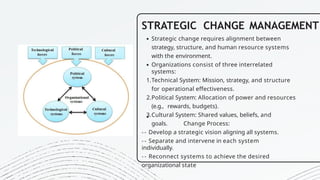
Strategic change requires alignment between
strategy, structure, and human resource systems
with the environment.
Organizations consist of three interrelated
systems:
1.Technical System: Mission, strategy, and structure
for operational effectiveness.
2.Political System: Allocation of power and resources
(e.g., rewards, budgets).
3.Cultural System: Shared values, beliefs, and
goals. Change Process:
-- Develop a strategic vision aligning all systems.
-- Separate and intervene in each system
individually.
-- Reconnect systems to achieve the desired
organizational state
STRATEGIC CHANGE MANAGEMENT
CHANGING THE CORPORATE
CULTURE
Why Change Culture?
1. Values don’t align with the
environment. 2. Competitive, fast-
changing industry.
3. Mediocre or declining performance.
4.Growing into a very large
firm.
5.Small but growing rapidly.
Challenges of Cultural Change:
Entrenched beliefs and resistance based on
past success.
Cultural clashes in mergers/takeovers
(e.g., Chrysler-Mercedes).
Solution:
Develop an innovative culture that
aligns employees' needs, the firm's
history, and market demands.
OD strategies can help overcome
resistance to foster adaptability.
Thank
You!

Organization Transformation & strategic change pptx

  • 1.
  • 2.
    ORGANIZATIONAL TRANSFORMATION Radical changesin structure, culture, and processes to stay competitive OT involves: Overhauling structures, processes, and cultures. Addressing market disruptions, technological advancements, and competitive pressures. Making organizations f lexible and responsive to changing external conditions. S u c c e s s Example : Cummins Inc restructured and focused on green technology Failure Example : GM and Chrysler ’ s bankruptcy despite efforts
  • 3.
  • 4.
    Incremental: Participative Evolution- Collaborative, slow-paced adjustmentsfor minor environmental changes. Forced Evolution-Slow adjustments without cultural support. Transformational: Charismatic Transformation- Radical, fast- paced change with cultural support, led by visionary leaders. Dictatorial Transformation- Authoritative and immediate restructuring during crises, STRATEGIES FOR CHANGE
  • 5.
  • 6.
    ROLE OF ODPRACTITIONERS INTRANSFORMATION OD practitioners must assess the change situation to select the most effective strategy. Directive approaches ( necessary in crises) should be combined with participative methods to ensure long-term success. OD practitioners focus on improving leadership, communication, and d e c i s i o n - making during transformation. STRATEGIC ANALYSIS BALANCING METHODS BEHAVIORAL SKILLS
  • 7.
    CORPORATE CULTURE Corporate Culture refersto the shared values, beliefs, and behaviors in an organization that shape how employees work and interact. I t evolves over time and is influenced by the organization' s leadership and history
  • 8.
    WHY IS CORPORATECULTURE IMPORTANT? Improves organizational effectiveness creates a positive work environment I t can be a company ' s strength or weakness STRATEGY AND CULTURE FIT When strategy and culture f it well, they reinforce each other and help in achieving success
  • 9.
    CORE CHARACTERISTICS OFCULTURE Individual Autonomy Support Open Communication Innovation Sensitivity to Needs Risk Behavior
  • 10.
  • 11.
    STRONG VS. WEAKCULTURES Number of Members Sharing Values- extent to which organizational values are shared among members Member Commitment to Values- how intensely the members ( employees) commit to those values
  • 12.
    The Strategy-Culture Matrix Understanding therelationship between strategy and culture is essential for effective strategic change. Four basic alternatives: a.Manage the Change (Manageable Risk) b.Reinforce the Culture (Negligible Risk) c.Manage Around the Culture (Manageable Risk) d.Change Strategy to Fit Culture (Unacceptable Risk)
  • 13.
    Manage the Change (ManageableRisk) Reinforce the Culture (Negligible Risk) Manage Around the Culture (Manageable Risk) Change Strategy to Fit the Culture (Unacceptable Risk) Share the vision – align changes with goals and mission. Reshuffle power – promote key people to lead change. Reinforce the new value system – align rewards with new direction. Forge a vision aligned with shared values. Reinforce and solidify existing culture. Organizations can use levers like reshuffling leadership, budget allocations, or reorganizing teams to facilitate change. This method minimizes resistance while achieving desired results. Question the necessity of change. Avoid cultural resistance when change is not critical.
  • 14.
    Strategic change requiresalignment between strategy, structure, and human resource systems with the environment. Organizations consist of three interrelated systems: 1.Technical System: Mission, strategy, and structure for operational effectiveness. 2.Political System: Allocation of power and resources (e.g., rewards, budgets). 3.Cultural System: Shared values, beliefs, and goals. Change Process: -- Develop a strategic vision aligning all systems. -- Separate and intervene in each system individually. -- Reconnect systems to achieve the desired organizational state STRATEGIC CHANGE MANAGEMENT
  • 15.
    CHANGING THE CORPORATE CULTURE WhyChange Culture? 1. Values don’t align with the environment. 2. Competitive, fast- changing industry. 3. Mediocre or declining performance. 4.Growing into a very large firm. 5.Small but growing rapidly. Challenges of Cultural Change: Entrenched beliefs and resistance based on past success. Cultural clashes in mergers/takeovers (e.g., Chrysler-Mercedes). Solution: Develop an innovative culture that aligns employees' needs, the firm's history, and market demands. OD strategies can help overcome resistance to foster adaptability.
  • 16.