Light
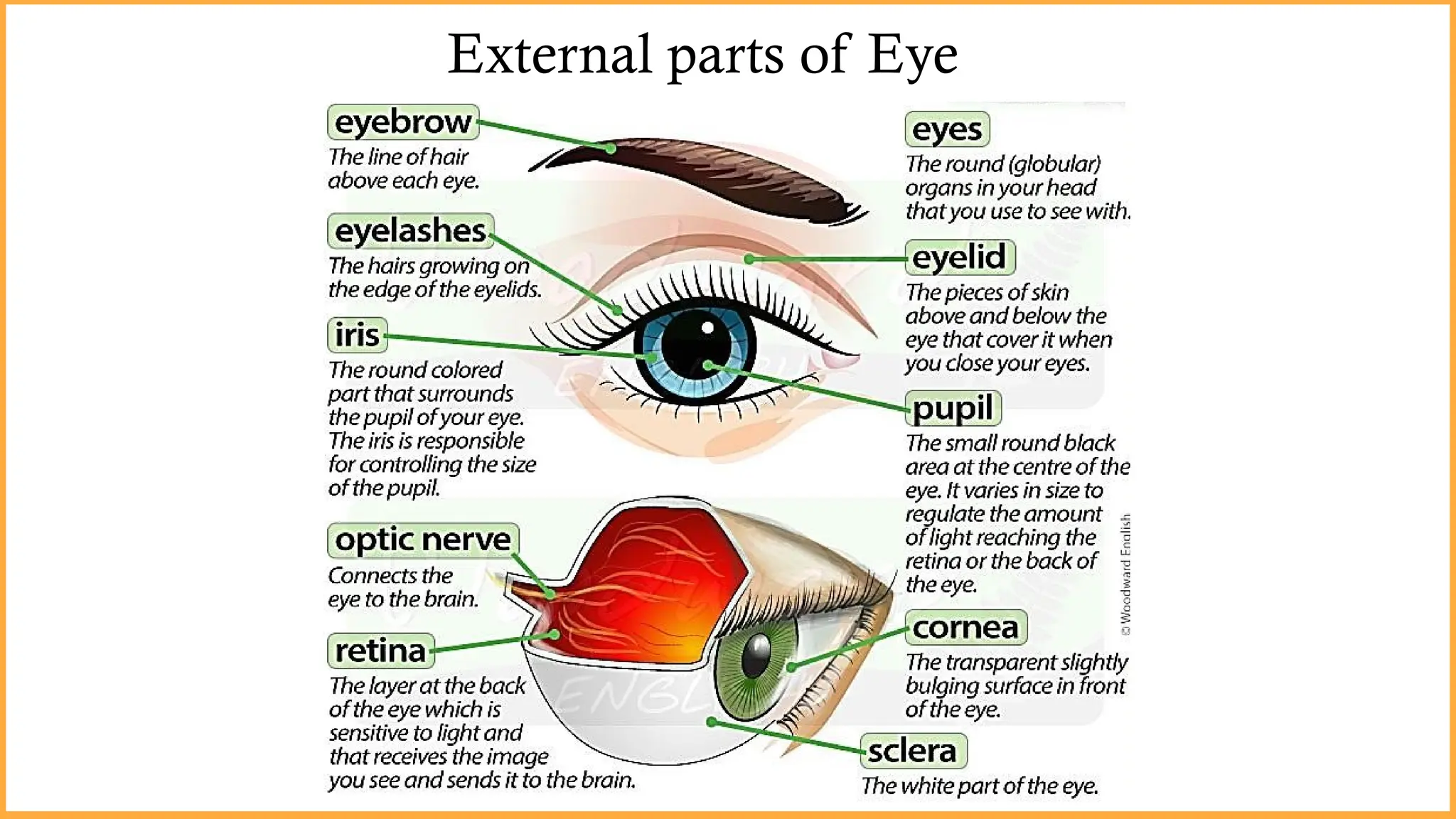
External parts of Eye
Internal parts of Eye
Eye Working
Eye Blind Spot
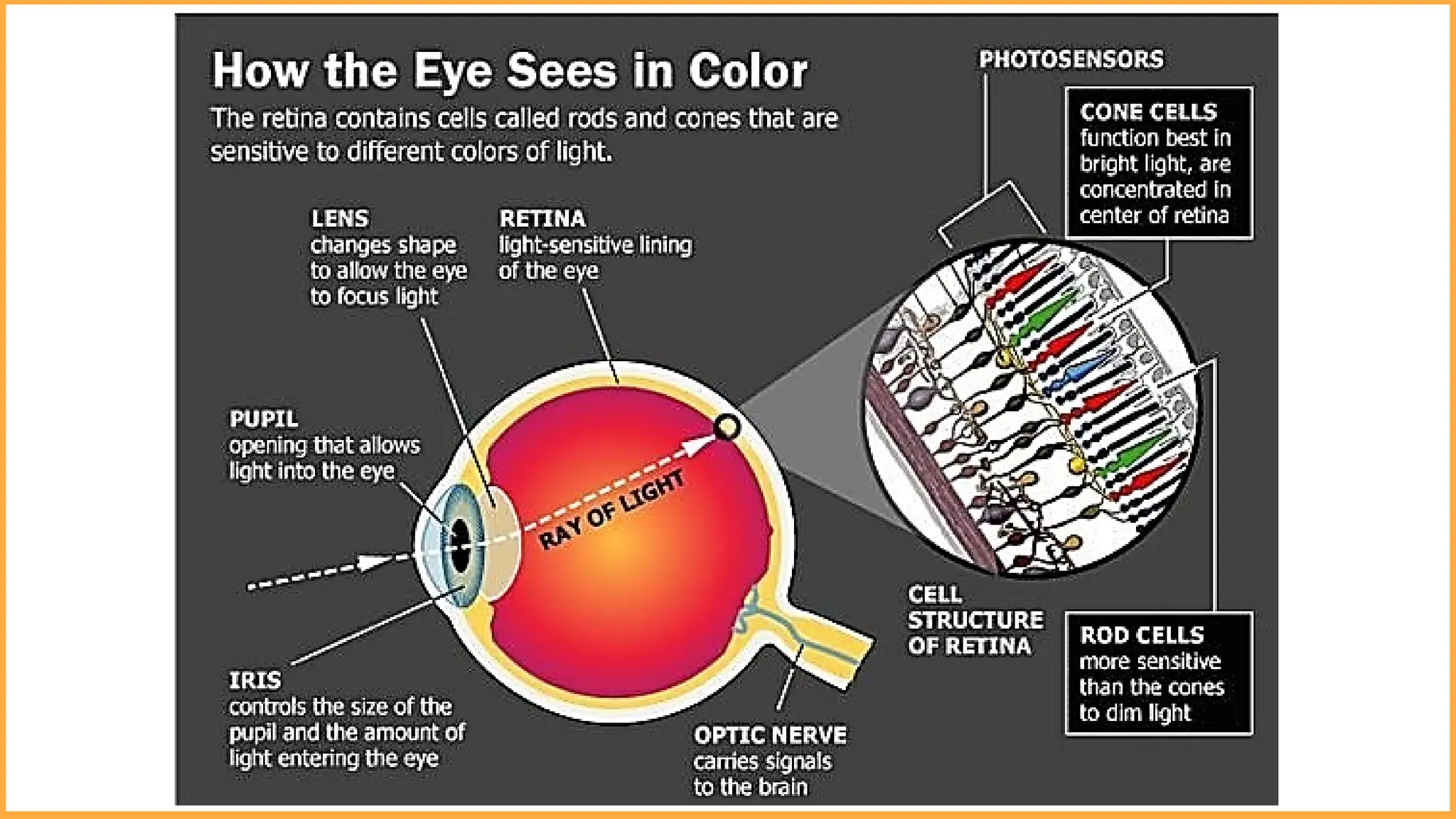
When light lands on your retina, it sends electrical bursts through your optic nerve to your brain.
Your brain turns the signals into a picture. The spot where your optic nerve connects to your
retina has no light-sensitive cells, so you can't see anything there. That's your blind spot.
Focusing objects at different positions
Cameras and lenses
Cameras and lenses
Optical instruments
Single lens
Multiple lenses
Why we see colour
DISPERSION OF LIGHT
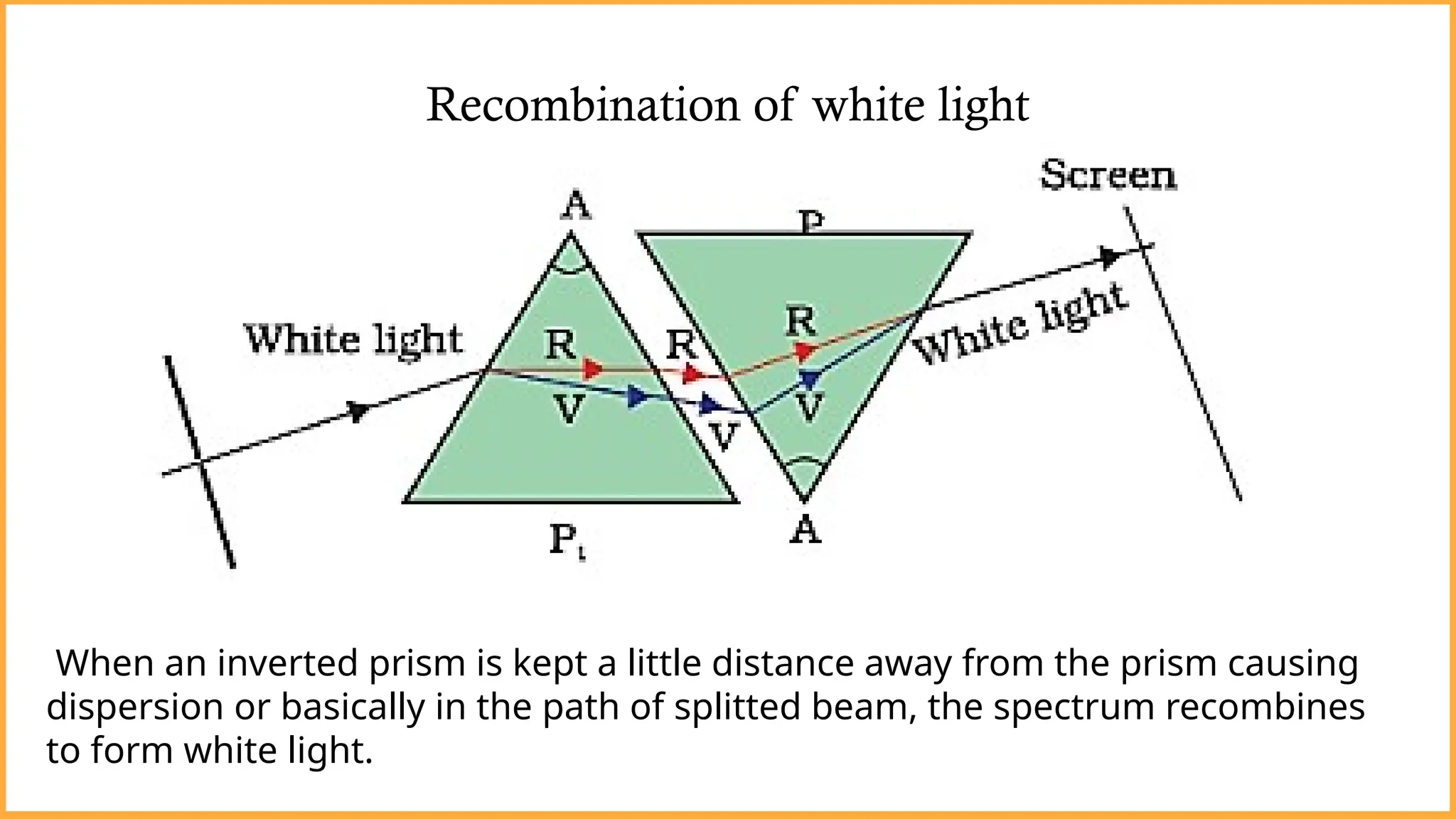
When an inverted prism is kept a little distance away from the prism causing
dispersion or basically in the path of splitted beam, the spectrum recombines
to form white light.
Recombination of white light
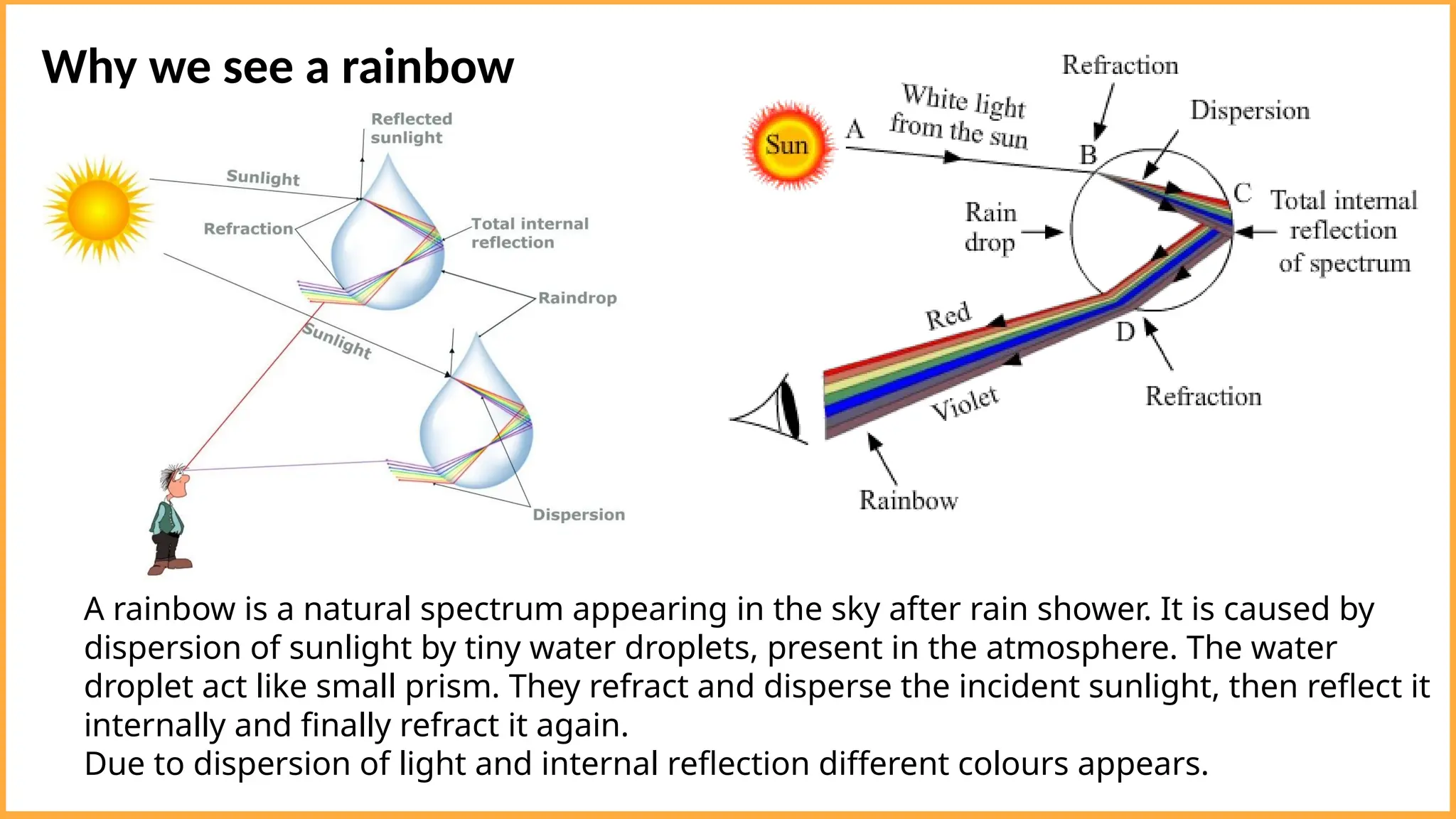
Why we see a rainbow
A rainbow is a natural spectrum appearing in the sky after rain shower. It is caused by
dispersion of sunlight by tiny water droplets, present in the atmosphere. The water
droplet act like small prism. They refract and disperse the incident sunlight, then reflect it
internally and finally refract it again.
Due to dispersion of light and internal reflection different colours appears.
Why we see a double rainbow
Atmospheric refraction :-
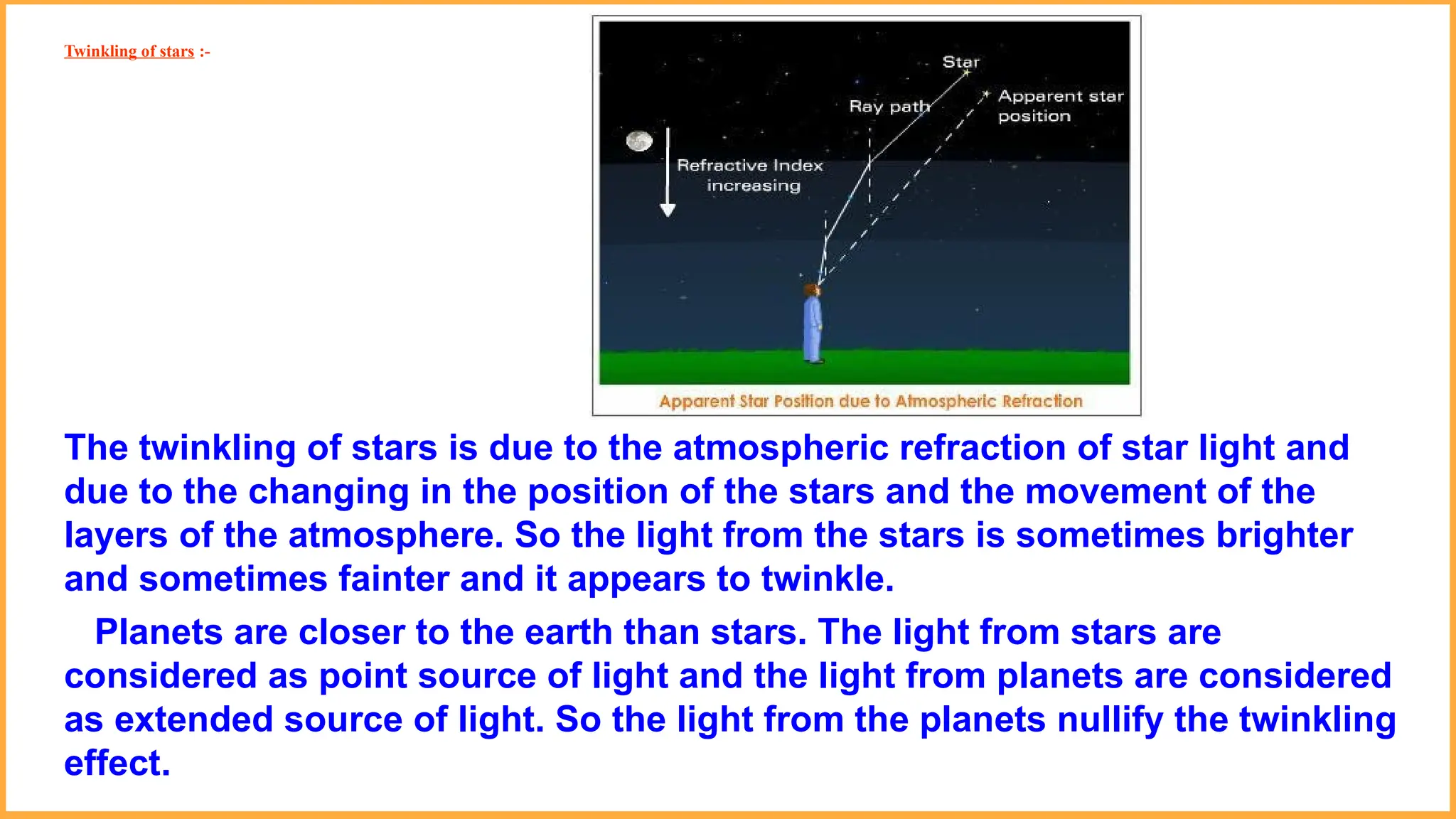
The twinkling of stars is due to the atmospheric refraction of star light and
due to the changing in the position of the stars and the movement of the
layers of the atmosphere. So the light from the stars is sometimes brighter
and sometimes fainter and it appears to twinkle.
Planets are closer to the earth than stars. The light from stars are
considered as point source of light and the light from planets are considered
as extended source of light. So the light from the planets nullify the twinkling
effect.
Twinkling of stars :-
Optical phenomenon and human eye and its part

Optical phenomenon and human eye and its part

  • 1.
  • 2.
  • 3.
  • 5.
  • 6.
    Eye Blind Spot Whenlight lands on your retina, it sends electrical bursts through your optic nerve to your brain. Your brain turns the signals into a picture. The spot where your optic nerve connects to your retina has no light-sensitive cells, so you can't see anything there. That's your blind spot.
  • 7.
    Focusing objects atdifferent positions
  • 9.
  • 10.
  • 11.
  • 12.
    Why we seecolour
  • 13.
  • 14.
    When an invertedprism is kept a little distance away from the prism causing dispersion or basically in the path of splitted beam, the spectrum recombines to form white light. Recombination of white light
  • 15.
    Why we seea rainbow A rainbow is a natural spectrum appearing in the sky after rain shower. It is caused by dispersion of sunlight by tiny water droplets, present in the atmosphere. The water droplet act like small prism. They refract and disperse the incident sunlight, then reflect it internally and finally refract it again. Due to dispersion of light and internal reflection different colours appears.
  • 16.
    Why we seea double rainbow
  • 17.
    Why we seea double rainbow
  • 18.
  • 19.
    The twinkling ofstars is due to the atmospheric refraction of star light and due to the changing in the position of the stars and the movement of the layers of the atmosphere. So the light from the stars is sometimes brighter and sometimes fainter and it appears to twinkle. Planets are closer to the earth than stars. The light from stars are considered as point source of light and the light from planets are considered as extended source of light. So the light from the planets nullify the twinkling effect. Twinkling of stars :-