1	
  
STEADMAN	
  HOSPITAL	


OPIM	
  Final	
  Project:	
  
Matt	
  Kahl,	
  Kendra	
  Otis,	
  Brook	
  Rice,	
  Karlyn	
  
Seidner	


Matthew	
  Kahl:	
  matthew.kahl@colorado.edu	
  	
  
Kendra	
  Otis:	
  Kendra.otis@colorado.edu	
  
Brooke	
  Rice:	
  brook.rice@colorado.edu	
  
Karlyn	
  Seidner:	
  karlyn.seidner@colorado.edu	
  
  2	
  
Table	
  of	
  Contents	


I. Executive	
  Summary	


  3	
  
II. Introduction	


  5	
  
III. Overview	
  of	
  Data	
  analysis	


  8	
  
IV. Physical	
  Location	
  and	
  Financial	
  Plan	


  18	
  
V. Medical	
  Service	
  Plan	


  25	
  
VI. Demand	
  Forecast	


  30	
  
VII. E-­‐Commerce	
  &	
  E-­‐Business	
  Plan	


  34	
  
VIII. Equipment	
  Plan	


  41	
  
IX. Supply	
  Chain	
  &	
  Inventory	
  Management	
  Plan	


  48	
  
X. Human	
  Resources	
  Staffing	
  Plan	
  and	
  Cost	
  Analysis	


  57	
  
XI. Revenue	
  analysis	


  73	
  
XII. Simple	
  Three	
  year	
  financial	
  plan	


  74	
  	
  
XIII. Process	
  Maps	


  80	
  
XIV. Final	
  Summaries	


  93	
  
XV. References	


  105	


  3	


(III)	
  Executive	
  Summary:	


   Given	
  this	
  project	
  to	
  be	
  worked	
  on	
  for	
  one	
  semester	
  has	
  allowed	
  our	
  team,	
  
Steadman	
  Hospital,	
  to	
  skim	
  the	
  surface	
  of	
  what	
  a	
  realistic	
  operations	
  system	
  of	
  any	
  
business	
  may	
  be.	
  To	
  be	
  assigned	
  a	
  hospital	
  and	
  starting	
  from	
  the	
  absolute	
  beginning	
  
proved	
  to	
  be	
  a	
  challenge	
  yet	
  purposeful	
  project	
  when	
  developing	
  functional	
  
knowledge	
  for	
  the	
  subject	
  of	
  operations.	
  Our	
  group	
  began	
  where	
  any	
  business	
  
associate	
  should	
  begin	
  –	
  develop	
  the	
  first	
  set	
  of	
  goals	
  that	
  we	
  would	
  like	
  to	
  achieve.	
  
Being	
  said,	
  the	
  overall	
  objective	
  was	
  to	
  create	
  a	
  hypothetical,	
  yet	
  operational	
  
hospital	
  that	
  is	
  also	
  profitable.	
  At	
  the	
  very	
  beginning	
  of	
  the	
  semester,	
  all	
  members	
  
within	
  our	
  group	
  had	
  very	
  little	
  knowledge	
  on	
  how	
  a	
  general	
  hospital	
  functions,	
  
which	
  does	
  not	
  even	
  include	
  how	
  said	
  hospital	
  could	
  make	
  any	
  sort	
  of	
  profit.	
  
Therefore,	
  we	
  searched	
  for	
  a	
  mentor	
  who	
  could	
  give	
  us	
  the	
  initial	
  spark	
  of	
  this	
  
project.	
  After	
  a	
  long	
  back	
  and	
  forth	
  meeting,	
  our	
  mentor	
  (NAME)	
  and	
  various	
  
sourced	
  doctors	
  helped	
  us	
  generate	
  the	
  unique	
  idea	
  of	
  splitting	
  our	
  hospital	
  into	
  a	
  
Growth	
  hospital	
  and	
  a	
  Base	
  hospital	
  –	
  which	
  will	
  be	
  discussed	
  later	
  in	
  this	
  
document.	
  Having	
  this	
  idea	
  always	
  running	
  through	
  our	
  minds,	
  we	
  continued	
  
developing	
  the	
  basics	
  of	
  the	
  hospital	
  such	
  as	
  location	
  and	
  facility.	
  Once	
  the	
  location	
  
and	
  building	
  was	
  chosen	
  and	
  our	
  intellectual	
  strategy	
  of	
  Base	
  versus	
  Growth	
  was	
  
decided	
  on,	
  all	
  details	
  pertaining	
  to	
  the	
  remainder	
  of	
  the	
  project	
  fell	
  into	
  place.	


   In	
  the	
  development	
  of	
  Steadman	
  Hospital,	
  we	
  found	
  that	
  successful	
  
organizations	
  are	
  not	
  simply	
  drawn	
  out	
  and	
  put	
  into	
  action.	
  Instead,	
  to	
  generate	
  a	
  
profitable	
  business	
  requires	
  immense	
  planning	
  and	
  detail	
  of	
  how	
  the	
  organization	
  
  4	
  
will	
  correlate	
  with	
  the	
  business	
  owners’	
  goals.	
  This	
  posed	
  as	
  an	
  initial	
  problem	
  with	
  
generating	
  a	
  hospital	
  because	
  hospitals	
  have	
  immense	
  expenses	
  with	
  an	
  even	
  larger	
  
initial	
  expense.	
  Of	
  course,	
  the	
  purpose	
  of	
  the	
  project	
  was	
  to	
  convince	
  an	
  investor	
  or	
  
several	
  investors	
  as	
  to	
  why	
  Steadman	
  Hospital	
  would	
  be	
  the	
  most	
  effective	
  hospital	
  
to	
  invest	
  in.	
  Though,	
  asking	
  an	
  investor	
  for	
  the	
  initial	
  several	
  hundred	
  million	
  
dollars	
  to	
  fund	
  the	
  creation	
  of	
  a	
  newly	
  improved	
  hospital	
  proved	
  to	
  be	
  an	
  unrealistic	
  
plan	
  that	
  was	
  not	
  in	
  the	
  best	
  interest	
  of	
  any	
  investor.	
  Because	
  of	
  this,	
  our	
  group	
  
found	
  that	
  just	
  because	
  there	
  is	
  a	
  simple	
  way	
  of	
  doing	
  something	
  does	
  not	
  make	
  it	
  
the	
  most	
  ideal	
  decision.	
  This	
  initial	
  hurdle	
  demonstrated	
  to	
  our	
  group	
  that	
  
organizations	
  must	
  think	
  outside	
  of	
  the	
  box	
  when	
  making	
  certain	
  important	
  
decisions.	
  This	
  newly	
  found	
  knowledge	
  allowed	
  our	
  group	
  to	
  form	
  a	
  successful	
  
business	
  plan	
  for	
  the	
  operations	
  of	
  Steadman	
  Hospital.	
  
Possibly	
  the	
  most	
  important	
  thing	
  we	
  learned	
  when	
  generating	
  the	
  
operations	
  for	
  Steadman	
  Hospital	
  was	
  that	
  we	
  are	
  developing	
  a	
  business	
  –	
  not	
  just	
  a	
  
product.	
  Some	
  companies	
  have	
  realized	
  that	
  when	
  creating	
  a	
  new	
  product,	
  they	
  
must	
  start	
  specific	
  and	
  move	
  towards	
  the	
  basics	
  of	
  their	
  organization.	
  Though,	
  
because	
  we	
  had	
  a	
  more	
  directed	
  focus	
  on	
  the	
  business	
  and	
  not	
  the	
  service	
  itself,	
  we	
  
found	
  it	
  easiest	
  and	
  most	
  successful	
  to	
  start	
  with	
  the	
  fundamentals	
  and	
  move	
  
towards	
  specific.	
  Therefore,	
  as	
  mentioned	
  before,	
  we	
  started	
  with	
  the	
  idea,	
  chose	
  a	
  
facility	
  (located	
  in	
  Los	
  Gatos,	
  California),	
  and	
  then	
  went	
  deeper	
  into	
  definite	
  
categories	
  such	
  as	
  medical	
  service	
  demands	
  and	
  human	
  resource	
  management.	
  By	
  
starting	
  with	
  these	
  basic	
  stages	
  of	
  development	
  and	
  moving	
  to	
  more	
  targeted	
  stages,	
  
  5	
  
it	
  allowed	
  our	
  team	
  to	
  fully	
  understand	
  each	
  operation	
  running	
  within	
  Steadman	
  
Hospital.	
  	
  
As	
  a	
  whole,	
  we	
  found	
  that	
  hospitals,	
  like	
  all	
  other	
  businesses,	
  are	
  changing	
  
with	
  the	
  modern	
  world.	
  New	
  ideas	
  and	
  operations	
  are	
  no	
  exception	
  to	
  this	
  change,	
  
which	
  accounted	
  for	
  a	
  whole	
  remodeling	
  of	
  the	
  operations	
  that	
  flow	
  within	
  
Steadman	
  Hospital.	
  As	
  a	
  result,	
  we	
  chose	
  our	
  location,	
  developed	
  a	
  medical	
  service	
  
plan	
  and	
  demand	
  forecast,	
  equipment	
  plan,	
  supply	
  chain	
  and	
  inventory	
  
management	
  plan,	
  human	
  resources	
  staffing	
  plan,	
  and	
  developed	
  a	
  financial	
  
forecast,	
  which	
  all	
  related	
  to	
  the	
  changes	
  American	
  is	
  currently	
  facing.	
  With	
  that,	
  we	
  
found	
  that,	
  to	
  be	
  a	
  successful	
  business	
  in	
  modern-­‐day	
  America,	
  the	
  company	
  must	
  
be	
  able	
  to	
  adapt	
  to	
  attract	
  and	
  retain	
  continuous	
  consumer	
  support.	
  
Throughout	
  the	
  process	
  of	
  this	
  project,	
  we	
  found	
  that	
  the	
  subject	
  of	
  
operations	
  management	
  is	
  a	
  complex	
  yet	
  important	
  field	
  when	
  generating	
  a	
  
profitable	
  business.	
  In	
  fact,	
  we	
  found	
  that	
  every	
  aspect	
  of	
  a	
  business	
  must	
  undergo	
  
some	
  form	
  of	
  operations	
  for	
  any	
  specific	
  department	
  to	
  exist.	
  With	
  that,	
  this	
  project	
  
allowed	
  an	
  enhanced	
  insight	
  on	
  the	
  world	
  of	
  business,	
  specifically	
  how	
  businesses	
  
operate	
  on	
  a	
  day-­‐to-­‐day	
  level.	


(IV)	
  General	
  introduction:	
  
	
   As	
  a	
  group	
  we	
  are	
  working	
  on	
  developing	
  a	
  detailed	
  and	
  efficient	
  business	
  
proposal	
  of	
  a	
  hospital	
  we	
  would	
  like	
  to	
  create.	
  We	
  have	
  decided	
  to	
  purchase	
  an	
  
existing	
  hospital	
  located	
  in	
  Los	
  Gatos,	
  California	
  called	
  Steadman	
  Hospital.	
  	
  Our	
  
hospital	
  will	
  be	
  a	
  branch	
  of	
  one	
  of	
  the	
  most	
  prestigious	
  and	
  well-­‐known	
  hospitals	
  in	
  
  6	
  
the	
  world	
  identified	
  as	
  The	
  Steadman	
  Clinic,	
  located	
  in	
  Vail,	
  Colorado.	
  Although	
  we	
  
associate	
  ourselves	
  with	
  Steadman	
  Clinic,	
  we	
  operate	
  as	
  a	
  full	
  serviced	
  hospital	
  
instead	
  of	
  just	
  a	
  specialized	
  clinic.	
  As	
  a	
  result,	
  Steadman	
  Hospital	
  uses	
  the	
  Steadman	
  
name	
  to	
  distinguish	
  the	
  difference	
  between	
  our	
  hospital	
  and	
  Vail’s	
  clinic	
  all	
  while	
  
maintaining	
  the	
  prestigious	
  name.	
  The	
  hospital	
  contains	
  143	
  total	
  beds,	
  has	
  about	
  
255,000	
  square	
  feet,	
  and	
  consists	
  of	
  three	
  different	
  buildings.	
  The	
  following	
  
business	
  and	
  strategic	
  decisions	
  made	
  to	
  create	
  this	
  newly	
  functional	
  hospital,	
  such	
  
as	
  the	
  different	
  departments	
  and	
  how	
  much	
  space	
  is	
  required	
  for	
  each	
  section,	
  is	
  
based	
  on	
  Steadman’s	
  higher	
  goals	
  of	
  efficiency,	
  importance,	
  accessibility	
  and	
  
affectivity.	
  	
  The main goal of the project is to develop an intelligent and functional
business plan of which will cause a desire for investors to invest in Steadman Hospital.
In order to focus on a specific target market and differentiate ourselves from other
hospitals, Steadman Hospital has created an intricate hybrid between business and
hospital that does not just function as a prestigious hospital. With that, the hospital is
going to be split into two diverse segments. The first segment will be hereby considered
as the ‘Base’ hospital, which will consist of typical functions within a general hospital.
The next section is what Steadman Hospital named the ‘Growth’ hospital, which is where
we will focus on separating ourselves from the other competition. As an alternative of
concentrating on one main section to specialize in, the “Growth” hospital will focus on
multiple highly profitable segments. Within this “Growth” hospital we will acquire
customers from all around America, and hopefully the world, whereas the Base hospital
will serve as a primary hospital for those within Los Gatos, California. As a result,
Steadman Hospital will have a high focus on the human resource department and having
  7	
  
the best doctors to function as an efficient and effective, and mostly, an attractive
hospital.
To be able to make a proficient and resourceful hospital we will display a detailed
service menu of the requirements for each of our different services Steadman has to offer,
which are listed below. In the detail given, we will first distinguish all various types of
equipment that each operational department will need for them to function as successful
as possible. This will begin at clarifying the proper equipment needed to provide comfort
in the lobby, such as: coaches, tables etc., to identifying specific tools and machines
needed in the Emergency Room. Likewise, we will purchase anything from operating
tables to MRI machines and CT scans. With that, we will provide an inventory
management strategy to make sure Steadman Hospital always have the correct amount of
tools to be able to offer the most quality services. To do this, our hospital will connect
with highly reliable manufacturers who will be able to maintain a set delivery schedule
for all the implementations needed.
Another important aspect of constructing our Steadman Hospital, and one of our
main priorities, is the elaborate human resource program. We will provide a specified
staffing plan along with a detailed cost analysis that focuses on each occupation within
the hospital. Further more, outside of having exceptional specified and general
professionals we will have physician assistants, nurses, customer representatives,
administrative support, faculty maintenance, and a strong management team. To help
maintain a successful and profitable hospital, Steadman’s primary goal is to keep our
employees happy because, like any other business, Steadman Hospital is only as good as
those working behind it.
  8	
  
Lastly, a central feature of our hospitals success is making sure we have accurate
financials. Having intelligent and precise numbers along with someone who fully
understand how to manage and disperse Steadman’s financials is vital to achieving our
goals. With that, we will make sure that all related employees are understanding of
Steadman Hospital’s financial structure. Steadman Hospital will be very transparent with
our financial information so there will be no secrets. In order to do this our hospital will
keep an up to date revenue analysis along with a detailed financial analysis. This will
enable us to recognize where the hospital stands as a business and what we can do to
change or improve on to eventually be California’s number one hospital.
Chosen	
  approach	
  to	
  the	
  market:	
  
	
   Choosing	
  a	
  specific	
  market	
  for	
  a	
  hospital	
  was	
  first	
  thought	
  to	
  be	
  simply	
  the	
  
area	
  surrounding	
  the	
  city	
  of	
  which	
  the	
  hospital	
  was	
  located	
  within.	
  Though	
  that	
  
works	
  with	
  smaller,	
  non-­‐profit	
  hospitals,	
  it	
  would	
  seem	
  that	
  this	
  strategy	
  is	
  too	
  
narrow	
  of	
  a	
  market	
  when	
  looking	
  to	
  make	
  any	
  profit.	
  So,	
  to	
  expand	
  our	
  target	
  
market,	
  we	
  did	
  the	
  following:	
  hypothetically	
  ‘separate’	
  the	
  hospital	
  into	
  two	
  major	
  
sections,	
  which	
  will	
  have	
  separate	
  operating	
  functions	
  within	
  each	
  section.	
  
	
   To	
  understand	
  the	
  two	
  segments	
  of	
  the	
  hospital,	
  it	
  is	
  easier	
  to	
  have	
  a	
  name	
  
for	
  each	
  major	
  faction.	
  The	
  first	
  division	
  is	
  what	
  is	
  called	
  the	
  “Base”	
  hospital.	
  The	
  
base	
  hospital	
  of	
  Steadman	
  Hospital	
  operates	
  very	
  similarly	
  to	
  any	
  general	
  hospital	
  
found	
  throughout	
  the	
  country,	
  and	
  is	
  designed	
  to	
  help	
  the	
  community	
  in	
  non-­‐
specialized	
  departments	
  of	
  medical	
  aid.	
  Therefore,	
  the	
  following	
  markets	
  would	
  be	
  
primarily	
  targeted:	
  
  9	
  
• Walk-­‐ins	
  
• Emergencies	
  
• Outpatient	
  
• Non-­‐reconstructive	
  surgeries	
  (surgical	
  services)	
  
• Infant/newborn	
  &	
  child	
  services	
  
• Woman’s	
  health	
  
• Men’s	
  health	
  
• Pediatrics	
  
• Senior	
  Services	
  
• Imaging	
  Center	
  
• Radiology	
  
• Cardiovascular	
  treatment	
  
• Cardiovascular	
  Research	
  
• Physical	
  therapy	
  
• Rehabilitation	
  
The	
  previously	
  listed	
  operations	
  are	
  designed	
  to	
  aid	
  the	
  population	
  of	
  Los	
  
Gatos	
  in	
  an	
  efficient,	
  effective	
  and	
  ordinary	
  fashion.	
  The	
  targeted	
  population	
  for	
  this	
  
Base	
  section	
  of	
  the	
  hospital	
  is	
  primarily	
  within	
  city	
  limits	
  because	
  hospitals	
  across	
  
the	
  globe	
  function	
  very	
  similarly	
  to	
  each	
  other,	
  given	
  the	
  listed	
  services.	
  And	
  
because	
  of	
  this,	
  individuals	
  across	
  the	
  country	
  will	
  not	
  choose	
  to	
  travel	
  the	
  distance	
  
for	
  simple	
  procedures	
  and	
  medical	
  attention.	
  Also,	
  within	
  the	
  list	
  of	
  services,	
  it	
  is	
  
clear	
  that	
  very	
  few	
  of	
  them	
  can	
  produce	
  any	
  significant	
  revenue	
  or	
  profit.	
  This	
  is	
  
because	
  they	
  are	
  rather	
  high-­‐expense,	
  low-­‐income	
  fields	
  to	
  simply	
  provide	
  service	
  
  10	
  
within	
  the	
  community.	
  These	
  services	
  are	
  projected	
  to	
  not	
  bleed	
  a	
  loss	
  for	
  the	
  
hospital,	
  and	
  are	
  functional	
  at	
  a	
  break-­‐even	
  or	
  small	
  profit	
  margins.	
  This	
  will	
  keep	
  
the	
  Hospital	
  at	
  a	
  functional	
  level	
  to	
  help	
  support	
  the	
  next	
  major	
  section.	
  
The	
  second	
  primary	
  section	
  of	
  the	
  hospital	
  is	
  what	
  is	
  called	
  the	
  “Growth”	
  
hospital.	
  Within	
  this	
  segment,	
  the	
  hospital	
  focuses	
  on	
  very	
  specific	
  and	
  specialized	
  
sections	
  of	
  hospital	
  procedures,	
  which	
  are	
  globally	
  known	
  to	
  be	
  costly	
  and	
  require	
  
enhanced	
  expertise.	
  The	
  following	
  sections	
  will	
  be	
  highly	
  focused	
  and	
  specialized	
  
within	
  the	
  Growth	
  hospital:	
  
• Specialized/reconstructive	
  surgeries	
  
• Cancer	
  treatment	
  
• Cancer	
  Research	
  
o Though,	
  because	
  of	
  Steadman	
  Hospital’s	
  location	
  and	
  
highly	
  contracted	
  cancers,	
  the	
  primary	
  focus	
  of	
  us	
  will	
  
be	
  breast	
  and	
  skin	
  cancer	
  
• Pharmaceuticals	
  	
  
• Drug	
  research	
  and	
  development	
  
Unlike	
  the	
  Base	
  section	
  of	
  the	
  hospital,	
  this	
  Growth	
  section	
  is	
  specifically	
  targeted	
  
towards	
  individuals	
  within	
  all	
  of	
  America	
  who	
  are	
  in	
  need	
  of	
  qspecialized	
  and	
  highly	
  
experienced	
  procedures.	
  As	
  mentioned	
  before,	
  these	
  fields	
  are	
  rather	
  costly	
  and	
  
require	
  close	
  attention	
  by	
  experienced	
  doctors.	
  Because	
  of	
  the	
  intended	
  doctors	
  
Steadman	
  Hospital	
  will	
  use,	
  who	
  are	
  widely	
  known	
  for	
  their	
  practices,	
  there	
  is	
  
realistically	
  no	
  limit	
  to	
  any	
  specific	
  market.	
  This	
  opens	
  up	
  a	
  very	
  large	
  range	
  of	
  
  11	
  
opportunities	
  for	
  Steadman	
  Hospital	
  to	
  become	
  widely	
  known	
  through	
  out	
  the	
  
country,	
  targeting	
  anyone	
  who	
  has	
  any	
  need	
  of	
  specialized	
  medical	
  attention.	


Competitive	
  advantages/differentiators:	
  
	
   A	
  struggling	
  concern	
  for	
  all	
  businesses	
  would	
  be	
  how	
  to	
  effectively	
  separate	
  
your	
  business	
  from	
  all	
  similar	
  companies.	
  A	
  hospital	
  is	
  no	
  different	
  than	
  a	
  company	
  
in	
  this	
  way.	
  To	
  begin	
  separating	
  the	
  hospital,	
  it	
  is	
  easiest	
  to	
  look	
  at	
  the	
  most	
  obvious	
  
ways	
  to	
  differentiate	
  yourself,	
  and	
  move	
  to	
  more	
  complicated	
  differentiations.	
  
Therefore,	
  the	
  first,	
  most	
  obvious	
  way	
  to	
  segment	
  Steadman	
  Hospital	
  away	
  from	
  
other	
  hospitals	
  is	
  to	
  hire	
  highly	
  talented,	
  trained	
  and	
  experienced	
  doctors	
  to	
  initially	
  
work	
  for	
  the	
  hospital.	
  This	
  will	
  capture	
  the	
  attention	
  of	
  people	
  across	
  the	
  country,	
  
which	
  will	
  understand	
  the	
  quality	
  of	
  work	
  done	
  at	
  Steadman	
  Hospital.	
  Though,	
  
having	
  these	
  doctors	
  to	
  directly	
  fix	
  and	
  help	
  patients	
  is	
  not	
  their	
  only	
  intended	
  use	
  
at	
  the	
  hospital.	
  Stanford	
  University,	
  a	
  prestigious	
  school	
  located	
  only	
  a	
  few	
  miles	
  
away	
  from	
  Los	
  Gatos,	
  has	
  a	
  surplus	
  of	
  students	
  striving	
  to	
  learn	
  by	
  professionals.	
  By	
  
having	
  the	
  University	
  neighbor	
  Steadman	
  Hospital,	
  it	
  targets	
  the	
  students	
  to	
  become	
  
interns	
  and	
  young	
  employees	
  looking	
  for	
  experience,	
  to	
  work	
  for	
  Steadman	
  
Hospital.	
  This	
  opens	
  an	
  opportunity	
  for	
  young	
  adults	
  to	
  be	
  trained	
  by	
  the	
  best	
  
doctors	
  known	
  which	
  will	
  create	
  the	
  next	
  generation	
  of	
  the	
  best	
  doctors.	


   Creating	
  the	
  future	
  of	
  medical	
  staff	
  is	
  only	
  the	
  beginning	
  of	
  how	
  our	
  hospital	
  
is	
  different	
  and	
  considerably	
  better	
  than	
  other	
  hospitals	
  within	
  the	
  country.	
  The	
  
next	
  factor	
  consists	
  of	
  Steadman	
  Hospital	
  focusing	
  much	
  of	
  its	
  attention	
  towards	
  
human	
  resources	
  management.	
  To	
  begin,	
  the	
  only	
  way	
  to	
  retain	
  doctors	
  and	
  early	
  
  12	
  
interns	
  is	
  to	
  have	
  them	
  want	
  to	
  stay.	
  Given	
  this,	
  doctors	
  and	
  other	
  staff	
  will	
  receive	
  
benefits	
  related	
  to	
  their	
  status	
  of	
  employment.	
  Many	
  of	
  these	
  benefits	
  are	
  found	
  
within	
  successful	
  companies	
  across	
  America.	
  Some	
  of	
  these	
  benefits	
  include:	
  
• 401k	
  retirement	
  plan	
  
• Stock	
  options	
  
• Various	
  insurance	
  plans	
  
• Significant	
  Wages	
  
• Publication	
  benefits	
  
• Grant	
  Benefits	
  (research	
  studies)	
  
A	
  very	
  unusual	
  benefit	
  listed	
  above,	
  for	
  a	
  hospital,	
  is	
  stock	
  options.	
  This	
  is	
  another	
  
section	
  where	
  Steadman	
  Hospital	
  differentiates	
  itself.	
  The	
  strategy,	
  which	
  will	
  be	
  
explained	
  in	
  more	
  detail	
  later,	
  is	
  rather	
  simple.	
  The	
  hospital	
  has	
  a	
  large	
  drug	
  and	
  
cancer	
  research	
  and	
  development	
  section	
  within	
  the	
  hospital.	
  This	
  is	
  projected	
  to	
  
not	
  only	
  increase	
  retention,	
  but	
  also	
  heighten	
  participation	
  of	
  experienced	
  doctors.	
  
This	
  development	
  of	
  drugs	
  and	
  treatments	
  is	
  essentially	
  another	
  company	
  within	
  
the	
  hospital	
  itself	
  –	
  though	
  under	
  the	
  same	
  staff.	
  	
  This	
  not	
  only	
  helps	
  bring	
  in	
  a	
  
rather	
  significant	
  amount	
  of	
  research,	
  but	
  it	
  also	
  helps	
  increase	
  profits	
  through	
  
being	
  a	
  public	
  company	
  within	
  the	
  stock	
  market	
  and	
  even	
  increase	
  retention	
  within	
  
the	
  hospital.	


   These	
  factors	
  are	
  all	
  part	
  of	
  the	
  bigger	
  picture	
  on	
  how	
  Steadman	
  Hospital	
  is	
  
different	
  than	
  other	
  hospitals	
  within	
  Los	
  Gatos	
  or	
  the	
  rest	
  of	
  the	
  country.	
  This	
  
‘bigger	
  picture’	
  is	
  understood	
  that,	
  Steadman	
  Hospital	
  is	
  applying	
  good	
  business	
  
practices	
  within	
  the	
  hospital.	
  This	
  is	
  somewhat	
  uncommon	
  for	
  most	
  hospitals,	
  for	
  
  13	
  
they	
  typically	
  only	
  know	
  how	
  to	
  run	
  a	
  hospital	
  as	
  a	
  hospital.	
  By	
  integrating	
  
intelligent	
  business	
  systems	
  and	
  operations	
  within	
  the	
  hospital,	
  we	
  hold	
  an	
  
advantage	
  within	
  many	
  sections	
  of	
  a	
  business.	
  Some	
  of	
  these	
  advantages	
  would	
  
include:	
  
• Increased	
  efficiency	
  and	
  effectiveness	
  
• Faster	
  communication	
  
• Higher	
  Retention	
  
• Happier	
  employees	
  
• Cost-­‐effective	
  operations	
  
• Best	
  doctors	
  and	
  educated	
  interns	
  
• Top	
  internship	
  programs	
  
These	
  advantages	
  will	
  help	
  put	
  Steadman	
  Hospital	
  above	
  others	
  within	
  similar	
  
specializations	
  with	
  the	
  understanding	
  that	
  other	
  hospitals	
  do	
  not	
  necessarily	
  know	
  
how	
  to	
  function	
  as	
  anything	
  beyond	
  a	
  hospital.	
  Therefore,	
  with	
  the	
  collaboration	
  
between	
  hospital	
  and	
  business,	
  Steadman	
  Hospital	
  is	
  superior	
  to	
  the	
  majority	
  of	
  
hospitals	
  throughout	
  the	
  country.	
  
	
   The	
  next	
  major	
  differentiating	
  factor	
  that	
  Steadman	
  Hospital	
  has	
  over	
  other	
  
hospitals,	
  especially	
  within	
  the	
  Northern	
  California	
  region,	
  is	
  that:	
  our	
  hospital	
  is	
  
associated	
  with	
  the	
  name	
  “Steadman”.	
  As	
  mentioned	
  before,	
  the	
  Steadman	
  name	
  is	
  
highly	
  valued	
  for	
  specialized	
  procedures	
  taken	
  place	
  within	
  Vail,	
  Colorado.	
  By	
  
connecting	
  the	
  Steadman	
  name	
  to	
  our	
  hospital,	
  we	
  immediately	
  obtain	
  a	
  
comparable	
  value	
  of	
  the	
  Clinic	
  in	
  Vail.	
  This	
  added	
  value	
  will	
  attract	
  customers	
  to	
  our	
  
location	
  who	
  would	
  typically	
  look	
  for	
  other	
  prestige	
  medical	
  services.	
  As	
  a	
  result,	
  
  14	
  
Steadman	
  Hospital	
  will	
  have	
  a	
  heightened	
  advantage	
  over	
  other	
  hospitals,	
  
particularly	
  hospitals	
  that	
  are	
  recently	
  operational.	
  
	
   After	
  noting	
  the	
  several	
  important	
  differentiating	
  factors	
  that	
  Steadman	
  
Hospital	
  obtains,	
  it	
  would	
  be	
  best	
  to	
  understand	
  our	
  hospital’s	
  direct	
  competition	
  
and	
  opportunities	
  for	
  partnership.	
  Therefore,	
  the	
  following	
  information	
  suggests	
  
just	
  that:	
  	
  
1. 	
   Los	
  Gatos	
  Surgical	
  Center:	
  	
  
Los	
  Gatos	
  Surgical	
  Center	
  is	
  located	
  in	
  the	
  heart	
  of	
  Los	
  Gatos,	
  California	
  
approximately	
  2.4	
  miles	
  south	
  of	
  The	
  Steadman	
  Hospital.	
  The	
  Los	
  Gatos	
  
Surgical	
  Center	
  is	
  a	
  facility	
  designed	
  strictly	
  for	
  outpatient	
  surgeries.	
  They	
  
focus	
  much	
  of	
  their	
  treatment	
  towards	
  family	
  care	
  and	
  provide	
  an	
  excessive	
  
amount	
  of	
  their	
  attention	
  towards	
  the	
  individual	
  patient.	
  The	
  surgical	
  center	
  
does	
  not	
  specialize	
  in	
  one	
  specific	
  surgery,	
  rather	
  they	
  have	
  a	
  large	
  variety	
  of	
  
different	
  services	
  such	
  as:	
  gynecology,	
  vascular,	
  ophthalmology,	
  
gastroenterology,	
  and	
  plastic	
  surgeries.	
  Based	
  off	
  research	
  and	
  the	
  general	
  
sizes	
  of	
  hospitals	
  and	
  centers	
  in	
  the	
  surrounding	
  area,	
  Los	
  Gatos	
  Surgical	
  
Center	
  is	
  not	
  an	
  extremely	
  large	
  center.	
  Even	
  though	
  this	
  is	
  a	
  surgical	
  center,	
  
what	
  differentiates	
  The	
  Steadman	
  Hospital	
  from	
  Los	
  Gatos	
  Surgical	
  center	
  is	
  
not	
  only	
  the	
  fact	
  the	
  reconstructive	
  surgery	
  is	
  something	
  we	
  specialize	
  in	
  but	
  
also	
  since	
  we	
  are	
  linked	
  with	
  the	
  Steadman	
  Clinic	
  out	
  of	
  Vail,	
  Colorado	
  we	
  
automatically	
  have	
  that	
  competitive	
  edge	
  over	
  other	
  hospitals	
  surrounding	
  
us.	
  This	
  is	
  due	
  to	
  the	
  simple	
  reason	
  that	
  the	
  Steadman	
  Clinic	
  is	
  one	
  of	
  the	
  
most	
  famous	
  and	
  well-­‐known	
  hospitals	
  in	
  the	
  world	
  and	
  being	
  linked	
  with	
  
  15	
  
them	
  allows	
  us	
  to	
  have	
  the	
  top	
  doctors	
  treat	
  our	
  patients.	
  In	
  addition,	
  The	
  
Steadman	
  Hospital	
  has	
  its	
  own	
  physical	
  therapy	
  clinic	
  right	
  on	
  campus,	
  
which	
  allows	
  our	
  patients	
  to	
  get	
  all	
  the	
  treatment	
  they	
  need	
  in	
  one	
  place.	
  
Having	
  the	
  reconstructive	
  surgeries	
  being	
  apart	
  of	
  our	
  ‘growth’	
  business	
  
proves	
  to	
  patients	
  that	
  we	
  are	
  attracting	
  a	
  high	
  range	
  of	
  patients	
  due	
  to	
  our	
  
extraordinary	
  service.	
  	
  
2. Stonebrook	
  Health	
  and	
  Rehabilitation:	
  Stonebrook	
  Health	
  and	
  
Rehabilitation	
  is	
  located	
  in	
  Los	
  Gatos,	
  California	
  about	
  3.2	
  miles	
  south	
  of	
  The	
  
Steadman	
  Hospital.	
  The	
  center	
  focuses	
  on	
  helping	
  individuals	
  recover	
  from	
  
surgeries,	
  injuries	
  or	
  serious	
  illnesses.	
  The	
  main	
  segment	
  that	
  Stonebrook	
  
targets	
  is	
  more	
  of	
  the	
  older	
  generation,	
  as	
  they	
  provide	
  nursing	
  and	
  social	
  
services	
  to	
  these	
  patients.	
  The	
  clinic	
  is	
  made	
  up	
  of	
  about	
  73	
  beds	
  and	
  believes	
  
in	
  helping	
  individuals	
  thrive.	
  Stonebrook	
  Health	
  and	
  Rehabilitation	
  center	
  
focuses	
  on	
  different	
  aspects	
  of	
  health	
  services	
  then	
  The	
  Steadman	
  Hospital	
  
does.	
  Stonebrook	
  is	
  concentrated	
  on	
  providing	
  a	
  nurturing	
  facility	
  for	
  the	
  
elder	
  generation	
  that	
  contains	
  various	
  types	
  of	
  therapy.	
  The	
  Steadman	
  
Hospital	
  does	
  not	
  target	
  the	
  older	
  population	
  as	
  highly	
  as	
  we	
  target	
  the	
  more	
  
active	
  generation.	
  Although,	
  having	
  Stonebrook	
  so	
  close	
  to	
  The	
  Steadman	
  
Hospital	
  could	
  lead	
  to	
  us	
  having	
  more	
  patients	
  from	
  the	
  ages	
  of	
  70	
  and	
  above.	
  
Since	
  Stonebrook	
  Health	
  and	
  Rehabilitation	
  does	
  not	
  provide	
  surgical	
  
procedures	
  that	
  could	
  be	
  somewhere	
  where	
  we	
  come	
  in	
  which	
  would	
  give	
  
The	
  Steadman	
  Hospital	
  a	
  competitive	
  advantage	
  over	
  the	
  Stonebrook	
  Center.	
  	
  
  16	
  
3. Stanford	
  Hospital	
  and	
  Clinics:	
  Stanford	
  Hospitals	
  and	
  Clinics	
  is	
  the	
  main	
  
hospital	
  that	
  surrounds	
  The	
  Steadman	
  Hospital.	
  It	
  is	
  a	
  huge	
  organization	
  
located	
  mainly	
  in	
  Palo	
  Alto,	
  California	
  but	
  is	
  also	
  spread	
  around	
  various	
  parts	
  
of	
  Northern	
  California.	
  Stanford	
  Hospitals	
  is	
  approximately	
  20	
  miles	
  north	
  of	
  
The	
  Steadman	
  Hospital	
  and	
  provides	
  our	
  hospital	
  with	
  many	
  opportunities.	
  
The	
  Stanford	
  Hospital	
  has	
  over	
  fifty	
  different	
  complex	
  services	
  along	
  with	
  
twenty	
  separate	
  buildings.	
  This	
  gives	
  The	
  Steadman	
  Hospital	
  a	
  slight	
  
advantage	
  because	
  all	
  of	
  our	
  services	
  take	
  place	
  in	
  three	
  buildings	
  that	
  are	
  
just	
  steps	
  away	
  from	
  one	
  another.	
  We	
  also	
  designed	
  the	
  buildings	
  so	
  that	
  
similar	
  patient	
  needs	
  can	
  be	
  accessed	
  within	
  the	
  same	
  structure.	
  Going	
  to	
  a	
  
large	
  hospital	
  can	
  be	
  over	
  whelming	
  and	
  the	
  size	
  of	
  our	
  hospital	
  gives	
  our	
  
doctors	
  and	
  employees	
  the	
  opportunity	
  to	
  be	
  able	
  to	
  really	
  connect	
  with	
  each	
  
patient	
  and	
  give	
  them	
  a	
  memorable	
  experience.	
  Even	
  though	
  Stanford	
  
Hospital	
  does	
  specialize	
  in	
  many	
  different	
  services,	
  one	
  they	
  do	
  concentrate	
  
more	
  on	
  is	
  organ	
  transplants,	
  which	
  The	
  Steadman	
  Hospital	
  does	
  not	
  do.	
  We	
  
specialize	
  in	
  other	
  reconstructive	
  surgeries	
  and	
  because	
  we	
  dedicate	
  
ourselves	
  to	
  fewer	
  ‘growth’	
  services	
  it	
  allows	
  our	
  doctors	
  to	
  really	
  excel	
  in	
  
them.	
  In	
  addition,	
  Stanford	
  does	
  have	
  a	
  very	
  prominent	
  research	
  center	
  and	
  
intern	
  program.	
  Instead	
  of	
  seeing	
  this	
  as	
  a	
  threat	
  The	
  Steadman	
  Hospital	
  
looks	
  at	
  is	
  as	
  an	
  opportunity	
  because	
  we	
  are	
  also	
  conjoined	
  with	
  Stanford.	
  
Our	
  goal	
  is	
  to	
  bring	
  in	
  the	
  medical	
  students	
  from	
  University	
  of	
  Stanford	
  to	
  
help	
  our	
  doctors	
  with	
  their	
  research,	
  while	
  gaining	
  experience	
  from	
  some	
  of	
  
the	
  best	
  around.	
  It	
  is	
  merely	
  impossibly	
  for	
  the	
  Stanford	
  Hospital	
  to	
  accept	
  
  17	
  
every	
  medical	
  student	
  looking	
  for	
  an	
  intern	
  ship.	
  Therefore,	
  being	
  correlated	
  
with	
  Stanford	
  allows	
  us	
  to	
  work	
  with	
  them	
  and	
  distinguish,	
  which	
  interns	
  
will	
  work	
  where	
  based	
  on	
  what	
  they	
  want	
  to	
  specialize	
  in	
  and	
  experience.	
  
One	
  aspect	
  of	
  research	
  we	
  focus	
  on	
  that	
  Stanford	
  does	
  not	
  is	
  pharmaceutical	
  
research.	
  Likewise,	
  besides	
  having	
  the	
  greatest	
  minds	
  behind	
  our	
  drug	
  
research,	
  those	
  interns	
  who	
  want	
  to	
  excel	
  in	
  the	
  pharmaceutical	
  field	
  will	
  
come	
  to	
  The	
  Steadman	
  Hospital	
  in	
  order	
  to	
  give	
  them	
  the	
  best	
  shot	
  at	
  
succeeding	
  and	
  outshining	
  others.	
  	
  	
  Also,	
  even	
  though	
  Stanford	
  Hospital	
  and	
  
Clinics	
  is	
  very	
  well	
  known	
  throughout	
  Northern	
  California,	
  the	
  “Steadman	
  
name”	
  is	
  famous	
  throughout	
  the	
  whole	
  world.	
  
4. El	
  Camino	
  Hospital	
  Mountain	
  View:	
  El	
  Camino	
  Hospital	
  Mountain	
  view	
  is	
  
located	
  in	
  Mountain	
  View,	
  California	
  about	
  twelve	
  miles	
  north	
  of	
  The	
  
Steadman	
  Hospital.	
  This	
  hospital	
  contains	
  395	
  beds	
  and	
  is	
  a	
  non-­‐profit	
  
organization	
  promoting	
  more	
  freedom	
  with	
  their	
  patients.	
  The	
  El	
  Camino	
  
hospital	
  is	
  more	
  of	
  a	
  general	
  based	
  hospital	
  providing	
  services	
  such	
  as	
  
surgeries	
  to	
  daily	
  care.	
  They	
  also	
  have	
  a	
  wide	
  range	
  or	
  programs	
  such	
  as	
  
psychiatric	
  aid,	
  eating	
  disorder	
  programs,	
  and	
  sleep	
  disorder	
  programs.	
  Even	
  
though	
  El	
  Camino	
  offers	
  a	
  few	
  similar	
  services	
  The	
  Steadman	
  Hospital	
  does,	
  
we	
  still	
  have	
  a	
  great	
  advantage	
  because	
  of	
  the	
  fact	
  we	
  are	
  associating	
  
ourselves	
  with	
  the	
  Steadman	
  Clinic	
  out	
  of	
  Vail.	
  This	
  allows	
  us	
  to	
  have	
  the	
  best	
  
doctors,	
  which	
  will	
  have	
  a	
  positive	
  impact	
  on	
  our	
  patients.	
  The	
  Steadman	
  
Hospital	
  also	
  has	
  a	
  very	
  efficient	
  and	
  well-­‐rounded	
  research	
  program,	
  which	
  
El	
  Camino	
  Hospital	
  does	
  not	
  have.	
  This	
  will	
  help	
  our	
  doctors	
  become	
  more	
  
  18	
  
educated	
  along	
  with	
  them	
  being	
  able	
  to	
  publish	
  studies	
  to	
  assist	
  other	
  
hospitals	
  throughout	
  the	
  world.	
  By	
  showing	
  that	
  we	
  are	
  distributing	
  a	
  large	
  
amount	
  of	
  informative	
  studies	
  it	
  will	
  show	
  the	
  knowledge	
  and	
  
professionalism	
  that	
  goes	
  in	
  behind	
  our	
  work.	
  Once	
  again,	
  The	
  Steadman	
  
Hospital	
  is	
  slightly	
  smaller	
  then	
  El	
  Camino	
  Hospital	
  which	
  leads	
  to	
  better	
  
patient	
  to	
  physician	
  connection	
  and	
  easier	
  access	
  to	
  our	
  various	
  facilities.	
  
Our	
  greatest	
  advantage	
  over	
  El	
  Camino	
  Hospital	
  will	
  be	
  the	
  fact	
  that	
  we	
  
specialize	
  in	
  reconstructive	
  surgeries,	
  cancer	
  treatment,	
  cancer	
  research,	
  
pharmaceuticals,	
  and	
  drug	
  research	
  and	
  development.	
  Also,	
  being	
  affiliated	
  
with	
  Stanford	
  gives	
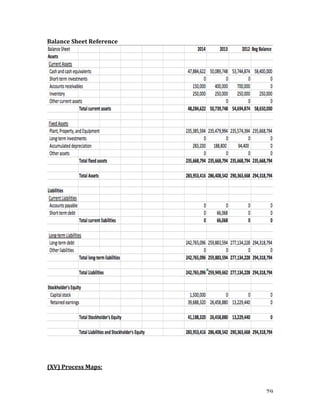
  us	
  a	
  competitive	
  benefit	
  considering	
  the	
  elite	
  level	
  of	
  
education	
  of	
  the	
  university.	
  	
  
Through	
  the	
  given	
  information,	
  Steadman	
  Hospital	
  proves	
  to	
  be	
  at	
  a	
  rather	
  high	
  
advantage	
  compared	
  to	
  other	
  hospitals	
  within	
  the	
  Los	
  Gatos	
  area.	
  With	
  that,	
  along	
  
with	
  Steadman	
  Hospital	
  being	
  associated	
  with	
  Steadman	
  Clinic,	
  we	
  assume	
  
successful	
  business	
  projections	
  within	
  the	
  near	
  future.	


(V)	
  Overview	
  of	
  Data	
  Used	
  in	
  Analysis	
  
Overview	
  of	
  Data	
  Used:	
  
	
   In	
  order	
  to	
  provide	
  the	
  most	
  accurate	
  and	
  reliable	
  business	
  plan	
  possible,	
  our	
  
group	
  was	
  very	
  careful	
  about	
  differentiating	
  what	
  data	
  sources	
  to	
  use	
  in	
  our	
  
proposal.	
  It	
  is	
  vitally	
  important	
  that	
  Steadman	
  Hospital	
  West	
  has	
  the	
  most	
  
dependable	
  and	
  precise	
  data	
  to	
  be	
  able	
  to	
  prove	
  why	
  the	
  hospital	
  is	
  striving	
  to	
  be	
  
  19	
  
one	
  of	
  the	
  best	
  in	
  the	
  world.	
  All	
  of	
  our	
  information	
  presented	
  was	
  found	
  through	
  
trustworthy	
  sources	
  and	
  numerous	
  hours	
  of	
  concise	
  and	
  effective	
  research.	


Websites:	


   A	
  majority	
  of	
  our	
  data	
  sources	
  came	
  from	
  informative	
  online	
  websites.	
  The	
  
group	
  would	
  thoroughly	
  research	
  each	
  resource	
  we	
  came	
  across,	
  making	
  sure	
  it	
  was	
  
the	
  best	
  and	
  most	
  knowledgeable	
  source	
  we	
  were	
  able	
  to	
  find.	
  We	
  based	
  Steadman	
  
Hospital	
  West	
  off	
  an	
  existing	
  hospital	
  in	
  Los	
  Gatos,	
  California	
  named	
  El	
  Camino	
  
Hospital	
  Los	
  Gatos.	
  Based	
  off	
  of	
  this,	
  a	
  majority	
  of	
  our	
  generalized	
  facts	
  about	
  the	
  
hospital	
  campus	
  came	
  from	
  their	
  website.	
  We	
  were	
  able	
  to	
  develop	
  a	
  well	
  organized	
  
campus	
  for	
  Steadman	
  Hospital	
  West	
  due	
  to	
  the	
  layout	
  on	
  El	
  Camino’s	
  website.	
  El	
  
Camino’s	
  website	
  was	
  one	
  of	
  our	
  most	
  prominent	
  resources	
  towards	
  the	
  beginning	
  
of	
  the	
  project	
  because	
  it	
  gave	
  us	
  the	
  opportunity	
  to	
  evaluate	
  a	
  current	
  hospital	
  and	
  
learn	
  what	
  we	
  could	
  apply	
  when	
  constructing	
  our	
  business	
  plan.	
  This	
  was	
  also	
  the	
  
reason	
  we	
  decided	
  to	
  buy	
  out	
  an	
  existing	
  hospital	
  because	
  we	
  were	
  aware	
  that	
  the	
  
information	
  about	
  El	
  Camino	
  would	
  help	
  us	
  in	
  gaining	
  ideas	
  for	
  Steadman	
  Hospital	
  
West.	


   Another	
  main	
  data	
  source	
  for	
  us	
  was	
  using	
  salary.com	
  and	
  indeed.com.	
  These	
  
websites	
  were	
  extremely	
  resourceful	
  when	
  it	
  came	
  to	
  our	
  human	
  resource	
  staffing	
  
plan.	
  More	
  specifically,	
  we	
  were	
  able	
  to	
  accurately	
  define	
  key	
  employee	
  salaries	
  by	
  
finding	
  the	
  average	
  pay	
  rate	
  within	
  the	
  San	
  Jose,	
  California	
  area.	
  We	
  decided	
  to	
  use	
  
these	
  websites	
  because	
  they	
  allowed	
  us	
  to	
  get	
  as	
  precise	
  as	
  possible	
  when	
  it	
  came	
  to	
  
generating	
  the	
  salaries	
  because	
  of	
  the	
  ability	
  for	
  us	
  to	
  choose	
  the	
  geographic	
  area.	
  In	
  
addition,	
  our	
  group	
  utilized	
  a	
  number	
  of	
  collegiate	
  website	
  that	
  supplied	
  
  20	
  
professionally	
  written	
  journals.	
  These	
  journals	
  were	
  mainly	
  based	
  off	
  a	
  study	
  that	
  
had	
  been	
  conducted	
  at	
  a	
  prestigious	
  university.	
  The	
  section	
  where	
  the	
  periodicals	
  
were	
  most	
  helpful	
  was	
  within	
  our	
  e-­‐commerce	
  segment.	
  We	
  came	
  to	
  a	
  conclusion	
  to	
  
use	
  the	
  sources	
  we	
  did	
  due	
  to	
  the	
  simple	
  fact	
  that	
  the	
  research	
  presented	
  was	
  based	
  
on	
  e-­‐commerce	
  role	
  in	
  the	
  medical	
  sector.	
  By	
  doing	
  this,	
  we	
  were	
  able	
  to	
  support	
  
our	
  information	
  with	
  very	
  accurate	
  evidence	
  because	
  of	
  the	
  experiments	
  that	
  were	
  
done	
  which	
  were	
  shown	
  in	
  the	
  journals.	


   Lastly,	
  the	
  rest	
  of	
  our	
  websites	
  were	
  found	
  from	
  various	
  sources	
  in	
  which	
  we	
  
felt	
  were	
  the	
  most	
  correct	
  and	
  reflective	
  of	
  our	
  hospital.	
  Our	
  group	
  did	
  not	
  just	
  use	
  
the	
  first	
  website	
  we	
  came	
  across	
  on	
  when	
  finding	
  certain	
  information.	
  Rather,	
  we	
  
found	
  a	
  significant	
  number	
  of	
  sources	
  for	
  each	
  piece	
  of	
  data	
  we	
  had	
  to	
  find	
  and	
  then	
  
filtered	
  the	
  sites	
  out	
  as	
  we	
  went	
  from	
  general	
  to	
  specific.	
  Also,	
  we	
  would	
  compare	
  
each	
  website	
  with	
  another	
  in	
  similar	
  categories	
  to	
  make	
  sure	
  major	
  ideas	
  and	
  facts	
  
were	
  the	
  same	
  throughout	
  multiple	
  sources.	


Interviews:	
  
	
   For	
  our	
  project	
  we	
  were	
  able	
  to	
  connect	
  and	
  interview	
  four	
  different	
  people	
  
who	
  each	
  assisted	
  us	
  in	
  their	
  own	
  way.	
  First	
  was	
  Mike	
  Stears	
  whom	
  we	
  found	
  
through	
  the	
  mentor	
  program.	
  Mike	
  did	
  not	
  have	
  any	
  experience	
  working	
  in	
  the	
  
healthcare	
  industry	
  but	
  he	
  did	
  have	
  a	
  vital	
  amount	
  of	
  knowledge	
  when	
  it	
  came	
  to	
  
operations	
  management.	
  Mike	
  helped	
  us	
  excessively	
  at	
  the	
  very	
  start	
  of	
  the	
  project.	
  
Within	
  our	
  group	
  none	
  of	
  us	
  were	
  familiar	
  with	
  hospitals,	
  which	
  is	
  why	
  we	
  decided	
  
to	
  talk	
  with	
  someone	
  who	
  had	
  a	
  strong	
  familiarity	
  in	
  the	
  business	
  world.	
  We	
  found	
  
  21	
  
that	
  it	
  really	
  helped	
  to	
  converse	
  with	
  someone	
  because	
  we	
  were	
  able	
  to	
  bounce	
  
ideas	
  off	
  of	
  me	
  and	
  gain	
  his	
  insight.	
  Mike	
  gave	
  us	
  great	
  assistance	
  in	
  where	
  we	
  
should	
  being	
  our	
  project	
  and	
  what	
  we	
  should	
  mainly	
  concentrate	
  on	
  from	
  the	
  start,	
  
which	
  we	
  came	
  to	
  a	
  conclusion	
  was	
  our	
  competitive	
  advantage.	
  The	
  main	
  reason	
  we	
  
decided	
  to	
  talk	
  with	
  Mike	
  was	
  because	
  of	
  the	
  advice	
  we	
  had	
  received	
  in	
  class	
  about	
  
meeting	
  with	
  a	
  mentor.	
  In	
  the	
  end,	
  we	
  are	
  very	
  happy	
  we	
  met	
  with	
  Mike	
  because	
  he	
  
really	
  gave	
  us	
  a	
  starting	
  edge	
  on	
  our	
  project.	
  
	
   The	
  next	
  person	
  we	
  contacted	
  was	
  Kathy	
  Stevens.	
  Kathy	
  is	
  one	
  of	
  our	
  group	
  
member’s,	
  Kendra	
  Otis,	
  aunt	
  who	
  works	
  in	
  the	
  hospital	
  El	
  Camino	
  Hospital	
  
Mountain	
  View.	
  This	
  was	
  the	
  sister	
  hospital	
  to	
  the	
  existing	
  we	
  bought	
  out	
  called	
  El	
  
Camino	
  Hospital	
  Los	
  Gatos.	
  Kathy	
  was	
  able	
  to	
  provide	
  us	
  with	
  general	
  information	
  
such	
  as	
  what	
  the	
  hospital	
  specialized	
  in	
  and	
  key	
  facts.	
  Kathy	
  worked	
  with	
  us	
  
throughout	
  the	
  entire	
  project	
  and	
  when	
  we	
  came	
  to	
  a	
  question	
  that	
  we	
  were	
  unable	
  
to	
  find	
  about	
  the	
  existing	
  hospital	
  we	
  were	
  able	
  to	
  communicate	
  with	
  her	
  very	
  
easily.	
  One	
  are	
  where	
  Kathy	
  really	
  helped	
  us	
  was	
  in	
  the	
  financial	
  analysis	
  segment.	
  
Even	
  though	
  we	
  gain	
  a	
  ton	
  of	
  knowledge	
  about	
  hospitals,	
  Kathy	
  was	
  able	
  to	
  supply	
  
us	
  with	
  a	
  more	
  detailed	
  idea	
  of	
  how	
  and	
  why	
  we	
  should	
  price	
  Steadman	
  Hospital	
  
West.	
  She	
  also	
  helped	
  us	
  in	
  conducting	
  our	
  income	
  statement	
  and	
  balance	
  sheet	
  by	
  
giving	
  us	
  data,	
  which	
  she	
  thought	
  would	
  be	
  useful.	
  We	
  decided	
  to	
  work	
  with	
  Kathy	
  
because	
  she	
  has	
  experience	
  and	
  currently	
  works	
  in	
  a	
  hospital,	
  and	
  better	
  yet	
  she	
  
works	
  in	
  a	
  very	
  similar	
  hospital	
  that	
  we	
  bought.	


   Thirdly,	
  we	
  were	
  able	
  to	
  interview	
  and	
  ask	
  questions	
  to	
  Doctor	
  Robert	
  
LaPrade.	
  Robert	
  LaPrade	
  currently	
  works	
  in	
  the	
  Steadman	
  Clinic	
  located	
  in	
  Vail,	
  
  22	
  
Colorado.	
  He	
  is	
  known	
  as	
  one	
  of	
  the	
  best	
  knee	
  surgeons	
  in	
  the	
  world	
  and	
  
professional	
  athletes	
  from	
  across	
  the	
  globe	
  will	
  travel	
  to	
  Vail	
  to	
  be	
  treated	
  by	
  him.	
  
Our	
  group	
  member,	
  Brooke	
  Rice,	
  was	
  fortunate	
  enough	
  to	
  gain	
  a	
  close	
  relationship	
  
with	
  Dr.	
  LaPrade	
  when	
  she	
  underwent	
  an	
  ACL/LCL	
  surgery	
  and	
  received	
  her	
  
surgery	
  from	
  him.	
  Dr.	
  LaPrade	
  helped	
  us	
  with	
  many	
  of	
  the	
  equipment	
  questions,	
  
such	
  as	
  if	
  certain	
  tools	
  come	
  in	
  bulk.	
  He	
  was	
  also	
  very	
  useful	
  with	
  staffing	
  hours	
  and	
  
during	
  what	
  times	
  of	
  year	
  certain	
  departments	
  were	
  busier.	
  Those	
  were	
  the	
  main	
  
sections	
  Robert	
  LaPrade	
  assisted	
  us	
  in,	
  but	
  we	
  were	
  aware	
  that	
  if	
  we	
  had	
  any	
  
further	
  needs	
  he	
  would	
  respond	
  to	
  us	
  within	
  two	
  days.	
  We	
  decided	
  to	
  contact	
  Dr.	
  
LaPrade	
  because	
  we	
  are	
  basing	
  our	
  hospital	
  off	
  of	
  the	
  Steadman	
  Clinic	
  in	
  Vail	
  so	
  we	
  
figured	
  it	
  would	
  be	
  the	
  most	
  resourceful	
  to	
  talk	
  to	
  one	
  of	
  the	
  most	
  prestigious	
  
doctors.	


   The	
  last	
  person	
  we	
  were	
  able	
  to	
  gain	
  insight	
  from	
  was	
  Brolin	
  Mawejje.	
  Brolin	
  
is	
  currently	
  a	
  pre-­‐med	
  major	
  at	
  Westminster	
  College	
  in	
  Salt	
  Lake	
  City,	
  Utah.	
  He	
  has	
  
spent	
  his	
  last	
  four	
  summer	
  working	
  at	
  The	
  Massachusetts	
  General	
  Hospital	
  in	
  
Boston,	
  Massachusetts	
  working	
  as	
  an	
  intern	
  for	
  one	
  of	
  the	
  top	
  doctors	
  in	
  the	
  world,	
  
Fred	
  Hochburg.	
  Brolin	
  is	
  in	
  the	
  process	
  of	
  studying	
  for	
  the	
  MCATS	
  and	
  having	
  
worked	
  in	
  one	
  of	
  the	
  best	
  hospitals	
  we	
  were	
  able	
  to	
  ask	
  him	
  for	
  advice	
  throughout	
  
the	
  project.	
  Brolin	
  assisted	
  us	
  in	
  defining	
  our	
  specialty	
  and	
  most	
  profitable	
  sector	
  of	
  
Steadman	
  Hospital	
  West	
  along	
  with	
  answering	
  general	
  questions	
  about	
  hospitals.	
  
Brolin	
  also	
  was	
  able	
  to	
  look	
  over	
  our	
  interim’s	
  to	
  see	
  if	
  he	
  had	
  any	
  further	
  
suggestions	
  for	
  them.	
  We	
  decided	
  to	
  seek	
  Brolin’s	
  help	
  because	
  he	
  was	
  easily	
  
accessible,	
  due	
  to	
  the	
  fact	
  of	
  being	
  a	
  close	
  friend,	
  and	
  have	
  been	
  studying	
  this	
  field	
  
  23	
  
for	
  many	
  years.	
  He	
  has	
  also	
  conducted	
  a	
  large	
  amount	
  of	
  research	
  for	
  Massachusetts	
  
General	
  Hospital	
  and	
  has	
  experience	
  working	
  with	
  some	
  of	
  the	
  top	
  surgeons.	
  	
  
Hospital	
  Book:	
  
	
   One	
  of	
  our	
  final	
  and	
  most	
  essential	
  resources	
  was	
  the	
  Hospital	
  Book	
  that	
  we	
  
were	
  provided.	
  We	
  used	
  the	
  hospital	
  book	
  throughout	
  the	
  entire	
  project	
  to	
  help	
  us	
  
with	
  sectional	
  information	
  along	
  with	
  confirming	
  ideas	
  and	
  thoughts	
  that	
  we	
  had.	
  
This	
  book	
  was	
  extremely	
  helpful	
  in	
  our	
  human	
  resource	
  staffing	
  plan	
  along	
  with	
  
giving	
  us	
  ideas	
  for	
  different	
  departments	
  such	
  as	
  the	
  emergency	
  room.	
  The	
  book	
  is	
  
filled	
  with	
  a	
  ton	
  of	
  information,	
  but	
  we	
  knew	
  what	
  facts	
  we	
  were	
  looking	
  for	
  and	
  
were	
  able	
  to	
  narrow	
  it	
  down	
  based	
  on	
  that.	
  	
  Basically,	
  the	
  hospital	
  book	
  was	
  a	
  
consecutive	
  resource	
  for	
  us	
  throughout	
  the	
  project	
  that	
  we	
  referred	
  to	
  because	
  of	
  its	
  
availability	
  to	
  our	
  group.	


Data	
  Analysis	
  
The	
  data	
  Steadman	
  Hospital	
  used	
  to	
  develop	
  our	
  accurate	
  forecasting	
  plan	
  
was	
  collected	
  through	
  multiple	
  strategies,	
  depending	
  on	
  what	
  subject	
  or	
  field	
  was	
  
being	
  looked	
  at.	
  To	
  begin,	
  the	
  first	
  stage	
  of	
  collecting	
  our	
  data	
  was	
  based	
  on	
  the	
  
physical	
  location	
  needed	
  to	
  develop	
  a	
  profitable	
  hospital.	
  Because	
  there	
  are	
  so	
  many	
  
regions	
  within	
  the	
  United	
  States	
  that	
  are	
  applicable	
  for	
  starting	
  a	
  good	
  hospital,	
  we	
  
decided	
  to	
  start	
  with	
  a	
  strategy	
  similar	
  to	
  the	
  ‘slice-­‐and-­‐dice’	
  or	
  multidimensional	
  
strategy.	
  Using	
  this	
  strategy,	
  we	
  began	
  looking	
  at	
  all	
  profitable	
  hospitals	
  within	
  the	
  
United	
  States.	
  We	
  then	
  reevaluated	
  those	
  specific	
  hospitals	
  to	
  find	
  one	
  located	
  in	
  a	
  
wealthier	
  region.	
  Finally,	
  we	
  arrived	
  at	
  our	
  specific	
  location,	
  Los	
  Gatos,	
  California,	
  by	
  
  24	
  
singling	
  out	
  the	
  hospital	
  with	
  the	
  most	
  potential	
  of	
  opportunity	
  and	
  growth.	
  
Therefore,	
  our	
  cubical	
  analysis	
  was	
  divided	
  among	
  the	
  following:	
  Region,	
  
profitability	
  and	
  opportunity	
  for	
  growth.	
  By	
  using	
  this	
  strategy	
  of	
  data	
  collection,	
  we	
  
were	
  able	
  to	
  find	
  a	
  building	
  that	
  has	
  a	
  very	
  large	
  opportunity	
  for	
  immense	
  profits	
  
and	
  growth.	
  
	
   Our	
  means	
  of	
  data	
  collection	
  is	
  hard	
  to	
  be	
  classified	
  solely	
  as	
  ‘drill-­‐down’	
  or	
  
‘roll-­‐up’	
  because	
  we	
  managed	
  to	
  use	
  both	
  strategies	
  in	
  the	
  development	
  of	
  
Steadman	
  Hospital.	
  Because	
  we	
  started	
  off	
  looking	
  at	
  all	
  hospitals	
  and	
  narrowing	
  
down	
  our	
  data	
  to	
  find	
  the	
  single	
  best	
  location,	
  that	
  stage	
  could	
  be	
  classified	
  as	
  ‘drill-­‐
down’.	
  But	
  then	
  we	
  reversed	
  our	
  means	
  of	
  collecting	
  data	
  when	
  looking	
  at	
  what	
  
facilities	
  would	
  be	
  useful	
  at	
  Steadman’s	
  campus.	
  To	
  do	
  this,	
  we	
  sought	
  out	
  the	
  most	
  
profitable	
  procedures	
  hospitals	
  do,	
  and	
  then	
  compared	
  that	
  to	
  our	
  competition.	
  This	
  
allowed	
  us	
  to	
  incorporate	
  as	
  many	
  low-­‐cost	
  and	
  high-­‐profit	
  operations	
  to	
  generate	
  
the	
  most	
  profit.	
  
	
   Similarly	
  to	
  the	
  previous	
  example,	
  Steadman	
  Hospital	
  used	
  several	
  forms	
  of	
  
both	
  quantitative	
  and	
  qualitative	
  data	
  to	
  generate	
  successful	
  information,	
  which	
  
translated	
  to	
  proper	
  operations.	
  To	
  do	
  this,	
  it	
  was	
  mentioned	
  earlier	
  that	
  we	
  were	
  in	
  
contact	
  with	
  several	
  doctors	
  and	
  a	
  mentor	
  to	
  help	
  arrive	
  at	
  useful	
  data.	
  These	
  people	
  
acted	
  in	
  a	
  way	
  a	
  business	
  ‘sage’	
  would	
  act	
  for	
  training	
  a	
  new	
  manager	
  how	
  to	
  run	
  a	
  
store.	
  To	
  gain	
  insider	
  knowledge	
  from	
  these	
  doctors,	
  we	
  set	
  up	
  a	
  questionnaire	
  that	
  
was	
  related	
  to	
  each	
  individual	
  doctor.	
  This	
  allowed	
  us	
  to	
  gain	
  further	
  data	
  on	
  certain	
  
hospital	
  procedures	
  and	
  potential	
  profitability,	
  along	
  with	
  consumer	
  congestion	
  
  25	
  
during	
  specific	
  seasons.	
  By	
  asking	
  a	
  sage	
  such	
  as	
  an	
  experienced	
  doctor,	
  we	
  were	
  
able	
  to	
  come	
  to	
  specific	
  conclusions	
  that	
  related	
  to	
  our	
  specific	
  hospital.	
  
	
   When	
  looking	
  at	
  operational	
  and	
  overhead	
  costs	
  to	
  operate	
  Steadman	
  
hospital,	
  we	
  chose	
  to	
  look	
  at	
  quantitative	
  data.	
  In	
  this,	
  we	
  observed	
  historical	
  costs	
  
and	
  other	
  expenses	
  related	
  to	
  the	
  current	
  hospital’s	
  location	
  to	
  help	
  gauge	
  
approximate	
  expenses	
  Steadman	
  Hospital	
  will	
  experience.	
  Generally,	
  all	
  quantitative	
  
data	
  used	
  for	
  Steadman	
  hospital	
  was	
  for	
  future	
  forecasts	
  of	
  expenses	
  and	
  revenues.	
  
This	
  is	
  primarily	
  because	
  most	
  of	
  the	
  data	
  collected	
  on	
  how	
  to	
  operate	
  the	
  physical	
  
building	
  is	
  best	
  collected	
  through	
  personal	
  sources.	
  With	
  that,	
  the	
  primary	
  use	
  for	
  
quantitative	
  data	
  collection	
  methods	
  was	
  for	
  financial	
  reports	
  and	
  forecasts.	


(VI)	
  Physical	
  Location	
  and	
  Financial	
  Plan:	
  
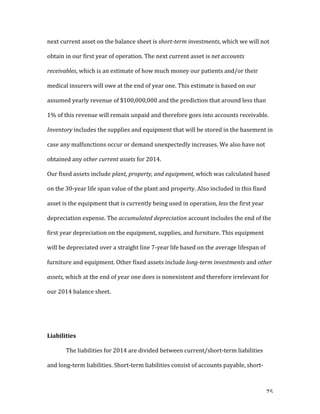
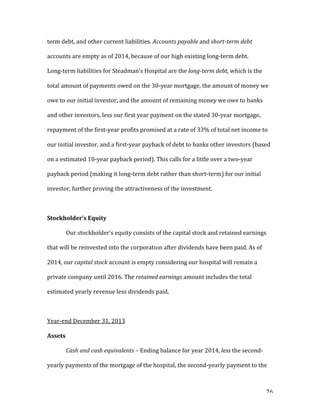
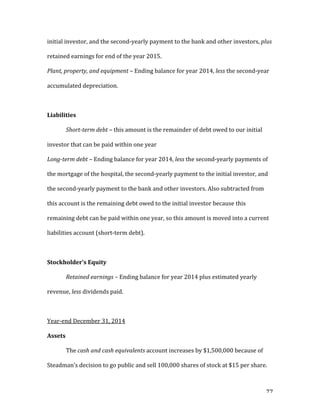
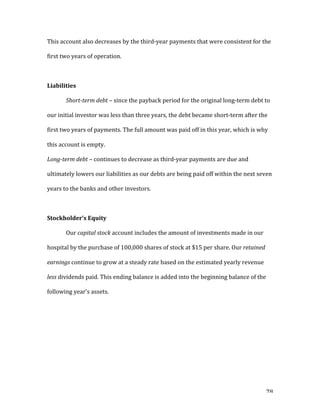
The chosen destination that Steadman Hospital is to be located in is Los Gatos,
California. Los Gatos is within the Northern region of California, and is recognized as
one of the wealthier cities of America. We chose this location because we understand
that, like many companies, the only way to make a significant profit with a stationary
‘brick’ company, is to have a target market that can afford the products. Because
specialized medical care is rather costly for patients, so to be located within a wealthy
section of the country is a priority for Steadman Hospital. With that, we hope that our
specialized services and doctors, combined with our location, will be highly attractive for
individuals with a need for medical attention. This will result in the value of the
Steadman name to increase, and further, for profits to dramatically increase. But to begin
  26	
  
making a profit, we must first examine the initial expenses required to buy the currently
standing building within Los Gatos that we will soon transform into Steadman Hospital.
The building chosen to be developed into Steadman Hospital is currently named
“El Camino Los Gatos”. This building was chosen because this location within Los Gatos
is a highly valued piece of property. With that, we found that the following financial
information:
• As a result of purchasing the physically standing structure that is already laid out
and functioning as an existing hospital known as El Camino, we are asking for
$8,797,500 from you as a primary investor to help fund this developmental
hospital. Assuming monthly payments of $58,700 would be included, the average
revenue of a hospital is approximately $100,000,000 per year. This, over time,
will balance out the initial payments towards Steadman Hospital. Additionally, to
rent or lease this physical building, it would cost a total of $652,800 per month (or
$7,833,600 per year). The standard thirty-year mortgage for this hospital is
estimated to be valued at $235,008,000 for the entire campus, which would not
include supplies needed for standard operations. These calculations were based
off of an average $230 per square footage cost within Northern California.
Finally, to maintain the Steadman name, we agreed to include a yearly expense
(based off profits) to the Steadman Corporation. As a result, Steadman Hospital
will provide 9% of its yearly profits to the Steadman Company in allowance for
us to become a franchise under the Steadman name.
• How we determined the asking investment price we suggest earlier followed this
guideline: you as an investor will automatically buy into 15% of the total cost to
  27	
  
build Steadman Hospital. For this investment, you will receive, in turn, a total of
30% of the organization plus a royalty of 3% (of profits) yearly. The remaining
amount needed to build Steadman Hospital will be achieved through various other
reliable investments.
One	
  campus	
  –	
  255,000	
  square	
  feet	
  
3	
  Buildings	
  –	
  143	
  beds	
  
1st	
  building	
  –	
  100-­‐110	
  beds	
  
2nd	
  building	
  –	
  30+	
  beds	
  
3rd	
  building	
  –	
  ±5	
  beds	
  
Three	
  buildings	
  
1. Main	
  Hospital	
  –	
  100,000	
  square	
  feet	
  
Basement	
  –	
  3,000	
  square	
  feet	
  
• Storage	
  3,000	
  square	
  feet	
  
The	
  basement	
  for	
  now	
  is	
  going	
  to	
  be	
  a	
  place	
  for	
  storage	
  and	
  backup	
  
equipment	
  and	
  supplies.	
  This	
  also	
  can	
  be	
  a	
  place	
  for	
  employees	
  to	
  be	
  while	
  
off	
  the	
  clock.	
  
1st	
  floor	
  –	
  40,000	
  square	
  feet	
  
• Lobby	
  1,500	
  square	
  feet	
  
• Cafeteria	
  1,500	
  square	
  feet	
  
• Gift	
  Shop	
  1,000	
  square	
  feet	
  
• ER	
  10,000	
  square	
  feet	
  
• Intensive	
  Care	
  6,000	
  square	
  feet	
  
• Pediatrics	
  10,000	
  square	
  feet	
  
  28	
  
• Pharmaceuticals	
  10,000	
  square	
  feet	
  
The	
  first	
  floor	
  is	
  typically	
  the	
  place	
  of	
  entrance	
  for	
  patients	
  and	
  visitors.	
  
The	
  lobby,	
  cafeteria,	
  and	
  gift	
  shop	
  make	
  the	
  most	
  sense	
  to	
  be	
  on	
  the	
  first	
  floor	
  
where	
  visitors	
  can	
  eat	
  and	
  buy	
  gifts,	
  while	
  patients	
  check-­‐in	
  in	
  the	
  lobby.	
  The	
  
ER,	
  Intensive	
  Care,	
  Pediatrics,	
  and	
  Pharmacy	
  are	
  also	
  located	
  on	
  the	
  first	
  
floor.	
  Emergency	
  rooms	
  on	
  the	
  first	
  floor	
  make	
  the	
  most	
  logical	
  sense	
  as	
  
patients	
  are	
  arriving	
  from	
  ambulances	
  or	
  other	
  forms	
  of	
  transportation	
  and	
  
need	
  to	
  be	
  quickly	
  attended	
  to.	
  Intensive	
  care	
  being	
  much	
  associated	
  with	
  
emergency	
  needs	
  to	
  be	
  located	
  on	
  the	
  first	
  floor	
  so	
  that	
  it	
  is	
  easy	
  and	
  
convenient	
  to	
  transport	
  patients	
  directly	
  there	
  or	
  even	
  from	
  the	
  ER.	
  
Pediatrics	
  should	
  also	
  be	
  located	
  on	
  the	
  first	
  floor	
  for	
  easy	
  access	
  for	
  children	
  
and	
  their	
  guardians.	
  Finally,	
  the	
  Pharmacy	
  will	
  be	
  on	
  the	
  first	
  floor	
  because	
  of	
  
the	
  ease	
  of	
  accessibility	
  and	
  as	
  it	
  is	
  considered	
  a	
  quicker	
  process	
  of	
  getting	
  a	
  
customer	
  in	
  an	
  out	
  of	
  the	
  facility.	
  Each	
  wing	
  and	
  department	
  of	
  the	
  first	
  floor	
  
will	
  have	
  its	
  respective	
  overnight	
  rooms	
  and	
  rooms	
  for	
  outpatients,	
  which	
  
will	
  total	
  to	
  about	
  85-­‐90	
  beds.	
  
2nd	
  floor	
  –	
  40,000	
  square	
  feet	
  
• Radiology	
  10,000	
  square	
  feet	
  
• Specialized/Reconstructive	
  Surgeries	
  10,000	
  square	
  feet	
  
• Cardiovascular	
  10,000	
  square	
  feet	
  
• Cancer	
  Treatment	
  10,000	
  square	
  feet	
  
The	
  second	
  floor	
  is	
  mainly	
  consisting	
  of	
  more	
  intense,	
  yet	
  planned	
  
operations.	
  Surgeries	
  of	
  the	
  reconstructive	
  and	
  specialized	
  type	
  are	
  planned	
  
  29	
  
and	
  can	
  be	
  kept	
  out	
  of	
  the	
  way	
  of	
  the	
  first	
  floor	
  emergencies.	
  The	
  same	
  goes	
  
for	
  cardiovascular	
  operations,	
  radiology,	
  and	
  cancer	
  treatment.	
  Although	
  
these	
  conditions	
  could	
  be	
  serious,	
  they	
  typically	
  come	
  with	
  planning	
  and	
  
preparation	
  and	
  could	
  be	
  separated	
  from	
  sudden	
  operations	
  or	
  traumas	
  
located	
  on	
  the	
  first	
  floor.	
  The	
  second	
  floor	
  will	
  also	
  have	
  its	
  respective	
  beds	
  
necessary	
  for	
  any	
  outpatients	
  or	
  overnight	
  patients,	
  which	
  will	
  total	
  to	
  about	
  
25-­‐30	
  beds.	
  Fewer	
  beds	
  are	
  needed	
  on	
  the	
  second	
  floor	
  than	
  on	
  the	
  first	
  floor	
  
because	
  the	
  operations	
  held	
  on	
  the	
  second	
  floor	
  can	
  be	
  controlled	
  and	
  
prepared	
  for,	
  while	
  the	
  need	
  for	
  first	
  floor	
  beds	
  is	
  inconsistent,	
  unknown,	
  and	
  
unplanned.	
  	
  
PARKING	
  LOT–	
  17,000	
  square	
  feet	
  
TOTAL	
  of	
  Main	
  Hospital	
  =	
  100,000	
  square	
  feet	
  
2. Rehabilitation	
  and	
  Physical	
  Performance	
  Institute	
  –	
  6,000-­‐7,000	
  square	
  feet	
  
• Physical	
  Therapy	
  	
  
• Rehabilitation	
  –	
  30	
  beds	
  
• Psychiatric	
  aid	
  
We	
  have	
  a	
  second	
  building	
  for	
  Rehabilitation,	
  Physical	
  Therapy,	
  and	
  
Psychiatric	
  Aid,	
  which	
  is	
  completely	
  separate	
  and	
  typically	
  is	
  needed	
  following	
  
any	
  operations	
  that	
  take	
  place	
  in	
  the	
  main	
  hospital.	
  This	
  building	
  has	
  one	
  floor,	
  
and	
  is	
  not	
  a	
  far	
  distance	
  from	
  the	
  main	
  hospital,	
  so	
  transportation	
  is	
  easy.	
  
PARKING	
  LOT	
  –	
  10,000	
  square	
  feet	
  
TOTAL	
  of	
  Rehab/Physical	
  Performance	
  Institute	
  =	
  17,000	
  square	
  feet	
  
3. Cancer	
  &	
  Other	
  Research	
  Centers	
  –	
  3,000	
  square	
  feet	
  
  30	
  
• Cancer	
  Research	
  
• Cardiovascular	
  Research	
  
• Drug	
  research	
  and	
  development	
  
Our	
  third	
  building	
  is	
  mainly	
  dedicated	
  to	
  research	
  and	
  development	
  of	
  a	
  
variety	
  of	
  fields	
  that	
  our	
  hospital	
  of	
  El	
  Camino	
  Los	
  Gatos	
  specializes	
  in.	
  We	
  would	
  
like	
  to	
  further	
  our	
  knowledge	
  and	
  use	
  this	
  building	
  as	
  a	
  source	
  for	
  our	
  growth	
  as	
  
a	
  successful	
  business	
  of	
  operations.	
  
PARKING	
  LOT	
  –	
  2,000	
  square	
  feet	
  
TOTAL	
  of	
  Research	
  center	
  –	
  5,000	
  square	
  feet	
  
4. Parking	
  Structure,	
  Campus	
  Area	
  –	
  50,000	
  square	
  feet	
  
FINAL	
  TOTAL	
  OF	
  EL	
  CAMINO	
  LOS	
  GATOS	
  HOSPITAL	
  =	
  172,000	
  square	
  feet	
  
83,000	
  square	
  feet	
  to	
  spare	


(VII)	
  Medical	
  Service	
  Plan:	
  
Every	
  functioning	
  moment	
  at	
  Steadman	
  Hospital	
  requires	
  crucial	
  planning	
  on	
  
what	
  supplies	
  and	
  inventory	
  is	
  required	
  for	
  each	
  process	
  and	
  service	
  provided	
  by	
  
our	
  hospital.	
  We	
  recognized	
  that	
  every	
  step	
  from	
  when	
  a	
  patient	
  walks	
  into	
  the	
  door	
  
until	
  they	
  leave	
  involves	
  very	
  specific	
  set	
  of	
  tools	
  and	
  people	
  to	
  help	
  them	
  through	
  
safely	
  and	
  successfully.	
  Therefore,	
  we	
  have	
  developed	
  a	
  intricate	
  system	
  of	
  
understanding	
  exactly	
  what	
  supplies	
  will	
  be	
  needed	
  for	
  every	
  movement	
  happening	
  
on	
  Steadman’s	
  campus.	
  The	
  organizational	
  map	
  of	
  customer	
  movement	
  can	
  be	
  
referred	
  to	
  in	
  the	
  Appendix,	
  Image	
  7.1.	
  To	
  fully	
  understand	
  Steadman	
  Hospital’s	
  
systems,	
  it	
  is	
  best	
  to	
  visualize	
  they	
  processes	
  of	
  how	
  a	
  patient	
  moves	
  within	
  campus.	
  	
  
  31	
  
	
   The	
  map	
  is	
  segmented	
  by	
  number	
  into	
  each	
  individual	
  segment,	
  which	
  
involves	
  the	
  movement	
  or	
  actions	
  towards	
  a	
  patient.	
  Given	
  each	
  number,	
  the	
  tools	
  
used	
  by	
  each	
  department	
  are	
  identifiable	
  by	
  looking	
  at	
  the	
  Appendix,	
  Chart	
  7.1.	
  To	
  
read	
  the	
  map	
  accurately,	
  correspond	
  the	
  Blue	
  numbers	
  from	
  Image	
  7.1	
  onto	
  Chart	
  
7.1.	
  
	
   In	
  image	
  7.1,	
  you	
  can	
  identify	
  that	
  Steadman	
  Hospital	
  has	
  broken	
  down	
  the	
  
processes	
  into	
  a	
  readable	
  diagram.	
  As	
  mentioned	
  before,	
  this	
  diagram	
  represents	
  
the	
  movement	
  and	
  tools	
  used	
  for	
  each	
  movement	
  for	
  our	
  hospital	
  to	
  run	
  effectively.	
  
To	
  fully	
  grasp	
  the	
  idea	
  of	
  how	
  Steadman	
  Operates,	
  you	
  should	
  first	
  understand	
  how	
  
admitted	
  patients	
  arrive	
  at	
  the	
  hospital.	
  There	
  are	
  three	
  forms	
  of	
  admitted	
  patients:	
  
Emergency,	
  Appointment	
  and	
  (some)	
  Walk-­‐ins.	
  Patients	
  of	
  appointment	
  and	
  walk-­‐in	
  
arrive	
  through	
  the	
  main	
  entrance	
  to	
  be	
  greeted	
  by	
  a	
  receptionist.	
  These	
  patients	
  will	
  
then	
  sign	
  in	
  through	
  a	
  kiosk	
  system	
  and	
  be	
  asked	
  to	
  wait	
  within	
  the	
  Reception	
  Room	
  
until	
  called	
  upon	
  by	
  a	
  nurse.	
  Emergency	
  patients,	
  such	
  as	
  critical	
  injuries	
  or	
  laboring	
  
mothers,	
  will	
  be	
  admitted	
  once	
  within	
  a	
  treatment	
  center,	
  which	
  will	
  act	
  on	
  the	
  
situation	
  based	
  on	
  a	
  scale	
  of	
  intensity.	
  This	
  first	
  step	
  of	
  Steadman	
  Hospital’s	
  
operations	
  requires	
  minimal	
  equipment	
  for	
  walk-­‐in	
  and	
  appointment-­‐made	
  
patients.	
  For	
  Emergency	
  patients,	
  some	
  of	
  the	
  equipment	
  required	
  by	
  each	
  patient	
  
may	
  include	
  an	
  ambulance,	
  wheelchair	
  or	
  stretcher	
  (depending	
  on	
  the	
  situation).	
  
You	
  can	
  observe	
  some	
  of	
  the	
  general	
  equipment	
  required	
  by	
  this	
  department	
  
located	
  in	
  the	
  Appendix	
  under	
  Step	
  1	
  of	
  Chart	
  7.1.	
  
	
   Step	
  two	
  is	
  where	
  non-­‐critical	
  patients	
  are	
  asked	
  to	
  wait	
  within	
  the	
  
Reception	
  room.	
  Because	
  of	
  the	
  non-­‐crucial	
  moments	
  happening	
  within	
  this	
  stage	
  of	
  
  32	
  
hospital	
  operations,	
  the	
  primary	
  equipment	
  used	
  within	
  this	
  section	
  includes	
  items	
  
like	
  couches,	
  magazines,	
  televisions,	
  etc.	


   Step	
  three	
  is	
  dedicated	
  to	
  mothers	
  either	
  in	
  or	
  going	
  into	
  labor.	
  This	
  stage	
  of	
  
operations	
  requires	
  quick	
  movements	
  between	
  departments	
  for	
  the	
  mother	
  to	
  get	
  
the	
  medical	
  attention	
  required	
  within	
  a	
  short	
  amount	
  of	
  time.	
  Because	
  of	
  this,	
  there	
  
will	
  always	
  be	
  equipment	
  such	
  as	
  wheelchairs,	
  labor	
  gowns	
  and	
  health	
  monitors	
  
readily	
  available	
  both	
  within	
  close	
  proximity	
  of	
  the	
  main	
  entrance	
  and	
  within	
  the	
  
labor	
  rooms	
  of	
  the	
  Steadman	
  Hospital.	
  As	
  mentioned	
  before,	
  more	
  equipment	
  for	
  
this	
  operation	
  and	
  all	
  other	
  operations	
  occurring	
  at	
  Steadman	
  Hospital	
  can	
  be	
  found	
  
within	
  the	
  Appendix,	
  Chart	
  7.1.	


   Step	
  four	
  is	
  a	
  very	
  crucial	
  stage	
  for	
  the	
  people	
  of	
  Los	
  Gatos.	
  Emergency	
  
surgeries	
  and	
  operations	
  must	
  be	
  quickly	
  moving	
  and	
  precise	
  to	
  avoid	
  undesired	
  
results.	
  As	
  a	
  result,	
  this	
  department	
  is	
  located	
  within	
  another	
  section	
  of	
  Steadman	
  
Hospital,	
  which	
  avoids	
  immediate	
  admittance.	
  There	
  is	
  an	
  extensive	
  list	
  of	
  
equipment	
  used	
  within	
  this	
  department,	
  which	
  will	
  later	
  be	
  discussed	
  under	
  the	
  
“Equipment	
  Plan”	
  section	
  of	
  this	
  document.	
  Though,	
  to	
  simplify	
  things	
  currently,	
  
some	
  of	
  the	
  equipment	
  used	
  to	
  transport	
  emergency	
  patients	
  from	
  the	
  unloading	
  
zone	
  too	
  the	
  emergency	
  operations	
  department	
  would	
  include:	
  stretchers,	
  portable	
  
beds,	
  and	
  emergency	
  supply	
  kits.	
  Though	
  this	
  is	
  not	
  limiting,	
  these	
  are	
  three	
  
essential	
  items	
  to	
  get	
  a	
  patient	
  from	
  one	
  location	
  to	
  another	
  with	
  as	
  little	
  risk	
  as	
  
possible.	
  
	
   Step	
  four	
  also	
  requires	
  patients	
  to	
  have	
  the	
  ability	
  to	
  stay	
  the	
  night	
  within	
  the	
  
hospital	
  for	
  extended	
  care.	
  This	
  will	
  require	
  all	
  equipment	
  that	
  can	
  be	
  found	
  within	
  
  33	
  
a	
  typical	
  hospital	
  bedroom,	
  along	
  with	
  emergency	
  medication	
  and	
  several	
  forms	
  of	
  
transportation	
  devices.	
  This	
  is	
  a	
  less	
  intensive	
  moment	
  for	
  the	
  operations	
  running	
  
within	
  Steadman	
  Hospital,	
  therefore	
  it	
  will	
  require	
  less	
  emergency	
  items	
  and	
  more	
  
general,	
  overnight	
  equipment.	


   Moving	
  forward,	
  patients	
  that	
  have	
  been	
  waiting	
  for	
  a	
  short	
  time	
  within	
  the	
  
Reception	
  Room	
  are	
  then	
  taken	
  by	
  a	
  nurse	
  to	
  their	
  needed	
  department.	
  Because	
  of	
  
the	
  low	
  level	
  of	
  intensity,	
  there	
  will	
  be	
  fewer	
  modes	
  of	
  transportation	
  from	
  one	
  
department	
  to	
  the	
  next.	
  It	
  should	
  also	
  be	
  noted	
  that	
  specific	
  sections	
  of	
  the	
  hospital	
  
might	
  be	
  located	
  within	
  different	
  buildings	
  on	
  campus.	
  Therefore,	
  each	
  building	
  will	
  
have	
  a	
  separate	
  admittance	
  office	
  and	
  reception	
  room.	
  Located	
  on	
  Image	
  7.1,	
  this	
  
process	
  is	
  identified	
  by	
  separate	
  departments	
  labeled	
  five	
  until	
  eleven.	
  After	
  a	
  
patient	
  arrives	
  at	
  their	
  required	
  destination,	
  the	
  equipment	
  that	
  is	
  located	
  within	
  
each	
  room	
  is	
  department-­‐specific.	
  That	
  is,	
  the	
  equipment	
  used	
  for	
  surgeries	
  (10)	
  
will	
  differentiate	
  from	
  equipment	
  used	
  in	
  rehabilitation	
  (9).	
  For	
  a	
  department	
  
specific	
  list	
  of	
  equipment,	
  you	
  can	
  look	
  at	
  Chart	
  7.1.	
  
	
   Outpatient	
  simply	
  falls	
  under	
  the	
  category	
  of	
  Walk-­‐in	
  patients,	
  though	
  they	
  
do	
  not	
  follow	
  the	
  exact	
  guidelines.	
  They	
  may	
  skip	
  the	
  admissions	
  section	
  of	
  the	
  
hospital	
  depending	
  on	
  their	
  condition	
  and	
  do	
  not	
  spend	
  the	
  night	
  within	
  the	
  
hospital.	
  Therefore,	
  because	
  the	
  patients	
  do	
  not	
  spend	
  the	
  night	
  and	
  are	
  classified	
  as	
  
a	
  walk-­‐in	
  patient,	
  they	
  use	
  the	
  same	
  equipment	
  and	
  operations	
  that	
  the	
  previously	
  
listed	
  sections	
  use,	
  above.	


   Steadman	
  Hospital	
  is	
  dedicated	
  on	
  getting	
  patients	
  the	
  quality	
  service	
  they	
  
need	
  and	
  deserve.	
  And	
  the	
  only	
  way	
  to	
  achieve	
  this	
  is	
  to	
  have	
  an	
  efficient	
  mode	
  of	
  
  34	
  
transportation	
  between	
  departments	
  along	
  with	
  all	
  of	
  the	
  necessary	
  equipment	
  
found	
  within	
  each	
  department.	
  To	
  do	
  this,	
  our	
  hospital	
  has	
  separated	
  each	
  
individual	
  path	
  a	
  patient	
  could	
  take	
  and	
  will	
  make	
  it	
  clear	
  to	
  management	
  exactly	
  
what	
  is	
  necessary	
  to	
  have	
  for	
  successful	
  operations.	
  With	
  that,	
  Steadman	
  Hospital	
  
will	
  prove	
  to	
  be	
  quick	
  and	
  tentative	
  to	
  each	
  patient’s	
  needs	
  within	
  any	
  given	
  
situation.	


(VIII)	
  Demand	
  Forecast:	
  
Walk-­ins:	
  Walk-­‐in	
  services	
  will	
  be	
  continuous	
  –	
  in	
  that	
  it	
  will	
  be	
  twenty-­‐four	
  
hours	
  a	
  day,	
  seven	
  days	
  a	
  week.	
  Though,	
  because	
  it	
  is	
  clear	
  that	
  people	
  typically	
  do	
  
not	
  require	
  too	
  much	
  medical	
  assistance	
  during	
  the	
  middle	
  of	
  the	
  night,	
  Steadman	
  
Hospital	
  will	
  operate	
  accordingly.	
  This	
  section	
  of	
  the	
  hospital	
  is	
  forecasted	
  to	
  have	
  a	
  
rather	
  consistent	
  congestion	
  of	
  patients	
  through	
  out	
  the	
  year,	
  suggesting	
  that	
  
Steadman	
  Hospital	
  does	
  not	
  change	
  any	
  operating	
  procedures	
  throughout	
  the	
  year	
  
according	
  to	
  month	
  or	
  season.	
  	
  Though,	
  through	
  various	
  sources	
  of	
  information,	
  it	
  is	
  
evident	
  that	
  the	
  flu	
  season,	
  which	
  occurs	
  typically	
  in	
  early	
  January	
  until	
  late	
  
February,	
  that	
  walk-­‐in	
  patients	
  somewhat	
  increase.	
  Although	
  this	
  is,	
  California	
  has	
  
lower	
  rates	
  of	
  the	
  flu	
  compared	
  to	
  those	
  of	
  other	
  states.	
  As	
  a	
  result,	
  Steadman	
  
Hospital	
  will	
  react	
  accordingly	
  by	
  hiring	
  slightly	
  more	
  nurses	
  to	
  administer	
  the	
  flu	
  
shot	
  and,	
  by	
  a	
  small	
  margin,	
  increase	
  the	
  amount	
  of	
  pediatric	
  doctors	
  to	
  compensate	
  
for	
  additional	
  walk-­‐in	
  patients.	
  Other	
  than	
  that,	
  this	
  department	
  is,	
  as	
  stated	
  before,	
  
very	
  consistent	
  throughout	
  the	
  year.	
  Therefore,	
  the	
  slight	
  addition	
  during	
  these	
  
  35	
  
months	
  is	
  relatively	
  insignificant,	
  considering	
  the	
  minimal	
  turnover	
  rate	
  from	
  
patient-­‐to-­‐patient	
  receiving	
  the	
  flu	
  shot.	
  
	
   Emergencies	
  and	
  Outpatient:	
  Similar	
  to	
  Walk-­‐ins,	
  Steadman	
  Hospital’s	
  
emergency	
  department	
  will	
  operate	
  around-­‐the-­‐clock,	
  through	
  out	
  the	
  year.	
  
Through	
  given	
  research,	
  there	
  does	
  not	
  appear	
  to	
  be	
  any	
  direct	
  correlation	
  between	
  
emergency	
  and	
  day	
  of	
  the	
  week.	
  Though,	
  during	
  the	
  day,	
  research	
  shows	
  that	
  during	
  
rush	
  hour	
  (3pm-­‐9pm),	
  there	
  are	
  the	
  most	
  non-­‐fatal	
  emergencies	
  as	
  a	
  result	
  of	
  
vehicular	
  accidents.	
  And	
  from	
  9pm-­‐12am	
  there	
  are	
  the	
  most	
  fatal	
  emergencies	
  
related	
  to	
  alcohol.	
  Therefore,	
  the	
  emergency	
  department	
  will	
  function	
  at	
  consistent	
  
level	
  throughout	
  the	
  week,	
  though	
  during	
  the	
  time	
  frames	
  listed	
  above,	
  it	
  will	
  be	
  
most	
  highly	
  demanded	
  during	
  the	
  most	
  curial	
  times	
  of	
  day.	
  Because	
  of	
  Steadman	
  
Hospital’s	
  location,	
  within	
  Los	
  Gatos,	
  California,	
  there	
  are	
  minimal	
  changes	
  in	
  
quantity	
  of	
  emergency	
  patients	
  and	
  outpatient	
  services	
  due	
  to	
  weather.	
  Therefore,	
  
the	
  services	
  provided	
  within	
  these	
  sections	
  of	
  the	
  hospital	
  will	
  have	
  little	
  change	
  
throughout	
  the	
  year	
  as	
  a	
  result	
  of	
  an	
  unchanging	
  demand.	
  
	
   Non-­reconstructive	
  surgeries	
  (surgical	
  services):	
  General	
  surgical	
  
services	
  will	
  be	
  held	
  during	
  surgeon’s	
  work	
  hours.	
  A	
  surgeon’s	
  typical	
  workday	
  for	
  
Steadman	
  Hospital	
  is	
  from	
  7am	
  until	
  5pm.	
  Depending	
  on	
  the	
  doctor,	
  scheduled	
  
surgeries	
  will	
  occur	
  Monday	
  through	
  Saturday	
  throughout	
  the	
  year.	
  Noted,	
  
emergency	
  surgeries	
  are	
  part	
  of	
  the	
  emergency	
  department,	
  which	
  will	
  be	
  
functional	
  during	
  the	
  times	
  given	
  above.	
  There	
  does	
  not	
  appear	
  to	
  be	
  any	
  significant	
  
change	
  of	
  general	
  surgical	
  procedures	
  based	
  on	
  the	
  month	
  or	
  season.	
  Given	
  that,	
  a	
  
  36	
  
surgeon’s	
  workday	
  will	
  not	
  typically	
  change	
  throughout	
  the	
  year	
  to	
  comply	
  with	
  
seasonal	
  changes.	


   Infant/Newborn	
  and	
  Child	
  Services:	
  Infant	
  and	
  Newborn	
  Services	
  are	
  
relatively	
  random	
  compared	
  to	
  other	
  services	
  provided	
  by	
  Steadman	
  Hospital.	
  
There	
  does	
  not	
  seem	
  to	
  be	
  any	
  connection	
  between	
  hour	
  of	
  the	
  day	
  and	
  baby	
  births,	
  
though	
  according	
  to	
  the	
  US	
  Census,	
  babies	
  are	
  most	
  likely	
  to	
  be	
  born	
  on	
  a	
  Tuesday,	
  
with	
  Wednesday,	
  Thursday,	
  and	
  Friday	
  not	
  too	
  far	
  behind.	
  The	
  same	
  article	
  also	
  
explained	
  that:	
  the	
  summer	
  months	
  of	
  the	
  year,	
  July	
  and	
  August,	
  seem	
  to	
  be	
  the	
  
most	
  popular	
  birth	
  month,	
  with	
  October,	
  November	
  and	
  December	
  being	
  the	
  least	
  
popular	
  months	
  for	
  births.	
  Given	
  this,	
  doctors	
  and	
  nurses	
  within	
  this	
  field	
  will	
  have	
  
schedules	
  which	
  correlate	
  to	
  these	
  highly	
  or	
  hardly	
  demanded	
  months	
  and	
  days.	
  
	
   Men’s/Women’s	
  Health	
  &	
  Pediatrics:	
  This	
  department	
  of	
  Steadman	
  
Hospital	
  is	
  specifically	
  by	
  appoint	
  only,	
  with	
  certain	
  functioning	
  hours	
  of	
  the	
  day.	
  
Given	
  that,	
  the	
  typical	
  hours	
  for	
  this	
  field	
  range	
  from	
  7am	
  until	
  4pm,	
  which	
  will	
  be	
  
directly	
  connected	
  to	
  doctor’s	
  work	
  hours.	
  Studies	
  show	
  that	
  the	
  most	
  congested	
  
times	
  of	
  year	
  for	
  this	
  department	
  is	
  during	
  early-­‐year	
  months	
  (January	
  until	
  March).	
  
As	
  a	
  result,	
  there	
  will	
  be	
  more	
  doctors	
  working	
  during	
  these	
  months,	
  to	
  respond	
  to	
  
the	
  increased	
  demand.	
  During	
  the	
  week,	
  Steadman	
  Hospital	
  will	
  provide	
  these	
  
services	
  Monday	
  through	
  Saturday.	
  
	
   Senior	
  Services:	
  Senior	
  services	
  will	
  be	
  functional	
  twenty-­‐four	
  hours	
  a	
  day,	
  
seven	
  days	
  a	
  week	
  to	
  comply	
  with	
  senior’s	
  health	
  conditions.	
  With	
  that,	
  there	
  will	
  
always	
  be	
  attentive	
  nurses	
  to	
  help	
  with	
  these	
  patients.	
  During	
  winter	
  months,	
  there	
  
is	
  a	
  rather	
  drastic	
  increase	
  for	
  the	
  amount	
  of	
  elderly	
  patients	
  that	
  require	
  assistance.	
  
  37	
  
This	
  is	
  resulted	
  from	
  seniors	
  within	
  the	
  Midwest	
  and	
  Northern	
  states	
  who	
  move	
  out	
  
to	
  warmer	
  states,	
  such	
  as	
  California,	
  to	
  escape	
  the	
  cold	
  and	
  unstable	
  weather.	
  
During	
  the	
  week,	
  there	
  are	
  no	
  differentiating	
  factors	
  that	
  suggest	
  a	
  busier	
  time.	
  
Therefore,	
  the	
  staff	
  provided	
  will	
  not	
  change	
  throughout	
  the	
  week.	
  Though,	
  on	
  an	
  
hourly	
  basis,	
  it	
  is	
  apparent	
  that	
  the	
  elderly	
  require	
  more	
  assistance	
  during	
  the	
  day,	
  
compared	
  to	
  the	
  night.	
  This	
  change	
  in	
  demand	
  will	
  allow	
  for	
  a	
  specific	
  schedule	
  for	
  
each	
  nurse	
  and	
  assistant.	
  
	
   Robotic	
  Surgeries,	
  Imaging	
  Center,	
  and	
  Radiology:	
  These	
  segments	
  within	
  
Steadman	
  Hospital	
  are	
  part	
  of	
  the	
  electronic	
  services,	
  which	
  have	
  specific	
  functional	
  
hours	
  during	
  the	
  day.	
  These	
  hours	
  range	
  from	
  7am	
  until	
  3pm,	
  and	
  are	
  appointment	
  
only.	
  The	
  procedures	
  will	
  occur	
  Monday	
  through	
  Saturday	
  throughout	
  the	
  year.	
  
There	
  are	
  no	
  factors,	
  which	
  suggest	
  a	
  change	
  in	
  demand	
  throughout	
  the	
  year,	
  week	
  
or	
  days	
  that	
  these	
  fields	
  are	
  required	
  by	
  patients.	
  Though	
  for	
  robotic	
  surgeries,	
  the	
  
most	
  typical	
  day	
  of	
  operation	
  occurs	
  on	
  Friday,	
  specifically	
  for	
  the	
  patient	
  to	
  recover	
  
on	
  hospital	
  grounds	
  until	
  the	
  following	
  Monday.	


   Cardiovascular	
  Treatment:	
  Cardiovascular	
  treatment	
  will	
  occur	
  Monday	
  
until	
  Saturday	
  from	
  7am	
  until	
  4pm,	
  similarly	
  to	
  Men’s	
  and	
  Woman’s	
  heath.	
  This	
  field	
  
has	
  little	
  correlation	
  between	
  time	
  of	
  month	
  and	
  day	
  and	
  services	
  required;	
  
therefore	
  there	
  will	
  be	
  little	
  change	
  in	
  schedules	
  between	
  cardiovascular	
  doctors	
  
throughout	
  the	
  year.	
  	
  
Physical	
  Therapy	
  &	
  Rehabilitation:	
  These	
  sections	
  will	
  occur	
  during	
  similar	
  hours	
  
compared	
  to	
  that	
  of	
  General	
  Surgeries	
  and	
  Specialized	
  Surgeries.	
  This	
  is	
  because	
  
patients	
  typically	
  require	
  physical	
  therapy	
  and	
  rehabilitation	
  directly	
  after	
  (no	
  more	
  
  38	
  
than	
  a	
  day	
  after)	
  surgical	
  procedures.	
  Therefore,	
  the	
  operation	
  hours	
  of	
  these	
  
segments	
  within	
  Steadman	
  Hospital	
  will	
  happen	
  from	
  7am	
  until	
  5pm,	
  Monday	
  
through	
  Saturday.	
  The	
  most	
  demanded	
  time	
  of	
  year	
  for	
  Physical	
  Therapy	
  and	
  
Rehabilitation	
  are	
  during	
  the	
  late	
  summer,	
  early	
  fall	
  months,	
  being	
  August	
  until	
  
October.	
  As	
  a	
  result,	
  our	
  staffing	
  plan	
  will	
  correlate	
  to	
  these	
  months,	
  without	
  
changing	
  the	
  hours	
  of	
  operation.	


   The	
  Growth	
  section	
  of	
  Steadman	
  Hospital	
  will	
  run	
  within	
  a	
  similar	
  time	
  and	
  
staffing	
  fluctuation	
  that	
  was	
  listed	
  within	
  the	
  previous	
  Base	
  section.	
  In	
  doing	
  this,	
  
hospital	
  staff	
  will	
  have	
  a	
  rather	
  unchanging	
  schedule	
  depending	
  on	
  the	
  areas	
  on	
  
campus	
  that	
  require	
  their	
  attention.	
  Though	
  these	
  sections	
  are	
  considered	
  
specialized	
  categories	
  of	
  Steadman	
  Hospital,	
  and	
  may	
  take	
  more	
  time	
  per	
  procedure,	
  
the	
  intention	
  is	
  to	
  have	
  them	
  operate	
  at	
  a	
  similar	
  frequency	
  because	
  they	
  are	
  the	
  
high-­‐grossing	
  profit	
  procedures.	
  Therefore,	
  the	
  hours	
  that	
  these	
  specialized	
  
procedures	
  are	
  run	
  at	
  will	
  not	
  be	
  any	
  less	
  than	
  that	
  of	
  the	
  base	
  section.	
  Given	
  this,	
  
the	
  following	
  medical	
  demand	
  forecast	
  for	
  the	
  Growth	
  section	
  will	
  be	
  the	
  following:	
  
	
   Specialized/Reconstructive	
  Surgeries:	
  These	
  procedures	
  will	
  occur	
  during	
  
the	
  same	
  time	
  frame	
  of	
  General	
  Surgery	
  procedures.	
  That	
  is,	
  Monday	
  through	
  
Saturday,	
  from	
  7am	
  until	
  5pm.	
  The	
  demand	
  for	
  specialized	
  surgeries	
  does	
  have	
  a	
  
relation	
  between	
  month	
  and	
  injury,	
  which	
  is	
  very	
  similar	
  to	
  that	
  of	
  physical	
  therapy	
  
and	
  rehabilitation.	
  Because	
  of	
  this,	
  the	
  highest	
  population	
  of	
  patients	
  will	
  occur	
  
between	
  August	
  and	
  October	
  as	
  a	
  result	
  of	
  highly	
  physical	
  sports	
  injuries.	
  Each	
  
  39	
  
doctor	
  within	
  specialized	
  surgeries	
  will	
  have	
  specific	
  days	
  to	
  operate	
  on	
  certain	
  
procedures.	
  Though,	
  that	
  will	
  be	
  discussed	
  in	
  a	
  later	
  section	
  under	
  “Staffing	
  Plan”.	
  
	
   Cancer	
  Treatment:	
  Cancer	
  Treatment	
  is	
  a	
  very	
  random	
  and	
  difficult	
  field	
  to	
  
forecast	
  because	
  there	
  has	
  been	
  no	
  historical	
  research	
  to	
  suggest	
  when	
  an	
  individual	
  
is	
  most	
  likely	
  to	
  develop	
  any	
  form	
  of	
  cancer.	
  As	
  a	
  result,	
  Steadman	
  Hospital	
  will	
  have	
  
a	
  rather	
  steady	
  and	
  unchanging	
  schedule	
  for	
  what	
  and	
  when	
  specific	
  cancers	
  will	
  be	
  
treated.	
  Though,	
  to	
  help	
  increase	
  efficiency	
  and	
  effectiveness	
  of	
  the	
  hospital,	
  there	
  
will	
  be	
  certain	
  cancer	
  treatments	
  operating	
  during	
  specific	
  days	
  of	
  the	
  week;	
  
meaning	
  one	
  type	
  of	
  cancer	
  will	
  be	
  treated,	
  for	
  example,	
  on	
  Monday,	
  Wednesday,	
  
and	
  Thursday	
  –	
  where	
  as	
  other	
  cancers	
  will	
  be	
  treated	
  on	
  other	
  days.	
  The	
  most	
  
common	
  hours	
  of	
  operation	
  for	
  cancer	
  treatments	
  is	
  during	
  the	
  hours	
  of	
  8am	
  until	
  
5pm,	
  Monday	
  through	
  Friday.	
  This	
  will	
  remain	
  a	
  steady	
  schedule	
  for	
  this	
  procedure	
  
until	
  Steadman	
  Hospital	
  can	
  publish	
  a	
  correlating	
  graph	
  on	
  time	
  of	
  year	
  and	
  cancer	
  
developments.	


   Pharmaceuticals:	
  Pharmaceuticals	
  is	
  a	
  never	
  fluctuating	
  operation	
  because	
  
it	
  applies	
  to	
  nearly	
  all	
  segments	
  within	
  hospitals.	
  Though	
  this	
  is,	
  there	
  may	
  be	
  
slightly	
  more	
  sales	
  during	
  the	
  flu	
  season	
  as	
  a	
  result	
  of	
  medication	
  prescribed	
  by	
  
doctors.	
  Therefore,	
  Steadman	
  Hospital	
  will	
  simply	
  staff	
  the	
  pharmaceuticals	
  
department	
  from	
  8am	
  until	
  5pm,	
  all	
  days	
  of	
  the	
  week.	
  This	
  is	
  compared	
  to	
  a	
  
pharmacy	
  similar	
  to	
  that	
  of	
  a	
  Walgreens,	
  which	
  will	
  help	
  keep	
  Steadman	
  Hospital	
  at	
  
a	
  competitive	
  advantage.	
  Because	
  people	
  and	
  the	
  hospital	
  are	
  always	
  functioning	
  
throughout	
  the	
  year,	
  pharmaceuticals	
  will	
  have	
  no	
  change	
  in	
  quantity	
  of	
  people	
  who	
  
  40	
  
need	
  drugs	
  when	
  compared	
  to	
  time	
  of	
  year.	
  Therefore,	
  Pharmaceuticals	
  will	
  run	
  at	
  a	
  
very	
  consistent	
  and	
  predictable	
  schedule.	
  
	
   All	
  Research	
  &	
  Development:	
  Research	
  and	
  Development	
  is	
  mostly	
  
operational	
  during	
  the	
  summer	
  months	
  within	
  the	
  US.	
  This	
  is	
  primarily	
  because	
  
many	
  college	
  medical	
  students	
  (such	
  as	
  those	
  attending	
  Stanford	
  University)	
  have	
  
time	
  over	
  the	
  summer	
  to	
  intern	
  for	
  desirable	
  hospitals,	
  such	
  as	
  Steadman	
  Hospital.	
  
Because	
  Research	
  and	
  Development	
  is	
  highly	
  related	
  to	
  the	
  business	
  field	
  within	
  the	
  
hospital,	
  the	
  time	
  of	
  research	
  and	
  development	
  will	
  occur	
  during	
  regular	
  business	
  
hours.	
  That	
  is,	
  Monday	
  through	
  Friday	
  from	
  7am	
  until	
  5pm.	
  This	
  time	
  frame	
  attracts	
  
college	
  students,	
  while	
  still	
  allowing	
  professionals	
  to	
  take	
  time	
  from	
  their	
  week	
  to	
  
participate	
  within	
  this	
  field.	
  Once	
  again,	
  R&D	
  is	
  always	
  occurring,	
  therefore,	
  the	
  
facility	
  will	
  be	
  functional	
  throughout	
  the	
  year,	
  though	
  with	
  a	
  higher	
  density	
  of	
  
researchers	
  during	
  the	
  late	
  summer	
  months.	
  
Visiting	
  hours:	
  Visiting	
  hours	
  are	
  entirely	
  important	
  for	
  the	
  sake	
  of	
  
overnight	
  patient’s	
  families	
  and	
  friends.	
  The	
  emotional	
  support	
  for	
  the	
  patient	
  
allows	
  for	
  customers	
  to	
  see	
  Steadman	
  Hospital	
  as	
  not	
  just	
  business	
  oriented	
  but	
  also	
  
tied	
  with	
  family	
  relations.	
  A	
  typical	
  day	
  of	
  visiting	
  hours	
  runs	
  from	
  10am	
  until	
  8pm	
  
for	
  adult	
  patients	
  and	
  anytime	
  for	
  children.	
  Although	
  these	
  hours	
  are	
  in	
  writing,	
  
they	
  are	
  not	
  entirely	
  limiting.	
  By	
  that,	
  Steadman	
  Hospital	
  allows	
  for	
  after-­‐hour	
  
visitations	
  by	
  family	
  that	
  can	
  be	
  made	
  by	
  appointment	
  through	
  phone	
  or	
  Internet.	
  
By	
  doing	
  this,	
  Steadman	
  hopes	
  to	
  make	
  families	
  comfortable	
  with	
  our	
  processes	
  and	
  
be	
  highly	
  active	
  with	
  patients	
  that	
  require	
  extensive	
  care.	
  
  41	
  
	
   Steadman	
  Hospital	
  strives	
  to	
  operate	
  on	
  a	
  consistent	
  schedule	
  that	
  works	
  in	
  
tandem	
  with	
  patient’s	
  needs	
  and	
  desires.	
  The	
  previous	
  plan	
  listed	
  is	
  designed	
  to	
  
satisfy	
  both	
  doctor’s	
  and	
  patient’s	
  working	
  schedule,	
  which	
  will	
  attract	
  more	
  
customers	
  and	
  allow	
  for	
  happier	
  employees.	
  The	
  demand	
  forecast	
  above	
  is	
  based	
  off	
  
of	
  previous	
  information,	
  which	
  allows	
  for	
  accurate	
  forecasting	
  of	
  future	
  demand	
  
and,	
  as	
  a	
  result,	
  supply	
  that	
  Steadman	
  Hospital	
  will	
  provide	
  to	
  the	
  people	
  of	
  Los	
  
Gatos	
  and	
  across	
  America.	


(XIV)	
  E-­Commerce	
  &	
  E-­Business	
  Plan:	
  
	
   Technology	
  and	
  web	
  access	
  is	
  thriving	
  in	
  the	
  evolving	
  world	
  we	
  currently	
  
exist	
  in.	
  To	
  benefit	
  Steadman	
  Hospital	
  West	
  as	
  a	
  business	
  and	
  a	
  hospital,	
  we	
  will	
  
apply	
  this	
  knowledge	
  to	
  obtain	
  technology	
  -­‐	
  which	
  will	
  better	
  our	
  relations,	
  
effectiveness	
  and	
  efficiency	
  with	
  those	
  that	
  we	
  associate	
  ourselves	
  with.	
  To	
  better	
  
understand	
  how	
  Steadman	
  Hospital	
  will	
  operate	
  with	
  these	
  technologies	
  and	
  
strategies,	
  it	
  is	
  best	
  to	
  separate	
  the	
  physical	
  hospital	
  from	
  the	
  online	
  services.	
  With	
  
that,	
  Steadman	
  Hospital’s	
  physical	
  hospital	
  (main	
  campus)	
  will	
  have	
  some	
  of,	
  but	
  
not	
  limited	
  to	
  the	
  following	
  technology	
  advancements:	


Automated,	
  Self	
  Check-­in	
  Kiosk:	
  	
  
This	
  is	
  primarily	
  for	
  the	
  use	
  of	
  walk	
  in	
  patients	
  and	
  those	
  who	
  have	
  
scheduled	
  appointments.	
  By	
  having	
  a	
  self-­‐serviced	
  device,	
  it	
  allows	
  for	
  a	
  quicker	
  and	
  
effective	
  check-­‐in	
  system,	
  and	
  also	
  reducing	
  the	
  cost	
  of	
  employment	
  by	
  eliminating	
  
the	
  need	
  for	
  several	
  secretaries.	
  This	
  is	
  projected	
  to	
  increase	
  customer	
  transaction	
  
  42	
  
time,	
  which	
  has	
  a	
  potential	
  of	
  doubling	
  the	
  numbers	
  of	
  customers	
  processed	
  per	
  
hour.	
  By	
  this,	
  patients	
  no	
  long	
  will	
  feel	
  the	
  stress	
  of	
  waiting	
  in	
  line	
  to	
  be	
  processed	
  
and	
  serviced.	
  Though	
  this	
  system	
  will	
  be	
  very	
  efficient,	
  Steadman	
  Hospital	
  will	
  still	
  
provide	
  several	
  administrators	
  to	
  help	
  patient’s	
  check-­‐in	
  or	
  those	
  who	
  do	
  not	
  feel	
  
comfortable	
  using	
  the	
  technology.	
  This	
  allows	
  for	
  employees	
  at	
  Steadman	
  Hospital	
  
to	
  no	
  longer	
  function	
  as	
  a	
  simple	
  utility	
  for	
  “punching	
  in	
  information	
  into	
  a	
  
computer	
  all	
  day”	
  and	
  instead	
  be	
  a	
  revenue	
  producing	
  employee.	
  This	
  is	
  because	
  
these	
  employees	
  will	
  now	
  offer	
  personalized	
  services	
  instead	
  of	
  simply	
  checking	
  
people	
  in.	


   The	
  operating	
  cost	
  of	
  a	
  single	
  standard	
  kiosk	
  is	
  relatively	
  minimal	
  compared	
  
to	
  other	
  ways	
  of	
  checking-­‐in	
  patients.	
  The	
  initial	
  cost	
  of	
  the	
  kiosk	
  desk	
  would	
  pose	
  
as	
  the	
  largest	
  expense	
  towards	
  this	
  new	
  system	
  of	
  automated	
  check-­‐ins.	
  That	
  being	
  
said,	
  all	
  operating	
  costs	
  past	
  the	
  initial	
  purchase	
  would	
  be	
  tied	
  within	
  the	
  
manufacturing	
  overhead	
  costs	
  of	
  the	
  entire	
  hospital	
  itself.	
  This	
  eliminates	
  the	
  need	
  
for	
  excess	
  receptionists,	
  which	
  would	
  further	
  cut	
  costs	
  in	
  operating	
  Steadman	
  
Hospital.	


   Based	
  off	
  research,	
  a	
  single	
  Kiosk	
  would	
  cost	
  around	
  $5000	
  dollars.	
  We	
  will	
  
most	
  likely	
  buy	
  a	
  total	
  of	
  three	
  kiosks	
  to	
  allow	
  for	
  shorter	
  wait	
  time.	
  Knowing	
  this,	
  
the	
  purchase	
  of	
  three	
  kiosks	
  from	
  the	
  company	
  Kiosks	
  will	
  cost	
  about	
  $15,000	
  
dollars.	
  This	
  cost	
  balances	
  out	
  due	
  to	
  the	
  advantage	
  and	
  customer	
  satisfaction	
  it	
  will	
  
bring	
  to	
  our	
  hospital.	
  	
  
Ipad	
  and	
  Device	
  communication:	
  
  43	
  
	
  By	
  having	
  each	
  employee	
  who	
  is	
  required	
  to	
  assist	
  several	
  patients	
  obtain	
  an	
  
increasingly	
  efficient	
  mode	
  of	
  communication,	
  it	
  allows	
  Steadman	
  Hospital	
  to	
  best	
  
service	
  each	
  individual	
  patient.	
  These	
  systems	
  of	
  communication	
  will	
  all	
  be	
  
connected	
  through	
  a	
  web	
  database,	
  which	
  allows	
  for	
  employees	
  to	
  access	
  medical	
  
records,	
  up-­‐to-­‐date	
  clinical	
  information	
  before	
  and	
  during	
  clinical	
  consultations,	
  and	
  
better	
  schedule	
  and	
  locate	
  each	
  employee.	
  These	
  certain	
  devices	
  allow	
  for	
  instant	
  
notifications	
  and	
  information,	
  which	
  will	
  be	
  critical	
  to	
  each	
  specific	
  employee.	
  
Another	
  aspect	
  of	
  the	
  new	
  technology	
  is	
  the	
  quantity	
  of	
  applications	
  that	
  are	
  capable	
  
of	
  being	
  downloaded	
  on	
  the	
  device.	
  This	
  allows	
  for	
  an	
  efficient	
  system	
  of	
  
communication	
  between	
  not	
  only	
  employee	
  too	
  employee	
  but	
  also	
  patient	
  too	
  
employee.	
  This	
  will	
  further	
  advance	
  the	
  accuracy	
  of	
  information	
  needed	
  for	
  
physicians	
  to	
  diagnose	
  patients.	
  These	
  technologies	
  will	
  also	
  lower	
  the	
  operating	
  
costs	
  for	
  the	
  hospital	
  communication	
  by	
  eliminating	
  slower,	
  less	
  efficient	
  means	
  of	
  
communication	
  that	
  currently	
  exists	
  in	
  most	
  hospitals	
  today.	


   By	
  having	
  instant,	
  technological	
  communication	
  between	
  faculties	
  at	
  
Steadman	
  Hospital,	
  it	
  improves	
  their	
  efficiency	
  and	
  reduces	
  time	
  wasted	
  through	
  
slower	
  means	
  of	
  communication.	
  As	
  a	
  result,	
  this	
  will	
  improve	
  internal	
  efficiency	
  by	
  
increasing	
  sales,	
  cost	
  savings	
  and	
  reducing	
  wasted	
  –	
  all	
  of	
  which	
  follow	
  the	
  modern	
  
view	
  of	
  corporate	
  social	
  responsibility.	
  For	
  a	
  simply	
  analogy,	
  for	
  every	
  ten	
  pounds	
  of	
  
paper	
  needed	
  to	
  be	
  printed,	
  information	
  is	
  as	
  easy	
  as	
  a	
  simple	
  touch	
  of	
  the	
  finger	
  
away.	
  These	
  new	
  systems	
  would	
  attract	
  new	
  customers	
  and	
  patients	
  by	
  doctors	
  
having	
  the	
  ability	
  to	
  gain	
  a	
  greater	
  understanding	
  of	
  beneficial	
  information	
  related	
  
  44	
  
to	
  each,	
  individual	
  patient,	
  which	
  will	
  result	
  in	
  more	
  patients	
  getting	
  the	
  care	
  that	
  
they	
  need.	
  	
  
Based	
  off	
  research	
  we	
  realize	
  that	
  a	
  single	
  mini	
  Ipad	
  cost	
  about	
  $300	
  dollar.	
  
Although,	
  we	
  will	
  be	
  receiving	
  the	
  Ipads	
  in	
  bulk	
  from	
  Apple	
  so	
  each	
  one	
  would	
  cost	
  
approximately	
  $150	
  dollars	
  due	
  to	
  the	
  fact	
  that	
  all	
  of	
  our	
  information	
  will	
  be	
  
transferred	
  onto	
  Icloud.	
  	
  By	
  looking	
  at	
  the	
  number	
  of	
  doctors,	
  physician	
  assistants,	
  
and	
  nurses	
  we	
  will	
  have	
  employed,	
  Steadman	
  Hospital	
  West	
  will	
  need	
  around	
  200	
  
Ipads.	
  This	
  would	
  conclude	
  to	
  a	
  total	
  cost	
  of	
  $30,000	
  dollars.	
  	
  In	
  addition,	
  the	
  
software	
  that	
  the	
  hospital	
  will	
  be	
  using	
  for	
  the	
  tablets	
  is	
  known	
  as,	
  Electronic	
  Health	
  
Software	
  (EHR).	
  This	
  is	
  very	
  common	
  software	
  used	
  in	
  hospitals	
  around	
  the	
  world.	
  
The	
  first	
  type	
  of	
  EHR	
  software	
  we	
  will	
  be	
  using	
  is	
  able	
  to	
  manage	
  cases	
  of	
  disease	
  
management.	
  Likewise,	
  the	
  software	
  will	
  allow	
  doctors	
  and	
  nurses	
  to	
  be	
  able	
  to	
  
organize	
  all	
  their	
  patients	
  within	
  their	
  tablet,	
  which	
  will	
  allow	
  for	
  quick	
  and	
  easy	
  
access	
  to	
  patient	
  information.	
  	
  We	
  have	
  the	
  option	
  to	
  either	
  rent	
  or	
  purchase	
  the	
  
software.	
  Our	
  hospital	
  has	
  decide	
  to	
  rent	
  the	
  EHR	
  software	
  due	
  to	
  the	
  fact	
  of	
  how	
  
often	
  software	
  can	
  change.	
  This	
  will	
  result	
  in	
  having	
  a	
  fixed	
  monthly	
  fee	
  that	
  we	
  pay	
  
the	
  company	
  of	
  around	
  $400.	
  	
  
Within	
  our	
  Ipads	
  we	
  will	
  also	
  be	
  able	
  to	
  conduct	
  electronic	
  billing	
  to	
  allow	
  for	
  
a	
  more	
  efficient	
  and	
  convenient	
  billing	
  process.	
  Steadman	
  Hospital	
  West	
  will	
  use	
  
another	
  type	
  of	
  EHR	
  software	
  that	
  focuses	
  more	
  on	
  billing.	
  This	
  segment	
  of	
  HER	
  
allows	
  for	
  patients	
  to	
  be	
  imported	
  into	
  the	
  software,	
  which	
  will	
  then	
  organize	
  and	
  
keep	
  track	
  of	
  all	
  the	
  patients’	
  bills.	
  It	
  can	
  also	
  connect	
  to	
  every	
  area	
  of	
  the	
  hospital	
  
just	
  in	
  case	
  the	
  patient	
  ends	
  of	
  needing	
  a	
  variety	
  of	
  services.	
  The	
  main	
  benefit	
  of	
  
  45	
  
having	
  electronic	
  billing	
  is	
  that	
  it	
  will	
  keep	
  all	
  the	
  patients	
  records	
  very	
  organized	
  
and	
  is	
  so	
  effective	
  that	
  it	
  can	
  result	
  in	
  doctors	
  having	
  more	
  time	
  with	
  each	
  patient.	
  	
  
Skype	
  &	
  Video:	
  
	
   Skype	
  is	
  an	
  effective	
  tool	
  of	
  face-­‐to-­‐face	
  communication,	
  even	
  when	
  not	
  
directly	
  face-­‐to-­‐face.	
  This	
  system	
  will	
  be	
  used	
  at	
  Steadman	
  Hospital	
  as	
  a	
  means	
  of	
  
sharing	
  knowledge	
  and	
  information	
  between	
  doctors,	
  interns,	
  nurses	
  and	
  other	
  
attendants,	
  and	
  lastly,	
  patients	
  too	
  friends	
  and	
  family.	
  Possibly	
  the	
  largest	
  use	
  for	
  
video	
  and	
  Skype	
  would	
  be	
  the	
  ability	
  for	
  a	
  single	
  doctor	
  to	
  communicate	
  his	
  or	
  her	
  
knowledge	
  on	
  a	
  situation	
  to	
  a	
  large	
  group	
  of	
  people	
  -­‐	
  all	
  from	
  either	
  their	
  office	
  
space	
  or	
  even	
  during	
  a	
  procedure.	
  This	
  is	
  resourceful	
  for	
  Steadman	
  Hospital	
  because	
  
it	
  helps	
  educate	
  other	
  employees	
  and	
  possible	
  interns	
  that	
  are	
  all	
  affiliated	
  with	
  our	
  
hospital.	
  We	
  consider	
  this	
  to	
  have	
  heightened	
  importance,	
  for	
  the	
  fact	
  that	
  our	
  
hospital	
  is	
  constantly	
  improving	
  and	
  training	
  the	
  future	
  best	
  doctors.	
  Video	
  
surveillance	
  also	
  allows	
  for	
  nurses	
  to	
  check	
  on	
  patients	
  throughout	
  the	
  hospital	
  
without	
  physically	
  going	
  to	
  each	
  individual	
  room.	
  This	
  not	
  only	
  saves	
  time	
  for	
  the	
  
nurse,	
  but	
  it	
  also	
  proves	
  to	
  have	
  a	
  quicker	
  response	
  time	
  for	
  nurses	
  to	
  potentially	
  
save	
  a	
  patient.	
  Within	
  each	
  room	
  there	
  is	
  the	
  ability	
  for	
  patients	
  to	
  virtually	
  and	
  
visually	
  communicate	
  with	
  their	
  friends	
  and	
  families.	
  This	
  will	
  add	
  a	
  sense	
  of	
  
comfort	
  during	
  a	
  patients	
  stay	
  at	
  Steadman	
  Hospital.	
  	
  
To	
  operate	
  video	
  surveillance	
  and	
  Skype,	
  there	
  will	
  be,	
  once	
  again,	
  minimal	
  
costs	
  past	
  the	
  initial	
  purchases	
  of	
  the	
  devices.	
  This	
  will	
  overall	
  save	
  time	
  and	
  money	
  
for	
  Steadman	
  Hospital,	
  which	
  will	
  improve	
  efficiency	
  and	
  effectiveness	
  within	
  the	
  
hospital.	
  	
  
  46	


Advanced,	
  Easy-­to-­use	
  Website:	
  
	
   Websites	
  and	
  online	
  databases	
  have	
  become	
  the	
  easiest	
  means	
  of	
  obtaining	
  
information	
  from	
  business	
  to	
  customer.	
  Because	
  of	
  this,	
  Steadman	
  Hospital	
  will	
  
provide	
  a	
  very	
  detailed	
  and	
  organized	
  website	
  to	
  function	
  as	
  a	
  primary	
  utility	
  for	
  the	
  
hospital.	
  Some	
  of	
  the	
  functions	
  that	
  our	
  website	
  will	
  provide	
  include	
  the	
  following:	
  
	
   Pharmaceutical	
  purchases:	
  By	
  giving	
  patients	
  the	
  ability	
  to	
  order	
  and	
  price	
  
out	
  their	
  prescriptions	
  online	
  through	
  instant	
  processes,	
  the	
  first	
  benefit	
  that	
  will	
  
occur	
  is	
  that	
  Steadman	
  Hospital’s	
  costs	
  and	
  expenses	
  will	
  decline.	
  This	
  is	
  a	
  result	
  
from	
  immediate	
  ordering	
  and	
  processing	
  without	
  the	
  interference	
  of	
  human	
  error	
  
and	
  sluggishness.	


   Scheduling	
  appointments:	
  The	
  scheduling	
  system	
  through	
  our	
  hospital’s	
  
website	
  will	
  be	
  organized	
  through	
  department,	
  preferred	
  doctor,	
  time	
  frame	
  and	
  
specific	
  illness	
  or	
  injury.	
  By	
  having	
  a	
  straightforward	
  and	
  quick	
  system	
  for	
  
scheduling	
  appointments,	
  customers	
  will	
  have	
  and	
  easier	
  and	
  more	
  efficient	
  time	
  
making	
  these	
  appointments.	
  Similarly	
  to	
  the	
  pharmaceutical	
  department	
  within	
  the	
  
website,	
  by	
  having	
  this	
  system	
  of	
  making	
  appointments,	
  Steadman	
  Hospital	
  is	
  
cutting	
  costs	
  and	
  expenses	
  through	
  increasing	
  efficiency.	


   Paperwork	
  submission:	
  Steadman	
  Hospital	
  is	
  striving	
  to	
  advance	
  with	
  the	
  
modern	
  world	
  and	
  what	
  people	
  really	
  want.	
  To	
  make	
  this	
  possible,	
  we	
  found	
  that	
  
many	
  people	
  rather	
  not	
  print	
  paperwork	
  at	
  their	
  house	
  to	
  have	
  it	
  filed	
  within	
  the	
  
hospital	
  facility.	
  Instead,	
  Steadman	
  Hospital	
  has	
  virtualized	
  all	
  paperwork	
  for	
  
patients	
  to	
  fill	
  out	
  at	
  their	
  house,	
  which	
  can	
  then	
  be	
  instantly	
  accessed	
  by	
  any	
  
  47	
  
necessary	
  doctor	
  or	
  nurse	
  through	
  an	
  online	
  database.	
  This	
  system	
  will	
  save	
  time	
  
for	
  the	
  customer	
  and	
  hospital	
  operations	
  by	
  eliminating	
  the	
  need	
  for	
  physical	
  paper	
  
files.	
  This	
  in	
  turn,	
  like	
  all	
  previous	
  sections,	
  will	
  further	
  increase	
  efficiency	
  to	
  help	
  
Steadman	
  Hospital	
  be	
  a	
  successful	
  and	
  desirable	
  hospital.	
  
	
   Steadman	
  Hospital	
  has	
  several	
  priorities,	
  including	
  patient	
  health,	
  emotional	
  
wellbeing,	
  family	
  relations,	
  employee	
  relations	
  and	
  profitability.	
  Through	
  the	
  course	
  
of	
  E-­‐commerce	
  and	
  E-­‐business,	
  our	
  hospital	
  is	
  capable	
  of	
  succeeding	
  in	
  all	
  of	
  these	
  
factors.	
  We	
  will	
  have	
  educated	
  staff,	
  new	
  and	
  impressive	
  technologies,	
  along	
  with	
  an	
  
easy-­‐to-­‐use,	
  elaborate	
  website	
  designed	
  for	
  customers	
  and	
  patients	
  to	
  help	
  orient	
  
themselves	
  through	
  Steadman	
  Hospital.	
  Finally,	
  by	
  having	
  these	
  listed	
  systems,	
  
Steadman	
  Hospital	
  will	
  rise	
  to	
  be	
  a	
  successful,	
  profitable	
  and	
  highly	
  valued	
  hospital	
  
within	
  Los	
  Gatos	
  and	
  throughout	
  America	
  as	
  a	
  whole.	


(X)	
  Equipment	
  Plan:	
  
	
   Steadman	
  Hospital	
  is	
  aware	
  that	
  each	
  practice	
  that	
  we	
  operate	
  requires	
  a	
  
specific	
  set	
  of	
  tools	
  and	
  equipment	
  to	
  have	
  it	
  go	
  successfully.	
  To	
  help	
  indicate	
  
everything	
  our	
  hospital	
  will	
  use	
  in	
  our	
  procedures,	
  you	
  can	
  refer	
  to	
  the	
  Appendix,	
  
Image	
  X.1.	
  In	
  this	
  list,	
  we	
  identified	
  exactly	
  what	
  equipment	
  could	
  be	
  used	
  within	
  
each	
  department	
  of	
  Steadman	
  Hospital	
  and	
  provided	
  the	
  estimated	
  price	
  for	
  each.	
  
This	
  not	
  only	
  helps	
  employees	
  and	
  interns	
  who	
  need	
  to	
  understand	
  exactly	
  what	
  
materials	
  are	
  accessible	
  on	
  campus,	
  but	
  it	
  also	
  helps	
  management	
  working	
  for	
  
Steadman	
  Hospital	
  project	
  a	
  precise	
  financial	
  plan	
  related	
  to	
  hospital	
  operations.	
  	
  
  48	
  
For	
  Steadman	
  Hospital’s	
  equipment	
  plan,	
  we	
  decided	
  to	
  rent	
  most	
  of	
  our	
  
equipment	
  from	
  Henry	
  Schein	
  Medical	
  for	
  the	
  first	
  few	
  years	
  of	
  operation	
  because	
  of	
  
the	
  initial	
  cost	
  of	
  buying	
  our	
  hospital.	
  Henry	
  Schein	
  Medical	
  is	
  a	
  company	
  that	
  offers	
  
wholesale	
  medical	
  supplies,	
  equipment,	
  and	
  products.	
  This	
  company	
  is	
  affordable	
  
and	
  known	
  worldwide	
  for	
  their	
  excellent	
  services	
  that	
  they	
  offer.	
  Henry	
  Schein	
  
Medical	
  is	
  the	
  best	
  option	
  for	
  a	
  supplier	
  and	
  distributor	
  because	
  of	
  the	
  high	
  quality	
  
products	
  they	
  provide,	
  the	
  vast	
  amounts	
  of	
  distribution	
  centers	
  they	
  have,	
  and	
  the	
  
impressive	
  contacts	
  and	
  relationships	
  they	
  hold	
  throughout	
  the	
  industry.	
  Once	
  we	
  
start	
  making	
  a	
  profit	
  and	
  hitting	
  our	
  target	
  revenue,	
  we	
  plan	
  on	
  buying	
  this	
  
equipment	
  when	
  it	
  is	
  in	
  our	
  budget.	
  That	
  is	
  why	
  our	
  equipment	
  expense	
  of	
  $660,794	
  
is	
  on	
  the	
  lower	
  side	
  of	
  what	
  hospitals	
  usually	
  spend.	
  We	
  included	
  the	
  minimum	
  
amount	
  of	
  equipment	
  we	
  would	
  need	
  to	
  run	
  an	
  efficient	
  and	
  successful	
  hospital.	
  
With	
  the	
  equipment	
  that	
  is	
  not	
  reusable,	
  we	
  are	
  expecting	
  that	
  this	
  minimum	
  
number	
  calculated	
  would	
  last	
  us	
  two	
  weeks	
  and	
  would	
  be	
  reordered	
  once	
  our	
  
numbers	
  ran	
  low.	
  We	
  included	
  all	
  the	
  necessary	
  appliances	
  in	
  the	
  kitchen	
  to	
  store,	
  
cook,	
  and	
  serve	
  the	
  food	
  to	
  our	
  patients	
  and	
  guests.	
  We	
  included	
  furniture	
  that	
  is	
  
needed	
  in	
  each	
  department	
  and	
  separate	
  buildings,	
  our	
  lobby,	
  overnight	
  rooms,	
  and	
  
bathrooms.	
  The	
  operating	
  rooms,	
  emergency	
  room,	
  and	
  outpatient	
  services	
  all	
  have	
  
the	
  proper	
  equipment	
  needed	
  for	
  different	
  surgeries	
  we	
  might	
  face	
  and	
  the	
  
equipment	
  needed	
  afterwards	
  to	
  care	
  for	
  our	
  patients.	
  We	
  found	
  and	
  calculated	
  this	
  
information	
  by	
  talking	
  to	
  our	
  personal	
  communication	
  source	
  that	
  currently	
  works	
  
at	
  the	
  El	
  Camino	
  Mountain	
  View	
  Hospital.	
  We	
  found	
  these	
  prices	
  from	
  our	
  source	
  
and	
  also	
  by	
  comparing	
  prices	
  to	
  online	
  stores	
  that	
  also	
  sell	
  this	
  equipment.	
  Once	
  
  49	
  
again,	
  the	
  representative	
  chart	
  on	
  the	
  equipment	
  is	
  located	
  within	
  the	
  Appendix	
  as	
  
Image	
  X.1.	
  
To	
  help	
  represent	
  the	
  approximate	
  percentage	
  of	
  costs	
  between	
  each	
  department	
  at	
  
Steadman	
  Hospital,	
  you	
  can	
  refer	
  to	
  the	
  image	
  below.	
  The	
  chart	
  represents	
  each	
  
department’s	
  role	
  in	
  cost	
  when	
  compared	
  to	
  each	
  other	
  to	
  help	
  define	
  the	
  planning	
  
and	
  actions	
  that	
  will	
  occur	
  in	
  Steadman’s	
  operations.	


(XI)	
  Supply	
  Chain	
  &	
  Inventory	
  Management	
  Plan	
  
At	
  Steadman	
  Hospital,	
  we	
  are	
  very	
  focused	
  on	
  an	
  efficient	
  and	
  organized	
  
means	
  of	
  getting	
  the	
  correct	
  supplies	
  to	
  individual	
  rooms	
  through	
  a	
  series	
  of	
  quick	
  
and	
  easy	
  motions.	
  We	
  have	
  selected	
  local	
  suppliers	
  and	
  an	
  effective	
  schedule	
  of	
  how	
  
and	
  when	
  to	
  receive	
  each	
  tool	
  used	
  on	
  Steadman’s	
  Hospital	
  grounds.	
  By	
  
incorporating	
  these	
  easy-­‐to-­‐follow	
  strategies	
  of	
  equipment	
  management,	
  it	
  will	
  
Operating	
  
room	
  
30%	
   Pharmacy	
  
0%	
  
Pediatrics	
  
1%	
  
Intensive	
  care	
  
5%	
  
Imaging	
  
19%	
  
Outpatient	
  
6%	
  
Furniture	
  
39%	
  
Department	
  Costs	
  
  50	
  
allow	
  Steadman	
  to	
  focus	
  less	
  of	
  our	
  time,	
  effort,	
  and	
  money	
  on	
  complicated	
  
operations	
  and	
  more	
  time	
  on	
  the	
  customer	
  themselves.	
  
	
   To	
  begin	
  understanding	
  the	
  operations	
  Steadman	
  Hospital	
  uses,	
  it	
  is	
  easiest	
  
to	
  first	
  distinguish	
  exactly	
  who	
  our	
  providers	
  will	
  be.	
  Because	
  Steadman	
  focuses	
  on	
  
a	
  ‘just-­‐in-­‐time’	
  supply	
  management	
  plan,	
  it	
  is	
  best	
  to	
  use	
  local	
  suppliers.	
  Within	
  the	
  
grand	
  state	
  of	
  California	
  there	
  are	
  several	
  distributers	
  of	
  both	
  drugs	
  and	
  medical	
  
equipment.	
  With	
  that,	
  we	
  directed	
  our	
  attention	
  to	
  two	
  of	
  the	
  highly	
  rated	
  
manufacturers	
  within	
  each	
  section.	


   For	
  Steadman	
  to	
  obtain	
  all	
  varieties	
  of	
  medical	
  equipment	
  to	
  use	
  within	
  our	
  
facilities,	
  we	
  determined	
  to	
  use	
  the	
  well-­‐known,	
  cost	
  effective	
  distributer	
  named,	
  
“Device	
  Matters”,	
  located	
  within	
  Los	
  Gatos.	
  Device	
  Matters	
  provides	
  an	
  enormous	
  
assortment	
  of	
  medical	
  equipment,	
  which	
  allows	
  Steadman	
  to	
  purchase	
  from	
  them	
  
alone	
  as	
  a	
  distributer.	
  By	
  having	
  a	
  single	
  distributer,	
  it	
  allows	
  for	
  enhanced	
  company	
  
relations	
  to	
  occur,	
  which	
  would	
  further	
  help	
  future	
  decision-­‐making.	
  Aside	
  from	
  
future	
  decision-­‐making	
  processes,	
  the	
  relationship	
  generated	
  through	
  this	
  process	
  
will	
  result	
  in	
  contracted	
  lower	
  prices	
  and	
  security	
  for	
  weekly	
  purchases	
  made	
  by	
  
Steadman	
  Hospital.	


   The	
  drugs	
  provided	
  by	
  Steadman	
  Hospital’s	
  pharmacy	
  follows	
  a	
  similar	
  
model	
  compared	
  to	
  the	
  processes	
  of	
  obtaining	
  our	
  medical	
  equipment.	
  With	
  that,	
  we	
  
will	
  focus	
  on	
  a	
  single	
  supplier	
  to	
  provide	
  all	
  of	
  the	
  drugs,	
  which	
  will	
  eventually	
  be	
  
purchased	
  by	
  Steadman’s	
  customers.	
  Multivitamin	
  Direct	
  is	
  a	
  distributor	
  located	
  
within	
  Los	
  Angeles,	
  which	
  provides	
  drugs	
  throughout	
  the	
  state.	
  Once	
  again,	
  this	
  
model	
  will	
  add	
  company	
  relations	
  between	
  Steadman	
  and	
  our	
  suppliers.	
  
  51	
  
	
   Steadman	
  Hospital	
  has	
  chosen	
  to	
  affiliate	
  ourselves	
  with	
  primarily	
  local	
  
distributors	
  because	
  it	
  takes	
  less	
  time	
  and	
  is	
  more	
  cost	
  effective	
  through	
  shipping.	
  It	
  
cannot	
  be	
  stressed	
  enough	
  that	
  Steadman	
  Hospital	
  is	
  not	
  simply	
  just	
  a	
  hospital,	
  but	
  
also	
  a	
  business	
  altogether.	
  All	
  of	
  the	
  strategies	
  listed	
  before	
  and	
  later	
  are	
  designed	
  
to	
  cut	
  expenses	
  and	
  increase	
  revenues	
  to	
  help	
  increase	
  profits	
  for	
  the	
  hospital.	
  
As	
  mentioned	
  earlier,	
  Steadman	
  Hospital	
  will	
  focus	
  on	
  what	
  is	
  called	
  a	
  ‘Just-­‐
in-­‐time’	
  strategy	
  of	
  supplying	
  our	
  hospital	
  and	
  facilities.	
  This	
  model	
  of	
  inventory	
  
management	
  has	
  proven	
  to	
  be	
  the	
  most	
  efficient	
  and	
  cost-­‐effective	
  means	
  of	
  
supplying	
  any	
  business.	
  This	
  is	
  because,	
  by	
  following	
  this	
  plan,	
  Steadman	
  will	
  never	
  
have	
  an	
  oversupply	
  of	
  various	
  inventories,	
  and	
  we	
  will	
  always	
  have	
  just	
  enough	
  
supplies	
  to	
  be	
  functional	
  until	
  the	
  next	
  shipment.	
  For	
  Steadman	
  Hospital	
  to	
  operate	
  
this	
  way,	
  specific	
  managers	
  will	
  be	
  obligated	
  to	
  forecast	
  the	
  inflow	
  of	
  customers	
  for	
  
months	
  in	
  advance.	
  To	
  do	
  this,	
  it	
  is	
  best	
  that	
  these	
  employees	
  focus	
  on	
  a	
  quantitative	
  
forecasting	
  strategy.	
  This	
  would	
  not	
  normally	
  be	
  possible	
  for	
  a	
  newly	
  operating	
  
hospital,	
  but	
  Steadman’s	
  strategy	
  of	
  buying	
  an	
  existing	
  hospital	
  allows	
  us	
  to	
  obtain	
  
data	
  from	
  the	
  previous	
  hospital,	
  which	
  helps	
  forecast.	
  By	
  doing	
  this,	
  Steadman	
  will	
  
have	
  accurate	
  predictions	
  about	
  the	
  exact	
  quantity	
  of	
  supplies	
  each	
  department	
  will	
  
require	
  for	
  specific	
  times	
  of	
  the	
  year.	
  	
  
The	
  plan	
  for	
  Steadman	
  Hospital	
  to	
  obtain	
  all	
  of	
  the	
  proper	
  equipment	
  on	
  
time,	
  and	
  to	
  follow	
  the	
  ‘just-­‐in-­‐time’	
  model,	
  we	
  decided	
  to	
  have	
  a	
  very	
  specific	
  time	
  
schedule	
  for	
  when	
  to	
  order	
  specific	
  tools	
  and	
  supplies.	
  This	
  leads	
  to	
  a	
  timeframe	
  for	
  
when	
  each	
  department	
  is	
  able	
  to	
  efficiently	
  receive	
  their	
  needed	
  supplies.	
  To	
  do	
  this,	
  
we	
  realized	
  that	
  all	
  shipments	
  should	
  not	
  be	
  received	
  within	
  the	
  same	
  day	
  and	
  time.	
  
  52	
  
Instead,	
  it	
  is	
  most	
  effective	
  for	
  large	
  shipments	
  of	
  department-­‐specific	
  supplies	
  to	
  be	
  
delivered	
  on	
  separate,	
  low	
  volume	
  days.	
  That	
  being	
  said,	
  Steadman	
  has	
  chosen	
  the	
  
following	
  days	
  to	
  receive	
  different	
  shipments:	
  
Tuesdays:	
  	
  (Biweekly	
  –	
  Medical	
  Supplies)	
  
	
   6:30am	
  -­‐	
  Main	
  hospital	
  operations	
  begin	
  (surgeries	
  &	
  consultations).	
  
	
   7:00am	
  –	
  Supply	
  management	
  coordinators	
  prepare	
  for	
  delivery.	
  
7:30am	
  –	
  Device	
  matters	
  uses	
  ground	
  transportation	
  to	
  deliver	
  specified	
  
supplies.	
  
7:45am	
  –	
  Truck	
  fully	
  unloaded	
  and	
  products	
  sit	
  within	
  storage	
  facility.	
  
8:00am	
  –	
  Supplies	
  are	
  taken	
  by	
  supply	
  management	
  employees	
  to	
  final	
  
destinations.	
  	
  
Thursdays:	
  (Weekly	
  –	
  Drugs	
  and	
  Medication)	
  
	
   6:30am	
  -­‐	
  Main	
  hospital	
  operations	
  begin	
  (surgeries	
  &	
  consultations).	
  
	
   7:00am	
  –	
  Supply	
  management	
  coordinators	
  prepare	
  for	
  delivery.	
  
7:30am	
  –	
  Multivitamin	
  Direct	
  uses	
  ground	
  transportation	
  to	
  deliver	
  specified	
  
supplies	
  	
  
7:45am	
  –	
  Truck	
  fully	
  unloaded	
  and	
  products	
  sit	
  within	
  storage	
  facility	
  
8:00am	
  –	
  supplies	
  are	
  delivered	
  to	
  pharmacy	
  storage	
  unit	
  
8:30am	
  –	
  employees	
  separate	
  drugs	
  and	
  medication	
  into	
  selected	
  categories	
  
to	
  be	
  relocated	
  onto	
  shelves.	
  	
  
9:00am	
  –	
  Shelves	
  fully	
  stocked.	
  
Thursdays:	
  (Weekly	
  -­‐	
  Food)	
  
	
   6:00pm	
  -­‐	
  Main	
  hospital	
  operations	
  begin	
  (surgeries	
  &	
  consultations).	
  
  53	
  
	
   6:30pm	
  –	
  Supply	
  management	
  coordinators	
  prepare	
  for	
  delivery.	
  
	
   7:00pm	
  –	
  (food	
  service)	
  delivers	
  food	
  to	
  storage	
  facility	
  
	
   7:15pm	
  –	
  Truck	
  fully	
  unloaded	
  
7:30pm	
  –	
  Food	
  immediately	
  delivered	
  to	
  cooled	
  storage	
  and	
  checked	
  for	
  
quality.	
  
As	
  seen	
  above,	
  this	
  will	
  be	
  a	
  consistent	
  schedule	
  for	
  appropriate	
  deliveries	
  to	
  be	
  
made	
  for	
  exactly	
  when	
  the	
  hospital	
  needs	
  them.	
  It	
  is	
  also	
  notable	
  that	
  on	
  Tuesdays,	
  
when	
  Steadman	
  Hospital	
  is	
  scheduled	
  to	
  receive	
  its	
  medical	
  supplies	
  through	
  Device	
  
Matters,	
  we	
  only	
  order	
  products	
  every	
  other	
  week.	
  Though,	
  on	
  Thursdays,	
  
Steadman	
  Hospital	
  receives	
  its	
  shipments	
  for	
  drugs/medications	
  and	
  food	
  every	
  
week.	
  This	
  is	
  because	
  medical	
  supplies	
  do	
  not	
  have	
  an	
  expiration	
  date	
  as	
  compared	
  
to	
  medication	
  or	
  food.	
  Drugs	
  and	
  food	
  have	
  the	
  weekly	
  deliveries,	
  also	
  because	
  
patients	
  and	
  customers	
  are	
  less	
  forecasted	
  for	
  when	
  they	
  need	
  certain	
  drugs	
  or	
  food.	
  
Therefore,	
  it	
  is	
  harder	
  to	
  predict	
  when	
  and	
  how	
  much	
  each	
  customer	
  will	
  need.	
  
Though	
  it	
  is	
  costly	
  to	
  have	
  a	
  delivery	
  made	
  every	
  week,	
  it	
  is	
  more	
  effective	
  and	
  
efficient	
  in	
  the	
  long	
  run	
  to	
  supply	
  the	
  facilities	
  this	
  way.	


   To	
  have	
  the	
  most	
  efficient	
  means	
  of	
  obtaining	
  our	
  necessary	
  products,	
  
Steadman’s	
  ordering	
  procedures	
  will	
  be	
  the	
  following:	
  
Saturdays:	
  	
  
1. Operational	
  manager	
  per	
  department	
  will	
  go	
  through	
  item	
  inventory	
  of	
  
medical	
  supplies	
  and	
  determine	
  quantity	
  of	
  supplies.	
  
2. Make	
  list	
  (on	
  portable	
  electronic	
  device)	
  of	
  exactly	
  how	
  many	
  supplies	
  
are	
  there	
  
  54	
  
3. Highlight	
  the	
  low	
  inventory	
  items	
  
4. Upload	
  the	
  file	
  to	
  data	
  warehouse	
  to	
  make	
  a	
  collective	
  list	
  
5. General	
  operations	
  manager	
  will	
  call	
  in	
  to	
  place	
  order	
  of	
  needed	
  supplies	
  
for	
  the	
  next	
  two	
  weeks.	
  
Monday:	
  
1. Operational	
  manager	
  within	
  the	
  food	
  and	
  drug	
  department	
  will	
  go	
  
through	
  inventory	
  to	
  determine	
  quantity	
  of	
  supply.	
  
2. Make	
  a	
  list	
  (on	
  portable	
  electronic	
  device)	
  of	
  current	
  supply	
  and	
  what	
  is	
  
necessary	
  to	
  buy.	
  
3. Highlight	
  low	
  inventory	
  items	
  
4. Upload	
  to	
  data	
  warehouse	
  (within	
  separate	
  department	
  of	
  medical	
  field)	
  
to	
  make	
  a	
  collective	
  list	
  
5. General	
  operations	
  manager	
  will	
  call	
  in	
  to	
  place	
  order	
  of	
  need	
  material	
  
for	
  the	
  next	
  week.	
  
As	
  noted,	
  these	
  lists	
  are	
  nearly	
  identical	
  to	
  each	
  other.	
  By	
  having	
  the	
  two	
  
systems	
  processes	
  be	
  as	
  similar	
  as	
  they	
  are,	
  Steadman	
  will	
  follow	
  essentially	
  one	
  
operational	
  plan	
  of	
  how	
  to	
  order	
  and	
  supply	
  the	
  hospital	
  in	
  a	
  very	
  business-­‐like	
  
fashion.	
  This	
  also	
  helps	
  eliminate	
  any	
  unorganized	
  data	
  that	
  is	
  commonly	
  collected	
  
through	
  the	
  process	
  of	
  gathering	
  this	
  quantity	
  of	
  information,	
  which	
  will	
  result	
  in	
  
more	
  efficient	
  operations.	
  As	
  mentioned	
  previously,	
  Steadman	
  Hospital	
  is	
  dedicated	
  
to	
  being	
  an	
  operational	
  business	
  beyond	
  being	
  a	
  general	
  hospital.	
  These	
  processes	
  
will	
  further	
  help	
  Steadman	
  reduce	
  the	
  cost	
  of	
  inefficient	
  systems,	
  which,	
  in	
  the	
  end,	
  
will	
  increase	
  profits.	
  	
  
  55	
  
To	
  represent	
  this	
  process,	
  it	
  is	
  easiest	
  to	
  refer	
  to	
  the	
  Appendix,	
  Images	
  XI.1	
  
through	
  XI.5.	
  These	
  diagrams	
  exhibit	
  the	
  standard	
  operations	
  needed	
  to	
  take	
  place	
  
for	
  a	
  product	
  to	
  get	
  from	
  one	
  section	
  of	
  the	
  hospital,	
  to	
  another.	
  In	
  Image	
  XI.1,	
  it	
  
shows	
  the	
  simple	
  process	
  of	
  getting	
  supplies	
  from	
  the	
  manufacturer	
  by	
  shipment,	
  
until	
  its	
  stored	
  and	
  then	
  moved	
  to	
  its	
  specific	
  department.	
  Refer	
  to	
  this	
  image	
  when	
  
observing	
  the	
  process	
  map	
  of	
  Images	
  XI.2	
  –	
  XI.5	
  by	
  the	
  indication	
  number	
  (1-­‐5)	
  
listed	
  on	
  the	
  right-­‐hand	
  side	
  of	
  the	
  image.	
  The	
  following	
  images	
  identify,	
  in	
  a	
  more	
  
specific	
  way,	
  how	
  products	
  get	
  from	
  hospital	
  grounds	
  to	
  different	
  departments.	
  This	
  
is	
  important	
  for	
  Steadman	
  Hospital	
  to	
  follow	
  with	
  high	
  intensity	
  so	
  that	
  products	
  
arrive	
  on	
  time	
  and	
  with	
  all	
  of	
  the	
  required	
  materials.	
  	
  
To	
  better	
  understand	
  this	
  system,	
  you	
  can	
  refer	
  to	
  Image	
  XI.6	
  within	
  the	
  
Appendix	
  where	
  it	
  visually	
  examines	
  the	
  processes	
  of	
  which	
  Steadman	
  Hospital	
  
follows.	
  This	
  reference	
  image	
  gives	
  a	
  simple	
  representation	
  of	
  the	
  process	
  and	
  flow	
  
of	
  supplies	
  used	
  at	
  Steadman	
  Hospital.	
  To	
  begin,	
  the	
  step	
  in	
  between	
  the	
  general	
  
employee	
  and	
  manger	
  will	
  be	
  referred	
  to	
  as	
  “A1”	
  and	
  the	
  next	
  step	
  will	
  be	
  “A2”	
  and	
  
so	
  on.	
  
During	
  step	
  A1,	
  an	
  employee	
  will	
  communicate	
  and	
  report	
  to	
  a	
  general	
  
operations	
  manager	
  about	
  the	
  quantity	
  of	
  supply	
  remaining.	
  The	
  manager	
  will	
  then	
  
take	
  note	
  of	
  the	
  supply	
  through	
  a	
  virtual	
  information	
  system	
  and	
  upload	
  that	
  to	
  a	
  
specific	
  data	
  warehouse,	
  dependent	
  on	
  department.	
  	
  
Step	
  A2	
  will	
  be	
  the	
  communication	
  process	
  between	
  general	
  operations	
  
manager	
  (by	
  department)	
  and	
  manufacturer	
  supply	
  manager.	
  This	
  is	
  where	
  the	
  
  56	
  
specific	
  department	
  within	
  Steadman	
  will	
  order	
  the	
  supplies	
  needed	
  for	
  the	
  week	
  
(or	
  two	
  weeks	
  for	
  the	
  medical	
  department).	
  
Step	
  A3	
  will	
  be	
  the	
  initial	
  delivery	
  process	
  initiated	
  by	
  the	
  manufacturing	
  
company.	
  Quite	
  simply,	
  this	
  step	
  is	
  where	
  the	
  supplies	
  are	
  delivered	
  by	
  truck	
  to	
  the	
  
hospital	
  campus.	
  
Step	
  A4	
  is	
  where	
  all	
  of	
  the	
  supplies	
  are	
  stored	
  in	
  an	
  on-­‐campus	
  storage	
  
facility.	
  Faculty	
  of	
  this	
  stage	
  will	
  process	
  the	
  supplies	
  received	
  and	
  check	
  that	
  
everything	
  that	
  was	
  ordered	
  has	
  arrived.	
  The	
  managers	
  will	
  then	
  prepare	
  the	
  
supplies	
  to	
  be	
  delivered	
  to	
  its	
  designated	
  department.	
  
Step	
  B1,	
  which	
  is	
  specifically	
  related	
  to	
  food	
  deliveries	
  is	
  the	
  process	
  of	
  
getting	
  each	
  food	
  supply	
  to	
  the	
  specific	
  destinations	
  where	
  it	
  is	
  needed.	
  This	
  stage	
  is	
  
quick	
  moving	
  and	
  specific	
  because	
  food	
  products	
  are	
  easily	
  perishable.	
  Therefore,	
  
Steadman	
  mangers	
  will	
  have	
  to	
  be	
  very	
  specific	
  on	
  the	
  destination	
  of	
  each	
  product.	
  	
  
Step	
  B2	
  is	
  the	
  when	
  the	
  food	
  finally	
  arrives	
  and	
  is	
  stored	
  at	
  each	
  designated	
  
location.	
  Finally,	
  the	
  food	
  is	
  checked	
  for	
  quality	
  and	
  will	
  be	
  reported	
  on	
  the	
  total	
  
supply	
  within	
  each	
  storage	
  unity.	
  This	
  will	
  allow	
  for	
  quicker	
  information	
  gathering	
  
and	
  accuracy	
  for	
  the	
  next	
  ordering	
  process.	
  
Step	
  C1	
  &	
  C2,	
  along	
  with	
  D1	
  &	
  D2	
  are	
  nearly	
  identical	
  to	
  the	
  processes	
  of	
  B1	
  
and	
  B2,	
  for	
  similar	
  reasons.	
  Therefore,	
  to	
  understand	
  a	
  process	
  map	
  of	
  how	
  these	
  
departments	
  receive	
  its	
  supply,	
  refer	
  to	
  the	
  processes	
  of	
  A	
  &	
  B.	


  57	
  
(XII)	
  Human	
  Resources	
  Staffing	
  Plan	
  and	
  Cost	
  Analysis:	


At	
  Steadman	
  Hospital,	
  it	
  is	
  extremely	
  important	
  for	
  our	
  facility	
  to	
  employ	
  the	
  
most	
  elite	
  medical	
  professionals	
  and	
  maintain	
  our	
  status	
  as	
  a	
  reputable	
  
establishment.	
  Within	
  the	
  four	
  primary	
  functions	
  of	
  our	
  hospital	
  including	
  the	
  
Emergency	
  Department,	
  Nursing	
  Unit,	
  Operating	
  Rooms,	
  and	
  Diagnostics	
  Facilities,	
  
exist	
  our	
  wide	
  array	
  of	
  services	
  and	
  staff	
  that	
  ensure	
  the	
  smooth	
  operations	
  of	
  
Steadman’s	
  Hospital.	
  Our	
  hospital’s	
  staffing	
  plan	
  centers	
  on	
  the	
  many	
  positions	
  
within	
  each	
  department	
  and	
  function	
  that	
  consist	
  of	
  service	
  providers	
  for	
  our	
  
patients,	
  customer	
  representatives,	
  management,	
  and	
  other	
  important	
  
administration.	
  It	
  is	
  important	
  to	
  note	
  the	
  salaries	
  being	
  made	
  by	
  each	
  position,	
  
even	
  further	
  demonstrating	
  the	
  quality	
  of	
  our	
  medical	
  professionals	
  and	
  their	
  
essentiality	
  to	
  our	
  corporation.	
  The	
  cost	
  analysis	
  portion	
  of	
  our	
  Human	
  Resources	
  
staffing	
  plan	
  primarily	
  consists	
  of	
  the	
  revenues	
  earned	
  by	
  each	
  service	
  provider	
  
within	
  our	
  Hospital.	
  These	
  numbers	
  were	
  calculated	
  based	
  on	
  thorough	
  research	
  on	
  
the	
  salary	
  made	
  by	
  an	
  employee	
  with	
  that	
  position,	
  and	
  it	
  was	
  specified	
  to	
  the	
  area	
  
in	
  which	
  we	
  are	
  operating.	
  It	
  was	
  found	
  that	
  the	
  average	
  salary	
  made	
  in	
  our	
  location	
  
of	
  operation	
  was	
  consistently	
  higher	
  than	
  in	
  other	
  areas	
  of	
  California	
  and	
  the	
  United	
  
States.	
  We	
  think	
  this	
  is	
  because	
  a	
  medical	
  professional	
  employed	
  in	
  the	
  San	
  Jose,	
  
California	
  area	
  is	
  of	
  higher	
  demand	
  and	
  quality	
  based	
  on	
  their	
  services	
  and	
  
specialization.	
  In	
  addition,	
  Steadman’s	
  Hospital	
  being	
  of	
  a	
  prestigious	
  and	
  reputable	
  
name	
  and	
  franchise,	
  will	
  only	
  employee	
  these	
  professionals	
  of	
  a	
  high	
  qualitative	
  
nature.	
  These	
  Human	
  Resources	
  staffing	
  plans	
  and	
  cost	
  analysis	
  are	
  illustrated	
  
below	
  with	
  detailed	
  descriptions	
  of	
  each	
  position,	
  the	
  numbers	
  of	
  each	
  employee	
  
  58	
  
required	
  for	
  our	
  hospital	
  to	
  function	
  properly,	
  and	
  the	
  costs	
  associated	
  with	
  each	
  
Steadman	
  staff	
  member.	
  In	
  total,	
  the	
  average	
  number	
  of	
  employees	
  in	
  a	
  hospital	
  of	
  
our	
  size	
  is	
  597	
  as	
  full-­‐time	
  staff	
  and	
  257	
  as	
  part-­‐time	
  staff,	
  however	
  we	
  concluded	
  
our	
  hospital	
  would	
  employ	
  590	
  full-­‐time	
  staff	
  and	
  249	
  part-­‐time	
  staff.	
  The	
  values	
  in	
  
red	
  indicate	
  the	
  number	
  of	
  employees	
  that	
  exist	
  in	
  that	
  position	
  and	
  include	
  our	
  full-­‐	
  
and	
  part-­‐time	
  staff,	
  as	
  well	
  as	
  the	
  total	
  number	
  of	
  persons	
  needed	
  for	
  each	
  shift.	
  We	
  
came	
  up	
  with	
  the	
  number	
  of	
  people	
  working	
  in	
  each	
  position	
  based	
  on	
  a	
  
combination	
  of	
  averages	
  of	
  the	
  El	
  Camino	
  Los	
  Gatos	
  Hospital,	
  which	
  is	
  a	
  143-­‐bed	
  
hospital,	
  similar	
  to	
  ours.	
  We	
  also	
  used	
  research	
  to	
  determine	
  the	
  numbers	
  based	
  on	
  
bed	
  occupancy.	


Emergency	
  Department	
  Service	
  Providers	
  (total	
  =	
  184)	
  
Service	
  Providers	
  operate	
  in	
  all	
  the	
  physical	
  assets	
  of	
  the	
  Emergency	
  Department,	
  
which	
  are	
  treated	
  as	
  functions.	
  At	
  Steadman’s	
  hospital,	
  these	
  functions	
  include	
  the	
  
following:	
  
• EMS	
  entrance	
  
• Triage	
  area	
  
• Waiting	
  room	
  
• Registration	
  area	
  
• Nurse	
  stations	
  
• Diagnostic	
  Units	
  
• Observation	
  unit	
  
• Acute	
  Care	
  (Major)	
  unit	
  
  59	
  
• Fast-­‐Track	
  (Minor)	
  unit	
  
• Pediatric	
  unit	
  
• Psychiatric	
  unit	
  
Medical	
  Director	
  	
  (1)	
  
• The	
  director	
  of	
  the	
  Emergency	
  Department	
  
• Responsible	
  for	
  hiring,	
  firing,	
  physician	
  review,	
  and	
  scheduling	
  
• Has	
  a	
  management	
  position	
  
• Median	
  salary	
  based	
  on	
  the	
  San	
  Jose,	
  CA	
  Area:	
  $147,022	
  
Emergency	
  Physician	
  (24)	
  
• Can	
  be	
  specialists	
  in	
  emergency	
  medicines	
  
• Are	
  “attending”	
  physicians	
  
• Responsible	
  for	
  care	
  of	
  patients,	
  supervision	
  of	
  medical	
  students	
  and	
  
residents	
  when	
  present	
  
• Other	
  duties	
  include	
  diagnosis,	
  decision	
  making,	
  and	
  direct	
  care	
  for	
  patients	
  
• We	
  are	
  choosing	
  to	
  have	
  thirteen	
  emergency	
  physicians	
  because	
  results	
  
show	
  that	
  there	
  are	
  calculated	
  percentages	
  of	
  these	
  doctors	
  that	
  devote	
  their	
  
time	
  to	
  particular	
  operations	
  in	
  the	
  hospital	
  throughout	
  the	
  day	
  
• Median	
  salary	
  based	
  on	
  the	
  San	
  Jose,	
  CA	
  Area:	
  $306,860	


Trauma	
  Surgeon	
  	
  (16)	
  
• Play	
  an	
  important	
  role	
  in	
  the	
  Emergency	
  Department	
  
• Can	
  sometimes	
  be	
  a	
  general	
  surgeon	
  since	
  trauma	
  surgeons	
  are	
  becoming	
  
less	
  common	
  
  60	
  
• Deal	
  with	
  patients	
  with	
  trauma	
  (a	
  bodily	
  injury	
  severe	
  enough	
  posing	
  a	
  
threat	
  to	
  life	
  and	
  limbs)	
  
• Median	
  salary	
  based	
  on	
  the	
  San	
  Jose,	
  CA	
  Area:	
  $427,362	
  
Physician	
  in	
  training	
  (residents,	
  interns)	
  (10)	
  
• Interns	
  –	
  in	
  first	
  year	
  of	
  training	
  
• Residents	
  –	
  completed	
  their	
  first	
  year	
  of	
  training	
  
• Participate	
  in	
  the	
  diagnosis	
  and	
  care	
  of	
  patients,	
  while	
  being	
  supervised	
  by	
  
an	
  attending	
  physician	
  
• Median	
  salary	
  based	
  on	
  the	
  San	
  Jose,	
  CA	
  Area:	
  $48,695	
  
Mid-­‐Level	
  Practitioners	
  	
  (26)	
  
• Physician	
  assistants	
  (PAs)	
  and	
  Nurse	
  Practitioners	
  (NPs)	
  
• Work	
  under	
  the	
  supervision	
  of	
  emergency	
  physicians	
  to	
  examine,	
  diagnose,	
  
and	
  treat	
  patients	
  
• Can	
  prescribe	
  medicine	
  in	
  most	
  states	
  
• (PAs)	
  Median	
  salary	
  based	
  on	
  the	
  San	
  Jose,	
  CA	
  Area:	
  $112,038	
  
• (NPs)	
  Median	
  salary	
  based	
  on	
  the	
  San	
  Jose,	
  CA	
  Area:	
  $114,997	


Emergency	
  Nurses	
  	
  (69)	
  	
  
• Many	
  roles	
  in	
  the	
  Emergency	
  Department	
  including	
  administration,	
  triage,	
  
diagnosis,	
  stabilization/resuscitation,	
  prioritization,	
  treatment,	
  and	
  
evaluation	
  
  61	
  
Nurse	
  Manager	
  (3)	
  
• Responsible	
  for	
  recruiting,	
  training	
  staffing,	
  scheduling,	
  and	
  educating	
  the	
  
nursing	
  team	
  in	
  the	
  Emergency	
  Department	
  	
  
• Median	
  salary	
  based	
  on	
  the	
  San	
  Jose,	
  CA	
  Area:	
  $113,876	
  
Triage	
  Nurse	
  (14)	
  
• Responsible	
  for	
  classifying	
  patients	
  according	
  to	
  their	
  treatment	
  needs	
  
• Median	
  salary	
  based	
  on	
  the	
  San	
  Jose,	
  CA	
  Area:	
  $76,357	
  
Charge	
  Nurse	
  (24)	
  
• Responsible	
  for	
  overall	
  operations,	
  assigning	
  patients	
  to	
  rooms	
  and	
  staffing	
  
of	
  nursing	
  resources	
  
• Median	
  salary	
  based	
  on	
  the	
  San	
  Jose,	
  CA	
  Area:	
  $89,665	
  
Primary	
  Nurse	
  (28)	
  
• Provides	
  and	
  coordinates	
  care	
  for	
  patients	
  in	
  the	
  Emergency	
  Department	
  
• Median	
  salary	
  based	
  on	
  the	
  San	
  Jose,	
  CA	
  Area:	
  $114,997	
  
ED	
  Technician	
  (8)	
  
• Tasks	
  including	
  taking	
  vital	
  signs,	
  drawing	
  blood,	
  starting	
  an	
  IV,	
  performing	
  
EKGs,	
  and	
  transporting	
  patients	
  to	
  and	
  from	
  various	
  tests	
  
• Median	
  salary	
  based	
  on	
  the	
  San	
  Jose,	
  CA	
  Area:	
  $75,000	


Pharmacist	
  (3)	
  
• Oversees	
  patient	
  medical	
  needs	
  and	
  to	
  improve	
  medication	
  billing	
  and	
  
inventory	
  control	
  
• Median	
  salary	
  based	
  on	
  the	
  San	
  Jose,	
  CA	
  Area:	
  $130,256	
  
  62	
  
Unit	
  Secretary/Clerks	
  (6)	
  
• Administration	
  running	
  the	
  Emergency	
  Department	
  
• Generally	
  serves	
  as	
  a	
  receptionist,	
  coordinating	
  orders,	
  and	
  
handles	
  the	
  communication	
  needs	
  of	
  the	
  ED	
  
• E.g.	
  help	
  physicians	
  contact	
  a	
  patient’s	
  family,	
  assist	
  families	
  
calling	
  about	
  their	
  loved	
  ones,	
  or	
  talk	
  to	
  patients	
  calling	
  for	
  
medical	
  advice	
  
o This	
  person	
  can	
  be	
  considered	
  a	
  customer	
  representative	
  
• Median	
  salary	
  based	
  on	
  the	
  San	
  Jose,	
  CA	
  Area:	
  $38,000	
  
Social	
  Workers	
  (5)	
  
• Deals	
  with	
  suicidal	
  or	
  homicidal	
  patients,	
  alcoholics,	
  addicts,	
  abused	
  children,	
  
and	
  patients	
  with	
  mental	
  illness	
  
• Works	
  with	
  patients	
  and	
  family	
  members	
  dealing	
  with	
  crisis	
  situations	
  
• Is	
  considered	
  a	
  customer	
  representative	
  
• Median	
  salary	
  based	
  on	
  the	
  San	
  Jose,	
  CA	
  Area:	
  $68,805	
  
On-­‐Call	
  Specialists	
  (16)	
  
• Used	
  for	
  consultation	
  and	
  support	
  
• Can	
  be	
  physicians	
  from	
  other	
  departments	


Nursing	
  Unit	
  Service	
  Providers	
  (total	
  =	
  97)	
  
Service	
  Providers	
  operate	
  in	
  all	
  the	
  physical	
  assets	
  of	
  the	
  Nursing	
  Unit.	
  At	
  
Steadman’s	
  hospital,	
  these	
  units	
  include	
  the	
  following:	
  
• ICU	
  (Intensive	
  Care	
  unit)	
  
  63	
  
• Step-­‐down	
  beds	
  
• General	
  care	
  bed	
  
• Observation	
  bed	
  
Larger	
  Nursing	
  Organization:	
  
Director	
  of	
  Nursing	
  	
  (1)	
  
• Part	
  of	
  executive	
  team	
  of	
  the	
  hospital	
  and	
  responsible	
  for	
  all	
  nursing	
  services	
  
• Participates	
  in	
  strategic	
  and	
  long-­‐range	
  planning	
  and	
  in	
  the	
  design	
  of	
  nursing	
  
services	
  
• Has	
  a	
  management	
  position	
  
• Median	
  salary	
  based	
  on	
  the	
  San	
  Jose,	
  CA	
  Area:	
  $156,662	
  
Nurse	
  Supervisors	
  (14)	
  
• Coordinates	
  the	
  care	
  over	
  multiple	
  nursing	
  units	
  
• Responsible	
  for	
  staffing	
  on	
  a	
  day-­‐to-­‐day	
  basis	
  
• Median	
  salary	
  based	
  on	
  the	
  San	
  Jose,	
  CA	
  Area:	
  $100,263	
  
Unit	
  Level:	
  
Nurse	
  Manager/Head	
  Nurse	
  (2)	
  
• Responsible	
  for	
  the	
  day-­‐to-­‐day	
  operations	
  of	
  one	
  or	
  more	
  nursing	
  units	
  
• Primarily	
  responsible	
  for	
  the	
  delivery	
  and	
  evaluation	
  of	
  patient	
  care	
  	
  
• Acts	
  as	
  a	
  communication	
  link	
  between	
  the	
  units’	
  nurses	
  and	
  upper	
  levels	
  of	
  
management	
  
• Has	
  a	
  management	
  position	
  
• Median	
  salary	
  based	
  on	
  the	
  San	
  Jose,	
  CA	
  Area:	
  $113,876	
  
Charge	
  Nurse	
  (22)	
  
  64	
  
• Handles	
  the	
  administrative	
  end	
  of	
  admits	
  and	
  discharges	
  
• Usually	
  is	
  an	
  RN	
  rounding	
  with	
  physicians,	
  and	
  sometimes	
  assigns	
  nurses	
  to	
  
patients	
  at	
  the	
  start	
  of	
  each	
  shift	
  
• Median	
  salary	
  based	
  on	
  the	
  San	
  Jose,	
  CA	
  Area:	
  $89,665	
  
Staff	
  Nurse	
  	
  (40)	
  
APN	
  –	
  Advanced	
  Practice	
  Nurses	
  (8)	
  
• RNs	
  who	
  have	
  1-­‐2	
  years	
  of	
  advanced	
  training	
  	
  
• Median	
  salary	
  based	
  on	
  the	
  San	
  Jose,	
  CA	
  Area:	
  $106,000	


RN	
  –	
  Registered	
  nurse	
  (22)	
  
• Registered	
  nurse	
  with	
  a	
  basic	
  nursing	
  degree	
  
• Median	
  salary	
  based	
  on	
  the	
  San	
  Jose,	
  CA	
  Area:	
  $82,253	


LVN	
  –	
  Licensed	
  vocational	
  nurse	
  (10)	
  
• Median	
  salary	
  based	
  on	
  the	
  San	
  Jose,	
  CA	
  Area:	
  $51,311	
  
UAP	
  –	
  Unlicensed	
  Assistive	
  Personnel	
  (18)	
  
• Carry	
  out	
  routine	
  activities	
  under	
  the	
  supervision	
  of	
  a	
  registered	
  nurse	
  
• Median	
  salary	
  based	
  on	
  the	
  San	
  Jose,	
  CA	
  Area:	
  $31,759	
  
• Operating	
  Rooms	
  (total	
  =	
  135)	
  
Service	
  Providers	
  operate	
  in	
  all	
  units	
  of	
  the	
  Operating	
  Rooms.	
  At	
  Steadman’s	
  
hospital,	
  these	
  functions	
  include	
  the	
  following:	
  
• Admissions	
  
• Waiting	
  room	
  
  65	
  
• Pre-­‐procedure	
  preparation	
  
• Procedure	
  Rooms	
  
• Post-­‐procedure	
  recovery	
  
• Step-­‐down	
  
• Staff	
  changing	
  rooms	
  
• Clean	
  corridor/zone	
  
• Scrub	
  rooms	
  
• Sterilizing	
  room(s)	
  
• Clean	
  storage	
  room	
  and	
  equipment	
  storage	
  room	
  
• Set-­‐up	
  room(s)	
  
• Housekeeping	
  room(s)	
  
Surgeon	
  	
  (12)	
  
• Leads	
  the	
  team	
  and	
  personally	
  directs	
  and	
  performs	
  the	
  procedures	
  
• Median	
  salary	
  based	
  on	
  the	
  San	
  Jose,	
  CA	
  Area:	
  $415,663	
  
Anesthesiologist	
  (10)	
  
• Administers	
  anesthetics	
  and	
  other	
  drugs	
  that	
  reduce	
  pain,	
  render	
  the	
  patient	
  
unreactive	
  to	
  the	
  trauma	
  of	
  the	
  operation,	
  and	
  reduce	
  the	
  probability	
  of	
  
unpleasant	
  or	
  adverse	
  reactions	
  to	
  the	
  procedure	
  
• Median	
  salary	
  based	
  on	
  the	
  San	
  Jose,	
  CA	
  Area:	
  $419,627	
  
First	
  assistant	
  (surgical	
  technician)	
  (14)	
  
• Median	
  salary	
  based	
  on	
  the	
  San	
  Jose,	
  CA	
  Area:	
  $49,512	
  
Scrub	
  nurse	
  (22)	
  
  66	
  
• Organizes	
  equipment	
  on	
  a	
  sterile	
  tray	
  so	
  everything	
  is	
  readily	
  available	
  for	
  
the	
  surgeon	
  as	
  he/she	
  transfers	
  all	
  required	
  instruments	
  
• Median	
  salary	
  based	
  on	
  the	
  San	
  Jose,	
  CA	
  Area	
  (same	
  as	
  RN):	
  $82,253	
  
Circulating	
  nurse	
  (24)	
  
• Gets	
  and	
  returns	
  equipment	
  during	
  a	
  procedure	
  
• Median	
  salary	
  based	
  on	
  the	
  San	
  Jose,	
  CA	
  Area:	
  $63,000	
  
Surgical	
  technician	
  (18)	
  
• Can	
  be	
  a	
  scrub	
  or	
  circulating	
  nurse,	
  or	
  a	
  less	
  highly	
  trained	
  assistant	
  
• Median	
  salary	
  based	
  on	
  the	
  San	
  Jose,	
  CA	
  Area:	
  $49,512	
  
The	
  surgical	
  team	
  also	
  requires	
  a	
  variety	
  of	
  other	
  employees	
  such	
  as	
  receptionist,	
  a	
  
preparation	
  and	
  sterilizing	
  crew,	
  people	
  who	
  transport	
  patients,	
  and	
  a	
  cleaning	
  
team.	
  (35)	
  
Diagnostics	
  Facility	
  (total	
  =	
  144)	
  
The	
  Service	
  Providers	
  in	
  the	
  Diagnostics	
  Facility	
  work	
  in	
  two	
  possible	
  divisions	
  
within	
  the	
  unit,	
  which	
  include	
  the	
  following:	
  
• Clinical	
  Pathology	
  Division	
  
• Anatomical	
  Pathology	
  Division	
  
Since	
  our	
  area	
  of	
  growth	
  is	
  based	
  on	
  cancer	
  treatment	
  and	
  research,	
  which	
  is	
  
associated	
  with	
  the	
  Imaging	
  Department	
  of	
  diagnostics,	
  we	
  think	
  it	
  is	
  important	
  for	
  
Steadman’s	
  Hospital	
  to	
  employ	
  a	
  greater	
  amount	
  of	
  medical	
  professionals	
  in	
  these	
  
fields	
  than	
  in	
  other	
  departments	
  and	
  services	
  we	
  offer.	
  
Pathology	
  Department	
  (71)	
  
Director	
  	
  (1)	
  
  67	
  
• A	
  licensed	
  physician	
  specializing	
  in	
  pathology	
  
• Has	
  a	
  management	
  position	
  
• Median	
  salary	
  based	
  on	
  the	
  San	
  Jose,	
  CA	
  Area:	
  $108,000	
  
Scientists	
  	
  (14)	
  
• Trained	
  pathologists,	
  clinical	
  biologists,	
  microbiologists,	
  and	
  biochemists	
  
• Head	
  and	
  staff	
  specific	
  labs	
  within	
  the	
  Pathology	
  Department	
  
• Median	
  salary	
  based	
  on	
  the	
  San	
  Jose,	
  CA	
  Area:	
  $57,643	
  
Residents	
  	
  (15)	
  
• Participate	
  in	
  clinical	
  case	
  management	
  and	
  research	
  studies	
  
• Median	
  salary	
  based	
  on	
  the	
  San	
  Francisco,	
  CA	
  Area:	
  $51,289	
  
Pathology	
  assistants	
  	
  (9)	
  
• Do	
  all	
  the	
  work	
  that	
  leads	
  up	
  to	
  diagnosis	
  
• Median	
  salary	
  based	
  on	
  the	
  San	
  Jose,	
  CA	
  Area:	
  $90,894	
  
Medical	
  technologists	
  and	
  technicians	
  (7)	
  
• Responsible	
  for	
  sample	
  preparation,	
  testing,	
  and	
  result	
  summarization	
  in	
  
clinical	
  labs	
  
• Median	
  salary	
  based	
  on	
  the	
  San	
  Jose,	
  CA	
  Area:	
  $75,000	


Phlebotomists	
  (5)	
  
• Specialize	
  in	
  the	
  collection	
  of	
  blood	
  and	
  other	
  bodily	
  fluids	
  from	
  inpatients	
  
and	
  outpatients	
  
• Median	
  salary	
  based	
  on	
  the	
  San	
  Jose,	
  CA	
  Area:	
  $36,984	
  
  68	
  
Transcriptionists	
  (6)	
  
• Translate	
  dictated	
  reports	
  by	
  pathologists	
  into	
  written	
  reports	
  
• Median	
  salary	
  based	
  on	
  the	
  San	
  Jose,	
  CA	
  Area:	
  $48,234	
  
Administrative	
  staff	
  (14)	
  
• Managers	
  of	
  various	
  administrative	
  units	
  	
  
• Median	
  salary	
  based	
  on	
  the	
  San	
  Jose,	
  CA	
  Area:	
  $44,738	
  
Imaging	
  Department	
  (73)	
  
Director	
  	
  (1)	
  
• Heads	
  the	
  Imaging	
  and	
  Radiology	
  Department	
  
• Licensed	
  physician	
  specializing	
  in	
  radiology	
  
• Has	
  a	
  management	
  position	
  	
  
• Median	
  salary	
  based	
  on	
  the	
  San	
  Jose,	
  CA	
  Area:	
  $150,931	
  
Radiologists	
  (8)	
  
• Within	
  the	
  radiology	
  department,	
  depending	
  on	
  the	
  patient’s	
  need	
  of	
  either	
  a	
  
specialized	
  radiologist	
  or	
  general	
  radiologists	
  for	
  a	
  CT-­‐scan	
  or	
  MRI,	
  we	
  would	
  
need	
  approximately	
  eight	
  radiologists	
  
• Median	
  salary	
  based	
  on	
  the	
  San	
  Jose,	
  CA	
  Area:	
  $454,507	


Radiologist	
  assistants	
  (12)	
  
• They	
  are	
  high-­‐level	
  radiologic	
  technologists	
  that	
  work	
  under	
  supervision	
  of	
  a	
  
radiologist	
  
  69	
  
• They	
  perform	
  examinations,	
  make	
  judgments	
  about	
  image	
  quality,	
  and	
  
participate	
  in	
  patient	
  management	
  and	
  evaluation	
  	
  
• Median	
  salary	
  based	
  on	
  the	
  San	
  Jose,	
  CA	
  Area:	
  $79,000	
  
Radiologic	
  technologists	
  (12)	
  
• They	
  are	
  the	
  primary	
  operators	
  of	
  radiologic	
  equipment	
  
• Median	
  salary	
  based	
  on	
  the	
  San	
  Jose,	
  CA	
  Area:	
  $86,000	
  
Radiological	
  nurses	
  (20)	
  
• Assist	
  with	
  patient	
  examinations,	
  help	
  patients	
  during	
  testing	
  and	
  
recuperation,	
  and	
  record	
  findings	
  
• Median	
  salary	
  based	
  on	
  the	
  San	
  Jose,	
  CA	
  Area:	
  $89,000	
  
Administrative	
  staff	
  (20)	
  
• Administrative	
  managers	
  and	
  staff	
  members	
  
• Responsible	
  for	
  billing,	
  engineering	
  services,	
  computing	
  services,	
  purchasing,	
  
finance,	
  quality	
  assurance,	
  and	
  other	
  important	
  activities	
  
• Median	
  salary	
  based	
  on	
  the	
  San	
  Jose,	
  CA	
  Area:	
  $44,738	
  
Other	
  (total	
  =	
  179):	
  
Administrative	
  Support	
  (employee	
  support)	
  (14)	
  
• Median	
  salary	
  based	
  on	
  the	
  San	
  Jose,	
  CA	
  Area:	
  $44,738	
  
Facility	
  Maintenance	
  and	
  Repair	
  (custodians)	
  (24)	
  
• Median	
  salary	
  based	
  on	
  the	
  San	
  Jose,	
  CA	
  Area:	
  $30,603	
  
Vehicle	
  Drivers	
  &	
  EMTs	
  (32)	
  
• Vehicle	
  Driver	
  –	
  Median	
  salary	
  based	
  on	
  the	
  San	
  Jose,	
  CA	
  Area:	
  $34,725	
  
• EMT	
  –	
  Median	
  salary	
  based	
  on	
  the	
  San	
  Jose,	
  CA	
  Area:	
  $38,024	
  
  70	
  
Security	
  Guards	
  (20)	
  
• Median	
  salary	
  based	
  on	
  the	
  San	
  Jose,	
  CA	
  Area:	
  $33,713	
  
Cafeteria	
  and	
  Gift	
  Shop	
  Workers	
  (12;	
  6)	
  
• Median	
  salary	
  based	
  on	
  the	
  San	
  Jose,	
  CA	
  Area:	
  $32,000	
  
• Median	
  salary	
  based	
  on	
  the	
  San	
  Jose,	
  CA	
  Area:	
  $56,000	
  
Finance	
  and	
  Accounting	
  Specialists	
  (18)	
  
• Median	
  salary	
  based	
  on	
  the	
  San	
  Jose,	
  CA	
  Area:	
  $58,000	
  
Receptionist/Check-­‐ins	
  	
  (12)	
  
• Median	
  salary	
  based	
  on	
  the	
  San	
  Jose,	
  CA	
  Area:	
  $35,000	
  
Cleaning	
  and	
  Laundry	
  Employees	
  	
  (26)	
  
• Median	
  salary	
  based	
  on	
  the	
  San	
  Jose,	
  CA	
  Area:	
  $24,630	
  
Rehabilitation	
  and	
  Physical	
  Performance	
  Employees	
  (15)	
  
• Median	
  salary	
  based	
  on	
  the	
  San	
  Jose,	
  CA	
  Area:	
  $94,477	
  
Areas	
  of	
  Growth	
  (total	
  =	
  65):	
  
Cancer	
  Treatment	
  Specialists	
  –	
  Oncologists	
  (24)	
  
• Median	
  salary	
  based	
  on	
  the	
  San	
  Jose,	
  CA	
  Area:	
  $324,359	
  
Cancer	
  Research	
  Specialists	
  (12)	
  
• Median	
  salary	
  based	
  on	
  the	
  San	
  Jose,	
  CA	
  Area:	
  $99,000	
  
Drug	
  and	
  Pharmaceuticals	
  Research	
  &	
  Development	
  Specialists	
  (9)	
  
• Median	
  salary	
  based	
  on	
  the	
  San	
  Jose,	
  CA	
  Area:	
  $112,000	
  
Specialized	
  Surgeries	
  Surgeons	
  (20)	
  
• Depending	
  on	
  which	
  area	
  the	
  surgeon	
  specializes	
  in,	
  the	
  average	
  salary	
  
increases	
  by	
  years	
  of	
  experience	
  
  71	
  
• Median	
  salary	
  based	
  on	
  the	
  San	
  Jose,	
  CA	
  Area:	
  $318,000	
  
Management	
  (total	
  =	
  35):	
  
Corporate	
  Management	
  (12)	
  
Steadman’s	
  Hospital	
  
Steadman’s	
  Hospital	
  Board	
  of	
  Directors	
  (12)	
  
• Directors	
  make	
  an	
  average	
  salary	
  of	
  $138,165	
  based	
  on	
  the	
  San	
  Jose,	
  CA	
  area	
  
Senior	
  Management	
  (5)	
  
Internal	
  Executive	
  Board	
  
• Business	
  Manager	
  and	
  Assistant	
  Manager	
  (2)	
  
• Medical	
  Director,	
  Assistant	
  Director,	
  and	
  Head	
  Nurse	
  (3)	
  
• Senior	
  Management	
  salaries	
  are	
  approximately	
  $212,128.	
  
Internal	
  Management	
  Structure	
  (18)	
  
Business	
  Manager	
  &	
  Assistant	
  Manager	
  (Senior	
  Management)	
  
• Vehicle	
  Department	
  
• General	
  Service	
  Department	
  
• Security	
  Guard	
  Department	
  
• Maintenance	
  Department	
  
• Finance	
  &	
  Accounting	
  Division	
  
• Purchasing	
  &	
  Stock	
  Division	
  
• Personnel	
  Division	
  (customer	
  representatives)	
  in	
  addition	
  to	
  others	
  already	
  
indicated	
  (18)	
  
Medical	
  Director,	
  Assistant	
  Director,	
  and	
  Head	
  Nurse	
  (Senior	
  Management)	
  
• Medical	
  Division	
  
  72	
  
• Reception	
  Department	
  
• Emergency	
  Department	
  
• Dispensary	
  Department	
  
• Medical	
  Registration	
  Department	
  
• Out-­‐Patients	
  Department	
  
• X-­‐Ray	
  Department	
  
• Laboratory	
  Department	
  
• Cancer	
  Treatment	
  Department	
  *	
  area	
  of	
  growth	
  
• Cancer	
  Research	
  Department	
  *	
  area	
  of	
  growth	
  
• Pharmaceuticals	
  and	
  Drug	
  Research	
  &	
  Development	
  Department	
  *	
  area	
  of	
  
growth	
  
• Specialized	
  Surgery	
  Department	
  *	
  area	
  of	
  growth	
  
Head	
  Nurse	
  (Senior	
  Management)	
  
• Nursing	
  Division	
  
• Operating	
  Room	
  &	
  Central	
  Supply	
  Department	
  
• Cleaning	
  Department	
  
• Laundry	
  Department	
  
• Public	
  Health	
  Program	
  
• Nurse	
  Aid	
  Department	
  
As	
  previously	
  stated,	
  the	
  number	
  of	
  staff	
  members	
  in	
  every	
  level	
  of	
  each	
  
department	
  include	
  the	
  morning,	
  afternoon,	
  and	
  evening	
  shifts,	
  as	
  well	
  as	
  full-­‐time	
  
and	
  part-­‐time	
  employees	
  depending	
  on	
  seasonal	
  demand.	
  Each	
  service	
  we	
  offer	
  is	
  
accounted	
  for	
  within	
  the	
  departments	
  of	
  service	
  providers,	
  customer	
  
  73	
  
representatives,	
  management	
  positions,	
  lower-­‐level	
  management	
  and	
  
administration,	
  and	
  our	
  areas	
  of	
  growth.	
  The	
  many	
  employed	
  nurses,	
  assistants,	
  and	
  
administrative	
  staff	
  will	
  also	
  offer	
  their	
  services	
  in	
  our	
  second	
  and	
  third	
  buildings	
  
where	
  we	
  focus	
  on	
  Rehabilitation,	
  Physical	
  Performance,	
  and	
  our	
  previously	
  stated	
  
areas	
  of	
  growth.	


(XIII)	
  Revenue	
  Analysis:	
  
Summary:	
  
The	
  revenue	
  analysis	
  is	
  broken	
  up	
  into	
  eight	
  different	
  categories	
  for	
  years	
  
2012,	
  2013,	
  and	
  a	
  forecasted	
  2014	
  shown	
  in	
  Image	
  XIII.1	
  of	
  the	
  Appendix.	
  These	
  
categories	
  consist	
  of	
  the	
  main	
  functions	
  of	
  our	
  hospital	
  which	
  include:	
  Surgeries,	
  
Research	
  and	
  Development,	
  Women	
  and	
  Men’s	
  Health	
  and	
  Pediatrics,	
  
Pharmaceuticals,	
  Imaging,	
  Physical	
  Therapy	
  and	
  Rehabilitation,	
  Cancer	
  Treatment,	
  
and	
  Walk-­‐In’s	
  and	
  Emergencies.	
  	
  The	
  numbers	
  in	
  the	
  revenue	
  analysis	
  show	
  the	
  
total	
  revenue	
  and	
  expenses	
  that	
  these	
  different	
  functions	
  bring	
  in	
  at	
  the	
  end	
  of	
  the	
  
year	
  and	
  the	
  net	
  income	
  or	
  loss	
  that	
  is	
  contributing	
  to	
  our	
  hospital’s	
  overall	
  net	
  
income.	
  The	
  revenues	
  and	
  expenses	
  of	
  each	
  section	
  were	
  created	
  from	
  calculated	
  
percentages	
  that	
  we	
  based	
  off	
  of	
  our	
  specializations	
  and	
  other	
  operations	
  of	
  our	
  
hospital.	
  	
  
  74	


(XIV)	
  Simple	
  Three	
  Year	
  Financial	
  Analysis	
  
Steadman’s	
  simple	
  three-­‐year	
  balance	
  sheet	
  is	
  based	
  entirely	
  off	
  of	
  
calculations	
  of	
  our	
  assets,	
  liabilities,	
  and	
  owner’s	
  equity.	
  First	
  we	
  began	
  with	
  a	
  
beginning	
  balance	
  for	
  2014	
  that	
  included	
  the	
  cash	
  and	
  cash	
  equivalents	
  received	
  
from	
  our	
  investors,	
  as	
  well	
  as	
  the	
  inventory	
  acquired	
  with	
  the	
  cash,	
  and	
  the	
  fixed	
  
assets	
  of	
  plant,	
  property,	
  and	
  equipment	
  acquired	
  in	
  the	
  form	
  of	
  long-­‐term	
  debt.	
  To	
  
keep	
  the	
  balance	
  sheet	
  as	
  consolidated	
  and	
  as	
  simple	
  as	
  possible,	
  we	
  assumed	
  to	
  
keep	
  all	
  things	
  constant	
  for	
  the	
  accounts	
  for	
  all	
  three	
  years.	
  The	
  only	
  possibility	
  for	
  
changes	
  include	
  the	
  short-­‐	
  and	
  long-­‐term	
  investments,	
  other	
  assets,	
  current	
  
liabilities,	
  other	
  liabilities,	
  and	
  capital	
  stock	
  investments	
  by	
  other	
  investors	
  or	
  
entities.	


Year-­‐end	
  December	
  31,	
  2012	
  
Assets	
  
The	
  first	
  current	
  asset	
  on	
  our	
  balance	
  sheet	
  is	
  cash	
  and	
  cash	
  equivalents.	
  This	
  
value	
  includes	
  the	
  initial	
  investment	
  from	
  our	
  primary	
  investor,	
  the	
  remaining	
  
required	
  cash	
  investment	
  from	
  bank	
  loans/other	
  investors,	
  and	
  the	
  year-­‐end	
  
retained	
  earnings,	
  less	
  the	
  amount	
  paid	
  for	
  inventory,	
  the	
  first	
  yearly	
  payment	
  on	
  
the	
  30-­‐year	
  mortgage	
  value	
  of	
  the	
  hospital	
  and	
  its	
  campus,	
  the	
  estimated	
  amount	
  of	
  
unpaid	
  receivables,	
  the	
  first-­‐year	
  cash	
  payment	
  at	
  a	
  rate	
  of	
  33%	
  to	
  our	
  initial	
  
investor,	
  and	
  the	
  first-­‐year	
  cash	
  payment	
  back	
  to	
  the	
  bank	
  and	
  other	
  investors.	
  The	
  
  75	
  
next	
  current	
  asset	
  on	
  the	
  balance	
  sheet	
  is	
  short-­term	
  investments,	
  which	
  we	
  will	
  not	
  
obtain	
  in	
  our	
  first	
  year	
  of	
  operation.	
  The	
  next	
  current	
  asset	
  is	
  net	
  accounts	
  
receivables,	
  which	
  is	
  an	
  estimate	
  of	
  how	
  much	
  money	
  our	
  patients	
  and/or	
  their	
  
medical	
  insurers	
  will	
  owe	
  at	
  the	
  end	
  of	
  year	
  one.	
  This	
  estimate	
  is	
  based	
  on	
  our	
  
assumed	
  yearly	
  revenue	
  of	
  $100,000,000	
  and	
  the	
  prediction	
  that	
  around	
  less	
  than	
  
1%	
  of	
  this	
  revenue	
  will	
  remain	
  unpaid	
  and	
  therefore	
  goes	
  into	
  accounts	
  receivable.	
  
Inventory	
  includes	
  the	
  supplies	
  and	
  equipment	
  that	
  will	
  be	
  stored	
  in	
  the	
  basement	
  in	
  
case	
  any	
  malfunctions	
  occur	
  or	
  demand	
  unexpectedly	
  increases.	
  We	
  also	
  have	
  not	
  
obtained	
  any	
  other	
  current	
  assets	
  for	
  2014.	
  
Our	
  fixed	
  assets	
  include	
  plant,	
  property,	
  and	
  equipment,	
  which	
  was	
  calculated	
  based	
  
on	
  the	
  30-­‐year	
  life	
  span	
  value	
  of	
  the	
  plant	
  and	
  property.	
  Also	
  included	
  in	
  this	
  fixed	
  
asset	
  is	
  the	
  equipment	
  that	
  is	
  currently	
  being	
  used	
  in	
  operation,	
  less	
  the	
  first	
  year	
  
depreciation	
  expense.	
  The	
  accumulated	
  depreciation	
  account	
  includes	
  the	
  end	
  of	
  the	
  
first	
  year	
  depreciation	
  on	
  the	
  equipment,	
  supplies,	
  and	
  furniture.	
  This	
  equipment	
  
will	
  be	
  depreciated	
  over	
  a	
  straight	
  line	
  7-­‐year	
  life	
  based	
  on	
  the	
  average	
  lifespan	
  of	
  
furniture	
  and	
  equipment.	
  Other	
  fixed	
  assets	
  include	
  long-­term	
  investments	
  and	
  other	
  
assets,	
  which	
  at	
  the	
  end	
  of	
  year	
  one	
  does	
  is	
  nonexistent	
  and	
  therefore	
  irrelevant	
  for	
  
our	
  2014	
  balance	
  sheet.	


Liabilities	
  
The	
  liabilities	
  for	
  2014	
  are	
  divided	
  between	
  current/short-­‐term	
  liabilities	
  
and	
  long-­‐term	
  liabilities.	
  Short-­‐term	
  liabilities	
  consist	
  of	
  accounts	
  payable,	
  short-­‐
  76	
  
term	
  debt,	
  and	
  other	
  current	
  liabilities.	
  Accounts	
  payable	
  and	
  short-­term	
  debt	
  
accounts	
  are	
  empty	
  as	
  of	
  2014,	
  because	
  of	
  our	
  high	
  existing	
  long-­‐term	
  debt.	
  	
  
Long-­‐term	
  liabilities	
  for	
  Steadman’s	
  Hospital	
  are	
  the	
  long-­term	
  debt,	
  which	
  is	
  the	
  
total	
  amount	
  of	
  payments	
  owed	
  on	
  the	
  30-­‐year	
  mortgage,	
  the	
  amount	
  of	
  money	
  we	
  
owe	
  to	
  our	
  initial	
  investor,	
  and	
  the	
  amount	
  of	
  remaining	
  money	
  we	
  owe	
  to	
  banks	
  
and	
  other	
  investors,	
  less	
  our	
  first	
  year	
  payment	
  on	
  the	
  stated	
  30-­‐year	
  mortgage,	
  
repayment	
  of	
  the	
  first-­‐year	
  profits	
  promised	
  at	
  a	
  rate	
  of	
  33%	
  of	
  total	
  net	
  income	
  to	
  
our	
  initial	
  investor,	
  and	
  a	
  first-­‐year	
  payback	
  of	
  debt	
  to	
  banks	
  other	
  investors	
  (based	
  
on	
  a	
  estimated	
  10-­‐year	
  payback	
  period).	
  This	
  calls	
  for	
  a	
  little	
  over	
  a	
  two-­‐year	
  
payback	
  period	
  (making	
  it	
  long-­‐term	
  debt	
  rather	
  than	
  short-­‐term)	
  for	
  our	
  initial	
  
investor,	
  further	
  proving	
  the	
  attractiveness	
  of	
  the	
  investment.	


Stockholder’s	
  Equity	
  
Our	
  stockholder’s	
  equity	
  consists	
  of	
  the	
  capital	
  stock	
  and	
  retained	
  earnings	
  
that	
  will	
  be	
  reinvested	
  into	
  the	
  corporation	
  after	
  dividends	
  have	
  been	
  paid.	
  As	
  of	
  
2014,	
  our	
  capital	
  stock	
  account	
  is	
  empty	
  considering	
  our	
  hospital	
  will	
  remain	
  a	
  
private	
  company	
  until	
  2016.	
  The	
  retained	
  earnings	
  amount	
  includes	
  the	
  total	
  
estimated	
  yearly	
  revenue	
  less	
  dividends	
  paid.	


Year-­‐end	
  December	
  31,	
  2013	
  
Assets	
  
Cash	
  and	
  cash	
  equivalents	
  –	
  Ending	
  balance	
  for	
  year	
  2014,	
  less	
  the	
  second-­‐
yearly	
  payments	
  of	
  the	
  mortgage	
  of	
  the	
  hospital,	
  the	
  second-­‐yearly	
  payment	
  to	
  the	
  
  77	
  
initial	
  investor,	
  and	
  the	
  second-­‐yearly	
  payment	
  to	
  the	
  bank	
  and	
  other	
  investors,	
  plus	
  
retained	
  earnings	
  for	
  end	
  of	
  the	
  year	
  2015.	
  
Plant,	
  property,	
  and	
  equipment	
  –	
  Ending	
  balance	
  for	
  year	
  2014,	
  less	
  the	
  second-­‐year	
  
accumulated	
  depreciation.	


Liabilities	
  
Short-­term	
  debt	
  –	
  this	
  amount	
  is	
  the	
  remainder	
  of	
  debt	
  owed	
  to	
  our	
  initial	
  
investor	
  that	
  can	
  be	
  paid	
  within	
  one	
  year	
  
Long-­term	
  debt	
  –	
  Ending	
  balance	
  for	
  year	
  2014,	
  less	
  the	
  second-­‐yearly	
  payments	
  of	
  
the	
  mortgage	
  of	
  the	
  hospital,	
  the	
  second-­‐yearly	
  payment	
  to	
  the	
  initial	
  investor,	
  and	
  
the	
  second-­‐yearly	
  payment	
  to	
  the	
  bank	
  and	
  other	
  investors.	
  Also	
  subtracted	
  from	
  
this	
  account	
  is	
  the	
  remaining	
  debt	
  owed	
  to	
  the	
  initial	
  investor	
  because	
  this	
  
remaining	
  debt	
  can	
  be	
  paid	
  within	
  one	
  year,	
  so	
  this	
  amount	
  is	
  moved	
  into	
  a	
  current	
  
liabilities	
  account	
  (short-­‐term	
  debt).	


Stockholder’s	
  Equity	
  
Retained	
  earnings	
  –	
  Ending	
  balance	
  for	
  year	
  2014	
  plus	
  estimated	
  yearly	
  
revenue,	
  less	
  dividends	
  paid.	


Year-­‐end	
  December	
  31,	
  2014	
  
Assets	
  
The	
  cash	
  and	
  cash	
  equivalents	
  account	
  increases	
  by	
  $1,500,000	
  because	
  of	
  
Steadman’s	
  decision	
  to	
  go	
  public	
  and	
  sell	
  100,000	
  shares	
  of	
  stock	
  at	
  $15	
  per	
  share.	
  
  78	
  
This	
  account	
  also	
  decreases	
  by	
  the	
  third-­‐year	
  payments	
  that	
  were	
  consistent	
  for	
  the	
  
first	
  two	
  years	
  of	
  operation.	


Liabilities	
  
Short-­term	
  debt	
  –	
  since	
  the	
  payback	
  period	
  for	
  the	
  original	
  long-­‐term	
  debt	
  to	
  
our	
  initial	
  investor	
  was	
  less	
  than	
  three	
  years,	
  the	
  debt	
  became	
  short-­‐term	
  after	
  the	
  
first	
  two	
  years	
  of	
  payments.	
  The	
  full	
  amount	
  was	
  paid	
  off	
  in	
  this	
  year,	
  which	
  is	
  why	
  
this	
  account	
  is	
  empty.	
  
Long-­term	
  debt	
  –	
  continues	
  to	
  decrease	
  as	
  third-­‐year	
  payments	
  are	
  due	
  and	
  
ultimately	
  lowers	
  our	
  liabilities	
  as	
  our	
  debts	
  are	
  being	
  paid	
  off	
  within	
  the	
  next	
  seven	
  
years	
  to	
  the	
  banks	
  and	
  other	
  investors.	


Stockholder’s	
  Equity	
  
Our	
  capital	
  stock	
  account	
  includes	
  the	
  amount	
  of	
  investments	
  made	
  in	
  our	
  
hospital	
  by	
  the	
  purchase	
  of	
  100,000	
  shares	
  of	
  stock	
  at	
  $15	
  per	
  share.	
  Our	
  retained	
  
earnings	
  continue	
  to	
  grow	
  at	
  a	
  steady	
  rate	
  based	
  on	
  the	
  estimated	
  yearly	
  revenue	
  
less	
  dividends	
  paid.	
  This	
  ending	
  balance	
  is	
  added	
  into	
  the	
  beginning	
  balance	
  of	
  the	
  
following	
  year’s	
  assets.	
  
  79	
  
Balance	
  Sheet	
  Reference	


(XV)	
  Process	
  Maps:	
  
  80	


   As	
  seen	
  in	
  the	
  appendix	
  and	
  previous	
  sections	
  within	
  this	
  document,	
  there	
  
are	
  several	
  processes	
  that	
  are	
  more	
  easily	
  demonstrated	
  through	
  graphic	
  mapping	
  
and	
  charts.	
  Within	
  several	
  sections,	
  this	
  was	
  evident	
  to	
  help	
  explain	
  certain	
  
procedures	
  done	
  at	
  Steadman	
  Hospital.	
  Though	
  this	
  is,	
  not	
  every	
  process	
  was	
  
identified	
  and	
  resembled	
  within	
  each	
  section.	
  One	
  process	
  that	
  is	
  more	
  clearly	
  
explained	
  through	
  an	
  image	
  would	
  be	
  how	
  a	
  patient	
  could	
  touch	
  every	
  part	
  of	
  our	
  
hospital’s	
  operations.
	
  
As	
  you	
  can	
  see	
  above,	
  each	
  section	
  within	
  the	
  hospital	
  is	
  demonstrated	
  as	
  a	
  process	
  
map	
  through	
  “swim	
  lanes”	
  to	
  help	
  organize	
  the	
  flow	
  of	
  customers.	
  	
  
  81	
  
	
   Another	
  factor	
  to	
  understand	
  is	
  the	
  relationship	
  between	
  inputs,	
  
departments,	
  and	
  outputs.	
  With	
  that,	
  we	
  created	
  a	
  cross-­‐functional	
  relationship	
  map	
  
to	
  help	
  represent	
  (very	
  simply)	
  of	
  how	
  certain,	
  but	
  not	
  all,	
  suppliers	
  relate	
  to	
  the	
  
output	
  services	
  within	
  Steadman	
  Hospital.	


As	
  it	
  can	
  be	
  seen,	
  very	
  few	
  inputs	
  result	
  in	
  many	
  outputs	
  that	
  happen	
  within	
  
Steadman	
  Hospital.	
  Because	
  of	
  this,	
  Steadman	
  is	
  able	
  to	
  gather	
  its	
  inputs	
  and	
  
transfer	
  important	
  procedures	
  to	
  customers	
  with	
  the	
  utmost	
  efficiency	
  to	
  better	
  our	
  
business	
  strategy.	
  	
  
  82	
  
	
   Finally,	
  one	
  aspect	
  not	
  previously	
  demonstrated	
  through	
  a	
  process	
  map	
  was	
  
billing.	
  Proper	
  billing	
  procedures	
  are	
  one	
  of	
  the	
  most	
  important	
  aspects	
  of	
  any	
  
business	
  because	
  it	
  is	
  the	
  roots	
  of	
  gaining	
  appropriate	
  revenue.	
  To	
  represent	
  a	
  very	
  
simple	
  billing	
  process,	
  see	
  the	
  image	
  below.


(XVI)	
  Final	
  Summary:	


Brooke	
  Rice:	
  Final	
  Summary	
  
Throughout	
  the	
  work	
  of	
  this	
  project	
  I	
  have	
  learned	
  not	
  only	
  a	
  ton	
  about	
  
operations	
  and	
  information	
  management	
  but	
  also	
  about	
  myself	
  and	
  working	
  with	
  a	
  
group.	
  This	
  is	
  my	
  first	
  group	
  project	
  at	
  CU	
  where	
  I	
  have	
  spent	
  an	
  entire	
  semester	
  
developing	
  a	
  project	
  with	
  the	
  same	
  people.	
  Working	
  with	
  a	
  group	
  during	
  a	
  whole	
  
semester	
  has	
  made	
  me	
  a	
  lot	
  more	
  comfortable	
  when	
  it	
  comes	
  to	
  working	
  with	
  
  83	
  
people.	
  I	
  have	
  also	
  learned	
  that	
  you	
  have	
  to	
  trust	
  people	
  within	
  your	
  group	
  that	
  they	
  
will	
  carry	
  their	
  weight.	
  With	
  a	
  project	
  like	
  this,	
  it	
  is	
  nearly	
  impossible	
  to	
  put	
  all	
  the	
  
responsibility	
  on	
  one	
  person.	
  In	
  addition,	
  I	
  found	
  out	
  that	
  communication	
  is	
  key	
  and	
  
to	
  not	
  be	
  afraid	
  to	
  ask	
  questions	
  if	
  you	
  do	
  not	
  understand	
  something.	
  	
  
Next,	
  this	
  project	
  consists	
  of	
  a	
  large	
  amount	
  of	
  research	
  and	
  data	
  collection	
  
and	
  analysis.	
  Working	
  with	
  data	
  is	
  not	
  entirely	
  easy	
  and	
  takes	
  time	
  and	
  effective	
  
decision-­‐making.	
  There	
  are	
  so	
  many	
  different	
  kinds	
  and	
  types	
  of	
  data	
  out	
  there,	
  so	
  it	
  
is	
  important	
  that	
  we	
  were	
  able	
  to	
  decide	
  which	
  data	
  would	
  be	
  more	
  useful	
  and	
  
accurate.	
  I	
  have	
  learned	
  how	
  to	
  better	
  filter	
  out	
  and	
  analyze	
  sources	
  more	
  
thoroughly	
  because	
  of	
  all	
  the	
  various	
  research	
  I	
  conducted.	
  I	
  have	
  also	
  learned	
  how	
  
to	
  find	
  specific	
  aspects	
  within	
  a	
  resource	
  that	
  is	
  excessively	
  long.	
  	
  
Thirdly,	
  this	
  is	
  the	
  first	
  time	
  I	
  have	
  ever	
  worked	
  with	
  process	
  mapping.	
  I	
  had	
  
a	
  familiarity	
  of	
  flow	
  charts	
  but	
  I	
  never	
  realized	
  how	
  useful	
  they	
  could	
  actually	
  be.	
  
This	
  project	
  made	
  me	
  understand	
  how	
  to	
  create	
  a	
  process	
  map	
  and	
  how	
  to	
  better	
  
appreciate	
  them.	
  Working	
  with	
  process	
  mapping	
  is	
  fairly	
  easy	
  and	
  logical	
  if	
  you	
  are	
  
able	
  to	
  just	
  think	
  through	
  the	
  steps,	
  such	
  as	
  a	
  cross-­‐functional	
  map.	
  When	
  looking	
  at	
  
the	
  maps	
  my	
  group	
  and	
  I	
  designed	
  I	
  began	
  to	
  grasp	
  how	
  much	
  more	
  effective	
  this	
  
could	
  be	
  for	
  a	
  reader	
  who	
  is	
  learning	
  about	
  the	
  topic.	
  Likewise,	
  I	
  think	
  the	
  process	
  
maps	
  are	
  a	
  very	
  helpful	
  tool	
  to	
  our	
  investors	
  and	
  they	
  really	
  demonstrate	
  the	
  flow	
  of	
  
information	
  throughout	
  our	
  hospital.	
  	
  
One	
  main	
  key	
  aspect	
  of	
  completely	
  the	
  project	
  and	
  doing	
  well	
  is	
  making	
  sure	
  
you	
  have	
  good	
  time	
  management	
  and	
  know	
  who	
  is	
  doing	
  what	
  sections.	
  I	
  have	
  
learned	
  how	
  crucial	
  timeliness	
  can	
  be	
  and	
  it	
  is	
  helpful	
  to	
  get	
  parts	
  done	
  early	
  rather	
  
  84	
  
then	
  later.	
  It	
  is	
  always	
  vital	
  to	
  look	
  into	
  the	
  next	
  steps	
  so	
  you	
  are	
  able	
  to	
  start	
  taking	
  
note	
  of	
  what	
  you	
  will	
  need	
  to	
  research.	
  Time	
  management	
  is	
  probably	
  the	
  most	
  
critical	
  element	
  when	
  it	
  comes	
  to	
  finishing	
  a	
  well-­‐rounded	
  project.	
  Also,	
  dividing	
  up	
  
the	
  work	
  between	
  your	
  members	
  and	
  continuously	
  checking	
  up	
  on	
  where	
  they	
  are	
  
is	
  important	
  for	
  the	
  overall	
  success	
  of	
  the	
  team.	
  I	
  realized	
  by	
  having	
  weekly	
  team	
  
meetings	
  it	
  allows	
  for	
  better	
  project	
  and	
  time	
  management	
  because	
  it	
  gives	
  people	
  
the	
  incentive	
  to	
  make	
  sure	
  there	
  segments	
  are	
  finished.	
  	
  
The	
  biggest	
  advice	
  I	
  can	
  give	
  to	
  future	
  BCOR	
  2500	
  students	
  is	
  to	
  make	
  sure	
  
you	
  pick	
  a	
  good	
  group.	
  You	
  are	
  going	
  to	
  be	
  working	
  with	
  the	
  same	
  people	
  for	
  a	
  
whole	
  semester	
  and	
  it’s	
  important	
  that	
  every	
  one	
  of	
  your	
  group	
  members	
  buys	
  into	
  
their	
  job	
  and	
  the	
  project.	
  Having	
  said	
  that,	
  if	
  possible	
  I	
  recommend	
  finding	
  people	
  
with	
  different	
  majors.	
  I	
  think	
  having	
  finance	
  major	
  is	
  important	
  just	
  because	
  it	
  
makes	
  the	
  financial	
  parts	
  of	
  the	
  assignment	
  easier.	
  Also,	
  it	
  is	
  so	
  helpful	
  if	
  you	
  start	
  
on	
  the	
  project	
  early	
  rather	
  than	
  procrastinate.	
  If	
  you	
  can	
  get	
  the	
  project	
  done	
  with	
  a	
  
week	
  to	
  spare,	
  where	
  during	
  that	
  week	
  you	
  can	
  put	
  the	
  project	
  together	
  and	
  make	
  
final	
  edits	
  it	
  becomes	
  less	
  stressful.	
  When	
  it	
  comes	
  to	
  writing	
  each	
  interim	
  the	
  
biggest	
  advice	
  I	
  can	
  give	
  is	
  to	
  have	
  a	
  scribe	
  and	
  to	
  include	
  as	
  much	
  detail	
  as	
  possible.	
  
Always	
  make	
  sure	
  you	
  are	
  answering	
  the	
  why	
  and	
  how	
  because	
  you	
  have	
  to	
  
remember	
  that	
  the	
  person	
  reading	
  your	
  proposal	
  does	
  not	
  know	
  anything	
  about	
  
what	
  you	
  are	
  developing.	
  Overall,	
  I	
  think	
  if	
  you	
  find	
  people	
  who	
  you	
  work	
  well	
  with	
  
and	
  have	
  weekly	
  meetings	
  the	
  project	
  is	
  not	
  as	
  bad	
  as	
  it	
  seems.	


Kendra	
  Otis	
  Final	
  Summary	
  
  85	


I	
  learned	
  that	
  being	
  involved	
  and	
  physically	
  learning	
  how	
  to	
  operate	
  a	
  hospital	
  
has	
  been	
  very	
  beneficial	
  in	
  understanding	
  class	
  concepts.	
  I	
  have	
  had	
  a	
  really	
  great	
  
and	
  positive	
  experience	
  working	
  with	
  Karlyn,	
  Brooke,	
  and	
  Matt.	
  We	
  communicated	
  
with	
  each	
  other	
  extremely	
  well,	
  we	
  were	
  very	
  open	
  and	
  accepting	
  of	
  everyone’s	
  
ideas	
  and	
  opinions,	
  and	
  everyone	
  was	
  excellent	
  at	
  pulling	
  their	
  own	
  weight	
  of	
  the	
  
project.	
  Furthermore,	
  our	
  group	
  worked	
  really	
  well	
  together	
  because	
  we	
  had	
  
different	
  strengths	
  and	
  weaknesses	
  and	
  utilized	
  those	
  effectively	
  to	
  each	
  section	
  of	
  
our	
  project.	


I	
  learned	
  that	
  data	
  is	
  a	
  very	
  important	
  resource	
  that	
  provides	
  companies	
  with	
  
business	
  intelligence	
  and	
  is	
  an	
  overall	
  indicator	
  on	
  how	
  the	
  company	
  is	
  doing.	
  Data	
  
was	
  really	
  important	
  to	
  look	
  at	
  when	
  deciding	
  whether	
  or	
  not	
  our	
  group	
  wanted	
  to	
  
buy	
  the	
  existing	
  El	
  Camino	
  Hospital.	
  It	
  provided	
  us	
  with	
  numbers	
  and	
  information	
  
on	
  how	
  this	
  hospital	
  is	
  doing	
  and	
  how	
  it	
  has	
  done	
  in	
  the	
  past	
  by	
  looking	
  at	
  their	
  
balance	
  sheets	
  and	
  income	
  statements.	
  It	
  allowed	
  us	
  to	
  analyze	
  the	
  hospital	
  as	
  a	
  
whole	
  and	
  come	
  up	
  with	
  the	
  correct	
  changes	
  to	
  improve	
  its	
  performance.	
  Data	
  
provided	
  us	
  with	
  information	
  about	
  our	
  competitors,	
  the	
  area	
  and	
  people	
  we	
  are	
  
surrounded	
  by,	
  and	
  helped	
  us	
  figure	
  out	
  what	
  we	
  should	
  specialize	
  in	
  as	
  a	
  hospital.	
  
Overall,	
  I	
  found	
  that	
  data	
  is	
  imperative	
  to	
  running	
  a	
  successful	
  business	
  because	
  it	
  
allows	
  you	
  to	
  analyze,	
  provide	
  insight,	
  allocate	
  action,	
  and	
  measure	
  the	
  successes	
  
and	
  failures.	
  	
  
I	
  found	
  working	
  with	
  process	
  maps	
  to	
  be	
  really	
  interesting	
  and	
  a	
  helpful	
  visual	
  
reference	
  to	
  what	
  processes	
  occur	
  in	
  a	
  line	
  of	
  business.	
  Never	
  being	
  behind	
  the	
  
scenes	
  of	
  what	
  goes	
  on	
  in	
  the	
  operations	
  of	
  a	
  business,	
  I	
  learned	
  that	
  there	
  are	
  a	
  lot	
  
  86	
  
of	
  different	
  steps	
  that	
  need	
  to	
  occur	
  for	
  the	
  business	
  to	
  be	
  successful.	
  Process	
  
mapping	
  helped	
  our	
  group	
  figure	
  out	
  who	
  and	
  what	
  needs	
  to	
  occur	
  to	
  have	
  our	
  
hospital	
  run	
  efficiently	
  and	
  successfully.	
  It	
  allowed	
  us	
  to	
  document	
  the	
  processes	
  
and	
  be	
  able	
  to	
  analyze	
  and	
  improve	
  on	
  certain	
  areas.	
  	
  
Time	
  and	
  project	
  management	
  was	
  very	
  crucial	
  when	
  planning	
  out	
  who	
  does	
  
what	
  section,	
  what	
  days	
  and	
  times	
  we	
  were	
  meeting,	
  and	
  keeping	
  track	
  of	
  our	
  
progress	
  throughout	
  the	
  weeks.	
  For	
  the	
  first	
  interim,	
  we	
  divided	
  up	
  with	
  sections	
  by	
  
our	
  strengths	
  and	
  would	
  meet	
  up	
  twice	
  a	
  week	
  to	
  make	
  sure	
  every	
  member	
  was	
  on	
  
the	
  right	
  track.	
  We	
  all	
  agreed	
  that	
  this	
  process	
  was	
  not	
  working	
  for	
  our	
  group	
  
because	
  we	
  felt	
  that	
  our	
  work	
  was	
  not	
  in	
  sync	
  with	
  each	
  other’s.	
  For	
  the	
  second	
  
interim,	
  we	
  decided	
  to	
  switch	
  up	
  how	
  we	
  were	
  going	
  to	
  accomplish	
  these	
  upcoming	
  
sections.	
  We	
  started	
  meeting	
  each	
  week	
  as	
  many	
  times	
  as	
  we	
  could	
  and	
  would	
  do	
  
each	
  section	
  together.	
  We	
  felt	
  that	
  this	
  was	
  the	
  most	
  successful	
  way,	
  and	
  our	
  grade	
  
on	
  our	
  second	
  submission	
  confirmed	
  that	
  it	
  was.	
  I	
  learned	
  that	
  group	
  projects	
  are	
  
more	
  successful	
  when	
  you	
  are	
  comfortable	
  with	
  your	
  teammates	
  and	
  are	
  able	
  to	
  
work	
  well	
  together,	
  you	
  all	
  are	
  putting	
  in	
  your	
  best	
  efforts	
  and	
  contributing	
  as	
  much	
  
as	
  possible,	
  and	
  you	
  all	
  are	
  able	
  to	
  manage	
  what	
  needs	
  to	
  be	
  done	
  by	
  a	
  certain	
  time.	
  
Our	
  group	
  was	
  extremely	
  well	
  at	
  planning	
  out	
  a	
  schedule	
  for	
  each	
  section	
  and	
  
making	
  sure	
  we	
  were	
  keeping	
  up	
  with	
  that	
  schedule	
  throughout	
  the	
  weeks	
  so	
  we	
  
were	
  not	
  cramming	
  to	
  finish	
  it	
  the	
  last	
  week.	
  	
  
My	
  suggestion	
  for	
  future	
  BCOR	
  2500	
  students	
  is	
  to	
  make	
  sure	
  you	
  pick	
  
teammates	
  that	
  have	
  the	
  same	
  goals	
  as	
  you	
  and	
  that	
  you	
  are	
  able	
  to	
  work	
  together	
  
well.	
  If	
  you	
  do	
  not	
  have	
  the	
  same	
  efforts	
  and	
  cannot	
  work	
  well	
  together,	
  this	
  project	
  
  87	
  
will	
  be	
  very	
  stressful	
  and	
  you	
  will	
  not	
  have	
  great	
  outcomes.	
  Also,	
  time	
  management	
  
is	
  extremely	
  important	
  and	
  your	
  group	
  should	
  try	
  to	
  accomplish	
  two	
  sections	
  a	
  
week.	
  You	
  want	
  to	
  give	
  yourself	
  time	
  in	
  the	
  end	
  to	
  read	
  through	
  it	
  and	
  make	
  the	
  
appropriate	
  changes	
  to	
  ensure	
  you	
  are	
  turning	
  in	
  the	
  best	
  project	
  possible.	
  This	
  
project	
  may	
  sound	
  intimidating	
  in	
  the	
  beginning,	
  but	
  it	
  has	
  been	
  a	
  tremendous	
  help	
  
grasping	
  the	
  concepts	
  and	
  being	
  able	
  to	
  apply	
  them	
  to	
  class	
  material.	
  Overall,	
  have	
  
fun	
  with	
  your	
  teammates	
  and	
  this	
  project,	
  and	
  stay	
  on	
  top	
  of	
  your	
  work.	


Matt	
  Kahl	
  Final	
  Summary	
  
Throughout	
  the	
  course	
  of	
  this	
  semester,	
  and	
  working	
  on	
  this	
  project,	
  I	
  have	
  
learned	
  a	
  significant	
  amount	
  of	
  useful	
  knowledge	
  on	
  the	
  process	
  of	
  operations	
  –	
  
specifically	
  when	
  it	
  is	
  related	
  to	
  how	
  hospitals	
  function.	
  That	
  being	
  said,	
  there	
  were	
  
many	
  aspects	
  within	
  the	
  process	
  of	
  this	
  project	
  that	
  came	
  as	
  a	
  new	
  experience	
  as	
  
well.	
  One	
  of	
  these	
  factors	
  included	
  the	
  simple	
  concept	
  of	
  working	
  with	
  a	
  group	
  for	
  
such	
  a	
  long	
  time.	
  It	
  immediately	
  came	
  to	
  an	
  unstated	
  consensus	
  that	
  there	
  was	
  a	
  
need	
  for	
  a	
  group	
  leader.	
  This	
  means	
  that	
  someone	
  needed	
  to	
  organize	
  the	
  group	
  and	
  
get	
  separate	
  sections	
  divided	
  evenly	
  in	
  order	
  for	
  goals	
  to	
  get	
  accomplished	
  in	
  a	
  
timely	
  and	
  efficient	
  manner.	
  Thankfully,	
  the	
  group	
  I	
  chose	
  ended	
  up	
  being	
  very	
  
competent	
  with	
  this	
  project	
  and	
  very	
  willing	
  to	
  do	
  any	
  part	
  that	
  they	
  were	
  assigned.	
  
	
   Working	
  with	
  the	
  data,	
  we	
  found	
  that	
  it	
  helps	
  to	
  always	
  have	
  an	
  excess	
  
amount	
  of	
  it	
  to	
  create	
  accurate	
  and	
  useful	
  information.	
  In	
  this	
  way,	
  the	
  way	
  we	
  
collected	
  data	
  was	
  similar	
  to	
  having	
  ‘big	
  data’	
  but	
  without	
  us	
  directly	
  creating	
  the	
  
  88	
  
data.	
  Although,	
  because	
  we	
  did	
  not	
  create	
  the	
  data	
  itself,	
  it	
  was	
  occasionally	
  
confusing	
  to	
  compare	
  all	
  of	
  the	
  sources	
  to	
  generate	
  accurate	
  numbers	
  to	
  be	
  used	
  
within	
  the	
  project.	
  But	
  in	
  the	
  end,	
  all	
  problems	
  seemed	
  to	
  work	
  themselves	
  out	
  to	
  
allow	
  us	
  to	
  form	
  accurate	
  information.	
  	
  
Process	
  mapping	
  was	
  very	
  long,	
  yet	
  straightforward	
  process.	
  I	
  found	
  that	
  making	
  
all	
  of	
  the	
  charts	
  required	
  simple	
  knowledge	
  of	
  the	
  movement	
  of	
  people	
  and	
  
inventory	
  within	
  a	
  hospital	
  –	
  which	
  seemed	
  very	
  logical	
  and	
  simpleminded.	
  Because	
  
of	
  the	
  simplicity	
  of	
  this	
  section,	
  it	
  allowed	
  me	
  to	
  think,	
  on	
  a	
  basic	
  level,	
  of	
  the	
  most	
  
basic	
  operations	
  of	
  hospital	
  movement.	
  This	
  benefited	
  the	
  creation	
  of	
  the	
  project	
  by	
  
starting	
  with	
  the	
  most	
  basic	
  and	
  visual	
  form	
  of	
  operations	
  and	
  applying	
  that	
  to	
  the	
  
specifics	
  required	
  within	
  each	
  section.	
  And	
  although	
  it	
  was	
  important,	
  it	
  was	
  
extremely	
  time	
  consuming.	
  In	
  order	
  to	
  generate	
  each	
  graph	
  or	
  chart	
  required	
  at	
  
least	
  an	
  hour	
  plus	
  editions	
  needed	
  to	
  be	
  made.	
  In	
  the	
  end	
  though,	
  having	
  process	
  
maps	
  benefited	
  the	
  project	
  as	
  a	
  whole,	
  which	
  proved	
  to	
  be	
  worth	
  the	
  time	
  spent.	
  
	
   Time	
  management	
  was	
  pertinent	
  through	
  the	
  process	
  of	
  this	
  project.	
  With	
  
that,	
  we	
  needed	
  certain	
  time	
  frames	
  to	
  have	
  specific	
  sections	
  done	
  before	
  each	
  turn-­‐
in	
  date.	
  To	
  do	
  this,	
  at	
  the	
  very	
  beginning	
  of	
  each	
  interim,	
  we	
  met	
  as	
  a	
  group	
  to	
  decide	
  
on	
  certain	
  time	
  frames	
  for	
  each	
  section	
  to	
  be	
  done.	
  I	
  personally	
  believe	
  that	
  I	
  had	
  a	
  
significant	
  sense	
  of	
  time	
  management	
  prior	
  to	
  beginning	
  this	
  project,	
  so	
  the	
  real	
  
challenge	
  was	
  to	
  correlate	
  my	
  time	
  with	
  the	
  group	
  as	
  a	
  whole.	
  We	
  found	
  that	
  having	
  
a	
  routine	
  schedule	
  of	
  meeting	
  at	
  least	
  two	
  days	
  a	
  week	
  proved	
  to	
  be	
  beneficial	
  by	
  
agreeing	
  on	
  a	
  certain	
  time	
  and	
  day	
  to	
  meet.	
  In	
  general,	
  we	
  found	
  that	
  the	
  only	
  way	
  to	
  
accomplish	
  this	
  project	
  was	
  to	
  have	
  strict	
  deadlines	
  that	
  were	
  challenging	
  and	
  
  89	
  
doable.	
  Therefore,	
  time	
  management	
  proved	
  to	
  be	
  possibly	
  the	
  most	
  important	
  
factor	
  for	
  completing	
  this	
  project.	
  
For	
  suggestions,	
  I	
  would	
  recommend	
  that	
  future	
  groups	
  meet	
  with	
  a	
  mentor	
  as	
  
soon	
  as	
  possible	
  to	
  generate	
  their	
  business	
  goals	
  of	
  the	
  project	
  before	
  they	
  work	
  on	
  
the	
  hospital	
  itself.	
  This	
  will	
  allow	
  other	
  groups	
  to	
  get	
  a	
  better	
  head	
  start	
  on	
  their	
  
projects	
  to	
  make	
  it	
  easier	
  for	
  them	
  going	
  forward.	
  I	
  would	
  also	
  recommend	
  that	
  
students	
  always	
  think	
  outside	
  the	
  box,	
  specifically	
  to	
  impress	
  their	
  recitation	
  leader.	
  
Thinking	
  outside	
  of	
  the	
  box	
  will	
  allow	
  the	
  students	
  to	
  go	
  above	
  and	
  beyond	
  in	
  many	
  
sections,	
  which	
  will	
  help	
  their	
  grade	
  in	
  the	
  long	
  run.	


Karlyn	
  Seidner	
  Final	
  Summary	
  
Throughout	
  the	
  course	
  of	
  the	
  semester	
  I	
  have	
  participated	
  as	
  a	
  team	
  member	
  
in	
  the	
  collaborative	
  effort	
  to	
  deliberate	
  and	
  essentially	
  create	
  a	
  hospital.	
  This	
  was	
  
the	
  first	
  project	
  I	
  have	
  participated	
  in	
  that	
  took	
  time	
  from	
  the	
  entire	
  semester	
  to	
  
complete.	
  This	
  assignment	
  to	
  construct	
  our	
  hospital,	
  Steadman	
  Hospital,	
  required	
  an	
  
equal	
  amount	
  of	
  determination	
  from	
  all	
  team	
  members	
  and	
  it	
  helped	
  me	
  to	
  fully	
  
understand	
  the	
  importance	
  of	
  teamwork	
  in	
  a	
  business.	
  It	
  was	
  vital	
  for	
  us	
  to	
  think	
  in	
  
terms	
  of	
  operations	
  of	
  a	
  specific	
  corporation	
  and	
  to	
  divide	
  responsibilities	
  
accordingly	
  to	
  best	
  complete	
  each	
  section	
  of	
  the	
  project	
  plan.	
  
As	
  I	
  have	
  learned	
  in	
  all	
  previous	
  courses	
  I	
  have	
  taken	
  at	
  the	
  Leeds	
  Business	
  
School,	
  it	
  is	
  extremely	
  essential	
  for	
  aspiring	
  businesspeople	
  to	
  learn	
  how	
  to	
  work	
  in	
  
a	
  functioning	
  group	
  or	
  team.	
  The	
  semester-­‐long	
  commitment	
  initially	
  appeared	
  
  90	
  
intimidating,	
  but	
  was	
  not	
  as	
  unapproachable	
  as	
  I	
  assumed.	
  I	
  think	
  that	
  our	
  early	
  
attempts	
  at	
  the	
  project	
  really	
  helped	
  us	
  get	
  to	
  know	
  each	
  other	
  and	
  determine	
  each	
  
other’s	
  skills	
  to	
  even	
  further	
  prepare	
  for	
  the	
  semester’s	
  project.	
  Our	
  obligations	
  as	
  a	
  
group	
  and	
  as	
  individuals	
  were	
  allocated	
  as	
  best	
  possible	
  early	
  on	
  in	
  the	
  process,	
  
which	
  I	
  think	
  helped	
  minimize	
  stress.	
  Our	
  participation	
  in	
  group	
  texts,	
  Facebook	
  
messages,	
  and	
  e-­‐mails	
  were	
  necessary	
  in	
  order	
  to	
  remain	
  in	
  constant	
  
communication	
  with	
  one	
  another.	
  I	
  have	
  learned	
  that	
  in	
  a	
  team,	
  overwhelming	
  
projects	
  such	
  as	
  this	
  one	
  were	
  manageable	
  and	
  became	
  less	
  difficult	
  once	
  an	
  
appropriate	
  routine	
  was	
  developed.	
  Group	
  work	
  and	
  team	
  collaboration	
  is	
  an	
  
inevitable	
  aspect	
  of	
  business	
  and	
  I	
  learned	
  that	
  our	
  approach	
  was	
  extremely	
  
beneficial	
  in	
  that	
  I	
  can	
  reference	
  our	
  strategies	
  for	
  future	
  group	
  assignments.	
  	
  
Much	
  of	
  our	
  data	
  was	
  found	
  on	
  the	
  Internet	
  and	
  through	
  personal	
  encounters	
  
with	
  either	
  experts	
  or	
  mentors.	
  These	
  professionals	
  helped	
  guide	
  us	
  towards	
  the	
  
right	
  direction	
  in	
  the	
  beginning	
  of	
  the	
  project	
  and	
  throughout	
  any	
  struggles	
  we	
  
experienced.	
  The	
  data	
  we	
  found	
  on	
  the	
  Internet	
  was	
  particularly	
  useful	
  and	
  it	
  did	
  
not	
  take	
  long	
  for	
  me	
  to	
  sift	
  through	
  and	
  determine	
  what	
  was	
  relevant	
  for	
  our	
  
hospital	
  versus	
  what	
  data	
  was	
  unimportant.	
  Forecasting	
  data	
  also	
  played	
  a	
  huge	
  role	
  
in	
  our	
  project	
  when	
  determining	
  our	
  hospital’s	
  future,	
  which	
  is	
  probably	
  one	
  of	
  the	
  
most	
  important	
  aspects	
  of	
  a	
  business’s	
  operations.	
  	
  
Process	
  mapping	
  was	
  an	
  extremely	
  useful	
  and	
  advantageous	
  learning	
  tool	
  in	
  
order	
  to	
  dissect	
  the	
  processes	
  that	
  Steadman	
  needed	
  to	
  uncover.	
  Process	
  maps	
  
helped	
  us	
  figure	
  out	
  the	
  supply	
  chain	
  of	
  hospital	
  services	
  and	
  equipment	
  and	
  further	
  
aided	
  us	
  with	
  a	
  visual	
  tool	
  making	
  these	
  operations	
  easy	
  to	
  understand.	
  These	
  
  91	
  
process	
  maps	
  guided	
  us	
  in	
  explaining	
  how,	
  where,	
  why,	
  and	
  when	
  our	
  operations	
  
would	
  take	
  place	
  and	
  who	
  in	
  particular	
  would	
  be	
  involved	
  in	
  them.	
  	
  
As	
  I	
  discussed	
  previously,	
  our	
  project	
  required	
  us	
  to	
  get	
  to	
  know	
  each	
  other	
  
on	
  a	
  level	
  that	
  provided	
  for	
  completing	
  sections	
  in	
  a	
  timely	
  manner	
  and	
  who	
  in	
  
particular	
  would	
  be	
  the	
  best	
  individual	
  to	
  contribute	
  to	
  each	
  section.	
  Since	
  we	
  did	
  
begin	
  as	
  early	
  as	
  possible	
  on	
  our	
  project,	
  everything	
  seemed	
  to	
  fall	
  into	
  place	
  with	
  
timing	
  and	
  it	
  was	
  rare	
  for	
  us	
  to	
  feel	
  overwhelmed	
  by	
  the	
  projects’	
  submissions.	
  Our	
  
management	
  of	
  the	
  project	
  became	
  very	
  routine	
  and	
  easy	
  to	
  follow	
  in	
  such	
  a	
  way	
  
where	
  each	
  of	
  us	
  knew	
  our	
  responsibilities	
  and	
  were	
  prepared	
  to	
  discuss	
  them	
  
during	
  each	
  meeting.	
  The	
  project	
  management	
  we	
  endured	
  was	
  ultimately	
  a	
  success	
  
and	
  besides	
  the	
  overwhelming	
  nature	
  of	
  the	
  project	
  in	
  general,	
  my	
  personal	
  stress	
  
was	
  minimized	
  by	
  always	
  being	
  organized	
  and	
  on	
  the	
  same	
  page	
  with	
  the	
  rest	
  of	
  the	
  
team	
  members.	
  
Suggestions	
  for	
  future	
  Operations	
  Management	
  students	
  would	
  fall	
  along	
  the	
  
lines	
  of	
  much	
  of	
  what	
  I	
  have	
  stated	
  thus	
  far.	
  I	
  think	
  choosing	
  the	
  right	
  group	
  that	
  you	
  
are	
  most	
  compatible	
  with	
  and	
  starting	
  early	
  is	
  key	
  to	
  staying	
  on	
  top	
  of	
  this	
  project.	
  I	
  
think	
  keeping	
  up	
  with	
  the	
  readings	
  and	
  being	
  attentive	
  in	
  class	
  provides	
  for	
  the	
  
simplest	
  form	
  of	
  preparation	
  for	
  deadlines	
  throughout	
  the	
  semester.	
  Beyond	
  these	
  
simple	
  tasks,	
  it	
  is	
  important	
  to	
  learn	
  how	
  to	
  adapt	
  to	
  one	
  another	
  in	
  a	
  group	
  that	
  you	
  
are	
  planning	
  on	
  working	
  with	
  for	
  several	
  months.	
  Personalities	
  may	
  clash	
  however	
  
it	
  is	
  imperative	
  to	
  be	
  able	
  to	
  overcome	
  differences	
  and	
  work	
  together	
  as	
  a	
  team,	
  or	
  
else	
  the	
  project	
  and	
  resulting	
  grades	
  may	
  suffer.	
  Despite	
  the	
  bearing	
  commitment	
  of	
  
  92	
  
group	
  meetings	
  and	
  tremendous	
  weekly	
  workloads,	
  this	
  project	
  was	
  definitely	
  a	
  
learning	
  experience	
  for	
  me	
  as	
  a	
  potential	
  future	
  businessperson.	


Appendix	
  
Chapter	
  VII:	
  	
  
  93	


Chart	
  7.1	


  94	
  
Step	
  1	
  Materials	
   Step	
  2	
  Materials	
   Step	
  3	
  Materials	


Ambulence	
   Couches	
   Wheelchair	
  
Wheelchair	
   Televisions	
   Electronic	
  Monitors	
  
Check-­‐in	
  Kiosk	
   Magazines	
   Surgical	
  Equipment	
  
Stretcher	
   Chairs	
   Bedding	
  
Emergency	
  Equip.	
   various	
  waiting	
  items	
   beds	
  
Emergency	
  Supplie	
  Kit	
   	
   Cribs	


   Heat	
  Lamps	


   Child	
  care	
  Equipment	


   Robes	


   Infant	
  Emergency	
  Equip.	


   Portable	
  Bed	


   Emergency	
  Supply	
  Kit	


Further	
  Detail	
  in	
  Section	
  10	
   Further	
  Detail	
  in	
  Section	
  10	
   Further	
  Detail	
  in	
  Section	
  10	


Step	
  4	
  Materials	
   Step	
  5	
  through	
  11	
  Materials	


Stretchers	
   Surgical	
  Equipment	
   	
  
Beds	
   Surgical	
  Lamp	
   	
  
Bedding	
   Surgical	
  Bed	
   	
  
Surgical	
  Equipment	
   Robes	
   	
  
wheelchairs	
   Wheelchair	
   	
  
Health	
  Monitors	
   Regulators	
   	
  
Surgical	
  Beds	
   stool	
   	
  
Surgical	
  Lamp	
   operating	
  table	
   CHART	
  7.1	
  
Xray	
  equipment	
   Emergency	
  Supply	
  Kit	
   	
  
Defibrillator	
   MRI	
  Scanner	
   	
  
krutches	
   Monitors	
   	
  
IV	
  equipment	
   Physical	
  Therapy	
  devices	
   	
  
Emergency	
   Medication	
   	
  
Portable	
  Beds	
   Detection	
  equipment	


   Pediatric	
  equipment	


Further	
  Detail	
  in	
  Section	
  10	
   Further	
  Detail	
  in	
  Section	
  10	


  APPENDIX	
  
  95	
  
CHAPTER	
  X:	
  
Image	
  X.1	
  
Equipment	
   Minimum	
  	
  
Amount	
  
Unit	
  Cost	
   Total	
  Cost	
  
Operating	
  Rooms/	
  Emergency	


Anesthetic	
  machine	
   5	
   12,000	
   60,000	
  
Defibrillator	
   6	
   800	
   4800	
  
Electrocardiography	
  monitor	
   5	
   1900	
   9500	
  
Oxygen	
  regulator	
   8	
   20	
   160	
  
Vital	
  signs	
  monitor	
   10	
   800	
   8000	
  
Resuscitation	
  bag	
   4	
   40	
   160	
  
Autoclave	
   1	
   260	
   260	
  
Laryngoscope	
  set	
   4	
   600	
   2400	
  
Electrosurgical	
  unit	
   3	
   2000	
   6000	
  
Syringes/Needles	
   50	
   15	
   750	
  
Spotlight	
   3	
   30	
   90	
  
Stool	
   5	
   300	
   1500	
  
Blood	
  pressure	
  kit	
   4	
   9	
   36	
  
Pulse	
  oximeter	
   2	
   20	
   40	
  
Refrigerator	
   2	
   1500	
   3000	
  
Operating	
  table	
   10	
   3000	
   30,000	
  
Surgical	
  tools	
  set	
   10	
   800	
   8000	
  
Crash	
  cart	
   7	
   900	
   6300	
  
Intubation	
  tubes	
   6	
   70	
   420	
  
Trolley	
   13	
   1000	
   13,000	
  
Suction	
  machine	
   3	
   200	
   600	
  
Reflex	
  hammer	
   4	
   8	
   32	
  
Examination	
  beds	
   10	
   500	
   5000	
  
Infusion	
  stand	
   5	
   150	
   750	
  
Clock	
   6	
   16	
   96	
  
Wheelchair	
   10	
   100	
   1000	
  
Diagnostic	
  set	
   3	
   535	
   1605	
  
Sphygmomanometer	
   5	
   30	
   150	
  
Thermometer	
   10	
   15	
   150	
  
Stethoscope	
   5	
   50	
   250	
  
Fire	
  extinguisher	
   2	
   55	
   110	
  
Fetoscope	
   3	
   50	
   150	
  
Ambu	
  bag	
   4	
   20	
   80	
  
Cervical	
  collars	
   4	
   10	
   40	
  
Resuscitation	
  mask	
   4	
   7	
   21	
  
Stretchers	
   10	
   1500	
   15,000	


  96	
  
Pharmacy	


Fire	
  extinguisher	
   1	
   55	
   55	
  
Refrigerator	
   1	
   1500	
   1500	
  
Balance	
   2	
   13	
   26	
  
Tablet	
  counter	
   2	
   16	
   32	
  
Weighing	
  scale	
   2	
   50	
   100	
  
Drug	
  cabinets	
   2	
   500	
   1000	


Pediatrics	


Exam	
  tables	
   5	
   500	
   2500	
  
Reflex	
  hammer	
   2	
   8	
   16	
  
Blood	
  pressure	
  kit	
   2	
   9	
   18	
  
Stethoscope	
   2	
   50	
   100	
  
Syringes/Needles	
   50	
   15	
   750	
  
Chairs	
   20	
   40	
   800	
  
Weighing	
  Scale	
   1	
   50	
   50	


Intensive	
  Care	


Beds	
   10	
   2700	
   27,000	
  
Trolley	
   5	
   1000	
   5000	
  
Infusion	
  stand	
   5	
   150	
   750	
  
Electrocardiography	
  monitor	
   2	
   1900	
   3800	
  
Defibrillator	
   1	
   800	
   800	
  
Suction	
  machine	
   2	
   200	
   400	
  
Syringe/Needles	
   50	
   15	
   750	
  
Refrigerator	
   1	
   1500	
   1500	
  
Vital	
  signs	
  monitor	
   10	
   800	
   8000	
  
Spotlight	
   2	
   30	
   60	
  
X-­‐ray	
  unit	
   1	
   12,000	
   12,000	


Imaging	


Ultrasound	
  unit	
   1	
   77,873	
   77,873	
  
X-­‐ray	
  unit	
   2	
   12,000	
   24,000	
  
X-­‐ray	
  viewer	
   2	
   1136	
   2272	
  
Mammography	
  unit	
   1	
   3000	
   3000	
  
Film	
  maker	
   2	
   300	
   600	
  
Film	
  processor	
   2	
   1700	
   3400	
  
Film	
  dryer	
  	
   2	
   200	
   400	


Outpatient	
  Department	


  97	
  
Stretcher	
   5	
   1500	
   7500	
  
IV	
  pole	
   5	
   25	
   125	
  
Examination	
  bed	
   10	
   500	
   5000	
  
Suction	
  machine	
   2	
   300	
   600	
  
Weighing	
  scale	
   2	
   220	
   440	
  
Infusion	
  stand	
   5	
   150	
   750	
  
Fire	
  extinguisher	
   1	
   55	
   55	
  
Spotlight	
   5	
   30	
   150	
  
Wheelchair	
   6	
   200	
   12,000	
  
Diagnostic	
  set	
   3	
   535	
   1605	
  
Sphygmomanometer	
   5	
   30	
   150	
  
X-­‐ray	
  viewer	
   2	
   1136	
   2272	
  
Thermometer	
   2	
   15	
   30	
  
Stethoscope	
   2	
   150	
   300	
  
Percussion	
  hammer	
   2	
   20	
   40	
  
Fetoscope	
   2	
   50	
   100	
  
Mirror	
   3	
   200	
   600	
  
Shoulder	
  wheel	
   2	
   250	
   500	
  
Wall	
  bars	
   2	
   500	
   1000	
  
Wheelchair	
   3	
   100	
   300	
  
Mats	
   5	
   20	
   100	
  
Crutches	
   4	
   20	
   80	
  
Walking	
  frame	
   4	
   40	
   160	
  
Bowls/plates	
   20	
  packs	
  of	
  12	
   24	
   480	


Furniture	


Bed/mattress	
   100	
   2700	
   27,000	
  
Bench	
   25	
   80	
   2000	
  
Cafeteria	
  table	
   12	
   550	
   6600	
  
Lockers	
   22	
  sets	
  of	
  9	
   300	
   6600	
  
Cribs	
   15	
   1000	
   15,000	
  
Desks	
   30	
   140	
   4200	
  
Trolley	
   10	
   1000	
   10,000	
  
Chairs	
   300	
   40	
   12,000	
  
Trash	
  cans	
   25	
   135	
   3375	
  
Filing	
  cabinets	
   50	
   120	
   6000	
  
Computers	
   20	
   1000	
   20,000	
  
Lamps	
   100	
   25	
   2500	
  
Water	
  fountains	
   10	
   200	
   2000	
  
TV	
   100	
   250	
   25,000	
  
Clock	
   20	
   16	
   320	
  
Pillows	
   200	
   15	
   3000	
  
Sheets	
   200	
   13	
   2600	
  
  98	
  
Toilets	
   120	
   130	
   15,600	
  
Sink/faucet	
   150	
   200	
   30,000	
  
Showers	
   100	
   375	
   37,500	


Total	
  Cost	
   	
   	
   660,794	


Appendix	
  
  99	
  
Chapter	
  XI:	


  100	


APPENDIX	
  
IMAGE	
  XIII.1	


Surgeries	


  101	
  
Category	
   Year	
  2012	
   Year	
  2013	
   Year	
  2014	
  (estimated)	


REVENUE	
  CATEGORY	
   $	
  in	
  Millions	
   $	
  in	
  Millions	
   $	
  in	
  Millions	
  
Gross	
  revenue	
   207.68	
   214.5	
   294.8	
  
Deductions	
   -­‐152.24	
   -­‐154.44	
   -­‐212.3	
  
Net	
  patient	
  Revenue	
   55.44	
   60.06	
   18.15	
  
other	
  operating	
  revenue	
   1.232	
   1.408	
   1.98	
  
Total	
  operating	
  Revenue	
   56.584	
   61.468	
   84.48	


EXPENSE	
  CATEGORY	


Salaries	
  &	
  WAGES	
   17.12	
   18.8	
   25.8	
  
Employee	
  Benefits	
   8.4	
   9.6	
   13	
  
Supplies	
  &	
  other	
  expenses	
   20.4	
   21.36	
   29.36	
  
Total	
  (Category)	
  expense	
   45.92	
   49.76	
   68.16	


Net	
  (Category)	
  income/loss	


Net	
  (Category)	
  income	
   10.664	
   11.708	
   16.32	


Research/Development	


Category	
   Year	
  2012	
   Year	
  2013	
   Year	
  2014	
  (estimated)	


REVENUE	
  CATEGORY	
   $	
  in	
  Millions	
   $	
  in	
  Millions	
   $	
  in	
  Millions	
  
Gross	
  revenue	
   47.2	
   48.75	
   67	
  
Deductions	
   -­‐34.6	
   -­‐35.1	
   -­‐48.25	
  
Net	
  patient	
  Revenue	
   12.6	
   13.65	
   18.75	
  
other	
  operating	
  revenue	
   0.28	
   0.32	
   0.45	
  
Total	
  operating	
  Revenue	
   12.86	
   13.97	
   19.2	


EXPENSE	
  CATEGORY	


Salaries	
  &	
  WAGES	
   17.12	
   18.8	
   25.8	
  
Employee	
  Benefits	
   8.4	
   9.6	
   13	
  
Supplies	
  &	
  other	
  expenses	
   20.4	
   21.36	
   29.36	
  
Total	
  (Category)	
  expense	
   45.92	
   49.76	
   68.16	


Net	
  (Category)	
  income/loss	


Net	
  (Category)	
  income	
   -­‐33.06	
   -­‐35.79	
   -­‐48.96	


Woman/Men/Pediatrics	


Category	
   Year	
  2012	
   Year	
  2013	
   Year	
  2014	
  (estimated)	


  102	
  
REVENUE	
  CATEGORY	
   $	
  in	
  Millions	
   $	
  in	
  Millions	
   $	
  in	
  Millions	
  
Gross	
  revenue	
   141.6	
   146.25	
   201	
  
Deductions	
   -­‐103.8	
   -­‐105.3	
   -­‐144.75	
  
Net	
  patient	
  Revenue	
   37.8	
   40.95	
   56.25	
  
other	
  operating	
  revenue	
   0.84	
   0.96	
   1.35	
  
Total	
  operating	
  Revenue	
   38.58	
   41.91	
   57.6	


EXPENSE	
  CATEGORY	


Salaries	
  &	
  WAGES	
   12.84	
   14.1	
   19.35	
  
Employee	
  Benefits	
   6.3	
   7.2	
   9.75	
  
Supplies	
  &	
  other	
  expenses	
   15.3	
   16.02	
   22.02	
  
Total	
  (Category)	
  expense	
   34.44	
   37.32	
   51.12	


Net	
  (Category)	
  income/loss	


Net	
  (Category)	
  income	
   4.14	
   4.29	
   6.48	


Pharmaceuticals	


Category	
   Year	
  2012	
   Year	
  2013	
   Year	
  2014	
  (estimated)	


REVENUE	
  CATEGORY	
   $	
  in	
  Millions	
   $	
  in	
  Millions	
   $	
  in	
  Millions	
  
Gross	
  revenue	
   141.6	
   146.25	
   201	
  
Deductions	
   -­‐103.8	
   -­‐105.3	
   -­‐144.75	
  
Net	
  patient	
  Revenue	
   37.8	
   40.95	
   56.25	
  
other	
  operating	
  revenue	
   0.84	
   0.96	
   1.35	
  
Total	
  operating	
  Revenue	
   38.58	
   41.91	
   57.6	


EXPENSE	
  CATEGORY	


Salaries	
  &	
  WAGES	
   8.56	
   9.4	
   12.9	
  
Employee	
  Benefits	
   4.2	
   4.8	
   6.5	
  
Supplies	
  &	
  other	
  expenses	
   10.2	
   10.68	
   14.68	
  
Total	
  (Category)	
  expense	
   22.96	
   24.88	
   34.08	


Net	
  (Category)	
  income/loss	


Net	
  (Category)	
  income	
   15.62	
   17.03	
   23.52	


Imaging	


Category	
   Year	
  2012	
   Year	
  2013	
   Year	
  2014	
  (estimated)	


REVENUE	
  CATEGORY	
   $	
  in	
  Millions	
   $	
  in	
  Millions	
   $	
  in	
  Millions	
  
Gross	
  revenue	
   47.2	
   48.75	
   67	
  
  103	
  
Deductions	
   -­‐34.6	
   -­‐35.1	
   -­‐48.25	
  
Net	
  patient	
  Revenue	
   12.6	
   13.65	
   18.75	
  
other	
  operating	
  revenue	
   0.28	
   0.32	
   0.45	
  
Total	
  operating	
  Revenue	
   12.86	
   13.97	
   19.2	


EXPENSE	
  CATEGORY	


Salaries	
  &	
  WAGES	
   4.28	
   4.7	
   6.45	
  
Employee	
  Benefits	
   2.1	
   2.4	
   3.25	
  
Supplies	
  &	
  other	
  expenses	
   5.1	
   5.34	
   7.34	
  
Total	
  (Category)	
  expense	
   11.48	
   12.44	
   17.04	


Net	
  (Category)	
  income/loss	


Net	
  (Category)	
  income	
   1.38	
   1.53	
   2.16	


Physical	
  Therapy/	
  Rehabilitation	


Category	
   Year	
  2012	
   Year	
  2013	
   Year	
  2014	
  (estimated)	


REVENUE	
  CATEGORY	
   $	
  in	
  Millions	
   $	
  in	
  Millions	
   $	
  in	
  Millions	
  
Gross	
  revenue	
   75.52	
   78	
   107.2	
  
Deductions	
   -­‐55.36	
   -­‐56.16	
   -­‐77.2	
  
Net	
  patient	
  Revenue	
   20.16	
   21.84	
   30	
  
other	
  operating	
  revenue	
   0.448	
   0.512	
   0.72	
  
Total	
  operating	
  Revenue	
   20.576	
   22.352	
   30.72	


EXPENSE	
  CATEGORY	


Salaries	
  &	
  WAGES	
   3.424	
   3.76	
   5.16	
  
Employee	
  Benefits	
   1.68	
   1.92	
   2.6	
  
Supplies	
  &	
  other	
  expenses	
   4.08	
   4.272	
   5.872	
  
Total	
  (Category)	
  expense	
   9.184	
   9.952	
   13.632	


Net	
  (Category)	
  income/loss	


Net	
  (Category)	
  income	
   11.39	
   12.4	
   17.09	


Cancer	
  Treatment	


Category	
   Year	
  2012	
   Year	
  2013	
   Year	
  2014	
  (estimated)	


REVENUE	
  CATEGORY	
   $	
  in	
  Millions	
   $	
  in	
  Millions	
   $	
  in	
  Millions	
  
Gross	
  revenue	
   169.92	
   175.5	
   241.2	
  
Deductions	
   -­‐124.56	
   -­‐126.36	
   -­‐173.7	
  
Net	
  patient	
  Revenue	
   45.36	
   49.14	
   67.5	
  
  104	
  
other	
  operating	
  revenue	
   1.008	
   1.152	
   1.62	
  
Total	
  operating	
  Revenue	
   46.296	
   50.292	
   69.12	


EXPENSE	
  CATEGORY	


Salaries	
  &	
  WAGES	
   15.408	
   16.92	
   23.22	
  
Employee	
  Benefits	
   7.56	
   8.64	
   11.7	
  
Supplies	
  &	
  other	
  expenses	
   18.36	
   19.224	
   26.424	
  
Total	
  (Category)	
  expense	
   41.328	
   44.784	
   61.344	


Net	
  (Category)	
  income/loss	


Net	
  (Category)	
  income	
   4.97	
   5.51	
   7.776	


Walk-­‐In/Emergency	


Category	
   Year	
  2012	
   Year	
  2013	
   Year	
  2014	
  (estimated)	


REVENUE	
  CATEGORY	
   $	
  in	
  Millions	
   $	
  in	
  Millions	
   $	
  in	
  Millions	
  
Gross	
  revenue	
   113.28	
   117	
   160.8	
  
Deductions	
   -­‐83.04	
   -­‐84.24	
   -­‐115.8	
  
Net	
  patient	
  Revenue	
   30.24	
   32.76	
   45	
  
other	
  operating	
  revenue	
   0.672	
   0.768	
   1.08	
  
Total	
  operating	
  Revenue	
   30.864	
   33.528	
   46.08	


EXPENSE	
  CATEGORY	


Salaries	
  &	
  WAGES	
   6.848	
   7.52	
   10.32	
  
Employee	
  Benefits	
   3.36	
   3.84	
   5.2	
  
Supplies	
  &	
  other	
  expenses	
   8.16	
   8.544	
   11.744	
  
Total	
  (Category)	
  expense	
   18.37	
   19.904	
   27.26	


Net	
  (Category)	
  income/loss	


Net	
  (Category)	
  income	
   12.494	
   13.624	
   18.82	


References:	
  
200	
  Hospital	
  Benchmarks.	
  (2012,	
  October	
  24).	
  Retrieved	
  March	
  19,	
  2014,	
  from	
  Becker's	
  
Hospital	
  Review	
  	
  
  105	
  
About	
  Kiosk.	
  (2014).	
  Retrieved	
  March	
  19,	
  2014,	
  from	
  Kiosk	
  Information	
  System	
  website:	
  
http://kiosk.com/market-­‐solutions	
  	
  
Aggarwal,	
  A.,	
  &	
  Travers,	
  S.	
  (n.d.).	
  E-­‐Commerce	
  in	
  Healthcare:	
  Changing	
  the	
  Traditional	
  
Landscape.	
  	
  
Campus	
  Map.	
  (2014).	
  Retrieved	
  February	
  20,	
  2014,	
  from	
  El	
  Camino	
  Hospital	
  Los	
  Gatos	
  
website:	
  	
  
http://www.elcaminohospital.org/Locations/El_Camino_Hospital_Los_Gatos	
  	
  
Chatterjoe,	
  S.	
  (2010,	
  November	
  27).	
  The	
  ECommerce	
  Opportunity	
  in	
  Health	
  Care	
  -­‐	
  Best	
  
Practices	
  for	
  Insurers.	
  Retrieved	
  March	
  19,	
  2014,	
  from	
  Slideshare	
  website:	
  
http://www.slideshare.net/chatterjeesanjay/ehealth-­‐forinsurers	
  	
  
Chee,	
  L.,	
  &	
  Yazdanifard,	
  R.	
  (2011).	
  Ecommerce’s	
  Important	
  Role	
  in	
  the	
  Medical	
  Sector.	
  
Retrieved	
  March	
  19,	
  2014,	
  from	
  International	
  Conference	
  on	
  Information	
  
Communication	
  and	
  Management	
  website:	
  http://www.ipcsit.com/vol16/4-­‐
ICICM2011M006.pdf	
  	
  
Decker,	
  F.	
  (n.d.).	
  Salary	
  of	
  Specialized	
  Surgeons.	
  Retrieved	
  from	
  Chron.com	
  website:	
  	
  
Emergency	
  department	
  physicians	
  spend	
  only	
  25%	
  of	
  their	
  working	
  time	
  on	
  direct	
  patient	
  
care.	
  (n.d.).	
  Retrieved	
  from	
  PubMed	
  website:	
  
http://www.ncbi.nlm.nih.gov/pubmed/23340186	
  	
  
Getting	
  care	
  and	
  Research.	
  (2014).	
  Retrieved	
  March	
  19,	
  2014,	
  from	
  Stanford	
  Medicine	
  
website:	
  http://stanfordmedicine.org/	
  	
  
Hopp,	
  W.,	
  &	
  Lovejoy,	
  W.	
  (2013).	
  Hospital	
  Operations.	
  	
  
Hospital	
  Map.	
  (2014).	
  Retrieved	
  February	
  20,	
  2014,	
  from	
  El	
  Camino	
  Hospital	
  Los	
  Gatos	
  
website:	
  
  106	


  http://work.chron.com/salary-­‐specialized-­‐surgeons-­‐4597.html	


  http://www.elcaminohospital.org/For_Physicians/Physician_Directory	
  	
  
http://www.elcaminohospital.org/Portals/0/documents/Maps/HospitalMap_Internal.pdf	


  http://www.salary.com/	
  	
  
http://www.who.int/medical_devices/survey_resources/	
  
medical_devices_by_facility_provincial_hospitals_kenya.pdf	
  
Imaging.	
  (2014).	
  Retrieved	
  February	
  20,	
  2014,	
  from	
  AliMed	
  website:	
  
http://www.alimed.com/	
  	
  
Inventory	
  Management	
  Issues	
  In	
  Health	
  Care	
  Supplies.	
  (2008,	
  June	
  5).	
  Retrieved	
  March	
  19,	
  
2014,	
  from	
  University	
  of	
  Arkansas	
  website:	
  
http://cavern.uark.edu/~rossetti/_Media/	
  inventory_management_issues.pdf	
  	
  
iPads	
  In	
  Health	
  And	
  Medicine:	
  More	
  Than	
  An	
  Information	
  Revolution?	
  (2012,	
  March	
  14).	
  
Retrieved	
  March	
  19,	
  2014,	
  from	
  Medical	
  News	
  Today	
  website:	
  
http://www.medicalnewstoday.com/articles/242843.php	
  
LaPrade,	
  R.	
  (2014,	
  February	
  12).	
  [E-­‐mail	
  interview].	
  	
  
Mawejje,	
  B.	
  (2014,	
  February	
  15).	
  [Personal	
  interview].	
  	
  
MEDICAL	
  EQUIPMENT	
  LIST	
  FOR	
  TYPICAL	
  DISTRICT	
  HOSPITAL.	
  (n.d.).	
  Retrieved	
  March	
  19,	
  
2014,	
  from	
  World	
  Health	
  Organization	
  website	
  
Medical	
  Workers.	
  (2014).	
  Retrieved	
  March	
  19,	
  2014,	
  from	
  Indeed.com	
  website:	
  
http://www.indeed.com/	
  	
  
METHODOLOGY	
  FOR	
  PHYSICIAN	
  &	
  NURSE	
  REQUIREMENT	
  PLANNING.	
  (2006).	
  Retrieved	
  
March	
  19,	
  2014,	
  from	
  Ministry	
  of	
  Health	
  website:	
  
http://www.moh.gov.om/en/hr/Method_phy&nurse_planning.pdf	
  	
  
  107	


  Office	
  Today	
  website:	
  http://medicalofficetoday.com/content_free/	
  	
  
Physician	
  Directory.	
  (2014).	
  Retrieved	
  March	
  19,	
  2014,	
  from	
  El	
  Camino	
  Hospital	
  website:	
  	
  
Programs	
  and	
  Services.	
  (2014).	
  Retrieved	
  February	
  20,	
  2014,	
  from	
  El	
  Camino	
  Hospital	
  Los	
  
Gatos	


  Retrieved	
  from	
  CiteSeerX	
  database.	
  	
  
Salaries	
  for	
  Medical	
  Industry.	
  (2014).	
  Retrieved	
  March	
  19,	
  2014,	
  from	
  Salary.com	
  website:	
  	
  
Salary	
  &	
  Benefits.	
  (n.d.).	
  Retrieved	
  March	
  19,	
  2014,	
  from	
  University	
  of	
  California,	
  San	
  
Francisco	
  	
  
Self-­Service	
  Check-­in	
  at	
  Hotels	
  and	
  Motels.	
  (n.d.).	
  Retrieved	
  March	
  19,	
  2014,	
  from	
  Customer	
  
Facing	
  Solutions	
  website:	
  http://www.customerfacingsolutions.com/pdfs	
  
FinalHotelGuideSelfServOnlineMag.pdf	
  	
  
Silicon	
  Valley,	
  Calif.,	
  Market	
  Profile.	
  (2011,	
  June	
  14).	
  Retrieved	
  February	
  20,	
  2014,	
  from	
  
Medical	


  silicon-­‐valley-­‐calif-­‐market-­‐profile.aspx	
  	
  
Stears,	
  M.	
  (2014,	
  February	
  11).	
  [Personal	
  interview].	
  	
  
Stevens,	
  K.	
  (2014,	
  February	
  5).	
  [Telephone	
  interview].	
  	
  
The	
  iPad	
  as	
  Healthcare	
  Tool.	
  (2013).	
  Retrieved	
  March	
  19,	
  2014,	
  from	
  Medtronic	
  website:	
  
http://www.medtronic.com/innovation/open-­‐ipad.html	


  website:	
  http://labmed.ucsf.edu/education/residency/benefits.html	


  website:	
  http://www.beckershospitalreview.com/lists/200-­‐hospital-­‐benchmarks-­‐
october-­‐2012.html	


  Website:	
  http://www.elcaminohospital.org/Programs_and_Services	
  	
  
  108	
  
Welcome	
  to	
  Los	
  Gatos	
  Surgical	
  Center.	
  (2014).	
  Retrieved	
  March	
  19,	
  2014,	
  from	
  Los	
  Gatos	
  
Surgical	
  Center	
  website:	
  http://losgatossc.com/home/	


OPIM FINAL TURN IN

  • 1.
      1   STEADMAN  HOSPITAL     OPIM  Final  Project:   Matt  Kahl,  Kendra  Otis,  Brook  Rice,  Karlyn   Seidner         Matthew  Kahl:  matthew.kahl@colorado.edu     Kendra  Otis:  Kendra.otis@colorado.edu   Brooke  Rice:  brook.rice@colorado.edu   Karlyn  Seidner:  karlyn.seidner@colorado.edu  
  • 2.
      2   Table  of  Contents     I. Executive  Summary                                                  3   II. Introduction                                                                                      5   III. Overview  of  Data  analysis                                    8   IV. Physical  Location  and  Financial  Plan                          18   V. Medical  Service  Plan                                25   VI. Demand  Forecast                                30   VII. E-­‐Commerce  &  E-­‐Business  Plan                            34   VIII. Equipment  Plan                                41   IX. Supply  Chain  &  Inventory  Management  Plan                        48   X. Human  Resources  Staffing  Plan  and  Cost  Analysis                      57   XI. Revenue  analysis                                73   XII. Simple  Three  year  financial  plan                            74     XIII. Process  Maps                                  80   XIV. Final  Summaries                                93   XV. References                                  105                              
  • 3.
      3     (III)  Executive  Summary:       Given  this  project  to  be  worked  on  for  one  semester  has  allowed  our  team,   Steadman  Hospital,  to  skim  the  surface  of  what  a  realistic  operations  system  of  any   business  may  be.  To  be  assigned  a  hospital  and  starting  from  the  absolute  beginning   proved  to  be  a  challenge  yet  purposeful  project  when  developing  functional   knowledge  for  the  subject  of  operations.  Our  group  began  where  any  business   associate  should  begin  –  develop  the  first  set  of  goals  that  we  would  like  to  achieve.   Being  said,  the  overall  objective  was  to  create  a  hypothetical,  yet  operational   hospital  that  is  also  profitable.  At  the  very  beginning  of  the  semester,  all  members   within  our  group  had  very  little  knowledge  on  how  a  general  hospital  functions,   which  does  not  even  include  how  said  hospital  could  make  any  sort  of  profit.   Therefore,  we  searched  for  a  mentor  who  could  give  us  the  initial  spark  of  this   project.  After  a  long  back  and  forth  meeting,  our  mentor  (NAME)  and  various   sourced  doctors  helped  us  generate  the  unique  idea  of  splitting  our  hospital  into  a   Growth  hospital  and  a  Base  hospital  –  which  will  be  discussed  later  in  this   document.  Having  this  idea  always  running  through  our  minds,  we  continued   developing  the  basics  of  the  hospital  such  as  location  and  facility.  Once  the  location   and  building  was  chosen  and  our  intellectual  strategy  of  Base  versus  Growth  was   decided  on,  all  details  pertaining  to  the  remainder  of  the  project  fell  into  place.       In  the  development  of  Steadman  Hospital,  we  found  that  successful   organizations  are  not  simply  drawn  out  and  put  into  action.  Instead,  to  generate  a   profitable  business  requires  immense  planning  and  detail  of  how  the  organization  
  • 4.
      4   will  correlate  with  the  business  owners’  goals.  This  posed  as  an  initial  problem  with   generating  a  hospital  because  hospitals  have  immense  expenses  with  an  even  larger   initial  expense.  Of  course,  the  purpose  of  the  project  was  to  convince  an  investor  or   several  investors  as  to  why  Steadman  Hospital  would  be  the  most  effective  hospital   to  invest  in.  Though,  asking  an  investor  for  the  initial  several  hundred  million   dollars  to  fund  the  creation  of  a  newly  improved  hospital  proved  to  be  an  unrealistic   plan  that  was  not  in  the  best  interest  of  any  investor.  Because  of  this,  our  group   found  that  just  because  there  is  a  simple  way  of  doing  something  does  not  make  it   the  most  ideal  decision.  This  initial  hurdle  demonstrated  to  our  group  that   organizations  must  think  outside  of  the  box  when  making  certain  important   decisions.  This  newly  found  knowledge  allowed  our  group  to  form  a  successful   business  plan  for  the  operations  of  Steadman  Hospital.   Possibly  the  most  important  thing  we  learned  when  generating  the   operations  for  Steadman  Hospital  was  that  we  are  developing  a  business  –  not  just  a   product.  Some  companies  have  realized  that  when  creating  a  new  product,  they   must  start  specific  and  move  towards  the  basics  of  their  organization.  Though,   because  we  had  a  more  directed  focus  on  the  business  and  not  the  service  itself,  we   found  it  easiest  and  most  successful  to  start  with  the  fundamentals  and  move   towards  specific.  Therefore,  as  mentioned  before,  we  started  with  the  idea,  chose  a   facility  (located  in  Los  Gatos,  California),  and  then  went  deeper  into  definite   categories  such  as  medical  service  demands  and  human  resource  management.  By   starting  with  these  basic  stages  of  development  and  moving  to  more  targeted  stages,  
  • 5.
      5   it  allowed  our  team  to  fully  understand  each  operation  running  within  Steadman   Hospital.     As  a  whole,  we  found  that  hospitals,  like  all  other  businesses,  are  changing   with  the  modern  world.  New  ideas  and  operations  are  no  exception  to  this  change,   which  accounted  for  a  whole  remodeling  of  the  operations  that  flow  within   Steadman  Hospital.  As  a  result,  we  chose  our  location,  developed  a  medical  service   plan  and  demand  forecast,  equipment  plan,  supply  chain  and  inventory   management  plan,  human  resources  staffing  plan,  and  developed  a  financial   forecast,  which  all  related  to  the  changes  American  is  currently  facing.  With  that,  we   found  that,  to  be  a  successful  business  in  modern-­‐day  America,  the  company  must   be  able  to  adapt  to  attract  and  retain  continuous  consumer  support.   Throughout  the  process  of  this  project,  we  found  that  the  subject  of   operations  management  is  a  complex  yet  important  field  when  generating  a   profitable  business.  In  fact,  we  found  that  every  aspect  of  a  business  must  undergo   some  form  of  operations  for  any  specific  department  to  exist.  With  that,  this  project   allowed  an  enhanced  insight  on  the  world  of  business,  specifically  how  businesses   operate  on  a  day-­‐to-­‐day  level.     (IV)  General  introduction:     As  a  group  we  are  working  on  developing  a  detailed  and  efficient  business   proposal  of  a  hospital  we  would  like  to  create.  We  have  decided  to  purchase  an   existing  hospital  located  in  Los  Gatos,  California  called  Steadman  Hospital.    Our   hospital  will  be  a  branch  of  one  of  the  most  prestigious  and  well-­‐known  hospitals  in  
  • 6.
      6   the  world  identified  as  The  Steadman  Clinic,  located  in  Vail,  Colorado.  Although  we   associate  ourselves  with  Steadman  Clinic,  we  operate  as  a  full  serviced  hospital   instead  of  just  a  specialized  clinic.  As  a  result,  Steadman  Hospital  uses  the  Steadman   name  to  distinguish  the  difference  between  our  hospital  and  Vail’s  clinic  all  while   maintaining  the  prestigious  name.  The  hospital  contains  143  total  beds,  has  about   255,000  square  feet,  and  consists  of  three  different  buildings.  The  following   business  and  strategic  decisions  made  to  create  this  newly  functional  hospital,  such   as  the  different  departments  and  how  much  space  is  required  for  each  section,  is   based  on  Steadman’s  higher  goals  of  efficiency,  importance,  accessibility  and   affectivity.    The main goal of the project is to develop an intelligent and functional business plan of which will cause a desire for investors to invest in Steadman Hospital. In order to focus on a specific target market and differentiate ourselves from other hospitals, Steadman Hospital has created an intricate hybrid between business and hospital that does not just function as a prestigious hospital. With that, the hospital is going to be split into two diverse segments. The first segment will be hereby considered as the ‘Base’ hospital, which will consist of typical functions within a general hospital. The next section is what Steadman Hospital named the ‘Growth’ hospital, which is where we will focus on separating ourselves from the other competition. As an alternative of concentrating on one main section to specialize in, the “Growth” hospital will focus on multiple highly profitable segments. Within this “Growth” hospital we will acquire customers from all around America, and hopefully the world, whereas the Base hospital will serve as a primary hospital for those within Los Gatos, California. As a result, Steadman Hospital will have a high focus on the human resource department and having
  • 7.
      7   thebest doctors to function as an efficient and effective, and mostly, an attractive hospital. To be able to make a proficient and resourceful hospital we will display a detailed service menu of the requirements for each of our different services Steadman has to offer, which are listed below. In the detail given, we will first distinguish all various types of equipment that each operational department will need for them to function as successful as possible. This will begin at clarifying the proper equipment needed to provide comfort in the lobby, such as: coaches, tables etc., to identifying specific tools and machines needed in the Emergency Room. Likewise, we will purchase anything from operating tables to MRI machines and CT scans. With that, we will provide an inventory management strategy to make sure Steadman Hospital always have the correct amount of tools to be able to offer the most quality services. To do this, our hospital will connect with highly reliable manufacturers who will be able to maintain a set delivery schedule for all the implementations needed. Another important aspect of constructing our Steadman Hospital, and one of our main priorities, is the elaborate human resource program. We will provide a specified staffing plan along with a detailed cost analysis that focuses on each occupation within the hospital. Further more, outside of having exceptional specified and general professionals we will have physician assistants, nurses, customer representatives, administrative support, faculty maintenance, and a strong management team. To help maintain a successful and profitable hospital, Steadman’s primary goal is to keep our employees happy because, like any other business, Steadman Hospital is only as good as those working behind it.
  • 8.
      8   Lastly,a central feature of our hospitals success is making sure we have accurate financials. Having intelligent and precise numbers along with someone who fully understand how to manage and disperse Steadman’s financials is vital to achieving our goals. With that, we will make sure that all related employees are understanding of Steadman Hospital’s financial structure. Steadman Hospital will be very transparent with our financial information so there will be no secrets. In order to do this our hospital will keep an up to date revenue analysis along with a detailed financial analysis. This will enable us to recognize where the hospital stands as a business and what we can do to change or improve on to eventually be California’s number one hospital. Chosen  approach  to  the  market:     Choosing  a  specific  market  for  a  hospital  was  first  thought  to  be  simply  the   area  surrounding  the  city  of  which  the  hospital  was  located  within.  Though  that   works  with  smaller,  non-­‐profit  hospitals,  it  would  seem  that  this  strategy  is  too   narrow  of  a  market  when  looking  to  make  any  profit.  So,  to  expand  our  target   market,  we  did  the  following:  hypothetically  ‘separate’  the  hospital  into  two  major   sections,  which  will  have  separate  operating  functions  within  each  section.     To  understand  the  two  segments  of  the  hospital,  it  is  easier  to  have  a  name   for  each  major  faction.  The  first  division  is  what  is  called  the  “Base”  hospital.  The   base  hospital  of  Steadman  Hospital  operates  very  similarly  to  any  general  hospital   found  throughout  the  country,  and  is  designed  to  help  the  community  in  non-­‐ specialized  departments  of  medical  aid.  Therefore,  the  following  markets  would  be   primarily  targeted:  
  • 9.
      9   •Walk-­‐ins   • Emergencies   • Outpatient   • Non-­‐reconstructive  surgeries  (surgical  services)   • Infant/newborn  &  child  services   • Woman’s  health   • Men’s  health   • Pediatrics   • Senior  Services   • Imaging  Center   • Radiology   • Cardiovascular  treatment   • Cardiovascular  Research   • Physical  therapy   • Rehabilitation   The  previously  listed  operations  are  designed  to  aid  the  population  of  Los   Gatos  in  an  efficient,  effective  and  ordinary  fashion.  The  targeted  population  for  this   Base  section  of  the  hospital  is  primarily  within  city  limits  because  hospitals  across   the  globe  function  very  similarly  to  each  other,  given  the  listed  services.  And   because  of  this,  individuals  across  the  country  will  not  choose  to  travel  the  distance   for  simple  procedures  and  medical  attention.  Also,  within  the  list  of  services,  it  is   clear  that  very  few  of  them  can  produce  any  significant  revenue  or  profit.  This  is   because  they  are  rather  high-­‐expense,  low-­‐income  fields  to  simply  provide  service  
  • 10.
      10   within  the  community.  These  services  are  projected  to  not  bleed  a  loss  for  the   hospital,  and  are  functional  at  a  break-­‐even  or  small  profit  margins.  This  will  keep   the  Hospital  at  a  functional  level  to  help  support  the  next  major  section.   The  second  primary  section  of  the  hospital  is  what  is  called  the  “Growth”   hospital.  Within  this  segment,  the  hospital  focuses  on  very  specific  and  specialized   sections  of  hospital  procedures,  which  are  globally  known  to  be  costly  and  require   enhanced  expertise.  The  following  sections  will  be  highly  focused  and  specialized   within  the  Growth  hospital:   • Specialized/reconstructive  surgeries   • Cancer  treatment   • Cancer  Research   o Though,  because  of  Steadman  Hospital’s  location  and   highly  contracted  cancers,  the  primary  focus  of  us  will   be  breast  and  skin  cancer   • Pharmaceuticals     • Drug  research  and  development   Unlike  the  Base  section  of  the  hospital,  this  Growth  section  is  specifically  targeted   towards  individuals  within  all  of  America  who  are  in  need  of  qspecialized  and  highly   experienced  procedures.  As  mentioned  before,  these  fields  are  rather  costly  and   require  close  attention  by  experienced  doctors.  Because  of  the  intended  doctors   Steadman  Hospital  will  use,  who  are  widely  known  for  their  practices,  there  is   realistically  no  limit  to  any  specific  market.  This  opens  up  a  very  large  range  of  
  • 11.
      11   opportunities  for  Steadman  Hospital  to  become  widely  known  through  out  the   country,  targeting  anyone  who  has  any  need  of  specialized  medical  attention.     Competitive  advantages/differentiators:     A  struggling  concern  for  all  businesses  would  be  how  to  effectively  separate   your  business  from  all  similar  companies.  A  hospital  is  no  different  than  a  company   in  this  way.  To  begin  separating  the  hospital,  it  is  easiest  to  look  at  the  most  obvious   ways  to  differentiate  yourself,  and  move  to  more  complicated  differentiations.   Therefore,  the  first,  most  obvious  way  to  segment  Steadman  Hospital  away  from   other  hospitals  is  to  hire  highly  talented,  trained  and  experienced  doctors  to  initially   work  for  the  hospital.  This  will  capture  the  attention  of  people  across  the  country,   which  will  understand  the  quality  of  work  done  at  Steadman  Hospital.  Though,   having  these  doctors  to  directly  fix  and  help  patients  is  not  their  only  intended  use   at  the  hospital.  Stanford  University,  a  prestigious  school  located  only  a  few  miles   away  from  Los  Gatos,  has  a  surplus  of  students  striving  to  learn  by  professionals.  By   having  the  University  neighbor  Steadman  Hospital,  it  targets  the  students  to  become   interns  and  young  employees  looking  for  experience,  to  work  for  Steadman   Hospital.  This  opens  an  opportunity  for  young  adults  to  be  trained  by  the  best   doctors  known  which  will  create  the  next  generation  of  the  best  doctors.       Creating  the  future  of  medical  staff  is  only  the  beginning  of  how  our  hospital   is  different  and  considerably  better  than  other  hospitals  within  the  country.  The   next  factor  consists  of  Steadman  Hospital  focusing  much  of  its  attention  towards   human  resources  management.  To  begin,  the  only  way  to  retain  doctors  and  early  
  • 12.
      12   interns  is  to  have  them  want  to  stay.  Given  this,  doctors  and  other  staff  will  receive   benefits  related  to  their  status  of  employment.  Many  of  these  benefits  are  found   within  successful  companies  across  America.  Some  of  these  benefits  include:   • 401k  retirement  plan   • Stock  options   • Various  insurance  plans   • Significant  Wages   • Publication  benefits   • Grant  Benefits  (research  studies)   A  very  unusual  benefit  listed  above,  for  a  hospital,  is  stock  options.  This  is  another   section  where  Steadman  Hospital  differentiates  itself.  The  strategy,  which  will  be   explained  in  more  detail  later,  is  rather  simple.  The  hospital  has  a  large  drug  and   cancer  research  and  development  section  within  the  hospital.  This  is  projected  to   not  only  increase  retention,  but  also  heighten  participation  of  experienced  doctors.   This  development  of  drugs  and  treatments  is  essentially  another  company  within   the  hospital  itself  –  though  under  the  same  staff.    This  not  only  helps  bring  in  a   rather  significant  amount  of  research,  but  it  also  helps  increase  profits  through   being  a  public  company  within  the  stock  market  and  even  increase  retention  within   the  hospital.       These  factors  are  all  part  of  the  bigger  picture  on  how  Steadman  Hospital  is   different  than  other  hospitals  within  Los  Gatos  or  the  rest  of  the  country.  This   ‘bigger  picture’  is  understood  that,  Steadman  Hospital  is  applying  good  business   practices  within  the  hospital.  This  is  somewhat  uncommon  for  most  hospitals,  for  
  • 13.
      13   they  typically  only  know  how  to  run  a  hospital  as  a  hospital.  By  integrating   intelligent  business  systems  and  operations  within  the  hospital,  we  hold  an   advantage  within  many  sections  of  a  business.  Some  of  these  advantages  would   include:   • Increased  efficiency  and  effectiveness   • Faster  communication   • Higher  Retention   • Happier  employees   • Cost-­‐effective  operations   • Best  doctors  and  educated  interns   • Top  internship  programs   These  advantages  will  help  put  Steadman  Hospital  above  others  within  similar   specializations  with  the  understanding  that  other  hospitals  do  not  necessarily  know   how  to  function  as  anything  beyond  a  hospital.  Therefore,  with  the  collaboration   between  hospital  and  business,  Steadman  Hospital  is  superior  to  the  majority  of   hospitals  throughout  the  country.     The  next  major  differentiating  factor  that  Steadman  Hospital  has  over  other   hospitals,  especially  within  the  Northern  California  region,  is  that:  our  hospital  is   associated  with  the  name  “Steadman”.  As  mentioned  before,  the  Steadman  name  is   highly  valued  for  specialized  procedures  taken  place  within  Vail,  Colorado.  By   connecting  the  Steadman  name  to  our  hospital,  we  immediately  obtain  a   comparable  value  of  the  Clinic  in  Vail.  This  added  value  will  attract  customers  to  our   location  who  would  typically  look  for  other  prestige  medical  services.  As  a  result,  
  • 14.
      14   Steadman  Hospital  will  have  a  heightened  advantage  over  other  hospitals,   particularly  hospitals  that  are  recently  operational.     After  noting  the  several  important  differentiating  factors  that  Steadman   Hospital  obtains,  it  would  be  best  to  understand  our  hospital’s  direct  competition   and  opportunities  for  partnership.  Therefore,  the  following  information  suggests   just  that:     1.   Los  Gatos  Surgical  Center:     Los  Gatos  Surgical  Center  is  located  in  the  heart  of  Los  Gatos,  California   approximately  2.4  miles  south  of  The  Steadman  Hospital.  The  Los  Gatos   Surgical  Center  is  a  facility  designed  strictly  for  outpatient  surgeries.  They   focus  much  of  their  treatment  towards  family  care  and  provide  an  excessive   amount  of  their  attention  towards  the  individual  patient.  The  surgical  center   does  not  specialize  in  one  specific  surgery,  rather  they  have  a  large  variety  of   different  services  such  as:  gynecology,  vascular,  ophthalmology,   gastroenterology,  and  plastic  surgeries.  Based  off  research  and  the  general   sizes  of  hospitals  and  centers  in  the  surrounding  area,  Los  Gatos  Surgical   Center  is  not  an  extremely  large  center.  Even  though  this  is  a  surgical  center,   what  differentiates  The  Steadman  Hospital  from  Los  Gatos  Surgical  center  is   not  only  the  fact  the  reconstructive  surgery  is  something  we  specialize  in  but   also  since  we  are  linked  with  the  Steadman  Clinic  out  of  Vail,  Colorado  we   automatically  have  that  competitive  edge  over  other  hospitals  surrounding   us.  This  is  due  to  the  simple  reason  that  the  Steadman  Clinic  is  one  of  the   most  famous  and  well-­‐known  hospitals  in  the  world  and  being  linked  with  
  • 15.
      15   them  allows  us  to  have  the  top  doctors  treat  our  patients.  In  addition,  The   Steadman  Hospital  has  its  own  physical  therapy  clinic  right  on  campus,   which  allows  our  patients  to  get  all  the  treatment  they  need  in  one  place.   Having  the  reconstructive  surgeries  being  apart  of  our  ‘growth’  business   proves  to  patients  that  we  are  attracting  a  high  range  of  patients  due  to  our   extraordinary  service.     2. Stonebrook  Health  and  Rehabilitation:  Stonebrook  Health  and   Rehabilitation  is  located  in  Los  Gatos,  California  about  3.2  miles  south  of  The   Steadman  Hospital.  The  center  focuses  on  helping  individuals  recover  from   surgeries,  injuries  or  serious  illnesses.  The  main  segment  that  Stonebrook   targets  is  more  of  the  older  generation,  as  they  provide  nursing  and  social   services  to  these  patients.  The  clinic  is  made  up  of  about  73  beds  and  believes   in  helping  individuals  thrive.  Stonebrook  Health  and  Rehabilitation  center   focuses  on  different  aspects  of  health  services  then  The  Steadman  Hospital   does.  Stonebrook  is  concentrated  on  providing  a  nurturing  facility  for  the   elder  generation  that  contains  various  types  of  therapy.  The  Steadman   Hospital  does  not  target  the  older  population  as  highly  as  we  target  the  more   active  generation.  Although,  having  Stonebrook  so  close  to  The  Steadman   Hospital  could  lead  to  us  having  more  patients  from  the  ages  of  70  and  above.   Since  Stonebrook  Health  and  Rehabilitation  does  not  provide  surgical   procedures  that  could  be  somewhere  where  we  come  in  which  would  give   The  Steadman  Hospital  a  competitive  advantage  over  the  Stonebrook  Center.    
  • 16.
      16   3.Stanford  Hospital  and  Clinics:  Stanford  Hospitals  and  Clinics  is  the  main   hospital  that  surrounds  The  Steadman  Hospital.  It  is  a  huge  organization   located  mainly  in  Palo  Alto,  California  but  is  also  spread  around  various  parts   of  Northern  California.  Stanford  Hospitals  is  approximately  20  miles  north  of   The  Steadman  Hospital  and  provides  our  hospital  with  many  opportunities.   The  Stanford  Hospital  has  over  fifty  different  complex  services  along  with   twenty  separate  buildings.  This  gives  The  Steadman  Hospital  a  slight   advantage  because  all  of  our  services  take  place  in  three  buildings  that  are   just  steps  away  from  one  another.  We  also  designed  the  buildings  so  that   similar  patient  needs  can  be  accessed  within  the  same  structure.  Going  to  a   large  hospital  can  be  over  whelming  and  the  size  of  our  hospital  gives  our   doctors  and  employees  the  opportunity  to  be  able  to  really  connect  with  each   patient  and  give  them  a  memorable  experience.  Even  though  Stanford   Hospital  does  specialize  in  many  different  services,  one  they  do  concentrate   more  on  is  organ  transplants,  which  The  Steadman  Hospital  does  not  do.  We   specialize  in  other  reconstructive  surgeries  and  because  we  dedicate   ourselves  to  fewer  ‘growth’  services  it  allows  our  doctors  to  really  excel  in   them.  In  addition,  Stanford  does  have  a  very  prominent  research  center  and   intern  program.  Instead  of  seeing  this  as  a  threat  The  Steadman  Hospital   looks  at  is  as  an  opportunity  because  we  are  also  conjoined  with  Stanford.   Our  goal  is  to  bring  in  the  medical  students  from  University  of  Stanford  to   help  our  doctors  with  their  research,  while  gaining  experience  from  some  of   the  best  around.  It  is  merely  impossibly  for  the  Stanford  Hospital  to  accept  
  • 17.
      17   every  medical  student  looking  for  an  intern  ship.  Therefore,  being  correlated   with  Stanford  allows  us  to  work  with  them  and  distinguish,  which  interns   will  work  where  based  on  what  they  want  to  specialize  in  and  experience.   One  aspect  of  research  we  focus  on  that  Stanford  does  not  is  pharmaceutical   research.  Likewise,  besides  having  the  greatest  minds  behind  our  drug   research,  those  interns  who  want  to  excel  in  the  pharmaceutical  field  will   come  to  The  Steadman  Hospital  in  order  to  give  them  the  best  shot  at   succeeding  and  outshining  others.      Also,  even  though  Stanford  Hospital  and   Clinics  is  very  well  known  throughout  Northern  California,  the  “Steadman   name”  is  famous  throughout  the  whole  world.   4. El  Camino  Hospital  Mountain  View:  El  Camino  Hospital  Mountain  view  is   located  in  Mountain  View,  California  about  twelve  miles  north  of  The   Steadman  Hospital.  This  hospital  contains  395  beds  and  is  a  non-­‐profit   organization  promoting  more  freedom  with  their  patients.  The  El  Camino   hospital  is  more  of  a  general  based  hospital  providing  services  such  as   surgeries  to  daily  care.  They  also  have  a  wide  range  or  programs  such  as   psychiatric  aid,  eating  disorder  programs,  and  sleep  disorder  programs.  Even   though  El  Camino  offers  a  few  similar  services  The  Steadman  Hospital  does,   we  still  have  a  great  advantage  because  of  the  fact  we  are  associating   ourselves  with  the  Steadman  Clinic  out  of  Vail.  This  allows  us  to  have  the  best   doctors,  which  will  have  a  positive  impact  on  our  patients.  The  Steadman   Hospital  also  has  a  very  efficient  and  well-­‐rounded  research  program,  which   El  Camino  Hospital  does  not  have.  This  will  help  our  doctors  become  more  
  • 18.
      18   educated  along  with  them  being  able  to  publish  studies  to  assist  other   hospitals  throughout  the  world.  By  showing  that  we  are  distributing  a  large   amount  of  informative  studies  it  will  show  the  knowledge  and   professionalism  that  goes  in  behind  our  work.  Once  again,  The  Steadman   Hospital  is  slightly  smaller  then  El  Camino  Hospital  which  leads  to  better   patient  to  physician  connection  and  easier  access  to  our  various  facilities.   Our  greatest  advantage  over  El  Camino  Hospital  will  be  the  fact  that  we   specialize  in  reconstructive  surgeries,  cancer  treatment,  cancer  research,   pharmaceuticals,  and  drug  research  and  development.  Also,  being  affiliated   with  Stanford  gives  us  a  competitive  benefit  considering  the  elite  level  of   education  of  the  university.     Through  the  given  information,  Steadman  Hospital  proves  to  be  at  a  rather  high   advantage  compared  to  other  hospitals  within  the  Los  Gatos  area.  With  that,  along   with  Steadman  Hospital  being  associated  with  Steadman  Clinic,  we  assume   successful  business  projections  within  the  near  future.     (V)  Overview  of  Data  Used  in  Analysis   Overview  of  Data  Used:     In  order  to  provide  the  most  accurate  and  reliable  business  plan  possible,  our   group  was  very  careful  about  differentiating  what  data  sources  to  use  in  our   proposal.  It  is  vitally  important  that  Steadman  Hospital  West  has  the  most   dependable  and  precise  data  to  be  able  to  prove  why  the  hospital  is  striving  to  be  
  • 19.
      19   one  of  the  best  in  the  world.  All  of  our  information  presented  was  found  through   trustworthy  sources  and  numerous  hours  of  concise  and  effective  research.       Websites:       A  majority  of  our  data  sources  came  from  informative  online  websites.  The   group  would  thoroughly  research  each  resource  we  came  across,  making  sure  it  was   the  best  and  most  knowledgeable  source  we  were  able  to  find.  We  based  Steadman   Hospital  West  off  an  existing  hospital  in  Los  Gatos,  California  named  El  Camino   Hospital  Los  Gatos.  Based  off  of  this,  a  majority  of  our  generalized  facts  about  the   hospital  campus  came  from  their  website.  We  were  able  to  develop  a  well  organized   campus  for  Steadman  Hospital  West  due  to  the  layout  on  El  Camino’s  website.  El   Camino’s  website  was  one  of  our  most  prominent  resources  towards  the  beginning   of  the  project  because  it  gave  us  the  opportunity  to  evaluate  a  current  hospital  and   learn  what  we  could  apply  when  constructing  our  business  plan.  This  was  also  the   reason  we  decided  to  buy  out  an  existing  hospital  because  we  were  aware  that  the   information  about  El  Camino  would  help  us  in  gaining  ideas  for  Steadman  Hospital   West.       Another  main  data  source  for  us  was  using  salary.com  and  indeed.com.  These   websites  were  extremely  resourceful  when  it  came  to  our  human  resource  staffing   plan.  More  specifically,  we  were  able  to  accurately  define  key  employee  salaries  by   finding  the  average  pay  rate  within  the  San  Jose,  California  area.  We  decided  to  use   these  websites  because  they  allowed  us  to  get  as  precise  as  possible  when  it  came  to   generating  the  salaries  because  of  the  ability  for  us  to  choose  the  geographic  area.  In   addition,  our  group  utilized  a  number  of  collegiate  website  that  supplied  
  • 20.
      20   professionally  written  journals.  These  journals  were  mainly  based  off  a  study  that   had  been  conducted  at  a  prestigious  university.  The  section  where  the  periodicals   were  most  helpful  was  within  our  e-­‐commerce  segment.  We  came  to  a  conclusion  to   use  the  sources  we  did  due  to  the  simple  fact  that  the  research  presented  was  based   on  e-­‐commerce  role  in  the  medical  sector.  By  doing  this,  we  were  able  to  support   our  information  with  very  accurate  evidence  because  of  the  experiments  that  were   done  which  were  shown  in  the  journals.       Lastly,  the  rest  of  our  websites  were  found  from  various  sources  in  which  we   felt  were  the  most  correct  and  reflective  of  our  hospital.  Our  group  did  not  just  use   the  first  website  we  came  across  on  when  finding  certain  information.  Rather,  we   found  a  significant  number  of  sources  for  each  piece  of  data  we  had  to  find  and  then   filtered  the  sites  out  as  we  went  from  general  to  specific.  Also,  we  would  compare   each  website  with  another  in  similar  categories  to  make  sure  major  ideas  and  facts   were  the  same  throughout  multiple  sources.       Interviews:     For  our  project  we  were  able  to  connect  and  interview  four  different  people   who  each  assisted  us  in  their  own  way.  First  was  Mike  Stears  whom  we  found   through  the  mentor  program.  Mike  did  not  have  any  experience  working  in  the   healthcare  industry  but  he  did  have  a  vital  amount  of  knowledge  when  it  came  to   operations  management.  Mike  helped  us  excessively  at  the  very  start  of  the  project.   Within  our  group  none  of  us  were  familiar  with  hospitals,  which  is  why  we  decided   to  talk  with  someone  who  had  a  strong  familiarity  in  the  business  world.  We  found  
  • 21.
      21   that  it  really  helped  to  converse  with  someone  because  we  were  able  to  bounce   ideas  off  of  me  and  gain  his  insight.  Mike  gave  us  great  assistance  in  where  we   should  being  our  project  and  what  we  should  mainly  concentrate  on  from  the  start,   which  we  came  to  a  conclusion  was  our  competitive  advantage.  The  main  reason  we   decided  to  talk  with  Mike  was  because  of  the  advice  we  had  received  in  class  about   meeting  with  a  mentor.  In  the  end,  we  are  very  happy  we  met  with  Mike  because  he   really  gave  us  a  starting  edge  on  our  project.     The  next  person  we  contacted  was  Kathy  Stevens.  Kathy  is  one  of  our  group   member’s,  Kendra  Otis,  aunt  who  works  in  the  hospital  El  Camino  Hospital   Mountain  View.  This  was  the  sister  hospital  to  the  existing  we  bought  out  called  El   Camino  Hospital  Los  Gatos.  Kathy  was  able  to  provide  us  with  general  information   such  as  what  the  hospital  specialized  in  and  key  facts.  Kathy  worked  with  us   throughout  the  entire  project  and  when  we  came  to  a  question  that  we  were  unable   to  find  about  the  existing  hospital  we  were  able  to  communicate  with  her  very   easily.  One  are  where  Kathy  really  helped  us  was  in  the  financial  analysis  segment.   Even  though  we  gain  a  ton  of  knowledge  about  hospitals,  Kathy  was  able  to  supply   us  with  a  more  detailed  idea  of  how  and  why  we  should  price  Steadman  Hospital   West.  She  also  helped  us  in  conducting  our  income  statement  and  balance  sheet  by   giving  us  data,  which  she  thought  would  be  useful.  We  decided  to  work  with  Kathy   because  she  has  experience  and  currently  works  in  a  hospital,  and  better  yet  she   works  in  a  very  similar  hospital  that  we  bought.       Thirdly,  we  were  able  to  interview  and  ask  questions  to  Doctor  Robert   LaPrade.  Robert  LaPrade  currently  works  in  the  Steadman  Clinic  located  in  Vail,  
  • 22.
      22   Colorado.  He  is  known  as  one  of  the  best  knee  surgeons  in  the  world  and   professional  athletes  from  across  the  globe  will  travel  to  Vail  to  be  treated  by  him.   Our  group  member,  Brooke  Rice,  was  fortunate  enough  to  gain  a  close  relationship   with  Dr.  LaPrade  when  she  underwent  an  ACL/LCL  surgery  and  received  her   surgery  from  him.  Dr.  LaPrade  helped  us  with  many  of  the  equipment  questions,   such  as  if  certain  tools  come  in  bulk.  He  was  also  very  useful  with  staffing  hours  and   during  what  times  of  year  certain  departments  were  busier.  Those  were  the  main   sections  Robert  LaPrade  assisted  us  in,  but  we  were  aware  that  if  we  had  any   further  needs  he  would  respond  to  us  within  two  days.  We  decided  to  contact  Dr.   LaPrade  because  we  are  basing  our  hospital  off  of  the  Steadman  Clinic  in  Vail  so  we   figured  it  would  be  the  most  resourceful  to  talk  to  one  of  the  most  prestigious   doctors.         The  last  person  we  were  able  to  gain  insight  from  was  Brolin  Mawejje.  Brolin   is  currently  a  pre-­‐med  major  at  Westminster  College  in  Salt  Lake  City,  Utah.  He  has   spent  his  last  four  summer  working  at  The  Massachusetts  General  Hospital  in   Boston,  Massachusetts  working  as  an  intern  for  one  of  the  top  doctors  in  the  world,   Fred  Hochburg.  Brolin  is  in  the  process  of  studying  for  the  MCATS  and  having   worked  in  one  of  the  best  hospitals  we  were  able  to  ask  him  for  advice  throughout   the  project.  Brolin  assisted  us  in  defining  our  specialty  and  most  profitable  sector  of   Steadman  Hospital  West  along  with  answering  general  questions  about  hospitals.   Brolin  also  was  able  to  look  over  our  interim’s  to  see  if  he  had  any  further   suggestions  for  them.  We  decided  to  seek  Brolin’s  help  because  he  was  easily   accessible,  due  to  the  fact  of  being  a  close  friend,  and  have  been  studying  this  field  
  • 23.
      23   for  many  years.  He  has  also  conducted  a  large  amount  of  research  for  Massachusetts   General  Hospital  and  has  experience  working  with  some  of  the  top  surgeons.     Hospital  Book:     One  of  our  final  and  most  essential  resources  was  the  Hospital  Book  that  we   were  provided.  We  used  the  hospital  book  throughout  the  entire  project  to  help  us   with  sectional  information  along  with  confirming  ideas  and  thoughts  that  we  had.   This  book  was  extremely  helpful  in  our  human  resource  staffing  plan  along  with   giving  us  ideas  for  different  departments  such  as  the  emergency  room.  The  book  is   filled  with  a  ton  of  information,  but  we  knew  what  facts  we  were  looking  for  and   were  able  to  narrow  it  down  based  on  that.    Basically,  the  hospital  book  was  a   consecutive  resource  for  us  throughout  the  project  that  we  referred  to  because  of  its   availability  to  our  group.       Data  Analysis   The  data  Steadman  Hospital  used  to  develop  our  accurate  forecasting  plan   was  collected  through  multiple  strategies,  depending  on  what  subject  or  field  was   being  looked  at.  To  begin,  the  first  stage  of  collecting  our  data  was  based  on  the   physical  location  needed  to  develop  a  profitable  hospital.  Because  there  are  so  many   regions  within  the  United  States  that  are  applicable  for  starting  a  good  hospital,  we   decided  to  start  with  a  strategy  similar  to  the  ‘slice-­‐and-­‐dice’  or  multidimensional   strategy.  Using  this  strategy,  we  began  looking  at  all  profitable  hospitals  within  the   United  States.  We  then  reevaluated  those  specific  hospitals  to  find  one  located  in  a   wealthier  region.  Finally,  we  arrived  at  our  specific  location,  Los  Gatos,  California,  by  
  • 24.
      24   singling  out  the  hospital  with  the  most  potential  of  opportunity  and  growth.   Therefore,  our  cubical  analysis  was  divided  among  the  following:  Region,   profitability  and  opportunity  for  growth.  By  using  this  strategy  of  data  collection,  we   were  able  to  find  a  building  that  has  a  very  large  opportunity  for  immense  profits   and  growth.     Our  means  of  data  collection  is  hard  to  be  classified  solely  as  ‘drill-­‐down’  or   ‘roll-­‐up’  because  we  managed  to  use  both  strategies  in  the  development  of   Steadman  Hospital.  Because  we  started  off  looking  at  all  hospitals  and  narrowing   down  our  data  to  find  the  single  best  location,  that  stage  could  be  classified  as  ‘drill-­‐ down’.  But  then  we  reversed  our  means  of  collecting  data  when  looking  at  what   facilities  would  be  useful  at  Steadman’s  campus.  To  do  this,  we  sought  out  the  most   profitable  procedures  hospitals  do,  and  then  compared  that  to  our  competition.  This   allowed  us  to  incorporate  as  many  low-­‐cost  and  high-­‐profit  operations  to  generate   the  most  profit.     Similarly  to  the  previous  example,  Steadman  Hospital  used  several  forms  of   both  quantitative  and  qualitative  data  to  generate  successful  information,  which   translated  to  proper  operations.  To  do  this,  it  was  mentioned  earlier  that  we  were  in   contact  with  several  doctors  and  a  mentor  to  help  arrive  at  useful  data.  These  people   acted  in  a  way  a  business  ‘sage’  would  act  for  training  a  new  manager  how  to  run  a   store.  To  gain  insider  knowledge  from  these  doctors,  we  set  up  a  questionnaire  that   was  related  to  each  individual  doctor.  This  allowed  us  to  gain  further  data  on  certain   hospital  procedures  and  potential  profitability,  along  with  consumer  congestion  
  • 25.
      25   during  specific  seasons.  By  asking  a  sage  such  as  an  experienced  doctor,  we  were   able  to  come  to  specific  conclusions  that  related  to  our  specific  hospital.     When  looking  at  operational  and  overhead  costs  to  operate  Steadman   hospital,  we  chose  to  look  at  quantitative  data.  In  this,  we  observed  historical  costs   and  other  expenses  related  to  the  current  hospital’s  location  to  help  gauge   approximate  expenses  Steadman  Hospital  will  experience.  Generally,  all  quantitative   data  used  for  Steadman  hospital  was  for  future  forecasts  of  expenses  and  revenues.   This  is  primarily  because  most  of  the  data  collected  on  how  to  operate  the  physical   building  is  best  collected  through  personal  sources.  With  that,  the  primary  use  for   quantitative  data  collection  methods  was  for  financial  reports  and  forecasts.         (VI)  Physical  Location  and  Financial  Plan:   The chosen destination that Steadman Hospital is to be located in is Los Gatos, California. Los Gatos is within the Northern region of California, and is recognized as one of the wealthier cities of America. We chose this location because we understand that, like many companies, the only way to make a significant profit with a stationary ‘brick’ company, is to have a target market that can afford the products. Because specialized medical care is rather costly for patients, so to be located within a wealthy section of the country is a priority for Steadman Hospital. With that, we hope that our specialized services and doctors, combined with our location, will be highly attractive for individuals with a need for medical attention. This will result in the value of the Steadman name to increase, and further, for profits to dramatically increase. But to begin
  • 26.
      26   makinga profit, we must first examine the initial expenses required to buy the currently standing building within Los Gatos that we will soon transform into Steadman Hospital. The building chosen to be developed into Steadman Hospital is currently named “El Camino Los Gatos”. This building was chosen because this location within Los Gatos is a highly valued piece of property. With that, we found that the following financial information: • As a result of purchasing the physically standing structure that is already laid out and functioning as an existing hospital known as El Camino, we are asking for $8,797,500 from you as a primary investor to help fund this developmental hospital. Assuming monthly payments of $58,700 would be included, the average revenue of a hospital is approximately $100,000,000 per year. This, over time, will balance out the initial payments towards Steadman Hospital. Additionally, to rent or lease this physical building, it would cost a total of $652,800 per month (or $7,833,600 per year). The standard thirty-year mortgage for this hospital is estimated to be valued at $235,008,000 for the entire campus, which would not include supplies needed for standard operations. These calculations were based off of an average $230 per square footage cost within Northern California. Finally, to maintain the Steadman name, we agreed to include a yearly expense (based off profits) to the Steadman Corporation. As a result, Steadman Hospital will provide 9% of its yearly profits to the Steadman Company in allowance for us to become a franchise under the Steadman name. • How we determined the asking investment price we suggest earlier followed this guideline: you as an investor will automatically buy into 15% of the total cost to
  • 27.
      27   buildSteadman Hospital. For this investment, you will receive, in turn, a total of 30% of the organization plus a royalty of 3% (of profits) yearly. The remaining amount needed to build Steadman Hospital will be achieved through various other reliable investments. One  campus  –  255,000  square  feet   3  Buildings  –  143  beds   1st  building  –  100-­‐110  beds   2nd  building  –  30+  beds   3rd  building  –  ±5  beds   Three  buildings   1. Main  Hospital  –  100,000  square  feet   Basement  –  3,000  square  feet   • Storage  3,000  square  feet   The  basement  for  now  is  going  to  be  a  place  for  storage  and  backup   equipment  and  supplies.  This  also  can  be  a  place  for  employees  to  be  while   off  the  clock.   1st  floor  –  40,000  square  feet   • Lobby  1,500  square  feet   • Cafeteria  1,500  square  feet   • Gift  Shop  1,000  square  feet   • ER  10,000  square  feet   • Intensive  Care  6,000  square  feet   • Pediatrics  10,000  square  feet  
  • 28.
      28   •Pharmaceuticals  10,000  square  feet   The  first  floor  is  typically  the  place  of  entrance  for  patients  and  visitors.   The  lobby,  cafeteria,  and  gift  shop  make  the  most  sense  to  be  on  the  first  floor   where  visitors  can  eat  and  buy  gifts,  while  patients  check-­‐in  in  the  lobby.  The   ER,  Intensive  Care,  Pediatrics,  and  Pharmacy  are  also  located  on  the  first   floor.  Emergency  rooms  on  the  first  floor  make  the  most  logical  sense  as   patients  are  arriving  from  ambulances  or  other  forms  of  transportation  and   need  to  be  quickly  attended  to.  Intensive  care  being  much  associated  with   emergency  needs  to  be  located  on  the  first  floor  so  that  it  is  easy  and   convenient  to  transport  patients  directly  there  or  even  from  the  ER.   Pediatrics  should  also  be  located  on  the  first  floor  for  easy  access  for  children   and  their  guardians.  Finally,  the  Pharmacy  will  be  on  the  first  floor  because  of   the  ease  of  accessibility  and  as  it  is  considered  a  quicker  process  of  getting  a   customer  in  an  out  of  the  facility.  Each  wing  and  department  of  the  first  floor   will  have  its  respective  overnight  rooms  and  rooms  for  outpatients,  which   will  total  to  about  85-­‐90  beds.   2nd  floor  –  40,000  square  feet   • Radiology  10,000  square  feet   • Specialized/Reconstructive  Surgeries  10,000  square  feet   • Cardiovascular  10,000  square  feet   • Cancer  Treatment  10,000  square  feet   The  second  floor  is  mainly  consisting  of  more  intense,  yet  planned   operations.  Surgeries  of  the  reconstructive  and  specialized  type  are  planned  
  • 29.
      29   and  can  be  kept  out  of  the  way  of  the  first  floor  emergencies.  The  same  goes   for  cardiovascular  operations,  radiology,  and  cancer  treatment.  Although   these  conditions  could  be  serious,  they  typically  come  with  planning  and   preparation  and  could  be  separated  from  sudden  operations  or  traumas   located  on  the  first  floor.  The  second  floor  will  also  have  its  respective  beds   necessary  for  any  outpatients  or  overnight  patients,  which  will  total  to  about   25-­‐30  beds.  Fewer  beds  are  needed  on  the  second  floor  than  on  the  first  floor   because  the  operations  held  on  the  second  floor  can  be  controlled  and   prepared  for,  while  the  need  for  first  floor  beds  is  inconsistent,  unknown,  and   unplanned.     PARKING  LOT–  17,000  square  feet   TOTAL  of  Main  Hospital  =  100,000  square  feet   2. Rehabilitation  and  Physical  Performance  Institute  –  6,000-­‐7,000  square  feet   • Physical  Therapy     • Rehabilitation  –  30  beds   • Psychiatric  aid   We  have  a  second  building  for  Rehabilitation,  Physical  Therapy,  and   Psychiatric  Aid,  which  is  completely  separate  and  typically  is  needed  following   any  operations  that  take  place  in  the  main  hospital.  This  building  has  one  floor,   and  is  not  a  far  distance  from  the  main  hospital,  so  transportation  is  easy.   PARKING  LOT  –  10,000  square  feet   TOTAL  of  Rehab/Physical  Performance  Institute  =  17,000  square  feet   3. Cancer  &  Other  Research  Centers  –  3,000  square  feet  
  • 30.
      30   •Cancer  Research   • Cardiovascular  Research   • Drug  research  and  development   Our  third  building  is  mainly  dedicated  to  research  and  development  of  a   variety  of  fields  that  our  hospital  of  El  Camino  Los  Gatos  specializes  in.  We  would   like  to  further  our  knowledge  and  use  this  building  as  a  source  for  our  growth  as   a  successful  business  of  operations.   PARKING  LOT  –  2,000  square  feet   TOTAL  of  Research  center  –  5,000  square  feet   4. Parking  Structure,  Campus  Area  –  50,000  square  feet   FINAL  TOTAL  OF  EL  CAMINO  LOS  GATOS  HOSPITAL  =  172,000  square  feet   83,000  square  feet  to  spare     (VII)  Medical  Service  Plan:   Every  functioning  moment  at  Steadman  Hospital  requires  crucial  planning  on   what  supplies  and  inventory  is  required  for  each  process  and  service  provided  by   our  hospital.  We  recognized  that  every  step  from  when  a  patient  walks  into  the  door   until  they  leave  involves  very  specific  set  of  tools  and  people  to  help  them  through   safely  and  successfully.  Therefore,  we  have  developed  a  intricate  system  of   understanding  exactly  what  supplies  will  be  needed  for  every  movement  happening   on  Steadman’s  campus.  The  organizational  map  of  customer  movement  can  be   referred  to  in  the  Appendix,  Image  7.1.  To  fully  understand  Steadman  Hospital’s   systems,  it  is  best  to  visualize  they  processes  of  how  a  patient  moves  within  campus.    
  • 31.
      31     The  map  is  segmented  by  number  into  each  individual  segment,  which   involves  the  movement  or  actions  towards  a  patient.  Given  each  number,  the  tools   used  by  each  department  are  identifiable  by  looking  at  the  Appendix,  Chart  7.1.  To   read  the  map  accurately,  correspond  the  Blue  numbers  from  Image  7.1  onto  Chart   7.1.     In  image  7.1,  you  can  identify  that  Steadman  Hospital  has  broken  down  the   processes  into  a  readable  diagram.  As  mentioned  before,  this  diagram  represents   the  movement  and  tools  used  for  each  movement  for  our  hospital  to  run  effectively.   To  fully  grasp  the  idea  of  how  Steadman  Operates,  you  should  first  understand  how   admitted  patients  arrive  at  the  hospital.  There  are  three  forms  of  admitted  patients:   Emergency,  Appointment  and  (some)  Walk-­‐ins.  Patients  of  appointment  and  walk-­‐in   arrive  through  the  main  entrance  to  be  greeted  by  a  receptionist.  These  patients  will   then  sign  in  through  a  kiosk  system  and  be  asked  to  wait  within  the  Reception  Room   until  called  upon  by  a  nurse.  Emergency  patients,  such  as  critical  injuries  or  laboring   mothers,  will  be  admitted  once  within  a  treatment  center,  which  will  act  on  the   situation  based  on  a  scale  of  intensity.  This  first  step  of  Steadman  Hospital’s   operations  requires  minimal  equipment  for  walk-­‐in  and  appointment-­‐made   patients.  For  Emergency  patients,  some  of  the  equipment  required  by  each  patient   may  include  an  ambulance,  wheelchair  or  stretcher  (depending  on  the  situation).   You  can  observe  some  of  the  general  equipment  required  by  this  department   located  in  the  Appendix  under  Step  1  of  Chart  7.1.     Step  two  is  where  non-­‐critical  patients  are  asked  to  wait  within  the   Reception  room.  Because  of  the  non-­‐crucial  moments  happening  within  this  stage  of  
  • 32.
      32   hospital  operations,  the  primary  equipment  used  within  this  section  includes  items   like  couches,  magazines,  televisions,  etc.         Step  three  is  dedicated  to  mothers  either  in  or  going  into  labor.  This  stage  of   operations  requires  quick  movements  between  departments  for  the  mother  to  get   the  medical  attention  required  within  a  short  amount  of  time.  Because  of  this,  there   will  always  be  equipment  such  as  wheelchairs,  labor  gowns  and  health  monitors   readily  available  both  within  close  proximity  of  the  main  entrance  and  within  the   labor  rooms  of  the  Steadman  Hospital.  As  mentioned  before,  more  equipment  for   this  operation  and  all  other  operations  occurring  at  Steadman  Hospital  can  be  found   within  the  Appendix,  Chart  7.1.       Step  four  is  a  very  crucial  stage  for  the  people  of  Los  Gatos.  Emergency   surgeries  and  operations  must  be  quickly  moving  and  precise  to  avoid  undesired   results.  As  a  result,  this  department  is  located  within  another  section  of  Steadman   Hospital,  which  avoids  immediate  admittance.  There  is  an  extensive  list  of   equipment  used  within  this  department,  which  will  later  be  discussed  under  the   “Equipment  Plan”  section  of  this  document.  Though,  to  simplify  things  currently,   some  of  the  equipment  used  to  transport  emergency  patients  from  the  unloading   zone  too  the  emergency  operations  department  would  include:  stretchers,  portable   beds,  and  emergency  supply  kits.  Though  this  is  not  limiting,  these  are  three   essential  items  to  get  a  patient  from  one  location  to  another  with  as  little  risk  as   possible.     Step  four  also  requires  patients  to  have  the  ability  to  stay  the  night  within  the   hospital  for  extended  care.  This  will  require  all  equipment  that  can  be  found  within  
  • 33.
      33   a  typical  hospital  bedroom,  along  with  emergency  medication  and  several  forms  of   transportation  devices.  This  is  a  less  intensive  moment  for  the  operations  running   within  Steadman  Hospital,  therefore  it  will  require  less  emergency  items  and  more   general,  overnight  equipment.       Moving  forward,  patients  that  have  been  waiting  for  a  short  time  within  the   Reception  Room  are  then  taken  by  a  nurse  to  their  needed  department.  Because  of   the  low  level  of  intensity,  there  will  be  fewer  modes  of  transportation  from  one   department  to  the  next.  It  should  also  be  noted  that  specific  sections  of  the  hospital   might  be  located  within  different  buildings  on  campus.  Therefore,  each  building  will   have  a  separate  admittance  office  and  reception  room.  Located  on  Image  7.1,  this   process  is  identified  by  separate  departments  labeled  five  until  eleven.  After  a   patient  arrives  at  their  required  destination,  the  equipment  that  is  located  within   each  room  is  department-­‐specific.  That  is,  the  equipment  used  for  surgeries  (10)   will  differentiate  from  equipment  used  in  rehabilitation  (9).  For  a  department   specific  list  of  equipment,  you  can  look  at  Chart  7.1.     Outpatient  simply  falls  under  the  category  of  Walk-­‐in  patients,  though  they   do  not  follow  the  exact  guidelines.  They  may  skip  the  admissions  section  of  the   hospital  depending  on  their  condition  and  do  not  spend  the  night  within  the   hospital.  Therefore,  because  the  patients  do  not  spend  the  night  and  are  classified  as   a  walk-­‐in  patient,  they  use  the  same  equipment  and  operations  that  the  previously   listed  sections  use,  above.         Steadman  Hospital  is  dedicated  on  getting  patients  the  quality  service  they   need  and  deserve.  And  the  only  way  to  achieve  this  is  to  have  an  efficient  mode  of  
  • 34.
      34   transportation  between  departments  along  with  all  of  the  necessary  equipment   found  within  each  department.  To  do  this,  our  hospital  has  separated  each   individual  path  a  patient  could  take  and  will  make  it  clear  to  management  exactly   what  is  necessary  to  have  for  successful  operations.  With  that,  Steadman  Hospital   will  prove  to  be  quick  and  tentative  to  each  patient’s  needs  within  any  given   situation.       (VIII)  Demand  Forecast:   Walk-­ins:  Walk-­‐in  services  will  be  continuous  –  in  that  it  will  be  twenty-­‐four   hours  a  day,  seven  days  a  week.  Though,  because  it  is  clear  that  people  typically  do   not  require  too  much  medical  assistance  during  the  middle  of  the  night,  Steadman   Hospital  will  operate  accordingly.  This  section  of  the  hospital  is  forecasted  to  have  a   rather  consistent  congestion  of  patients  through  out  the  year,  suggesting  that   Steadman  Hospital  does  not  change  any  operating  procedures  throughout  the  year   according  to  month  or  season.    Though,  through  various  sources  of  information,  it  is   evident  that  the  flu  season,  which  occurs  typically  in  early  January  until  late   February,  that  walk-­‐in  patients  somewhat  increase.  Although  this  is,  California  has   lower  rates  of  the  flu  compared  to  those  of  other  states.  As  a  result,  Steadman   Hospital  will  react  accordingly  by  hiring  slightly  more  nurses  to  administer  the  flu   shot  and,  by  a  small  margin,  increase  the  amount  of  pediatric  doctors  to  compensate   for  additional  walk-­‐in  patients.  Other  than  that,  this  department  is,  as  stated  before,   very  consistent  throughout  the  year.  Therefore,  the  slight  addition  during  these  
  • 35.
      35   months  is  relatively  insignificant,  considering  the  minimal  turnover  rate  from   patient-­‐to-­‐patient  receiving  the  flu  shot.     Emergencies  and  Outpatient:  Similar  to  Walk-­‐ins,  Steadman  Hospital’s   emergency  department  will  operate  around-­‐the-­‐clock,  through  out  the  year.   Through  given  research,  there  does  not  appear  to  be  any  direct  correlation  between   emergency  and  day  of  the  week.  Though,  during  the  day,  research  shows  that  during   rush  hour  (3pm-­‐9pm),  there  are  the  most  non-­‐fatal  emergencies  as  a  result  of   vehicular  accidents.  And  from  9pm-­‐12am  there  are  the  most  fatal  emergencies   related  to  alcohol.  Therefore,  the  emergency  department  will  function  at  consistent   level  throughout  the  week,  though  during  the  time  frames  listed  above,  it  will  be   most  highly  demanded  during  the  most  curial  times  of  day.  Because  of  Steadman   Hospital’s  location,  within  Los  Gatos,  California,  there  are  minimal  changes  in   quantity  of  emergency  patients  and  outpatient  services  due  to  weather.  Therefore,   the  services  provided  within  these  sections  of  the  hospital  will  have  little  change   throughout  the  year  as  a  result  of  an  unchanging  demand.     Non-­reconstructive  surgeries  (surgical  services):  General  surgical   services  will  be  held  during  surgeon’s  work  hours.  A  surgeon’s  typical  workday  for   Steadman  Hospital  is  from  7am  until  5pm.  Depending  on  the  doctor,  scheduled   surgeries  will  occur  Monday  through  Saturday  throughout  the  year.  Noted,   emergency  surgeries  are  part  of  the  emergency  department,  which  will  be   functional  during  the  times  given  above.  There  does  not  appear  to  be  any  significant   change  of  general  surgical  procedures  based  on  the  month  or  season.  Given  that,  a  
  • 36.
      36   surgeon’s  workday  will  not  typically  change  throughout  the  year  to  comply  with   seasonal  changes.       Infant/Newborn  and  Child  Services:  Infant  and  Newborn  Services  are   relatively  random  compared  to  other  services  provided  by  Steadman  Hospital.   There  does  not  seem  to  be  any  connection  between  hour  of  the  day  and  baby  births,   though  according  to  the  US  Census,  babies  are  most  likely  to  be  born  on  a  Tuesday,   with  Wednesday,  Thursday,  and  Friday  not  too  far  behind.  The  same  article  also   explained  that:  the  summer  months  of  the  year,  July  and  August,  seem  to  be  the   most  popular  birth  month,  with  October,  November  and  December  being  the  least   popular  months  for  births.  Given  this,  doctors  and  nurses  within  this  field  will  have   schedules  which  correlate  to  these  highly  or  hardly  demanded  months  and  days.     Men’s/Women’s  Health  &  Pediatrics:  This  department  of  Steadman   Hospital  is  specifically  by  appoint  only,  with  certain  functioning  hours  of  the  day.   Given  that,  the  typical  hours  for  this  field  range  from  7am  until  4pm,  which  will  be   directly  connected  to  doctor’s  work  hours.  Studies  show  that  the  most  congested   times  of  year  for  this  department  is  during  early-­‐year  months  (January  until  March).   As  a  result,  there  will  be  more  doctors  working  during  these  months,  to  respond  to   the  increased  demand.  During  the  week,  Steadman  Hospital  will  provide  these   services  Monday  through  Saturday.     Senior  Services:  Senior  services  will  be  functional  twenty-­‐four  hours  a  day,   seven  days  a  week  to  comply  with  senior’s  health  conditions.  With  that,  there  will   always  be  attentive  nurses  to  help  with  these  patients.  During  winter  months,  there   is  a  rather  drastic  increase  for  the  amount  of  elderly  patients  that  require  assistance.  
  • 37.
      37   This  is  resulted  from  seniors  within  the  Midwest  and  Northern  states  who  move  out   to  warmer  states,  such  as  California,  to  escape  the  cold  and  unstable  weather.   During  the  week,  there  are  no  differentiating  factors  that  suggest  a  busier  time.   Therefore,  the  staff  provided  will  not  change  throughout  the  week.  Though,  on  an   hourly  basis,  it  is  apparent  that  the  elderly  require  more  assistance  during  the  day,   compared  to  the  night.  This  change  in  demand  will  allow  for  a  specific  schedule  for   each  nurse  and  assistant.     Robotic  Surgeries,  Imaging  Center,  and  Radiology:  These  segments  within   Steadman  Hospital  are  part  of  the  electronic  services,  which  have  specific  functional   hours  during  the  day.  These  hours  range  from  7am  until  3pm,  and  are  appointment   only.  The  procedures  will  occur  Monday  through  Saturday  throughout  the  year.   There  are  no  factors,  which  suggest  a  change  in  demand  throughout  the  year,  week   or  days  that  these  fields  are  required  by  patients.  Though  for  robotic  surgeries,  the   most  typical  day  of  operation  occurs  on  Friday,  specifically  for  the  patient  to  recover   on  hospital  grounds  until  the  following  Monday.       Cardiovascular  Treatment:  Cardiovascular  treatment  will  occur  Monday   until  Saturday  from  7am  until  4pm,  similarly  to  Men’s  and  Woman’s  heath.  This  field   has  little  correlation  between  time  of  month  and  day  and  services  required;   therefore  there  will  be  little  change  in  schedules  between  cardiovascular  doctors   throughout  the  year.     Physical  Therapy  &  Rehabilitation:  These  sections  will  occur  during  similar  hours   compared  to  that  of  General  Surgeries  and  Specialized  Surgeries.  This  is  because   patients  typically  require  physical  therapy  and  rehabilitation  directly  after  (no  more  
  • 38.
      38   than  a  day  after)  surgical  procedures.  Therefore,  the  operation  hours  of  these   segments  within  Steadman  Hospital  will  happen  from  7am  until  5pm,  Monday   through  Saturday.  The  most  demanded  time  of  year  for  Physical  Therapy  and   Rehabilitation  are  during  the  late  summer,  early  fall  months,  being  August  until   October.  As  a  result,  our  staffing  plan  will  correlate  to  these  months,  without   changing  the  hours  of  operation.       The  Growth  section  of  Steadman  Hospital  will  run  within  a  similar  time  and   staffing  fluctuation  that  was  listed  within  the  previous  Base  section.  In  doing  this,   hospital  staff  will  have  a  rather  unchanging  schedule  depending  on  the  areas  on   campus  that  require  their  attention.  Though  these  sections  are  considered   specialized  categories  of  Steadman  Hospital,  and  may  take  more  time  per  procedure,   the  intention  is  to  have  them  operate  at  a  similar  frequency  because  they  are  the   high-­‐grossing  profit  procedures.  Therefore,  the  hours  that  these  specialized   procedures  are  run  at  will  not  be  any  less  than  that  of  the  base  section.  Given  this,   the  following  medical  demand  forecast  for  the  Growth  section  will  be  the  following:     Specialized/Reconstructive  Surgeries:  These  procedures  will  occur  during   the  same  time  frame  of  General  Surgery  procedures.  That  is,  Monday  through   Saturday,  from  7am  until  5pm.  The  demand  for  specialized  surgeries  does  have  a   relation  between  month  and  injury,  which  is  very  similar  to  that  of  physical  therapy   and  rehabilitation.  Because  of  this,  the  highest  population  of  patients  will  occur   between  August  and  October  as  a  result  of  highly  physical  sports  injuries.  Each  
  • 39.
      39   doctor  within  specialized  surgeries  will  have  specific  days  to  operate  on  certain   procedures.  Though,  that  will  be  discussed  in  a  later  section  under  “Staffing  Plan”.     Cancer  Treatment:  Cancer  Treatment  is  a  very  random  and  difficult  field  to   forecast  because  there  has  been  no  historical  research  to  suggest  when  an  individual   is  most  likely  to  develop  any  form  of  cancer.  As  a  result,  Steadman  Hospital  will  have   a  rather  steady  and  unchanging  schedule  for  what  and  when  specific  cancers  will  be   treated.  Though,  to  help  increase  efficiency  and  effectiveness  of  the  hospital,  there   will  be  certain  cancer  treatments  operating  during  specific  days  of  the  week;   meaning  one  type  of  cancer  will  be  treated,  for  example,  on  Monday,  Wednesday,   and  Thursday  –  where  as  other  cancers  will  be  treated  on  other  days.  The  most   common  hours  of  operation  for  cancer  treatments  is  during  the  hours  of  8am  until   5pm,  Monday  through  Friday.  This  will  remain  a  steady  schedule  for  this  procedure   until  Steadman  Hospital  can  publish  a  correlating  graph  on  time  of  year  and  cancer   developments.       Pharmaceuticals:  Pharmaceuticals  is  a  never  fluctuating  operation  because   it  applies  to  nearly  all  segments  within  hospitals.  Though  this  is,  there  may  be   slightly  more  sales  during  the  flu  season  as  a  result  of  medication  prescribed  by   doctors.  Therefore,  Steadman  Hospital  will  simply  staff  the  pharmaceuticals   department  from  8am  until  5pm,  all  days  of  the  week.  This  is  compared  to  a   pharmacy  similar  to  that  of  a  Walgreens,  which  will  help  keep  Steadman  Hospital  at   a  competitive  advantage.  Because  people  and  the  hospital  are  always  functioning   throughout  the  year,  pharmaceuticals  will  have  no  change  in  quantity  of  people  who  
  • 40.
      40   need  drugs  when  compared  to  time  of  year.  Therefore,  Pharmaceuticals  will  run  at  a   very  consistent  and  predictable  schedule.     All  Research  &  Development:  Research  and  Development  is  mostly   operational  during  the  summer  months  within  the  US.  This  is  primarily  because   many  college  medical  students  (such  as  those  attending  Stanford  University)  have   time  over  the  summer  to  intern  for  desirable  hospitals,  such  as  Steadman  Hospital.   Because  Research  and  Development  is  highly  related  to  the  business  field  within  the   hospital,  the  time  of  research  and  development  will  occur  during  regular  business   hours.  That  is,  Monday  through  Friday  from  7am  until  5pm.  This  time  frame  attracts   college  students,  while  still  allowing  professionals  to  take  time  from  their  week  to   participate  within  this  field.  Once  again,  R&D  is  always  occurring,  therefore,  the   facility  will  be  functional  throughout  the  year,  though  with  a  higher  density  of   researchers  during  the  late  summer  months.   Visiting  hours:  Visiting  hours  are  entirely  important  for  the  sake  of   overnight  patient’s  families  and  friends.  The  emotional  support  for  the  patient   allows  for  customers  to  see  Steadman  Hospital  as  not  just  business  oriented  but  also   tied  with  family  relations.  A  typical  day  of  visiting  hours  runs  from  10am  until  8pm   for  adult  patients  and  anytime  for  children.  Although  these  hours  are  in  writing,   they  are  not  entirely  limiting.  By  that,  Steadman  Hospital  allows  for  after-­‐hour   visitations  by  family  that  can  be  made  by  appointment  through  phone  or  Internet.   By  doing  this,  Steadman  hopes  to  make  families  comfortable  with  our  processes  and   be  highly  active  with  patients  that  require  extensive  care.  
  • 41.
      41     Steadman  Hospital  strives  to  operate  on  a  consistent  schedule  that  works  in   tandem  with  patient’s  needs  and  desires.  The  previous  plan  listed  is  designed  to   satisfy  both  doctor’s  and  patient’s  working  schedule,  which  will  attract  more   customers  and  allow  for  happier  employees.  The  demand  forecast  above  is  based  off   of  previous  information,  which  allows  for  accurate  forecasting  of  future  demand   and,  as  a  result,  supply  that  Steadman  Hospital  will  provide  to  the  people  of  Los   Gatos  and  across  America.       (XIV)  E-­Commerce  &  E-­Business  Plan:     Technology  and  web  access  is  thriving  in  the  evolving  world  we  currently   exist  in.  To  benefit  Steadman  Hospital  West  as  a  business  and  a  hospital,  we  will   apply  this  knowledge  to  obtain  technology  -­‐  which  will  better  our  relations,   effectiveness  and  efficiency  with  those  that  we  associate  ourselves  with.  To  better   understand  how  Steadman  Hospital  will  operate  with  these  technologies  and   strategies,  it  is  best  to  separate  the  physical  hospital  from  the  online  services.  With   that,  Steadman  Hospital’s  physical  hospital  (main  campus)  will  have  some  of,  but   not  limited  to  the  following  technology  advancements:     Automated,  Self  Check-­in  Kiosk:     This  is  primarily  for  the  use  of  walk  in  patients  and  those  who  have   scheduled  appointments.  By  having  a  self-­‐serviced  device,  it  allows  for  a  quicker  and   effective  check-­‐in  system,  and  also  reducing  the  cost  of  employment  by  eliminating   the  need  for  several  secretaries.  This  is  projected  to  increase  customer  transaction  
  • 42.
      42   time,  which  has  a  potential  of  doubling  the  numbers  of  customers  processed  per   hour.  By  this,  patients  no  long  will  feel  the  stress  of  waiting  in  line  to  be  processed   and  serviced.  Though  this  system  will  be  very  efficient,  Steadman  Hospital  will  still   provide  several  administrators  to  help  patient’s  check-­‐in  or  those  who  do  not  feel   comfortable  using  the  technology.  This  allows  for  employees  at  Steadman  Hospital   to  no  longer  function  as  a  simple  utility  for  “punching  in  information  into  a   computer  all  day”  and  instead  be  a  revenue  producing  employee.  This  is  because   these  employees  will  now  offer  personalized  services  instead  of  simply  checking   people  in.       The  operating  cost  of  a  single  standard  kiosk  is  relatively  minimal  compared   to  other  ways  of  checking-­‐in  patients.  The  initial  cost  of  the  kiosk  desk  would  pose   as  the  largest  expense  towards  this  new  system  of  automated  check-­‐ins.  That  being   said,  all  operating  costs  past  the  initial  purchase  would  be  tied  within  the   manufacturing  overhead  costs  of  the  entire  hospital  itself.  This  eliminates  the  need   for  excess  receptionists,  which  would  further  cut  costs  in  operating  Steadman   Hospital.       Based  off  research,  a  single  Kiosk  would  cost  around  $5000  dollars.  We  will   most  likely  buy  a  total  of  three  kiosks  to  allow  for  shorter  wait  time.  Knowing  this,   the  purchase  of  three  kiosks  from  the  company  Kiosks  will  cost  about  $15,000   dollars.  This  cost  balances  out  due  to  the  advantage  and  customer  satisfaction  it  will   bring  to  our  hospital.     Ipad  and  Device  communication:  
  • 43.
      43    By  having  each  employee  who  is  required  to  assist  several  patients  obtain  an   increasingly  efficient  mode  of  communication,  it  allows  Steadman  Hospital  to  best   service  each  individual  patient.  These  systems  of  communication  will  all  be   connected  through  a  web  database,  which  allows  for  employees  to  access  medical   records,  up-­‐to-­‐date  clinical  information  before  and  during  clinical  consultations,  and   better  schedule  and  locate  each  employee.  These  certain  devices  allow  for  instant   notifications  and  information,  which  will  be  critical  to  each  specific  employee.   Another  aspect  of  the  new  technology  is  the  quantity  of  applications  that  are  capable   of  being  downloaded  on  the  device.  This  allows  for  an  efficient  system  of   communication  between  not  only  employee  too  employee  but  also  patient  too   employee.  This  will  further  advance  the  accuracy  of  information  needed  for   physicians  to  diagnose  patients.  These  technologies  will  also  lower  the  operating   costs  for  the  hospital  communication  by  eliminating  slower,  less  efficient  means  of   communication  that  currently  exists  in  most  hospitals  today.       By  having  instant,  technological  communication  between  faculties  at   Steadman  Hospital,  it  improves  their  efficiency  and  reduces  time  wasted  through   slower  means  of  communication.  As  a  result,  this  will  improve  internal  efficiency  by   increasing  sales,  cost  savings  and  reducing  wasted  –  all  of  which  follow  the  modern   view  of  corporate  social  responsibility.  For  a  simply  analogy,  for  every  ten  pounds  of   paper  needed  to  be  printed,  information  is  as  easy  as  a  simple  touch  of  the  finger   away.  These  new  systems  would  attract  new  customers  and  patients  by  doctors   having  the  ability  to  gain  a  greater  understanding  of  beneficial  information  related  
  • 44.
      44   to  each,  individual  patient,  which  will  result  in  more  patients  getting  the  care  that   they  need.     Based  off  research  we  realize  that  a  single  mini  Ipad  cost  about  $300  dollar.   Although,  we  will  be  receiving  the  Ipads  in  bulk  from  Apple  so  each  one  would  cost   approximately  $150  dollars  due  to  the  fact  that  all  of  our  information  will  be   transferred  onto  Icloud.    By  looking  at  the  number  of  doctors,  physician  assistants,   and  nurses  we  will  have  employed,  Steadman  Hospital  West  will  need  around  200   Ipads.  This  would  conclude  to  a  total  cost  of  $30,000  dollars.    In  addition,  the   software  that  the  hospital  will  be  using  for  the  tablets  is  known  as,  Electronic  Health   Software  (EHR).  This  is  very  common  software  used  in  hospitals  around  the  world.   The  first  type  of  EHR  software  we  will  be  using  is  able  to  manage  cases  of  disease   management.  Likewise,  the  software  will  allow  doctors  and  nurses  to  be  able  to   organize  all  their  patients  within  their  tablet,  which  will  allow  for  quick  and  easy   access  to  patient  information.    We  have  the  option  to  either  rent  or  purchase  the   software.  Our  hospital  has  decide  to  rent  the  EHR  software  due  to  the  fact  of  how   often  software  can  change.  This  will  result  in  having  a  fixed  monthly  fee  that  we  pay   the  company  of  around  $400.     Within  our  Ipads  we  will  also  be  able  to  conduct  electronic  billing  to  allow  for   a  more  efficient  and  convenient  billing  process.  Steadman  Hospital  West  will  use   another  type  of  EHR  software  that  focuses  more  on  billing.  This  segment  of  HER   allows  for  patients  to  be  imported  into  the  software,  which  will  then  organize  and   keep  track  of  all  the  patients’  bills.  It  can  also  connect  to  every  area  of  the  hospital   just  in  case  the  patient  ends  of  needing  a  variety  of  services.  The  main  benefit  of  
  • 45.
      45   having  electronic  billing  is  that  it  will  keep  all  the  patients  records  very  organized   and  is  so  effective  that  it  can  result  in  doctors  having  more  time  with  each  patient.     Skype  &  Video:     Skype  is  an  effective  tool  of  face-­‐to-­‐face  communication,  even  when  not   directly  face-­‐to-­‐face.  This  system  will  be  used  at  Steadman  Hospital  as  a  means  of   sharing  knowledge  and  information  between  doctors,  interns,  nurses  and  other   attendants,  and  lastly,  patients  too  friends  and  family.  Possibly  the  largest  use  for   video  and  Skype  would  be  the  ability  for  a  single  doctor  to  communicate  his  or  her   knowledge  on  a  situation  to  a  large  group  of  people  -­‐  all  from  either  their  office   space  or  even  during  a  procedure.  This  is  resourceful  for  Steadman  Hospital  because   it  helps  educate  other  employees  and  possible  interns  that  are  all  affiliated  with  our   hospital.  We  consider  this  to  have  heightened  importance,  for  the  fact  that  our   hospital  is  constantly  improving  and  training  the  future  best  doctors.  Video   surveillance  also  allows  for  nurses  to  check  on  patients  throughout  the  hospital   without  physically  going  to  each  individual  room.  This  not  only  saves  time  for  the   nurse,  but  it  also  proves  to  have  a  quicker  response  time  for  nurses  to  potentially   save  a  patient.  Within  each  room  there  is  the  ability  for  patients  to  virtually  and   visually  communicate  with  their  friends  and  families.  This  will  add  a  sense  of   comfort  during  a  patients  stay  at  Steadman  Hospital.     To  operate  video  surveillance  and  Skype,  there  will  be,  once  again,  minimal   costs  past  the  initial  purchases  of  the  devices.  This  will  overall  save  time  and  money   for  Steadman  Hospital,  which  will  improve  efficiency  and  effectiveness  within  the   hospital.    
  • 46.
      46         Advanced,  Easy-­to-­use  Website:     Websites  and  online  databases  have  become  the  easiest  means  of  obtaining   information  from  business  to  customer.  Because  of  this,  Steadman  Hospital  will   provide  a  very  detailed  and  organized  website  to  function  as  a  primary  utility  for  the   hospital.  Some  of  the  functions  that  our  website  will  provide  include  the  following:     Pharmaceutical  purchases:  By  giving  patients  the  ability  to  order  and  price   out  their  prescriptions  online  through  instant  processes,  the  first  benefit  that  will   occur  is  that  Steadman  Hospital’s  costs  and  expenses  will  decline.  This  is  a  result   from  immediate  ordering  and  processing  without  the  interference  of  human  error   and  sluggishness.       Scheduling  appointments:  The  scheduling  system  through  our  hospital’s   website  will  be  organized  through  department,  preferred  doctor,  time  frame  and   specific  illness  or  injury.  By  having  a  straightforward  and  quick  system  for   scheduling  appointments,  customers  will  have  and  easier  and  more  efficient  time   making  these  appointments.  Similarly  to  the  pharmaceutical  department  within  the   website,  by  having  this  system  of  making  appointments,  Steadman  Hospital  is   cutting  costs  and  expenses  through  increasing  efficiency.       Paperwork  submission:  Steadman  Hospital  is  striving  to  advance  with  the   modern  world  and  what  people  really  want.  To  make  this  possible,  we  found  that   many  people  rather  not  print  paperwork  at  their  house  to  have  it  filed  within  the   hospital  facility.  Instead,  Steadman  Hospital  has  virtualized  all  paperwork  for   patients  to  fill  out  at  their  house,  which  can  then  be  instantly  accessed  by  any  
  • 47.
      47   necessary  doctor  or  nurse  through  an  online  database.  This  system  will  save  time   for  the  customer  and  hospital  operations  by  eliminating  the  need  for  physical  paper   files.  This  in  turn,  like  all  previous  sections,  will  further  increase  efficiency  to  help   Steadman  Hospital  be  a  successful  and  desirable  hospital.     Steadman  Hospital  has  several  priorities,  including  patient  health,  emotional   wellbeing,  family  relations,  employee  relations  and  profitability.  Through  the  course   of  E-­‐commerce  and  E-­‐business,  our  hospital  is  capable  of  succeeding  in  all  of  these   factors.  We  will  have  educated  staff,  new  and  impressive  technologies,  along  with  an   easy-­‐to-­‐use,  elaborate  website  designed  for  customers  and  patients  to  help  orient   themselves  through  Steadman  Hospital.  Finally,  by  having  these  listed  systems,   Steadman  Hospital  will  rise  to  be  a  successful,  profitable  and  highly  valued  hospital   within  Los  Gatos  and  throughout  America  as  a  whole.       (X)  Equipment  Plan:     Steadman  Hospital  is  aware  that  each  practice  that  we  operate  requires  a   specific  set  of  tools  and  equipment  to  have  it  go  successfully.  To  help  indicate   everything  our  hospital  will  use  in  our  procedures,  you  can  refer  to  the  Appendix,   Image  X.1.  In  this  list,  we  identified  exactly  what  equipment  could  be  used  within   each  department  of  Steadman  Hospital  and  provided  the  estimated  price  for  each.   This  not  only  helps  employees  and  interns  who  need  to  understand  exactly  what   materials  are  accessible  on  campus,  but  it  also  helps  management  working  for   Steadman  Hospital  project  a  precise  financial  plan  related  to  hospital  operations.    
  • 48.
      48   For  Steadman  Hospital’s  equipment  plan,  we  decided  to  rent  most  of  our   equipment  from  Henry  Schein  Medical  for  the  first  few  years  of  operation  because  of   the  initial  cost  of  buying  our  hospital.  Henry  Schein  Medical  is  a  company  that  offers   wholesale  medical  supplies,  equipment,  and  products.  This  company  is  affordable   and  known  worldwide  for  their  excellent  services  that  they  offer.  Henry  Schein   Medical  is  the  best  option  for  a  supplier  and  distributor  because  of  the  high  quality   products  they  provide,  the  vast  amounts  of  distribution  centers  they  have,  and  the   impressive  contacts  and  relationships  they  hold  throughout  the  industry.  Once  we   start  making  a  profit  and  hitting  our  target  revenue,  we  plan  on  buying  this   equipment  when  it  is  in  our  budget.  That  is  why  our  equipment  expense  of  $660,794   is  on  the  lower  side  of  what  hospitals  usually  spend.  We  included  the  minimum   amount  of  equipment  we  would  need  to  run  an  efficient  and  successful  hospital.   With  the  equipment  that  is  not  reusable,  we  are  expecting  that  this  minimum   number  calculated  would  last  us  two  weeks  and  would  be  reordered  once  our   numbers  ran  low.  We  included  all  the  necessary  appliances  in  the  kitchen  to  store,   cook,  and  serve  the  food  to  our  patients  and  guests.  We  included  furniture  that  is   needed  in  each  department  and  separate  buildings,  our  lobby,  overnight  rooms,  and   bathrooms.  The  operating  rooms,  emergency  room,  and  outpatient  services  all  have   the  proper  equipment  needed  for  different  surgeries  we  might  face  and  the   equipment  needed  afterwards  to  care  for  our  patients.  We  found  and  calculated  this   information  by  talking  to  our  personal  communication  source  that  currently  works   at  the  El  Camino  Mountain  View  Hospital.  We  found  these  prices  from  our  source   and  also  by  comparing  prices  to  online  stores  that  also  sell  this  equipment.  Once  
  • 49.
      49   again,  the  representative  chart  on  the  equipment  is  located  within  the  Appendix  as   Image  X.1.   To  help  represent  the  approximate  percentage  of  costs  between  each  department  at   Steadman  Hospital,  you  can  refer  to  the  image  below.  The  chart  represents  each   department’s  role  in  cost  when  compared  to  each  other  to  help  define  the  planning   and  actions  that  will  occur  in  Steadman’s  operations.                                                 (XI)  Supply  Chain  &  Inventory  Management  Plan   At  Steadman  Hospital,  we  are  very  focused  on  an  efficient  and  organized   means  of  getting  the  correct  supplies  to  individual  rooms  through  a  series  of  quick   and  easy  motions.  We  have  selected  local  suppliers  and  an  effective  schedule  of  how   and  when  to  receive  each  tool  used  on  Steadman’s  Hospital  grounds.  By   incorporating  these  easy-­‐to-­‐follow  strategies  of  equipment  management,  it  will   Operating   room   30%   Pharmacy   0%   Pediatrics   1%   Intensive  care   5%   Imaging   19%   Outpatient   6%   Furniture   39%   Department  Costs  
  • 50.
      50   allow  Steadman  to  focus  less  of  our  time,  effort,  and  money  on  complicated   operations  and  more  time  on  the  customer  themselves.     To  begin  understanding  the  operations  Steadman  Hospital  uses,  it  is  easiest   to  first  distinguish  exactly  who  our  providers  will  be.  Because  Steadman  focuses  on   a  ‘just-­‐in-­‐time’  supply  management  plan,  it  is  best  to  use  local  suppliers.  Within  the   grand  state  of  California  there  are  several  distributers  of  both  drugs  and  medical   equipment.  With  that,  we  directed  our  attention  to  two  of  the  highly  rated   manufacturers  within  each  section.       For  Steadman  to  obtain  all  varieties  of  medical  equipment  to  use  within  our   facilities,  we  determined  to  use  the  well-­‐known,  cost  effective  distributer  named,   “Device  Matters”,  located  within  Los  Gatos.  Device  Matters  provides  an  enormous   assortment  of  medical  equipment,  which  allows  Steadman  to  purchase  from  them   alone  as  a  distributer.  By  having  a  single  distributer,  it  allows  for  enhanced  company   relations  to  occur,  which  would  further  help  future  decision-­‐making.  Aside  from   future  decision-­‐making  processes,  the  relationship  generated  through  this  process   will  result  in  contracted  lower  prices  and  security  for  weekly  purchases  made  by   Steadman  Hospital.       The  drugs  provided  by  Steadman  Hospital’s  pharmacy  follows  a  similar   model  compared  to  the  processes  of  obtaining  our  medical  equipment.  With  that,  we   will  focus  on  a  single  supplier  to  provide  all  of  the  drugs,  which  will  eventually  be   purchased  by  Steadman’s  customers.  Multivitamin  Direct  is  a  distributor  located   within  Los  Angeles,  which  provides  drugs  throughout  the  state.  Once  again,  this   model  will  add  company  relations  between  Steadman  and  our  suppliers.  
  • 51.
      51     Steadman  Hospital  has  chosen  to  affiliate  ourselves  with  primarily  local   distributors  because  it  takes  less  time  and  is  more  cost  effective  through  shipping.  It   cannot  be  stressed  enough  that  Steadman  Hospital  is  not  simply  just  a  hospital,  but   also  a  business  altogether.  All  of  the  strategies  listed  before  and  later  are  designed   to  cut  expenses  and  increase  revenues  to  help  increase  profits  for  the  hospital.   As  mentioned  earlier,  Steadman  Hospital  will  focus  on  what  is  called  a  ‘Just-­‐ in-­‐time’  strategy  of  supplying  our  hospital  and  facilities.  This  model  of  inventory   management  has  proven  to  be  the  most  efficient  and  cost-­‐effective  means  of   supplying  any  business.  This  is  because,  by  following  this  plan,  Steadman  will  never   have  an  oversupply  of  various  inventories,  and  we  will  always  have  just  enough   supplies  to  be  functional  until  the  next  shipment.  For  Steadman  Hospital  to  operate   this  way,  specific  managers  will  be  obligated  to  forecast  the  inflow  of  customers  for   months  in  advance.  To  do  this,  it  is  best  that  these  employees  focus  on  a  quantitative   forecasting  strategy.  This  would  not  normally  be  possible  for  a  newly  operating   hospital,  but  Steadman’s  strategy  of  buying  an  existing  hospital  allows  us  to  obtain   data  from  the  previous  hospital,  which  helps  forecast.  By  doing  this,  Steadman  will   have  accurate  predictions  about  the  exact  quantity  of  supplies  each  department  will   require  for  specific  times  of  the  year.     The  plan  for  Steadman  Hospital  to  obtain  all  of  the  proper  equipment  on   time,  and  to  follow  the  ‘just-­‐in-­‐time’  model,  we  decided  to  have  a  very  specific  time   schedule  for  when  to  order  specific  tools  and  supplies.  This  leads  to  a  timeframe  for   when  each  department  is  able  to  efficiently  receive  their  needed  supplies.  To  do  this,   we  realized  that  all  shipments  should  not  be  received  within  the  same  day  and  time.  
  • 52.
      52   Instead,  it  is  most  effective  for  large  shipments  of  department-­‐specific  supplies  to  be   delivered  on  separate,  low  volume  days.  That  being  said,  Steadman  has  chosen  the   following  days  to  receive  different  shipments:   Tuesdays:    (Biweekly  –  Medical  Supplies)     6:30am  -­‐  Main  hospital  operations  begin  (surgeries  &  consultations).     7:00am  –  Supply  management  coordinators  prepare  for  delivery.   7:30am  –  Device  matters  uses  ground  transportation  to  deliver  specified   supplies.   7:45am  –  Truck  fully  unloaded  and  products  sit  within  storage  facility.   8:00am  –  Supplies  are  taken  by  supply  management  employees  to  final   destinations.     Thursdays:  (Weekly  –  Drugs  and  Medication)     6:30am  -­‐  Main  hospital  operations  begin  (surgeries  &  consultations).     7:00am  –  Supply  management  coordinators  prepare  for  delivery.   7:30am  –  Multivitamin  Direct  uses  ground  transportation  to  deliver  specified   supplies     7:45am  –  Truck  fully  unloaded  and  products  sit  within  storage  facility   8:00am  –  supplies  are  delivered  to  pharmacy  storage  unit   8:30am  –  employees  separate  drugs  and  medication  into  selected  categories   to  be  relocated  onto  shelves.     9:00am  –  Shelves  fully  stocked.   Thursdays:  (Weekly  -­‐  Food)     6:00pm  -­‐  Main  hospital  operations  begin  (surgeries  &  consultations).  
  • 53.
      53     6:30pm  –  Supply  management  coordinators  prepare  for  delivery.     7:00pm  –  (food  service)  delivers  food  to  storage  facility     7:15pm  –  Truck  fully  unloaded   7:30pm  –  Food  immediately  delivered  to  cooled  storage  and  checked  for   quality.   As  seen  above,  this  will  be  a  consistent  schedule  for  appropriate  deliveries  to  be   made  for  exactly  when  the  hospital  needs  them.  It  is  also  notable  that  on  Tuesdays,   when  Steadman  Hospital  is  scheduled  to  receive  its  medical  supplies  through  Device   Matters,  we  only  order  products  every  other  week.  Though,  on  Thursdays,   Steadman  Hospital  receives  its  shipments  for  drugs/medications  and  food  every   week.  This  is  because  medical  supplies  do  not  have  an  expiration  date  as  compared   to  medication  or  food.  Drugs  and  food  have  the  weekly  deliveries,  also  because   patients  and  customers  are  less  forecasted  for  when  they  need  certain  drugs  or  food.   Therefore,  it  is  harder  to  predict  when  and  how  much  each  customer  will  need.   Though  it  is  costly  to  have  a  delivery  made  every  week,  it  is  more  effective  and   efficient  in  the  long  run  to  supply  the  facilities  this  way.       To  have  the  most  efficient  means  of  obtaining  our  necessary  products,   Steadman’s  ordering  procedures  will  be  the  following:   Saturdays:     1. Operational  manager  per  department  will  go  through  item  inventory  of   medical  supplies  and  determine  quantity  of  supplies.   2. Make  list  (on  portable  electronic  device)  of  exactly  how  many  supplies   are  there  
  • 54.
      54   3.Highlight  the  low  inventory  items   4. Upload  the  file  to  data  warehouse  to  make  a  collective  list   5. General  operations  manager  will  call  in  to  place  order  of  needed  supplies   for  the  next  two  weeks.   Monday:   1. Operational  manager  within  the  food  and  drug  department  will  go   through  inventory  to  determine  quantity  of  supply.   2. Make  a  list  (on  portable  electronic  device)  of  current  supply  and  what  is   necessary  to  buy.   3. Highlight  low  inventory  items   4. Upload  to  data  warehouse  (within  separate  department  of  medical  field)   to  make  a  collective  list   5. General  operations  manager  will  call  in  to  place  order  of  need  material   for  the  next  week.   As  noted,  these  lists  are  nearly  identical  to  each  other.  By  having  the  two   systems  processes  be  as  similar  as  they  are,  Steadman  will  follow  essentially  one   operational  plan  of  how  to  order  and  supply  the  hospital  in  a  very  business-­‐like   fashion.  This  also  helps  eliminate  any  unorganized  data  that  is  commonly  collected   through  the  process  of  gathering  this  quantity  of  information,  which  will  result  in   more  efficient  operations.  As  mentioned  previously,  Steadman  Hospital  is  dedicated   to  being  an  operational  business  beyond  being  a  general  hospital.  These  processes   will  further  help  Steadman  reduce  the  cost  of  inefficient  systems,  which,  in  the  end,   will  increase  profits.    
  • 55.
      55   To  represent  this  process,  it  is  easiest  to  refer  to  the  Appendix,  Images  XI.1   through  XI.5.  These  diagrams  exhibit  the  standard  operations  needed  to  take  place   for  a  product  to  get  from  one  section  of  the  hospital,  to  another.  In  Image  XI.1,  it   shows  the  simple  process  of  getting  supplies  from  the  manufacturer  by  shipment,   until  its  stored  and  then  moved  to  its  specific  department.  Refer  to  this  image  when   observing  the  process  map  of  Images  XI.2  –  XI.5  by  the  indication  number  (1-­‐5)   listed  on  the  right-­‐hand  side  of  the  image.  The  following  images  identify,  in  a  more   specific  way,  how  products  get  from  hospital  grounds  to  different  departments.  This   is  important  for  Steadman  Hospital  to  follow  with  high  intensity  so  that  products   arrive  on  time  and  with  all  of  the  required  materials.     To  better  understand  this  system,  you  can  refer  to  Image  XI.6  within  the   Appendix  where  it  visually  examines  the  processes  of  which  Steadman  Hospital   follows.  This  reference  image  gives  a  simple  representation  of  the  process  and  flow   of  supplies  used  at  Steadman  Hospital.  To  begin,  the  step  in  between  the  general   employee  and  manger  will  be  referred  to  as  “A1”  and  the  next  step  will  be  “A2”  and   so  on.   During  step  A1,  an  employee  will  communicate  and  report  to  a  general   operations  manager  about  the  quantity  of  supply  remaining.  The  manager  will  then   take  note  of  the  supply  through  a  virtual  information  system  and  upload  that  to  a   specific  data  warehouse,  dependent  on  department.     Step  A2  will  be  the  communication  process  between  general  operations   manager  (by  department)  and  manufacturer  supply  manager.  This  is  where  the  
  • 56.
      56   specific  department  within  Steadman  will  order  the  supplies  needed  for  the  week   (or  two  weeks  for  the  medical  department).   Step  A3  will  be  the  initial  delivery  process  initiated  by  the  manufacturing   company.  Quite  simply,  this  step  is  where  the  supplies  are  delivered  by  truck  to  the   hospital  campus.   Step  A4  is  where  all  of  the  supplies  are  stored  in  an  on-­‐campus  storage   facility.  Faculty  of  this  stage  will  process  the  supplies  received  and  check  that   everything  that  was  ordered  has  arrived.  The  managers  will  then  prepare  the   supplies  to  be  delivered  to  its  designated  department.   Step  B1,  which  is  specifically  related  to  food  deliveries  is  the  process  of   getting  each  food  supply  to  the  specific  destinations  where  it  is  needed.  This  stage  is   quick  moving  and  specific  because  food  products  are  easily  perishable.  Therefore,   Steadman  mangers  will  have  to  be  very  specific  on  the  destination  of  each  product.     Step  B2  is  the  when  the  food  finally  arrives  and  is  stored  at  each  designated   location.  Finally,  the  food  is  checked  for  quality  and  will  be  reported  on  the  total   supply  within  each  storage  unity.  This  will  allow  for  quicker  information  gathering   and  accuracy  for  the  next  ordering  process.   Step  C1  &  C2,  along  with  D1  &  D2  are  nearly  identical  to  the  processes  of  B1   and  B2,  for  similar  reasons.  Therefore,  to  understand  a  process  map  of  how  these   departments  receive  its  supply,  refer  to  the  processes  of  A  &  B.                
  • 57.
      57   (XII)  Human  Resources  Staffing  Plan  and  Cost  Analysis:     At  Steadman  Hospital,  it  is  extremely  important  for  our  facility  to  employ  the   most  elite  medical  professionals  and  maintain  our  status  as  a  reputable   establishment.  Within  the  four  primary  functions  of  our  hospital  including  the   Emergency  Department,  Nursing  Unit,  Operating  Rooms,  and  Diagnostics  Facilities,   exist  our  wide  array  of  services  and  staff  that  ensure  the  smooth  operations  of   Steadman’s  Hospital.  Our  hospital’s  staffing  plan  centers  on  the  many  positions   within  each  department  and  function  that  consist  of  service  providers  for  our   patients,  customer  representatives,  management,  and  other  important   administration.  It  is  important  to  note  the  salaries  being  made  by  each  position,   even  further  demonstrating  the  quality  of  our  medical  professionals  and  their   essentiality  to  our  corporation.  The  cost  analysis  portion  of  our  Human  Resources   staffing  plan  primarily  consists  of  the  revenues  earned  by  each  service  provider   within  our  Hospital.  These  numbers  were  calculated  based  on  thorough  research  on   the  salary  made  by  an  employee  with  that  position,  and  it  was  specified  to  the  area   in  which  we  are  operating.  It  was  found  that  the  average  salary  made  in  our  location   of  operation  was  consistently  higher  than  in  other  areas  of  California  and  the  United   States.  We  think  this  is  because  a  medical  professional  employed  in  the  San  Jose,   California  area  is  of  higher  demand  and  quality  based  on  their  services  and   specialization.  In  addition,  Steadman’s  Hospital  being  of  a  prestigious  and  reputable   name  and  franchise,  will  only  employee  these  professionals  of  a  high  qualitative   nature.  These  Human  Resources  staffing  plans  and  cost  analysis  are  illustrated   below  with  detailed  descriptions  of  each  position,  the  numbers  of  each  employee  
  • 58.
      58   required  for  our  hospital  to  function  properly,  and  the  costs  associated  with  each   Steadman  staff  member.  In  total,  the  average  number  of  employees  in  a  hospital  of   our  size  is  597  as  full-­‐time  staff  and  257  as  part-­‐time  staff,  however  we  concluded   our  hospital  would  employ  590  full-­‐time  staff  and  249  part-­‐time  staff.  The  values  in   red  indicate  the  number  of  employees  that  exist  in  that  position  and  include  our  full-­‐   and  part-­‐time  staff,  as  well  as  the  total  number  of  persons  needed  for  each  shift.  We   came  up  with  the  number  of  people  working  in  each  position  based  on  a   combination  of  averages  of  the  El  Camino  Los  Gatos  Hospital,  which  is  a  143-­‐bed   hospital,  similar  to  ours.  We  also  used  research  to  determine  the  numbers  based  on   bed  occupancy.       Emergency  Department  Service  Providers  (total  =  184)   Service  Providers  operate  in  all  the  physical  assets  of  the  Emergency  Department,   which  are  treated  as  functions.  At  Steadman’s  hospital,  these  functions  include  the   following:   • EMS  entrance   • Triage  area   • Waiting  room   • Registration  area   • Nurse  stations   • Diagnostic  Units   • Observation  unit   • Acute  Care  (Major)  unit  
  • 59.
      59   •Fast-­‐Track  (Minor)  unit   • Pediatric  unit   • Psychiatric  unit   Medical  Director    (1)   • The  director  of  the  Emergency  Department   • Responsible  for  hiring,  firing,  physician  review,  and  scheduling   • Has  a  management  position   • Median  salary  based  on  the  San  Jose,  CA  Area:  $147,022   Emergency  Physician  (24)   • Can  be  specialists  in  emergency  medicines   • Are  “attending”  physicians   • Responsible  for  care  of  patients,  supervision  of  medical  students  and   residents  when  present   • Other  duties  include  diagnosis,  decision  making,  and  direct  care  for  patients   • We  are  choosing  to  have  thirteen  emergency  physicians  because  results   show  that  there  are  calculated  percentages  of  these  doctors  that  devote  their   time  to  particular  operations  in  the  hospital  throughout  the  day   • Median  salary  based  on  the  San  Jose,  CA  Area:  $306,860       Trauma  Surgeon    (16)   • Play  an  important  role  in  the  Emergency  Department   • Can  sometimes  be  a  general  surgeon  since  trauma  surgeons  are  becoming   less  common  
  • 60.
      60   •Deal  with  patients  with  trauma  (a  bodily  injury  severe  enough  posing  a   threat  to  life  and  limbs)   • Median  salary  based  on  the  San  Jose,  CA  Area:  $427,362   Physician  in  training  (residents,  interns)  (10)   • Interns  –  in  first  year  of  training   • Residents  –  completed  their  first  year  of  training   • Participate  in  the  diagnosis  and  care  of  patients,  while  being  supervised  by   an  attending  physician   • Median  salary  based  on  the  San  Jose,  CA  Area:  $48,695   Mid-­‐Level  Practitioners    (26)   • Physician  assistants  (PAs)  and  Nurse  Practitioners  (NPs)   • Work  under  the  supervision  of  emergency  physicians  to  examine,  diagnose,   and  treat  patients   • Can  prescribe  medicine  in  most  states   • (PAs)  Median  salary  based  on  the  San  Jose,  CA  Area:  $112,038   • (NPs)  Median  salary  based  on  the  San  Jose,  CA  Area:  $114,997         Emergency  Nurses    (69)     • Many  roles  in  the  Emergency  Department  including  administration,  triage,   diagnosis,  stabilization/resuscitation,  prioritization,  treatment,  and   evaluation  
  • 61.
      61   Nurse  Manager  (3)   • Responsible  for  recruiting,  training  staffing,  scheduling,  and  educating  the   nursing  team  in  the  Emergency  Department     • Median  salary  based  on  the  San  Jose,  CA  Area:  $113,876   Triage  Nurse  (14)   • Responsible  for  classifying  patients  according  to  their  treatment  needs   • Median  salary  based  on  the  San  Jose,  CA  Area:  $76,357   Charge  Nurse  (24)   • Responsible  for  overall  operations,  assigning  patients  to  rooms  and  staffing   of  nursing  resources   • Median  salary  based  on  the  San  Jose,  CA  Area:  $89,665   Primary  Nurse  (28)   • Provides  and  coordinates  care  for  patients  in  the  Emergency  Department   • Median  salary  based  on  the  San  Jose,  CA  Area:  $114,997   ED  Technician  (8)   • Tasks  including  taking  vital  signs,  drawing  blood,  starting  an  IV,  performing   EKGs,  and  transporting  patients  to  and  from  various  tests   • Median  salary  based  on  the  San  Jose,  CA  Area:  $75,000     Pharmacist  (3)   • Oversees  patient  medical  needs  and  to  improve  medication  billing  and   inventory  control   • Median  salary  based  on  the  San  Jose,  CA  Area:  $130,256  
  • 62.
      62   Unit  Secretary/Clerks  (6)   • Administration  running  the  Emergency  Department   • Generally  serves  as  a  receptionist,  coordinating  orders,  and   handles  the  communication  needs  of  the  ED   • E.g.  help  physicians  contact  a  patient’s  family,  assist  families   calling  about  their  loved  ones,  or  talk  to  patients  calling  for   medical  advice   o This  person  can  be  considered  a  customer  representative   • Median  salary  based  on  the  San  Jose,  CA  Area:  $38,000   Social  Workers  (5)   • Deals  with  suicidal  or  homicidal  patients,  alcoholics,  addicts,  abused  children,   and  patients  with  mental  illness   • Works  with  patients  and  family  members  dealing  with  crisis  situations   • Is  considered  a  customer  representative   • Median  salary  based  on  the  San  Jose,  CA  Area:  $68,805   On-­‐Call  Specialists  (16)   • Used  for  consultation  and  support   • Can  be  physicians  from  other  departments     Nursing  Unit  Service  Providers  (total  =  97)   Service  Providers  operate  in  all  the  physical  assets  of  the  Nursing  Unit.  At   Steadman’s  hospital,  these  units  include  the  following:   • ICU  (Intensive  Care  unit)  
  • 63.
      63   •Step-­‐down  beds   • General  care  bed   • Observation  bed   Larger  Nursing  Organization:   Director  of  Nursing    (1)   • Part  of  executive  team  of  the  hospital  and  responsible  for  all  nursing  services   • Participates  in  strategic  and  long-­‐range  planning  and  in  the  design  of  nursing   services   • Has  a  management  position   • Median  salary  based  on  the  San  Jose,  CA  Area:  $156,662   Nurse  Supervisors  (14)   • Coordinates  the  care  over  multiple  nursing  units   • Responsible  for  staffing  on  a  day-­‐to-­‐day  basis   • Median  salary  based  on  the  San  Jose,  CA  Area:  $100,263   Unit  Level:   Nurse  Manager/Head  Nurse  (2)   • Responsible  for  the  day-­‐to-­‐day  operations  of  one  or  more  nursing  units   • Primarily  responsible  for  the  delivery  and  evaluation  of  patient  care     • Acts  as  a  communication  link  between  the  units’  nurses  and  upper  levels  of   management   • Has  a  management  position   • Median  salary  based  on  the  San  Jose,  CA  Area:  $113,876   Charge  Nurse  (22)  
  • 64.
      64   •Handles  the  administrative  end  of  admits  and  discharges   • Usually  is  an  RN  rounding  with  physicians,  and  sometimes  assigns  nurses  to   patients  at  the  start  of  each  shift   • Median  salary  based  on  the  San  Jose,  CA  Area:  $89,665   Staff  Nurse    (40)   APN  –  Advanced  Practice  Nurses  (8)   • RNs  who  have  1-­‐2  years  of  advanced  training     • Median  salary  based  on  the  San  Jose,  CA  Area:  $106,000     RN  –  Registered  nurse  (22)   • Registered  nurse  with  a  basic  nursing  degree   • Median  salary  based  on  the  San  Jose,  CA  Area:  $82,253     LVN  –  Licensed  vocational  nurse  (10)   • Median  salary  based  on  the  San  Jose,  CA  Area:  $51,311   UAP  –  Unlicensed  Assistive  Personnel  (18)   • Carry  out  routine  activities  under  the  supervision  of  a  registered  nurse   • Median  salary  based  on  the  San  Jose,  CA  Area:  $31,759   • Operating  Rooms  (total  =  135)   Service  Providers  operate  in  all  units  of  the  Operating  Rooms.  At  Steadman’s   hospital,  these  functions  include  the  following:   • Admissions   • Waiting  room  
  • 65.
      65   •Pre-­‐procedure  preparation   • Procedure  Rooms   • Post-­‐procedure  recovery   • Step-­‐down   • Staff  changing  rooms   • Clean  corridor/zone   • Scrub  rooms   • Sterilizing  room(s)   • Clean  storage  room  and  equipment  storage  room   • Set-­‐up  room(s)   • Housekeeping  room(s)   Surgeon    (12)   • Leads  the  team  and  personally  directs  and  performs  the  procedures   • Median  salary  based  on  the  San  Jose,  CA  Area:  $415,663   Anesthesiologist  (10)   • Administers  anesthetics  and  other  drugs  that  reduce  pain,  render  the  patient   unreactive  to  the  trauma  of  the  operation,  and  reduce  the  probability  of   unpleasant  or  adverse  reactions  to  the  procedure   • Median  salary  based  on  the  San  Jose,  CA  Area:  $419,627   First  assistant  (surgical  technician)  (14)   • Median  salary  based  on  the  San  Jose,  CA  Area:  $49,512   Scrub  nurse  (22)  
  • 66.
      66   •Organizes  equipment  on  a  sterile  tray  so  everything  is  readily  available  for   the  surgeon  as  he/she  transfers  all  required  instruments   • Median  salary  based  on  the  San  Jose,  CA  Area  (same  as  RN):  $82,253   Circulating  nurse  (24)   • Gets  and  returns  equipment  during  a  procedure   • Median  salary  based  on  the  San  Jose,  CA  Area:  $63,000   Surgical  technician  (18)   • Can  be  a  scrub  or  circulating  nurse,  or  a  less  highly  trained  assistant   • Median  salary  based  on  the  San  Jose,  CA  Area:  $49,512   The  surgical  team  also  requires  a  variety  of  other  employees  such  as  receptionist,  a   preparation  and  sterilizing  crew,  people  who  transport  patients,  and  a  cleaning   team.  (35)   Diagnostics  Facility  (total  =  144)   The  Service  Providers  in  the  Diagnostics  Facility  work  in  two  possible  divisions   within  the  unit,  which  include  the  following:   • Clinical  Pathology  Division   • Anatomical  Pathology  Division   Since  our  area  of  growth  is  based  on  cancer  treatment  and  research,  which  is   associated  with  the  Imaging  Department  of  diagnostics,  we  think  it  is  important  for   Steadman’s  Hospital  to  employ  a  greater  amount  of  medical  professionals  in  these   fields  than  in  other  departments  and  services  we  offer.   Pathology  Department  (71)   Director    (1)  
  • 67.
      67   •A  licensed  physician  specializing  in  pathology   • Has  a  management  position   • Median  salary  based  on  the  San  Jose,  CA  Area:  $108,000   Scientists    (14)   • Trained  pathologists,  clinical  biologists,  microbiologists,  and  biochemists   • Head  and  staff  specific  labs  within  the  Pathology  Department   • Median  salary  based  on  the  San  Jose,  CA  Area:  $57,643   Residents    (15)   • Participate  in  clinical  case  management  and  research  studies   • Median  salary  based  on  the  San  Francisco,  CA  Area:  $51,289   Pathology  assistants    (9)   • Do  all  the  work  that  leads  up  to  diagnosis   • Median  salary  based  on  the  San  Jose,  CA  Area:  $90,894   Medical  technologists  and  technicians  (7)   • Responsible  for  sample  preparation,  testing,  and  result  summarization  in   clinical  labs   • Median  salary  based  on  the  San  Jose,  CA  Area:  $75,000       Phlebotomists  (5)   • Specialize  in  the  collection  of  blood  and  other  bodily  fluids  from  inpatients   and  outpatients   • Median  salary  based  on  the  San  Jose,  CA  Area:  $36,984  
  • 68.
      68   Transcriptionists  (6)   • Translate  dictated  reports  by  pathologists  into  written  reports   • Median  salary  based  on  the  San  Jose,  CA  Area:  $48,234   Administrative  staff  (14)   • Managers  of  various  administrative  units     • Median  salary  based  on  the  San  Jose,  CA  Area:  $44,738   Imaging  Department  (73)   Director    (1)   • Heads  the  Imaging  and  Radiology  Department   • Licensed  physician  specializing  in  radiology   • Has  a  management  position     • Median  salary  based  on  the  San  Jose,  CA  Area:  $150,931   Radiologists  (8)   • Within  the  radiology  department,  depending  on  the  patient’s  need  of  either  a   specialized  radiologist  or  general  radiologists  for  a  CT-­‐scan  or  MRI,  we  would   need  approximately  eight  radiologists   • Median  salary  based  on  the  San  Jose,  CA  Area:  $454,507       Radiologist  assistants  (12)   • They  are  high-­‐level  radiologic  technologists  that  work  under  supervision  of  a   radiologist  
  • 69.
      69   •They  perform  examinations,  make  judgments  about  image  quality,  and   participate  in  patient  management  and  evaluation     • Median  salary  based  on  the  San  Jose,  CA  Area:  $79,000   Radiologic  technologists  (12)   • They  are  the  primary  operators  of  radiologic  equipment   • Median  salary  based  on  the  San  Jose,  CA  Area:  $86,000   Radiological  nurses  (20)   • Assist  with  patient  examinations,  help  patients  during  testing  and   recuperation,  and  record  findings   • Median  salary  based  on  the  San  Jose,  CA  Area:  $89,000   Administrative  staff  (20)   • Administrative  managers  and  staff  members   • Responsible  for  billing,  engineering  services,  computing  services,  purchasing,   finance,  quality  assurance,  and  other  important  activities   • Median  salary  based  on  the  San  Jose,  CA  Area:  $44,738   Other  (total  =  179):   Administrative  Support  (employee  support)  (14)   • Median  salary  based  on  the  San  Jose,  CA  Area:  $44,738   Facility  Maintenance  and  Repair  (custodians)  (24)   • Median  salary  based  on  the  San  Jose,  CA  Area:  $30,603   Vehicle  Drivers  &  EMTs  (32)   • Vehicle  Driver  –  Median  salary  based  on  the  San  Jose,  CA  Area:  $34,725   • EMT  –  Median  salary  based  on  the  San  Jose,  CA  Area:  $38,024  
  • 70.
      70   Security  Guards  (20)   • Median  salary  based  on  the  San  Jose,  CA  Area:  $33,713   Cafeteria  and  Gift  Shop  Workers  (12;  6)   • Median  salary  based  on  the  San  Jose,  CA  Area:  $32,000   • Median  salary  based  on  the  San  Jose,  CA  Area:  $56,000   Finance  and  Accounting  Specialists  (18)   • Median  salary  based  on  the  San  Jose,  CA  Area:  $58,000   Receptionist/Check-­‐ins    (12)   • Median  salary  based  on  the  San  Jose,  CA  Area:  $35,000   Cleaning  and  Laundry  Employees    (26)   • Median  salary  based  on  the  San  Jose,  CA  Area:  $24,630   Rehabilitation  and  Physical  Performance  Employees  (15)   • Median  salary  based  on  the  San  Jose,  CA  Area:  $94,477   Areas  of  Growth  (total  =  65):   Cancer  Treatment  Specialists  –  Oncologists  (24)   • Median  salary  based  on  the  San  Jose,  CA  Area:  $324,359   Cancer  Research  Specialists  (12)   • Median  salary  based  on  the  San  Jose,  CA  Area:  $99,000   Drug  and  Pharmaceuticals  Research  &  Development  Specialists  (9)   • Median  salary  based  on  the  San  Jose,  CA  Area:  $112,000   Specialized  Surgeries  Surgeons  (20)   • Depending  on  which  area  the  surgeon  specializes  in,  the  average  salary   increases  by  years  of  experience  
  • 71.
      71   •Median  salary  based  on  the  San  Jose,  CA  Area:  $318,000   Management  (total  =  35):   Corporate  Management  (12)   Steadman’s  Hospital   Steadman’s  Hospital  Board  of  Directors  (12)   • Directors  make  an  average  salary  of  $138,165  based  on  the  San  Jose,  CA  area   Senior  Management  (5)   Internal  Executive  Board   • Business  Manager  and  Assistant  Manager  (2)   • Medical  Director,  Assistant  Director,  and  Head  Nurse  (3)   • Senior  Management  salaries  are  approximately  $212,128.   Internal  Management  Structure  (18)   Business  Manager  &  Assistant  Manager  (Senior  Management)   • Vehicle  Department   • General  Service  Department   • Security  Guard  Department   • Maintenance  Department   • Finance  &  Accounting  Division   • Purchasing  &  Stock  Division   • Personnel  Division  (customer  representatives)  in  addition  to  others  already   indicated  (18)   Medical  Director,  Assistant  Director,  and  Head  Nurse  (Senior  Management)   • Medical  Division  
  • 72.
      72   •Reception  Department   • Emergency  Department   • Dispensary  Department   • Medical  Registration  Department   • Out-­‐Patients  Department   • X-­‐Ray  Department   • Laboratory  Department   • Cancer  Treatment  Department  *  area  of  growth   • Cancer  Research  Department  *  area  of  growth   • Pharmaceuticals  and  Drug  Research  &  Development  Department  *  area  of   growth   • Specialized  Surgery  Department  *  area  of  growth   Head  Nurse  (Senior  Management)   • Nursing  Division   • Operating  Room  &  Central  Supply  Department   • Cleaning  Department   • Laundry  Department   • Public  Health  Program   • Nurse  Aid  Department   As  previously  stated,  the  number  of  staff  members  in  every  level  of  each   department  include  the  morning,  afternoon,  and  evening  shifts,  as  well  as  full-­‐time   and  part-­‐time  employees  depending  on  seasonal  demand.  Each  service  we  offer  is   accounted  for  within  the  departments  of  service  providers,  customer  
  • 73.
      73   representatives,  management  positions,  lower-­‐level  management  and   administration,  and  our  areas  of  growth.  The  many  employed  nurses,  assistants,  and   administrative  staff  will  also  offer  their  services  in  our  second  and  third  buildings   where  we  focus  on  Rehabilitation,  Physical  Performance,  and  our  previously  stated   areas  of  growth.       (XIII)  Revenue  Analysis:   Summary:   The  revenue  analysis  is  broken  up  into  eight  different  categories  for  years   2012,  2013,  and  a  forecasted  2014  shown  in  Image  XIII.1  of  the  Appendix.  These   categories  consist  of  the  main  functions  of  our  hospital  which  include:  Surgeries,   Research  and  Development,  Women  and  Men’s  Health  and  Pediatrics,   Pharmaceuticals,  Imaging,  Physical  Therapy  and  Rehabilitation,  Cancer  Treatment,   and  Walk-­‐In’s  and  Emergencies.    The  numbers  in  the  revenue  analysis  show  the   total  revenue  and  expenses  that  these  different  functions  bring  in  at  the  end  of  the   year  and  the  net  income  or  loss  that  is  contributing  to  our  hospital’s  overall  net   income.  The  revenues  and  expenses  of  each  section  were  created  from  calculated   percentages  that  we  based  off  of  our  specializations  and  other  operations  of  our   hospital.    
  • 74.
      74       (XIV)  Simple  Three  Year  Financial  Analysis   Steadman’s  simple  three-­‐year  balance  sheet  is  based  entirely  off  of   calculations  of  our  assets,  liabilities,  and  owner’s  equity.  First  we  began  with  a   beginning  balance  for  2014  that  included  the  cash  and  cash  equivalents  received   from  our  investors,  as  well  as  the  inventory  acquired  with  the  cash,  and  the  fixed   assets  of  plant,  property,  and  equipment  acquired  in  the  form  of  long-­‐term  debt.  To   keep  the  balance  sheet  as  consolidated  and  as  simple  as  possible,  we  assumed  to   keep  all  things  constant  for  the  accounts  for  all  three  years.  The  only  possibility  for   changes  include  the  short-­‐  and  long-­‐term  investments,  other  assets,  current   liabilities,  other  liabilities,  and  capital  stock  investments  by  other  investors  or   entities.       Year-­‐end  December  31,  2012   Assets   The  first  current  asset  on  our  balance  sheet  is  cash  and  cash  equivalents.  This   value  includes  the  initial  investment  from  our  primary  investor,  the  remaining   required  cash  investment  from  bank  loans/other  investors,  and  the  year-­‐end   retained  earnings,  less  the  amount  paid  for  inventory,  the  first  yearly  payment  on   the  30-­‐year  mortgage  value  of  the  hospital  and  its  campus,  the  estimated  amount  of   unpaid  receivables,  the  first-­‐year  cash  payment  at  a  rate  of  33%  to  our  initial   investor,  and  the  first-­‐year  cash  payment  back  to  the  bank  and  other  investors.  The  
  • 75.
      75   next  current  asset  on  the  balance  sheet  is  short-­term  investments,  which  we  will  not   obtain  in  our  first  year  of  operation.  The  next  current  asset  is  net  accounts   receivables,  which  is  an  estimate  of  how  much  money  our  patients  and/or  their   medical  insurers  will  owe  at  the  end  of  year  one.  This  estimate  is  based  on  our   assumed  yearly  revenue  of  $100,000,000  and  the  prediction  that  around  less  than   1%  of  this  revenue  will  remain  unpaid  and  therefore  goes  into  accounts  receivable.   Inventory  includes  the  supplies  and  equipment  that  will  be  stored  in  the  basement  in   case  any  malfunctions  occur  or  demand  unexpectedly  increases.  We  also  have  not   obtained  any  other  current  assets  for  2014.   Our  fixed  assets  include  plant,  property,  and  equipment,  which  was  calculated  based   on  the  30-­‐year  life  span  value  of  the  plant  and  property.  Also  included  in  this  fixed   asset  is  the  equipment  that  is  currently  being  used  in  operation,  less  the  first  year   depreciation  expense.  The  accumulated  depreciation  account  includes  the  end  of  the   first  year  depreciation  on  the  equipment,  supplies,  and  furniture.  This  equipment   will  be  depreciated  over  a  straight  line  7-­‐year  life  based  on  the  average  lifespan  of   furniture  and  equipment.  Other  fixed  assets  include  long-­term  investments  and  other   assets,  which  at  the  end  of  year  one  does  is  nonexistent  and  therefore  irrelevant  for   our  2014  balance  sheet.       Liabilities   The  liabilities  for  2014  are  divided  between  current/short-­‐term  liabilities   and  long-­‐term  liabilities.  Short-­‐term  liabilities  consist  of  accounts  payable,  short-­‐
  • 76.
      76   term  debt,  and  other  current  liabilities.  Accounts  payable  and  short-­term  debt   accounts  are  empty  as  of  2014,  because  of  our  high  existing  long-­‐term  debt.     Long-­‐term  liabilities  for  Steadman’s  Hospital  are  the  long-­term  debt,  which  is  the   total  amount  of  payments  owed  on  the  30-­‐year  mortgage,  the  amount  of  money  we   owe  to  our  initial  investor,  and  the  amount  of  remaining  money  we  owe  to  banks   and  other  investors,  less  our  first  year  payment  on  the  stated  30-­‐year  mortgage,   repayment  of  the  first-­‐year  profits  promised  at  a  rate  of  33%  of  total  net  income  to   our  initial  investor,  and  a  first-­‐year  payback  of  debt  to  banks  other  investors  (based   on  a  estimated  10-­‐year  payback  period).  This  calls  for  a  little  over  a  two-­‐year   payback  period  (making  it  long-­‐term  debt  rather  than  short-­‐term)  for  our  initial   investor,  further  proving  the  attractiveness  of  the  investment.     Stockholder’s  Equity   Our  stockholder’s  equity  consists  of  the  capital  stock  and  retained  earnings   that  will  be  reinvested  into  the  corporation  after  dividends  have  been  paid.  As  of   2014,  our  capital  stock  account  is  empty  considering  our  hospital  will  remain  a   private  company  until  2016.  The  retained  earnings  amount  includes  the  total   estimated  yearly  revenue  less  dividends  paid.     Year-­‐end  December  31,  2013   Assets   Cash  and  cash  equivalents  –  Ending  balance  for  year  2014,  less  the  second-­‐ yearly  payments  of  the  mortgage  of  the  hospital,  the  second-­‐yearly  payment  to  the  
  • 77.
      77   initial  investor,  and  the  second-­‐yearly  payment  to  the  bank  and  other  investors,  plus   retained  earnings  for  end  of  the  year  2015.   Plant,  property,  and  equipment  –  Ending  balance  for  year  2014,  less  the  second-­‐year   accumulated  depreciation.       Liabilities   Short-­term  debt  –  this  amount  is  the  remainder  of  debt  owed  to  our  initial   investor  that  can  be  paid  within  one  year   Long-­term  debt  –  Ending  balance  for  year  2014,  less  the  second-­‐yearly  payments  of   the  mortgage  of  the  hospital,  the  second-­‐yearly  payment  to  the  initial  investor,  and   the  second-­‐yearly  payment  to  the  bank  and  other  investors.  Also  subtracted  from   this  account  is  the  remaining  debt  owed  to  the  initial  investor  because  this   remaining  debt  can  be  paid  within  one  year,  so  this  amount  is  moved  into  a  current   liabilities  account  (short-­‐term  debt).     Stockholder’s  Equity   Retained  earnings  –  Ending  balance  for  year  2014  plus  estimated  yearly   revenue,  less  dividends  paid.     Year-­‐end  December  31,  2014   Assets   The  cash  and  cash  equivalents  account  increases  by  $1,500,000  because  of   Steadman’s  decision  to  go  public  and  sell  100,000  shares  of  stock  at  $15  per  share.  
  • 78.
      78   This  account  also  decreases  by  the  third-­‐year  payments  that  were  consistent  for  the   first  two  years  of  operation.     Liabilities   Short-­term  debt  –  since  the  payback  period  for  the  original  long-­‐term  debt  to   our  initial  investor  was  less  than  three  years,  the  debt  became  short-­‐term  after  the   first  two  years  of  payments.  The  full  amount  was  paid  off  in  this  year,  which  is  why   this  account  is  empty.   Long-­term  debt  –  continues  to  decrease  as  third-­‐year  payments  are  due  and   ultimately  lowers  our  liabilities  as  our  debts  are  being  paid  off  within  the  next  seven   years  to  the  banks  and  other  investors.     Stockholder’s  Equity   Our  capital  stock  account  includes  the  amount  of  investments  made  in  our   hospital  by  the  purchase  of  100,000  shares  of  stock  at  $15  per  share.  Our  retained   earnings  continue  to  grow  at  a  steady  rate  based  on  the  estimated  yearly  revenue   less  dividends  paid.  This  ending  balance  is  added  into  the  beginning  balance  of  the   following  year’s  assets.  
  • 79.
      79   Balance  Sheet  Reference         (XV)  Process  Maps:  
  • 80.
      80       As  seen  in  the  appendix  and  previous  sections  within  this  document,  there   are  several  processes  that  are  more  easily  demonstrated  through  graphic  mapping   and  charts.  Within  several  sections,  this  was  evident  to  help  explain  certain   procedures  done  at  Steadman  Hospital.  Though  this  is,  not  every  process  was   identified  and  resembled  within  each  section.  One  process  that  is  more  clearly   explained  through  an  image  would  be  how  a  patient  could  touch  every  part  of  our   hospital’s  operations.   As  you  can  see  above,  each  section  within  the  hospital  is  demonstrated  as  a  process   map  through  “swim  lanes”  to  help  organize  the  flow  of  customers.    
  • 81.
      81     Another  factor  to  understand  is  the  relationship  between  inputs,   departments,  and  outputs.  With  that,  we  created  a  cross-­‐functional  relationship  map   to  help  represent  (very  simply)  of  how  certain,  but  not  all,  suppliers  relate  to  the   output  services  within  Steadman  Hospital.         As  it  can  be  seen,  very  few  inputs  result  in  many  outputs  that  happen  within   Steadman  Hospital.  Because  of  this,  Steadman  is  able  to  gather  its  inputs  and   transfer  important  procedures  to  customers  with  the  utmost  efficiency  to  better  our   business  strategy.    
  • 82.
      82     Finally,  one  aspect  not  previously  demonstrated  through  a  process  map  was   billing.  Proper  billing  procedures  are  one  of  the  most  important  aspects  of  any   business  because  it  is  the  roots  of  gaining  appropriate  revenue.  To  represent  a  very   simple  billing  process,  see  the  image  below.         (XVI)  Final  Summary:     Brooke  Rice:  Final  Summary   Throughout  the  work  of  this  project  I  have  learned  not  only  a  ton  about   operations  and  information  management  but  also  about  myself  and  working  with  a   group.  This  is  my  first  group  project  at  CU  where  I  have  spent  an  entire  semester   developing  a  project  with  the  same  people.  Working  with  a  group  during  a  whole   semester  has  made  me  a  lot  more  comfortable  when  it  comes  to  working  with  
  • 83.
      83   people.  I  have  also  learned  that  you  have  to  trust  people  within  your  group  that  they   will  carry  their  weight.  With  a  project  like  this,  it  is  nearly  impossible  to  put  all  the   responsibility  on  one  person.  In  addition,  I  found  out  that  communication  is  key  and   to  not  be  afraid  to  ask  questions  if  you  do  not  understand  something.     Next,  this  project  consists  of  a  large  amount  of  research  and  data  collection   and  analysis.  Working  with  data  is  not  entirely  easy  and  takes  time  and  effective   decision-­‐making.  There  are  so  many  different  kinds  and  types  of  data  out  there,  so  it   is  important  that  we  were  able  to  decide  which  data  would  be  more  useful  and   accurate.  I  have  learned  how  to  better  filter  out  and  analyze  sources  more   thoroughly  because  of  all  the  various  research  I  conducted.  I  have  also  learned  how   to  find  specific  aspects  within  a  resource  that  is  excessively  long.     Thirdly,  this  is  the  first  time  I  have  ever  worked  with  process  mapping.  I  had   a  familiarity  of  flow  charts  but  I  never  realized  how  useful  they  could  actually  be.   This  project  made  me  understand  how  to  create  a  process  map  and  how  to  better   appreciate  them.  Working  with  process  mapping  is  fairly  easy  and  logical  if  you  are   able  to  just  think  through  the  steps,  such  as  a  cross-­‐functional  map.  When  looking  at   the  maps  my  group  and  I  designed  I  began  to  grasp  how  much  more  effective  this   could  be  for  a  reader  who  is  learning  about  the  topic.  Likewise,  I  think  the  process   maps  are  a  very  helpful  tool  to  our  investors  and  they  really  demonstrate  the  flow  of   information  throughout  our  hospital.     One  main  key  aspect  of  completely  the  project  and  doing  well  is  making  sure   you  have  good  time  management  and  know  who  is  doing  what  sections.  I  have   learned  how  crucial  timeliness  can  be  and  it  is  helpful  to  get  parts  done  early  rather  
  • 84.
      84   then  later.  It  is  always  vital  to  look  into  the  next  steps  so  you  are  able  to  start  taking   note  of  what  you  will  need  to  research.  Time  management  is  probably  the  most   critical  element  when  it  comes  to  finishing  a  well-­‐rounded  project.  Also,  dividing  up   the  work  between  your  members  and  continuously  checking  up  on  where  they  are   is  important  for  the  overall  success  of  the  team.  I  realized  by  having  weekly  team   meetings  it  allows  for  better  project  and  time  management  because  it  gives  people   the  incentive  to  make  sure  there  segments  are  finished.     The  biggest  advice  I  can  give  to  future  BCOR  2500  students  is  to  make  sure   you  pick  a  good  group.  You  are  going  to  be  working  with  the  same  people  for  a   whole  semester  and  it’s  important  that  every  one  of  your  group  members  buys  into   their  job  and  the  project.  Having  said  that,  if  possible  I  recommend  finding  people   with  different  majors.  I  think  having  finance  major  is  important  just  because  it   makes  the  financial  parts  of  the  assignment  easier.  Also,  it  is  so  helpful  if  you  start   on  the  project  early  rather  than  procrastinate.  If  you  can  get  the  project  done  with  a   week  to  spare,  where  during  that  week  you  can  put  the  project  together  and  make   final  edits  it  becomes  less  stressful.  When  it  comes  to  writing  each  interim  the   biggest  advice  I  can  give  is  to  have  a  scribe  and  to  include  as  much  detail  as  possible.   Always  make  sure  you  are  answering  the  why  and  how  because  you  have  to   remember  that  the  person  reading  your  proposal  does  not  know  anything  about   what  you  are  developing.  Overall,  I  think  if  you  find  people  who  you  work  well  with   and  have  weekly  meetings  the  project  is  not  as  bad  as  it  seems.       Kendra  Otis  Final  Summary  
  • 85.
      85     I  learned  that  being  involved  and  physically  learning  how  to  operate  a  hospital   has  been  very  beneficial  in  understanding  class  concepts.  I  have  had  a  really  great   and  positive  experience  working  with  Karlyn,  Brooke,  and  Matt.  We  communicated   with  each  other  extremely  well,  we  were  very  open  and  accepting  of  everyone’s   ideas  and  opinions,  and  everyone  was  excellent  at  pulling  their  own  weight  of  the   project.  Furthermore,  our  group  worked  really  well  together  because  we  had   different  strengths  and  weaknesses  and  utilized  those  effectively  to  each  section  of   our  project.       I  learned  that  data  is  a  very  important  resource  that  provides  companies  with   business  intelligence  and  is  an  overall  indicator  on  how  the  company  is  doing.  Data   was  really  important  to  look  at  when  deciding  whether  or  not  our  group  wanted  to   buy  the  existing  El  Camino  Hospital.  It  provided  us  with  numbers  and  information   on  how  this  hospital  is  doing  and  how  it  has  done  in  the  past  by  looking  at  their   balance  sheets  and  income  statements.  It  allowed  us  to  analyze  the  hospital  as  a   whole  and  come  up  with  the  correct  changes  to  improve  its  performance.  Data   provided  us  with  information  about  our  competitors,  the  area  and  people  we  are   surrounded  by,  and  helped  us  figure  out  what  we  should  specialize  in  as  a  hospital.   Overall,  I  found  that  data  is  imperative  to  running  a  successful  business  because  it   allows  you  to  analyze,  provide  insight,  allocate  action,  and  measure  the  successes   and  failures.     I  found  working  with  process  maps  to  be  really  interesting  and  a  helpful  visual   reference  to  what  processes  occur  in  a  line  of  business.  Never  being  behind  the   scenes  of  what  goes  on  in  the  operations  of  a  business,  I  learned  that  there  are  a  lot  
  • 86.
      86   of  different  steps  that  need  to  occur  for  the  business  to  be  successful.  Process   mapping  helped  our  group  figure  out  who  and  what  needs  to  occur  to  have  our   hospital  run  efficiently  and  successfully.  It  allowed  us  to  document  the  processes   and  be  able  to  analyze  and  improve  on  certain  areas.     Time  and  project  management  was  very  crucial  when  planning  out  who  does   what  section,  what  days  and  times  we  were  meeting,  and  keeping  track  of  our   progress  throughout  the  weeks.  For  the  first  interim,  we  divided  up  with  sections  by   our  strengths  and  would  meet  up  twice  a  week  to  make  sure  every  member  was  on   the  right  track.  We  all  agreed  that  this  process  was  not  working  for  our  group   because  we  felt  that  our  work  was  not  in  sync  with  each  other’s.  For  the  second   interim,  we  decided  to  switch  up  how  we  were  going  to  accomplish  these  upcoming   sections.  We  started  meeting  each  week  as  many  times  as  we  could  and  would  do   each  section  together.  We  felt  that  this  was  the  most  successful  way,  and  our  grade   on  our  second  submission  confirmed  that  it  was.  I  learned  that  group  projects  are   more  successful  when  you  are  comfortable  with  your  teammates  and  are  able  to   work  well  together,  you  all  are  putting  in  your  best  efforts  and  contributing  as  much   as  possible,  and  you  all  are  able  to  manage  what  needs  to  be  done  by  a  certain  time.   Our  group  was  extremely  well  at  planning  out  a  schedule  for  each  section  and   making  sure  we  were  keeping  up  with  that  schedule  throughout  the  weeks  so  we   were  not  cramming  to  finish  it  the  last  week.     My  suggestion  for  future  BCOR  2500  students  is  to  make  sure  you  pick   teammates  that  have  the  same  goals  as  you  and  that  you  are  able  to  work  together   well.  If  you  do  not  have  the  same  efforts  and  cannot  work  well  together,  this  project  
  • 87.
      87   will  be  very  stressful  and  you  will  not  have  great  outcomes.  Also,  time  management   is  extremely  important  and  your  group  should  try  to  accomplish  two  sections  a   week.  You  want  to  give  yourself  time  in  the  end  to  read  through  it  and  make  the   appropriate  changes  to  ensure  you  are  turning  in  the  best  project  possible.  This   project  may  sound  intimidating  in  the  beginning,  but  it  has  been  a  tremendous  help   grasping  the  concepts  and  being  able  to  apply  them  to  class  material.  Overall,  have   fun  with  your  teammates  and  this  project,  and  stay  on  top  of  your  work.       Matt  Kahl  Final  Summary   Throughout  the  course  of  this  semester,  and  working  on  this  project,  I  have   learned  a  significant  amount  of  useful  knowledge  on  the  process  of  operations  –   specifically  when  it  is  related  to  how  hospitals  function.  That  being  said,  there  were   many  aspects  within  the  process  of  this  project  that  came  as  a  new  experience  as   well.  One  of  these  factors  included  the  simple  concept  of  working  with  a  group  for   such  a  long  time.  It  immediately  came  to  an  unstated  consensus  that  there  was  a   need  for  a  group  leader.  This  means  that  someone  needed  to  organize  the  group  and   get  separate  sections  divided  evenly  in  order  for  goals  to  get  accomplished  in  a   timely  and  efficient  manner.  Thankfully,  the  group  I  chose  ended  up  being  very   competent  with  this  project  and  very  willing  to  do  any  part  that  they  were  assigned.     Working  with  the  data,  we  found  that  it  helps  to  always  have  an  excess   amount  of  it  to  create  accurate  and  useful  information.  In  this  way,  the  way  we   collected  data  was  similar  to  having  ‘big  data’  but  without  us  directly  creating  the  
  • 88.
      88   data.  Although,  because  we  did  not  create  the  data  itself,  it  was  occasionally   confusing  to  compare  all  of  the  sources  to  generate  accurate  numbers  to  be  used   within  the  project.  But  in  the  end,  all  problems  seemed  to  work  themselves  out  to   allow  us  to  form  accurate  information.     Process  mapping  was  very  long,  yet  straightforward  process.  I  found  that  making   all  of  the  charts  required  simple  knowledge  of  the  movement  of  people  and   inventory  within  a  hospital  –  which  seemed  very  logical  and  simpleminded.  Because   of  the  simplicity  of  this  section,  it  allowed  me  to  think,  on  a  basic  level,  of  the  most   basic  operations  of  hospital  movement.  This  benefited  the  creation  of  the  project  by   starting  with  the  most  basic  and  visual  form  of  operations  and  applying  that  to  the   specifics  required  within  each  section.  And  although  it  was  important,  it  was   extremely  time  consuming.  In  order  to  generate  each  graph  or  chart  required  at   least  an  hour  plus  editions  needed  to  be  made.  In  the  end  though,  having  process   maps  benefited  the  project  as  a  whole,  which  proved  to  be  worth  the  time  spent.     Time  management  was  pertinent  through  the  process  of  this  project.  With   that,  we  needed  certain  time  frames  to  have  specific  sections  done  before  each  turn-­‐ in  date.  To  do  this,  at  the  very  beginning  of  each  interim,  we  met  as  a  group  to  decide   on  certain  time  frames  for  each  section  to  be  done.  I  personally  believe  that  I  had  a   significant  sense  of  time  management  prior  to  beginning  this  project,  so  the  real   challenge  was  to  correlate  my  time  with  the  group  as  a  whole.  We  found  that  having   a  routine  schedule  of  meeting  at  least  two  days  a  week  proved  to  be  beneficial  by   agreeing  on  a  certain  time  and  day  to  meet.  In  general,  we  found  that  the  only  way  to   accomplish  this  project  was  to  have  strict  deadlines  that  were  challenging  and  
  • 89.
      89   doable.  Therefore,  time  management  proved  to  be  possibly  the  most  important   factor  for  completing  this  project.   For  suggestions,  I  would  recommend  that  future  groups  meet  with  a  mentor  as   soon  as  possible  to  generate  their  business  goals  of  the  project  before  they  work  on   the  hospital  itself.  This  will  allow  other  groups  to  get  a  better  head  start  on  their   projects  to  make  it  easier  for  them  going  forward.  I  would  also  recommend  that   students  always  think  outside  the  box,  specifically  to  impress  their  recitation  leader.   Thinking  outside  of  the  box  will  allow  the  students  to  go  above  and  beyond  in  many   sections,  which  will  help  their  grade  in  the  long  run.       Karlyn  Seidner  Final  Summary   Throughout  the  course  of  the  semester  I  have  participated  as  a  team  member   in  the  collaborative  effort  to  deliberate  and  essentially  create  a  hospital.  This  was   the  first  project  I  have  participated  in  that  took  time  from  the  entire  semester  to   complete.  This  assignment  to  construct  our  hospital,  Steadman  Hospital,  required  an   equal  amount  of  determination  from  all  team  members  and  it  helped  me  to  fully   understand  the  importance  of  teamwork  in  a  business.  It  was  vital  for  us  to  think  in   terms  of  operations  of  a  specific  corporation  and  to  divide  responsibilities   accordingly  to  best  complete  each  section  of  the  project  plan.   As  I  have  learned  in  all  previous  courses  I  have  taken  at  the  Leeds  Business   School,  it  is  extremely  essential  for  aspiring  businesspeople  to  learn  how  to  work  in   a  functioning  group  or  team.  The  semester-­‐long  commitment  initially  appeared  
  • 90.
      90   intimidating,  but  was  not  as  unapproachable  as  I  assumed.  I  think  that  our  early   attempts  at  the  project  really  helped  us  get  to  know  each  other  and  determine  each   other’s  skills  to  even  further  prepare  for  the  semester’s  project.  Our  obligations  as  a   group  and  as  individuals  were  allocated  as  best  possible  early  on  in  the  process,   which  I  think  helped  minimize  stress.  Our  participation  in  group  texts,  Facebook   messages,  and  e-­‐mails  were  necessary  in  order  to  remain  in  constant   communication  with  one  another.  I  have  learned  that  in  a  team,  overwhelming   projects  such  as  this  one  were  manageable  and  became  less  difficult  once  an   appropriate  routine  was  developed.  Group  work  and  team  collaboration  is  an   inevitable  aspect  of  business  and  I  learned  that  our  approach  was  extremely   beneficial  in  that  I  can  reference  our  strategies  for  future  group  assignments.     Much  of  our  data  was  found  on  the  Internet  and  through  personal  encounters   with  either  experts  or  mentors.  These  professionals  helped  guide  us  towards  the   right  direction  in  the  beginning  of  the  project  and  throughout  any  struggles  we   experienced.  The  data  we  found  on  the  Internet  was  particularly  useful  and  it  did   not  take  long  for  me  to  sift  through  and  determine  what  was  relevant  for  our   hospital  versus  what  data  was  unimportant.  Forecasting  data  also  played  a  huge  role   in  our  project  when  determining  our  hospital’s  future,  which  is  probably  one  of  the   most  important  aspects  of  a  business’s  operations.     Process  mapping  was  an  extremely  useful  and  advantageous  learning  tool  in   order  to  dissect  the  processes  that  Steadman  needed  to  uncover.  Process  maps   helped  us  figure  out  the  supply  chain  of  hospital  services  and  equipment  and  further   aided  us  with  a  visual  tool  making  these  operations  easy  to  understand.  These  
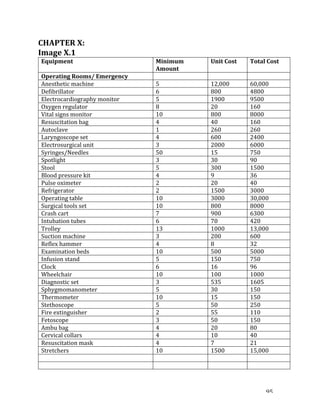
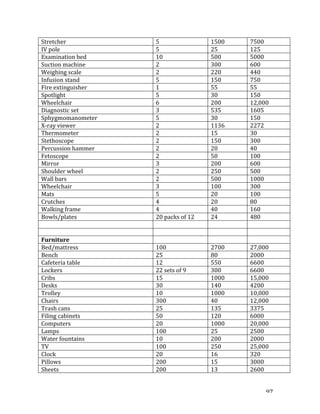
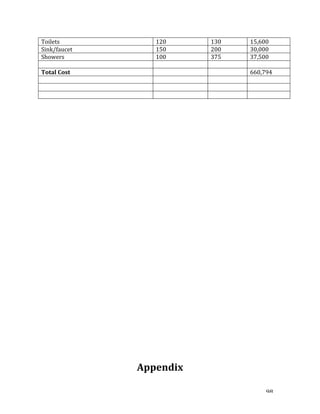
  • 91.
      91   process  maps  guided  us  in  explaining  how,  where,  why,  and  when  our  operations   would  take  place  and  who  in  particular  would  be  involved  in  them.     As  I  discussed  previously,  our  project  required  us  to  get  to  know  each  other   on  a  level  that  provided  for  completing  sections  in  a  timely  manner  and  who  in   particular  would  be  the  best  individual  to  contribute  to  each  section.  Since  we  did   begin  as  early  as  possible  on  our  project,  everything  seemed  to  fall  into  place  with   timing  and  it  was  rare  for  us  to  feel  overwhelmed  by  the  projects’  submissions.  Our   management  of  the  project  became  very  routine  and  easy  to  follow  in  such  a  way   where  each  of  us  knew  our  responsibilities  and  were  prepared  to  discuss  them   during  each  meeting.  The  project  management  we  endured  was  ultimately  a  success   and  besides  the  overwhelming  nature  of  the  project  in  general,  my  personal  stress   was  minimized  by  always  being  organized  and  on  the  same  page  with  the  rest  of  the   team  members.   Suggestions  for  future  Operations  Management  students  would  fall  along  the   lines  of  much  of  what  I  have  stated  thus  far.  I  think  choosing  the  right  group  that  you   are  most  compatible  with  and  starting  early  is  key  to  staying  on  top  of  this  project.  I   think  keeping  up  with  the  readings  and  being  attentive  in  class  provides  for  the   simplest  form  of  preparation  for  deadlines  throughout  the  semester.  Beyond  these   simple  tasks,  it  is  important  to  learn  how  to  adapt  to  one  another  in  a  group  that  you   are  planning  on  working  with  for  several  months.  Personalities  may  clash  however   it  is  imperative  to  be  able  to  overcome  differences  and  work  together  as  a  team,  or   else  the  project  and  resulting  grades  may  suffer.  Despite  the  bearing  commitment  of  
  • 92.
      92   group  meetings  and  tremendous  weekly  workloads,  this  project  was  definitely  a   learning  experience  for  me  as  a  potential  future  businessperson.                                           Appendix   Chapter  VII:    
  • 93.
      93       Chart  7.1          
  • 94.
      94   Step  1  Materials   Step  2  Materials   Step  3  Materials         Ambulence   Couches   Wheelchair   Wheelchair   Televisions   Electronic  Monitors   Check-­‐in  Kiosk   Magazines   Surgical  Equipment   Stretcher   Chairs   Bedding   Emergency  Equip.   various  waiting  items   beds   Emergency  Supplie  Kit     Cribs       Heat  Lamps       Child  care  Equipment       Robes       Infant  Emergency  Equip.       Portable  Bed       Emergency  Supply  Kit                           Further  Detail  in  Section  10   Further  Detail  in  Section  10   Further  Detail  in  Section  10               Step  4  Materials   Step  5  through  11  Materials           Stretchers   Surgical  Equipment     Beds   Surgical  Lamp     Bedding   Surgical  Bed     Surgical  Equipment   Robes     wheelchairs   Wheelchair     Health  Monitors   Regulators     Surgical  Beds   stool     Surgical  Lamp   operating  table   CHART  7.1   Xray  equipment   Emergency  Supply  Kit     Defibrillator   MRI  Scanner     krutches   Monitors     IV  equipment   Physical  Therapy  devices     Emergency   Medication     Portable  Beds   Detection  equipment       Pediatric  equipment           Further  Detail  in  Section  10   Further  Detail  in  Section  10                                                                                                          APPENDIX  
  • 95.
      95   CHAPTER  X:   Image  X.1   Equipment   Minimum     Amount   Unit  Cost   Total  Cost   Operating  Rooms/  Emergency         Anesthetic  machine   5   12,000   60,000   Defibrillator   6   800   4800   Electrocardiography  monitor   5   1900   9500   Oxygen  regulator   8   20   160   Vital  signs  monitor   10   800   8000   Resuscitation  bag   4   40   160   Autoclave   1   260   260   Laryngoscope  set   4   600   2400   Electrosurgical  unit   3   2000   6000   Syringes/Needles   50   15   750   Spotlight   3   30   90   Stool   5   300   1500   Blood  pressure  kit   4   9   36   Pulse  oximeter   2   20   40   Refrigerator   2   1500   3000   Operating  table   10   3000   30,000   Surgical  tools  set   10   800   8000   Crash  cart   7   900   6300   Intubation  tubes   6   70   420   Trolley   13   1000   13,000   Suction  machine   3   200   600   Reflex  hammer   4   8   32   Examination  beds   10   500   5000   Infusion  stand   5   150   750   Clock   6   16   96   Wheelchair   10   100   1000   Diagnostic  set   3   535   1605   Sphygmomanometer   5   30   150   Thermometer   10   15   150   Stethoscope   5   50   250   Fire  extinguisher   2   55   110   Fetoscope   3   50   150   Ambu  bag   4   20   80   Cervical  collars   4   10   40   Resuscitation  mask   4   7   21   Stretchers   10   1500   15,000                  
  • 96.
      96   Pharmacy         Fire  extinguisher   1   55   55   Refrigerator   1   1500   1500   Balance   2   13   26   Tablet  counter   2   16   32   Weighing  scale   2   50   100   Drug  cabinets   2   500   1000                   Pediatrics         Exam  tables   5   500   2500   Reflex  hammer   2   8   16   Blood  pressure  kit   2   9   18   Stethoscope   2   50   100   Syringes/Needles   50   15   750   Chairs   20   40   800   Weighing  Scale   1   50   50                   Intensive  Care         Beds   10   2700   27,000   Trolley   5   1000   5000   Infusion  stand   5   150   750   Electrocardiography  monitor   2   1900   3800   Defibrillator   1   800   800   Suction  machine   2   200   400   Syringe/Needles   50   15   750   Refrigerator   1   1500   1500   Vital  signs  monitor   10   800   8000   Spotlight   2   30   60   X-­‐ray  unit   1   12,000   12,000                   Imaging         Ultrasound  unit   1   77,873   77,873   X-­‐ray  unit   2   12,000   24,000   X-­‐ray  viewer   2   1136   2272   Mammography  unit   1   3000   3000   Film  maker   2   300   600   Film  processor   2   1700   3400   Film  dryer     2   200   400                   Outpatient  Department        
  • 97.
      97   Stretcher   5   1500   7500   IV  pole   5   25   125   Examination  bed   10   500   5000   Suction  machine   2   300   600   Weighing  scale   2   220   440   Infusion  stand   5   150   750   Fire  extinguisher   1   55   55   Spotlight   5   30   150   Wheelchair   6   200   12,000   Diagnostic  set   3   535   1605   Sphygmomanometer   5   30   150   X-­‐ray  viewer   2   1136   2272   Thermometer   2   15   30   Stethoscope   2   150   300   Percussion  hammer   2   20   40   Fetoscope   2   50   100   Mirror   3   200   600   Shoulder  wheel   2   250   500   Wall  bars   2   500   1000   Wheelchair   3   100   300   Mats   5   20   100   Crutches   4   20   80   Walking  frame   4   40   160   Bowls/plates   20  packs  of  12   24   480                   Furniture         Bed/mattress   100   2700   27,000   Bench   25   80   2000   Cafeteria  table   12   550   6600   Lockers   22  sets  of  9   300   6600   Cribs   15   1000   15,000   Desks   30   140   4200   Trolley   10   1000   10,000   Chairs   300   40   12,000   Trash  cans   25   135   3375   Filing  cabinets   50   120   6000   Computers   20   1000   20,000   Lamps   100   25   2500   Water  fountains   10   200   2000   TV   100   250   25,000   Clock   20   16   320   Pillows   200   15   3000   Sheets   200   13   2600  
  • 98.
      98   Toilets   120   130   15,600   Sink/faucet   150   200   30,000   Showers   100   375   37,500           Total  Cost       660,794                                                                                         Appendix  
  • 99.
      99   Chapter  XI:          
  • 100.
      100     APPENDIX   IMAGE  XIII.1                 Surgeries                  
  • 101.
      101   Category   Year  2012   Year  2013   Year  2014  (estimated)           REVENUE  CATEGORY   $  in  Millions   $  in  Millions   $  in  Millions   Gross  revenue   207.68   214.5   294.8   Deductions   -­‐152.24   -­‐154.44   -­‐212.3   Net  patient  Revenue   55.44   60.06   18.15   other  operating  revenue   1.232   1.408   1.98   Total  operating  Revenue   56.584   61.468   84.48           EXPENSE  CATEGORY         Salaries  &  WAGES   17.12   18.8   25.8   Employee  Benefits   8.4   9.6   13   Supplies  &  other  expenses   20.4   21.36   29.36   Total  (Category)  expense   45.92   49.76   68.16           Net  (Category)  income/loss         Net  (Category)  income   10.664   11.708   16.32           Research/Development               Category   Year  2012   Year  2013   Year  2014  (estimated)           REVENUE  CATEGORY   $  in  Millions   $  in  Millions   $  in  Millions   Gross  revenue   47.2   48.75   67   Deductions   -­‐34.6   -­‐35.1   -­‐48.25   Net  patient  Revenue   12.6   13.65   18.75   other  operating  revenue   0.28   0.32   0.45   Total  operating  Revenue   12.86   13.97   19.2           EXPENSE  CATEGORY         Salaries  &  WAGES   17.12   18.8   25.8   Employee  Benefits   8.4   9.6   13   Supplies  &  other  expenses   20.4   21.36   29.36   Total  (Category)  expense   45.92   49.76   68.16           Net  (Category)  income/loss         Net  (Category)  income   -­‐33.06   -­‐35.79   -­‐48.96           Woman/Men/Pediatrics               Category   Year  2012   Year  2013   Year  2014  (estimated)          
  • 102.
      102   REVENUE  CATEGORY   $  in  Millions   $  in  Millions   $  in  Millions   Gross  revenue   141.6   146.25   201   Deductions   -­‐103.8   -­‐105.3   -­‐144.75   Net  patient  Revenue   37.8   40.95   56.25   other  operating  revenue   0.84   0.96   1.35   Total  operating  Revenue   38.58   41.91   57.6           EXPENSE  CATEGORY         Salaries  &  WAGES   12.84   14.1   19.35   Employee  Benefits   6.3   7.2   9.75   Supplies  &  other  expenses   15.3   16.02   22.02   Total  (Category)  expense   34.44   37.32   51.12           Net  (Category)  income/loss         Net  (Category)  income   4.14   4.29   6.48           Pharmaceuticals                 Category   Year  2012   Year  2013   Year  2014  (estimated)           REVENUE  CATEGORY   $  in  Millions   $  in  Millions   $  in  Millions   Gross  revenue   141.6   146.25   201   Deductions   -­‐103.8   -­‐105.3   -­‐144.75   Net  patient  Revenue   37.8   40.95   56.25   other  operating  revenue   0.84   0.96   1.35   Total  operating  Revenue   38.58   41.91   57.6           EXPENSE  CATEGORY         Salaries  &  WAGES   8.56   9.4   12.9   Employee  Benefits   4.2   4.8   6.5   Supplies  &  other  expenses   10.2   10.68   14.68   Total  (Category)  expense   22.96   24.88   34.08           Net  (Category)  income/loss         Net  (Category)  income   15.62   17.03   23.52           Imaging                 Category   Year  2012   Year  2013   Year  2014  (estimated)           REVENUE  CATEGORY   $  in  Millions   $  in  Millions   $  in  Millions   Gross  revenue   47.2   48.75   67  
  • 103.
      103   Deductions   -­‐34.6   -­‐35.1   -­‐48.25   Net  patient  Revenue   12.6   13.65   18.75   other  operating  revenue   0.28   0.32   0.45   Total  operating  Revenue   12.86   13.97   19.2           EXPENSE  CATEGORY         Salaries  &  WAGES   4.28   4.7   6.45   Employee  Benefits   2.1   2.4   3.25   Supplies  &  other  expenses   5.1   5.34   7.34   Total  (Category)  expense   11.48   12.44   17.04           Net  (Category)  income/loss         Net  (Category)  income   1.38   1.53   2.16           Physical  Therapy/  Rehabilitation               Category   Year  2012   Year  2013   Year  2014  (estimated)           REVENUE  CATEGORY   $  in  Millions   $  in  Millions   $  in  Millions   Gross  revenue   75.52   78   107.2   Deductions   -­‐55.36   -­‐56.16   -­‐77.2   Net  patient  Revenue   20.16   21.84   30   other  operating  revenue   0.448   0.512   0.72   Total  operating  Revenue   20.576   22.352   30.72           EXPENSE  CATEGORY         Salaries  &  WAGES   3.424   3.76   5.16   Employee  Benefits   1.68   1.92   2.6   Supplies  &  other  expenses   4.08   4.272   5.872   Total  (Category)  expense   9.184   9.952   13.632           Net  (Category)  income/loss         Net  (Category)  income   11.39   12.4   17.09           Cancer  Treatment                 Category   Year  2012   Year  2013   Year  2014  (estimated)           REVENUE  CATEGORY   $  in  Millions   $  in  Millions   $  in  Millions   Gross  revenue   169.92   175.5   241.2   Deductions   -­‐124.56   -­‐126.36   -­‐173.7   Net  patient  Revenue   45.36   49.14   67.5  
  • 104.
      104   other  operating  revenue   1.008   1.152   1.62   Total  operating  Revenue   46.296   50.292   69.12           EXPENSE  CATEGORY         Salaries  &  WAGES   15.408   16.92   23.22   Employee  Benefits   7.56   8.64   11.7   Supplies  &  other  expenses   18.36   19.224   26.424   Total  (Category)  expense   41.328   44.784   61.344           Net  (Category)  income/loss         Net  (Category)  income   4.97   5.51   7.776           Walk-­‐In/Emergency                 Category   Year  2012   Year  2013   Year  2014  (estimated)           REVENUE  CATEGORY   $  in  Millions   $  in  Millions   $  in  Millions   Gross  revenue   113.28   117   160.8   Deductions   -­‐83.04   -­‐84.24   -­‐115.8   Net  patient  Revenue   30.24   32.76   45   other  operating  revenue   0.672   0.768   1.08   Total  operating  Revenue   30.864   33.528   46.08           EXPENSE  CATEGORY         Salaries  &  WAGES   6.848   7.52   10.32   Employee  Benefits   3.36   3.84   5.2   Supplies  &  other  expenses   8.16   8.544   11.744   Total  (Category)  expense   18.37   19.904   27.26           Net  (Category)  income/loss         Net  (Category)  income   12.494   13.624   18.82       References:   200  Hospital  Benchmarks.  (2012,  October  24).  Retrieved  March  19,  2014,  from  Becker's   Hospital  Review    
  • 105.
      105   About  Kiosk.  (2014).  Retrieved  March  19,  2014,  from  Kiosk  Information  System  website:   http://kiosk.com/market-­‐solutions     Aggarwal,  A.,  &  Travers,  S.  (n.d.).  E-­‐Commerce  in  Healthcare:  Changing  the  Traditional   Landscape.     Campus  Map.  (2014).  Retrieved  February  20,  2014,  from  El  Camino  Hospital  Los  Gatos   website:     http://www.elcaminohospital.org/Locations/El_Camino_Hospital_Los_Gatos     Chatterjoe,  S.  (2010,  November  27).  The  ECommerce  Opportunity  in  Health  Care  -­‐  Best   Practices  for  Insurers.  Retrieved  March  19,  2014,  from  Slideshare  website:   http://www.slideshare.net/chatterjeesanjay/ehealth-­‐forinsurers     Chee,  L.,  &  Yazdanifard,  R.  (2011).  Ecommerce’s  Important  Role  in  the  Medical  Sector.   Retrieved  March  19,  2014,  from  International  Conference  on  Information   Communication  and  Management  website:  http://www.ipcsit.com/vol16/4-­‐ ICICM2011M006.pdf     Decker,  F.  (n.d.).  Salary  of  Specialized  Surgeons.  Retrieved  from  Chron.com  website:     Emergency  department  physicians  spend  only  25%  of  their  working  time  on  direct  patient   care.  (n.d.).  Retrieved  from  PubMed  website:   http://www.ncbi.nlm.nih.gov/pubmed/23340186     Getting  care  and  Research.  (2014).  Retrieved  March  19,  2014,  from  Stanford  Medicine   website:  http://stanfordmedicine.org/     Hopp,  W.,  &  Lovejoy,  W.  (2013).  Hospital  Operations.     Hospital  Map.  (2014).  Retrieved  February  20,  2014,  from  El  Camino  Hospital  Los  Gatos   website:  
  • 106.
      106            http://work.chron.com/salary-­‐specialized-­‐surgeons-­‐4597.html              http://www.elcaminohospital.org/For_Physicians/Physician_Directory     http://www.elcaminohospital.org/Portals/0/documents/Maps/HospitalMap_Internal.pdf              http://www.salary.com/     http://www.who.int/medical_devices/survey_resources/   medical_devices_by_facility_provincial_hospitals_kenya.pdf   Imaging.  (2014).  Retrieved  February  20,  2014,  from  AliMed  website:   http://www.alimed.com/     Inventory  Management  Issues  In  Health  Care  Supplies.  (2008,  June  5).  Retrieved  March  19,   2014,  from  University  of  Arkansas  website:   http://cavern.uark.edu/~rossetti/_Media/  inventory_management_issues.pdf     iPads  In  Health  And  Medicine:  More  Than  An  Information  Revolution?  (2012,  March  14).   Retrieved  March  19,  2014,  from  Medical  News  Today  website:   http://www.medicalnewstoday.com/articles/242843.php   LaPrade,  R.  (2014,  February  12).  [E-­‐mail  interview].     Mawejje,  B.  (2014,  February  15).  [Personal  interview].     MEDICAL  EQUIPMENT  LIST  FOR  TYPICAL  DISTRICT  HOSPITAL.  (n.d.).  Retrieved  March  19,   2014,  from  World  Health  Organization  website   Medical  Workers.  (2014).  Retrieved  March  19,  2014,  from  Indeed.com  website:   http://www.indeed.com/     METHODOLOGY  FOR  PHYSICIAN  &  NURSE  REQUIREMENT  PLANNING.  (2006).  Retrieved   March  19,  2014,  from  Ministry  of  Health  website:   http://www.moh.gov.om/en/hr/Method_phy&nurse_planning.pdf    
  • 107.
      107            Office  Today  website:  http://medicalofficetoday.com/content_free/     Physician  Directory.  (2014).  Retrieved  March  19,  2014,  from  El  Camino  Hospital  website:     Programs  and  Services.  (2014).  Retrieved  February  20,  2014,  from  El  Camino  Hospital  Los   Gatos              Retrieved  from  CiteSeerX  database.     Salaries  for  Medical  Industry.  (2014).  Retrieved  March  19,  2014,  from  Salary.com  website:     Salary  &  Benefits.  (n.d.).  Retrieved  March  19,  2014,  from  University  of  California,  San   Francisco     Self-­Service  Check-­in  at  Hotels  and  Motels.  (n.d.).  Retrieved  March  19,  2014,  from  Customer   Facing  Solutions  website:  http://www.customerfacingsolutions.com/pdfs   FinalHotelGuideSelfServOnlineMag.pdf     Silicon  Valley,  Calif.,  Market  Profile.  (2011,  June  14).  Retrieved  February  20,  2014,  from   Medical              silicon-­‐valley-­‐calif-­‐market-­‐profile.aspx     Stears,  M.  (2014,  February  11).  [Personal  interview].     Stevens,  K.  (2014,  February  5).  [Telephone  interview].     The  iPad  as  Healthcare  Tool.  (2013).  Retrieved  March  19,  2014,  from  Medtronic  website:   http://www.medtronic.com/innovation/open-­‐ipad.html              website:  http://labmed.ucsf.edu/education/residency/benefits.html              website:  http://www.beckershospitalreview.com/lists/200-­‐hospital-­‐benchmarks-­‐ october-­‐2012.html              Website:  http://www.elcaminohospital.org/Programs_and_Services    
  • 108.
      108   Welcome  to  Los  Gatos  Surgical  Center.  (2014).  Retrieved  March  19,  2014,  from  Los  Gatos   Surgical  Center  website:  http://losgatossc.com/home/