Download to read offline


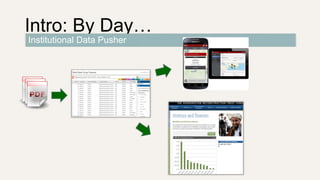


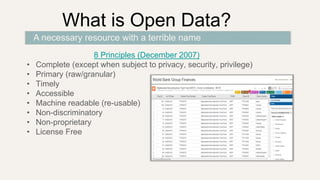
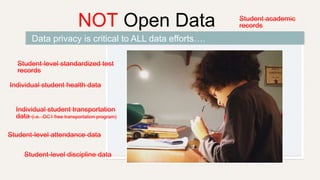
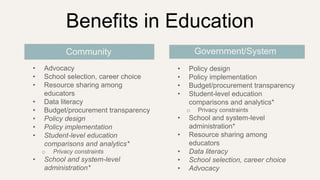
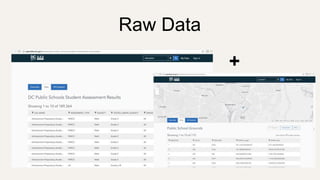
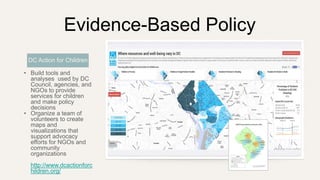
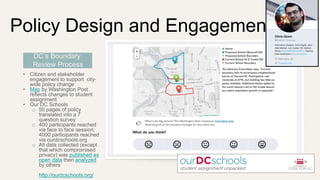

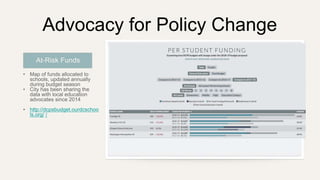
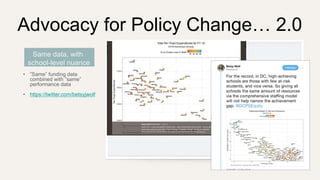
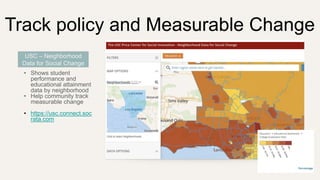

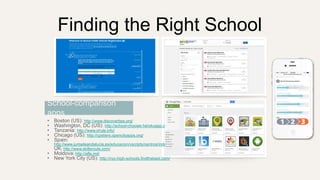

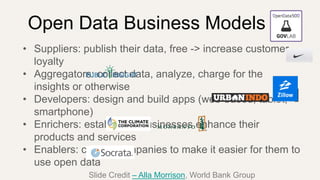
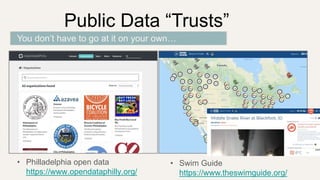




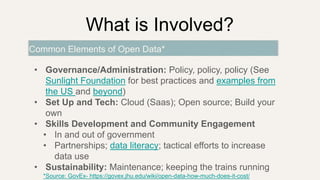
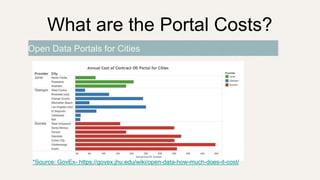
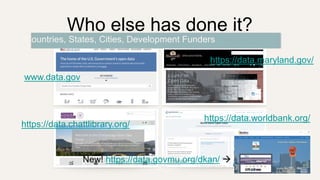


This document discusses open data and its benefits. It defines open data as being complete, primary, timely, accessible, machine readable, non-discriminatory, non-proprietary and license free. Open data can help solve problems by engaging the community. When combined with evidence-based policy and tools, open data can help design policy, support advocacy efforts, and track measurable changes. Several examples of open data applications and business models are provided. Engaging the community is important to determine what data they want and increasing data literacy.


