The document discusses the topic of open data and its potential to create mass joy within communities. It highlights the role of the Civic User Testing Group and its connection with Smart Chicago. Contact information for Dan O'Neil is provided.
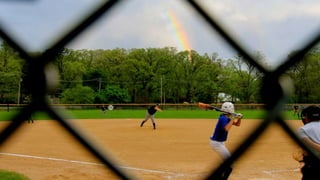
#2 In the summer of 2014, in the city of Chicago, Illinois, a youth baseball team called Jackie Robinson West came out of nowhere (well, at least according to the vast millions of Chicagoans who don’t follow such things) to compete for the World Championship in the Little League Baseball World Series.
#3 Great kids.
As you can see here. They were the winners of the Great Lakes region, which must be some grouping that Little League baseball used. Interesting to see those groupings. And yellow means nothing to us. That’s part of what appealed to me last summer as all of this was going on— there were these odd and arbitrary geographies. In the context of an actual World Series, one where teams from all over the world compete, the Great Lakes are a pretty prominent landform. It’s natural to pluck that out from a world map and say, “let’s get a team from here”. A natural grouping, And those of us in civic tech who have ever made maps with dots on them, we know this work.
#4 And then they won the U.S. title! This is the stuff of movies. It was bananas. Anyone here from a city that’s won a major sports championship? It’s a big deal, right?
This was a bunch of kids. It was like a gift. We just got all championship, no regular season.
Which was cool.
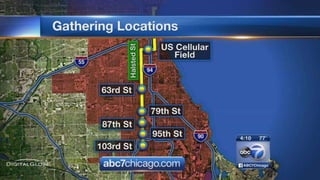
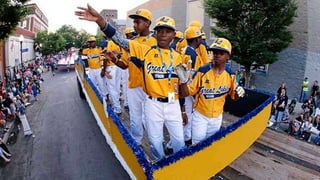
#5 The parade route was amazing. More maps, more dots. If you know anything about Chicago, it’s a lot like other cities– dots that show, time and again, poverty and lack of opportunity. This was a map of victory. It was so much fun.
#6 So for miles and miles, through one of the major spines in our up-and-down city, there was a victory parade.
As a father of two boys, aged 14 and 16, who play baseball
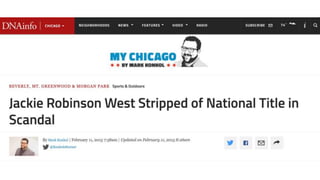
#7 Then, one morning in February we learned in breaking news fashion that Jackie Robinson West’s U.S. title was vacated. They had placed players on their team who did not qualify to play because they lived outside the team’s boundaries.
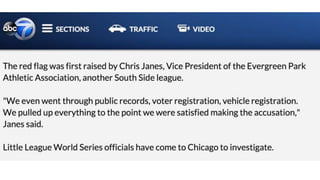
#8 We discovered that a coach from an opposing team from the suburbs of Chicago (the Evergreen Park Athletic Association vice president) had discovered this fact and brought it to the attention of the officials at Little League Baseball.
And one detail just stuck with me.
READ QUOTE
This matter is based on the stuff that civic tech is made of— boundaries, maps, points, addresses, data, records, municipalities. It felt so “us”.
It brought up an odd combo of anger and despair for me. All of this— the cherry-picking of public records, the doxxing of individuals, the fetish-izing singular pieces of info, placing the hopes and dreams and needs of people into neat points on a mobile-friendly map— seemed so familiar.
To this day, people still come up with maps of “safe” neighborhoods, and use data to define places in ways they see fit.
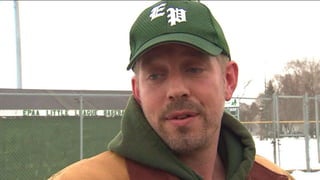
#9 So ya this guy.
This is the Vice President of a suburban Chicago little league association.
To be fair, this guy is a legit whistleblower.
He was absolutely correct.
He dealt in facts.
#10 But I’m all about mass joy.
I run the Smart Chicago Collaborative.
#11 One of the things we do is work with Textizen.
The default was 2K we had to call 4 time to up it.
It was their largest campaign ever.
13,000 text messages from 1300 people.
We help the whole ecosystem of the civic tech space.
CFA
CDOT
DCASE
Metroplanners
Knight
#12 This is a health clinic in the Humboldt Park neighborhood.
Smart Health Centers
#14 I am a third base coach. That’s where they put people who don’t really know what they’re doing.
All I knew was “Go.”
Go.
Because if you get in, the crowd will cheer, and smile.
#15 Because when you try to include everyone, there are such things as magic moments of mass joy.