http://www.poland.travel/en-us/cities/olsztyn-copernicus-city-with-15lakes/
Olsztyn
Olsztyn is situated in the southern part of Warmia
on the river Łyna, within the boundaries of
Olsztyńskie Lakeland. There are 15 lakes situated
within the borders of Olsztyn, parks and forests.
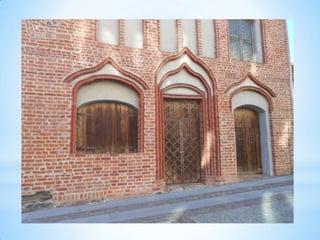
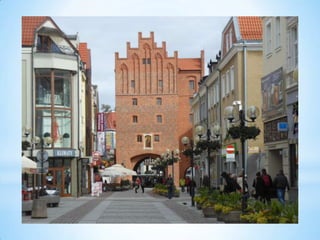
The most important monuments of Olsztyn are the
Old Town with the castle complex and Saint Jacob
Apostle’s Church dating back to the XIV century.
The monuments of the Olsztyn Town Square are
situated on the European Route of Gothic and the
church is deemed one of the greatest monuments
of brick gothic era in Poland.
Nicolas Copernicus himself lived in the castle in
Olsztyn for many years.
In 1521 he prepared the stronghold/bastion for
defence against the Teutonic Knights Order armies,
here Copernicus wrote one of the first works in the
history of economical thought, explaining the
phenomenon of inflation.
The character of Copernicus is commemorated by
two monuments and memorial boards. A fragment
of a wall, on which the great astronomer drew
auxiliary lines during his research on the day and
night of the equinox in 1517 actually remained in
the castle.
Olsztyn
Olsztyn
Olsztyn
Olsztyn
Olsztyn
Olsztyn
Olsztyn
Olsztyn

Olsztyn

  • 1.
  • 2.
  • 3.
    Olsztyn is situatedin the southern part of Warmia on the river Łyna, within the boundaries of Olsztyńskie Lakeland. There are 15 lakes situated within the borders of Olsztyn, parks and forests. The most important monuments of Olsztyn are the Old Town with the castle complex and Saint Jacob Apostle’s Church dating back to the XIV century. The monuments of the Olsztyn Town Square are situated on the European Route of Gothic and the church is deemed one of the greatest monuments of brick gothic era in Poland.
  • 7.
    Nicolas Copernicus himselflived in the castle in Olsztyn for many years. In 1521 he prepared the stronghold/bastion for defence against the Teutonic Knights Order armies, here Copernicus wrote one of the first works in the history of economical thought, explaining the phenomenon of inflation. The character of Copernicus is commemorated by two monuments and memorial boards. A fragment of a wall, on which the great astronomer drew auxiliary lines during his research on the day and night of the equinox in 1517 actually remained in the castle.