Obstetric Anaesthesia
 GA or spinal ( both have risks)
In obs pt NB
-Physiological changes in pregnancy
-Difficult airway
-2 patients (mom and baby)
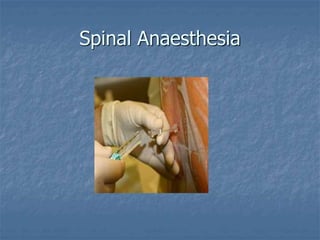
Spinal Anaesthesia
Spinal Contraindications
 Absolute:
 Uncontrolled haemorrhage
 Hypovolaemia
 Eclampsia with depressed level of consciousness
 Coagulopathy. (INR or PTT > 1.5 times normal
or platelets < 100 000)
 Local infection at site of puncture.
 Severe sepsis
 Obstructive cardiac lesions
 Patient refusal.
 Known hypersensitivity to local anaesthetics.
 Lack of resuscitative equipment or drugs
 Increased intracranial pressure
 Doctor unable to provide general anaesthesia
Relative Contra-Indications
 Relative contradictions:
 Active CNS disease (including multiple sclerosis)
 Primary herpes.
 Myasthenia gravis.
 Uncooperative teenage pregnancies
 Morbidly obese
 Extremely short (less than 150cm)
 Difficult airway
 Previous Lumbar surgery
PROTOCOL FOR NEURAXIAL
ANAESTHESIA IN OBSTETRICS
PREOPERATIVE PREPARATION
 Take a history and examine the patient, check consent for
surgery, check relevant investigations
 Discuss procedure with patient and obtain written consent
for neuraxial anaesthesia.
 Ensure that the patient has good intravenous access (18 G
minimum), aim to preload with 500-1000 ml crystalloid.
Check that the patient is catheterized.
 Administer prophylactic antibiotics: Kefzol 2g.
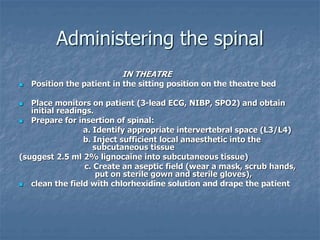
Administering the spinal
IN THEATRE
 Position the patient in the sitting position on the theatre bed
 Place monitors on patient (3-lead ECG, NIBP, SPO2) and obtain
initial readings.
 Prepare for insertion of spinal:
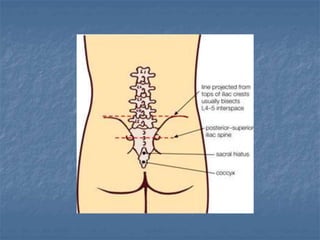
a. Identify appropriate intervertebral space (L3/L4)
b. Inject sufficient local anaesthetic into the
subcutaneous tissue
(suggest 2.5 ml 2% lignocaine into subcutaneous tissue)
c. Create an aseptic field (wear a mask, scrub hands,
put on sterile gown and sterile gloves),
 clean the field with chlorhexidine solution and drape the patient
4. Insertion of the Spinal Needle:
 a. Use a 25 or 27 G pencil point spinal needle.
 b. Inject your spinal mixture (prepared in a 5 ml syringe) into
the subarachnoid space.
[1.8 ml 0.5 % heavy bupivacaine and 0.4 ml (20 ug) fentanyl]
 C. Apply dressing
 5. Position patient in the supine position, ensuring a degree of left
lateral tilt tilt to prevent aortocaval compression. Use of a vaculitre
as a wedge is acceptable.
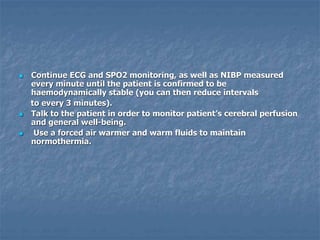
 Continue ECG and SPO2 monitoring, as well as NIBP measured
every minute until the patient is confirmed to be
haemodynamically stable (you can then reduce intervals
to every 3 minutes).
 Talk to the patient in order to monitor patient’s cerebral perfusion
and general well-being.
 Use a forced air warmer and warm fluids to maintain
normothermia.
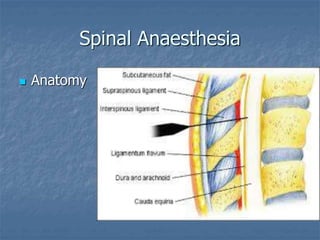
Spinal Anaesthesia
 Anatomy
Monitoring
 BP can drop after spinal
 Active Rx of Hypotension
 Ongoing rapid fluid administration
 Phenylephrine/Ephedrine/adrenaline
 Ensure adequate tilt
 Turn mother on her side!
 LOC
 Intubate
 Adrenaline (don’t be shy!)
 DELIVER THE BABY
High Spinal
 High index of suspicion
 ABC’s
 Loss Of Consciousness
 Intubate
 Adrenaline (don’t be shy!)
 DELIVER THE BABY
General Anaesthesia
 Potential problems:
 Failed/ difficult intubation
 Pulmonary aspiration of gastric contents
 Neonatal depression
 Maternal awareness
 Establish adequate IVI access and place the
patient in a left lateral tilt
 Establish monitoring as used for all general
anaesthetic cases
 Surgeons should be scrubbed and the
abdomen cleaned prior to induction.
 Perform a rapid sequence induction
 Adequate pre-oxygenation – at least 3 minutes of
breathing 100% oxygen or else at least 5 vital
capacity breaths.
 Adequate dose of propofol
 Apply cricoid pressure
 Give sux 1 mg/kg
 Supine:
 Aortocaval compression  decreased preload
 decreased cardiac output  decreased
uterine perfusion
 “Supine hypotensive syndrome”
 Wedge/left lateral tilt
Recovery room
 Continue monitoring and management
 Monitoring (HR, NIBP, SpO2)
 A+B
 – Oxygen, awake enough to maintain airway ?
 Do you need to keep ventilating and arrange ICU admission ?
 PONV ? Suction available
 C - Fluids/blood products
 Monitor and manage bleeding (wound, PV, urine) and
hypotension
 State of uterus
 D – Drugs
 Analgesia and antiemetics prescribed
 Oxytocin 20U into full vacolitre, running slowly (125mls/hour)
Post Dural Puncture Headache
 Due to leak from dura mater defect
 Causes decreased ICP, traction on structures
 Positional; better lying down, worse sitting up
 Exclude other causes of headache
 Meningitis
 Migraine
 Initial treatment is conservative
 Strict bed rest
 Simple analgesics
 [Caffeine]
 Epidural blood patch if not resolving within
24hours
 Sterile in theatre
 Patients’ own blood into EPIDURAL SPACE
Summary
 Before you start:
 Preoperative assessment – as if for GA
 Make the correct choice of type of anaesthetic
 Preparation – expect complications
 When you start:
 Use the safest technique
 Look out for complications at all times
 Proactive management of complications
 Once you have finished:
 Postoperative recovery and discharge
 Good documentation
 Before you leave:
 Clear, detailed instructions to the ward

Obstetric Anaesthesia Updated (2).pptx

  • 1.
  • 2.
     GA orspinal ( both have risks) In obs pt NB -Physiological changes in pregnancy -Difficult airway -2 patients (mom and baby)
  • 3.
  • 4.
    Spinal Contraindications  Absolute: Uncontrolled haemorrhage  Hypovolaemia  Eclampsia with depressed level of consciousness  Coagulopathy. (INR or PTT > 1.5 times normal or platelets < 100 000)  Local infection at site of puncture.  Severe sepsis  Obstructive cardiac lesions
  • 5.
     Patient refusal. Known hypersensitivity to local anaesthetics.  Lack of resuscitative equipment or drugs  Increased intracranial pressure  Doctor unable to provide general anaesthesia
  • 6.
    Relative Contra-Indications  Relativecontradictions:  Active CNS disease (including multiple sclerosis)  Primary herpes.  Myasthenia gravis.  Uncooperative teenage pregnancies  Morbidly obese  Extremely short (less than 150cm)  Difficult airway  Previous Lumbar surgery
  • 7.
    PROTOCOL FOR NEURAXIAL ANAESTHESIAIN OBSTETRICS PREOPERATIVE PREPARATION  Take a history and examine the patient, check consent for surgery, check relevant investigations  Discuss procedure with patient and obtain written consent for neuraxial anaesthesia.  Ensure that the patient has good intravenous access (18 G minimum), aim to preload with 500-1000 ml crystalloid. Check that the patient is catheterized.  Administer prophylactic antibiotics: Kefzol 2g.
  • 9.
    Administering the spinal INTHEATRE  Position the patient in the sitting position on the theatre bed  Place monitors on patient (3-lead ECG, NIBP, SPO2) and obtain initial readings.  Prepare for insertion of spinal: a. Identify appropriate intervertebral space (L3/L4) b. Inject sufficient local anaesthetic into the subcutaneous tissue (suggest 2.5 ml 2% lignocaine into subcutaneous tissue) c. Create an aseptic field (wear a mask, scrub hands, put on sterile gown and sterile gloves),  clean the field with chlorhexidine solution and drape the patient
  • 10.
    4. Insertion ofthe Spinal Needle:  a. Use a 25 or 27 G pencil point spinal needle.  b. Inject your spinal mixture (prepared in a 5 ml syringe) into the subarachnoid space. [1.8 ml 0.5 % heavy bupivacaine and 0.4 ml (20 ug) fentanyl]  C. Apply dressing  5. Position patient in the supine position, ensuring a degree of left lateral tilt tilt to prevent aortocaval compression. Use of a vaculitre as a wedge is acceptable.
  • 11.
     Continue ECGand SPO2 monitoring, as well as NIBP measured every minute until the patient is confirmed to be haemodynamically stable (you can then reduce intervals to every 3 minutes).  Talk to the patient in order to monitor patient’s cerebral perfusion and general well-being.  Use a forced air warmer and warm fluids to maintain normothermia.
  • 12.
  • 13.
    Monitoring  BP candrop after spinal  Active Rx of Hypotension  Ongoing rapid fluid administration  Phenylephrine/Ephedrine/adrenaline  Ensure adequate tilt  Turn mother on her side!  LOC  Intubate  Adrenaline (don’t be shy!)  DELIVER THE BABY
  • 14.
    High Spinal  Highindex of suspicion  ABC’s  Loss Of Consciousness  Intubate  Adrenaline (don’t be shy!)  DELIVER THE BABY
  • 15.
    General Anaesthesia  Potentialproblems:  Failed/ difficult intubation  Pulmonary aspiration of gastric contents  Neonatal depression  Maternal awareness
  • 16.
     Establish adequateIVI access and place the patient in a left lateral tilt  Establish monitoring as used for all general anaesthetic cases  Surgeons should be scrubbed and the abdomen cleaned prior to induction.
  • 17.
     Perform arapid sequence induction  Adequate pre-oxygenation – at least 3 minutes of breathing 100% oxygen or else at least 5 vital capacity breaths.  Adequate dose of propofol  Apply cricoid pressure  Give sux 1 mg/kg
  • 18.
     Supine:  Aortocavalcompression  decreased preload  decreased cardiac output  decreased uterine perfusion  “Supine hypotensive syndrome”  Wedge/left lateral tilt
  • 19.
    Recovery room  Continuemonitoring and management  Monitoring (HR, NIBP, SpO2)  A+B  – Oxygen, awake enough to maintain airway ?  Do you need to keep ventilating and arrange ICU admission ?  PONV ? Suction available  C - Fluids/blood products  Monitor and manage bleeding (wound, PV, urine) and hypotension  State of uterus  D – Drugs  Analgesia and antiemetics prescribed  Oxytocin 20U into full vacolitre, running slowly (125mls/hour)
  • 20.
    Post Dural PunctureHeadache  Due to leak from dura mater defect  Causes decreased ICP, traction on structures  Positional; better lying down, worse sitting up  Exclude other causes of headache  Meningitis  Migraine
  • 21.
     Initial treatmentis conservative  Strict bed rest  Simple analgesics  [Caffeine]  Epidural blood patch if not resolving within 24hours  Sterile in theatre  Patients’ own blood into EPIDURAL SPACE
  • 22.
    Summary  Before youstart:  Preoperative assessment – as if for GA  Make the correct choice of type of anaesthetic  Preparation – expect complications  When you start:  Use the safest technique  Look out for complications at all times  Proactive management of complications  Once you have finished:  Postoperative recovery and discharge  Good documentation  Before you leave:  Clear, detailed instructions to the ward